Vince Guzzo Video Interview: The Current State of His Businesses and Predictions of Mass Retail Closures in Canada
Vince Guzzo, a well-known Canadian entrepreneur and judge on the Dragons’ Den TV show, discusses the economic pain entrepreneurs have faced during the pandemic and what they need to do to survive. He starts off discussing challenges with his own businesses including theatres, consumer goods and real estate and then predicts that many businesses will close in Canada this year and discusses how interest rate increases will further affect both businesses and consumers.
The Video Interview Series by Retail Insider is available on YouTube.
Connect with Mario Toneguzzi, a veteran of the media industry for more than 40 years and named in 2021 a Top Ten Business Journalist in the world and the only Canadian – to learn how you can tell your story, share your message and amplify it to a wide audience. He is Senior National Business Journalist with Retail Insider and owner of Mario Toneguzzi Communications Inc. and can be reached at mdtoneguzzi@gmail.com
Also check out the other series offered by Retail Insider, including The Weekly podcast and The Interview Series, which are both available on Apple Podcasts, Stitcher, TuneIn, Google Podcasts, or through our dedicated RSS feed for Simplecast and other podcast players.
RioCan Real Estate Investment Trust announced that Harden will assume third-party property management for the REIT’s 18 Quebec retail properties.
Harden is a second generation, family-owned real estate company whose primary focus is owning and operating commercial, residential, and industrial properties in many communities throughout Quebec and Ontario.
RioCan said the partnership strengthens RioCan’s regional position, leveraging Harden’s local expertise and full suite of property management capabilities tailored for the market, including leasing, development, construction, and administration services.
Harden x Riocan
Jonathan Gitlin
“With a common focus on performance, customer-centrism, and cultural excellence, we are confident that Harden is perfectly positioned to manage our retail portfolio in the Quebec region,” said Jonathan Gitlin, President and CEO of RioCan. “RioCan’s Quebec properties have proven resilient through the pandemic and there are significant growth opportunities embedded in the portfolio. Harden’s long-established and in-depth understanding of the local real estate landscape will further support growth and extract value from our presence in this market.”
Tyler Harden, co-CEO of Harden with his brother Chris, said the company will work closely with RioCan to provide their tenants with exceptional service and well-maintained properties that it and their customers will be proud of.
Tyler Harden
“We are confident the Harden team has the expertise and talent to execute our strategy of enhancing the experience and value of the portfolio. We will accomplish this by curating a synergistic mix of uses, providing a high-quality retail experience and eco-responsible environment, and investing in the communities we serve,” he said.
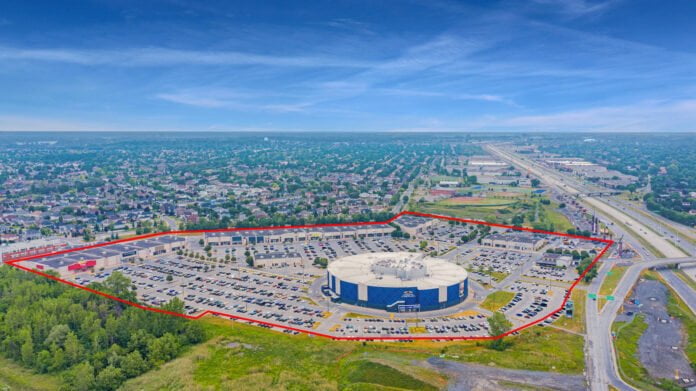
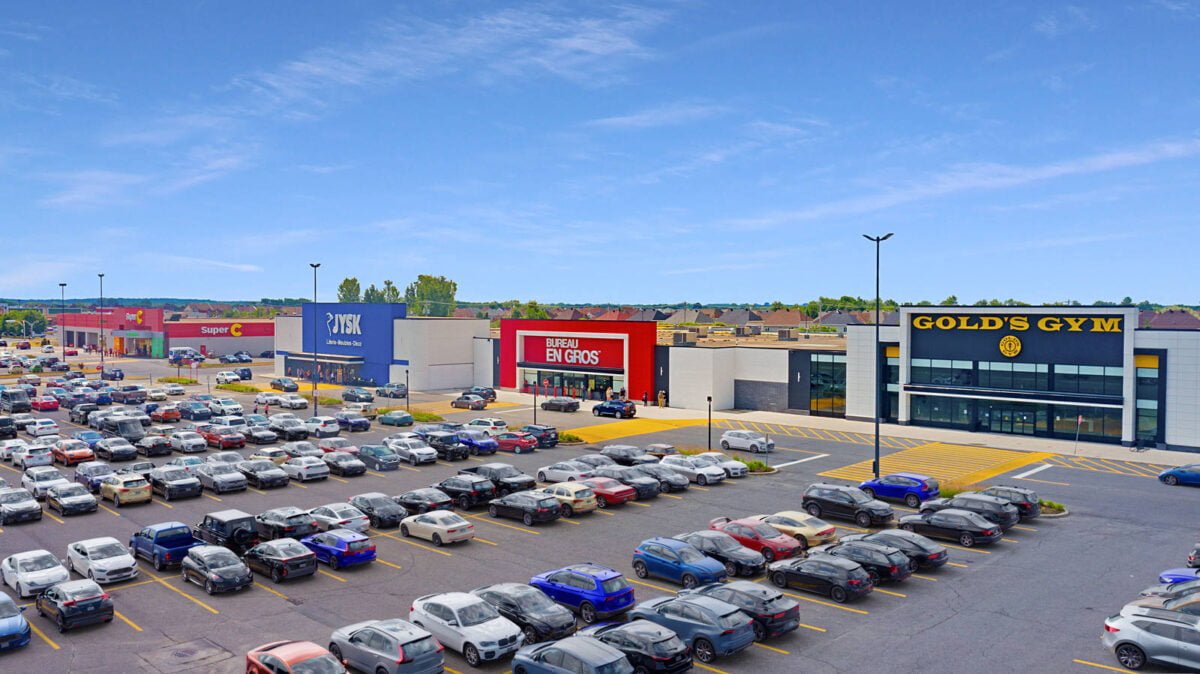
RioCan and Harden said they have an established relationship, with each owning a 50 per cent interest in Les Galeries Lachine in Montreal, where Harden is responsible for the management, leasing, and redevelopment of the property. Recently, RioCan agreed to sell a 50 per cent interest in the Trust’s Mega Centre Notre-Dame property to Harden for $34.5 million. The transaction closed on March 30th.
Mega Centre Notre-Dame (Image: RioCan)
“We also knew it was something we could help them out with the rest of their portfolio. We had certain conversations over the last couple of years and ultimately they made a decision they would like for us to be the ones that work within their portfolio in Quebec as partners in certain instances and in this particular case basically as property managers as well as taking care of the leasing, the construction and the development or redevelopment of their properties. So that’s our role.
“So for us we’re really excited to be able to partner with RioCan or expanding on our current partnership that we have had with them for the last couple of years. What does this does for Harden it allows us to continue to scale our business, comprised of quality retail portfolio in Quebec and give ourselves development opportunities within the portfolio to lean on the services that we offer, namely development, leasing, construction and our management platform, to be able to extract maximum value for obviously the partnership but most importantly putting together a program where the retailers are living obviously in that portfolio as well other services that we are going to be adding are able to do so proudly and confidently and not have issues from a day to day perspective, or very little. That’s essentially our role within this partnership.”
Harden said the relationship with RioCan is also adding a lot of square footage to its development pipeline which is positive and productive for the company. The 18 retail properties in Quebec comprise just over 2.55 million square feet.
RioCan Greenfield (Image: RioCan)
As of December 31, 2021, RioCan’s portfolio included 207 properties with an aggregate net leasable area of approximately 36.4 million square feet (at RioCan’s interest) including office, residential rental and 13 development properties.
Harden, who’s head office is located in Vaudreuil-Dorion, Quebec, currently owns and operates over five million square feet of net leasable area of commercial space. It has several projects under development – two million square feet of net leasable area of industrial, 500, 000 square feet of net leasable area of commercial, and over 2,000 residential units.
Tyler Harden said the company’s roots began in 1949, where his grandparents founded a jewellery store named Harden’s Jewellers, located in Hawkesbury, Ontario; a small town on the border of Quebec and Ontario. In 1975, William Harden (Tyler’s father) joined the family business and expanded it to a total of 7 stores; along with his brothers, Reg and Brent.
Harden was founded by Tyler and Chris’ father, William, in 1985. Over the following years William had developed several commercial properties in Ontario and Quebec, mostly retail shopping centers. Chris and Tyler joined the business in 2006 and 2008, respectively, and worked very closely under their fathers’ guidance and mentorship until this past January where they were appointed Co-CEOs.
“We were confident that Harden was the right partner to help them unlock the value embedded within their Quebec portfolio. We had certain conversations over the last couple of years and ultimately RioCan made the decision to expand our current relationship and in this particular case become asset managers that are responsible of the management, leasing, construction, development and redevelopment of their properties.”
Centre St-Martin (Image: RioCan)
“We’re very excited to be able to partner with RioCan and expand on our current partnership that we had formed in 2019. This partnership allows Harden to continue to scale our business, comprised of quality retail properties and give ourselves further development opportunities within the portfolio.”
Harden and RioCan agreement applies to the following properties :
Retail Insider is streamlining its Canadian retail news from around the web to include a handful of top news stories that can be viewed quickly during the day. Here are the top stories from the past 24 hours.
Frank And Oak Co-Founder Ethan Song Discusses What He’s Doing After Exiting the Retailer
Craig and Ethan Song discuss Ethan’s new NFT venture that he launched following his exit from Frank And Oak, as well as his analysis of the future of retail post-pandemic.
The Interview Series podcast by Retail Insider Canada is available on Apple Podcasts, Stitcher, TuneIn, Google Play, or through our dedicated RSS feed for Overcast and other podcast players. Also check out our The Weekly podcast where Craig and Lee discuss popular content published on Retail Insider which is part of the The Retail Insider Podcast Network.
Interviewed this episode:
Ethan Song – Chief Executive Officer at RareCircles
Drop us a line at Craig@Retail-Insider.com. You can also rate us in Apple Podcasts or recommend us in Overcast to help more people discover the show!
Background Music Credit: Hard Boiled Kevin MacLeod (incompetech.com). Licensed under Creative Commons: By Attribution 3.0 License. http://creativecommons.org/licenses/by/3.0/
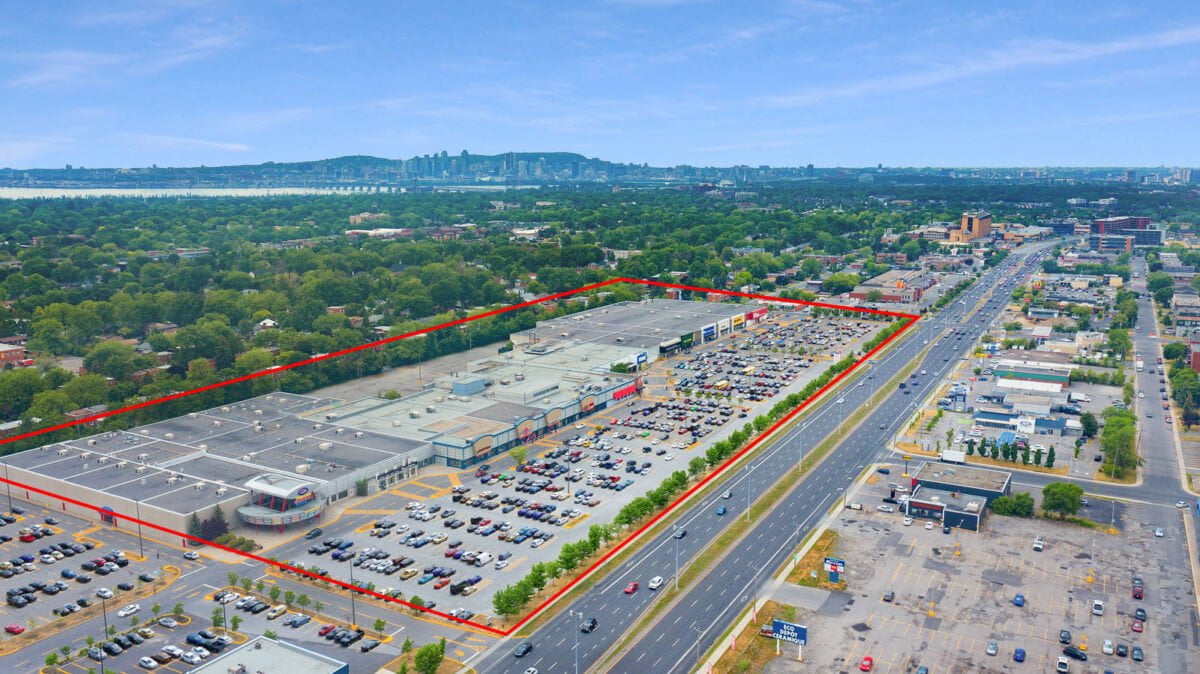
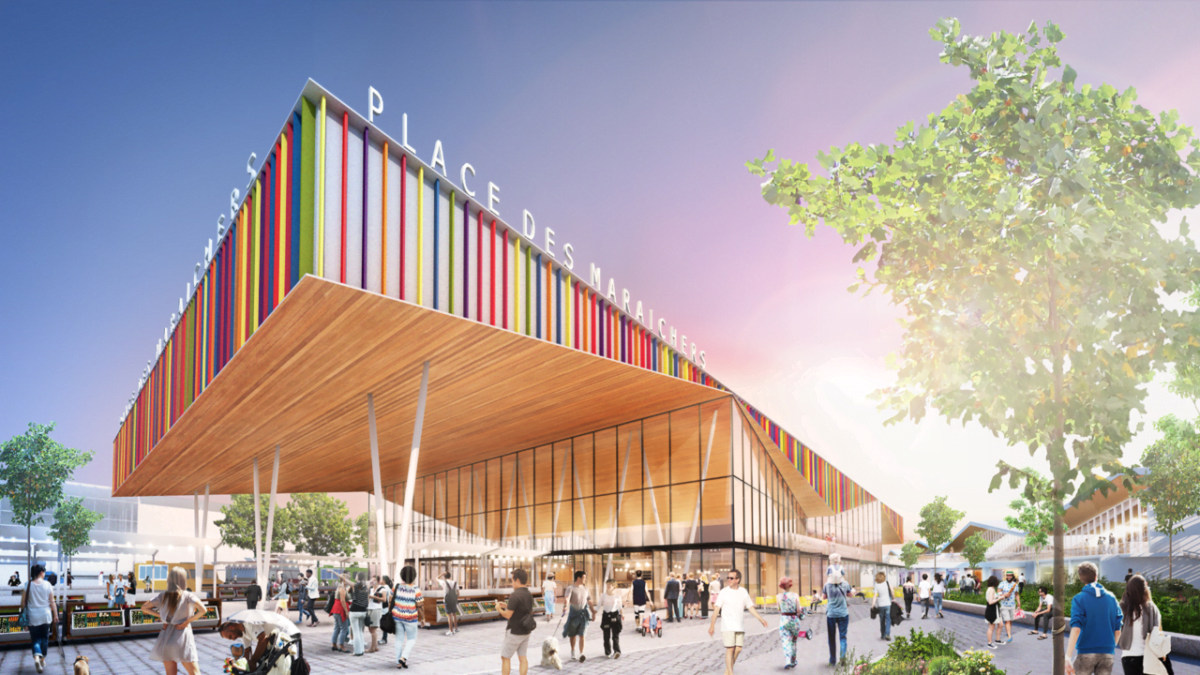
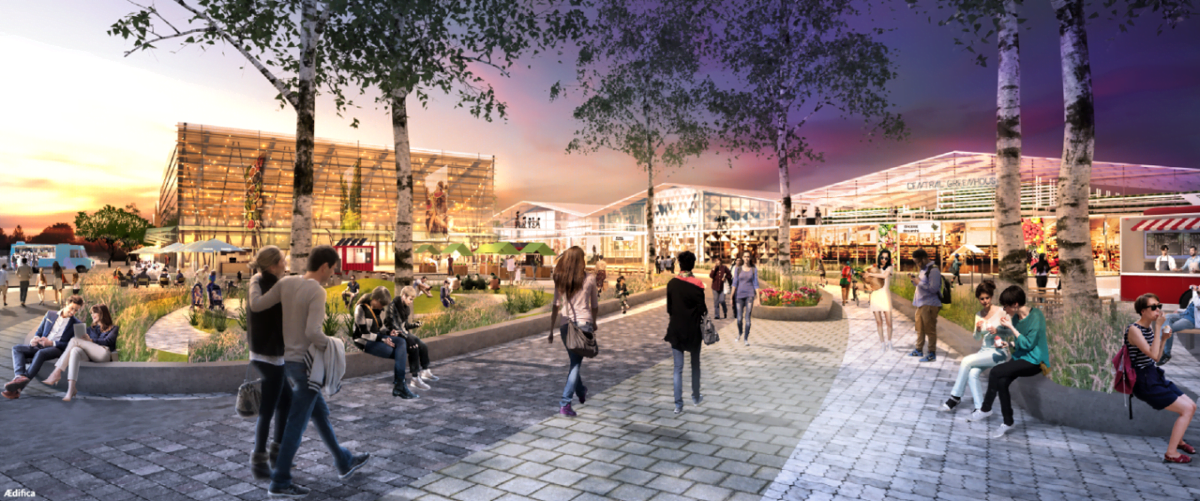
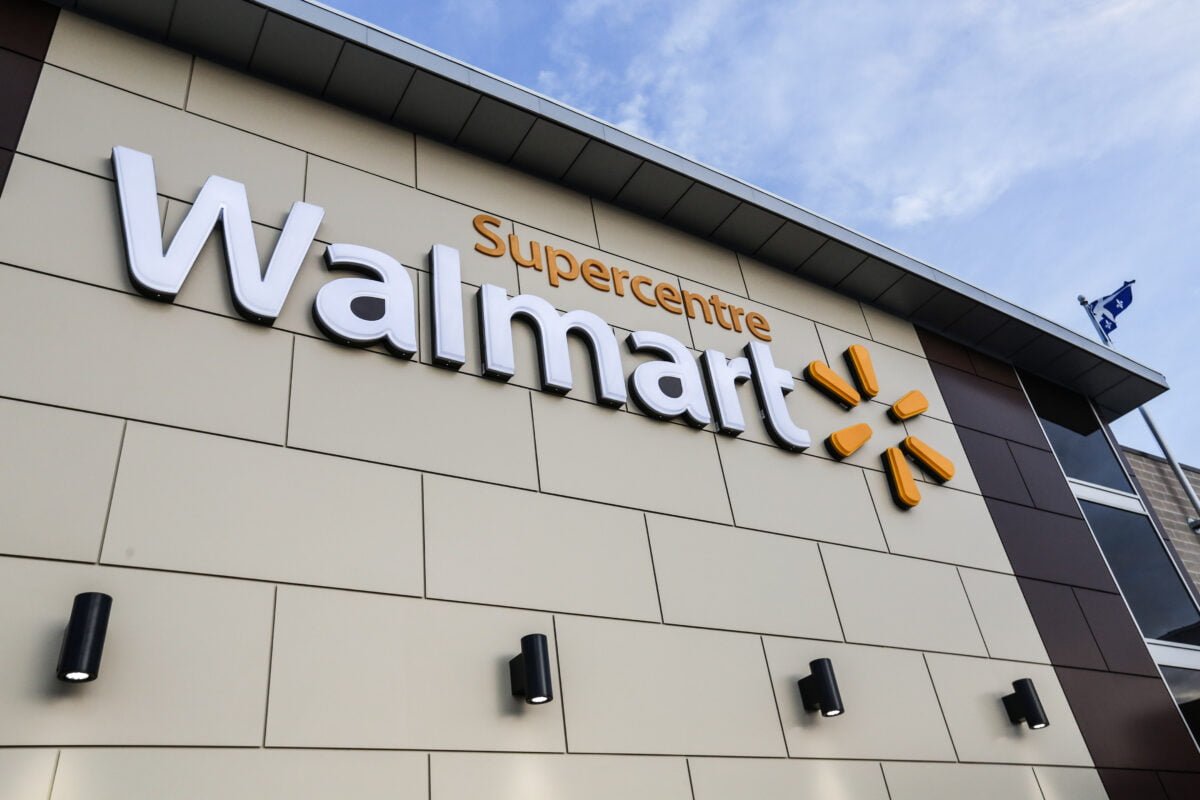
Walmart Canada will be opening a new state-of-the-art, 140,000-square-foot Supercentre with sustainable features, including a 125,000-square-foot green roof, in Marché Central, one of Canada’s top performing power centres and Montreal’s premier value shopping destination.
The store will open in the summer of 2023.
Walmart will be located in the shopping centre’s sixth retail phase on 30 acres of adjacent land which QuadReal Property Group has slated for development.
Andy Clydesdale
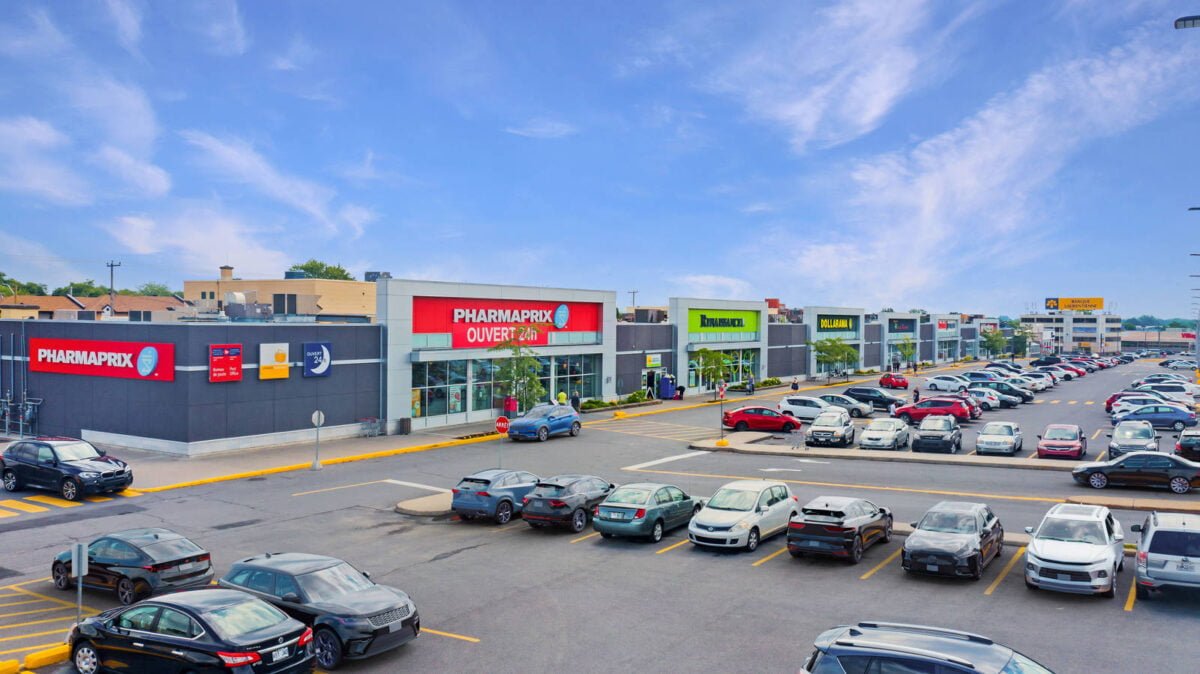
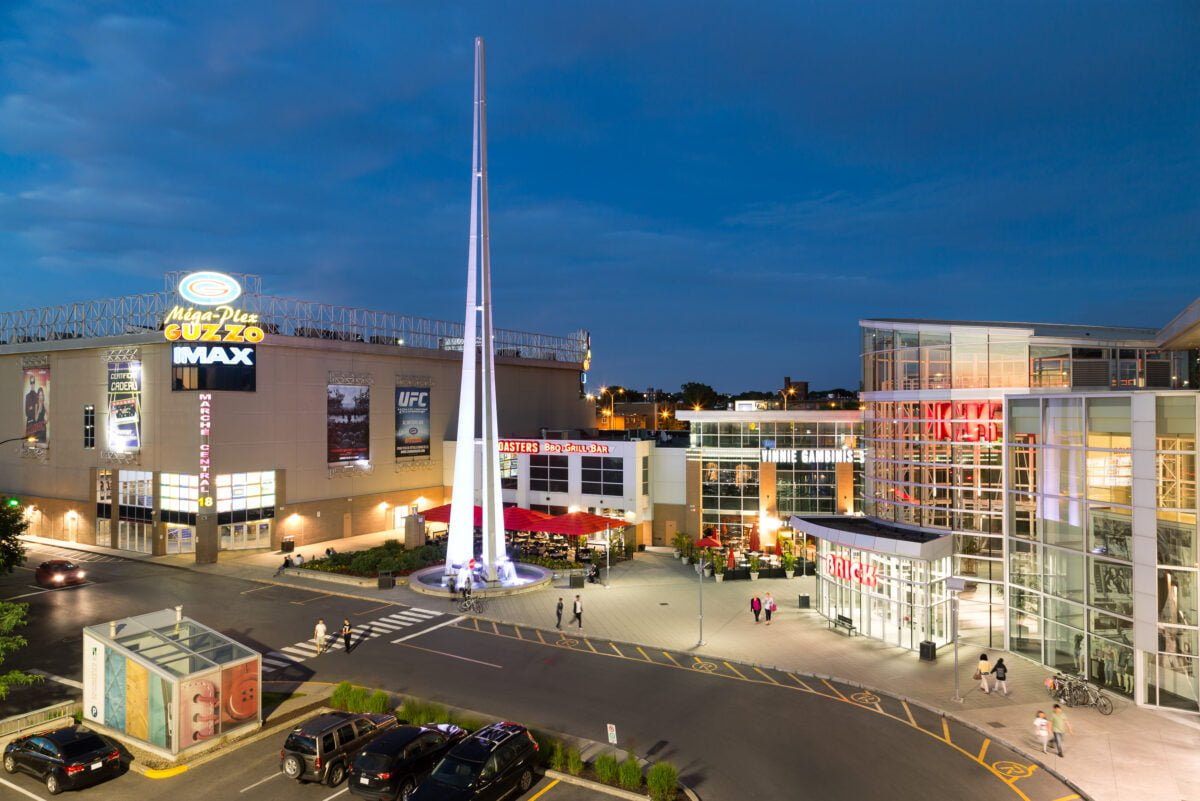
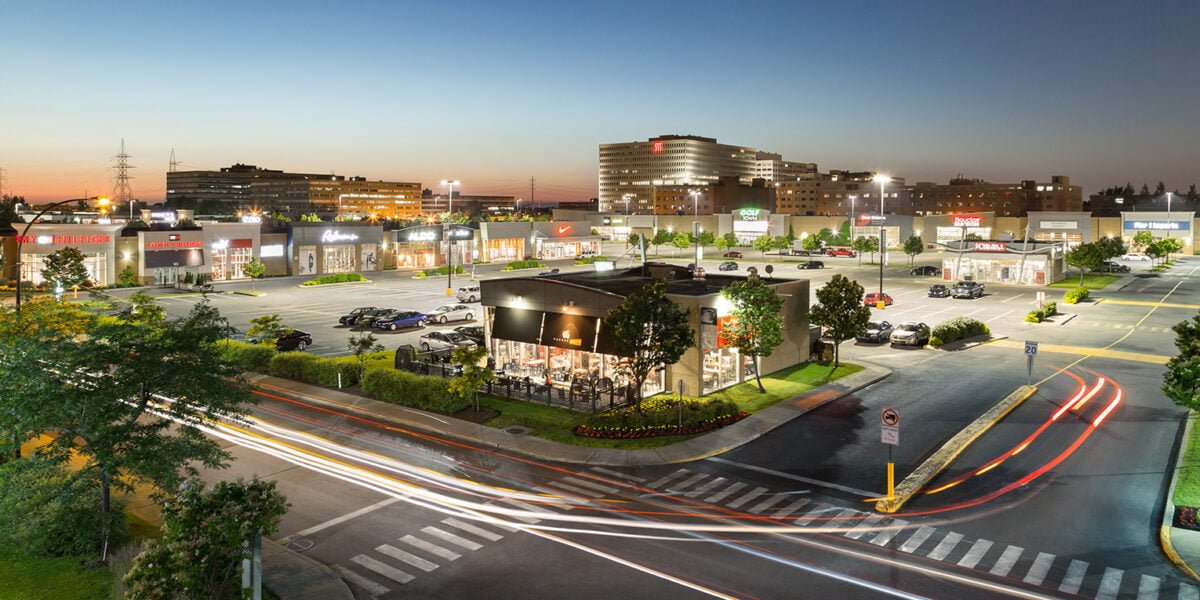
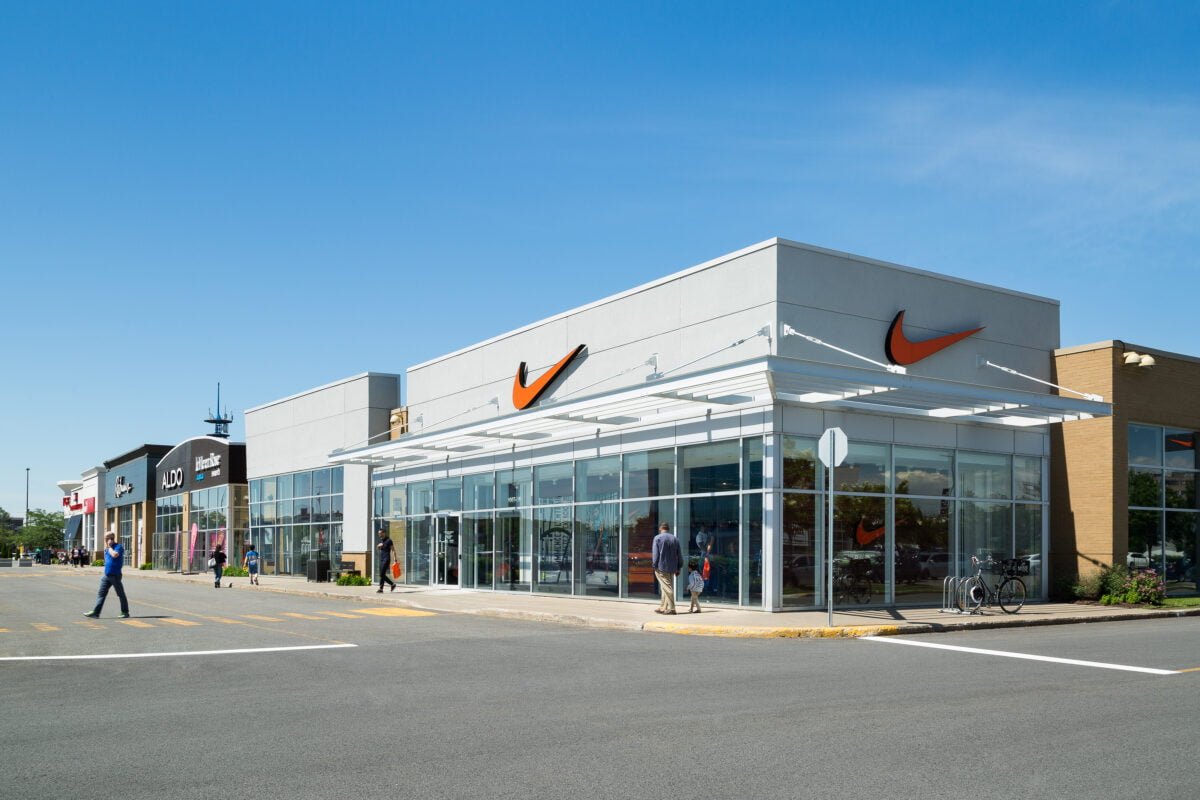
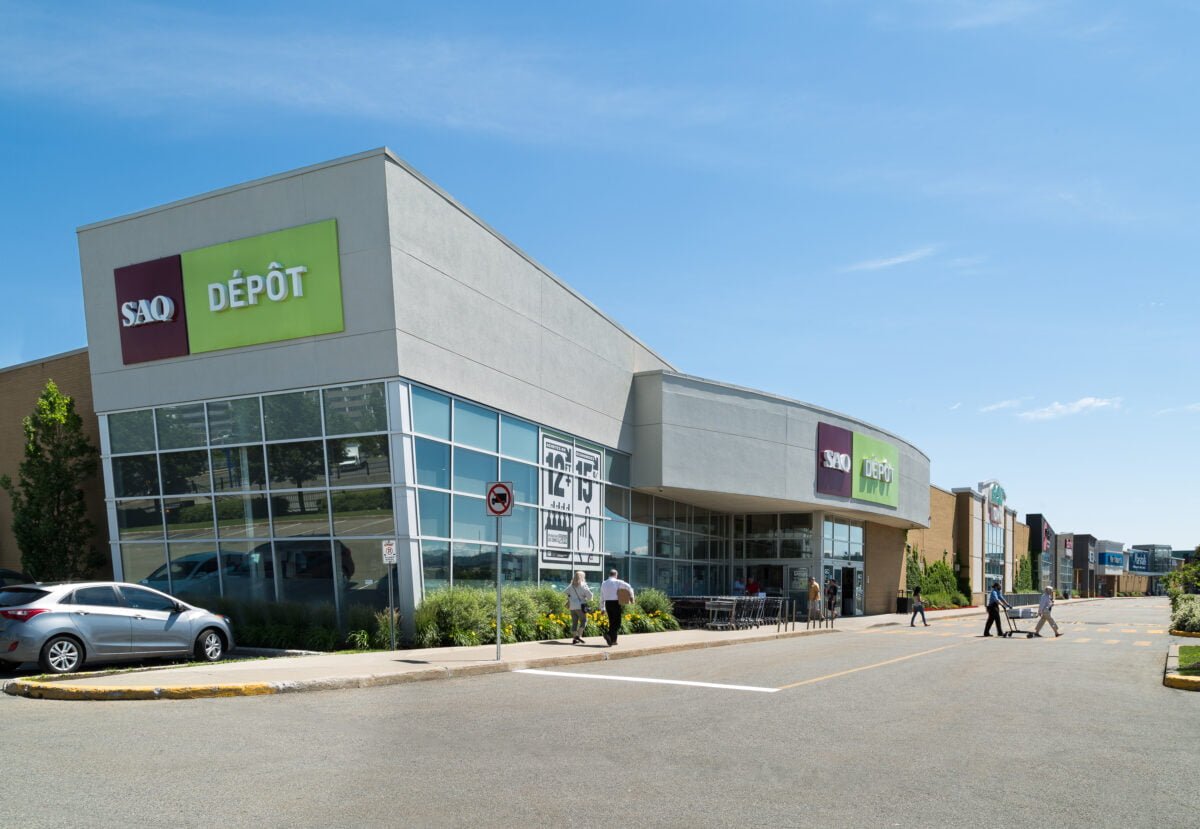
The shopping centre has five phases with a retail mix of 60 tenants in an open, large format with 16 campus-style buildings equalling a gross leasable area of over one million square feet.
“We are thrilled to be adding Walmart Canada to our retail offering at Marché Central, especially a partner who shares QuadReal’s commitment to environmental responsibility through waste reduction, waste management and green roofs,” said Andy Clydesdale, Executive Vice President, QuadReal Property Group. “Our goal with Marché Central’s Phase 6 expansion is to strengthen the value-oriented offering, enhance tenant synergies and solidify Marché Central’s dominant position in both Montreal and Canada. Walmart is central to that retail strategy.”
Marché Central has a strong roster of national tenants such as Costco, Réno-Depot, TJX brands and Staples.
Marché Central (Image: QuadReal)Marché Central (Image: QuadReal)
Jay Camacho
“This Walmart addition is not only huge for us as we embark on our Phase 6 expansion, it, along with Costco on the other end, anchors the entire 100 acre project. We are very focused on adding to Marché Central’s already strong service and value-oriented tenant mix and we want to do that with partners who share our thinking as it relates to sustainability initiatives, green space, etc,” said Jay Camacho, Senior Vice President, Retail, QuadReal Property Group.
“From a food and beverage perspective, Giulietta Pizzeria, which offers homemade pasta and Neopolitan-style wood-fire oven pizzas and Zyara, which specializes in Lebanese and Mediterranean gastronomy are both recent additions to the Marché Central family. From a fashion perspective, we added a 6,600-square-foot American Eagle Outlet and a 7,500-square-foot Under Armour to our mix. Last, but not least, we welcomed Canada Computers at 10,000 square feet to our venue.
“As we expand our project, we are working on prioritizing active transportation on the site through safe and continuous pedestrian courses as well as, through the addition of a cycling network. Additionally, as we evolve the property, we are also very focused on creating an atmosphere that’s conducive to longer dwell time. Last, but not least, we are very fixated on creating a sense of place at Marché Central so stay tuned as we continue to activate our Public Square with our various programming initiatives. Coming up in May we have a great event to celebrate Spring complete with floral vendors, family craft workshops and more.”
Marché Central (Rendering: QuadReal)
Marché Central (Rendering: QuadReal)
Marché Central (Rendering: QuadReal)
Despite the pandemic, Camacho said Marché Central is literally a billboard for when the fundamentals are right, everything works like clockwork. It remained at 98 per cent occupancy throughout the pandemic which it attributes to a great retail mix as well as, location, location, location.
“When it comes to convenience, accessibility and visibility, this site is really second to none,” he said.
“Leasing for Phase 6 is well underway so expect more news to follow in the very near future.”
Marché Central (Image: QuadReal)Marché Central (Image: QuadReal)
Walmart said it will be hiring about 300 people to work at the Marché Central location and is investing approximately $20 million in the project.
Cyrille Ballereau
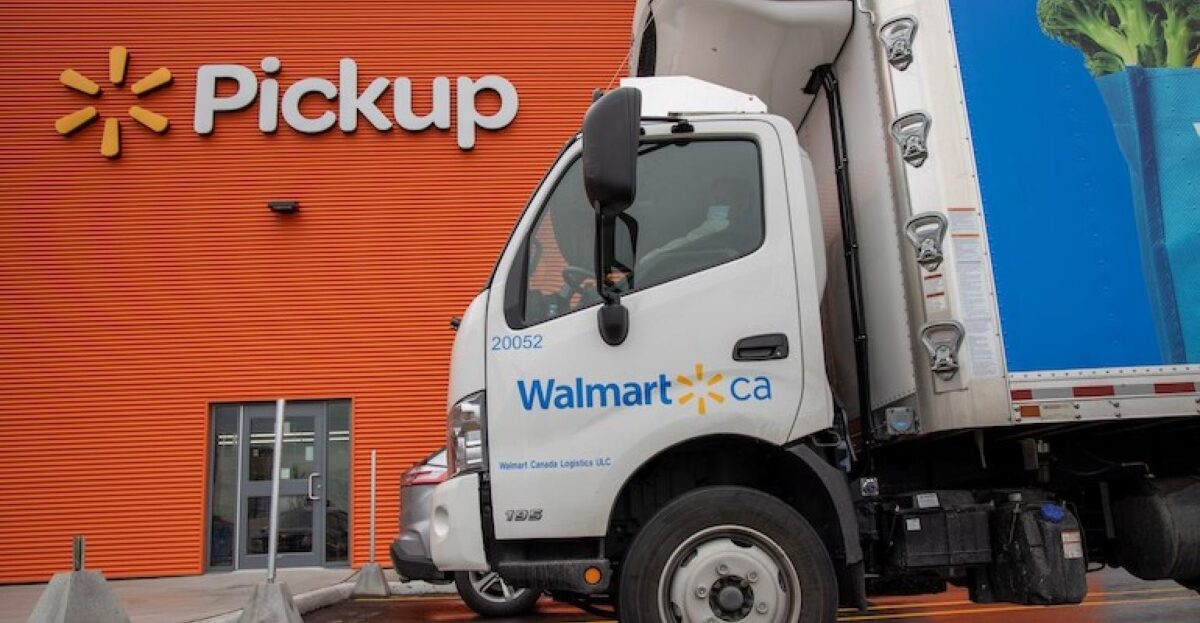
“Montreal is an extremely important market for us and we’re incredibly excited to be growing in Quebec and offering even more shopping options for our customers,” said Cyrille Ballereau, Walmart Canada Regional Vice President for Quebec. “We are always listening to our customers and this investment shows we’re committed to providing the best service possible at our everyday low prices. More Quebecers are choosing to shop with us online via curbside pickup and this unique store design will allow our associates to better serve busy families to save them time and money.
“We’re also implementing several sustainability features because Walmart’s goal is to make as light a footprint on the planet as we can. We can’t wait to open this store next year as we continue to grow in Quebec.”
The retailer has 71 stores in Quebec and more than 14,500 associates across the province.
The Marché Central Walmart will include:
A natural refrigerant for store refrigeration with a transcritical CO2 system;
LED lighting with advanced lighting controls throughout the store, backroom and offices;
Ultra-low flow lavatories, urinals and water closets;
Recycled content within building materials and low VOC finishes.
Image: Walmart Canada in Quebec
Walmart Canada’s sustainability plans for the store will complement those of QuadReal Property Group’s for the shopping venue which include:
Implementation of rain gardens within the parking area to manage water on-site (bio-retention);
Revegetation of the site for the reduction of heat island effect (bio-diversity);
Prioritization of active travel methods via safe and continuous pedestrian courses as well as the implementation of a cycling network (active mobility); and
Integration of additional electric vehicle charging stations.
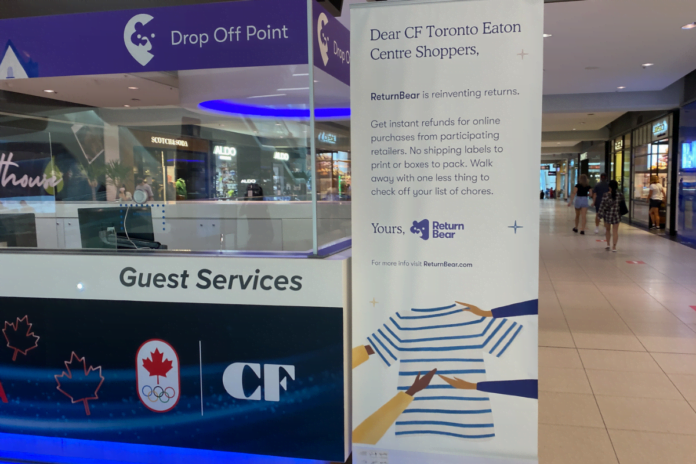
ReturnBear at CF Toronto Eaton Centre (Image: Dustin Fuhs)
Canada’s first end-to-end returns solution, ReturnBear, is expanding its national footprint in premier Cadillac Fairview malls in Ontario, Quebec, Alberta, British Columbia and Manitoba.
Sylvia Ng
“The growth of e-commerce has spotlighted one of online retail’s biggest problems: returns. More online shopping means more online returns. Returns are costly for merchants and a hassle for customers, and up until now there has been no streamlined process to make this easier for Canadians,” said Sylvia Ng, CEO of ReturnBear. “We are on a mission to make retail returns easy and accessible for everyone. We are proud to expand ReturnBear and provide a cross-country solution for Canadian retailers and shoppers alike.”
ReturnBear, which is backed by Cadillac Fairview and the Ontario Teachers’ Pension Plan, was established in October of last year.
“We’re an end- to-end returns solution with a focus on Canadian retailers. What we’re trying to do with ReturnBear is to make returns honestly just really easy for the consumer and efficient for the retailer and then obviously through those two things make it better for the planet because it’s a huge environmental problem,” said Ng.
Image: ReturnBear
Canadians can now find ReturnBear in the following CF locations:
Ontario
● CF Toronto Eaton Centre
● CF Fairview Mall
● CF Sherway Gardens
● CF Fairview Park
Quebec
● CF Carrefour Laval
● CF Promenade St Bruno
Alberta
● CF Chinook Centre
British Columbia
● CF Pacific Centre
● CF Richmond Centre
Manitoba
● CF Polo Park
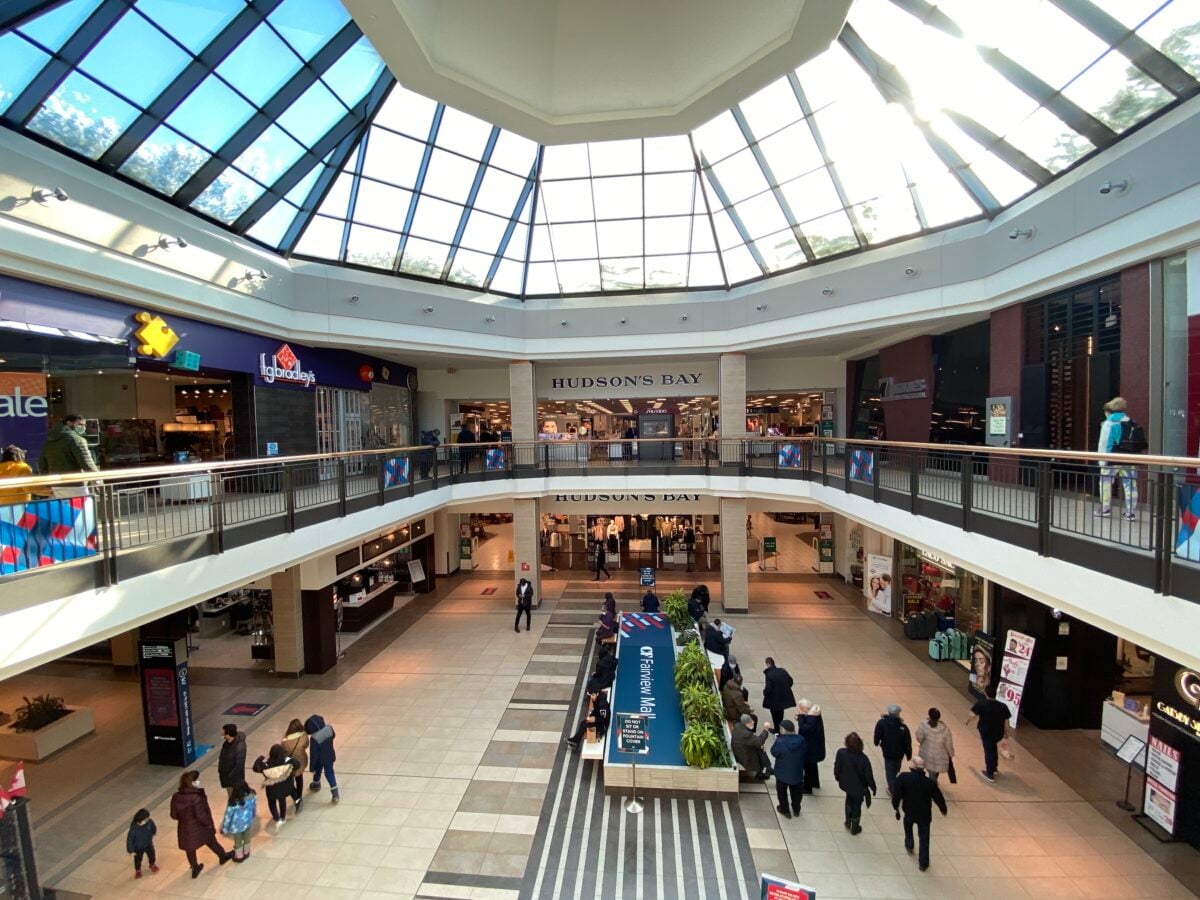
CF Fairview Mall (Image: Dustin Fuhs)
Ng said ReturnBear has convenient new package-free drop off locations, enhanced product offerings, and new merchant partners. Its SaaS solution has been updated to include a merchant admin app to manage return operations, analytics to monitor return trends, a consumer experience designed to make self-serve returns quick and convenient, and a tablet application for ReturnBear kiosk staff to efficiently accept returns and process exchanges, refunds or store credit.
The expansion comes in tandem with ReturnBear adding new retailers to its merchant-base, including Mint Green Group (home to household brands like K-Swiss), Franc, California Cowboy and Numi, said the company.
Jose Ribau
“When we announced our partnership with ReturnBear last year, we knew Canadians would respond positively to the unique, multi-retailer return offering,” said JoseRibau, Executive Vice President, Digital and Innovation at Cadillac Fairview. “We recognize shoppers’ pain points when it comes to online returns and are prioritizing convenience through national expansion across our CF properties, as well as support for retailers by reducing reverse logistics costs and operational challenges when it comes to returns. It’s a win-win for everyone.”
Ng said Canada is a large and geographically dispersed country, making shipping costs very high. The national expansion of ReturnBear is in locations that are close and convenient to consumers.
“It’s almost like you and I in our daily commutes would almost pass by one of these Cadillac Fairview malls and in that case it’s easy to return something as part of your daily commute. With those savings we are helping the environment as well as helping the retailers take those goods back in a more efficient way,” she said.
The first two ReturnBear locations started in Toronto.
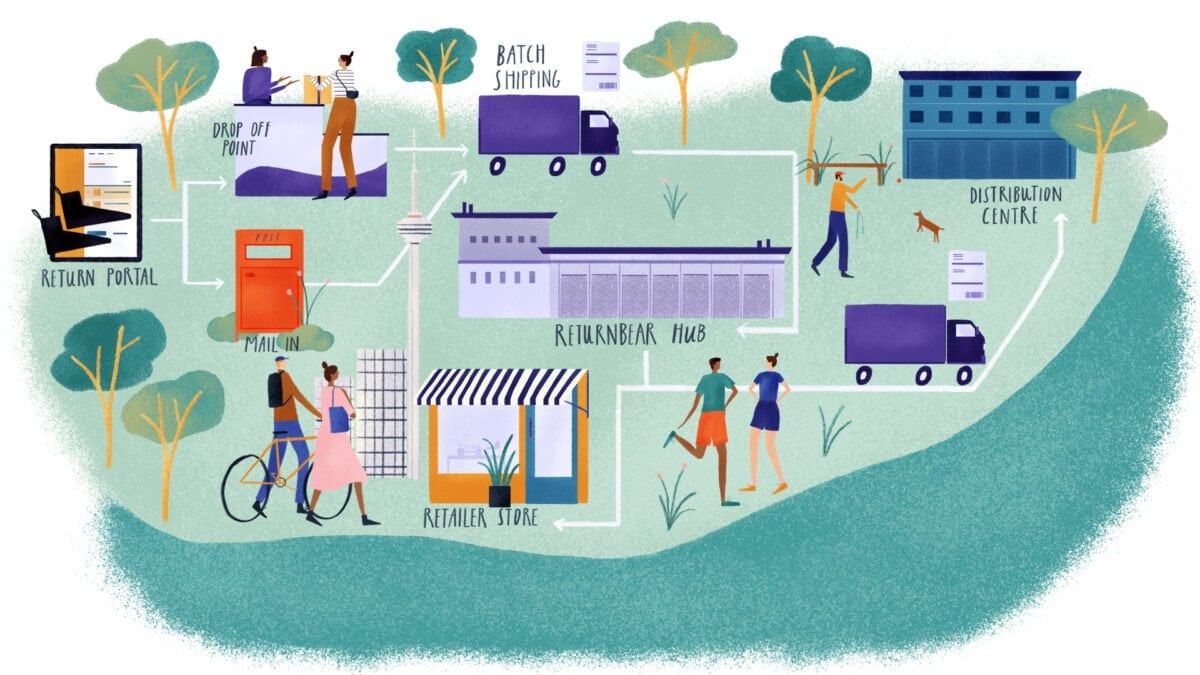
ReturnBear said it simplifies the end-to-end return experience by streamlining the process for retailers, providing a one-stop solution where shoppers can drop off their returns without printing labels, repacking their products, or having to wait in line at a post office. ReturnBear’s software is integrated into the merchant’s website, providing a self-serve experience for customers to initiate returns and exchanges, and choose the drop-off or mail-in option for their return that is most convenient to them.
Merchants that use ReturnBear can offer a self-serve return and exchange experience to their retail customers, providing an automated return process that is consistent with existing in-store and e-commerce practices, and the convenience of packaging-free drop-off options. ReturnBear’s hands-on item quality control, repacking, and batch shipping ensure that products get back into forward supply faster – saving brands money, and reducing the risk of product waste. With features that include store credit bonuses, the ability to create custom return rules, and analytics that help retailers identify patterns and opportunities for improvements, ReturnBear removes manual intervention from merchants’ online returns operations, and helps them bring more convenient experiences to their customers.
Image: ReturnBear
“We basically offer retailers two main things. The software components to handle returns and exchanges and the logistical component of handling returns and exchanges,” said Ng.
“On the software side, what we provide a retailer is a few things. One is a consumer-facing application for the consumer to actually do self-serve returns. We also offer a software application for the retailer to manage all those returns . . . There’s also reporting and analytics for them to optimize all of their entire system.
“There’s actually a third app that we give them for their retail locations to be scanning the returns in and hook into our system that way.
“On the logistical side, we help the retailer . . . when the consumer drops off their item into the mall, we take it and we do the processing on the retailer’s behalf. We will check to see if it’s in a resellable condition. If it is, we will re-pack it, see if there’s any refurbishing required, and pack it back into the condition they need to be to be sold immediately. So by the time it gets back to their warehouse or into their brick and mortar location it is completely ready to sell. And we are able to do that a lot faster than most retailers are able to do it themselves.”
Retail Insider is streamlining its Canadian retail news from around the web to include a handful of top news stories that can be viewed quickly during the day. Here are the top stories from the past 24 hours.
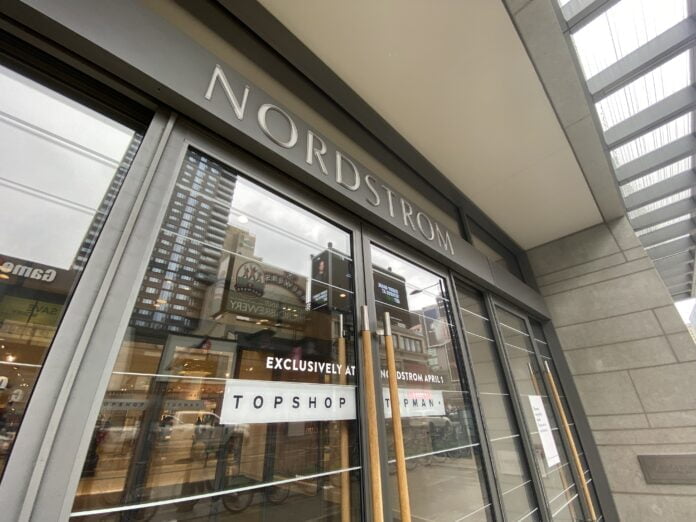
Following Topshop’s exit from Hudson’s Bay last year, Nordstrom is introducing the line to its Canadian stores and ecommerce site as of April 1. Topshop entered the Canadian market about 11 years ago with shop-in-stores at Hudson’s Bay and the partnership ended following Topshop’s bankruptcy and subsequent acquisition by ASOS last year.
The Topshop 2.0 expansion in Canada won’t be nearly as grand as the one a decade ago. Nordstrom’s six Canadian stores will carry Topshop fashions for women and Topman fashions for men, as will Nordstrom’s Canadian e-commerce site. The Nordstrom stores in Vancouver, Calgary, Ottawa and Toronto will feature an assortment of women’s and men’s clothing, swimwear and bags, being considerably less in terms of selection compared to some of the larger Topshop locations that opened within Hudson’s Bay a decade ago, including a massive 33,000 square foot shop-in-store in downtown Vancouver that was the largest international location for the retailer at the time.
Topshop owner Arcadia Group went into administration (bankruptcy protection) in November of 2020 and ASOS acquired Topshop in February of 2021. ASOS said that it was planning on closing all of Topshop/Topman’s stores while taking the brand online through ASOS’ channels.
Hudson’s Bay is said to have not been able to have come to an agreement with ASOS to keep carrying Topshop in Canada. A source said that ASOS subsequently gave Nordstrom the green light to bring the brand back to the Canadian market. After losing Topshop, Hudson’s Bay partnered with YM Inc. to launch the Forever 21 brand at Hudson’s Bay stores for the first time.
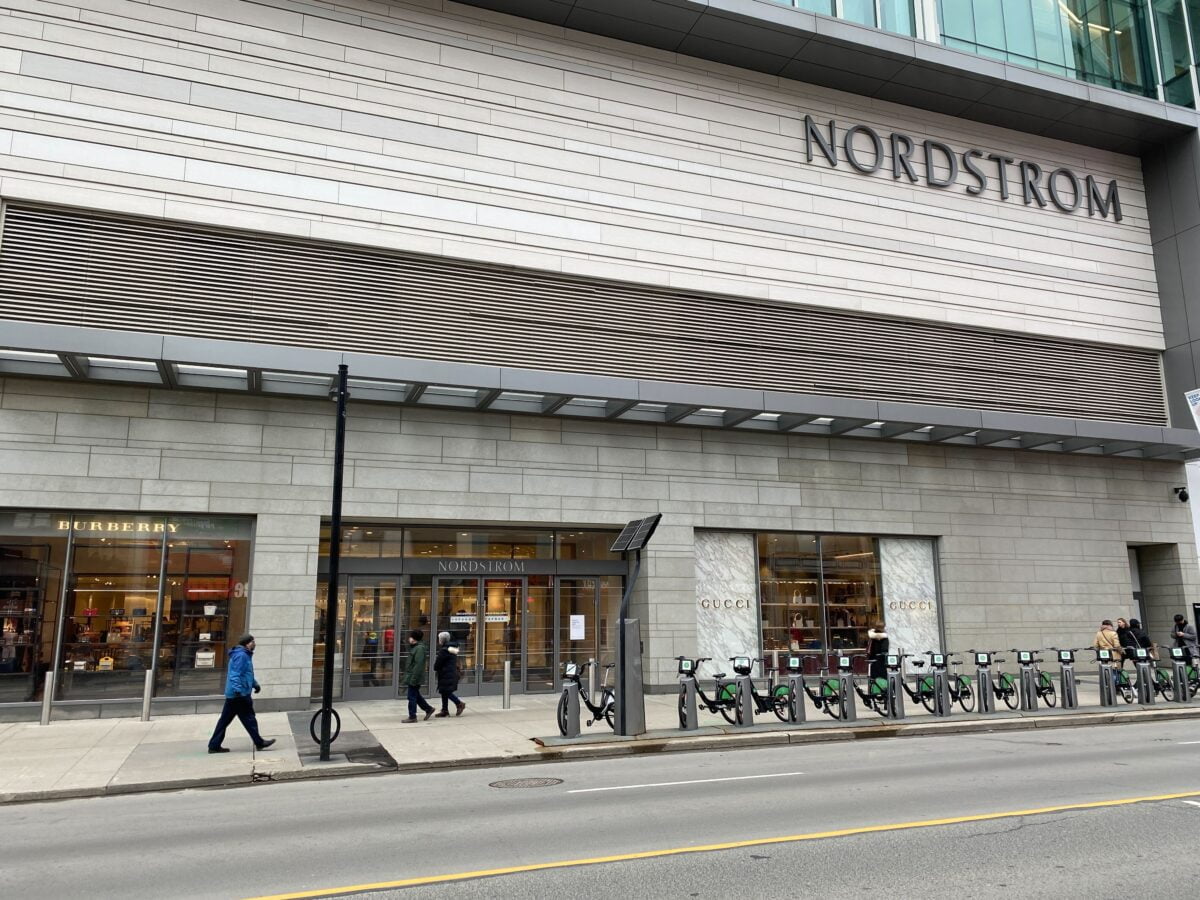
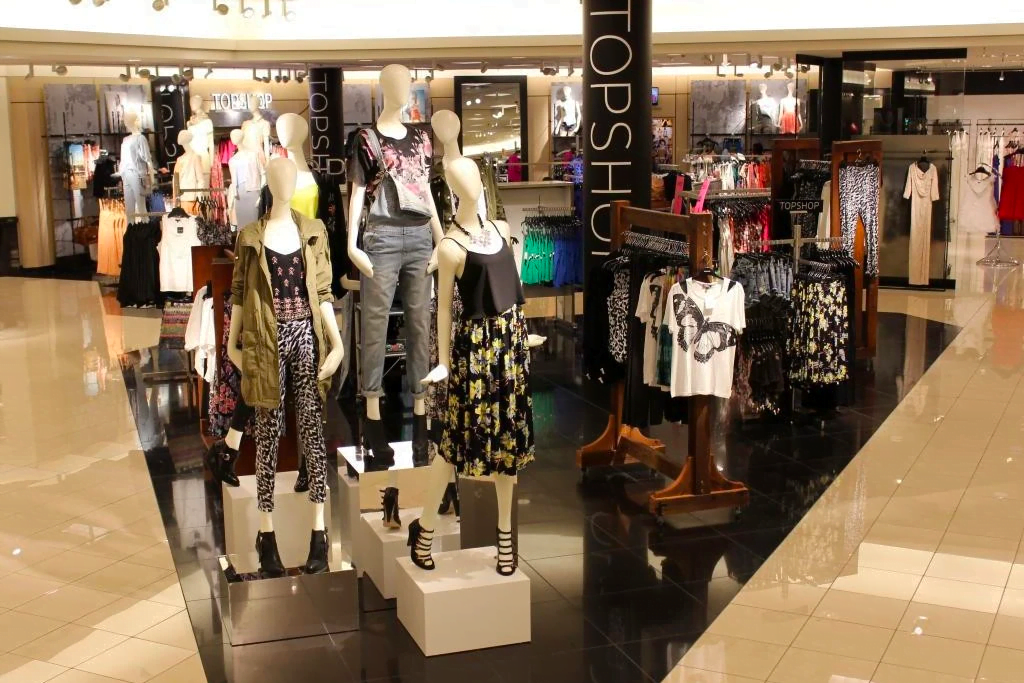
Exterior of Nordstrom at CF Toronto Eaton Centre. Photo: Dustin FuhsTopshop at Nordstrom, Dadeland Mall in Miami. Photo: Nordstrom
Image: TOPSHOP
IMAGE: TOPMAN
Topshop opened its first Canadian shop-in-store in 2010 temporarily at retailer Jonathan and Olivia on Ossington Avenue in Toronto. Following a partnership announcement in 2011 with HBC, the first large Topshop/Topman storefront in Canada opened in Hudson’s Bay at Toronto’s Yorkdale Shopping Centre in October of that year, spanning about 15,000 square feet over two levels. A rollout of larger Topshop stores followed for several years in major markets. The rollout continued with some Bay stores seeing separate smaller Topshop and Topman department areas added rather than fully branded shop-in-stores.
In 2011, then CEO Bonnie Brooks said that the retailer had plans for about 50 Topshop locations in Canada as part of a significant shakeup for Hudson’s Bay. Brooks was hired by HBC owner Richard Baker to increase sales in Bay stores which included new retail partnerships while at the same time dropping hundreds of underperforming brands. Topshop alone was expected to increase sales in Bay stores by about 10%. Baker said at the time that Topshop was expected to sell about $700 a square foot in its spaces, an impressive number considering that sales at most Bay stores were less than $200 per square foot in most departments at the time.
Topshop started as a brand extension of the Peter Robinson department store chain in London in 1964 and sold women’s fashions by young British designers such as Mary Quant and Stirling Cooper. Topshop was spun off as its own store and in 1978, the men’s division called Topman was also launched.
Prior to the bankruptcy, Topshop/Topman operated over 500 stores globally with about 300 of those being located in the UK. Topshop entered the US market in 2007 and had 11 large flagship stores in major cities. In the spring of 2019, the US division filed for bankruptcy and all of its stores subsequently shuttered.
Retail giant Walmart Canada’s massive $3.5 billion investment in the country is a clear indication of the brand’s confidence in this market and its intention for future growth in both its physical stores and its e-commerce business.
“Honestly, we were a little bit behind in terms of e-comm a couple of years ago so we needed to really accelerate our investments and capabilities but also rejuvenate the stores,” said Horacio Barbeito, President and CEO, Walmart Canada, in an exclusive interview with Retail Insider.
“Our five-year plan five years ago did not have the level of investments that we’re doing in Canada and now we are going to be deploying $3.5 billion. This year we are going to be investing $1 billion.
“When you see how this $3.5 billion breaks down it is along the supply chain and our capabilities to back up that growth in e-com, it is a lot in store remodeling, rejuvenating the store fleet, it is a lot about technology. Those are the three main streams of investment. In Canada, we have been very successful for 27 years. The reason to keep on investing is this is a successful operation for Walmart and we wanted to actually bring forward some investment to rejuvenate it. Almost relaunching Walmart Canada in the same big important impact that Walmart Canada had in lowering the cost of living for Canadians when we entered the market, now we want to make sure that we provide not only those low prices every day but also access to goods and services at the lowest prices every day.”
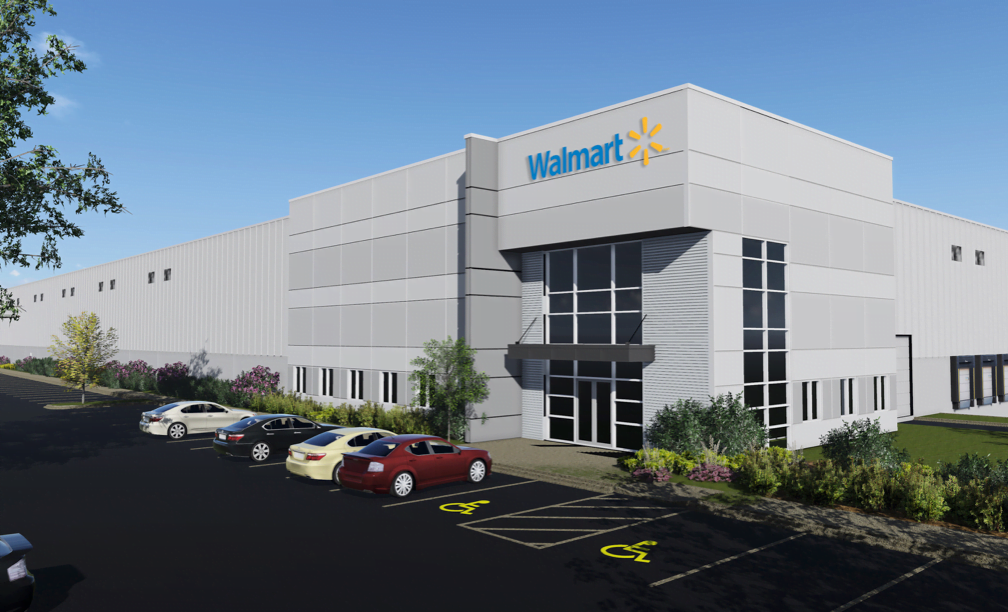
Walmart Canada continues to accelerate its commitment to its omni-channel network across the country with the announcement Monday of a new $118-million, 430,000-square-foot fulfillment centre in Rocky View County, which is located just north of Calgary’s city limits. (Rendering: Walmart Canada)
Barbeito spoke exclusively to Retail Insider following an official news conference recently in the Calgary area to announce a new $118-million, 430,000-square-foot fulfillment centre in Rocky View County, which is located just north of Calgary’s city limits. The retailer said the facility is slated to open in September 2022 and Walmart customers will see better product availability and quicker service whether they choose to shop in-store or online at Walmart.ca.
Including the new facility in the Calgary area, and the ones under construction in Surrey, Moncton and Vaughan, there will eventually be a total of 17 across the country – a combination of distribution and fulfillment centres with a total square footage of approximately nine million.
The new facility in the Calgary area is located in High Plains Industrial Park and it is the third Walmart industrial real estate facility in Rocky View County. The other two centres in the area, of 428,000 square feet and 400,000 square feet, were constructed about 12 years ago and seven years ago.
Barbeito said the investment in rejuvenating the stores is important.
Image: Walmart Canada
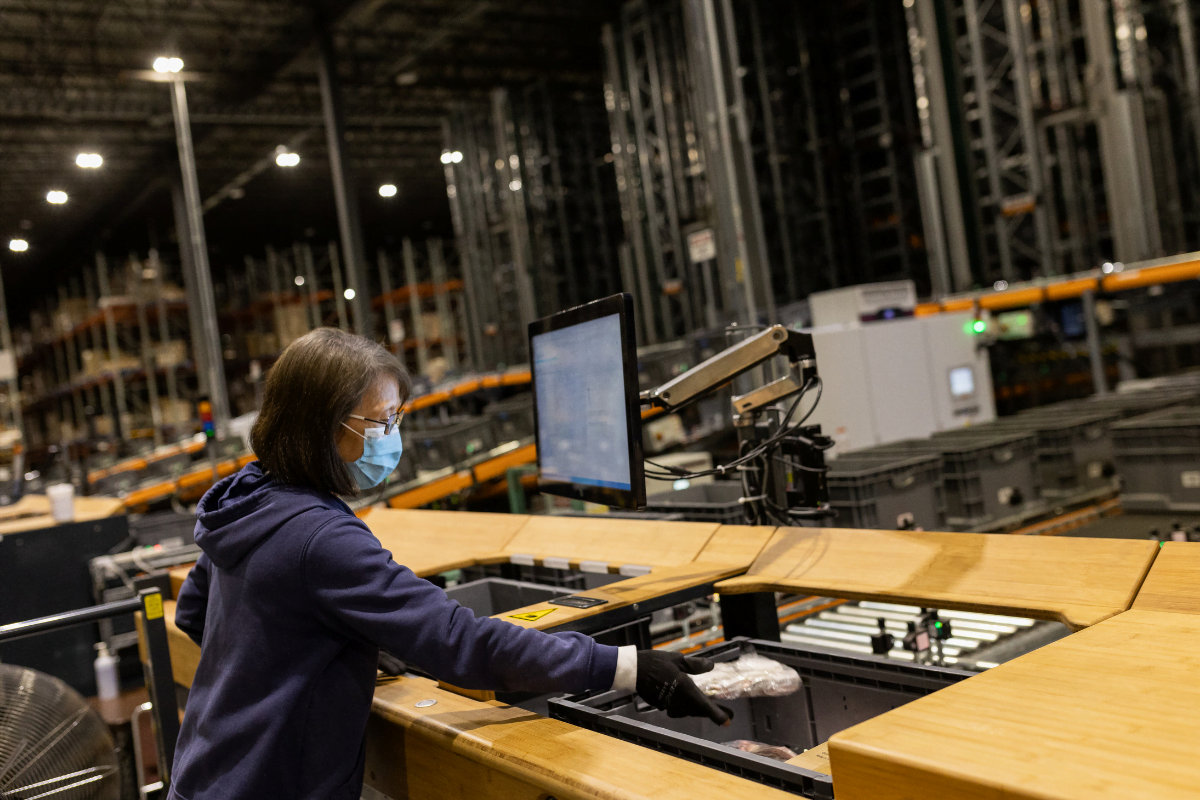
“The stores were designed for a brick and mortar only business. The largest population on any given retail has always been the check out associates. Right now the biggest population of associates that we have in Walmart Canada, 39,000 of them, are people working in fulfilling orders either for in-store pickup or delivery or delivery from fulfillment centres,” he said.
“So the jobs are changing and our stores need to change with that.”
He cited the Walmart Supercentre in Scarborough, Ontario as an example – one of the most successful stores the brand has in Canada which will be integrating a micro-fulfillment centre in back of store. The store in Vaughan has a hybrid with a replicated assortment in the back of the store for online and delivery.
“We have stores where last-mile shoppers, so partners like Door Dash, Instacart or last-milers, the gig economy going to our stores to fulfill orders for customers,” said Barbeito. “So where we are is really adapting the store for a future that is different than what we had when we opened many of those supercentres.”
Barbeito said the company will keep opening stores where it makes sense in growth markets or where certain markets are under-served.
Walmart Canada at Gerrard Square in Toronto (Image: Dustin Fuhs)
“But the big, the big, focus is on remodeling our footprint. We are within 30 minutes of 90 per cent of the average Canadian. So our focus is on building these capabilities to get faster to doorsteps and technology to make our associates’ life easier to work better and faster and productively. And our customers to interact with us in a more digital way, not only traditional in person.”
Barbeito said more than 60 stores in Canada have a grocery component to them.
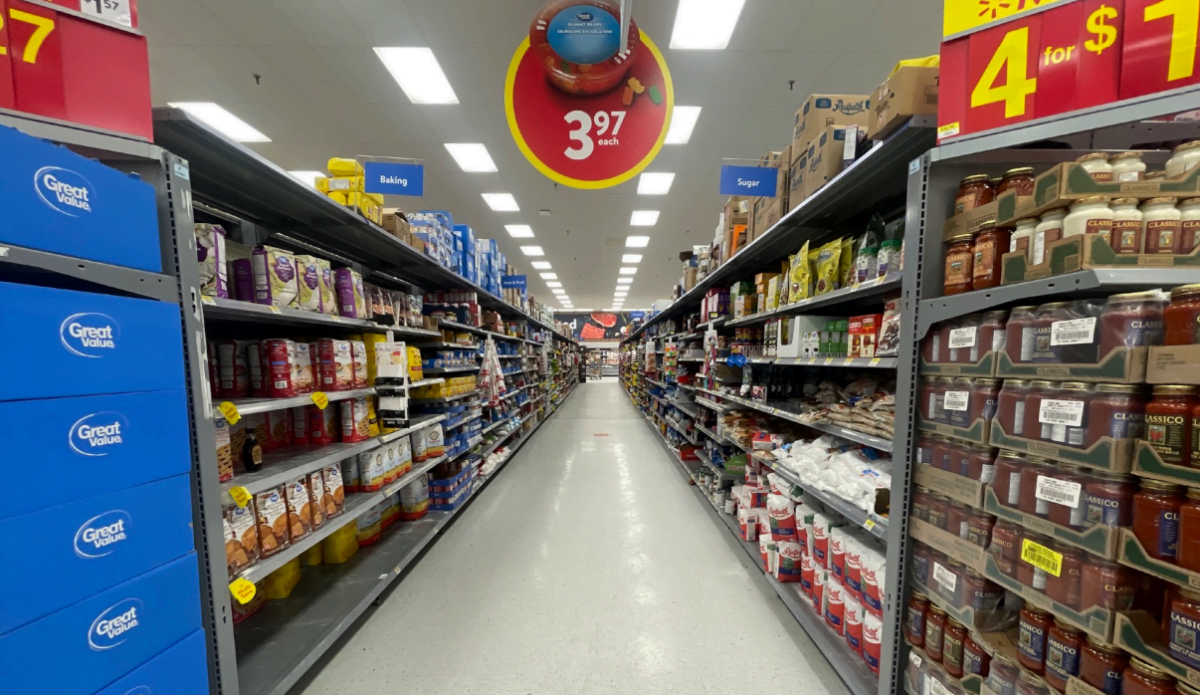
“Grocery for us is a very, very important business,” he said. “I think the last two years with the challenge the food service had faced, the at-home economy is here to stay in many aspects. There are micro-trends about cooking more at home, fitness at home, studying at home, working from home, even when we come back to the office, it’s not going to be the same.
“So the at-home economy is a micro-trend that food groceries for the home categories is going to be super important. Consumers will shift their way of spending.”
Image: Walmart Canada
Investment in its people has also been an important initiative for Walmart Canada. As soon as the pandemic started, it announced it was going to be hiring 10,000 new associates and reach out to people in distressed industries such as hospitality and apparel.
“We were really proud in such tough times to be able to hire more associates,” he said, adding Walmart Canada has more than 100,000 associates in the country.
“The investments we have done have been around wellbeing. We have now 100,000 associates and their families with access to EQ care which is telemedicine, permanently, and we will keep doing that throughout the pandemic. We have incorporated something that the associates really, really have welcomed, that is 20 per cent discounts on days for associates which help them a lot in stretching their income. And we have invested a lot in wellbeing and a better balance for live and work. We partnered with the Thrive (Thrive Global, the behaviour change technology company founded by Arianna Huffington) where associates have access to a platform in their phones to work on their wellbeing.”
Barbeito said another big focus is the development of a certification for leaders within the company on mental health management so they can be better leaders and address mental health in the workplace.
Walmart Canada Distribution Centre in Cornwall, Ontario (Image: Walmart Canada)
“We want to be the best employer we can be and that starts with the associates in the centres and our associate value proposition not only is about pay, it is important and will always be important, but also how we support their wellbeing,” he said.
Barbeito said Walmart is not exempt from the labour challenges currently experienced across the retail sector. But there is opportunity for the company as it strives to be the best employer of choice for people.
“I think we’re making big strides on making sure it’s not only just the first job because it is retail and many of us started our first jobs in the business but it’s also the career ladder and we say also the career passports for people to explore opportunities in operations, merchandising, merchants that come into our operations, people that move across the country and experience different markets. We actually feel that we could be a great place for diverse talent to unleash their potential,” he added.
Canada is currently in a time of high inflationary pressure with prices and Barbeito describes inflation like a tax on the lowest socio-economic levels.
Dufferin Mall Walmart Supercentre in Toronto (Image: FieldAgent Canada)
“As a team we are very, very committed in making sure that we’re going to fight inflation. We are not naive to say ignore what’s going on with the energy costs and the commodity surge, so we have asked our suppliers also to be very responsible to make sure we work together on going after the lowest possible cost. In our culture, we want to go for the lowest possible retail to put to our customers,” he said.
“We are committed and actually we have been investing a lot of time in how can we go lower in prices. You have right now a Rollback campaign, you have right now private labels items. It’s tough times for our customers and we want to be on the side of being agents for them to be able to stretch their incomes.”
In Canada, the retailer has more than 400 stores with 1.5 million customers every day. Its online store is also visited by more than 1.5 million customers on a daily basis.
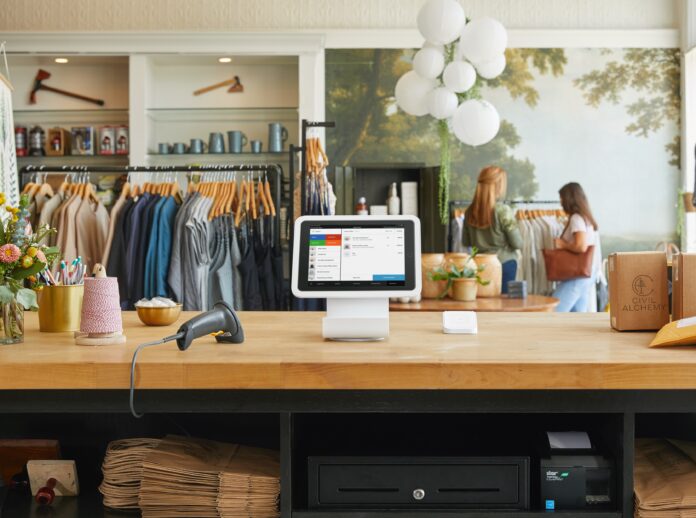
The retail industry in Canada is constantly evolving. Traditionally driven by a combination of shifting market conditions, evolving consumer behaviour and relentless merchant innovation, the retail landscape continues to become more diverse within an expanding shopping ecosystem. It’s change and evolution that’s perpetual and has forever been recognized as one of the retail industry’s most unique and differentiating qualities. However, as a result of a recently accelerated digitization of the world around us, the pace of change within the industry has been dramatically hastened, requiring merchants to adapt quickly in order to ensure the continued growth and success of their brands. According to Roshan Jhunja, GM for Retail at Square, it’s a transition into a new digital frontier that is presenting those operating across the country with significant challenges to overcome, and a number of big growth opportunities as well.
“Retailers across the country, generally speaking, have always done a really good job of taking care of their customers in-store,” he says. “But many are still navigating the new digital world and the challenges and opportunities inherent in managing online business. As a result of the impacts of the pandemic, and the subsequent surge in online sales, much of the retail industry was compelled to develop or enhance their ecommerce offering and capabilities almost overnight. When selling online, including social channels, retailers must provide a really thorough description and dynamic imagery of every item they want to sell while ensuring compliance with the requirements of the marketplaces that they’re selling on. But, most importantly, they’ve got to maintain an acute awareness of their inventory. The last thing a retailer wants is for one of their customers to make a purchase, completing the transaction, for an item that is no longer available, resulting in a significant amount of dissatisfaction and disappointment, and a lack of trust in your online channels.”
Rise of social commerce
Roshan Jhunja
Jhunja goes on to explain that the expansion of online retail to include additional channels of commerce has added to the complexities of selling online. A rise in the use of social commerce by Canadian consumers who are increasingly leveraging platforms like Facebook, Instagram, Twitter, Pinterest and Snapchat to explore product and make purchases is one of the primary drivers of the current expansion. They are channels lending further to the growth of the retail omnichannel ecosystem, presenting merchants with even more ways and opportunities to engage with and attract customers. It’s an expansion of commerce touchpoints that poses a number of different challenges for retailers to address. However, Jhunja believes that with the implementation of the right technologies, the challenges facing the industry when it comes to selling online can easily be overcome.
“Providing fulfillment is another aspect of ecommerce that’s proving difficult for a lot of retailers to get right,” he asserts. “For retailers that are relatively new to ecommerce, they’re discovering that there is a whole new set of workflows and behaviours required to ship product. And, there’s an expectation on the part of the consumer that the retailer is going to pick, pack, ship and deliver that item in a certain amount of time. They’re also increasingly expecting to receive and have access to tracking information as well as the ability to change order information during the shipping process. They are a set of challenges, including post-purchase management and the handling of returns, that brick-and-mortar retailers never had to contend with. It’s where technology can not only help address and solve these challenges, but can be leveraged to take advantage of some great opportunities as well.”
The power of data
Some of the opportunities that Jhunja refers to are rooted in a retailers’ willingness to truly embrace online channels as ways to further connect with their customers. He says that in doing so, merchants expose themselves to multiple circumstances which they can leverage in order to upsell, cross-sell and convert larger baskets. There are also a host of marketing, promotions and loyalty program opportunities that retailers can realize in efforts to support and facilitate the customer’s path of exploration and discovery. In addition, technology is not only the enabler of online commerce, it’s also instrumental in providing merchants with the ability to effectively and accurately manage their online business. However, Jhunja suggests that the greatest benefit that technology enables for brands is in the data and information that’s generated, providing them with a view into the behaviour, tastes and preferences of their customers and allowing them to offer a more personalized and seamless experience.
“Today’s consumer expects retailers to know what they’ve recently purchased from them independent of whether they bought that item in-person or online,” he says. “They expect retailers to know how and when they engaged with them and in what channels these engagements happened. Pre-pandemic, many across the industry viewed brick-and-mortar and online channels as two completely separate streams. But they’re beginning to recognize that truly omnichannel retail is simply one marketplace consisting of multiple channels of commerce and engagement that the customer expects to be able to traverse effortlessly and seamlessly. It’s a recognition that’s facilitating a real growth of the retail ecosystem where product might be discovered by the consumer in social media, clicked through to view in an online store, added to a cart, but not checked out. With the data that reflects this journey, retailers are able to follow up with the offer of an incentive to complete the purchase or to visit the physical store. The consumer’s shopping journey and purchase experience has changed dramatically in a short time. And, generating and leveraging data arms retailers with the insights and intelligence to be able to develop and offer the rich omnichannel experience that’s becoming a baseline expectation for consumers today.”
Centralized reporting informing better decisions
With the fount of data and information that’s available to retailers today concerning the behaviour, tastes and preferences of their consumers, the opportunity to develop a deep and meaningful understanding of them is immense. Jhunja explains that one of the biggest advantages and uses of the data that any retailer generates is the fact that it powers reports that can help merchants become even more granular and targeted with respect to the performance of their network of stores, marketing and promotions campaigns, and anything else. He says that it provides retailers with some direction, informing much of their business decisions. And, he adds, the fact that today’s technology centralizes all of the data in one place for merchants means that they’re enabled with the ability to make those important decisions based on a holistic view of their customers and operation.
“If a retailer is in a number of different channels today, it’s critically important for them to understand how they’re all performing. Part of this performance analysis includes mapping out how different products are selling across the different channels, allowing them to identify where changes might be made to their channel strategy, pricing, merchandising approach and everything else. Centralizing all of this information becomes really important for retailers, benefitting them in ways they could never have imagined. It truly is a digital world today. The retail environment is transforming, influencing consumer behaviour and driving an increased set of expectations. As a result, in order to keep up with the pace of change and ensure that they continue to satisfy consumer tastes and preferences when it comes to the shopping journey, retailers are increasingly looking to the latest in technology, helping them manage their online business, find efficiencies and offer the consumer a delightful online experience, meeting and exceeding their expectations.”
For information concerning the ways Square and its suite of commerce solutions can help your business optimize opportunities for success and growth in an increasingly digitized world, visit https://squareup.com/ca/en