Etsy, the online marketplace for handmade and vintage goods, sold more than $10 billion in goods in 2020, according to a new report from the company.
In Canada, it said there are 199,000 active Etsy sellers as the company offers an on-ramp to creative entrepreneurship for many people who might not have otherwise started a business. In Canada, 50 per cent sold their goods for the first time on Etsy; 83 per cent are businesses of one; and 97 per cent operate their businesses from their homes.
“Etsy has long served as an on-ramp to entrepreneurship for creators, designers, and makers all over the world, allowing them the freedom and flexibility to work and build a business on their own terms. The importance of being able to build and grow a small business on Etsy was abundantly clear over the last year, amidst a global pandemic and the resulting economic crisis. Nearly two million new sellers turned to Etsy last year—bringing the total number of active sellers on Etsy at the end of 2020 to 4.4 million—looking for economic opportunity as well as personal fulfillment during challenging times,” said Chelsea Mozen, Etsy’s Director of Impact and Sustainability.
ETSY Toronto (Image Toronto Etsy Street Team)
“2020 reinforced the notion that creative entrepreneurship can be a powerful force for good, providing income and jobs, driving local economic development, and helping to revitalize and bring hope to communities around the world. During 2021 and beyond, Etsy remains committed to supporting our community around the world.”
Chelsea Mozen
Company research indicates that for 28 per cent of these entrepreneurs, Etsy is their sole occupation. For the rest, it provides an important source of supplemental income – with their creative business contributing 9.9 per cent of household income, on average. Four in 10 have financial dependents, including 22 per cent who have children at home and 35 per cent use income from their creative business to cover household expenses like bills, rent, and food.

Etsy said these businesses support local communities and the broader economy:
The majority (78 per cent) source their vendors and supplies domestically, if not in their own province (64 per cent), then in their own country (14 per cent).
17 per cent have help (both paid and unpaid), with most hiring fewer than five people;
They contribute to the broader retail ecosystem, with the majority (52 per cent) selling their goods via other channels as well, including other online sales platforms, social media, craft fairs, or through retail stores; and
56 per cent export their goods outside their home country.
“We found that the pandemic drove many to start creative businesses in a time of economic upheaval. Within Canada, 43 per cent of sellers who started their business in the past year did so due to COVID-19, and half cite financial challenges as prompting them to start their creative businesses,” said Mozen.

“Despite the challenges of 2020, Etsy offered stability and even growth for new and existing sellers: 69 per cent of sellers in Canada say their Etsy income has held steady, if not grown, since the start of the pandemic, while nine in 10 say the importance of Etsy income has stayed the same or increased.”
Half of all sellers cite financial challenges as prompting them to start their creative businesses, with loss of employment driving many (10 per cent job loss, 13 per cent unable to find work and seven per cent unable to work to care for a family member).

The company said 31 per cent of Etsy sellers in Canada experienced income declines during the pandemic, yet only 13 per cent were able to access relief funds, adding that 21 per cent wanted to apply for relief funds, but were either unable to apply for them or unsure if they could.
Approximately 40 per cent of Etsy sellers globally with a sale had double the number of sales in 2020 versus 2019, and nearly three quarters of these sellers had quadruple the number of sales. On average, new sellers in 2020 received over two times more orders in the first 30 days after opening a shop compared to new sellers in 2019.
Downtown Victoria - Image courtesy of the Downtown Victoria Business Association (DVBA)
Victoria’s downtown retail vacancy rate rose from 3.1 per cent in the fourth quarter of 2019 to 6 per cent in the fourth quarter of 2020 which confirms the pressures the market faced in a pandemic year, according to a report by commercial real estate firm Colliers Canada.
Also, the city’s shopping centre vacancy rose by 0.8 per cent over the year to finish 2020 at 5.8 per cent.
“2020 started with very optimistic expectations for the vibrancy of the downtown core. 2019 had been a strong year for the downtown and the prediction was that 2020 would continue the trend with downtown residents, office workers and record tourism figures all driving the market forward. By March 2020, however, it was clear that the predictions were going to be incorrect. Although downtown residents continued to offer some life to retailers, the occupants of office space largely were forced to work from home and tourism was severely restricted,” said Colliers.
“Thankfully, government programs provided much needed support and many retail and restaurant operations have been able to hold on through this challenging period. Wage subsidies, rent subsidies and other small business programs have combined to minimize the damage to downtown businesses.
“Furthermore, with the local market not travelling, retailers did benefit from local support throughout the year. Canadian residents and particularly lower mainland residents also took the opportunity to visit Victoria instead of travelling abroad, providing some level of relief to local retailers and restaurants.”
Nathaniel Simpson, Sales Associate with commercial real estate firm CBRE Limited, said government support helped local businesses as did a trend by consumers to shop local. And many landlords did help tenants through the challenging times.
Nathaniel Simpson
“Everyone managed to survive. Revenues are down but the profits because of the subsidies are actually up for a lot of people,” said Simpson.
“The pandemic created a real opportunity for Victoria to take a hard look at just how sustainable the market is without the tourism dollars, without the cruise ships, which is huge. Hundreds of millions of dollars. Tourism is a billion dollar industry in Victoria. A lot of that comes from cruise ships.
“Over COVID, it’s been a real opportunity for retailers to see how sustainable their businesses are and then focus on the experience for the local community. The ones that have done well, they know that they haven’t relied on tourism dollars.
“The local community did rally to keep businesses alive, especially food and beverage.”
Some small retailers have suffered because many consumers are going to Amazon and buying smaller items. But the trend was already shifting toward that experience prior to the pandemic, which simply accelerated some of that in the market.
“Everyone’s had to reinvent and luckily a lot of the businesses are still around and this time last year we didn’t know that was going to be the case. As a Realtor I get lots of people from people out of town saying ‘I’m a restaurateur. Send me a list of all the closed restaurants because I’m looking for existing infrastructure’. And there is no list. We don’t have a list of closed restaurants to send. There’s one or two. It’s not a doom and gloom as we felt we were at risk of last year,” said Simpson.
Image courtesy of the Downtown Victoria Business Association (DVBA)
While the vacancy rate in the retail market has increased, Simpson said it remains a healthy market at a six per cent rate.
“At least now there’s a few more options,” he said.
The Colliers report said the next market test for Victoria will be balancing the eventual pull back from government subsidies with an expected increase in office workers returning to the core and tourism gradually strengthening.
“We do predict that this balancing act will be difficult to time perfectly for all retailers which will likely create additional pressures. Additional retail vacancy in the latter part of 2021 may be the result,” it said.
“For the majority of 2021, however, we do anticipate that the market will maintain status quo. It is anticipated that outcomes will become much easier to forecast as we progress through 2021, particularly as vaccination programs reach the larger population and consumer shopping patterns become more transparent. There is no question, however, that a timely and broad-based vaccination program will have an immediate and positive impact on sales for retailers and more importantly, for restaurants and hospitality venues in Victoria.”
The Bay Centre in downtown Victoria- Image courtesy of Cushman & Wakefield
Colliers said the suburban shopping centre market remained very strong through 2020 due to the large number of centres offering both essential and basic goods and services (grocery, liquor, pharmacy and take out). For those retailers most impacted by shutdowns, government programs once again provided a buffer to a drop in sales. Strong occupancy numbers in the suburban retail sector were also supported by a lack of any new shopping centres being added to the inventory in 2020, it said.
“The most challenged sector for the retail market continues to be interior enclosed shopping centres. Largely driven by fashion retail sales, these centres were already seeing challenges pre COVID-19, with the pandemic accelerating a shift in shopping trends and behaviours to the convenience of on-line shopping and same day delivery. The enhanced shift in consumer shopping resulted in several failures or companies in creditor protection such as Pier 1 Imports, Reitman’s, Victoria’s Secret and Aldo. Once again, government funding in 2020 helped to slow the decline of this market sector, however, 2021 will likely see an increase in downsizing of retailers serving this market,” added Colliers.
“The key for these enclosed shopping centres will be how to reinvent themselves in order to accommodate what is likely to be a new and smaller footprint approach from retailers while finding utility for excess land and buildings.”
Recent tariffs imposed by the federal government have created a ‘devastating situation’ for furniture retailers in Canada.
A coalition of small to midsize furniture retailers said the tax of up to 295 per cent on specific categories of upholstered furniture from China and Vietnam, imposed by Canada Border Services Agency on May 5, is a “financial bombshell, adding to the one present throughout the past few months, affecting retailers and the entire retail furniture supply chain.”
“To better illustrate the impact: sofas sold – including those already ordered, those in the ports, or en route in the supply chain – are subject to an increase of up to 295 per cent, without any notice. For example, some upholstered sofas that used to cost $1,500 now cost $5,925. The imposition of the tax affects retailers and customers alike. At this cost, these products will not be able to be offered to consumers,” says the coalition.
The situation began in 2020 when several Canadian furniture manufacturers launched a complaint alleging that furniture from China and Vietnam was being dumped in the Canadian market at below market prices and hurting Canadian businesses. That led to the tariffs. The Canadian International Trade Tribunal will investigate the matter this Fall.
“This tax creates an unprecedented economic and operational challenge in a pandemic context, where rising raw material and labor costs, international transportation issues, in addition to staff shortages, cast a shadow on overall economic health of the furniture retail sector,” said Johannes Kau, President of Mobilia.
Brisebois said the Retail Council of Canada disagrees with the tariffs and it has indicated it will be intervening in the case to represent furniture retailers across Canada.
Image: Mobilia Storefront in Toronto’s Design District.
“The Tribunal will hopefully make its final decision around September, early to mid September, and at that point in time we will know if one, they believe that there’s no justification for any duties, two, if they believe there has been anti-dumping in some cases and may create a duty rate of a certain level that will be way below what the CBSA has put in place as a provisional duty or three, they could agree with the provisional duties that have been put in place by the CBSA in the interim period before the final finding,” said Brisebois.
“Our case will be that we don’t believe there’s been anti-dumping and most importantly we believe that the provisional duties that the CBSA has put in place are absolutely outrageous and are creating an enormous amount of damage within the sector and also not only furniture retailers but their customers. The problem is that by making it effective May 5 those retailers who had shipments coming in had to in fact pay those duties to accept those shipments. In many cases, it’s had a very serious impact on their bottom line and secondly I think what has really aggravated the situation is that because of the pandemic and the challenges in supply chain . . . even those retailers who have been putting orders in through Canadian manufacturers have to wait three, six to nine months if not more to get some of the orders.
“At the end of the day, we are asking the Minister of Finance to intervene in this special case and to consider putting a freeze on the provisional duties until such time as the Tribunal has made its final decision or reduce the duties to the level at which even the complainants are suggesting which is around 35 per cent duty.”
Brisebois said many of the retailers have written letters to their MPs asking for this consideration because of the injurious nature of these provisional duties on the entire sector and ultimately on customers who are not able to afford expensive luxury furniture – the everyday Canadian in other words, she said.
Canyon Street Furniture in Creston, BC (Image: Google Maps)
In a letter to MP Rob Morrison, Canyon Street Furniture in Creston BC, which has operated since 2015, said that despite the many challenges posed by COVID-19 and repeated shut-downs and capacity restrictions, it has managed to weather the current public health crisis.
“The biggest threat to our business arises from a recent federal government decision under the Special Import Measures Act (SIMA). SIMA, which is the joint responsibility of the Canada Border Services Agency (CBSA) and the Department of Finance, is intended to provide anti-dumping remedies. Dumping occurs when a foreign company exports goods to Canada at a price that is lower than in the exporting company’s domestic market,” said the company.
The letter said duties recently imposed “at these levels are highly unusual and are potentially crippling to Canadian furniture retailers like ourselves, as they can double the cost of Vietnamese imports and quadruple the cost of Chinese imports,” it added.
“At present, we have $30,000 of goods on order that we simply cannot afford to bring into Canada. Even if we could find the financing to pay the provisional duties, it is unlikely that we could sell much of it at the far higher consumer prices that would result from these increases in the cost-of-goods. To add to our frustration and challenges, there is no way for us to obtain alternative products from domestic manufacturers, who have next to no current capacity,” explained the company.
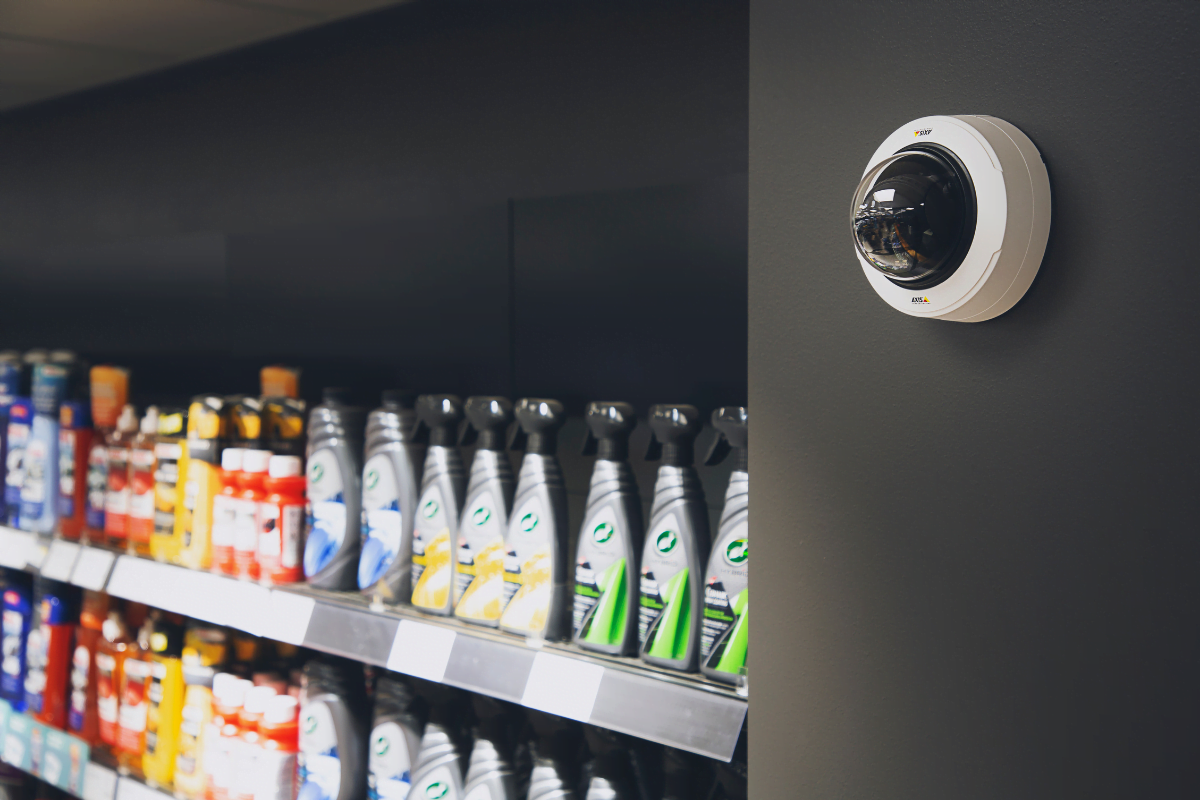
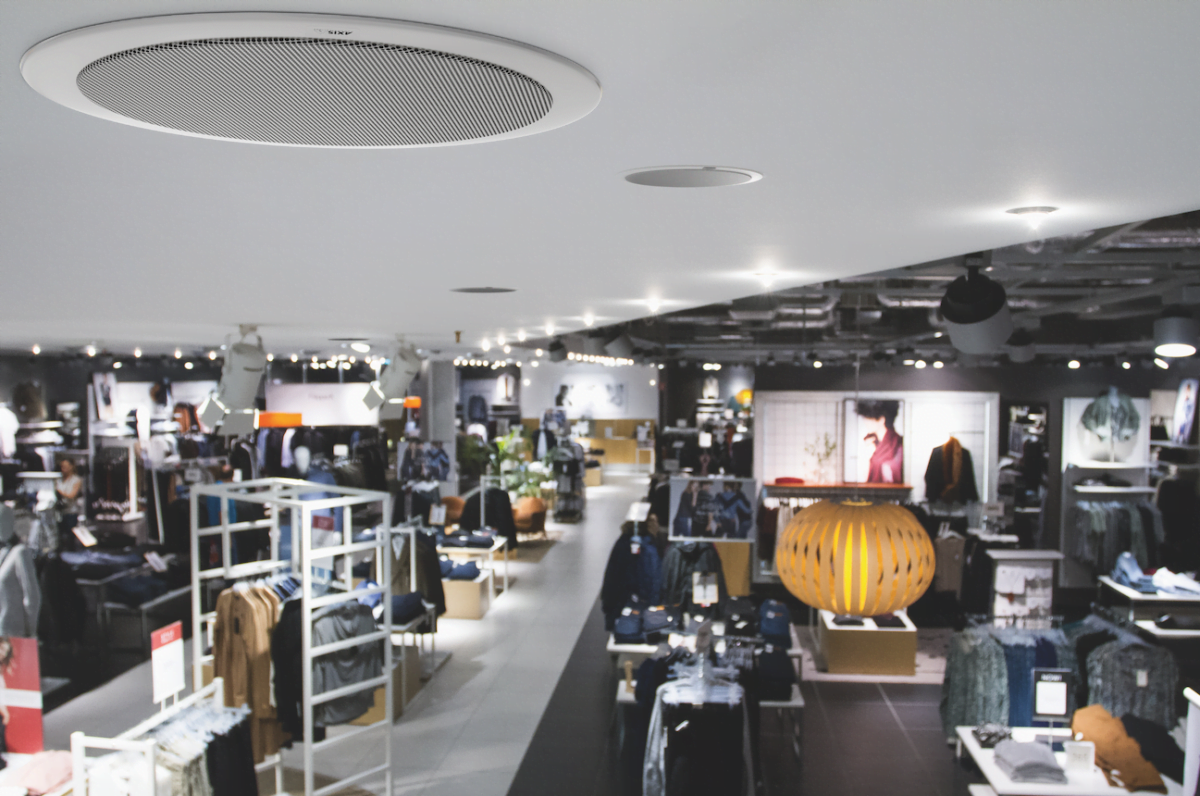
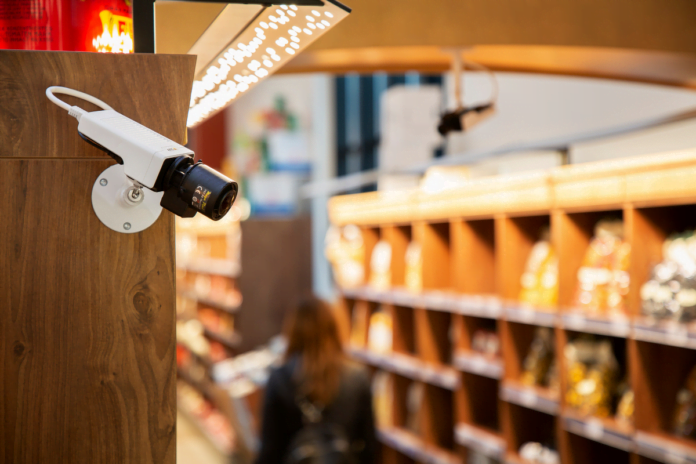
The retail industry is constantly evolving. Changing and shifting amid ever-transforming consumer behaviour and the emergence of market trends, merchants everywhere are perpetually challenged with the task of consistently meeting this evolution with innovation and creativity and a continuous improvement of the service and offering they provide to their customers. For retail loss prevention teams charged with ensuring the safety and profitability of the business, it means leveraging the latest in smart security and automation technologies in order to protect the operation and secure the retail environment. But, as Jason Macdonnell, President, Smart Security and Automation at TELUS, points out, the capabilities of these technologies extend far beyond protecting the organization from threats, providing an opportunity to harness them and enhance the entire business.
“Smart security and automation systems are transforming the way loss prevention teams approach security, allowing them to get out in front of risk to mitigate its impact or avert it altogether,” he says. “However, these technologies don’t simply apply to loss prevention. They are also transforming the way businesses approach every aspect of their operations. Today’s smart systems allow for the collection and analysis of valuable data and insights that can be acted upon to improve business results. With new smart systems, retailers can do things such as dynamically monitor queue lengths and customer wait times to alert either real-time staffing changes or to gain insights into historical trends for future resource planning. For example, what times during the day do queues backup and create customer inefficiencies? Today’s systems, and the data generated, provide insights into what merchandising is working and the customer exploration and purchasing journeys, as well as helping to streamline business operations and maximize efficiency across the board.”
To help retailers gain a deeper understanding of the latest in smart security and automation innovation and the ways it can help businesses generate valuable data that can be turned into insights to drive an enhanced customer experience and greater operational efficiencies, TELUS is hosting its Access Granted: Unlock your true business potential with smart security and automationvirtual event on Wednesday, June 16 at 2pm ET. The event, featuring a panel of industry experts, will highlight the evolution of the retail and banking industries and the ways intelligent security systems can help elevate the performance of their physical spaces.
The evolution of smart security and automation technology
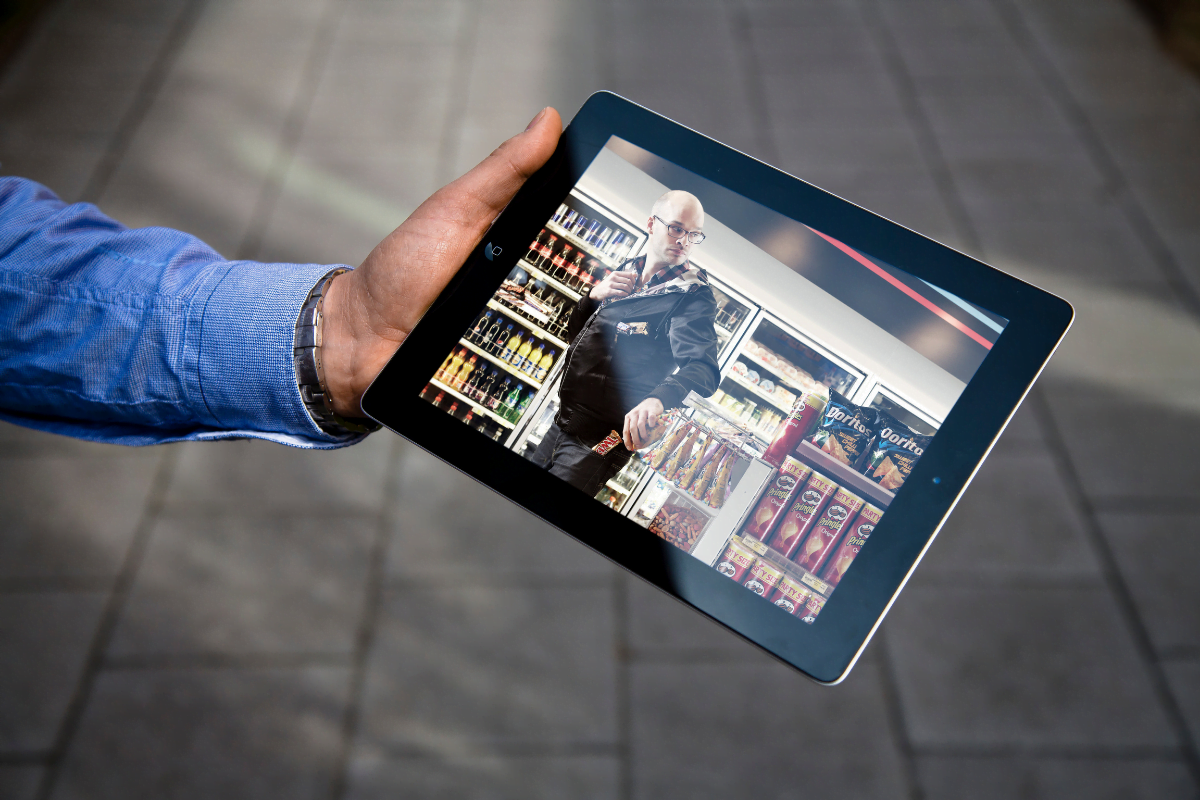
From a loss prevention perspective, recent advancements in video analytics are helping to bolster the efforts of security teams everywhere. Take live video monitoring for example, which is equipped with video analytics to recognize threats and proactively engages automated responses while alerting monitoring teams. There are also visual alarm verification capabilities which allow the Central Monitoring Station team member to verify crimes in-progress, resulting in quicker police response and significantly decreased property loss. Rick Snook, Segment Manager, Retail and Banking, Canada, Axis Communications, recognizes the clear benefits to retailers’ loss prevention efforts, but echoes Macdonnell’s sentiment, explaining that the benefits extend far beyond the realm of loss prevention, positively impacting the entirety of the retail operation.
“The future of retail is going to be about setting yourself up with the right system to enable the collection of true business insights from every one of your retail locations,” he asserts. “Physical security has traditionally always been a cost centre. The new technologies are serving a tremendous purpose in reducing loss and minimizing risk. However, the conversation today is around leveraging the same tools and adapting them to all areas of the business, providing benefits and improvements to human resources, operations and marketing, to name a few. Loss prevention is no longer just a cost center. It’s providing the tools and insights to be able to significantly contribute to a better understanding of retail operations.”
Improving the customer experience
In addition to improving operational efficiencies and streamlining the business, applications of today’s video analytics technologies also serve to enhance the in-store customer experience, providing perhaps its greatest benefit to retailers.
“Retailers are increasingly seeking opportunities to improve their in-store customer experience and better understand the journey with their brands,” explains Macdonnell. “Modern smart security and automation systems can help merchants achieve this by creating a ‘wow’ experience for the customer by leveraging data and video analytics to continuously improve real-time interactions. Retail traffic data and heat mapping can also help retailers understand customer behaviours more accurately, providing a clearer view into traffic patterns, the areas customers are browsing more than others and the products catching their attention. This kind of data ensures store merchandising is set up properly, while increasing the value of product placement fees. And, retailers can also integrate these technologies to create new and more personalized shopping experiences for their customers.”
More automation, peace-of-mind for businesses
In addition to the enhancements that smart security and automation technologies are enabling for their users, their immense capabilities are also making business a lot less stressful for operators to run efficiently. In short, according to Macdonnell, it’s changing the way things are done within the business, removing process impediments while enabling business owners to act on insights that secure the organization while saving them valuable time and money.
“There are many insights you can gain that give you the ability to run your business more effectively,” says Macdonnell. “Analytics gathered from these smart systems help businesses run more efficiently. For example, there are technologies like automated access control that can be programmed to disable your alarm system when your first employee badges in, as well as other automation technologies such as smart sensors or auto-shutoff valves that can proactively detect and prevent unexpected events such as floods. All of this translates into more peace-of-mind for business owners. Whether a single business or multiple sites, automation today should pay for itself really quickly.”
Transforming multiple industries
Despite the clear benefits that modern security technology presents to retailers, its potential can also be applied to other industries operating within similar environments and possessing comparable requirements and needs. In conjunction with the digitization of the world around us, these innovations are helping to transform the way businesses operate, providing them with a basis and anchor point from which effective strategy can be built based on a clear understanding of the business and its customers’ needs.
‘Take the banking industry as an example,” says Snook. “It’s a very similar conversation to what is going on in retail. Much of the current discussion is revolving around the elimination of alarms to allow video to become the security system of the future. And, just as is the case in the retail environment, the analytics that these systems generate for the user can help the banking industry tackle very real challenges impacting their operations, such as removing loitering, optimizing routing and queue lines and utilizing flow and space to its maximum potential. Increasingly, only a small portion of a bank’s physical environment is actual bank space. In North America, the bank is still very much a place where people go to socialize and interact with others. As a result, these spaces have been designed to include large lounge areas where people can communicate and engage. It presents a different set of challenges to those operating within the industry. But it also presents them with a fantastic opportunity to gain valuable insights about their customers and how they like to interact with their branch of choice.”
Shaping the future
The power of modern security technology is so great that it’s not only serving to transform industries. It’s also playing a significant role in shaping the ways communities are planned and operated. And, according to Macdonnell, the true capabilities of these technology systems are only now being discovered and leveraged.
“We’re not just helping to create smart storefronts with these technologies,” he asserts. “With the convergence of security, big data, the Internet of Things and, of course, 5G, we’re helping to create smart buildings and smart communities as well. From intelligent traffic systems and connected streetlights to advanced AI that provides insights into traffic patterns or ongoing incidents, our smart city solutions are really going to enable municipalities of any size to improve the lives and efficiencies of their citizens and city planning.”
TELUS has already rolled out this kind of technology in 65 municipalities across the country, which has helped the company track infrastructure usage, save energy with intelligent lighting systems, improve traffic flow, decrease emergency response times, and much more. With such wide-ranging uses and possible benefits, it seems that the latest in smart security and automation and video analytics technology innovations are already setting a standard for the current and future state of urban spaces everywhere. And, according to Macdonnell, it’s also going a long way toward supporting the continued evolution of the retail and banking industries and providing them with the tools to remain ahead of trends and more easily identify opportunities for further growth and success.
“The emergence of these technologies and the incredible capabilities that they provide for users are changing the game for those operating within the retail and banking industries. They’re allowing them to build systems that enable greater success for loss prevention teams, a more efficient operation and considerable enhancements to be made to the customer experience and journey. And, as these technologies continue to develop, and their potential uses expand further, the current and potential benefits that can be gained are immense.”
Want to unlock the true potential of your business?
For those interested in learning more about the benefits of leveraging smart security and automation systems and the ways it can help transform your business through the power of data and insights, TELUS’ is hosting its virtual event Access Granted: Unlock your true business potential with smart security and automationon Wednesday, June 16 at 2pm ET. A panel of industry experts, including Craig Patterson, Founder & Editor-in-Chief, Retail Insider, Rick Snook, Segment Manager, Retail and Banking, Canada, Axis Communications, Jason Macdonnell, President, Smart Security and Automation, TELUS, and James Reno, VP, Commercial Business, Alarm.com, will discuss the latest in smart security and automation and how these innovations can help enhance businesses.
Hudson's Bay Flagship Store - Downtown Montreal Ste Catherine Street. Rendering: Hudson's Bay Company
Downtown Hudson’s Bay flagship stores in Canada are being downsized as parent Hudson’s Bay Company strategizes real estate assets with an eye for redevelopment. So far the downtown Montreal and Calgary Hudson’s Bay stores are confirmed to be downsizing and other flagships are expected to follow if things go as planned with HBC’s development arm Streetworks Development.
The Montreal store, as discussed in April, will be downsized from more than 650,000 square feet to about 295,000 square feet of space over five floors while a 25-storey office tower is added at the back of the site. Last week we reported that in Calgary, the Bay flagship store would be downsized to three floors and we’ll discuss that more below.
Several of Hudson’s Bay’s standalone flagship stores in Canadian cities were relocated after Eaton’s demise in 1999. In Victoria, Edmonton, Regina and Saskatoon, Hudson’s Bay exited larger flagship locations to relocate in former Eaton’s stores which were part of major downtown shopping centres. The downtown Edmonton Hudson’s Bay store shut forever last week in a former Eaton’s space at Edmonton City Centre. In downtown Victoria, Hudson’s Bay moved into the former Eaton Centre shopping complex which was renamed the Bay Centre while the former Bay flagship was converted to a mixed-use residential building. In Saskatoon, Hudson’s Bay moved into a former Eaton’s space at Midtown Plaza which resulted in the repurposing of the standalone Bay store a couple of blocks away into a residential building. In Regina, the former downtown Bay store was repurposed for offices, a bank and a broadcast station after the retailer moved into Eaton’s former space at the downtown Cornwall Centre shopping complex.
La Baie d’Hudson (585 Sainte-Catherine St. W.) Photo: Maxime FrechetteInside the Montreal flagship. Image via Julien Paquier-Galliard/Google Images
In October of 2020 the Hudson’s Bay Company announced a new division called HBC Properties and Investments with Streetworks Development reconceptualizing the downtown flagships as mixed-use buildings. The goal according to HBC is on creating multi-use spaces that feature a range of services and experiences across the workplace, retail, residential and entertainment categories.
The Hudson’s Bay Company owns several large flagship stores in Canada in a joint partnership with RioCan, and these stores could be redeveloped with downsized department store retail spaces. Here’s a breakdown of what might come.
Historic photo of the Vancouver Bay flagship via hbcheritage.ca Luxury department ‘The Room’ at Hudson’s Bay in Vancouver, featuring womenswear and menswear. Photo supplied by Hudson’s Bay
Vancouver: The 636,828 square foot Hudson’s Bay building at the northeast corner of Granville and Georgia Streets in Vancouver spans nine levels with six of those being large above-ground floor plates spanning more than 70,000 square feet each. As with the downtown Montreal flagship, the Vancouver store could be downsized to five levels including the basement putting the store at more than 300,000 square feet, and it’s unclear what will become of a basement level where Topshop/Topman will vacate in the fall. A redevelopment of the building could see the remainder of the historical portion of the building become office space and there’s the potential for one or two large towers to be built on the site, be it for office, residential or other uses.
The Vancouver Hudson’s Bay flagship store opened in 1914 and additions brought it to its current size by 1949. If the store were to downsize, that would mean the end of its large sixth-floor menswear store which is the largest in the city. The downtown Vancouver Hudson’s Bay store attracts some affluent shoppers with its second-floor department The Room which last year also introduced menswear.
Calgary flagship: Image: Hudson’s BayMen’s floor at the Calgary Bay flagship. Photo: Gireesh Annepu/Google Images
Calgary: Few details are known on what will happen to the upper levels of the flagship Calgary Bay store once it is downsized to three levels — the company says for now that they may be used for e-commerce fulfillment. Each of the floor plates in the 448,834 square foot downtown store span about 58,000 square feet which means the three level store would span about 175,000 square feet of retail space. As a comparison, the CF Chinook Centre Bay store spans about 206,500 square feet and the CF Market Mall Bay store is about 200,000 square feet according to landlord Cadillac Fairview.
Several years ago the sixth floor of the downtown Calgary Bay store became an event space operated by Toronto-based Oliver & Bonacini, and part of the main floor of the store was segregated for a 5,000 square foot restaurant called The Guild. The downtown Calgary Bay store lacks the luxury brands found in the Vancouver and Toronto stores with the CF Chinook location having the most robust selection of higher-end brands of any Bay store in Calgary.
Ottawa: The downtown Ottawa Hudson’s Bay flagship store spans about 335,000 square feet and occupies six levels. The former Freiman’s department store could be downsized for a mixed-use project including a site intensification. A Saks OFF 5TH store occupies 34,877 square feet in the basement. The Bay store is connected by a pedestrian overpass to the CF Rideau Centre shopping complex.
Non-RioCan JV Partner Stores
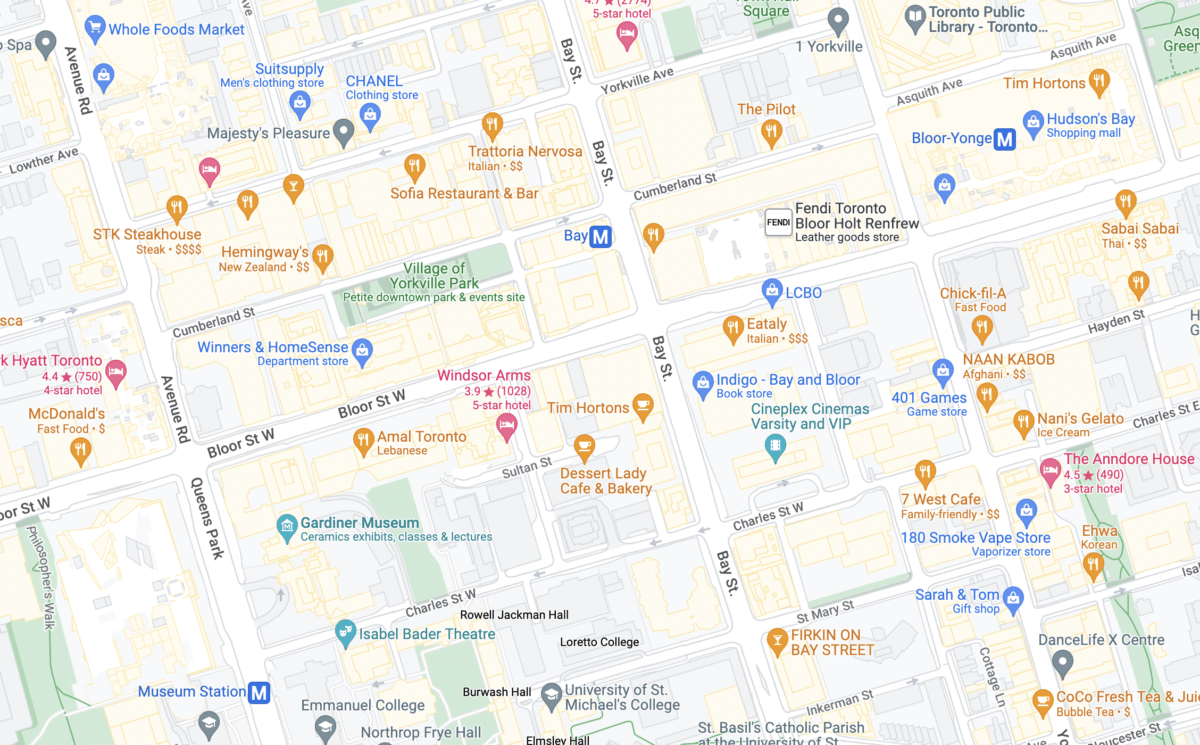
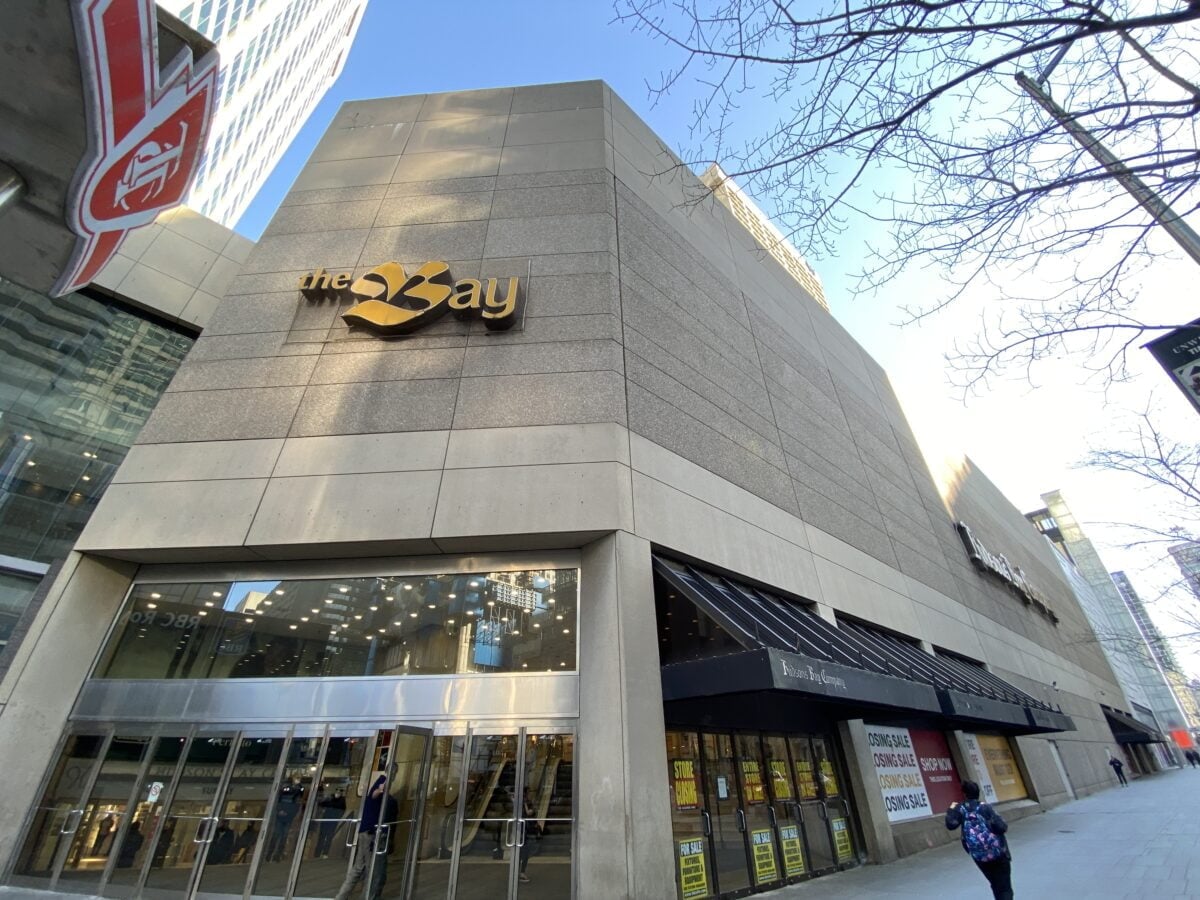
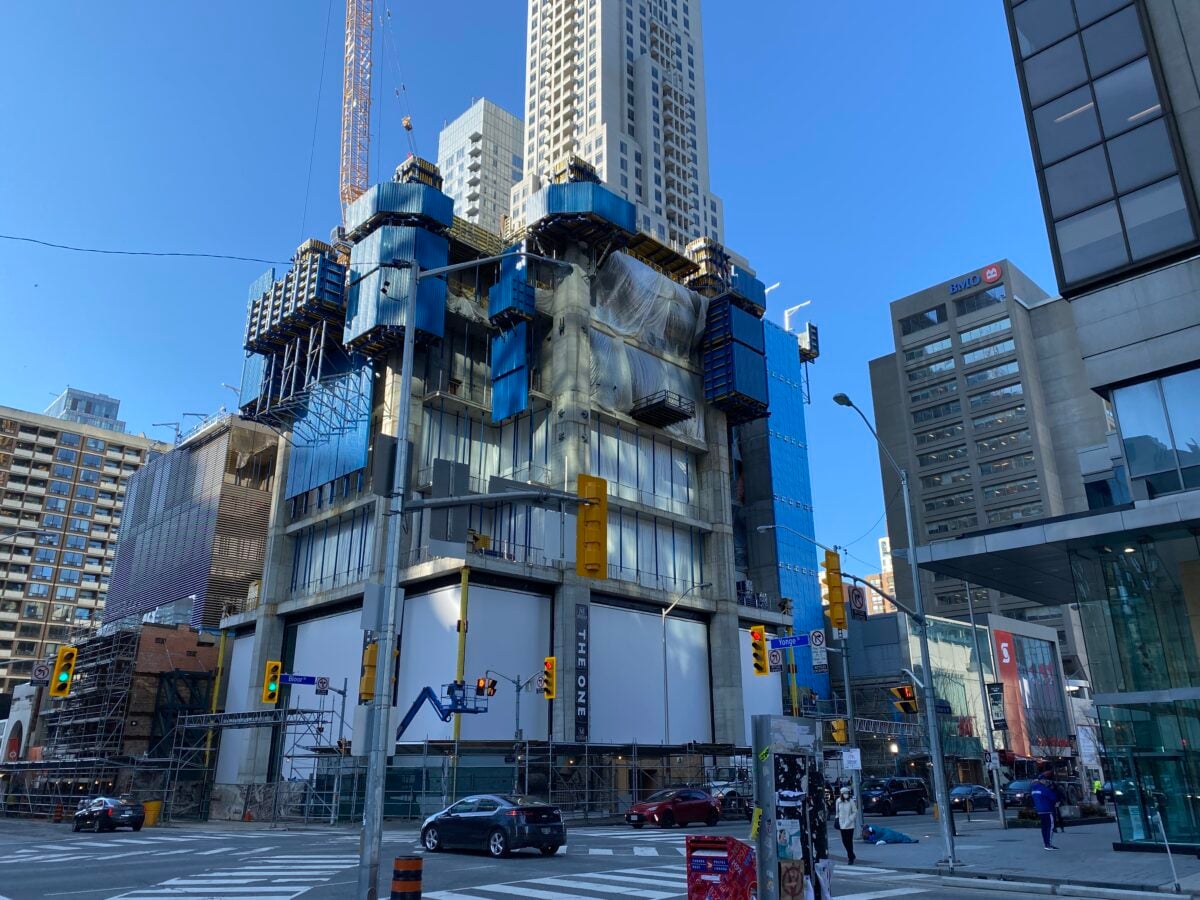
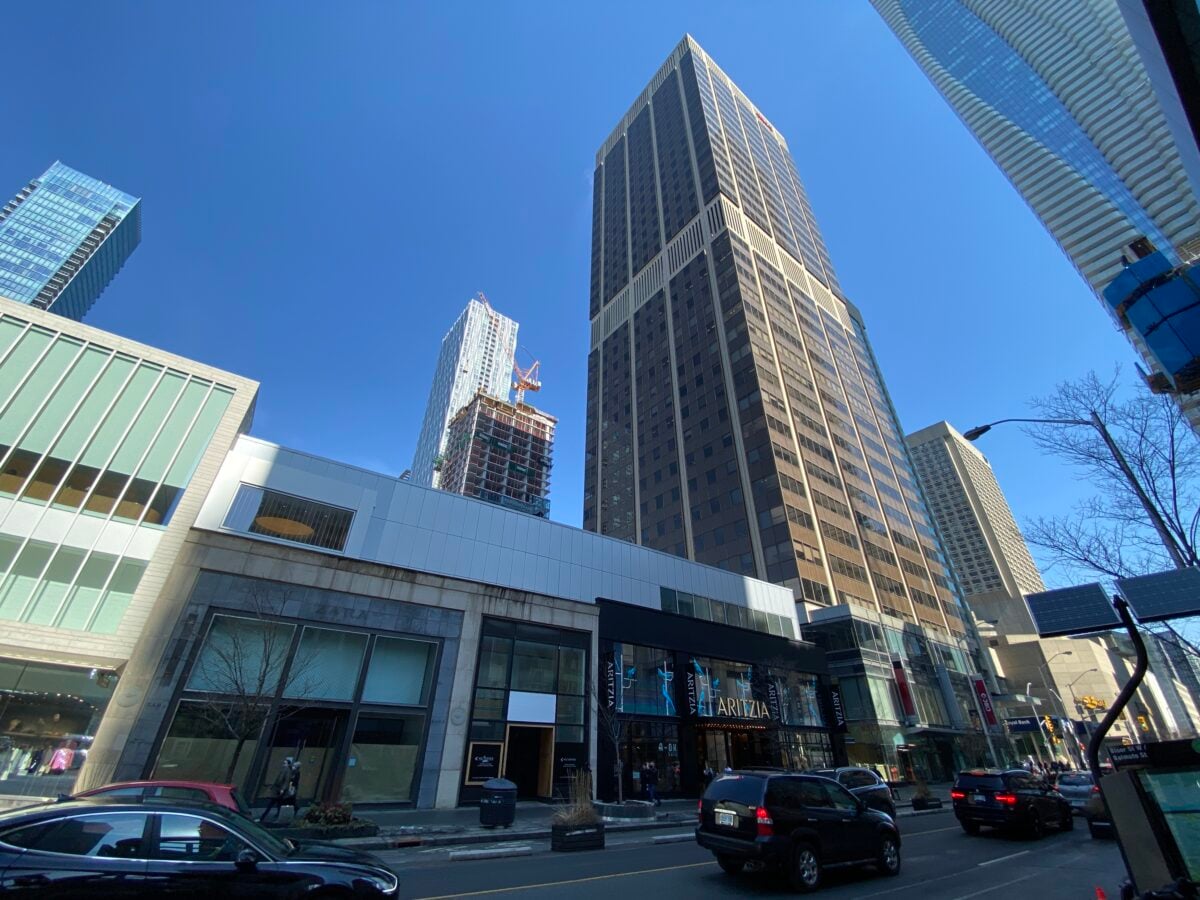
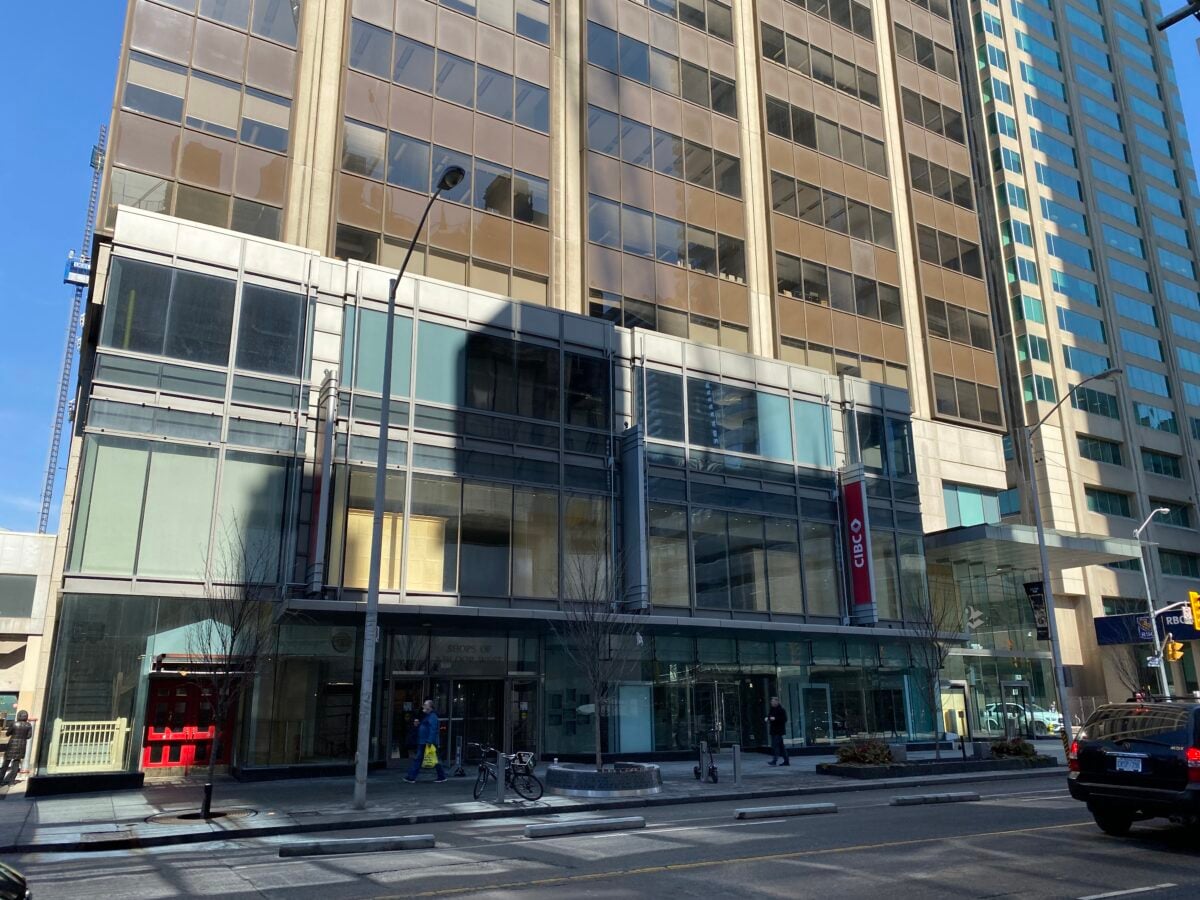
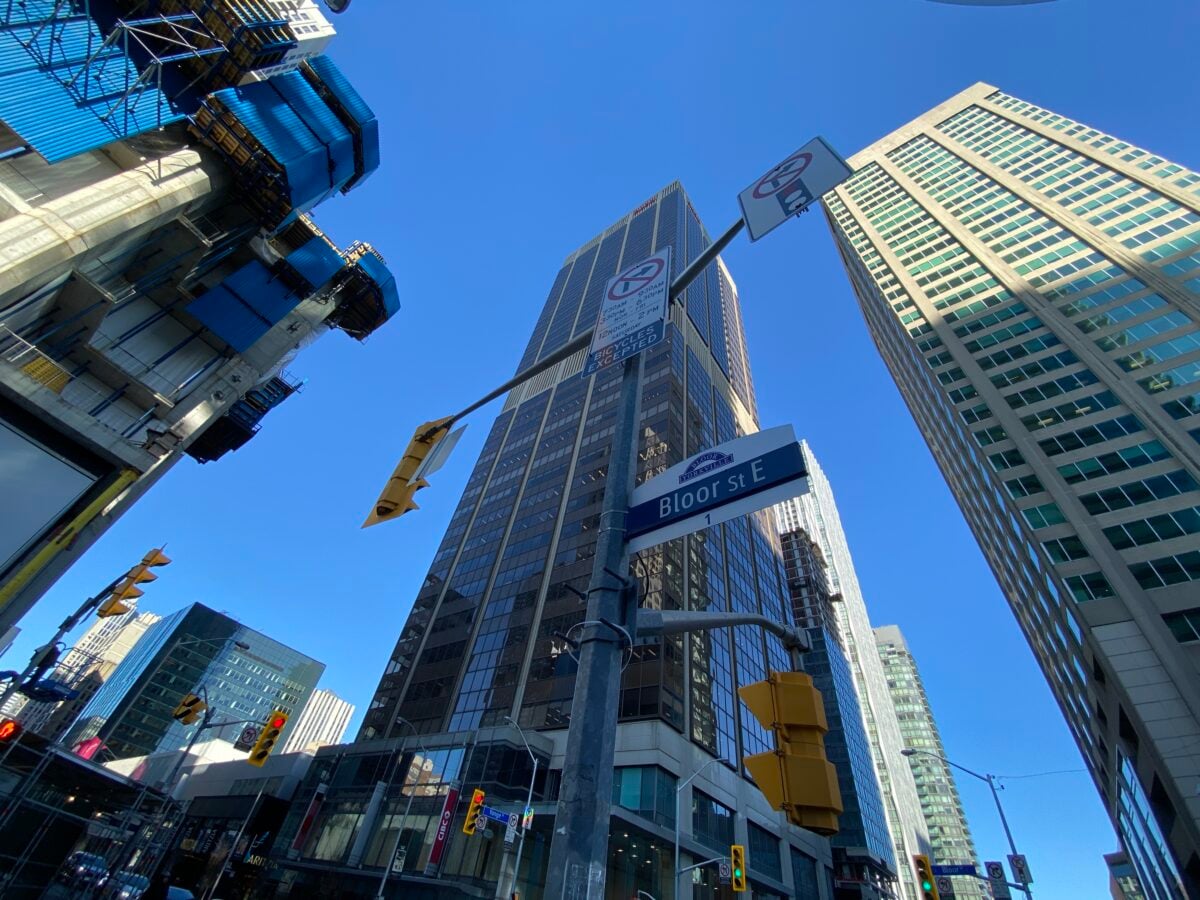
Toronto 44 Bloor Street East: The future of the 340,000 square foot Hudson’s Bay store at the corner of Yonge and Bloor Streets in downtown Toronto is uncertain amid whispers of a redevelopment of the site. An investment surpassing a billion dollars will see upgrades to the subway interchange at the intersection (and below the store) and rumours include a partial demolition of the block including an office tower that could be replaced with a much taller building. Few details are available publicly at this time for the redevelopment of Brookfield-owned Hudson’s Bay Centre.
Hudson’s Bay on Queen Street in Toronto, formerly Simpsons – Photo by Dustin Fuhs3rd floor women’s luxury brand apparel area at Saks Fifth Avenue, located within the Hudson’s Bay building in downtown Toronto. Image: Hudson’s Bay Company
Toronto Queen Street: The Hudson’s Bay Company sold the flagship Hudson’s Bay store at 176 Yonge Street to Cadillac Fairview in 2014 for $650 million and the massive department store complex became part of the CF Toronto Eaton Centre. Currently, the building houses a Hudson’s Bay department store spanning about 886,000 square feet with a 150,000 square foot Saks Fifth Avenue store-in-store on three floors and a 20,000 square foot Pusateri’s-operated food hall within the building on the PATH subway level. Each floor plate of the Queen Street Hudson’s Bay store, which was once occupied by iconic retailer Simpsons, exceeds 100,000 square feet. About 34,000 square feet of valuable main floor retail space could be added if Saks were to close.
There’s a possibility that Cadillac Fairview and Hudson’s Bay could partner to redevelop the Queen Street building by adding at least one tower to the site to unlock value through density. The Queen Street Bay store’s sales prior to the pandemic were said to be slightly higher than that of Simpsons which occupied the building in 1979 — and that’s not taking inflation into account. In today’s dollars, Simpsons would have sold nearly $700 million annually in that one store alone, and the Bay’s sales are said to be a fraction of that.
Winnipeg Hudson’s Bay Company flagship store in 1939. Image: HBC Archives
Winnipeg: The 655,755 downtown Winnipeg Hudson’s Bay flagship store shut forever in November of 2020, and HBC wanted nothing to do with it after declaring that the building was a liability rather than an asset. RioCan has no ownership in the building and the building’s future is in discussion. For a time it served as HBC’s primary flagship location until a new flagship opened at 44 Bloor Street West in 1974.
HBC ground leases – potential redevelopment with RioCan
The Hudson’s Bay Company also has ground leases with several of its suburban stores which means that redevelopment could be possible at some point. Suburban RioCan partner stores include Yorkdale in Toronto, Scarborough Town Centre in Toronto, Square One in Mississauga, CF Carrefour Laval near Montreal, CF Promenades St. Bruno near Montreal, and Devonshire Mall in Windsor. Two ground lease Bay locations not jointly held by RioCan include the Centre Laval Bay store near Montreal as well as the Centrepoint store in Toronto.
A missed opportunity?
The downsizings of Hudson’s Bay’s downtown stores come at a time when leading urban department stores in Europe and Asia have in some instances actually been expanding in size to offer attractions and food-and-beverage options to gain shoppers and keep them in-store. There are several examples of incredible department stores globally, some selling more than $1 billion annually in a single location. There are currently no department stores in North America with single locations selling that amount except for possibly Macy’s on Herald Square in Manhattan.
In London, Selfridges occupies a 540,000 square foot store that expanded in 2012. The vibrant and popular store features 20 food and beverage options ranging from champaign bars to full-sized restaurants, and the store also includes such unique features as a movie theatre and skateboarding park. Iconic Harrod’s in London features an expansive food hall, numerous restaurants, and many global brand stores including many luxury brand concessions. Galeries Lafaytette and Printemps in Paris have both expanded over the years into multiple buildings to house a vast assortment of brands and services, and both are incredible stores in their brand offerings. Several years ago the Ka De We store in Berlin and de Bijenkorf in Amsterdam also saw expansions and renovations, as did the popular Castellana flagship branch of the El Cortes Ingles chain in Madrid.
In South Korea, several large department stores sell well in excess of a billion dollars annually under the Shinsegae and Lotte banners — these massive stores include ample food and beverage options as well as exciting interiors and brands. China and Japan are home to numerous large and impressive department stores that are very popular. Concessions and buzzy pop-ups are common among all of the international stores mentioned above.
7th floor women’s footwear hall at David Jones in Sydney. Photo: David Jones
The David Jones department store in downtown Sydney Australia unveiled an incredible women’s footwear hall in 2018 on its seventh floor housing a vast assortment of brands as well as concessions for many of the world’s top luxury brands. Last year a renovated main floor revealed boutiques for big brands including Louis Vuitton, Gucci, Dior and several others. The footwear hall is particularly notable given its size, spanning more than 40,000 square feet. Selfridges, Galeries Lafayette, Printemps and several other global department store flagships have also opened equally impressive shoe departments which have become attractions for locals and tourists.
Hudson’s Bay has the opportunity to activate its flagship stores with unique offerings including food-and-beverage options and attractions such as massive footwear halls, however, the downsizing of the Canadian flagship stores will limit this potential. It remains to be seen what the renovated smaller downtown flagship Hudson’s Bay stores will look and function like, and from what we’ve heard so far these will be showrooms displaying product with a focus on digital purchases. Hudson’s Bay has said that its stores in the future will be ‘experiential’ with few details.
We will follow up on this article when we learn more about the future of Hudson’s Bay’s downtown flagship stores including what they might do to attract customers. One thing that is becoming apparent is none of these Bay stores in the future will be as large as the global flagship department stores overseas that have been draws for shoppers from around the world. Feel free to let us know your comments below.
Retail Insider is announcing an exclusive partnership with Toronto-based digital logistics startup Swyft which facilitates same-day delivery for Retailers. Swyft is poised to be a game changer in the package shipping industry as it grows rapidly and innovates through data and technology. The company’s overall goal is to make the price of same-day delivery comparable to one or two-day delivery, levelling the playing field for smaller businesses against major players.
“Retail Insider is thrilled to bring Swyft on as our exclusive partner in the space, as we believe what they are building will transform shipping in Canada. We believe that Swyft will be a huge benefit to large and small retailers looking to offer same-day shipping to consumers as retail continues to shift online,” said Craig Patterson, Editor-in-Chief of Retail Insider.
The company has been securing significant funding including a recent Series A raising $22 million led by Inovia Capital, Forerunner Ventures and Shopify. Now Swyft is expanding geographically over the next 12 months in a big way after recently launching operations in Los Angeles. Swyft’s software application integrates with merchant shopping carts on e-commerce platforms including Shopify, WooCommerce, and Magento to offer same-day delivery. Swyft grants courier companies free access to its software as they join Swyft’s marketplace, thus creating a network of warehouses and delivery drivers.
“Now everyone can offer affordable last mile delivery to their customers that automatically scales with seasonal activity,” said Aadil Kazmi, Swyft’s co-founder and CEO, “Same day delivery is no longer only for Amazon sellers.”
Retailers and brands already using Swyft’s marketplace include Lush Cosmetics, Station Cold Brew coffee, luxury retailer Holt Renfrew, and jewellery brand Jenny Bird. More retailers are coming on board daily as part of their accelerated growth.
Since launching in March of 2020, Swyft has delivered over 200,000 packages to date and has expanded its gross margin rapidly due to its zero-asset business model. In December, Swyft says that it drove an additional $10,000 per day for a jewellery retailer by offering quick delivery when the holidays were resulting in delivery delays from other providers.
Swyft says that its rapid delivery platform helps drive consumer retention and loyalty which in turn leads to higher profitability for retailers. Swyft also enables independent brands to offer affordable same-day delivery which is critical in helping them grow their businesses and meet increasing customer expectations. In theory, utilizing Swyft can help smaller retailers level the playing field with Amazon by in some cases offering even faster delivery.
Retail Insider will continue to work with Swyft as it grows and will provide updates on the company as it helps retailers in this country succeed. For more information on Swyft, visit: https://www.useswyft.com
Montreal-based commerce platform Lightspeed announced Monday that it has acquired two global leaders in digital commerce for about USD $925 million in total. The acquisitions will provide Lightspeed customers new further digital capabilities, enhanced supply chain management, and enhanced online customer experiences.
Lightspeed will acquire US-based eCommerce platform Ecwid which allows customers to create standalone businesses in a short time. Once integrated, the combination of Lightspeed and Ecwid will allow for selling flexibility and omnichannel experiences. Lightspeed acquired Ecwid for about USD $500 million including payment on closing of approximately USD $175 million in cash and issuance of subordinate voting shares in the capital of Lightspeed valued at approximately USD $325 million. The deal is expected to close during the quarter ended September 30, 2021.
Lightspeed also announced a definitive agreement to acquire digital platform NuORDER which connects businesses and suppliers. The partnership’s aim is to create an industry-leading bridge between the merchant and supplier experience by simplifying product ordering for retailers and offering brands insight into how their products move. Lightspeed will acquire NuORDER for about USD $425 million by way of payment on closing of USD $212.5 million in cash and the issuance of subordinate voting shares in the capital of Lightspeed valued at approximately USD $212.5 million. The deal is expected to close during the quarter ended September 30, 2021 as well.
The acquisition of NuORDER capitalizes on the Lightspeed Supplier Network to accelerate the growth of Lightspeed’s financial services offerings including Lightspeed Payments and Lightspeed Capital while establishing the company as a distribution network for leading brands such as Canada Goose, Converse and Arc’teryx.
“By joining forces with Ecwid and NuORDER, Lightspeed becomes the common thread uniting merchants, suppliers and consumers, a transformation we believe will enable innovative retailers to adapt to the new world of commerce,” said Dax Dasilva, Founder and CEO of Lightspeed. “As economies reopen and business creation accelerates, we hope to embolden entrepreneurs with the tools they need to simplify their operations and scale their ambitions.”
Ecwid currently serves over 130,000 customers in over 100 countries globally and had revenue of over USD $20 million last year with 50% growth year-over-year. NuORDER serves over 3,000 brands with about 100,000 partner retailers seeing more than USD $11.5 billion in orders through its platform over the course of the year, generating over USD $20 million in annual revenue with a year-over-year growth rate exceeding 30%.
Lightspeed was founded in Montréal in 2005 and is dual-listed on the New York Stock Exchange and Toronto Stock Exchange (NYSE: LSPD) (TSX: LSPD). The rapidly growing company has teams across North America, Europe and Asia Pacific and serves retail, hospitality and golf businesses in over 100 countries.
*Lightspeed is a partner of Retail Insider Media Ltd. To work with Retail Insider, email: craig@retail-insider.com