B2 Shoes at Montreal Eaton Centre (Image: Browns Shoes)
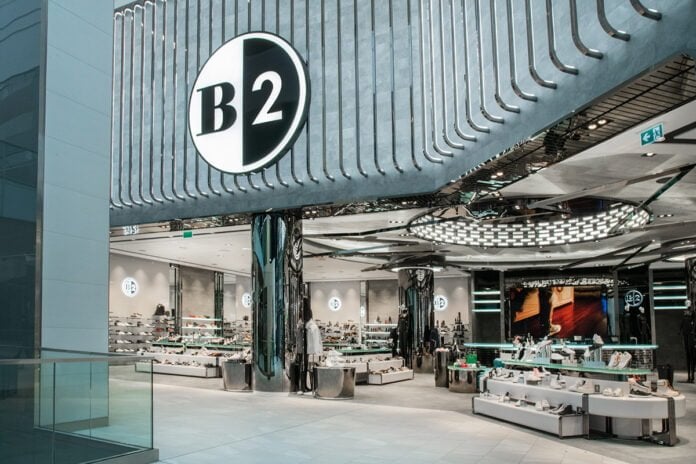
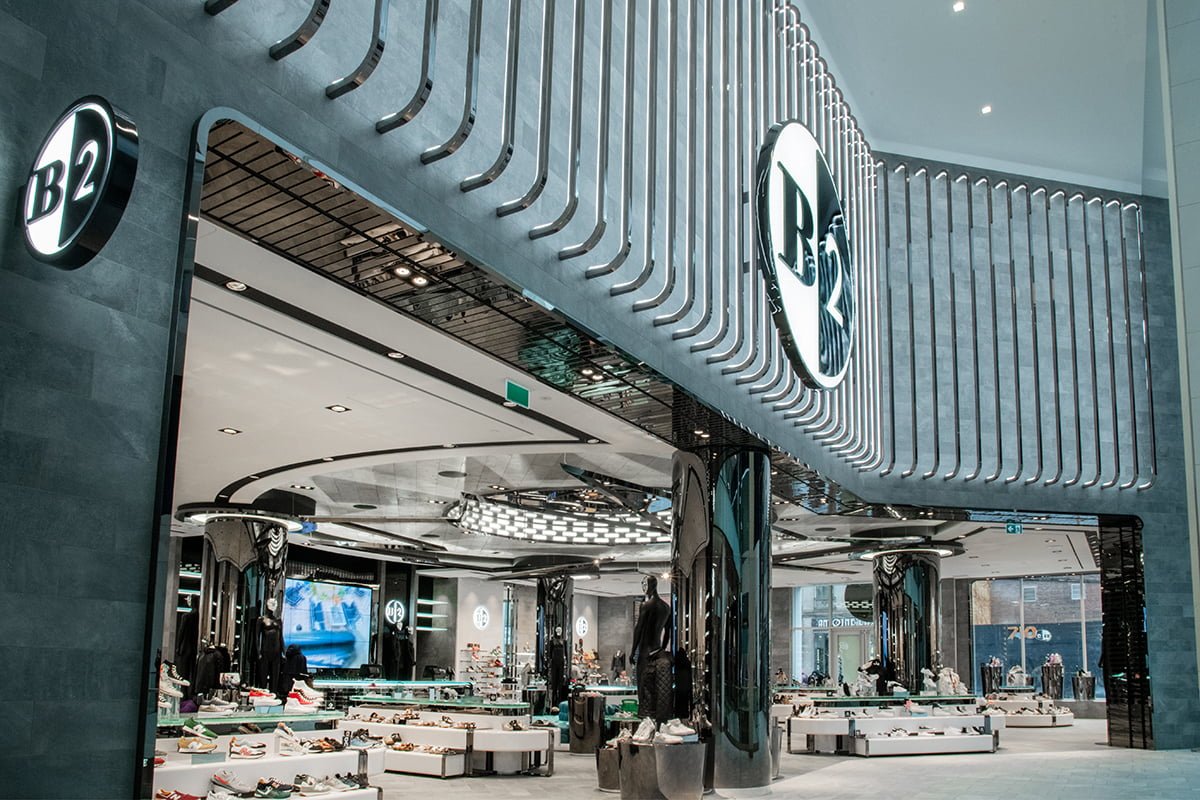
After taking a brief pause during COVID-19, B2 shoes has recently opened a new state-of-the-art flagship store located in the Montreal Eaton Centre.
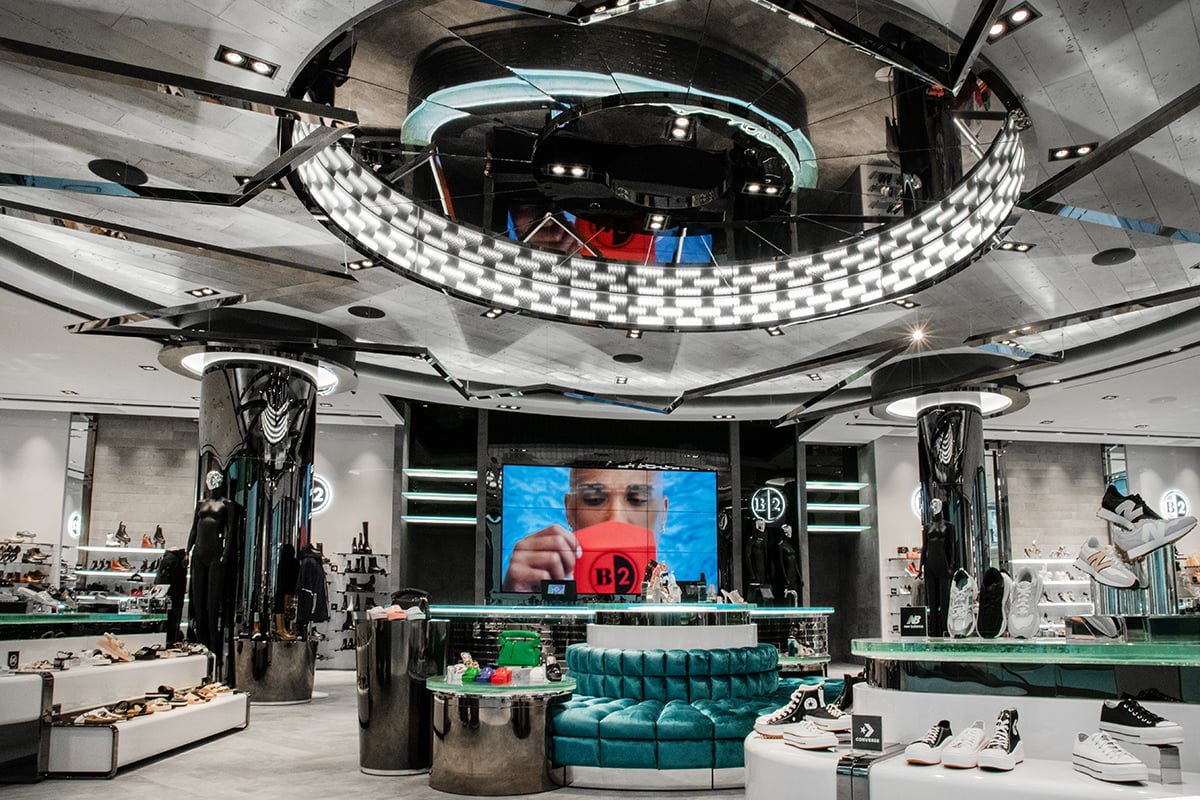
The expansive two-floor location is just over 11,000 square feet, including a vibrant showroom and a second-level stock room. The in-house designed B2 flagship offers comfortable seating, a hydration station with sparkling water, a state-of-the-art sound system, and a head-turning video wall.
“The Montreal flagship is one the most exciting stores the team has developed to date,” says Eric Ouaknine who is the Senior Director of Retail. “The space is designed to be experience-driven in order to entertain our customers.”
B2 Shoes at Montreal Eaton Centre (Image: Browns Shoes)
To access the Montreal Eaton Centre location, customers can enter through the mall or on Saint- Catherine Street.
Browns and B2 are also working on expanding other existing stores.
Eric Ouaknine
“Now in 2022, we are full steam ahead and making up for lost time,” says Ouaknine. “We are taking the opportunity to expand our footprint as in-store shoppers return.
Ouaknine said at least 12 stores are confirmed for this year.
“As we speak, we currently have three stores under construction, in addition to the three stores that we just opened in the past couple weeks, including the B2 flagship in Montreal, this is an exciting time” says Ouaknine.
B2 Shoes at Montreal Eaton Centre (Image: Browns Shoes)
Right now, there are eight store expansions in the process and some of these will be nearly doubling in size. Some of these stores include:
The Browns store in Toronto Premium Outlets has been open for three years and they will be expanding to make it 7,000 square feet – increasing the size by 60 percent.
The Browns in Polo Park, Winnipeg is relocating to a larger space and will grow by 50 percent with construction already underway.
In Mirabel, outside of Montreal, the new Browns store that reopened last week grew by 50 percent.
The B2 store at Fairview Pointe-Claire in Montreal is now expanded to 4,200 square feet.
In Toronto, Browns at Yorkdale is building an impressive 6,000 sq ft flagship with 87 feet of frontage
“There are several others in the pipeline that we’re working on across Canada” says Ouaknine.
It will be a busy year ahead for Browns and B2 with new stores opening but they are making customer service a priority.
“Browns has a really unique store concept, like no other in Canada or even North America,” says Ouaknine. “At our core we strive to offer our customers a wide selection of highly curated brands, a lot of which are exclusive, coupled with top notch customer service, in an environment that allows us to entertain them. The goal is to offer our customers an immersive and unforgettable experience — that is really what it’s all about for us.”
Oberfeld Snowcap works with Browns Shoes in terms of negotiating retail leases.
Retail Insider is streamlining its Canadian retail news from around the web to include a handful of top news stories that can be viewed quickly during the day. Here are the top stories from the past 24 hours.
The past two-and-a-half years have proven to be an immense challenge for most retailers operating across the country. The COVID-19 global pandemic, along with a number of other factors and influencers, has served up a litany of disruptions and disturbances for the industry to contend with. However, as communities in countries all over the world continue to slowly and methodically head toward something of a new “normal”, retailers search for ways by which they can maintain their relevance with the consumer and ensure future growth and success. With these things in mind, Deloitte recently released its 2022 Canadian retail outlook, highlighting five key insights that will shape the retail landscape over the coming months. And, according to Marty Weintraub, Partner, National Retail Leader at Deloitte, it’s a landscape that continues to evolve in the wake of impacts of the pandemic.
“Merchants within the industry have been through a lot over the course of the past couple of years,” he says. “Impacts of the pandemic, most dramatically pronounced by store closures and social restrictions, had a profound effect on the industry. And, most recently, the war in Ukraine and continued rise in inflation have only added to the disruption and challenges that retailers have been facing. Having said that, however, the economy is still doing fairly well from an employment and growth perspective. So, over the next 12 months or so, we’re going to continue to see ups and downs, just as we’ve become used to. But overall, based on a number of things that we’ve uncovered, the outlook is relatively positive for retailers in the country.”
Optimism around growth and concern about profits
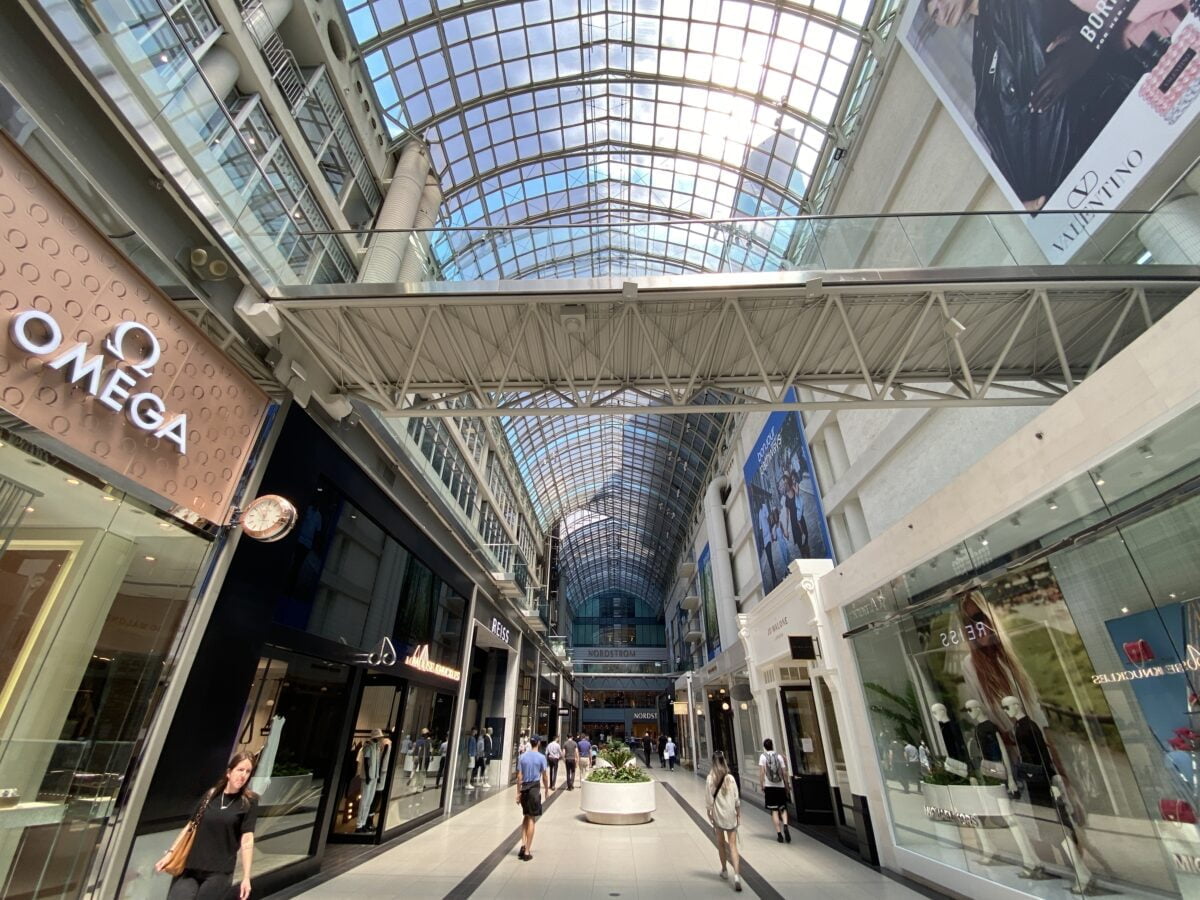
CF Toronto Eaton Centre (Image: Dustin Fuhs)
One of the things that Deloitte uncovered within its 2022 Canadian retail outlook is the fact that executives within the country are feeling quite optimistic, even confident, about the near-term future of their companies. The survey reveals that an incredible 77 per cent expect their revenues to increase, with 93 per cent believing in their organizations’ ability to meet growth targets and objectives. Though some 40 per cent expect margins to fall in 2022, driven largely by the threat of inflation and the continuation of rising costs, Weintraub says that much of the industry intend to invest throughout the coming year in order to drive revenue and facilitate further growth.
“There’s been an obvious accelerated digitization of the industry and everything else around us over the past couple of years,” he recognizes. “Retailers will continue to invest in digital technologies to support their ecommerce efforts and the digital evolution of their businesses. However, what’s equally, if not more, important is the reinvestment into the physical brick-and-mortar store. We’re already starting to see this shift as retailers are realizing the Canadian consumer’s increasing desire for experiences and to reengage in a physical environment. They are investments that are going to go a long way toward bolstering the omnichannel experience retailers provide. And, of course, supply chains are going to receive attention. We’ve learned over the last couple of years that supply chains are fragile. And, because resilience is key, there’s going to be a lot of investment into all aspects of supply in order to enable the growth that’s expected.”
Strengthening supply chains
As unsung as it may have been, escaping much of the spotlight prior to the pandemic, the supply chain is a pivotal component of the retail operation and integral to the overall customer experience. And, responses within Deloitte’s outlook reflect its importance, revealing a number of priorities for executives, including avoiding stockouts (95%), making their supply chain networks more agile (90%) and ensuring their resiliency (90%). The outlook also suggests that there are a number of ways by which retail organizations plan to support these priorities, with nearly two-thirds (65%) seeking diversification of their overseas supplier networks and 10 per cent expecting to reduce their reliance on overseas vendors altogether. However, as Weintraub points out, much more of their focus is going to be around investments in technology that will help them better prepare for the future. In fact, the outlook indicates that 85 per cent of retailers expect to invest in supply chain automation and other types of technologies.
“One of the biggest questions that retailers have got to answer today is how to better forecast and plan for demand,” he asserts. “It’s another aspect of the retail operation that’s completely changed over the course of the past two years. Using history as a source to predict the future is not proving to be all that reliable at the moment as consumer preferences and behaviour have shifted and continue to evolve with the digitization of everything. As a result, many within the industry are going to be leveraging newer techniques and innovative technologies, including those equipped with artificial intelligence, in order to help forecast and plan with greater accuracy and assurance. There’s going to be a real push over the next 6 to 12 months toward gaining clearer and more granular visibility to all of the signals along the end-to-end supply chain, ultimately enabling them to react timelier in the event that shocks or disturbances occur.”
The fight for retail talent
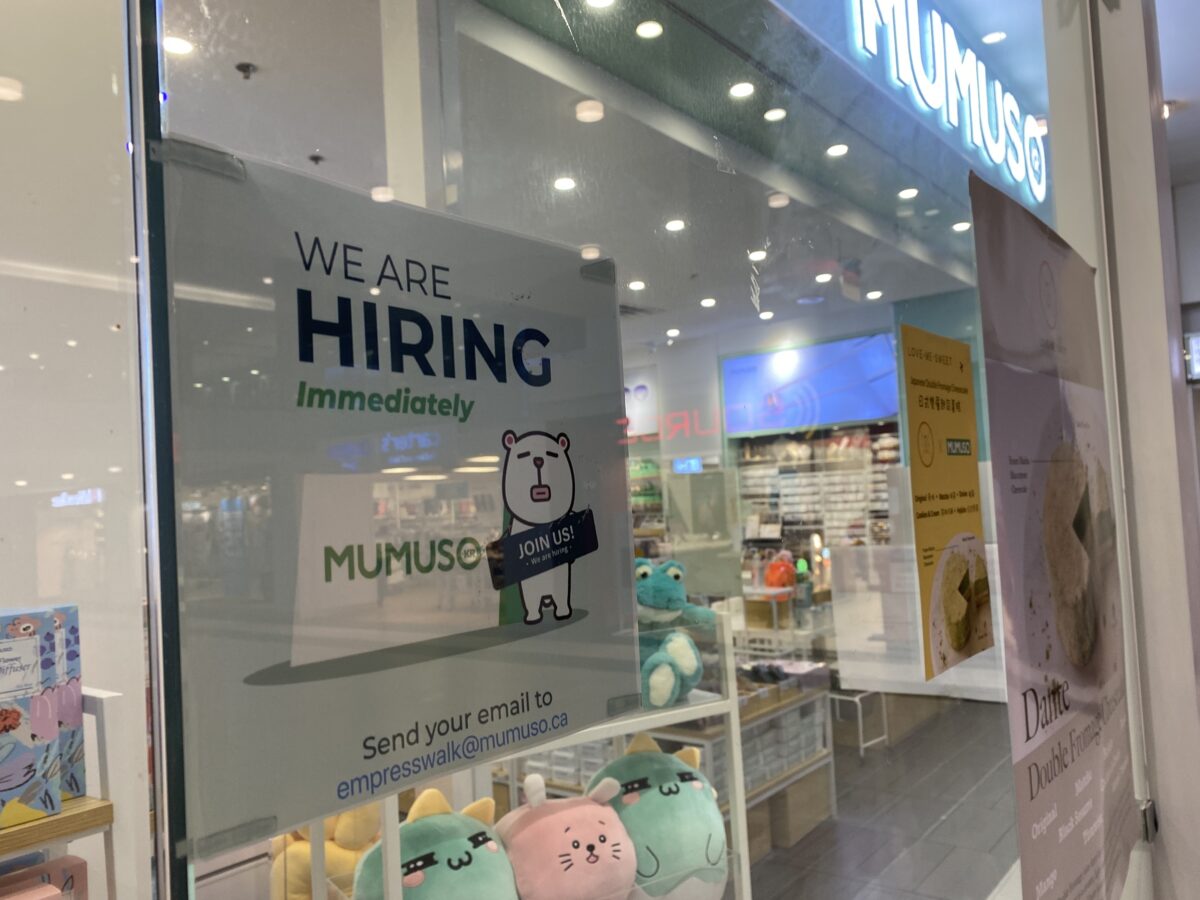
Mumuso at Yonge Eglinton Centre (Image: Dustin Fuhs)
In addition to digitizing the business through automated supply chains and artificial-intelligence-aided demand forecasting, there’s also a growing need for retailers to ensure that they have the human capital required to keep the operation, and all of its bells and whistles, operating optimally. In fact, more than three-quarters (77%) of Canadian retail executives believe that the current talent shortage as well as their ability to hang on to their top employees is one of the top current concerns. To address the concern, and in an attempt to attract and retain top talent, 73 per cent plan to offer their staff better working conditions, 67 per cent intend on offering increased pay and benefits and 43 per cent plan to provide enhanced learning and development opportunities. Though these are all pieces or enticements required in order to attract and retain retail talent, Weintraub points out that an organization’s culture, specifically its initiatives around diversity, equity and inclusion, are of significant importance today.
“It’s been difficult for many retailers attempting to work through this talent shortage,” he says. “The main reason is because there is really only a fixed pool of talent. It’s the result of a number of people who have exited the industry due to early retirements, changes within their careers, or simply wanting more money for the work that they’re doing. In order to attract and retain talent, many retailers are realizing in full the powerful sway that a positive and inclusive corporate and employee culture presents. An organization’s diversity, equity and inclusion initiatives have become an important criterion for prospective employees. So, to keep workforces happy, engaged and motivated, brands have got to figure out what the best DE&I strategy will work best for their organizations.”
Environmental, social and corporate governance
Another aspect of an organization’s culture that links very closely with diversity, equity and inclusion are issues related to environmental, social and corporate governance (ESG). It’s yet another precipitation of the pandemic, one that’s rooted in the Canadian consumers’ increased focus paid toward their values and things they care most about. And, Canadian executives are taking notice. According to Deloitte’s outlook, 80 per cent believe that governments and regulators will increase related mandates, 63 per cent feel that employees are more willing to work for brands with strong ESG records, and 43 per cent believe that it will increase loyalty among customers. And, it’s all true, says Weintraub, provided that brands are genuine in their approach.
“The development of strong ESG initiatives and stances can be a significant lever for recruiting and retaining talent and for cultivating customer loyalty,” he says. “However, employees and customers today are looking for true, meaningful change and movement being made by brands. As a result, those that are serious about their commitments are beginning to imbed various ESG initiatives throughout their companies rather than it living within a siloed team or department. And, many of their initiatives are quite spread out, including support for local communities, enhancing ethics, integrity and compliance, leveraging more sustainable sourcing, and more. But, again, It’s incredibly important for retailers to remember that any initiatives put in place have got to be perceived as real and not something that’s being done simply because it’s expected.”
Focus on customers, brand and agility
One of the key takeaways of the COVID-19 global pandemic, as we hopefully begin to approach something of an end to its impacts, is the fact that agility within the retail business is paramount. Those that already had it baked into their operations were more easily able to adapt and pivot to evolving consumer demands and behaviour. And, those with more of a rigid structure and operation, generally speaking, were less inclined and able to do so. It’s the reason, says Weintraub, there will be such a concerted focus and effort paid by brands toward ensuring agility as we move forward. However, he suggests that it will be incredibly important to maintain a deep understanding of the brand and evolving consumer expectations in order to succeed in a transformed retail landscape.
“People have been talking for years about putting customers first and keeping them at the heart of every decision that’s made,” he says. “However, what makes this notion even more important is the fact that the customer has acquired more power over the course of the past 18 to 24 months than they’ve ever had before, enabled to shop wherever, whenever and however they want. It means that retailers need to meet them where they want to be met. It’s too easy today for customers to switch brands or retailers. As a result, taking care of the brand is imperative, requiring retailers to figure out what investments need to be made in order to grow and elevate the brand in the customers’ mind.”
Overcoming challenges
Despite the amount of disruption that’s occurred over the course of the past two-plus years, and the uncertainty that it’s created across industries and the world, Weintraub believes that the resilience of Canadian retailers will continue to serve them well, helping them withstand many of the challenges that they face. And, although he recognizes that many of those challenges will likely sustain through the near-term, he adds that there are also immense opportunities available to those within the industry that can continue to stay close to the consumer, innovating to meet their evolving needs and preferences.
“Though there remain a number of headwinds that will challenge the industry over the next little while, there has never been such opportunity to win over the customer by standing apart from competitors. Increasingly, retailers will be focusing more of their resources and effort on achieving that through a number of different ways, including investing in the right technologies, closely monitoring cost, strengthening their supply chains, bolstering their brand values and finding the right talent to support it all. Those that can move the needle on each of these things in a positive direction are those that will be positioning themselves well to succeed and grow in this new retail landscape.”
Podcast [Interview] Ed Skira of UrbanToronto Discusses the City's Incredible Development Boom
Craig and Ed Skira discuss how Toronto’s rapid growth is impacting retail as thousands of new residential units are added to the city yearly. Skira makes predictions based on increased immigration numbers. UrbanToronto also launched UrbanToronto Pro, a database showcasing what’s happening.
The Interview Series podcast by Retail Insider Canada is available on Apple Podcasts, Stitcher, TuneIn, Google Play, or through our dedicated RSS feed for Overcast and other podcast players. Also check out our The Weekly podcast where Craig and Lee discuss popular content published on Retail Insider which is part of the The Retail Insider Podcast Network.
Interviewed this episode:
Edward Skira, Owner of Chart Communications Inc./UrbanToronto.ca.
Drop us a line at Craig@Retail-Insider.com. You can also rate us in Apple Podcasts or recommend us in Overcast to help more people discover the show!
Background Music Credit: Hard Boiled Kevin MacLeod (incompetech.com). Licensed under Creative Commons: By Attribution 3.0 License. http://creativecommons.org/licenses/by/3.0/
Overall leasing activity in the Calgary retail market has reached its pre-pandemic level.
A report by commercial real estate firm JLL said the strong leasing activity that started in 2021 has continued into 2022 and local retailers remain optimistic about increased future sales fuelled by pent-up demand.
“Asking rents are trending upwards. Q1 2022 rents have seen a 15 per cent increase from Q1 2020. Effective rents are rising as well, but they remain down from pre-pandemic levels. Notably, several fast-food operators are bidding on similar spaces driving rates up,” said the report.
“There has been a strong net positive absorption this year in tandem with a surge in deliveries. While new construction is adding retail inventory to the market, a lot of these spaces have already been absorbed through pre- leasing. Percentage of available space remains flat even with the positive net absorption. General retail has contributed most to this positive absorption.
“Tenants are searching through existing inventory and future development opportunities to expand their businesses, particularly in the suburbs. With a tighter market, rental rates are expected to continue their upward trajectory in the short term.”
Image: Ron Odagaki
Ron Odagaki, Senior Sales Associate, Retail with JLL, described the market in Calgary as having sustained demand.
“2021 was the turning point. There’s still a positive trend from the beginning of 2022. There’s still pent-up demand I believe from retailers and from consumers,” he said.
“I think that continues from a leasing perspective. You’re still seeing an upward pressure on rental rates and a downward pressure on vacancy.”
Total inventory of retail space in the Calgary market is 74.9 million square feet with 1.6 million square feet under construction. Total availability is about 4.2 per cent, which is up from 3.1 per cent in 2019 after peaking at 4.6 per cent in 2020.
The JLL report said the market is seeing retailer leasing demand that is higher in the suburbs but lower downtown as foot traffic in the downtown core hasn’t yet returned to pre-pandemic norms. With employees starting to return to office environments, we should see more sustained traffic patterns in the downtown core and consequently higher demand, it said.
“We’re not out of the woods yet. We’re not at the 2019 traffic yet. Have we reached an equilibrium on what the downtown looks like today as for hybrid working models, full-time back to the office?,” said Odagaki. “And then the question about the current vacancy. The vacancy is improving but where does that equilibrium get to? I don’t think we’re there yet.
1800 4 St SW, Calgary, AB (Image: Strategic Group Leasing)
“There is this optimism but there’s still this wait and see from a number of retailers.”
Of the major retail corridors, the fastest recovery is along 17th Avenue and on 4th Street. Traffic is returning to these nodes, and the retail vacancy rate has plateaued but isn’t yet starting to decline, said the JLL report, adding that Calgary has regained foot traffic better than many other cities including Ottawa, Montreal, and Toronto.
Vacancy rates have continued to be high in areas in the downtown core. Beltline, Central Core South, Central Court North, and East Village have vacancy rates of 5.8 per cent, 6.1 per cent, 6.7 per cent, and 11.5 per cent, respectively. Outside the downtown core, vacancy has been under four per cent, it said.
“With its anticipated population growth, Calgary stands as a significant market for retail expansion. Relaxation of physical store restrictions, higher personal savings levels, and increased consumer confidence have pushed demand for spending,” said JLL. “We’ve seen a spending shift from categories such as home furnishing and home improvement to travel and entertainment. As festivals, conferences, and cultural events resume, tourism spending should also return and contribute to Calgary’s retail sales.”
Odagaki said the vacancy rate, particularly in the downtown, did not reach the level many people might have expected considering the challenging economic times and public health restrictions of the past two years.
77 Edmonton Trail, Calgary, AB (Image: CDNGLOBAL Alberta)
He said a combination of landlords assisting retailers as well as government support was helpful in keeping the retail vacancy rate at a lower level.
“Through the times that retailers had to be closed, a number of categories found other alternatives to get their products to market be it online, curbside, when they were allowed to open,” added Odagaki. “A lot of different ways so retailers were not completely shut down and still able to provide goods or services.
“That has played a factor in why the vacancy hasn’t really fluctuated as much as maybe some had expected. And as we come back to recovery, the retailers are now finding it as getting back to normal in terms of selling practices again.”
Retail Insider is streamlining its Canadian retail news from around the web to include a handful of top news stories that can be viewed quickly during the day. Here are the top stories from the past several days.
Minakakis talks about what retailers should be doing to survive and thrive, labour shortages in the industry, closures of businesses, whether consumers are back spending, and how retailers need to be street smart, tech driven, customer obsessed and bold innovators.
The Video Interview Series by Retail Insider is available on YouTube.
Connect with Mario Toneguzzi, a veteran of the media industry for more than 40 years and named in 2021 a Top Ten Business Journalist in the world and the only Canadian – to learn how you can tell your story, share your message and amplify it to a wide audience. He is Senior National Business Journalist with Retail Insider and owner of Mario Toneguzzi Communications Inc. and can be reached at mdtoneguzzi@gmail.com.
Also check out the other series offered by Retail Insider, including The Weekly podcast and The Interview Series, which are both available on Apple Podcasts, Stitcher, TuneIn, Google Podcasts, or through our dedicated RSS feed for Simplecast and other podcast players.
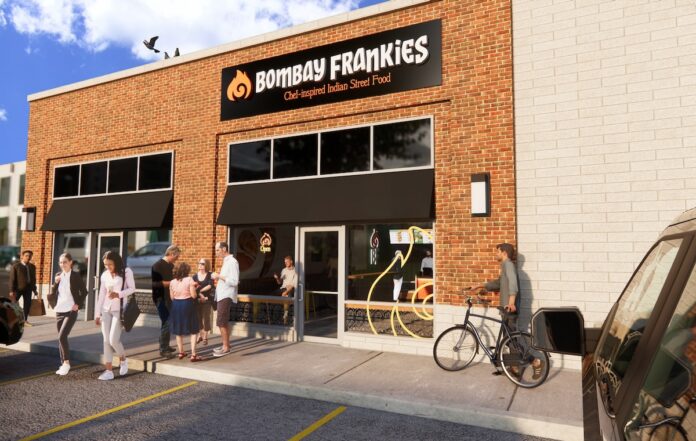
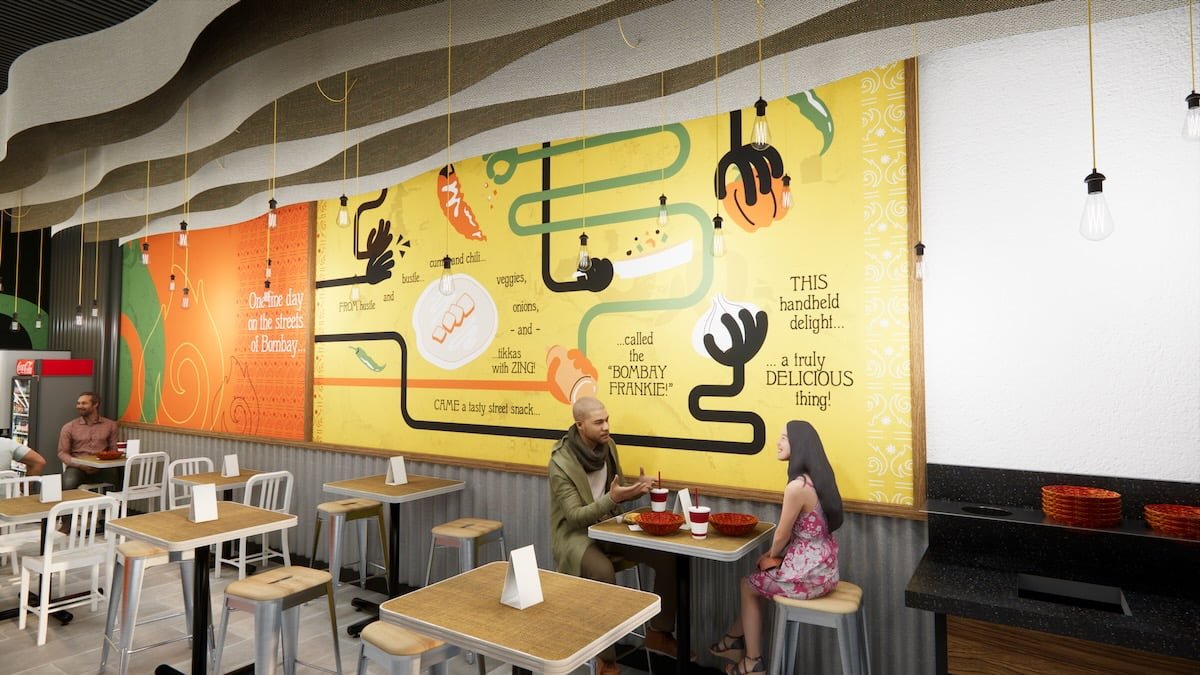
Celebrity Chef Vikram Vij is partnering with Eat Up Canada to launch a new chef-inspired Indian street food restaurant concept called ‘Bombay Frankies‘ in the Greater Toronto Area in September.
Newmarket will be Bombay Frankies’ first location in Canada with franchising opportunities to grow the brand.
Vikram Vij
Restaurant industry veterans and co-founders of Eat Up Canada, Alex Gerzon and George Heos, already have plans for Bombay Frankies’ growth and expansion across Canada.
“The goal is to open three to five locations in the first year, with the potential for more than 100 restaurants in 10 years,” said Heos. “Having seen the rise in popularity of Indian cuisine in Canada, we believe there’s a huge opportunity for Bombay Frankies in the fast casual restaurant sector.
Rendering: Bombay Frankies
“We really wanted to start with a great site. It wasn’t so much which specific market it would be. Our strategy is going to be to locate our restaurants in very high quality shopping centres and this is one of those types of shopping centres. We’re building a brand that is going to have mass appeal.
George Heos
“Sometimes I think people think that it’s a so-called ethnic brand and shouldn’t you be going into a market that is predominantly that ethnic group. Our strategy is really to build a brand that is going to be enjoyed by Canadians as a whole rather than targeting all these specific demographic groups.”
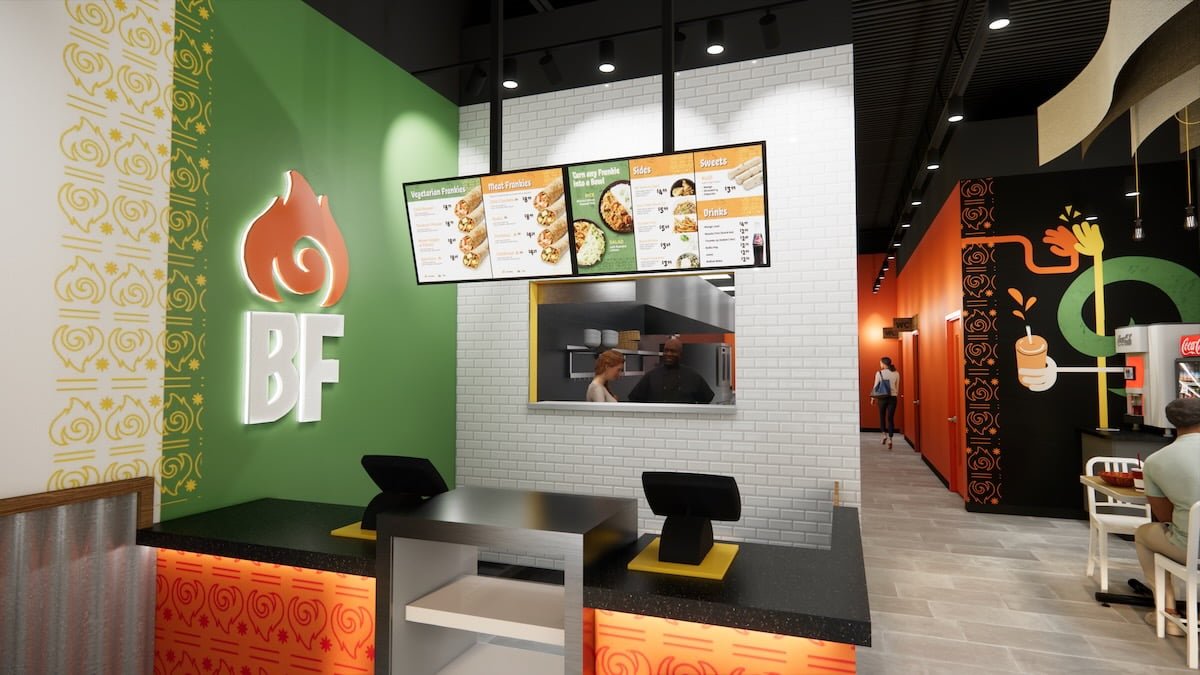
The restaurant is named after India’s all-time number one street food, the frankie roll, which originated in the city of Bombay. The frankie is a handheld, burrito-style flatbread wrap called a paratha, filled with meat or vegetables and Indian spices and sauces. Bombay Frankies will serve a variety of meat and vegetarian frankie options, plus frankie bowls, salads, side items and drinks.
Rendering: Bombay Frankies
Celebrity Chef, restaurateur, cookbook author and TV personality Vij will oversee menu development as the team prepares for the grand opening of the first Bombay Frankies in Newmarket, at Yonge Street and Green Lane at the Green Lane Centre, in early September.
“Those AAA type newer centres is what our strategy will be,” said Heos.
Franchising opportunities are available, and Eat Up Canada is looking for great locations for Bombay Frankies across the GTA and Ontario, ideally between 1,200 and 1,500 square feet.
“My partner Alex Gerzon and I have collectively been in the restaurant industry over 50 years,” said Heos. “We realize that at the end of the day a restaurant concept is successful because of the food. Marketing and branding and all that is great but people choose based on their stomach. Does it taste good and do they feel good about eating it?
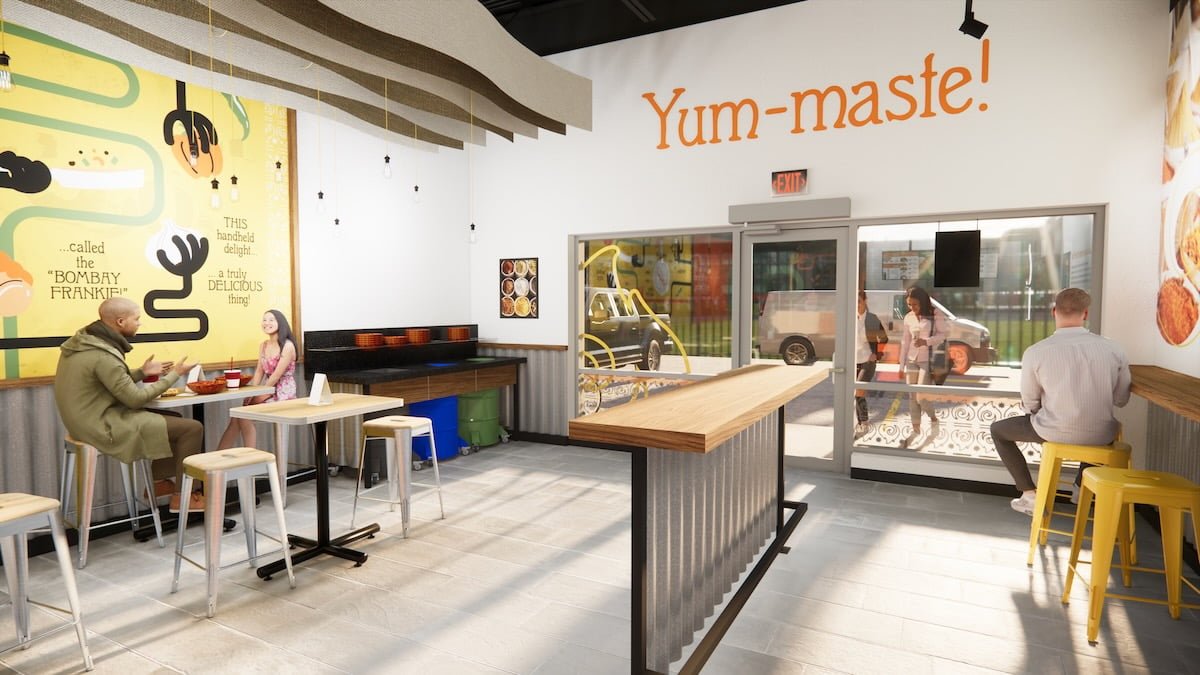
Rendering: Bombay Frankies
“We fell in love with this product when we first tried it about three years ago. We didn’t know anything about it, what a frankie was. And we tried it and we found it was very, very craveable. And as we started to do more research we realized this was India’s number one street food, available widely there. And we just thought this was a product that we really could build a brand around. It was something that we believed Canadians will love.
“It’s an affordable handheld product that can be made quickly, enjoyed whether it’s on the go or it’s going to be a great delivery, pick-up product which is obviously very important these days. At the end of the day, it’s an opportunity to expose the wonderful tastes and flavours of India in a format that a lot of Canadians would be comfortable with, which is a handheld burrito-like product.”
Alexander Gerzon
Heos said he and Gerzon feel so fortunate to work with Vij, someone who is so accomplished in the Indian space and is so passionate about this project. He was born in India and is from Bombay. It’s one of the reasons Eat Up Canada is so confident in the brand. People rave about his food and Vij is not just a chef but a restaurateur as well. He believes in hospitality and guest service.
“Frankies have always been dear to my heart because they bring me back to the streets of India, its culture and deep-rooted food history. Namaste and enjoy,” says Vij.
Eat Up Canada, which was formed in 2021, is the Canadian master franchisee for Pokeworks and is focused on developing restaurant brands new to Canada. Prior to launching Eat Up Canada, Heos and Gerzon were the co-founders of Onfire Restaurants Inc. and have held senior roles in franchising, real estate, construction, finance, marketing, and operations at some of Canada’s largest restaurant companies.
Winnipeg-based FGC Health continues to grow its footprint in the pharmacy space with the acquisition of five Calgary drug stores.
FGC, which owns, operates, and services independent pharmacies, medical clinics, home health care and ambulatory care services, now has 10 pharmacies in its portfolio – three in Ontario and seven in Alberta – which are being branded as Healthful Pharmacy, which will be launched in the third quarter of this year.
Dalbir Bains
“Our ongoing success has provided us the chance to continue growing and expanding our network of retail pharmacy locations, and with that opportunity we plan to bring our innovative and modernized approach to managing retail pharmacies and their customer experiences to Canadians all across this country,” said Dalbir Bains, CEO of FGC Health.
The company has also announced the hiring of industry veteran Trevor Paynter as Executive Vice President of Pharmacy Operations. Paynter joins FGC Health after 20 years working in the retail pharmacy industry, most recently serving as the Director of Pharmacy and Retail Operations for Walgreens.
Trevor Paynter
“With Trevor Paynter joining our team at the helm of this ongoing expansion and transformation, we are primed to bring positive change and innovative strategies to the industry as a whole, and these recent acquisitions play a significant role in making that a reality,” added Bains.
The company’s newest acquisitions in Calgary include Hope Medicare, Whitehorn Pharmacy, and three Martindale Pharmacy locations.
FGC Health began in January 2020. The company’s initials stand for Freedom, Growth, Community.
“The plan is to reach about 50 pharmacies by the end of the year,” said Bains.
“With seven pharmacies in Alberta, one of the things we really gain is tremendous knowledge and experience in how to provide personalized services that pharmacists can do under an expanded scope . . . For us, Alberta is the most progressive province. So we wanted to certainly have a strong presence there because that’s where we think the future of pharmacy is going, more in terms of service as opposed to just product. But in Ontario they also announced a progressive program Minor Ailments where pharmacists will be able to prescribe medications under certain protocols.
Image: FGC Health
“That gives us the opportunity to apply the same knowledge in the Ontario market. Obviously Trevor is leading that effort.”
One of the initiative’s key components is the pharmacy partner program where pharmacists will have an equity position in the business.
“A lot of the young pharmacists are finding it hard to get in because the prices have gone up and a lot of the female pharmacists because of mat leave and other issues are also finding it hard to own. So we’re looking at different models to bring in people,” said Bains.
“We just brought in our first female pharmacy partner recently and what it does is it puts the power back in the hands of the people that deliver the care. With the right information, the right data, the right interventions given to them. That’s the key. It has to be together.”
Bains said the company is focused on community – how can the pharmacy go from being a pill dispenser to a community resource. It’s the mindset it takes as it believes community is what drives big change. The strategy is to be able to provide multiple services through the pharmacies.
“As I looked for the next step in my career within the healthcare and retail pharmacy field, FGC Health and its mission of transforming the customer experience at pharmacies across Canada stood out to me, and I could not be more excited to join the team and to serve a key role in this mission moving forward,” said Paynter. “Stepping into this role has provided me the opportunity I have always looked for to change the industry and empower the owners and operators of retail pharmacies while putting the customer experience at the forefront of the field.
Image: FGC Health (Bradford Store Signage)
“It’s about having the pharmacists being able to practice at the top end of their license. We talk about the community, it’s really important to think about how the pharmacist is truly the most accessible health care provider in the community . . . We’re looking to have a full complement of the health services that we’re taking to the market.”
Bains said independent pharmacy is suffering right now and comparison sales have been declining for the vast majority of independents. Some of that is because many independents were not ready for the COVID-19 pandemic. That customer wave was lost.
“For us now, it’s really not about us putting in money to own our own pharmacies but we’re doing it largely because we think there’s a better way and that better way is to hold on to the one advantage that all these independents have which is the personalization of service,” said Bains. “There’s a personalization of care that is very difficult to replicate by chains.
“We believe that with that personalized care model with the right environment around those businesses, they will win and they will win by one measure, which is patient outcomes. Patients will do better under their care than somewhere else. And so we’re trying to basically get to the market with tools and programs to basically lift up the independent to say no we’ll compete now and kick the chain’s ass.
“This is about a renaissance involving independents. We’re certainly one of many who are supporting this evolution but we’re very excited about being I would say the underdog in this whole fight.”
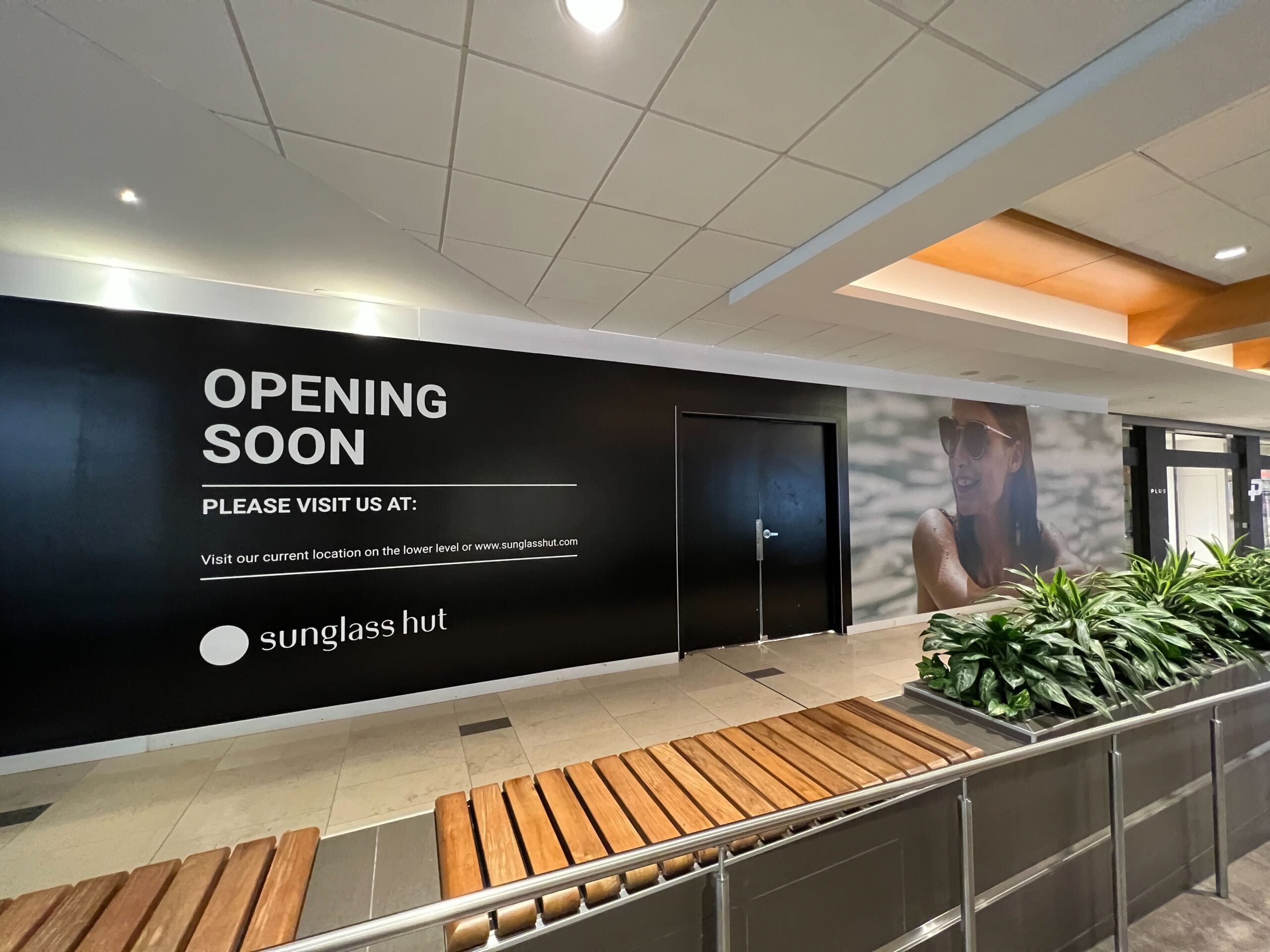
Future Sunglass Hut on the Upper Level at CF Pacific Centre in downtown Vancouver (May 2022). Photo: Lee Rivett.
International retailer Sunglass Hut, owned by Italian-based Luxottica Group, will be relocating within CF Pacific Centre in downtown Vancouver.
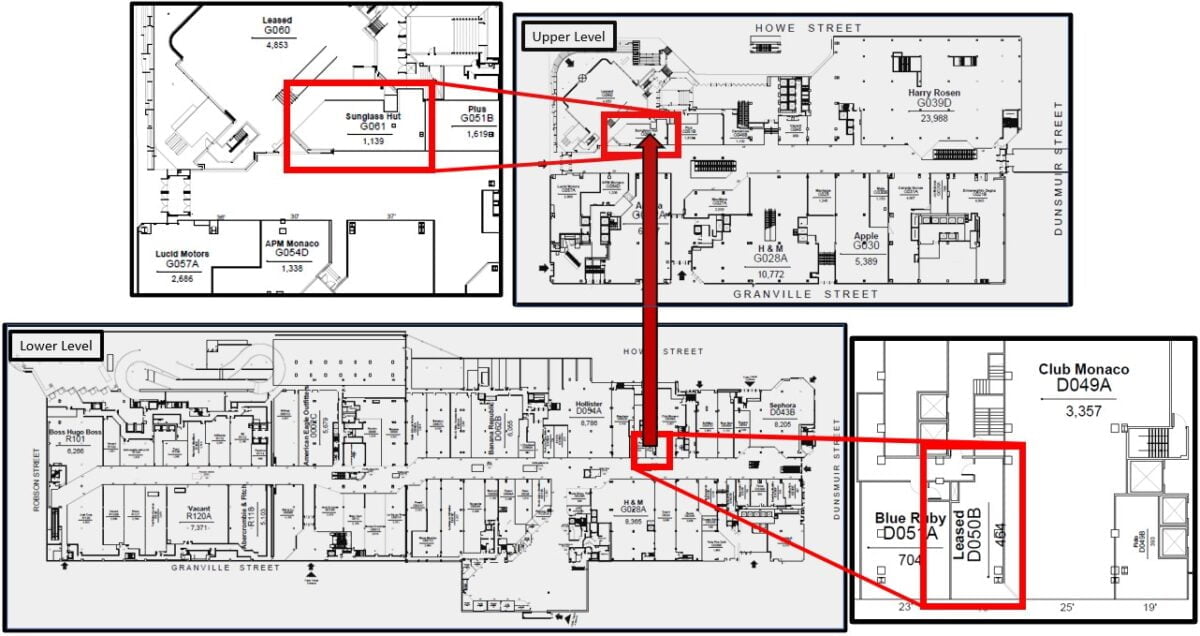
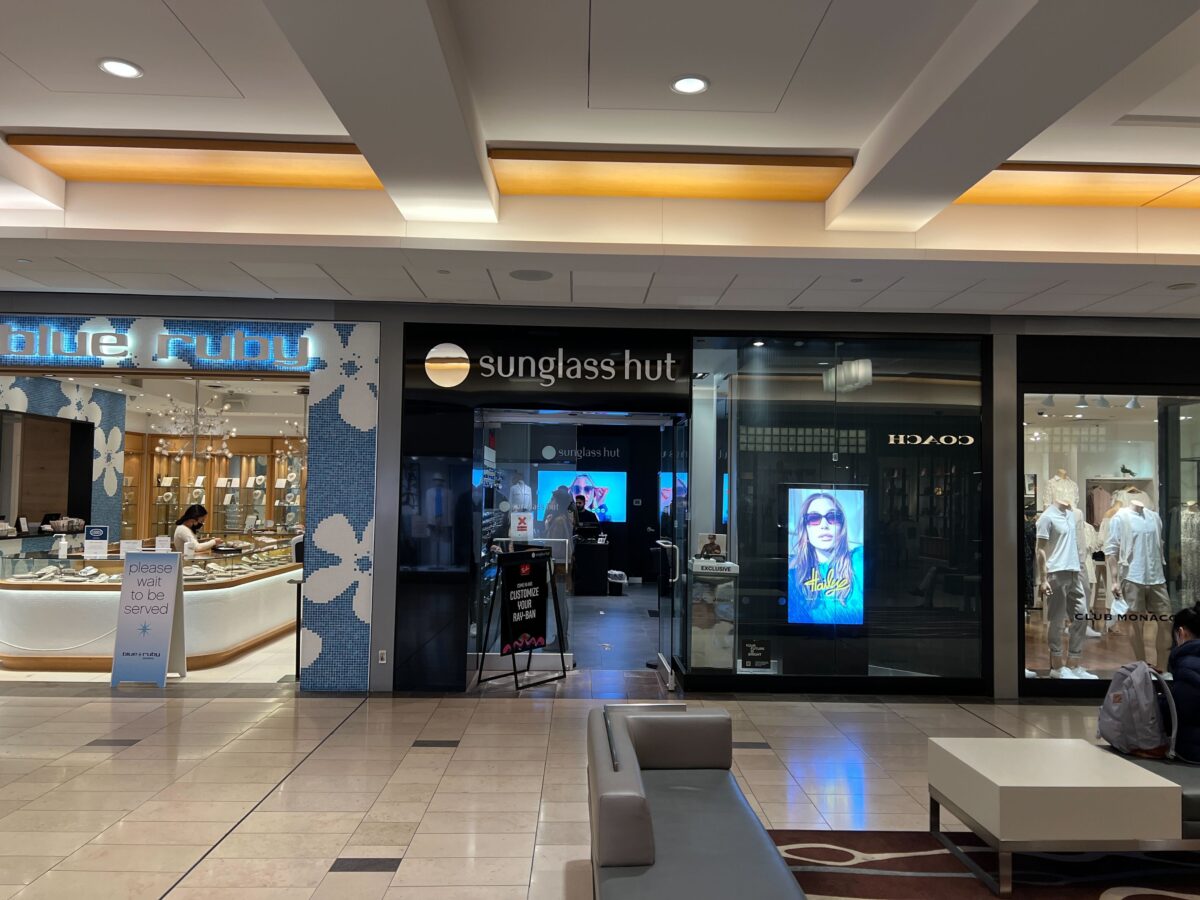
The retailer is currently in a 463 square foot location on the lower level between Vancouver-based Blue Ruby jewelers and Canadian retailer Club Monaco.
Sunglass Hut Relocation Map at CF Pacific Centre. Map: Cadillac Fairview with notations by Retail Insider.
Current Sunglass Hut on the Lower Level at CF Pacific Centre in downtown Vancouver (May 2022). Photo: Lee Rivett.
Sunglass Hut was founded in 1971 by optometrist Sanford L. Ziff in Miami, Florida and continued to grow until 1986 when investment firm Kidd, Kamm & Co. purchased a 75% stake in the company and the remaining stake in 1991.
In the mid-90s, the company went onto the New York stock exchange and expanded into selling watches under the retail banners of Watch Station, Watch World, and as combined Sunglass Hut-Watch Station stores.
In February 2001, the Luxottica Group acquired Sunglass Hut and associated watch retail chains.
Sunglass Hut Locations in the Greater Vancouver Area. Photo: Sunglass Hut Store Locator Map
Sunglass Hut has boutiques in Hudson’s Bay and Cabela’s retail locations and operates ten standalone retail locations in the greater Vancouver area at: