Advertisement
Advertisement
Home Blog Page 869

BRIEF: Intermix Exiting Canada, Chicken Chain Opening 30 Locations in Canada, Luxury Mall for Downtown Vancouver

Retail Insider Brief collage

US-Based Dave’s Hot Chicken to Open 30 Locations in Canada, Starting in Toronto

Los Angeles-based Dave’s Hot Chicken will open its first international location next month in Toronto’s Parkdale neighbourhood at 1582 Queen Street West. A national expansion is planned over the course of 2021 with about 30 locations planned.

Exterior of Dave's Hot Chicken. Photo: Dave's Hot Chicken
Exterior of Dave’s Hot Chicken. Photo: Dave’s Hot Chicken

The fast-casual concept specializes in hot chicken tenders and sliders which are offered at seven various spice levels, ranging from No Heat to Reaper (which requires a signed waiver for those who dare), and a variety of sides including house-made kale slaw, creamy mac n’ cheese, and crispy french fries. The menu will feature items that are unique to Canada with locally sourced craft beers and classic Dave’s Hot Chicken staples shaped around ‘Canadian cuisine’.

Interior of Dave's Hot Chicken. Photo: Dave's Hot Chicken
Interior of Dave’s Hot Chicken. Photo: Dave’s Hot Chicken

Toronto-based Obelysk Foods Ltd. is the Canadian franchisee who is bringing Dave’s Hot Chicken to Canada. Blair Bitove, Director of Business Development, Obelysk. “In just a few years, Dave’s Hot Chicken has established a cult and celebrity following across the US with its craveable menu offerings and unique combinations of spices. We look forward to continuing that momentum across Canada and watching Canadians flock to the brand.”

Co-founder and Chef Dave Kopushyan, along with his three best friends, came up with the idea for Dave’s Hot Chicken in early 2017. Dave is a classically trained chef, and self-described ‘spice freak’ and says he was inspired by the unique, flavourful spice of Nashville Hot Chicken and set out to create his own version. Dave’s Hot Chicken is one of the fastest-growing restaurant concepts in history, with more than 200 locations under contract across the US since it began franchising in 2019.

Intermix to Shut Only Canadian Store

Exterior of Intermix store before the brand's imminent departure from Canada. Photo: Craig Patterson
Exterior of Intermix store before the brand’s imminent departure from Canada. Photo: Craig Patterson

Gap-owned, multi-brand luxury retailer Intermix will shut its only Canadian store next month as the company downsizes its footprint. Intermix opened at 130 Bloor Street West in September of 2011.

The Gap acquired Intermix in 2012 with plans for further expansion. Intermix at the time was competing with another edgy multi-brand retailer, Scoop, which was also expanding across the United States.

Interior of Intermix store before the brand's imminent departure from Canada. Photo: Craig Patterson
Interior of Intermix store before the brand’s imminent departure from Canada. Photo: Craig Patterson

WWD reported in January of 2011 that the 2,500-square-foot Toronto Intermix flagship was the start of a rollout of Intermix stores across Canada. Under the Gap’s ownership, that Canadian Intermix multi-store expansion never came to fruition.

The space won’t be vacant for long as brands look to open stores on Toronto’s ‘Mink Mile’ which houses flagships for brands such as Hermes, Louis Vuitton, Dior, Burberry, and others.

Luxury Retail Shopping Centre Proposal for Downtown Vancouver

Rendering of the 1045 Haro Street Vancouver retail podium. Rendering Intracorp

Developer Intracorp is proposing a unique 42,000-square-foot mini shopping centre in downtown Vancouver that would be at the base of a 55 storey luxury condominium tower. The two-level retail plaza at 1045 Haro Street would include 19,000 square feet at street level with an additional 23,000 square feet on the second level.

The site at the northeast corner of Thurlow Street and Haro Street will feature a diagonal galleria that will extend from the corner of Thurlow Street and Rosemary Brown Lane through to a new public plaza that will face onto Haro Street. Rosemary Brown Lane is expected to be revitalized for commercial uses, as was the case with the laneway directly north of Robson Street’s 1000 block.

The developer won’t say what type of retail will move into the new centre, though it noted the possibility of a restaurant with patio space on the second level. A source being consulted for the project tells Retail Insider that the project is looking to court luxury retailers for the complex with a particular focus on the Thurlow Street side for big-names. This would bring luxury retail south from the Alberni Street and Thurlow Street intersection and could result in much needed space for luxury brands looking to open or expand in the Vancouver market.

BRIKA Moves Online

An element of the Brika merchandised content studio at First Capital Realty's luxury Yorkville Village property. Photo: Brika
An element of the Brika merchandised content studio at First Capital Realty’s luxury Yorkville Village property. Photo: Brika

BRIKA, Toronto-based retail agency that creates experiential retail pop-ups for property developers and brands, has quickly pivoted their offline activations to provide an omni-channel experience at First Capital Realty’s luxury Yorkville Village property. The holiday pop-up, which was to take place in-person for the month of December, has now become a fully decorated and merchandised content studio and curb-side pickup location. This initiative has been launched in partnership with florist Bloom Service. In addition, a mirror e-commerce site has been launched at brikapopup.com.

This curated shop includes nearly 30 small and local businesses, and there is momentum to support local and small given the shut-down of retailers currently.

In addition to their Canadian pop-ups this winter season, BRIKA opened a concept shop “The Art of the Cozy” on December 15th in Aspen, Colorado. Featuring nearly 30 elevated brands, this curated store is in the centre of the city where retail occupancies are at nearly 100%.

By The Namesake Launches ‘Namesake Studio’: An Interactive Toronto Studio Space and Lifestyle Extension

Upstairs office of the Namesake Studio. Photo: By The Namesake

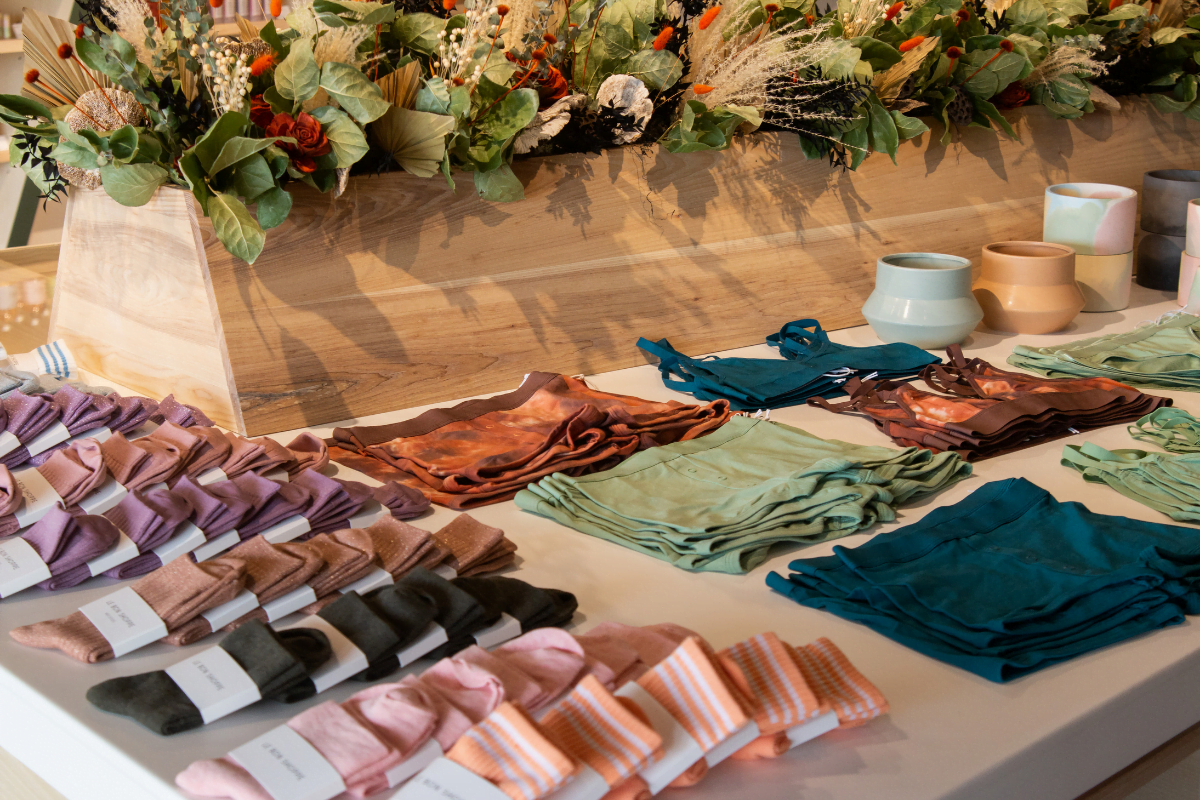
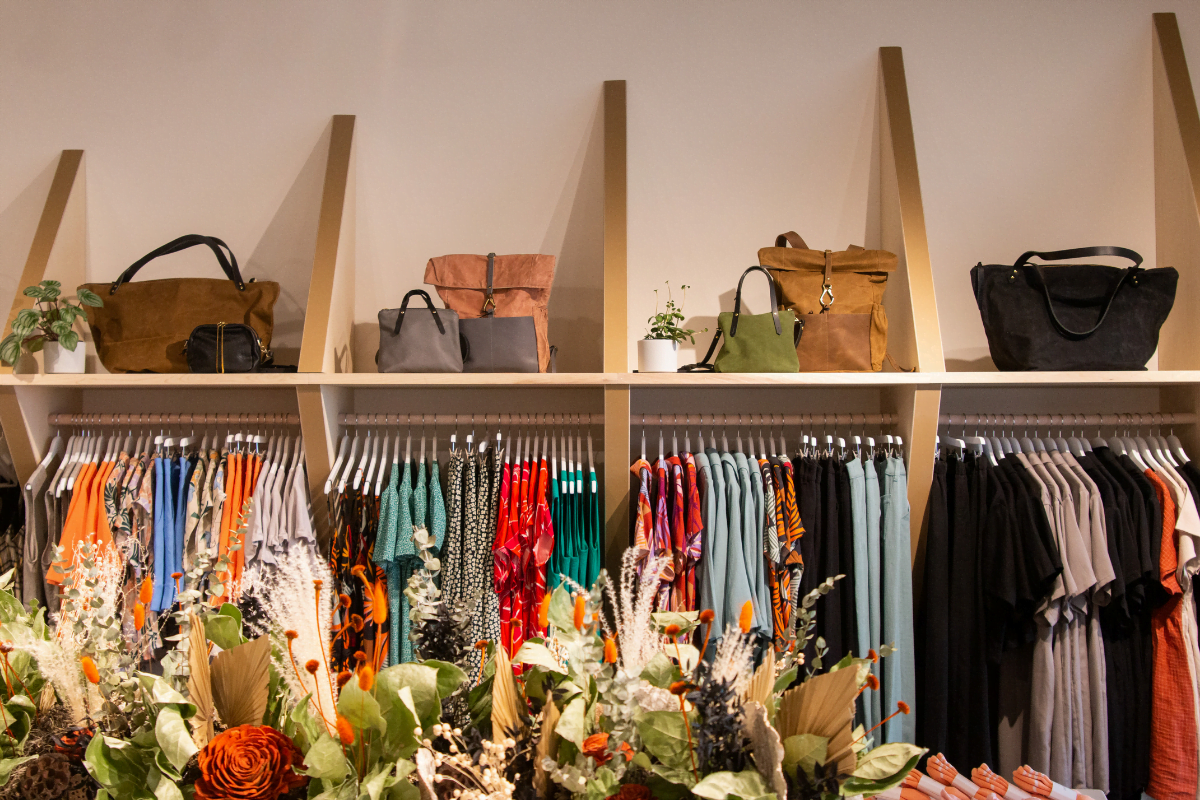
By The Namesake, a luxury custom leather brand, launches Namesake Studio: an interactive space that functions as a showroom, production facility, photography studio, event, and retail space.

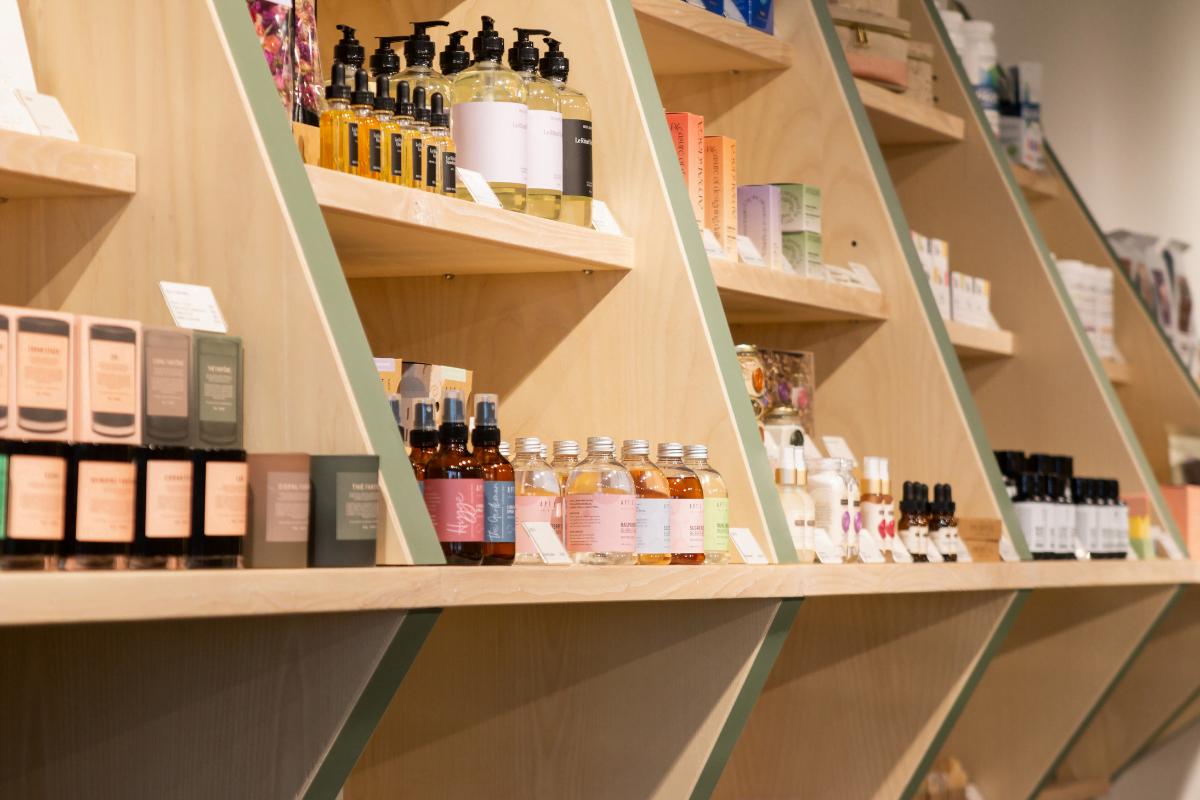
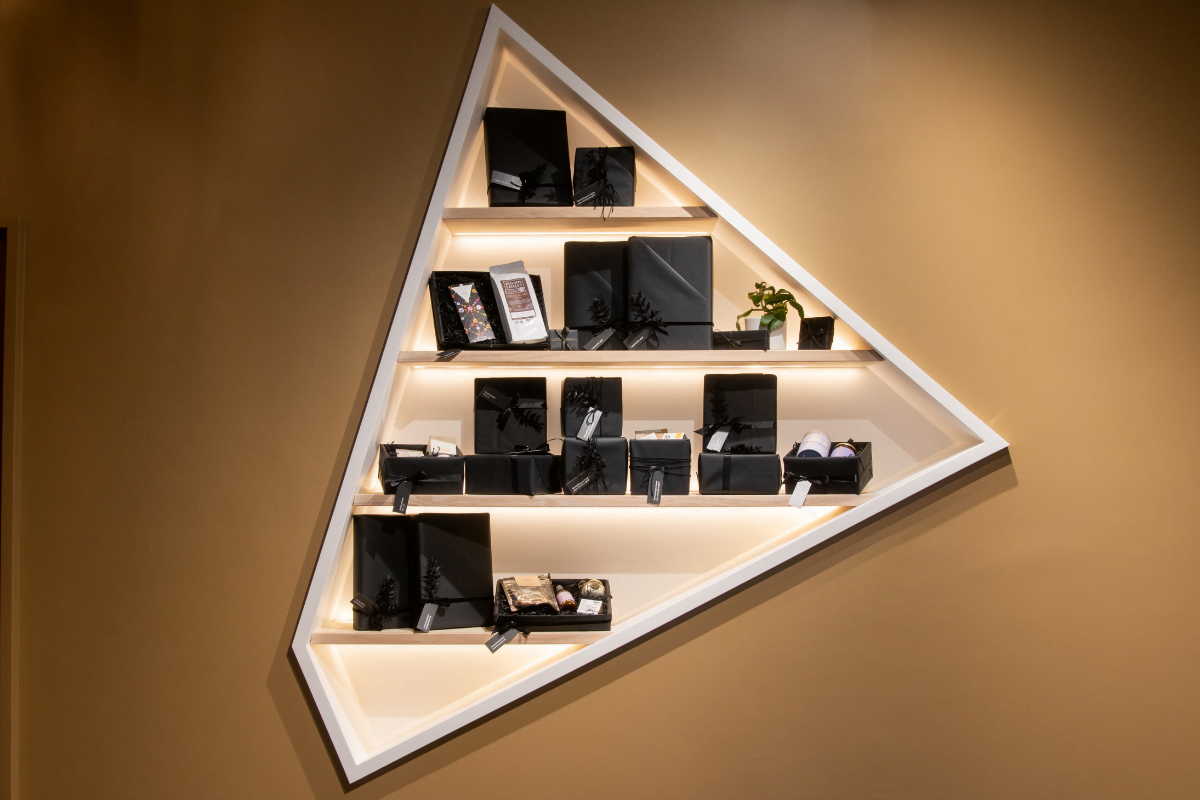
Namesake Studio goes beyond the physical with a lifestyle extension including ready-to-wear and accessories designed to pair with the brand’s leather jackets, along with a curated selection of leather infused homeware. As a creative, the founder of By The Namesake, Rosa Halpern, has yearned for a unique concept studio to not only provide a haven for her team but a dynamic space that clients and fellow creatives within the industry can use.

Founder Rosa Halpern (center) with ATG’s Ryan Gibson (left) and Interior Designer Ali Budd (right)
Founder Rosa Halpern (centre) with ATG’s Ryan Gibson (left) and Interior Designer Ali Budd (right)

With the help of Ali Budd, owner of Ali Budd Interiors, and Ryan Gibson, owner of Against The Grain Remodelling, the space, which was once an industrial shipping warehouse, has been transformed into a leather wonderland. The over-the-top decor includes a two-story cow-hide runner and leather-wrapped bar tops and benches that are meant to inspire visitors to help them imagine the endless possibilities of custom leather. The vision for her new home-base propelled Halpern to create an extension of the By The Namesake rock ‘n’ roll lifestyle — she took the opportunity to fill the space with an ever-evolving market approach consigning from local businesses and artisans, along with items made in-house that would complement her leather jackets and curated interiors.

Halpern built out the wearable extension in response to customer queries on how she styles her leather jackets and pants: “My customers have always asked me how to style their jackets with other clothing, often asking me where my full outfit was from. I started By The Namesake with the desire to create jacket styles that I could not find on the market and I am so excited to launch an extension that will advance the story of the brand, while reflecting on my own personal style.”

The extension includes six black silk basic styles; a jewelry line in collaboration with Mark Lash, one of Canada’s most prominent jewelry designers; and a curated selection of rare, globally-sourced first-generation vintage rock band t-shirts from the ‘80s and ‘90s.

The brand continues to carry their already existing personalized candles and leather bins while adding a new assortment of home accessories to its product lineup. Along with the in-house lifestyle items, Halpern has filled the studio with accessories, artwork, and homeware that offer a retail platform to other local small businesses and artisans, including Coup de Tete, SAMD, Hannah Candle, Tahsin The Good, Carmel Floral, and Mellah Projects.

The Namesake Studio lifestyle expansion will be available for purchase online at www.bythenamesake.com and in person at Namesake Studio, 95 Florence Street, Toronto.

Southcentre Mall is Taking a Community-Forward Approach to the 2020 Holiday Season

Exterior of Southcentre Mall. Photo: Southcentre Mall

This holiday season, Southcentre Mall is implementing a community-forward approach to the holidays by focusing on giving back to those in need and supporting local businesses. Southcentre is inviting guests to help raise 350,000 meals for Food Banks Canada, in addition to continuing to champion the shop local movement on behalf of Calgary-based retailers that call the mall home.

Food banks around the country have experienced a 20% increase in the number of people needing support, and that number is continuing to rise. While most Calgarians were being told to stock up on supplies during the pandemic, those who struggle with food insecurity have not had that privilege.

Southcentre is calling on the Calgary community to offer a final wave of support to Food Banks Canada as the year comes to a close with its unique #PassThePlate2020 campaign. The campaign first launched in October and provides multiple ways to give back both virtually and in person by using #PassthePlate2020 on social media, donating outstanding balances from mall gift cards and scanning QR codes located throughout the mall.

Southcentre is also dedicated to supporting local entrepreneurs year round and focuses on breaking down barriers and providing opportunities that smaller enterprises might not normally have access to in order to help them achieve long term success and sustainability. This holiday season, Southcentre is helping shoppers to identify its local retailers with special stickers on storefronts. Oak & Tonic, Joydrop, Collab, Lamose, and Adesso Man are just a few examples of local retailers who have grown their businesses at Southcentre.

Southcentre has also introduced a number of initiatives to make shopping safer and simpler during the holidays. Shopping hours have been extended (open until 9pm on weekdays), guests can now virtually save their spot in line for specific retailers with Save Your Spot. Curbside pick-up is also available and the ShopNOW tool allows guests to plan their shopping trip online before heading in-store.

Read More Retail Insider Briefs:

From In-House Studio to Serving Largest Canadian Retailers – 2 Year Anniversary of StylePhotos

Stylephotos website homepage

Retail Insider was one of the first sources to report on the inception and development of new e-commerce photography start-up StylePhotos Canada. StylePhotos is now celebrating two years of business, remembering its origins as an in-house studio for their own e-commerce platform OriginalLuxury.

Today it has become a go-to studio and one of the leaders in e-commerce content creation for the largest Canadian and U.S. retailers as well as independent entrepreneurs. We met with one of the founders of StylePhotos, Khasan Aripov, to see how the processes have changed since the company’s launch in late 2018.

All three machines in the StylePhotos studio were fully occupied by the operators, who process boxes of products and create high-quality photo and video content for e-commerce retailers. One of the most important questions we had was related to the pandemic and the changes and challenges it created for the business. Mr. Aripov notified us that during the full-lockdown in Toronto the business suffered just like any other business, since the studio had to shut down their operations completely. Given the caliber of clients that StylePhotos currently serves, a large backlog started to form. When the lockdown restrictions were lifted however, and the studio began to operate again, the whole StylePhotos team was operating full-time to support their clients and their businesses with much needed content.

When asked about the main reason for StylePhotos’ success in partnering with the largest retailers and acquiring a large customer base of individual entrepreneurs, Mr. Aripov said that he believes that the unique and systematic approach taken by StylePhotos allowed the company to appeal to all tiers of retailers.

StylePhotos developed its own software solutions to streamline the ordering process by creating a digital style guide for its clients — this way every photography order is consistent and every machine operator knows exactly what light, shadow, and angles have to be maintained. This approach allowed the company to implement extremely competitive pricing  which is based on volume orders; something that did not exist in e-commerce content creation before. A traditional approach of shooting products was considerably more expensive, time consuming, and inconsistent — which resulted in lower sales and higher returns for the clients ordering e-commerce content. The most important factor for success is that StylePhotos eliminated human error. The unique systems and technologies utilized by StylePhotos provide unprecedented consistency to its clients. StylePhotos also offers one-price-for-all strategy, where every client (regardless of company’s size) is paying  the same pricing that already includes editing, post-production and product prepping. With this approach, clients are fully aware of the cost of services, and will not be facing any additional charges.

Mr. Aripov also noted that the current situation in the retail industry is alarming — players of all sizes are exiting the market, or facing unprecedented loss of cash-flows. The old mentality of larger retailers of focusing on brick and mortar stores is no longer applicable — companies that fail to offer their products online without a doubt will become obsolete. The overhead costs from rent, utilities, large staffing requirements and constant  inventory ordering threaten well being even of the largest retailers.

Mr. Aripov also mentioned that StylePhotos is currently partnered with a small tech start-up from Switzerland that is developing a unique solution to edit photos and videos virtually automatically, to further enhance the speed of content creation. This software is built using machine learning and most advanced algorithms to ensure accuracy  and reliability of the solution.

We also asked Mr. Aripov if StylePhotos has reached its peak in terms of capacity, to which he replied that currently StylePhotos outgrew itself in terms of current location and equipment. Given the large client portfolio that StylePhotos currently has, it is apparent that the need for expansion is imminent. Mr. Aripov and his team are also working with potential investors who are approaching StylePhotos to find the right investor that would assist StylePhotos in expanding. Further expansion within Canada as well as the United States are a priority according to Mr. Aripov.

“We started off as an unknown studio 2 years ago,” said Mr. Aripov. “However in two years we were able to transform and grow to become one of the leading e-commerce content providers, thanks to utilization of cutting edge technologies, and well-thought systems that were put in place. We are  looking for the right investor who sees the potential of this market to expand our operations to increase our capacity and capabilities to capture a larger share of the e-commerce content creation market. We are confident that the demand is there, and with the right partner we will substantially increase our client base and subsequent revenue.”

The COVID era may have shuttered many businesses in the retail and hospitality industries, but we are glad that this has given an opportunity for companies like StylePhotos to disrupt the industry and help businesses transition towards e-commerce in an affordable manner.

Luxury Multi-Brand Retailer ‘The Webster’ to Open 1st Canadian Store in Toronto’s Yorkville Neighbourhood

Rendering of The Webster Facade in Yorkville. Rendering: The Webster

Miami-based multi-brand luxury retailer The Webster will open its first Canadian storefront in July of 2021 in Toronto’s affluent Yorkville neighbourhood. The Webster is expected to disrupt luxury retailing in the city with an innovate strategy that includes one-on-one clienteling and a selection of luxury goods that in some instances are not sold elsewhere.

The Webster’s Toronto store will span about 6,500 square feet in a heritage building at 121 Scollard Street near the corner of Hazelton Avenue. The building was built in 1884 by Leeds Sheppard and it will be preserved and designed by Stéphane Parmentier, a Parisian interior designer who is also the creative director of The Webster Home vertical.

The Scollard Street store will be The Webster’s eighth retail store and the brand’s first outside of the United States.

Laure Heriard Dubreuil

Laure Heriard Dubreuil, Founder and CEO of The Webster, said, “It is absolutely incredible to think that we will soon have a permanent international outpost! I am so grateful for the success and support that The Webster has had domestically thus far, and I am so excited for the new adventure that awaits us in Toronto. It is such an energetic city full of life and experiences, a perfect fit for our colourful curations. I am looking forward to working with Stephane again to bring another one of our visions to life.”

121 Scollard Street prior to renovations. Photo: First Capital REIT

First Capital REIT owns the 121 Scollard Street building which is currently undergoing a renovation to house The Webster.

“First Capital are wonderful partners and we have been completely in sync since the start with our execution of luxury retail, as we both believe in creating more than a shopping experience for our clients,” she said.
Eric Sherman, Vice President, Real Estate-Yorkville at First Capital REIT said, “We are thrilled to welcome The Webster’s first international flagship to Toronto and specifically to our portfolio in Yorkville. The Webster has quickly emerged as one of the most prestigious and coveted luxury concepts in the world. They are committed to delivering unique and curated experiences within a luxury environment that mirrors First Capital’s approach to the neighbourhood as a whole. We are proud to deliver another creative transformation of a gorgeous heritage building in Yorkville which has become the chosen destination for luxury concepts and consumers alike.”

Michiel Maes, Chief Operating Officer of The Webster, said, “Toronto had been on our radar for a while. It’s one of the largest and most diverse cities in North America, and it welcomes a large number of international tourists every year. Those are all factors that have shown to be huge drivers for our success since we started in Miami 12 years ago. We thus see an enormous demand for luxury fashion in Toronto.”

The Webster is expected to take some market share from retailers such as Holt Renfrew and Saks Fifth Avenue — some of the same brands are carried at those stores, with The Webster boasting a unique assortment not found elsewhere. Founder Laure Heriard Dubreuil for years developed relationships with key brands and obtains some merchandise via consignment. Prior to founding The Webster, Ms. Heriard Dubreuil lived in Paris and worked as a top merchandiser for Balenciaga and Yves Saint Laurent.

More than 100 of the industry’s leading fashion designers are available at The Webster stores including ready-to-wear for women, men, and kids. Brands include Alexander Wang, Amiri, Amina Muaddi, Balenciaga, Bottega Veneta, Burberry, Celine, Chanel, Chloé, Dior, Dries Van Noten, Fendi, Fear of God, Givenchy, Gucci, Heron Preston, Jacquemus, Khaite, LaQuan Smith, Loewe, Marine Serre, Off-White, Paco Rabanne, Palm Angels, Raf Simons, Rhude, Saint Laurent, and The Row among others. A private label brand called LHD, designed by the founder herself, adds an extra element of uniqueness with bold silhouettes and playful prints.

The Webster also features an expanded assortment of products including fine jewellery, home goods and most recently, beauty products.

The Webster was founded in 2009 when Laure Heriard Dubreuil opened a 20,000-square-foot store in the former Webster Hotel at 1220 Collins Avenue in South Beach, Miami. The Art Deco building spans three floors and became a draw for locals and tourists. “The idea was a place where you can feel very comfortable,” said Ms. Heriard Dubreuil of The Webster’s concept. “It’s a place to spend time. You arrive, you take off your shoes, you’re at someone’s house, or you’re in your gigantic closet, and you can try everything.” Rather than organize the store according to brand, Ms. Heriard Dubreuil merchandised it as if it were a personal wardrobe by mixing big brands with the emerging, arranging everything intuitively by mood, which was revolutionary at the time.

A decade after opening the first location, The Webster opened stores in Bal Harbour (Bal Harbour Shops) near Miami, in Houston Texas (adjacent to Houston Galleria) , at South Coast Plaza in Costa Mesa California, in New York City’s SoHo area, in Los Angeles at the Beverly Center, and most recently in Montecito California. The Webster also has an outlet store at Sawgrass Mills in Florida. Each store has its own personality.


Collaborations and limited edition product availability are also part of The Webster’s appeal. The retailer has partnered with brands such as Paco Rabanne, Off-White, and Fenty, and has permanent collaborations with David Mallett and Joanna Czech who operate studios out of The Webster’s SoHo location in New York City.

The Webster’s retail strategy seems to be working. Despite the COVID-19 pandemic, sales are up significantly for the retailer this year over last which speaks to the power of personal relationships with its top clients. In Toronto, The Webster is expected to court some of the city’s wealthiest and trendiest residents.

Interactive Google Map of !21 Scollard Street and surrounding area.
Interactive Google Map of 121 Scollard Street and surrounding area.

This week the 121 Scollard Street building was under tarp and construction could be heard within. An expansion at the back of the building could house a restaurant space according to one source, with the front of the building dedicated to fashion. It’s unclear what colour The Webster’s Toronto building will be — the retailer’s South Beach flagship and Beverly Centre locations both feature pink facades. One source said that the Toronto store could be painted gold.

The location of The Webster in Toronto is unique. Scollard Street is a much quieter street when compared to nearby Yorkville Avenue and Cumberland Street. Bylaws state that new restaurants are not permitted to open on Scollard Street, which is home to a mix of upscale retailers and service businesses as well as several multi-million dollar residential townhouses. The Webster will be located next to fashion retailer George C. which fronts onto Hazelton Avenue, with fashion guru Nicholas Mellamphy’s by appointment luxury showroom Cabine being located across the street on Hazelton Avenue.

Yorkville Avenue, located a block south of Scollard Street, has seen a flurry of leasing activity since 2016 that included the addition of several luxury brands. Christian Louboutin, Chanel, Off-White, Brunello Cucinelli, Versace, Stone Island, and others have opened on Yorkville Avenue and more brands are said to be in talks to open on the street as well. To the south of Yorkville Avenue is Cumberland Street which features a mix of retail and restaurants, and a block south of Cumberland Street is the prestigious ‘Mink Mile’ stretch of Bloor Street West which houses flagship stores for some of the world’s top luxury brands.

The addition of The Webster to Toronto’s Yorkville will help the area attract other luxury brand stores. For the past several years, the Yorkdale Shopping Centre has attracted some of the world’s top luxury brands, which are now said in some instances to be looking to open second locations in Bloor-Yorkville. With recent announcements such as Italian luxury menswear brand Isaia’s move into Yorkville, the area is expected to see more luxury brand store announcements into 2021.

Plant-Based Retailer PlantX Opening 1st Canadian Flagship Store in Squamish

Exterior of PlantX Flagship in San Diego. Photo: PlantX

PlantX, a one-stop shop for everything plant based, is moving into the Canadian marketplace with a physical location in Squamish, B.C., with plans to grow its presence in the country through franchise operations.

Sean Dollinger, founder of the unique concept, said PlantX is the digital face of everything plant-based utilizing the power of education and accessibility. The company aims to be the most trusted and convenient online destination for those interested in a plant-based lifestyle.

PlantX was founded in December 2019. It became a website in April of this year. It went public in August.

Dollinger said the company is the digital face of the plant-based community. Its mission is to eliminate the barriers to entry for anyone interested in a plant-based lifestyle, with a goal to help individuals in living a longer, happier, and healthier life.

In Canada, the flagship retail location in Squamish will be 15,000 square feet with an expected launch at the beginning of the new year. The company also has a location in San Diego of 4,500 square feet.

“These are built as models for people to then be able to get franchises to then have their own stores and educate people and then also act as a distribution centre for the ecommerce platform as well,” said Dollinger.

The Squamish location will include a cafe, a restaurant with plant-based meals, and a plant-based education centre.

“Basically what we’re building out is a pop up store with a thousand different products to begin with to start showing people that plant-based living can be fun, taste great and they can actually be full,” said Dollinger.

“We are following in the footsteps of Apple, Microsoft and Tesla who believe that education fuels growth. We look forward to expanding the concept across North America through franchising and hope others will join us in the plant-based movement.

“We are not a brand. We’re a platform.” – Plantx

“We are not a brand. We’re a platform.”

The 15,000-square-foot Locavore Bar & Grill in Squamish will be redesigned as PlantX’s Canadian flagship location, keeping Locavore’s management staff. The popular Cloudburst Cafe will become the PlantX Cafe, with an updated design and new menu, keeping the top selling items. The company will use the space as a showcase for franchises including a multi-tiered pop-up shop concept, food truck and full-service bar for beer, wine and mixed drinks.

“It is very exciting for all of us to see our Canadian flagship location come to life,” said Julia Frank, PlantX CEO. “There are so many great features that showcase our brand under one roof and we can’t wait to implement them in all of our franchises across North America.”

Dollinger said the company has developed a franchise model to grow its footprint through North America and internationally.

PlantX offers customers across North America more than 10,000 plant-based products. In addition to offering meal and indoor plant deliveries, the company currently has plans underway to expand its product lines to include cosmetics, clothing, and its own water brand — but the business is not limited to an e-commerce platform.

The company says it uses its digital platform to build a community of like-minded consumers, and most importantly, provide education. It says its successful enterprise is being built and fortified on partnerships with top nutritionists, chefs, and brands. The company eliminates the barriers to entry for anyone interested in living a plant-based lifestyle, and thriving in a longer, healthier, and happier life.

Apple Fitness+ Disrupts Canadian Fitness Industry

Apple Fitness+ Suite. Photo: Apple

Prior to the COVID-19 pandemic, the Canadian fitness market place was becoming saturated amid competition for a slice of the Canadian fitness segment. COVID-19 chased Canadians into lockdowns and quarantines causing havoc on many levels, including affecting fitness routines from coast-to-coast. Some Canadians turned to eating their way through the pandemic but home fitness equipment sales skyrocketed.

Retail Insider reported in September 2020 on how gym memberships and attendance plummeted in Canada. Some fitness chains tried to pivot into online or virtual offerings like guided workouts or interactive Zoom-like sessions. December 2020 wrapped with an unpleasant gift to struggling fitness businesses as Apple launched its ‘Apple Fitness+‘ service which promises to disrupt the Canadian fitness industry.

Apple Fitness+ is an online platform that requires an Apple Watch to participate and provides guided workouts for treadmills, rowers, yoga enthusiasts, dance, core, strength, high intensity interval training (HIIT), cycling, and more.

Apple Fitness+ Workouts. Photo: Apple

Apple Fitness+ Reinventing Canadian Fitness Industry?

For our “type A” readers in the crowd, the simplest and quickest example of Apple Fitness+ disrupting the fitness industry can be summed up in the following consumer-focused example, based on using Apple Fitness+ since it launched on December 14, 2020:

  • Pre-Pandemic: Unlimited OrangeTheory Membership was $189 per month per person. 20 minutes to drive each direction to get to studio. 450 calories burnt during a 45 minute guided HIIT workout.
  • Apple Fitness+: Unlimited workouts (HIIT, rowing, strength, yoga, etc.) for $12.99 per month for a family up to five. 650 calories burnt in my basement home gym during 45 minute workout (broken down by a 20 minute HIIT, 20 minute jog on treadmill and a 5 minute mindful/guided cool down).

Based on price, Orange Theory cost $378 per month for a couple plus an hour of driving time (gas costs, parking, etc.) versus Apple Fitness+ cost of $12.99 per month for a couple.

Based on effectiveness, an OrangeTheory 45 minute workout burnt 450 calories on average for me. Apple Fitness+ burnt 650 calories in 45 minutes based on the workouts which were selected.

Based on time usage, OrangeTheory required a 40-60 minute commute to get to and from. Apple Fitness+ is in-home and it can be done anywhere (in a hotel, at home, in a fitness gym).

Apple Fitness+ is the clear winner based on price, effectiveness and time-usage which garners it the title of being a fitness industry disrupter. Even at launch, the variety alone is also an asset for the service.

Apple Fitness+ Classes. Photo: Apple
Apple Fitness+ Price Plans. Photo: Apple

Price Point

The monthly fee for Apple Fitness+ varies from country to country, but the Canadian monthly fee is $12.99 per month and this give us up to five family members access. It is also available through the Apple One premier bundle which give a family access to Apple Fitness+, Apple Music, Apple TV+, Apple Arcade, Apple News+ and 2TB of iCloud storage.

In contrast, unlimited Orange Theory in-studio workouts were $189 monthly per person. During the pandemic with shutdowns, OrangeTheory has launched an unlimited OTLive offering for $129.99 monthly per person. OTLive are Zoom-like OrangeTheory classes focused on floor workouts where live coaching in a group (limited number of participants). You still need to provide your own equipment for weights and benches. All interactions with a coach through a chat and camera interface while lunging, planking, side-to-siding and various other workouts.

$378 per month for a couple for OrangeTheory in-studio or $260 for OTLive Zoom-like classes versus $12.99 per month for a couple using unlimited Apple Fitness+ isn’t fairing well for the future of OrangeTheory.

Apple One Premier Bundle. Photo: Apple

The Apple Advantage

The first iteration of the Apple Watch came to the market in 2015 and it has progressed with a new version every year with a focus on fitness and health. “Apple Watch owns half the worldwide smartwatch market and remains the clear industry leader” said Neil Mawston, Executive Director at Strategy Analytics in a press release. “Apple Watch shipped 7.6 million units worldwide in Q1 2020, rising an above-average 23 percent from 6.2 million in Q1 2019. Apple’s global smartwatch market share has grown from 54 percent to 55 percent, its highest level for two years” said Mawston.

The Canadian fitness industry has cast a wide net to cater to every possible path to the Canadian fitness dollar imaginable, from the value-priced chains (like Fit4less and Planet Fitness) to the luxury market (like Equinox) to group fitness (like Crossfit, Orange Theory, F45 Fitness and Barry’s Bootcamp) to virtual/remote fitness (like Peloton).

  • Value Priced chains: The appeal is the price. Fit4Less is $10.49 biweekly (or $21 monthly) for 24 hour access to a fitness facility with various amenities, like sun tanning booths, aqua massage equipment, etc.
  • Luxury Market: The appeal is prestige and exclusivity. Towel services, group fitness classes, etc. to turn the gym experience into a destination experience.
  • Group fitness: The appeal is working out with others to achieve a balance between cost and staying motivated by working out with a community.
  • Virtual fitness: The appeal is convenience and it usually comes at a cost. Peloton locks in users by having them purchase the proprietary bike or treadmill (yes, there are many hacks on Youtube to get a knock-off equivalent).

Looking across the four markets, Apple is coming in at $12.99 per month (sorry value chains) with exclusivity for Apple Watch users (sorry luxury market) where you can work out with the trainers (sorry group fitness) in a virtual environment (sorry virtual fitness market).

Apple Fitness+ Suite. Photo: Apple

Apple Fitness+ Disadvantage

After all the disruption review, Apple requires users to own an Apple Watch to use Apple Fitness+ service. This likely will not go over well in the Android market but Apple has had six years of developing the typical Apple cult following for the Apple Watches, including coming out with a more economical Apple Watch SE version this year.

Next Steps for the Canadian Fitness Industry

Returning to the Canadian fitness industry view, the various fitness business models being used by the Canadian fitness titans like Orange Theory, Fit4Less and other facilities took a front-facing hit from Apple with the launch of Apple Fitness+ due to price, convenience and effectiveness. Most Canadian fitness retailers have been expanding aggressively pre-pandemic, including Orange Theory’s expansion, Barry’s Bootcamp expansion and Soul Cycle’s expansions featured in Retail Insider.

Many will try to rest on the ‘fitness community’ they build; however, anyone who knows the Apple cult culture knows that isn’t going to sustain their business models. Technology has played a role in Peloton as well as boutiques like F45 and Orange Theory which gives these titans experience on getting ahead of Apple but do they have the research and development abilities of Apple?

Aside from the #ShopLocal and #SupportLocal movements, the Canadian fitness industry is likely revising their business models as they speak. As Apple revolutionized the mobile phone market with the iPhone and the music consuming market with Apple Music, we are about to see some new developments in the Canadian fitness market in 2021 as entrepreneurs get their juices flowing to attempt to pivot and thrive with the new normal of Apple Fitness+.

Let us know if you would like to hear more about fitness products by Retail Insider. Sound off in the comments below.

Montreal Design Marketplace SOUK Goes Digital for the 1st Time

Interior of SOUK Habitat showcasing the participating designers. Photo: Alex Lesage

This year, in response to the COVID-19 pandemic, the 17th edition of SOUK, an annual design marketplace showcasing the creative works of Montreal’s finest designers and makers has gone digital. The popular Montreal-based event has been transformed into a global virtual marketplace running from November 17th to December 17th, 2020, and brought to life with a new year-long physical design space hosted in the iconic 1 Place Ville Marie in the heart of downtown Montreal.

Azamit
SOUK Founder, Azamit. Photo: Alexis GR

Thanks to its close partnership with global Montreal-based cloud commerce leader, Lightspeed, SOUK has been able to launch a fully-integrated digital platform to provide its virtual attendees with the same engagement and immersive environment previously enjoyed by its in-person customers. Credited for putting Quebec’s design scene on the global map, the annual design exhibition, founded by Creative Director & Curator Azamit, is known for its promise of pivotal and enriching conversations about local Montreal designers.

“We wish to educate people about local artists and designers. That has always been SOUK’s main goal. Now with our partnership with Lightspeed we are able to show others how to innovate in the face of COVID-19.”

Launched in 2003, SOUK has traditionally been a five-day event featuring 60-150 local Montreal artists and designers. The pre-COVID SOUK usually saw approximately 16,000 attendees each year. Renowned as the city’s much-awaited yearly eclectic gathering where connections are made and stories are told, SOUK is indispensable to Montreal’s creative scene.

“From a design point of view, we are highly-selective. In order to participate in SOUK we ask each designer to propose a piece that will be exclusive to SOUK. We try to ensure that most of our products are eco-friendly and locally-sourced — we ensure to highlight those that are on our website.”

In addition to the launch of the 17th addition, SOUK unveiled an online shop on November 17th,  showcasing the 2020 jury-selected products and exclusive collections. And in keeping with previous SOUK events, the online platform offers singular and attractive content to highlight the participant designers and their products. SOUK’s eCommerce presence allows for a wider audience outreach and engagement, while also providing the participating designers with an omnichannel retail experience — a route becoming increasingly crucial for small and medium-sized brands to take if they want to survive in 2021.

COVID-19 was the catalyst for SOUK’s entire virtualization, however Azamit says that the eCommerce route was high on her priority list prior to the pandemic experienced this year. “I knew having an online presence was going to be very important going forward and our partnership with Lightspeed actually started last year. However, it was impossible to know then the significance it would have going forward.”

Azamit added, “we are proud of the voice SOUK gives our featured designers. We also believe that SOUK reminds people of the value and necessity of shopping local now and into the future. All of our products come from local designers”.

To add to the month-long virtual event, SOUK has launched SOUK Habitat — a fully-immersive shoppable apartment, designed within Place Ville Marie and curated with SOUK products, all of which can be purchased on the spot through its partnership with Lightspeed. Built to represent the soul behind SOUK, which is the city of Montreal and its creatives , SOUK Habitat encompasses the full workings of an actual apartment, with a bedroom, a living room, a kitchen, and a home-office, a dining room, a walk-in, and a kids room, giving customers the opportunity to familiarize themselves with the pieces before any potential purchases. Housed on the 20th floor of the iconic 1 Place Ville Marie building in the heart of downtown Montreal, SOUK Habitat will offer a scenic view of famous monuments and landmarks of the city. SOUK Habitat is open all year long and is available by appointment only. To learn more or to make an appointment visit soukmtl.com/en/habitat/.

In lieu of the traditional setup, SOUK has availed Booxi — a cloud-based appointment management platform for small to midsize businesses — to ensure that customers still have the ability to make appointments and meet with the participating designers. “SOUK is all about creating an immersive experience. We were adamant not to lose that this year despite what’s happening around us.”

To learn more, visit soukmtl.com/en/edition/edition-2020/

The Future of the Retail Footprint in Canada Amidst the Accelerating Shift to Digital from Stores: Expert Q&A

Farla Efros & Anthony Karabus

Retail Insider interviewed HRC Advisory’s leaders, Antony Karabus, CEO, and Farla Efros, President, to get their perspective on the situation facing the retail industry. The purpose of this interview was to get the perspective of experienced Retail Experts on the future of retail including addressing one of the most crucial questions – finding the right balance of brick and mortar stores and e-commerce.

Before starting the formal Q&A, Karabus and Efros said that they wanted to express their strong view that consumers love shopping in brick and mortar stores and that the future of retail will always include a meaningful brick and mortar presence. However the reality is that retail in many categories (other than food and certain other categories such as home improvement) are heading slowly but surely towards a world of “50:50”, where 50% of retailers’ sales will be digital or digitally-driven and 50% will originate in brick and mortar. HRC Advisory advises retailers to not plan incrementally on this issue and to develop a business model that reflects an outsize investment in scaling and expanding digital and omni-channel capabilities to be able to enable this transformation, while revamping their lease portfolio to increase occupancy cost flexibility that allows them to gradually exit or repurpose marginal and under-performing stores and locations that don’t have a clearly-defined future ( for example, locations where the main anchors have or are likely to be departing—these locations will likely decline over time).

The following is the Q&A interview:

Retail Insider: There is much being said about the so-called retail apocalypse. What do you think is really going on?

HRC Advisory: We feel very strongly that there is no retail apocalypse. If the health of the retail sector is judged by the number of CCAA and liquidation announcements since 2019 and the off-again, on-again restrictions dictated by governments, some are predicting that retail is facing an apocalypse. But we at HRC Retail Advisory believe that the reality is far more nuanced.

The bar for successful performance has been raised since the onset of the digital era, coupled with the arrival of the pandemic which has lasted longer than any of us expected. Significant opportunities exist for retailers that are committed to deal with the most pressing challenges and opportunities for fundamental transformation. While there are many retailers whose business models are under siege – some of them will either not be with us in a year or two and others will survive in a smaller and very different form – there will be many winners – those that evolve to become the destination and authority for target customers in their category.

RI: Is the consumer still spending and what is the health of the consumer?

HRC: Consumer spending remains strong. Consumers are still shopping, but their habits and choices have changed significantly since March of 2020. Higher-income and high net-worth consumers have for the most part not been negatively impacted by the pandemic ( in fact the media reported this week that Canadian billionaries have significantly increased their net worth since the start of the pandemic) and are shifting considerable spending from dining-out, entertainment-related categories and travel towards spending on their homes and backyards, cooking at home, pets and exercise, both outdoor and at home. Those categories that are the recipient of spending shifts are experiencing significant growth while the others are really challenged. The pandemic has unfortunately exposed the fault-lines of asymmetrical consumer strength. The medium and lower-income consumers are focusing on spending on essentials which is leading to growth in discount, dollar stores and club retail, while the higher net worth consumers are doing at least as well as they were previously and many are doing much better.

RI: Can we discuss the impact of the pandemic on different kinds of retail real estate?

HRC: That’s an excellent question as there is no doubt that retail real estate will experience a secular shift. Mall foot traffic has continued its steady multi-year decline and this trend will continue for a long time to come. Obviosuly this has been sharply accelerated since the start of the pandemic. The shift of sales from physical stores to digital has accelerated sharply and while we see the continued acceleration abating somewhat after a successful vaccine and herd immunity, we do see the increased importance of digital to be a long-term reality and we see the transition to a 50: 50 environment as happening much faster than anyone could have anticipated ( 50% digital and 50% in physical stores). Without a doubt, consumers are being more careful and many are avoiding crowded environments with direct exposure to outside entrances. We are concerned about underground shopping, enclosed malls, crowded department stores especially in downtown cities. However, we believe that street retail, strip malls, power centers, big box and mass retail, and any other retailers whose stores are open directly to the outside and are best positioned for curbside and BOPIS will be happy recipients of the sales shift. While we see a good long-term future for the top-notch malls such as Pacific Centre, Yorkdale, Toronto Eaton Centre, Chinook Mall, West Edmonton Mall, Square One, and a few others, we expect that numerous suburban malls in Canada will need to transform their properties by adding densification projects such as condo buildings on the parking lots and other lifestyle and mixed-use amenities and stronger and more direct access to public transportation hubs.

RI: What should retailers do to fortify themselves for the new retail future?

HRC: This is a complex answer but the first question is to ensure where possible that retailers are able to participate to the extent possible in essential categories and those categories that are now more important than ever before. For example, tailored clothing will improve after the pandemic but we believe casual, lounge-wear and athleisure will become a much more important component of clothing purchases. Retailers must fortify their digital and omni-channel capabilities and capacity, as well as their inventory management and assortment planning processes and systems. Lastly, if one believes the hypothesis that retail will be a 50:50 split in time and that an increased percent of total retail sales will be made in essential retailers who sell both essential and non-essential categories, then the discretionary retailers need to take a hard look at their store fleets – how many stores, where they are situated, what occupancy costs they can afford and which stores can double as digital fulfilment operations as well as serve walk-in customers.

Antony Karabus and Farla Efros are CEO and President of HRC Advisory respectively. HRC Advisory is Canada’s leading retail consulting firm that has assisted more than 150 national retail chains to adapt their economic operating model and key processes in order to compete more profitably and effectively. Visit www.hrcadvisory.com for more information as to how HRC can assist your company in this unprecedented time.

Read More Retail Insider Interviews:

COVID Crisis Driving Need for Digital Retail Acceleration and Deeper Customer Engagement: Study

Vala Afshar, Photo: Forbes

Long gone are the days when a great, even exceptional, in-store experience was enough to satisfy the consumer and keep them coming back. If it remained a notion for brands before the impacts of COVID-19 began to take hold, it has surely been blown up since. Restrictions associated with the pandemic, on both consumers and businesses alike, have transformed the lives of people all over the world, changing the way we interact and operate in this new crisis-laden environment. As a result, consumers are expecting retailers to respond to these transformations in order to assuage the challenges they face and meet their increasing demand for personalization and convenience.

A recently released report conducted by Salesforce – the fourth edition of its State of the Connected Customer – finds that 90 percent of Canadian customers believe that the way a company acts during a crisis demonstrates its trustworthiness. And, according to Vala Afshar, Salesforce’s Chief Digital Evangelist, the opportunities available for retailers to reinforce or even elevate their value in the eyes of customers and secure their continued loyalty to the brand are plentiful and immense.

“What we’ve all experienced over the past nine months or so is truly unprecedented,” he says. “The impacts of the pandemic have set in motion a titanic shift concerning the way we do things right across the board. One of the most profound changes is in the country’s workforce. In March, only 9 percent of the workforce in Canada was working remotely. Just 30 days later, that number increased to 60 percent. It resulted in more than 5 million people immediately shifting to a decentralized, digital-only construct. It’s fundamentally altered the way we communicate with one another, as well as the way we want to be communicated to by businesses and brands. What it’s resulted in is a consumer who wants to engage with their favourite brands in different ways than they have in the past, and they want those brands to respond accordingly. It provides retailers with massive opportunities to listen to their customers and innovate to meet their demands.”

Digital Acceleration

One of the areas in which today’s consumer is demanding innovation from retailers, according to the Salesforce report, is with respect to their digital capabilities and offering. The study reveals that 89 percent of Canadians expect companies to accelerate digital initiatives. Further, it also indicates that it’s a digital shift that is likely going to be long-lasting, with 66 percent of respondents admitting that COVID-19 has elevated their expectations of digital capabilities. Combining these responses with the fact that an estimated 53 percent of their interactions with businesses will take place online this coming year leaves little doubt that the ways in which retailers choose to address these attitudes and intentions will directly influence their appeal among consumers during the months and years ahead.

“We’ve seen tremendous growth in e-commerce adoption over the past several months,” asserts Afshar. “It’s part of a digital shift that’s been happening over the last number of years. But, with the obvious forcing function that the pandemic’s presented, these attitudes and behaviours have been significantly quickened. As a result, the ways in which today’s connected customer wants to engage with businesses has transformed. It’s disrupting all of the norms and forcing businesses everywhere to rethink the ways they communicate with their customers, both existing and prospective, at every touchpoint.”

Evolving Methods of Engagement

The dramatic change is highlighted in the fact that 57 percent of those participating in the study say that the way they interact with businesses has evolved throughout the past year. Some of their new expectations of businesses include the introduction of alternative ways to receive existing products and services, such as providing digital versions of traditionally in-person experiences (69 percent), and an expansion of the customer engagement methods they deploy (54 percent). They are expectations that are challenging businesses to innovate. And, as Afshar explains, they are expectations that will provide all businesses with a platform for differentiation, as well as a moment of truth in which trust in brands will either be forged, or not.

“Throughout all of the change that we’ve undergone in 2020, one thing remains very clear,” he says. “The experience that a brand provides for its customers still serves as a significant way for them to separate their offering from competitors. As part of that experience, businesses need to develop and execute on an omnichannel engagement strategy that takes into account the customers’ preferences and the multitude of channels on which they interact. If done properly, businesses will nurture a true understanding of their customers’ needs and drive an experience of value and convenience that services their uniquely evolving needs and engenders within them a trust and support for the brand.”

Understanding and Empathy

During this most difficult time when everyone across the globe is attempting to navigate through the challenges and evolving circumstances presented by the spread of COVID-19, a business’ recognition of the needs and preferences of today’s consumer is perhaps more important than ever. According to Salesforce’s report, 66 percent of customers expect companies to understand their unique needs and expectations. And 68 percent expect brands to demonstrate empathy as a result of their understanding. The sentiment offers retailers that can realize it a tremendous opportunity to strengthen relationships with customers and bolster the image of the brand.

It all represents a need for businesses to continue cultivating deeper connections with consumers, appealing to their heightened needs to make their lives easier and less cluttered. And it seems that the customers’ desire for businesses to display empathy is also parlaying into an expectation for brands to continue improving their corporate and societal values as well. According to the report, factors including a brands’ treatment of employees and customers during the pandemic crisis, environmental practices, actions on racial and economic injustices, and community involvement are all considerations made by consumers when making a purchase decision. In addition, 56 percent of customers have re-evaluated the societal role of companies this year, with a significant 71 percent stating to be paying more attention to companies’ values than they did a year ago.

“The impacts of COVID have resulted in highlighting the responsibility of companies everywhere,” he says. “Customers want to see that the brands they shop at are making the right decisions with respect to the hiring of workforces that more accurately reflect the communities they serve, the ethical use of technology, advocating for human and civil rights, and the implementation of more environmentally-friendly and sustainable practices. Today, Canadian consumers are demanding that brands demonstrate their values with 85 percent stating that they believe the societal role of companies is changing. For those brands that are truly dedicated to making improvements in these areas and invest the resources to do so, the rewards for their efforts could be immeasurable.”

The Future of Retail

“The pandemic has impacted and disrupted every facet of the customers’ daily lives. The colossal shift it has caused requires businesses to adapt and transform the way they do things, not only to remain competitive, but in some instances to survive. The ways in which brands respond to these changes and the concerted efforts that they make toward enhancing their digital capabilities and increasing their accessibility to customers across all touchpoints will not only prove to be critical to their success, but will also help shape the future of retail in Canada.”

All told, the report helps weave a narrative surrounding the attitudes and preferences of today’s connected customer and their collective desire for businesses to elevate their operations and practices to better serve their needs. It represents a tall order for brands looking to meet these expectations. But, as Afshar points out, it’s quickly becoming an imperative for them to do so in order to continue growing and attracting the interest of engaged and loyal shoppers.

Canada’s Main Streets and Small Businesses Face Uncertainty with Declining Foot Traffic

Flatiron Pub on a quiet Front Street East in Toronto. Photo: Dustin Fuhs

Canada’s main streets and small businesses face extreme uncertainty with foot traffic down substantially due to the COVID-19 pandemic.

A new research study, which examined seven of Canada’s main streets, found that foot traffic on main streets has plunged since September with visits down 35 to 70 percent compared to the same time last year and 58 percent of businesses operating with reduced revenues – often less than half of pre-COVID levels.

The research was done by Vancity, Vancity Community Investment Bank (VCIB), and the Canadian Urban Institute.

“Right across the country small businesses are struggling. And if we let them fail, the whole country will be poorer for it. Local businesses form the backbone of the Canadian economy and they have shown determination and resilience during the pandemic. Given the extraordinary measures and investment they have made to continue operating, they are now counting on us to get behind them,” said Christine Bergeron, Interim President and CEO, Vancity, a values-based financial co-operative serving the needs of its more than 543,000 member-owners and their communities, with offices and 60 branches located in Metro Vancouver, the Fraser Valley, Victoria, Squamish, and Alert Bay. It has $28.2 billion in assets plus assets under administration and is Canada’s largest community credit union.

Christine Bergeron, Interim President and CEO, Vancity

Survey Focused on British Columbia & Ontario

The survey looked at blocks in the following neighbourhoods in Ontario and British Columbia: The Beaches in Toronto; Surrey-Newton, BC; Downtown Hamilton; Wexford Heights, Toronto; Downtown Victoria; Strathcona-Vancouver; and the North Shore in Kamloops.

Bergeron said the first round of research showed that small businesses connected to community were doing better. That’s still the base but the foot traffic drop has been so large that they really need that stay local community to take their shopping online because it’s hard to make up for that drop.

“When we did ask what is most helpful to you as a small business, of course we expected perhaps grant programs would be the top but actually what they really want is to see people shop local and to see whether there are any programs that government could help introduce incentives to really drive that local shopping behaviour,” she said.
Key findings from the study include:

  • Downtown Victoria saw almost a million fewer visits from April to September compared to the same time last year. In The Beaches neighbourhood in Toronto, there were 550,000 fewer visits and on the North Shore in Kamloops, a community in the BC Interior, there were 140,000 fewer visits;
  • Business owners in downtown blocks report an exponential increase in vandalism, including graffiti and broken windows, that they fear is keeping local residents off the main street. In Victoria and Strathcona in BC, 77 percent and 67 percent of businesses respectively, said their biggest challenge is increased safety issues in the neighbourhood;
  • More than 25 percent of businesses say that selling more online and through delivery applications have positively affected their business. And while these services have become a significant source of revenue for restaurants, the high commission rates charged by mainstream meal delivery services continues to put a strain on profits;
  • Encouraging local shopping was the most widely cited example of a meaningful support business owners wanted from government (57 percent). It was more popular than creating a more competitive tax environment (40 percent) or better access to financing (20 percent) as the most important thing governments and other main street advocates should do to support them going forward;
  • Over 60 percent of businesses have built an online presence, but the overall loss in visitors – which averaged just below 500,000 for a small two-block segment of a main street – will be difficult to make up for, particularly as public health restrictions are being tightened at the very moment when the holiday shopping season is starting; and
  • There is a growing presence of REITS and large investment companies on main streets, which tend to be less invested in the well-being of businesses and local neighbourhoods.
Mary W. Rowe, President and CEO at The Canadian Urban Institute

“This is a crucial time for our main street businesses. Community members can continue to support their local shops, especially throughout the holiday season. These businesses also need support from all levels of government. The stories, data, and insights from these block studies guide policymakers to implement measures to help main street businesses weather these challenging times. Consumers and government must step in right now and take action to bring back our main streets – the heart of Canadian communities,” said Mary Rowe, President and CEO, Canadian Urban Institute.

“It’s clear from this study that Canada’s small businesses need our support more now than ever before, and there are simple steps we can all take to help out, such as shopping local. By investing in our small businesses now we will be futureproofing our economy in the long run, helping our business owners stay resilient to the impacts of the pandemic,” said Jay Ann Gilfoy, CEO, Vancity Community Investment Bank (VCIB).

Bergeron said people are craving social interaction and want to see their local community thriving.

“The main feedback from this research and what we’re seeing is just really thinking about how to ensure as many people are buying local whenever possible and hope that gets them (businesses) through,” she said.
“We’re on the cusp of a vaccine. There is some light at that end of the tunnel. How do we think about new programs and new initiatives along with getting as many people in supporting these local shops as possible?”

The full research study can be found online here.

Online Resale Marketplace StockX Reports Record-Breaking Cyber Weekend

StockX store interior. Photo: StockX

The online resale market is booming. Represented by one of the fastest growing consumer segments, one whose collective tastes and preferences are epitomized by a penchant for exclusive, hard-to-find, limited-run products, the space is rife with opportunities for those within the industry that are savvy enough to develop an offering that satisfies their unique interests. Combining the growth of the segment with the current pandemic-induced acceleration of e-commerce activity around the globe has resulted in increased demand within the category and a plentiful bounty available for merchants that can meet it.

It might help explain why StockX, the global leader in the online secondary resale market, experienced a record-breaking Cyber Weekend. That and, according to Scott Cutler, StockX CEO, the enthusiasm shown by StockX buyers, sellers and frontline employees.

“As in-person shopping has become increasingly difficult this year, consumers have turned to online retailers like StockX to meet their needs,” he says. “Despite lockdowns that continue around the world, our platform has remained open, stable and strong. Thanks to the diversity and liquidity of our global marketplace and the incredible work of our frontline team members, we’ve managed to continue growing at an incredible rate during this time. Our recent Cyber Weekend performance is the most recent indication of our growth.”

Record-Breaking Growth

Scott Cutler (LinkedIn)

The company, headquartered in Detroit and operating multiple authentication and distribution centres throughout North America and Europe, including one in Toronto, specializes in facilitating the resale of authentic product across categories that include sneakers, apparel, electronics, accessories, and collectibles. Its powerful platform connects buyers and sellers of high-demand consumer goods from brands that include Jordan Brand, adidas, Nike, Supreme, BAPE, Off-White, Louis Vuitton, Gucci, and many others. Leveraging dynamic stock market pricing mechanics, StockX provides its users with unparalleled access and transparency powered by real-time data that empowers buyers and sellers to determine and transact based on fair market value.

It’s an approach that users of the site seem to trust and appreciate. And it’s also one that’s reaping benefits for the online marketplace which recently surpassed $2.5 billion in lifetime gross merchandise value. It’s an incredible achievement for an operation that hasn’t even celebrated four years of business. And it seems as though the wave of growth StockX is experiencing has yet to crest, averaging a record 25 million monthly global visitors to its website during its third quarter, and recently wrapping up an astonishing Cyber Weekend, with a 100 per cent increase in average daily gross merchandise value during the four-day period compared to Cyber Weekend 2019.

An Ever-Expanding Segment

The astounding success, which included ten million visitors to the StockX site between Friday, November 27 and Monday, November 30, is significant for the burgeoning company. But what’s more is the fact that nearly 100,000 of those visitors were new buyers transacting on StockX for the very first time. It represents a manifestation of the ever-increasing opportunities that exist within the space. And, as Cutler points out, it’s also representative of a continued shift in consumer behaviour, one that is benefitting the company exponentially.

“Resale is a rapidly expanding segment of the market,” he asserts. “As consumer preferences shift, people in Canada and around the world are increasingly choosing to shop on secondary platforms. While the global shift in consumer behavior is undoubtedly linked to Gen Z, we’re also seeing a halo effect on older generations. This growing group of next gen consumers, who seek limited-edition products over fast fashion and demand unparalleled access and complete transparency from brands, are helping to rewrite the rules of commerce.

While change is afoot for traditional retail, StockX is one of the companies that is uniquely positioned to meet the needs of a consumer that is ever-evolving.”

Breadth of Product

In addition to the impressive sales posted by the company over the recent Cyber Weekend, the breadth of product sought by its visitors located in all corners of the world is another clear indication of the expansion of the segment that continues unabated. Over the four-day shopping event, more than 20,000 different types of product were sold through StockX to buyers from more than 140 different countries.

Among the top selling products, there were lots of sneakers – the first product category offered by the company when it originated in 2017 – including the Air Jordan 4 Retro Fire Red 2020, Air Jordan 1 Retro High Black Metallic Gold 2020 and the adidas Yeezy 500 Utility Black, among an array of others. Next-gen gaming consoles were another big hit with visitors looking to scoop up the recently released Microsoft Xbox Series X and Sony PlayStation 5 Blu Ray Edition consoles just before the holidays.

The company estimates that more than one of these consoles were sold every minute on the site.

Apace With the Consumer

Experiencing such rapid growth since its inception, the pace that the leader in the online resale space has set for itself is extraordinary. But, according to Cutler, it’s a pace that’s required in order to keep up with the ever-expanding and evolving segment of willing and enthusiastic customers that it serves. And if the company can continue to do that – to satisfy the unique needs, tastes and preferences of its visitors – he believes that there remains untapped potential for StockX to grow its operation even further.

“The resale market, and the StockX platform, are growing faster than ever before, and we’re very optimistic about the future. Right now, we’re hyper-focused on global growth and category expansion while we continue to strengthen the core of our business and introduce StockX to new consumers. As we plan for 2021 and beyond, ensuring we scale the platform in a way that authentically connects with customers across the globe remains paramount.”