It said comparable sales accelerated to 3.8%, including 8.5% at Burger King US and 5.5% at International. RBI returned $435 million of capital to shareholders via dividends and share repurchases.
And it said it remains on track for 8% organic Adjusted Operating Income growth in 2026.
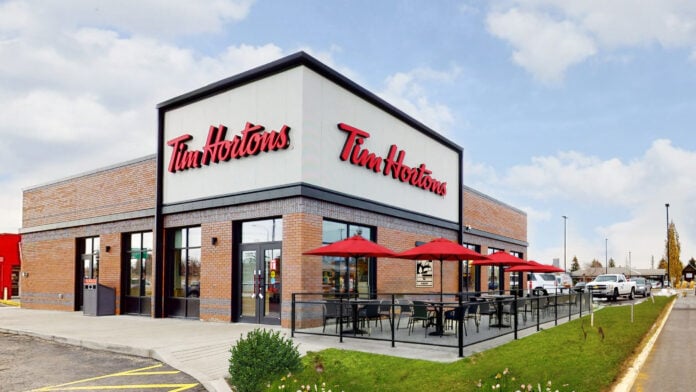
Josh KobzaTim Hortons photo
Josh Kobza, Chief Executive Officer of RBI commented, “We built on our strong start to 2026 with another quarter of over 3% global comparable sales and double-digit earnings growth, led by Burger King’s standout performance and continued strength at International. These results show the benefits of our diversified portfolio and that the strategy we outlined at Investor Day is working. Burger King’s performance is a great example of what’s possible when you invest in the fundamentals and execute well – an approach we’re applying across all of our brands.”
Restaurant Brands International Inc. is one of the world’s largest quick service restaurant companies with nearly $49 billion in annual system-wide sales and over 33,000 restaurants in more than 120 countries and territories. RBI owns four of the world’s most prominent and iconic quick service restaurant brands – Tim Hortons, Burger King, Popeyes and Firehouse Subs.
RBI’s principal executive offices are in Miami, Florida. In North America, RBI’s brands are headquartered in their home markets where they were founded decades ago: Canada for Tim Hortons and the U.S. for Burger King, Popeyes and Firehouse Subs.
McDonald’s says its new specialty beverage platform is performing at or above expectations in Canada, giving the restaurant giant early evidence that an expanded cold-drink menu can generate customer visits beyond its traditional meal periods.
Canada is one of the first major markets participating in the rollout, alongside the United States and Germany. Australia introduced the platform in July, with additional countries expected to follow as McDonald’s develops beverages into what it believes can become a long-term global growth platform.
The strategy reaches well beyond adding new drinks to the menu.
Executives said during McDonald’s second-quarter earnings call this week that the strongest early results have come during the afternoon, when restaurants typically have excess capacity. More than half of the beverage traffic across the initial launch markets has been occurring after lunch, creating new customer occasions rather than simply shifting existing demand. Customers are also adding food to many beverage purchases, producing average cheques approximately 50 per cent higher than McDonald’s full-day average.
McDonald’s did not disclose Canada-specific sales, traffic or average-cheque figures. The company said results from Canada and the other initial markets were consistently meeting or exceeding expectations.
Canada Becomes an Early Launch Market
McDonald’s Canada introduced its permanent beverage lineup nationally in May, adding Crafted Sodas, Refreshers and Cloud Iced Coffees at participating restaurants across the country.
The menu includes Crafted Sodas such as Sprite Berry Bliss, Orange Dream and Creamy Strawberry Coke, alongside fruit-based Refreshers and a range of Cloud Iced Coffees topped with cold foam.
The drinks are considerably more elaborate than the fountain beverages and traditional iced coffees long associated with McDonald’s. Cold foam, fruit garnishes, popping pearls and layered flavours move the chain into territory more commonly occupied by coffee shops, bubble tea operators and specialty beverage concepts.
Importantly, McDonald’s is pursuing that opportunity through its existing restaurants, drive-thrus and digital ecosystem rather than introducing a separate store format.
Canada’s menu also demonstrates how the company intends to scale the platform globally. While the overall beverage architecture is shared across markets, flavours and product combinations can be adapted to local tastes, allowing McDonald’s to balance global consistency with regional preferences.
Creating a New Afternoon Occasion
The most significant insight from the earnings call was not which drinks customers are ordering, but when they are buying them.
Afternoon traffic has long represented an opportunity for quick-service restaurant operators because restaurants typically have available capacity between the lunch and dinner rushes. Every additional beverage visit during those hours improves utilization without requiring another restaurant or additional dining space.
McDonald’s believes beverages can become a destination in their own right.
Management said customers frequently add food to their beverage purchases, increasing average order values while creating incremental visits that may not otherwise have occurred.
The company developed the broader strategy through testing in parts of the United States, where it evaluated customer demand, restaurant equipment, employee training and operational execution before expanding into Canada and other international markets.
Executives now view beverages as a platform capable of supporting multiple years of growth through new flavours, seasonal offerings, loyalty promotions and future product innovation.
That represents a different approach from the limited-time entertainment collaborations that have become common across the restaurant industry.
Chief Executive Officer Chris Kempczinski told analysts that McDonald’s must be careful not to rely too heavily on what he described as “borrowed equity” such as movies, sporting events or celebrity partnerships. While those campaigns can generate significant short-term attention, permanent menu platforms provide a stronger foundation for recurring customer visits and sustainable growth.
Competition Extends Beyond Traditional Quick Service
McDonald’s is expanding into one of the most competitive segments of Canada’s restaurant industry.
Tim Hortons has recently broadened its own cold beverage lineup with Sparkling Quenchers, Protein Quenchers and flavoured iced beverages, while Starbucks, bubble tea chains, convenience stores and specialty beverage operators continue investing heavily in the category.
McDonald’s has chosen to compete through visually distinctive drinks featuring cold foam, fruit garnishes and colourful flavour combinations designed to appeal to younger consumers and social media sharing.
The company also benefits from advantages many competitors cannot match, including one of Canada’s largest restaurant networks, an extensive drive-thru system and direct access to millions of customers through its mobile app and loyalty platform.
The objective is straightforward: encourage consumers to think about McDonald’s when they want an afternoon drink, even if they are not initially planning to purchase a meal.
Balancing Value and Premiumization
The beverage strategy also illustrates how McDonald’s is attempting to balance affordability with higher-value purchases.
The company brought back Summer Drink Days alongside the beverage launch while continuing its broader value initiatives, including $1 small McCafé coffee and $5 McValue Meals.
Those promotions reinforce McDonald’s value credentials while allowing Crafted Sodas, Refreshers and Cloud Iced Coffees to occupy a more premium position within the menu.
The approach reflects current consumer behaviour. Many customers remain highly price-conscious on everyday purchases while continuing to spend selectively on products they perceive as distinctive, convenient or indulgent.
McDonald’s is attempting to capture both ends of that spectrum within a single restaurant visit.
Execution Will Determine Long-Term Success
The earnings call also highlighted the principal risk facing the strategy.
McDonald’s acknowledged that U.S. restaurant teams became overwhelmed during the second quarter after several major initiatives, including value menu changes, digital promotions, the beverage rollout and FIFA marketing, were introduced within a relatively short period. The result was slower service and lower customer satisfaction.
Management has already begun simplifying restaurant operations and reducing non-customer-facing activities to allow employees to focus more closely on speed, hospitality and food quality.
“If it looks great on paper, but you can’t execute it, it doesn’t matter,” Kempczinski told analysts.
The company did not identify comparable issues in Canada. Even so, the U.S. experience illustrates the operational challenge associated with introducing products requiring additional preparation steps into a system built around speed and consistency.
Canadian restaurant teams now prepare beverages using syrups, cold foam, fruit toppings and multiple product builds while continuing to deliver McDonald’s core menu efficiently.
Execution is particularly important in Canada because approximately 92 per cent of the country’s 1,520 McDonald’s restaurants are operated by franchisees. Consistency across hundreds of independently operated restaurants will ultimately determine whether the platform can achieve the scale the company envisions.
Part of McDonald’s Next
The beverage rollout is one of the earliest public examples of McDonald’s Next, the company’s new global growth strategy that will be presented in greater detail during its September Investor Day.
The strategy focuses on improving food quality, strengthening customer engagement, simplifying restaurant operations and enhancing hospitality while identifying productivity improvements that can help fund future investment.
McDonald’s also plans to launch what it describes as the largest training initiative in its history on October 5, providing instruction centred on taste, quality and hospitality to more than two million restaurant crew members, company employees and supplier partners.
Taken together, those initiatives reflect a broader shift in strategy. Rather than relying primarily on periodic promotional campaigns, McDonald’s is investing in permanent platforms that it believes can generate recurring customer visits over many years.
Financial Results
McDonald’s reported global comparable sales growth of 1.3 per cent during the second quarter.
Comparable sales increased by 0.8 per cent in the United States, while International Operated Markets, which include Canada, recorded growth of 1.5 per cent. International Developmental Licensed Markets increased 1.9 per cent.
Systemwide sales grew four per cent in constant currencies, and McDonald’s generated more than US$4 billion in restaurant margins during the quarter.
The company continues to plan approximately 2,600 gross restaurant openings globally this year but now expects to reach 50,000 restaurants in 2028, one year later than previously anticipated, reflecting higher development costs and a more challenging consumer environment.
McDonald’s did not disclose a Canadian restaurant-opening target.
Canada’s early beverage results are likely to play an important role in determining how quickly the company expands the platform across additional international markets. If the early performance continues, beverages could become one of McDonald’s most significant growth opportunities outside its traditional breakfast, lunch and dinner business.
Neighbourhood Pharmacy Association of Canada photo
Neighbourly Pharmacy Inc., Canada’s largest and fastest-growing network of independent pharmacies, says it recently acquired seven additional pharmacies across the Prairies and Central Canada in multiple transactions, bringing its national footprint to 332 pharmacies and further expanding access to essential community healthcare.
“Independent pharmacies play an essential role in the health of the communities they serve, and we’re honoured that more pharmacy owners continue to choose Neighbourly as their long-term partner,” said Skip Bourdo, Chief Executive Officer of Neighbourly.
Skip Bourdo
“These acquisitions reflect our commitment to supporting local healthcare providers, investing in the communities we serve, and ensuring patients continue to have access to trusted care close to home. We look forward to welcoming these pharmacy teams to Neighbourly and building on the strong foundations that they have already established.”
Neighbourly says it is Canada’s largest and fastest-growing network of community pharmacies.
“United by a patient-first focus and their role as essential, trusted healthcare hubs, Neighbourly pharmacies deliver accessible care with a personal touch,” says the company which has been around since 2015.
Shopify announced Wednesday financial results for the quarter ended June 30, 2026. Shopify said it achieved 34% revenue growth (33% in constant currency) and 18% free cash flow margins.
“This was a monster quarter: more than 30% growth in GMV (Gross Merchandise Volume) and revenue and gross profit and free cash flow,” said Harley Finkelstein, President of Shopify. “We power every kind of business, and with AI, we’re expanding what’s possible for all of them. No one else comes close.”
GMV was $115.6 billion, the fifth straight quarter of more than 30% growth. Revenue increased 34% year over year to $3.58 billion.
Shopify provides essential internet infrastructure for commerce. Millions of businesses in 175+ countries use Shopify—from entrepreneurs to brands like Aldo, BarkBox, Carrier, Meta, SKIMS, Supreme, and Vuori.
“GMV growth accelerated on top of last year’s already strong Q2 with solid results across all merchant sizes, channels, and geographies. Alongside this momentum, we continue to drive operating leverage, which flowed through to 18% free cash flow margins. Broad-based, consistent, and compounding growth with financial discipline; that’s exactly the model that we’ve been building,” said Jeff Hoffmeister, Chief Financial Officer.
Harley FinkelsteinJeff Hoffmeister
The company said AI is becoming a major driver of merchant growth and the company’s own productivity.
For the third quarter of 2026, Shopify said it expects:
Revenue to grow at a low-thirties percentage rate on a year-over-year basis;
Gross profit dollars to grow at a mid-to-high twenties percentage rate on a year-over-year basis;
Operating expenses as a percentage of revenue to be 33% to 34%;
Stock-based compensation to be $150 million; and
Free cash flow margin to be in the high-teens to low-twenties.
Welcome to the Daily Synopsis by Retail Insider. We hope you enjoy the 11 articles we published covering key developments in Canadian retail.
Sleep Country expanded its portfolio through acquiring Sleep Number, boosting its North American presence with 600 U.S. stores and enhancing its omnichannel retail strategy. Fendi opened its only independent Canadian boutique at Vancouver’s Oakridge Park, marking a significant return to the market with luxury offerings. Goodfood filed for CCAA protection to restructure and simplify operations under new CEO Najib Maalouf while maintaining service continuity.
Wayfair’s results highlight contrasting furniture market trends with a U.S. recovery contrasting subdued Canadian demand amid economic pressures. Retail Insider also published that Australian beef imports may sustain Canadian consumer demand as local prices remain high, and May retail sales data signals retail gains driven by fuel rather than discretionary spending.
Sunterra Market at West Market Square in Calgary. Photo: Trip Advisor
Alberta-based Sunterra Group, with a portfolio of grocery stores and meat processing facilities, recently went through a court-approved for sale or investment process within its court-supervised restructuring proceedings under the Companies’ Creditors Arrangement Act (CCAA).
In April, the Court of King’s Bench granted the sale and investment solicitation process for the company with a portfolio of agriculture and food businesses in Alberta including a multi-generational pork production operation with more than 595,000 square feet of barn infrastructure on 1.150 acres of land across eight facilities and a premium grocery retailer operating seven “farm-to-fork” market locations.
Interested parties who wanted to pursue this opportunity were given a deadline of June 25 to submit a letter of intent to the sale advisor, KPMG Corporate Finance Inc. The next phase involves the assessment of those submissions.
FTI Consulting Canada Inc. is the court-appointed monitor.
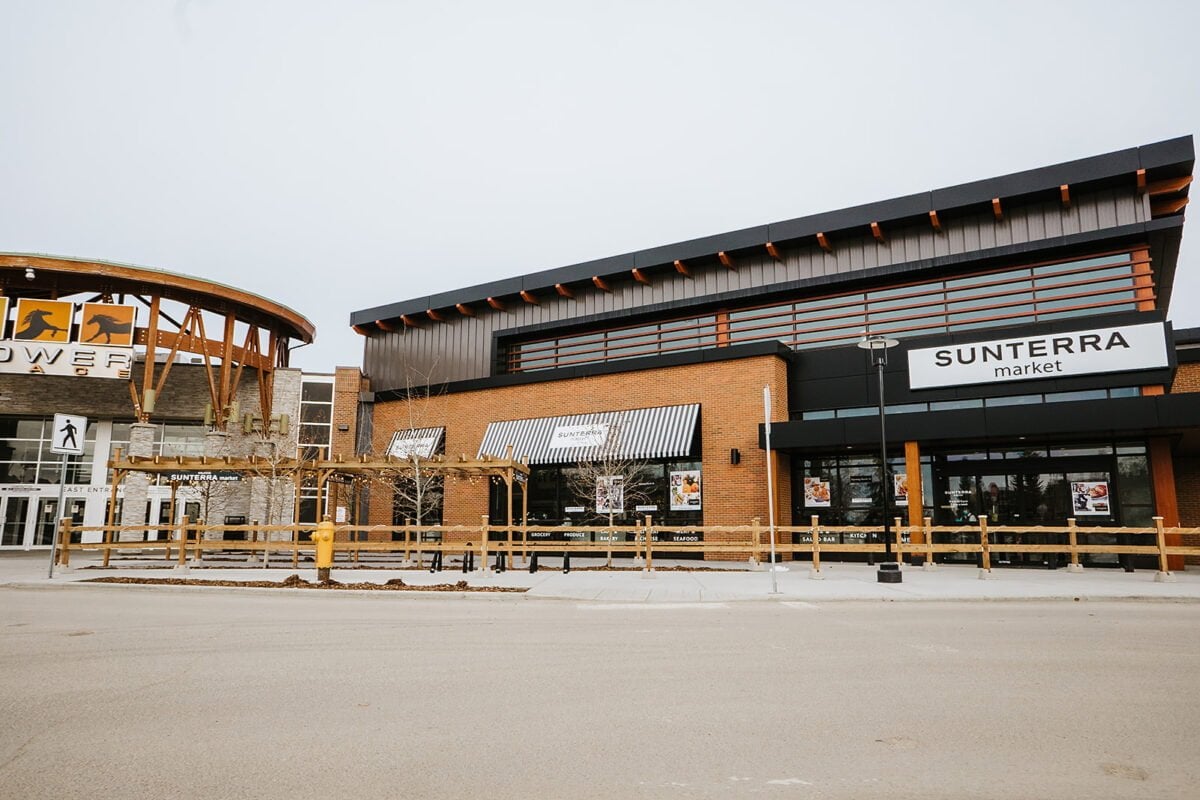
Exterior of the Sunterra Market at Bower Place in Red Deer, Alberta. Photo: Red Deer Branding Photography
In February Retail Insider reported that an Alberta judge ruled that Sunterra engaged in cheque kiting on what the court described as an “astonishing scale,” finding the company liable to U.S. agricultural lender Compeer Financial for approximately $35 million.
In a decision issued on January 27 by the Court of King’s Bench in Calgary, Justice Michael Lema also held Sunterra’s president personally responsible for the debt, marking a significant escalation in the legal and financial pressures facing the vertically integrated agri-food group, said the news story.
The ruling arrived as Sunterra continued to restructure under court supervision following months of financial strain, lender disputes, and operational disruption. While the decision focuses on conduct between Canadian and U.S. affiliates and lenders, it carries implications for the broader Sunterra group, including its premium Sunterra Market grocery stores across Alberta, said the story.
In his written decision, Justice Lema likened the financial practices at issue to a game of musical chairs where there are not enough seats when the music stops. He concluded that Sunterra’s Canadian entities fraudulently misrepresented the availability of funds behind cheques sent to the United States, inducing Compeer to continue honouring payments that were not backed by actual cash balances.
Founded in 1970 by the Price family, Sunterra traces its origins to Pig Improvement Canada, a hog-production business built on higher-standard farming practices. The company launched Sunterra Meats and Sunterra Market in 1990, the latter debuting in downtown Calgary’s Bankers Hall with a European-style market concept that emphasized fresh food, in-house production, and premium positioning.
Sunterra Market in Edmonton’s Lendrum Centre. Photo: Tripadvisor
In 2025, Sunterra filed a Notice of Intention (NOI) to make a proposal under the Bankruptcy and Insolvency Act (BIA) and Harris & Partners was appointed as Proposal Trustee.
Court documentsindicated the company had more than 200 creditors with liabilities of $18.9 million
“Please be advised that the Company is not bankrupt and has availed itself to a procedure whereby an insolvent person, with creditor and Court approval, restructures its financial affairs,” said court documents. “The role of the Proposal Trustee in this matter is to monitor the cash flow of the Company during the restructuring process, to assist with the development of the Proposal, and to liaise with creditors, who will ultimately make the decision regarding the Proposal.”
In April 2025, Sunterra obtained protection under CCAA.
On its website, Sunterra for its market lists five Calgary locations, one in Edmonton and one in Red Deer. It also states that the Commerce Place location on Jasper Avenue in Edmonton is permanently closed.
Michael Kehoe, Broker with Fairfield Commercial Real Estate, said Sunterra Market has been a fixture on the Calgary grocery and food service scene for a generation and for Calgary consumers it would be sad to lose a family-owned and operated shopping option in this retail sector.
“Several of the five locations would be desirable to other retail grocery brands with other spaces likely to be repurposed with other commercial uses once the dust settles on everything. The Calgary retail scene is constantly evolving, and the extremely competitive retail grocery business is changing before our eyes with new value-oriented food stores serving the community. This trend will likely continue as the city densifies and expands,” he said.
Sleep Country Corp. says its acquisition of Sleep Number will give the retailer a foothold in the U.S. market while adding what CEO Stewart Schaefer calls the industry’s most technologically advanced mattress brand to its growing portfolio.
In an interview with Retail Insider, Schaefer, President & CEO of SleepCountry, Dormez-vous, Endy, Hush, Silk & Snow, Casper, Simba, and Sleep Number, said the deal is about more than adding another mattress brand. He said Sleep Number’s network of about 600 U.S. stores, established brand recognition and proprietary sleep technology provide an opportunity to expand the company’s North American footprint while also bringing the brand into Sleep Country and Dormez-Vous stores in Canada and into the U.K. through its Simba business.
Schaefer said the acquisition fits the company’s long-standing strategy of buying brands that offer products, technology or customer appeal it does not already have, adding that he believes Sleep Country’s current collection of brands now serves virtually every segment of the sleep market while leaving room for continued organic growth.
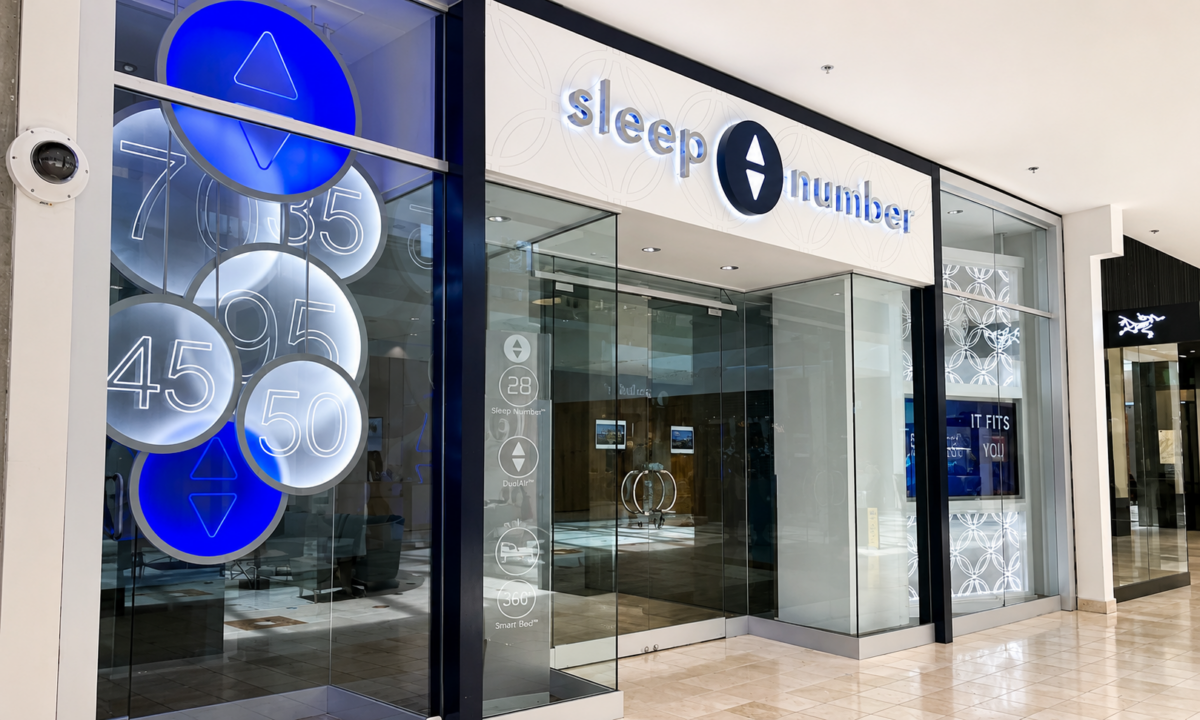
Image Provided by Stewart Schaefer Sleep Number storefront in an American shopping centre. Photo: Sleep Number
“What a lot of people don’t know is that the Sleep Number product is the most advanced, innovative technology mattress in the world. It’s huge in the United States,” said Schaefer.
“The mattresses – there are like seven different mattresses – mattresses are air-controlled, so you can make the bed itself softer or harder at any point in time and on both sides of the bed. You also can make the bed cooler or hotter. It actually blows air conditioning or heating, like stuff you’ve seen in some of the cars now.
“It also has the adjustable component, and it comes with health apps and checks your heart rate. It really is the crown jewel. They’ve been around for 42 years. It’s longer than we’ve been around, which is 32 years.
“For 30 years, I’ve always admired it. We used to actually sell the product in Canada about 20 years ago, but we were a very different business, and we were importing it from the United States. We weren’t very good at importing at the time because everything in our business was from local distributors.”
Not only was it the quality and uniqueness of the product, but being able to have that with the 600 stores across the United States allows Sleep Country to enter the U.S. with store distribution, with the quality of this incredible product, with their fulfillment centres, and brand awareness that is literally through the roof, explained Schaefer.
“It’s rare that I can find something that’s unique to Canada because I’m going to bring that into our 300 stores in Canada, since all the other brands I already have here in Canada,” said Schaefer.
“I’m going to take it to the UK, and we’re going to combine it with our Simba brand in the UK, and we’re going to open up brick-and-mortar stores in the UK with that brand.”
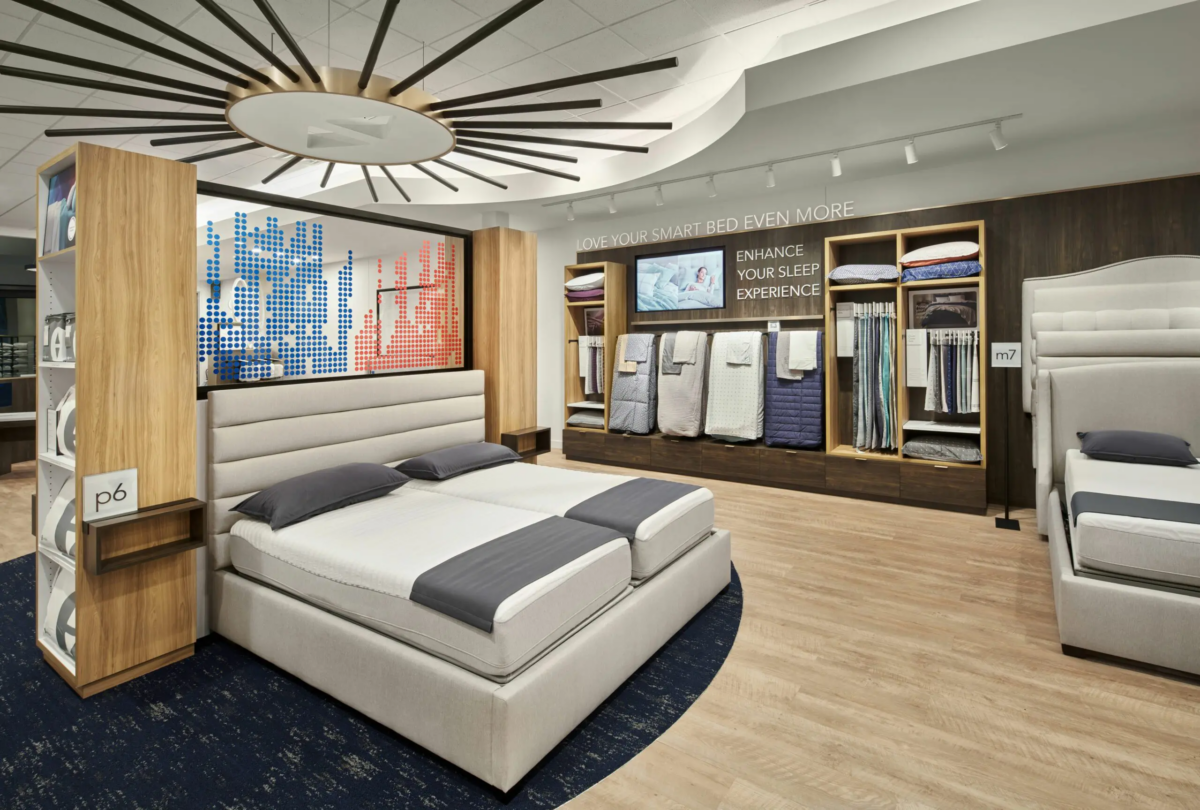
Sleep Number store. Image: CenterPoint
He said the plan is to roll the Sleep Number brand into the company’s Sleep Country stores and Dormez-Vous stores. Although there’s no need to do standalone stores, there may be a few flagship stores.
“I might put one in Yorkdale Mall. I might put one in Calgary, in Chinook mall, some of the high-profile malls in the country. But the majority is going to roll seamlessly into my own stores,” he explained.
Over the past few years, Sleep Country has been on a buying spree of different brands. What’s the strategy behind all this?
“I always ask myself the question when I’m looking at something: build or buy?,” said Schaefer.
“If I can build it, in most cases, anything related to our business we can build. The only times that I buy are when they have something uniquely different that I guess, over time, I could develop myself, but it’s something uniquely different that I don’t have.
“When we bought Endy, it was clear that they were unbelievable as the number one bed-in-a-box company in the country. Hush was edgy and cool on the accessories side of the business.
“Silk & Snow was affordable luxury, a whole other category besides their beds, which were fantastic, between all their linens, sheets, and some of their introduction into furniture. Again, something uniquely different than what we did.
“Simba was the same thing in the UK—a brand that resonated unbelievably with the consumer.
“Every single time when I saw these companies, we would meet the teams, and the teams themselves would be uniquely different from our teams. In many ways, they created an incubator of talent within the sleep space.”
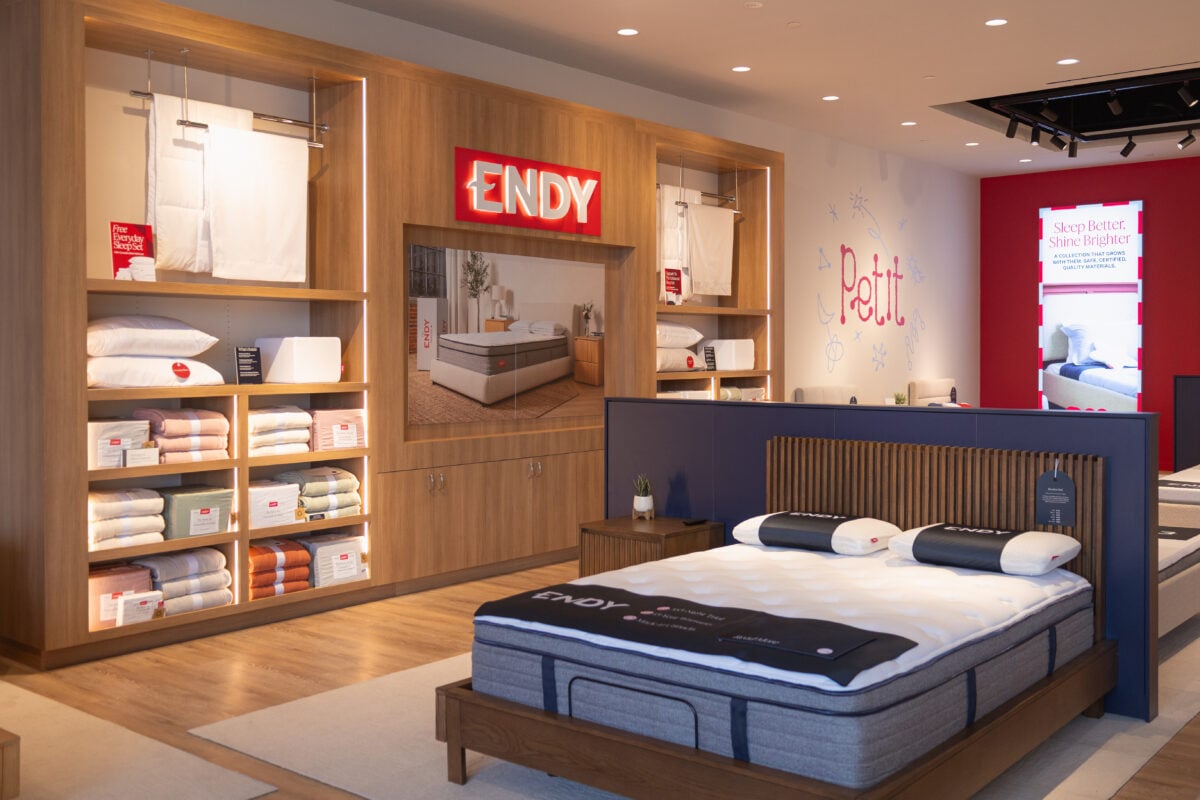
Endy photo
Whenever there’s an opportunity to expand, the company only does so after measuring how the brand scores with the consumer.
“If the brand scores unbelievably well, that’s the first interest we take. If the product is innovative and different from what we currently have, that’s the second part,” he shared.
“Then, if there’s an opportunity to give us something—in this case, Sleep Number—we could have gone to the United States and opened up stores ourselves, I guess. But it would take me at least a decade to build out that many stores, maybe even longer. It’s taken me 32 years to build out 300 stores.
“Instantly, I now have 600 stores in the U.S., and 600 stores with a very powerful brand name that I would say is equal to the Sleep Country name in Canada, as Sleep Number is in terms of brand awareness in the United States.”
Schaefer believes Sleep Country has hit its critical mass of quality, amazing brands that really tackle all customer segmentations, all merchandising hierarchies, and all marketing demographics.
“You never want to say that you’re done, but between all the different brands that we have right now, there’s really nothing I’m missing for the consumer. It always goes back to the consumer. I always think through the eyes of the consumer,” he explained.
“I still walk through my stores today after 32 years, and I act like a consumer and ask myself, “What am I missing? What can’t my customers get?” In these Sleep Number stores, I’m going to bring Silk & Snow’s sheets, pillows, linens, and all their beautiful products into those stores.
“In the UK, Simba is the number one digital brand out there, but I’m going to bring the Simba digital brand into a brick-and-mortar environment with Sleep Number because you couldn’t probably do Simba by itself.
“I think we have the collection of brands that resonate incredibly well with the consumer, and we’re just going to continue to grow organically, just like we’ve been doing with Sleep Country.
“Now I think, between all these brands, we have enough of a portfolio to open greenfield locations for the rest of our larger plan. If something comes along, we’re always opportunistic. If some brilliant young person comes up with a new idea or something different worldwide, hopefully someone will knock on our door and show us something because we’re always curious about something a little more special.”
Silk & Snow x Sleep Country Canada
Schaefer also said Sleep Country is looking to launch the new Bed Bath & Beyond concept in the fourth quarter of this year.
“There’s a technology stack that we’re working on, the merchandising. They’re taking their time in curating a really special type of collection. It’s not going to be your everyday. We’re not looking to compete against the world of Amazon or Walmart. We want to make it really special and have a curated collection of products,” he said.
“Recently we also just took over Kitchen Stuff Plus, which is a chain of 20 stores in Ontario. They’re in the kitchen business. The reason we did that, once again, is that we know bath and we know bed. I didn’t know the “Beyond” part—the kitchens part—very well.
“So here was this wonderful opportunity to create some type of partnership with Kitchen Stuff Plus. We’re going to help with that brand, but at the same time, we’re going to take the talented people from Kitchen Stuff Plus to help build out a broader kitchen selection in Bed Bath & Beyond. So the online store is going to launch in the fourth quarter. Brick-and-mortar will launch sometime in 2027. I don’t know when. It’ll probably be in the back half of the year.
“We want to get it right. We want to listen to our customers and see what they say. If they’re happy with the selection, it’s easier to make adjustments online than in a brick-and-mortar environment. Once we feel that we’ve got the recipe right, then we will look to open up stores across the country.”
The report examines Canadian retail loss prevention, physical security, cybersecurity, fraud prevention, shrink reduction, payments security and retail risk management. Drawing on Retail Insider reporting, industry research and public data, it considers how risks once handled separately are becoming interconnected across stores, digital platforms, supply chains and corporate operations.
Retail Insider Reports are designed to deliver executive-level insights across major retail sectors and can be accessed through the Retail Insider Report Hub.
General Themes
Risk has moved beyond merchandise: Loss prevention now encompasses employee safety, customer data, digital infrastructure, payment systems, inventory accuracy and operational continuity.
Crime is influencing real estate decisions: Persistent theft and safety concerns can affect operating hours, capital investment, expansion plans and the viability of individual locations.
Security can introduce commercial friction: Locked products, access controls and other protective measures may reduce shrink while also discouraging purchases and weakening the customer experience.
Thin-margin retailers face greater exposure: Sustained shrink and rising security costs can quickly undermine locations in categories where profitability is already limited.
Technology is widening the security mandate: Artificial intelligence, video analytics and electronic surveillance are becoming more important, but so are protection against cyberattacks, payment fraud and account takeovers.
Data integrity is becoming a loss issue: Inventory errors, weak audit trails and inaccurate operational data can produce lost sales and financial damage even when no criminal act has occurred.
Collaboration is increasingly necessary: Retailers, landlords, governments, law enforcement agencies and communities all have a role in responding to organized retail crime and repeat offenders.
Retail Insider Coverage
Retail Insider’s reporting documents how security pressures are translating into operating and investment decisions. The report points to 7-Eleven’s warning that crime and theft could place multiple Winnipeg locations at risk of closure. It also examines London Drugs’ closure of its Woodward’s location in Vancouver’s Downtown Eastside following years of operating losses and persistent safety challenges.
In Toronto, Dudley’s Hardware cited break-ins, vandalism and neighbourhood safety concerns among the factors behind downsizing and eventually closing its longstanding downtown location. These cases show how persistent crime can affect more than merchandise costs. It can determine whether a retailer maintains hours, carries certain products or continues serving a community.
Retail Insider coverage also followed research and industry developments involving EY, QBE, Equifax Canada and DALBAR. Together, those stories connect cyber threats, AI-enabled attacks, first-party fraud, customer friction and inventory accuracy to a broader retail risk environment.
Broader Industry Coverage
The report says retail theft now costs Canadian businesses more than $9 billion annually, while shrink is estimated at approximately 1.5 per cent of retail sales. Retail Council of Canada-led enforcement initiatives seized 121 weapons in 2024, and 81 per cent of retailers reported that organized retail crime offenders had become more violent. Repeat offenders accounted for 17.7 per cent of arrests during the council’s initiatives.
Those conditions are placing added pressure on frontline employees and on the economics of individual stores. Health and personal care stores, including pharmacies and drugstores, recorded a pre-tax profit margin of approximately 5.7 per cent in 2023, according to Statistics Canada data cited in the report. In a thin-margin business, sustained shrink and additional security spending can quickly influence a location’s viability.
The response also carries commercial risk. Research from DALBAR and Competitor IQ found that 38 per cent of shoppers had abandoned purchases because of security measures and in-store friction. Retailers therefore face a difficult calculation: controls strong enough to reduce loss may also restrict access, slow transactions and erode customer trust.
Beyond stores, Equifax Canada reported a 31 per cent year-over-year increase in first-party fraud. IBM placed the average cost of a Canadian data breach at nearly $7 million in 2025. These figures reinforce the report’s conclusion that payments, loyalty programs, inventory systems and digital commerce platforms now belong within the retail security discussion.
Editor’s Take
The central shift is that loss prevention has become a question of enterprise resilience and market presence. Crime, fraud, cyber threats and weak operational data can all influence where retailers invest, how stores are designed and whether certain locations remain viable. The retailers under the greatest pressure may be those operating essential, thin-margin stores in communities already vulnerable to losing local services. Effective loss prevention will require integrated decisions across security, technology, operations, real estate and customer experience.
Furniture purchases can reveal a great deal about consumer confidence.
Households worried about employment, housing costs or the direction of the economy can continue using an older sofa, postpone replacing a dining table or furnish a new home one room at a time. Unlike groceries and other necessities, most home furnishings can wait.
That helps explain why Wayfair’s latest quarterly results tell two different stories about the North American consumer.
The Boston-based home retailer reported its strongest U.S. revenue growth of the post-pandemic period during the second quarter of 2026. Its Canadian business, however, continues to operate in a more difficult consumer environment.
Wayfair executives said the modest improvement appearing in the U.S. home furnishings market had not extended to Canada or the United Kingdom, where consumer sentiment and discretionary spending remained under pressure.
The divergence offers another indication that Canada’s home furnishings market has yet to join the recovery beginning to emerge south of the border.
Wayfair’s U.S. Business Accelerates
Wayfair generated US$3.52 billion in net revenue during the quarter ended June 30, an increase of 7.5% from the previous year.
Revenue in the United States increased 8.7% to approximately US$3.13 billion, while international revenue declined 1.3% to US$394 million. On a constant-currency basis, the international segment was down 2%. Wayfair combines its Canadian and British operations in that segment and does not disclose separate revenue figures for the two countries.
Orders delivered during the quarter increased 6%, while active customers rose 3.2% to 21.7 million. Average order value also continued to move higher.
The company’s growth was notable because it did not depend on a dramatic improvement in the wider furniture industry.
Wayfair co-founder and CEO Niraj Shah said the U.S. category was approximately flat to slightly positive compared with the previous year, marking the first quarter since 2021 in which the company had measured any year-over-year category growth. Wayfair’s U.S. sales grew considerably faster, indicating that the retailer continued to capture market share.
Management described the improvement as early and uneven, with stronger growth concentrated among higher-income households.
Canada remains on a different trajectory.
“The macro improvement did not extend to our end markets in Canada or the U.K., which both saw continued pressure on consumer sentiment and discretionary spending,” CFO Kate Gulliver told analysts.
Wayfair did not quantify how Canada performed relative to the U.K., meaning the international decline cannot be assigned entirely, or even primarily, to Canadian operations. Gulliver’s comments nevertheless provide a direct assessment of the market from one of North America’s largest home furnishings retailers.
Canadian Furniture Sales Remain Below Last Year
Recent Statistics Canada data supports Wayfair’s description of a cautious Canadian market.
Sales at Canadian furniture retailers increased 0.8% between April and May 2026, offering a modest sign of sequential improvement. They remained 2.3% below May 2025.
The broader category encompassing furniture, home furnishings, electronics and appliance retailers increased 0.6% during the month but was down 6.1% year over year. Sales at floor covering, window treatment and other home furnishing retailers were 5.1% lower than a year earlier.
The figures suggest the category may be stabilizing in some areas without experiencing a broad recovery.
Canadian households have not stopped buying furniture, and month-to-month improvements may eventually develop into more durable momentum. Current sales levels nevertheless remain below those recorded a year ago.
The weakness also cannot be understood solely through changes in furniture prices. The larger issue is the amount of money consumers have available after paying for housing, food, transportation, debt servicing and other necessities.
A sofa does not need to become dramatically more expensive for a family to decide it is unaffordable this year. It only needs to compete with more urgent expenses.
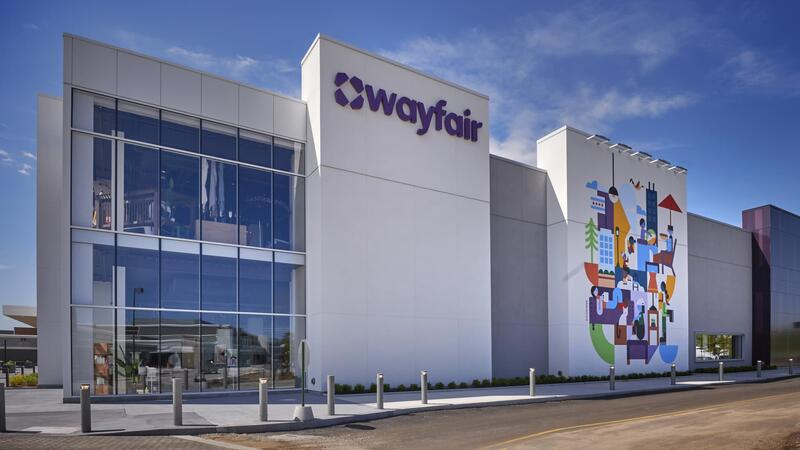
Wayfair showroom in Wilmette, Il. Photo: Wayfair
Major Purchases Remain Easy to Postpone
The Bank of Canada’s second-quarter Canadian Survey of Consumer Expectations found that consumers continued to view the economy as challenging. High prices and economic uncertainty remained a drag on household spending plans, while concerns about inflation and energy prices had increased.
Furniture is particularly exposed to this behaviour. It is a high-consideration purchase that can usually be deferred without an immediate consequence. Consumers can repair an existing item, purchase a less expensive alternative, wait for a promotion or decide that a room does not need to be completed immediately.
That places furniture retailers in a highly promotional environment. Wayfair executives said discounting remains common at the mass-market end of the category because retailers and suppliers must work harder to attract cautious consumers.
Promotions can encourage a shopper who was already considering a purchase, but they cannot fully overcome weak confidence or limited household cash flow.
Housing Activity Has Not Yet Produced a Furniture Rebound
The Canadian housing market has begun to show signs of improvement, although the recovery remains gradual.
National home sales increased 5.5% between April and May, followed by a further 0.5% increase in June. Actual June activity was 0.9% above the same month in 2025.
The Canadian Real Estate Association nevertheless forecasts that 463,336 residential properties will change hands in 2026, representing a 1.4% decline from 2025.
Housing turnover is closely watched by the furniture industry because moving households often purchase mattresses, seating, dining furniture, storage products, appliances and home décor. Improving real estate activity should eventually create additional demand, but the relationship is not immediate.
A home purchase also brings a down payment, closing costs, moving expenses and, in many cases, renovations. Buyers who stretched to enter the market may have little money left to furnish the property. Existing homeowners facing higher mortgage payments may also be less willing to replace furniture that remains functional.
The current market therefore contains an apparent contradiction: housing activity can begin to improve while furniture spending remains subdued.
Canada’s housing recovery has not yet been strong or widespread enough to produce a comparable rebound in home furnishings.
Luxury Shoppers Are Behaving Differently
Wayfair’s results also demonstrate how differently the market is performing across income groups.
The company’s specialty retail brands, including Joss & Main, AllModern and Birch Lane, grew by nearly 20% during the quarter. Perigold, Wayfair’s luxury home furnishings platform, grew by more than 35%.
Perigold now generates slightly more than US$400 million in annual sales and has an active customer base approaching 400,000. Those customers spend almost three times as much annually as the typical Wayfair shopper, according to the company.
Shah characterized the environment as a K-shaped recovery. Affluent households are proving more resilient, while consumers at the mass-market end of the category remain more sensitive to economic pressure.
That does not establish that Canada’s luxury home furnishings market is growing at the same rate. Wayfair’s Perigold disclosures primarily concern the United States, where the company is investing in physical stores, design services and a broader assortment.
The results do illustrate a wider challenge when interpreting retail growth. Strong company-wide numbers do not necessarily mean the average household has returned to discretionary spending. A relatively small group of affluent customers can generate substantial growth through larger and more frequent purchases.
Wayfair.ca Mississauga Office (Google Streetview)
Wayfair Is Becoming an Omnichannel Retailer
Wayfair’s U.S. momentum also reflects a company moving beyond its origins as a pure online marketplace. The retailer opened stores in Atlanta and Columbus during 2026, with Denver expected to follow in the fall. It has announced additional U.S. locations for 2027, including Westchester, Fort Lauderdale, Cincinnati, Princeton and Pittsburgh.
Management said more than half of the customers visiting its stores are new to Wayfair’s customer file.
The locations allow shoppers to see materials, assess comfort and better understand the dimensions of products before making a purchase. They also give Wayfair another way to acquire customers without relying exclusively on digital advertising.
This is particularly relevant in furniture, where colour, scale, texture, construction and comfort can be difficult to evaluate through a screen.
Wayfair sells products in its stores at the same prices offered online. Much of the displayed inventory also remains owned by suppliers, allowing the company to operate the locations without assuming the full inventory burden associated with a conventional furniture chain.
The result is a store that functions partly as a showroom, partly as a customer-acquisition channel and partly as an entry point into Wayfair’s much larger online assortment.
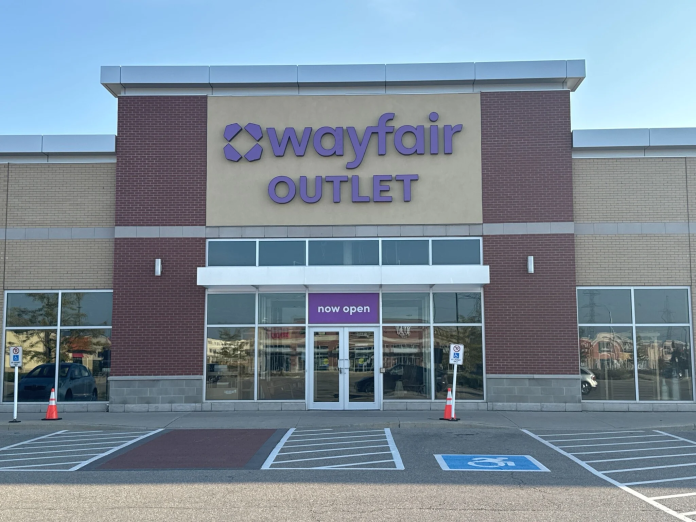
Wayfair has not announced a comparable store expansion in Canada. Canadian customers continue to have access to the company’s extensive online marketplace, but they are not yet receiving the same developing omnichannel experience being introduced across selected U.S. markets.
Wayfair executives noted that new programs cannot always be deployed in every country simultaneously. Loyalty and technology initiatives can reach international markets later because of operational and development requirements.
Even so, the sequencing could widen the performance gap in the near term. The company is deploying some of its strongest customer-acquisition and loyalty tools in the country where demand is already improving.
AI Could Strengthen the Digital Experience
Wayfair is also investing heavily in artificial intelligence as it looks to improve online merchandising while controlling costs.
The company said an internal AI production system recently created seasonal imagery for Perigold that would traditionally have required location shoots, travel, studio space, styling teams and other production expenses.
Wayfair estimated that a conventional version of the project would have cost approximately US$2 million. The AI-assisted production cost less than US$10,000, according to Shah.
The claim has not been independently verified and depends on Wayfair’s estimate of what an equivalent traditional campaign would have cost. It nevertheless demonstrates the scale of the savings the company believes generative tools can deliver.
For an online furniture retailer, the technology has uses beyond advertising. Consumers frequently need to see how individual products might look in a completed room. Producing conventional lifestyle photography for millions of items would be prohibitively expensive.
AI-generated environments could allow Wayfair to show more of its assortment in realistic settings, update seasonal presentations more frequently and help customers visualize combinations of furniture and décor.
The company is also developing AI tools to assist its in-store and virtual designers with product selection and presentations.
These investments will not eliminate the appeal of touching a fabric or sitting on a sofa. They may narrow some of the experiential gap between online and store-based furniture shopping.
Canada Is Still Waiting for Sustained Momentum
Wayfair expects company-wide revenue to grow at a high-single-digit rate during the third quarter. Management said the forecast does not depend on an improvement in the wider economy. It expects customer loyalty, product selection, delivery, stores and technology investments to continue driving market-share gains.
That confidence should not obscure the difference between gaining share and benefiting from a healthy category.
Wayfair can outperform competitors in a soft market, but Canadian households still determine the size and pace of the wider opportunity. Furniture demand is unlikely to accelerate meaningfully until consumers feel more secure about their finances and more comfortable making large discretionary purchases.
The early improvement in Canadian housing activity could eventually support the category. For now, furniture sales remain below last year, consumer spending intentions are subdued and many households are prioritizing other expenses.
Wayfair’s quarter shows that a home furnishings recovery is possible. It also shows that the recovery is arriving unevenly.
In the United States, stronger consumer segments and Wayfair’s own initiatives are creating renewed momentum. In Canada, the conditions needed for a sustained rebound have yet to fully take hold.
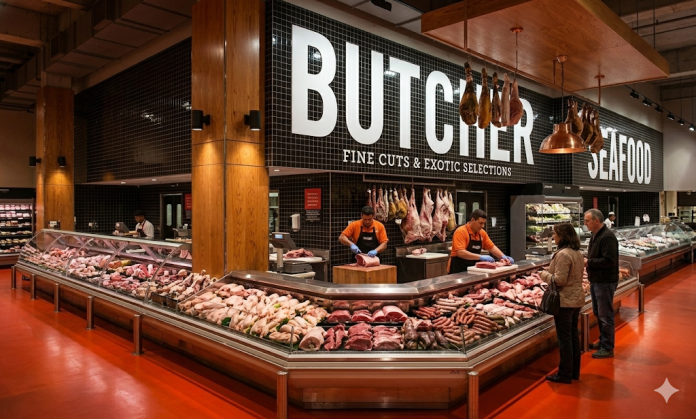
Grocery store meat butcher department. Image: RI/Google
At first glance, the presence of inexpensive Australian beef in Canadian grocery stores seems absurd. How can beef raised thousands of kilometres away, shipped across the Pacific and distributed through Canada sell for substantially less than beef produced in Alberta?
Recent comparisons circulating online have shown Australian striploin selling for approximately $24 per kilogram while a Canadian alternative was priced above $50. Understandably, Canadian cattle producers and consumers are asking how this is possible.
But inexpensive Australian beef may not be the threat to Canadian beef that many assume. For a limited period, it could actually help protect the domestic industry’s most valuable long-term asset: the Canadian beef consumer.
Canadian beef prices have reached levels that many households simply cannot absorb. Ground beef, once considered an economical protein, has become increasingly expensive. Premium steaks are now beyond the reach of many middle-income families except for special occasions. Faced with these prices, consumers do not merely purchase less-expensive cuts. They migrate toward chicken, pork, fish or other alternatives.
That substitution can become permanent.
Food consumption is largely habitual. When families stop preparing beef regularly, they develop new recipes, shopping routines and preferences. Restaurants change menus. Retailers reduce shelf space. Over time, a temporary supply shortage can cause lasting demand destruction.
This is where Australian beef can play a surprisingly constructive role. By offering a more affordable entry point, imported beef keeps consumers engaged with the category. They continue visiting the meat counter, preparing steaks and roasts, purchasing ground beef and treating beef as part of their regular diet.
In economic terms, Australian beef can function as a bridge until Canadian production recovers.
Canada’s cattle herd contracted for years and cannot be rebuilt quickly. Even when producers begin retaining more heifers, several years are required before those decisions generate significant additional beef supplies. Canadian consumers cannot reasonably be expected to wait indefinitely while paying historically high prices.
Australia, meanwhile, has a highly export-oriented beef industry, a climate that permits longer grazing seasons and efficient access to international markets. Under the Comprehensive and Progressive Agreement for Trans-Pacific Partnership, Australian beef also enjoys favourable access to Canada. Despite the distance involved, refrigerated ocean freight adds surprisingly little to the cost of each kilogram when spread across an entire container.
None of this means the products are necessarily identical. Canada and Australia use different grading systems. Canadian AAA beef is typically grain-finished and more heavily marbled, while much Australian beef is grass-fed and leaner. An Australian striploin marked at $24 per kilogram should not automatically be considered equivalent to Canadian AAA striploin selling for $52.
Country of origin, grade, feeding method and whether the product was previously frozen should therefore be clearly disclosed. Consumers deserve enough information to understand what they are comparing.
Nevertheless, the quality distinction does not invalidate the broader economic argument. A family deciding between affordable Australian beef and abandoning beef altogether is not necessarily taking a sale away from a Canadian producer. At current prices, that household may no longer be a realistic buyer of Canadian beef.
The imported product may instead preserve that household as a future customer.
Canadian beef also retains significant competitive advantages. It enjoys strong domestic recognition, established quality standards and considerable consumer loyalty. When Canadian supplies improve and prices moderate, many consumers will likely return to Canadian beef—provided they have not already abandoned the category.
Imports can also introduce some useful competitive tension into the processing and retail sectors. The price paid to cattle producers explains only part of the final shelf price. Processing capacity, labour, transportation, wholesale negotiations, retail strategies and margins all influence what consumers ultimately pay. A credible imported alternative can place pressure on every participant in that chain to justify costs and improve efficiency.
Canadian cattle producers should not be expected to sell below their costs, nor should Canada become permanently dependent on imported beef. The objective must remain a larger, more productive and resilient domestic cattle industry.
But protection from competition is not the same as protection from consumer abandonment.
If Australian beef keeps Canadians buying beef during an exceptional period of domestic scarcity, it may support rather than undermine the Canadian industry. The real danger is not that consumers temporarily purchase Australian beef. It is that persistently high Canadian prices drive an entire generation of consumers away from the beef counter.
Sometimes an imported competitor does more than take market share. It keeps the market alive.