Advertisement
Home Blog Page 924

Will a Second Wave of COVID-19 Induce Panic Buying in Canada Again?

WOMAN GROCERY SHOPS WHILE WEARING A MASK AMID COVID-19 PANDEMIC

Many months into the pandemic, we know more about this relentless virus and how it behaves and spreads. Using this limited, but growing, scientific knowledge, public health measures have kept us largely safe. Back in March, given the unknowns we needed to manage, the only solution possible was a complete lockdown. It came into our lives violently, enticing many to panic buy, thinking they would not be allowed to leave their homes for weeks, possibly months. As consumers, we behaved irrationally as we coped with many uncertainties.

Regrettably, over-buying food led to more food waste and added unnecessary pressure to the food supply chain. The food industry was also compromised by a food service sector that was almost completely idle for weeks. In addition, the livestock industry was hard hit by COVID-19. A total of twelve meat processing plants had to shut down, some for as long as a month, because so many employees contracted the virus. The Cargill plant in High River, Alberta, became a case study when it experienced the largest outbreak at one address in the country.

The weird and wacky quest for toilet paper aside, empty shelves where food belonged gave many a profound, heart-thumping fear of food insecurity. It became real for many people, likely for the first time in their lives. After all, North America has not experienced the famine, major wars, or chronic civil unrest seen elsewhere in the world over the last century. In the land of abundance and bounty, running out of food seems like something that happens elsewhere.

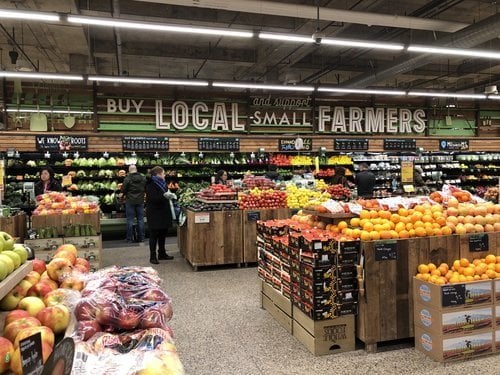
That was then. This is now. Though pictures of empty shelves led Canadians to believe our food system has its limits, it quickly became apparent that the shelves would continue to be stocked with food, however messy the process of getting it there. Panic slowly disappeared, allowing collective discipline and peaceful amenability to take over. Measures were put in place to keep people safe and responsible, and, a few weeks into the pandemic, rationing became an expectation. All measures were gracefully executed as consumers complied.

CANADA’S FOOD INDUSTRY DELIVERED IN MORE WAYS THAN ONE AMID COVID-19 PANDEMIC

Technologies and just-in-time procurement allowed the food industry to absorb the unprecedented shock back in March and April. In a stunning display, the food industry really delivered, using different assortment and packaging schemes to ensure shelves were stocked. We’ve all witnessed a beautiful miracle of collaborative spirit.

The industry also learned how to serve consumers who are physically unable to go to grocery stores as quarantines and self-isolation measures forced many to order online. Barely six months ago, it was almost impossible to get a grocery order delivered within eight days. Now, most markets offer great home delivery service and will deliver just about anything, including groceries, within two hours. This was almost unconceivable when this crazy year that is 2020 began. As a result of this pandemic, online food sales will triple the numbers seen in 2019.

The food industry and consumers also benefited from the decision to allow borders to remain permeable throughout the pandemic. Just a few decades ago that would not have happened, but cool heads prevailed and governments around the world quickly understood that closing the borders would only make matters worse. Canadians should feel comforted by the willingness to allow the borders to remain permeable.

STATISTICS CANADA REPORTS 700,000 PEOPLE HAVE EXPERIENCED FOOD INSECURITY SINCE MARCH

While most Canadians will be food secure, despite higher food prices, this is not true for all Canadians. Poverty rates have increased under the pandemic, and Statistics Canada reports that an additional 700,000 people have experienced food insecurity since March. Let’s hope Ottawa has long-term plans for our financially vulnerable populations.

The pandemic has made life challenging, and, quite understandably, Canadians are on edge and a little restless going into the fall. But we do not need to panic. companies do learn, and it is highly doubtful an uncontrolled, mismanaged scenario will happen again.

The food sector has been preparing for a potential second wave for months now, and, though it may not be perfect, we should trust that food will remain available across the country.

Hudson’s Bay Launches Menswear for the 1st Time in Luxury Department ‘The Room’

EXTERIOR OF HUDSON’S BAY IN VANCOUVER. PHOTO: HUDSON’S BAY

For the first time in its 83 year history, luxury department The Room at Hudson’s Bay is carrying menswear in addition to a vast assortment of womenswear. The menswear collection recently launched in the renovated Vancouver The Room department with a point-of-view tailored to the Vancouver market.

VANCOUVER’S HUDSON BAY’S ‘THE ROOM’ FIRST TO CARRY MENSWEAR

“Discovery is at the core of The Room,” says Tyler Franch, VP, Fashion Director, Hudson’s Bay. “We have curated the collections to appeal specifically to the Vancouver market, while still highlighting The Room’s unique point-of-view; one that’s more forward-thinking and conceptual, with a strong representation of each designer’s brand DNA.”

TYLER FRANCH

Franch said in an interview that he’d toured retail concepts globally in places such as the UK, France, and South Korea and brought some of what inspired him to The Room at Hudson’s Bay. That included renovating the Vancouver space by creating a bold metallic environment including metal tread flooring, silver walls and ceilings. The ‘clinical look’ is meant to showcase the product and is unlike any retail space in Canada.

The Room, located on the second-floor of the Vancouver Hudson’s Bay store, is “retail theatre’ that is “elevated through visually-impactful storytelling moments like limited-time concept spaces, photo-worthy installations, and exciting pop-ups”, according to Franch. The first pop-up is a 10-brand South Korean designer showcase, featuring emerging brands, KUHO, Low Classic, Andersson Bell, and, exclusive to The Room, Yuul Yie. Overall The Room is intended to be an “Instagram-worthy” experience for visitors and the layout also allows for flexibility where things can be changed to keep shoppers coming back.

Franch brought menswear into The Room in Vancouver for the fist time to attract an expanded demographic into the 13,700-square-foot retail space which recently saw a renovation after its opening in 2011. New luxury menswear brands at The Room Vancouver include Balmain, Junya Watanabe, Moschino, Ann Demeulemeester, DSquared2, Vetments, ALYX, Marni, Maison Margiela, Lanvin, Solid Homme, J.W. Anderson, and others.

IMAGES OF THE ROOM IN VANCOUVER’S HUDSON’S BAY SHOWCASING THE INTENTIONAL CLINICAL DESIGN. PHOTOS: HUDSON’S BAY

“Vancouver was a major opportunity with a strong designer business,” according to Franch, who curated a localized assortment of brands for the Vancouver market. Men’s advanced contemporary brands as well as luxury brands are found at The Room in Vancouver, allowing for a broader price-point in an effort to attract shoppers. Some of the brands at The Room in Vancouver are not available elsewhere in Canada or even North America.

CONTEMPORARY & LUXURY MEN’S BRANDS AVAILABLE AT ‘THE ROOM’ ALLOWING FOR BROAD PRICE-POINT

Brands exclusive to The Room at Hudson’s Bay in Vancouver include apparel brands Act n°1, Anais Jourdan, Arizona Love, Awake Mode, Baum Und Pferdgarten, CASC8, Danielle Guizio, Deadwood, F_WD, Gauge81, Les Coyotes De Paris, Olivia Rubin, and Yuul Yie. Exclusive footwear brands include Chloe Gosselin, Kalda, Magda Butrym, Midnight 00, Nicole Saldana, Pwenille x Gia Couture, Rejina Pyo, and Superga x Mary K. Exclusive handbag brands include Ganni, Osoi, Rejina Pyo, and The Volon.

The Room in Vancouver is a substantially different experience than what one finds in The Room in Toronto, which relocated to the west side of the Hudson’s Bay flagship store on Queen Street in 2016 after a grand relaunch in 2009. The Room in Toronto is a larger space and currently only carries women’s fashions. Some of the gowns in the Toronto store surpass $15,000 each. The assortment of brands in the Toronto location is somewhat different than what’s found in Vancouver. Franch noted that the Vancouver market dresses differently than Toronto and brands were picked accordingly — and the Vancouver store was first to see the new Room renovation because of the adventurous fashion consumer in Vancouver seeking ‘novelty’.

The Room in Toronto is expected to see updates as well according to Franch, though at the moment menswear won’t be moving in. The fifth floor of the Hudson’s Bay flagship in Toronto features a men’s designer area with several of the same designers carried at The Room in Vancouver such as Balmain, Moschino, J.W. Anderson, Vetments and others. The upscale Toronto men’s department lacks the edgy aesthetics found at The Room in Vancouver however.

The Hudson’s Bay website has also expanded to include more pieces from The Room. That includes women’s apparel and some footwear styles. Franch said that the website would be expanded and ‘elevated’ further in the spring of 2021.

MONTREAL WOULD BE OBVIOUS CHOICE FOR NEXT ‘THE ROOM’ DEPARTMENT

Other Hudson’s Bay stores could also be in line for The Room departments, though Franch wouldn’t confirm anything during the interview. Montreal would be an obvious choice given the size of the city, and the downtown Montreal Bay store is said to be getting a substantial renovation which will include downsizing the store to about 250,000 square feet over three levels from its current 655,000-square-foot footprint.

High-end retail competition in downtown Vancouver is fierce, and the stakes are high. In recent years, Holt Renfrew and Nordstrom have expanded their designer offerings which have taken a bite out of sales at Vancouver’s Hudson’s Bay. Nordstrom opened its luxury-heavy Vancouver flagship store in September of 2015 across the street at CF Pacific Centre in a building once occupied by Eaton’s. At the same time, Holt Renfrew expanded its Vancouver store to more than 190,000 square feet to carry many of the world’s leading luxury brands in a hybrid concession model. Brands themselves have been opening standalone stores in Vancouver when not being carried in multi-brand retailers. The Room will also likely see a boost when luxury multi-brand retailer Leone closes its doors forever this fall.

Franch explained that The Room’s assortment in Vancouver features fewer ‘first-line’ designers such as Gucci and Prada. That could give Hudson’s Bay an edge in attracting customers seeking something not available elsewhere.

The current location of The Room in Vancouver was unveiled in September of 2011 on the store’s second floor — the beautiful space launched with a splashy opening party and carried brands that included Mary Katrantzou, Erdem, Balmain, Roland Mouret, DSquared2, Alaia, and others. Former Hudson’s Bay Company VP Nicholas Mellamphy was the brainchild of The Room’s relaunch which began with an overhaul of The Room at Toronto’s Hudson’s Bay flagship on Queen Street in the fall of 2009. In 2013, the Hudson’s Bay Company planned to launch The Room at its downtown Montreal Bay flagship store as well as at the former Lord & Taylor store on Fifth Avenue in New York City, though neither materialized. Mellamphy operated and bought collections for The Room until his departure from the Hudson’s Bay Company in early 2016.

‘THE ROOM’ CONCEPT BEGAN 83 YEARS AGO IN TORONTO’S QUEEN STREET SIMPSON’S FLAGSHIP STORE

The Room’s history at the Queen Street Hudson’s Bay flagship spans more than 83 years. Until 1991, the Queen Street building was branded as a Simpson’s department store that in years past was a chain operating in several markets across the country. The luxurious St. Regis Room at Simpson’s carried some of the world’s leading luxury couture brands over the years, catering to Toronto’s carriage trade. Marjory Steele joined The St. Regis Room as a buyer’s assistant in 1962 and became the couture buyer in 1971, followed by Director in 1984. She brought in many new collections from global designers and was called the ‘first lady of fashion’ until her death in 1999.

The St. Regis Room concept at one time operated in Simpson’s stores in Toronto, Ottawa, London, Halifax, and Regina. In Montreal, the Salon Vendome department operated in parallel housing various luxury brands over the years.

In Vancouver in 1998, the Hudson’s Bay Company introduced a St. Regis Room department to the northwest corner of the store’s third floor — it was only the second St. Regis Room department for a Bay store at the time. Designers in the Vancouver St. Regis Room included Thierry Mugler, State of Claude Montana, Ungaro Collection, Yves Saint Laurent Encore, Oscar de la Renta, Jean Muir, and others. The Room ultimately wasn’t successful in Vancouver and was shut down in the early 2000s. Vancouver was a different city in many ways in the late 1990s and today it has a much bigger fashion market, particularly because of a growing brand conscious Asian demographic.

IMAGE: THE VANCOUVER SUN, JUNE 9, 1998 VIA NEWSPAPERS.COM

The Hudson’s Bay building in Vancouver has a long history of carrying women’s luxury fashion brands, and was the first store to introduce high-end shopping to Vancouver. In 1948, the Vancouver store’s upscale department ‘The Mirror Room’ opened featuring some of the world’s leading luxury brands at the time. That included names such as Schiaparelli, Balmain, Balenciaga, and Christian Dior. Competitor Eaton’s, then located on West Hastings Street, introduced high-end brands in its ‘French Room’ in 1950 including the likes of Balmain, Jacques Fath, Lanvin, and Balenciaga.

In the fall of 1972, the Mirror Room relaunched at the Vancouver’s Bay store with boutique spaces for brands Lanvin, Ungaro and Givenchy. The Givenchy Nouvelle Boutique, according to newspaper reports at the time, featured branded carpeting with the ‘HG’ logo. Other brands carried in the Mirror Room included Jean Patou.

NEWSPAPER CLIPPING FROM THE VANCOUVER SUN ON DECEMBER 6, 1972. IMAGE VIA NEWSPAPERS.COM

In the 1980s, the Vancouver Mirror Room housed brands such as Missoni, Jean Claude Poitras, Krizia, Aquascutum, and in 1991 a Mr. Jax boutique opened which signalled a lower price point than in years past. Competitor Eaton’s, again, went on the offensive by stocking brands such as Escada, Kenzo, Tiktiner, and Sonia Rykiel in the 1980s. The small Holt Renfrew store at CF Pacific Centre also brought in competing brands, as did several multi-brand retailers that operated in Vancouver in years past.

Between 1985 and 1988, Hudson’s Bay also operated a Gucci accessory boutique on the main floor of the Vancouver store. Upscale menswear designers were also carried in the store’s ‘Hudson Room’ department. Browns Shoes once operated leased spaces for women and men within the Vancouver store with some upscale brands such as Manolo Blahnik and Bally of Switzerland.

NEWSPAPER CLIPPING FROM THE VANCOUVER SUN DATED AUGUST 31, 1985. IMAGE VIA NEWSPAPERS.COM

The Room’s update in Vancouver will aim to draw shoppers from competitors Nordstrom and Holt Renfrew, both of which have seen considerable success in Vancouver. The Vancouver Holt Renfrew store at CF Pacific Centre was the top performer in the chain for the past several years, and the Nordstrom store in the same mall was also the company’s top performer until at least last year. Affluent shoppers visiting Vancouver’s Hudson’s Bay store will also likely shop in other departments such as the main floor handbag hall featuring upscale brands such as Coach and Kate Spade, as well as the fifth floor men’s store housing several notable upscale brands. The overall retail design and brand matrix of The Room at Hudson’s Bay in Vancouver will make it a destination for visitors from Vancouver and beyond. Franch said that he and his team will be continuing to innovate in Vancouver as well as in the Toronto store — it will be interesting to see what happens next next to The Room concept at Hudson’s Bay.

GUCCI to Open Large Storefront at West Edmonton Mall

GUCCI’S NEWEST RETAIL CONCEPT WILL BE SHOWCASED AT WEST EDMONTON MALL IN THE SPRING OF 2021. PHOTO: GUCCI (DUBAI MALL)

Italian luxury brand Gucci will open at West Edmonton Mall in Edmonton early next year, marking a significant milestone in the shopping centre’s efforts to secure upscale tenants. It will be the third standalone storefront for Gucci in Canada as well as the only standalone location for the brand in Alberta.

The Edmonton Gucci store will span more than 5,000 square feet on one level and will carry the brand’s full lines of ready-to-wear clothing for women and men as well as handbags, leather goods, footwear, accessories, and jewellery. The design of the store will reflect Gucci’s latest store design which is plush and opulent. That will include an interior featuring wood and velvet accents as well as ample use of marble flooring. Construction begins mid-October and the store is expected to open in March of 2021. Toronto-based dkstudio Architects Inc. designed the West Edmonton Mall space.

The new Gucci store will be located on West Edmonton Mall’s second level between a Louis Vuitton store which opened last year, and a Saint Laurent store that will be finished construction in November. The three powerhouse brands are part of a luxury clustering that also includes nearby storefronts for Tiffany & Co., Rolex, Canada Goose, and other pricey brands.

West Edmonton Mall Interactive Map

Gucci was one of the top brands at the former Holt Renfrew store in downtown Edmonton which closed in January of 2020. Sources said that Gucci handbags and shoes sold more than $3 million annually at Holts in Edmonton, an impressive number given the limited offering. Louis Vuitton was by far the top selling brand at Holt Renfrew in Edmonton, said to have been more than $20 million annually. Losing Holt Renfrew was a significant blow to downtown Edmonton, and the new luxury brands at West Edmonton Mall will also attract some wealthy consumers who might otherwise shop at the relatively upscale Southgate Shopping Centre.

THE GUCCI ACCESSORY AND BAGS SECTION AT HOLT RENFREW IN EDMONTON IN JANUARY 2019. GUCCI BAGS AND SHOES ARE SAID TO HAVE SOLD MORE THAN $3-MILLION/YEAR AT THE FORMER HOLT RENFREW STORE IN EDMONTON. PHOTO: CRAIG PATTERSON
SCREEN SHOT OF GUCCI MEN’S SHOES FROM HOLT RENFREW’S WEBSITE
GUCCI MEN’S DEPARTMENT AT TORONTO’S YORKDALE SHOPPING CENTRE. PHOTO: GUCCI

West Edmonton Mall is scooping up the top brands that were once available at Holt Renfrew in Edmonton to open standalone stores — in the summer of 2019, Canada Goose opened a large standalone store at West Edmonton Mall, and Tiffany & Co., formerly only available at Holts, opened its West Edmonton Mall store in 2013.

Other brands carried at the former Edmonton Holts store could look to West Edmonton Mall as well, including the likes of Burberry and Max Mara. Some brands such as Fendi, which didn’t have a significant presence at Holts in Edmonton, could also be looking at West Edmonton Mall according to sources.

When it opens, the West Edmonton Mall Gucci store will be the only standalone location for the brand in Alberta. It will be another bragging right for Edmonton, which will also be home to the province’s only standalone Saint Laurent store. In Calgary, Gucci operates three concession spaces within the downtown Holt Renfrew store which includes an accessory boutique on the street level, a women’s ready-to-wear boutique on the second level and a men’s Gucci area on the third floor.

GUCCI WOMEN’S DEPARTMENT AT TORONTO’S YORKDALE SHOPPING CENTRE. PHOTO: GUCCI
SCREEN SHOT OF GUCCI PRODUCTS FROM HOLT RENFREW’S WEBSITE

If Gucci were to open a standalone store at some point in Calgary, it would be most likely at CF Chinook Centre — few luxury brands are said to be interested in being in downtown Calgary unless it’s inside Holt Renfrew. Louis Vuitton opened a standalone store at CF Chinook Centre in the fall of 2018 after exiting the downtown Holt Renfrew store, which was a shocking move and a bit of a black eye for downtown Calgary (Chanel ended up securing Vuitton’s ground floor space at Holts). Other luxury brands could also look to open at CF Chinook Centre which is also home to standalone storefronts for Tiffany & Co., Burberry, Aesop, Canada Goose, and others.

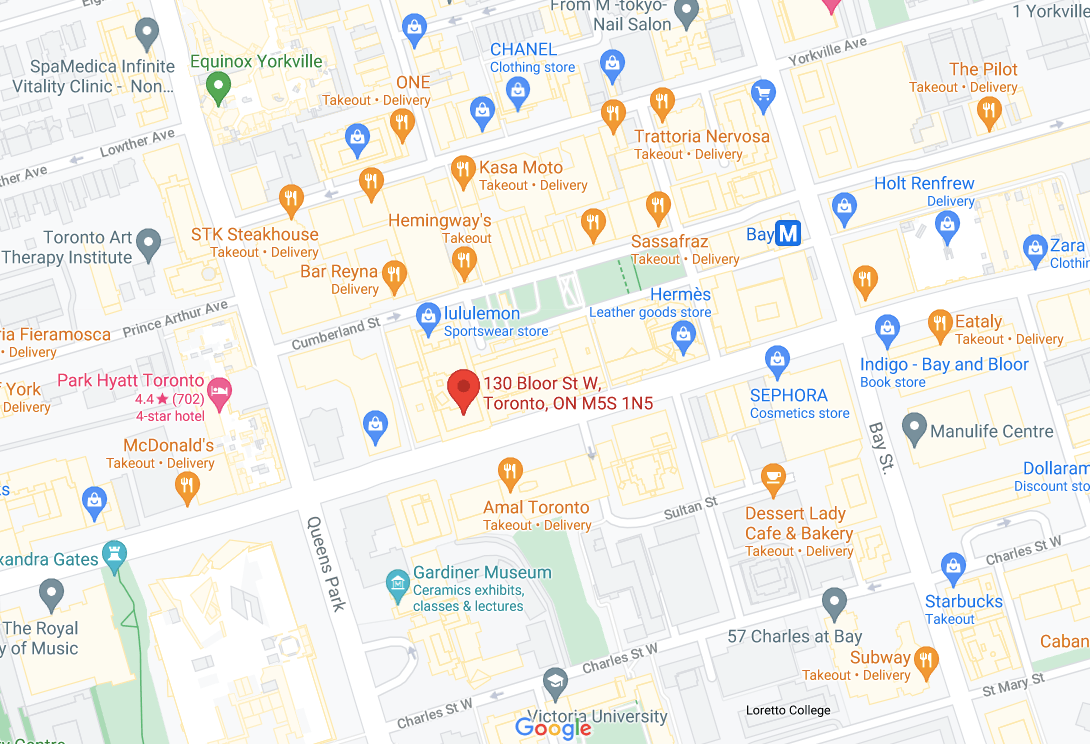
In Canada, Gucci operates two standalone stores as well as several concessions. The first standalone Gucci store in Canada opened in the year 2000 at 130 Bloor Street West in Toronto in a 6,500-square-foot space that is currently being updated. A second Gucci store opened in 2006 in Vancouver at the Fairmont Hotel Vancouver, spanning 3,875 square feet — sources say that it could be replaced with an 8,000-square-foot store next year. Gucci’s other locations in Canada are located within Holt Renfrew and Nordstrom stores. In Vancouver, Gucci operates concessions at Holt Renfrew including separate shops for bags/accessories as well as women’s and men’s apparel. Holt Renfrew’s Calgary store, as mentioned above, features the brand in concession spaces.

In Toronto, Gucci operates its large concession at Holt Renfrew in Yorkdale as well as separate bag/accessory and apparel boutiques at Holt Renfrew on Bloor Street. Nordstrom’s CF Toronto Eaton Centre store features a main floor Gucci bag and accessory concession. In Mississauga, Gucci operates a bag/accessory concession at Holt Renfrew. In Montreal, Gucci operates concession spaces at Holt Renfrew Ogilvy for bags/accessories, women’s apparel, men’s apparel, and the store also features Gucci boutiques for men and women. Gucci shoes and belts are also carried at Nordstrom and Saks Fifth Avenue stores in Canada.

SCREEN SHOT OF GUCCI MEN’S FASHIONS FROM HOLT RENFREW’S WEBSITE

Gucci operates a large outlet store at Toronto Premium Outlets which opened in late 2018, coinciding with the closure of Gucci’s outlet store at Montreal Premium Outlets which operated for several years.

In years past, Gucci’s Canadian distribution was primarily in Holt Renfrew stores. In the early 1990’s, Holt Renfrew in Edmonton housed a Gucci boutique space (most recently occupied by women’s shoes) with a mall-facing entrance carrying bags and accessories. Holt Renfrew also operated Gucci bag/accessory boutiques in its other stores including a particularly large selection in Toronto and Montreal.

GUCCI BAG/ACCESSORIES CONCESSION AT HOLT RENFREW ON BLOOR STREET IN TORONTO. PHOTO: GUCCI
SCREEN SHOT OF GUCCI BAGS FROM HOLT RENFREW’S WEBSITE
GUCCI WOMEN’S ACCESSORY DEPARTMENT AT TORONTO’S YORKDALE SHOPPING CENTRE. PHOTO: GUCCI

In the 1980’s, Gucci’s price-point was lower and in 1985, a Gucci bag/accessory boutique opened in the Hudson’s Bay department store in downtown Vancouver, downtown Calgary and downtown Ottawa which operated for about three years. Upscale Hudson’s Bay-owned chain Simpson’s also featured Gucci accessory boutiques in the mid-1980’s at the Queen Street store in Toronto as well as at the Ste-Catherine Street West location in Montreal.

ADVERTISEMENT FOR THE GUCCI BOUTIQUE AT HUDSON’S BAY IN VANCOUVER IN 1985. PHOTO VIA NEWSPAPERS.COM
ADVERTISEMENT FOR THE GUCCI BOUTIQUE AT HUDSON’S BAY IN CALGARY IN 1986. PHOTO VIA NEWSPAPERS.COM
ADVERTISEMENT FOR THE GUCCI BOUTIQUE AT HUDSON’S BAY IN OTTAWA IN 1985. PHOTO VIA NEWSPAPERS.COM

West Edmonton Mall is becoming something of a luxury retail powerhouse that is expected to attract more brands. The Edmonton market is still relatively affluent despite low oil prices as well as challenges resulting from the COVID-19 pandemic. As well, when international tourism resumes, high-spending Chinese tourists are expected to return to visit West Edmonton Mall while at the same time, affluent international students will eventually return to the University of Alberta campus.

Next year West Edmonton Mall will be offering valet parking in a partnership with a new Toyota experience centre which will help woo affluent locals to the shopping centre. Another benefit to shopping in Alberta is that the province currently does not have a provincial sales tax.

Gucci is one of the world’s leading luxury brands with more than US $10 billion in annual sales. Gucci was founded in 1921 and is now part of the Kering conglomerate of luxury brands. Gucci operates about 500 stores globally. In the United States, Gucci operates a network of standalone stores as well as boutique spaces in stores such as Neiman Marcus, Saks Fifth Avenue, Bloomingdale’s, Nordstrom, and Macy’s (Manhattan store only).

Park Royal Shopping Centre [Mall Tour]

An off-schedule podcast touring the Park Royal Shopping Centre in West Vancouver, British Columbia, in September 2020. Craig and Lee discuss what’s happening at Park Royal in a tour showcasing what’s open and what has closed recently.

Park Royal Shopping Centre Video Tour:

The Weekly podcast by Retail Insider Canada is available on Apple Podcasts, Stitcher, TuneIn, Google Play, or through our dedicated RSS feed for Overcast and other podcast players.

  1. Park Royal Shopping Centre (property’s website)
  2. Retailers mentioned in the commentary/tour and related Retail Insider articles:

Subscribe, Rate, and Review our Retail Insider Podcast!

Follow Craig:

Follow Retail Insider:

Listen & Subscribe:

Share your thoughts!

Drop us a line at Craig@Retail-Insider.com. You can also rate us in Apple Podcasts or recommend us in Overcast to help more people discover the show.

Listen on Google Play Music

110 Bloor Retail Podium Overhaul to Transform the Heart of Toronto’s Mink Mile

110 Bloor Street West Facade

The retail podium of the mixed-use 110 Bloor Street West building in Toronto will be seeing substantial changes that will include an impressively updated physical appearance as well as opportunities for new tenants. The retail podium spans more than 200 feet along Toronto’s prestigious ‘Mink Mile’ as well as frontage facing onto Cumberland Street and Village of Yorkville Park.

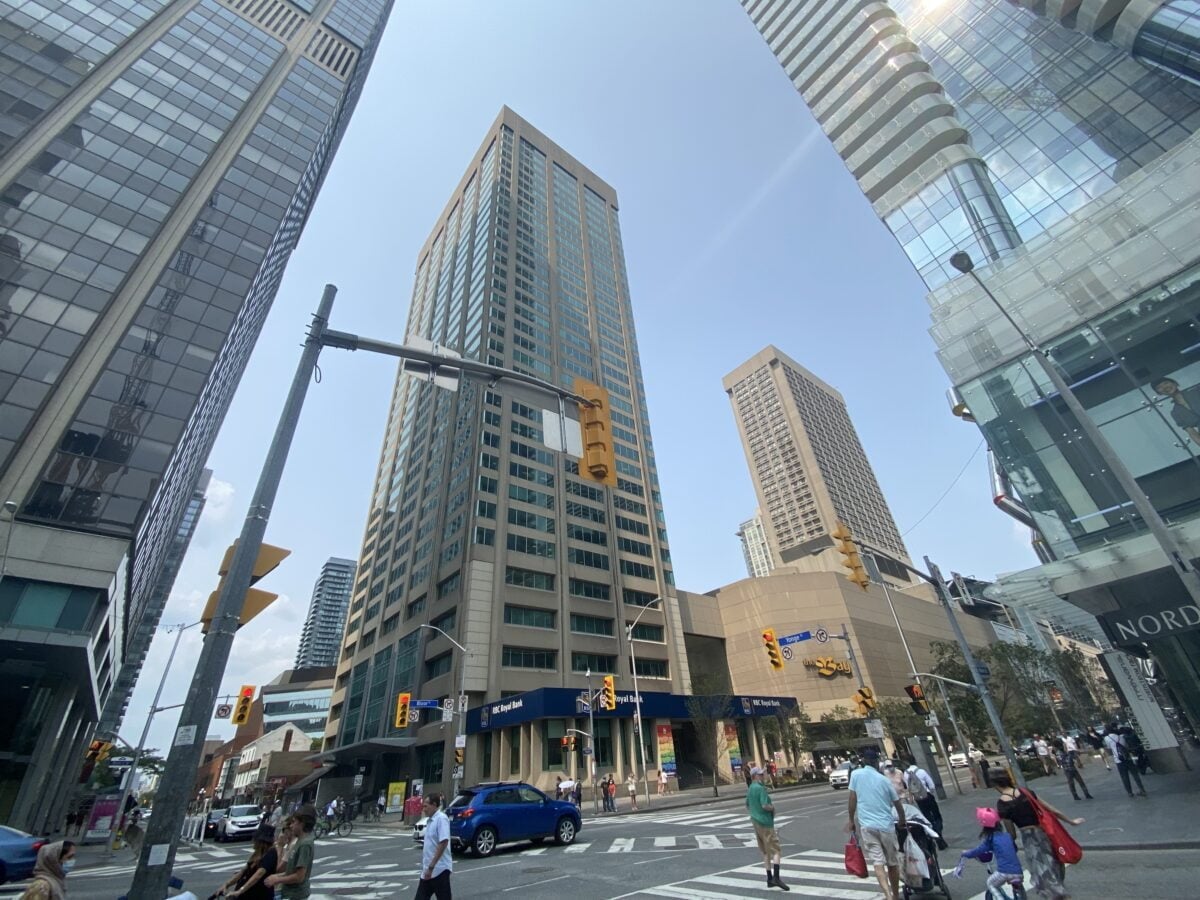
Renderings of the renovated commercial podium at 110 Bloor show a dynamic facade with dark metal finishes and a gold patterned public art piece directly above the updated retail facades. The podium will act as a centerpiece to the luxury stretch of Bloor Street West. Arlin Markowitz of CBRE explained that 110 Bloor is ‘centre ice’ for the area which has recently added several prominent luxury brands. To the west of 110 Bloor are storefronts for Gucci, St. John, Burberry, Tiffany & Co. and Louis Vuitton. To the east of 110 Bloor are flagship storefronts for Zegna and Hermes. Across the street are flagship locations for brands such as Prada, Dior, MCM and others.

Plans to redevelop the podium at 110 Bloor were put into place last year. That was made possible in part with the exit of three retailers on the western portion of the Bloor street side of the building, allowing for new tenant opportunities within four new retail spaces. That includes ‘Unit 1’ spanning 1,614 square feet, ‘Unit 2’ spanning 966 square feet, ‘Unit 3’ at 1,010 square feet, and ‘Unit 4’ with two levels including a street-facing 2,466 square foot space as well as an optional 2,346 square foot basement level. Unit 2 has already been leased to an international luxury brand according to Mr. Markowitz. Lease terms are between five and 10 years, according to marketing materials provided to Retail Insider by CBRE.

110 BLOOR ST. W. IN TORONTO AT 6:30PM ON TUESDAY, SEPTEMBER 15 2020. PHOTO: CRAIG PATTERSON
110 Bloor Street West Art
110 Bloor Street West Basement Floorplan
110 Bloor Street West Floorplan

The existing Winners flagship store at 110 Bloor Street West will remain operational. Plans show a renovated entrance to Winners which is more upscale and matches the design aesthetic of the new Bloor Street facades as a whole.

The eastern portion of the Bloor Street frontage at 110 Bloor currently houses Brooks Brothers and J. Crew stores. Both companies recently filed for bankruptcy protection and their future on Bloor Street is uncertain. If both retailers were to exit the 110 Bloor complex, plans are in place to replace them.

The street level of Brooks Brothers spans about 4,570 square feet according to plans, while the J. Crew space is 7,507 square feet. The spaces may be combined to form one larger unit with triple-height facades according to marketing materials. Furthermore, an additional 13,000 square feet could be available on the basement level of the building to connect with street level retail.

110 Bloor Street West Brooks Brothers and JCrew Floorplan

The north facing side of 110 Bloor overlooks the Village of Yorkville Park and Cumberland Street. Renderings showcase the opportunity to create a basement level retail space that could house an urban-format grocery store. A lower level space spanning 13,295 square feet could be accessed from street level via a ground level space spanning 1,920 square feet according to lease plans indicating new tenant possibilities.

ProWinko Canada Inc. owns the 110 Bloor Street podium. CBRE and Cushman & Wakefield are co-listing the 110 Bloor Street West retail spaces. That includes Arlin Markowitz of brokerage CBRE as well as Philip Traikos and Carmen Siegel of brokerage Cushman & Wakefield.

The 110 Bloor mixed-use building was built in 1980. When it was built, Bloor Street was beginning to find its place as a luxury destination for shoppers as well as residents. The 18 storey 110 Bloor building includes more than 150 condominium units above the retail podium. All residential units feature grand double doors into suites leading into expansive condominium apartments which often sell quickly when they come to market. The surrounding area bounded by Avenue Road to the west, Bellair Street to the east, Yorkville Avenue to the North and Charles Street to the south boasts the highest density of ultra high net worth households in Toronto if not all of Canada.

From its inception, 110 Bloor Street West has been home to luxury brand stores. In the 1980s, brands such as Celine and Byblos had stores in the commercial podium, followed by the 1990s which saw Louis Vuitton and Plaza Escada move in with prominent storefronts. Given the location at the heart of the Mink Mile, luxury retail will continue to be a focus for the leasing in the building.

Toronto’s Bloor-Yorkville continues to transform as new retailers and other businesses move into the area. Nearby Yorkville Avenue has added several luxury retailers since 2017 including Christian Louboutin, Chanel, Versace, Brunello Cucinelli and Off-White among others. ProWinko Canada is also leasing 5,280 square feet of space at 94 Cumberland Street, located at the corner of Bellair Street between Bloor Street and Yorkville Avenue. The 94 Cumberland Street space features more than 150 feet of frontage along Cumberland and Bellair Streets as well as soaring 18 foot ceilings. The space could be occupied by one tenant or divided into as many as three units. CBRE’s Arlin Markowitz is listing the space as well.

NEW RETAIL AT 94 CUMBERLAND STREET

BIAs Mark 50 Years in Canada Amid COVID-19 Challenges

BLOOR WEST VILLAGE (TORONTO). PHOTO: BLOOR WEST VILLAGE BIA

On September 16, 1970, Bloor West Village BIA in Toronto became the first Business Improvement Area in the world.

And as the concept celebrates its 50th anniversary this year, it’s becoming even more apparent during these challenging economic times brought on by the COVID-19 pandemic just how important BIAs are to communities.

“BIAs are integral to advancing distinct, livable, vibrant and resilient business communities in Ontario and beyond, and arguably Ontario’s (Toronto’s) greatest export,” said Kay Matthews, Executive Director of Ontario Business Improvement Area Association. “We’re excited to see the growing spread of this world export. OBIAA strives to be pivotal in building capacity of our BIAs by providing a platform for sharing their wonderful ideas and best practices among our BIAs.

KAY MATTHEWS. PHOTO: LINKEDIN

“It’s a very different thinking than it was when it was set up 50 years ago. When we did a return on investment of BIAs a couple of years ago, what we learned was the one thing that most BIAs feel that they’re doing is community development. So it’s beyond the idea of just creating a shopping area. It’s creating a community area. One where, as a resident, it’s a part of your fabric of your day to day. We often talk about our BIAs being the heart of a community. We use the word heart really specifically because it stands for heritage, economy, arts, revitalization, tourism. We’re broader than we were originally anticipated to be.

“And we are the feet on the street. When we closed down on March 17 and became ghost towns it was like a proxy for the whole economy. It was a proxy for the whole community disappearing and going within.”

Today, there are more than 300 BIAs in Ontario and about 500 across Canada. There are 84 BIAs in Toronto, 19 in Ottawa, 13 in Hamilton. Some are also very specific to cultures such as Chinatown. There’s a wide variety and a broad range of what they do.

BIAs across the country, and around the world, are being invited to celebrate the 50th anniversary of the organizations.

The BIAs are becoming increasingly more important as communities across the country face tough economic times due to the pandemic.

“I think they’re going to be pivotal in the recovery,” said Matthews.

Kensington Night Market

Annie MacInnis, Executive Director of the Kensington Business Revitalization Zone in Calgary, said that at a very basic level the job of a BIA is to create or support a business district where community and businesses thrive.

Part of that includes beautifying an area and ensuring that it is safe.

“Walkability, pedestrian comfort, those are all things that we consider,” said MacInnis. “And we also do marketing and promotion of the area. Most BIAs organize events of one kind or another.”

In Calgary, it’s been particularly tough for local businesses these days. Not only have they struggled due to the pandemic but the economy has been challenged for the past six years as a result of oil prices which collapsed at the end of 2014.

“BIAs are absolutely critical particularly here in Calgary. We’re five years into a downturn. We already had businesses close to the edge prior to COVID and so the presence of a BIA is going to be ever so important as we try to help businesses survive through this next year or so,” said MacInnis. “But we do know from international downtown association data is that businesses that are in a BIA are more likely to survive any kind of a disaster – whether that’s a physical disaster like a hurricane or a flood or whether it’s an economic downturn or whether it’s a current situation like COVID.

ANNIE MACINNIS. PHOTO: TWITTER

“They also recover quicker in a BIA. One of the things we look at when we think of BIAs is that it’s going to be really important for us to do the job that we do and do it even better because we not only have a responsibility to support our businesses who are still struggling to survive but we need to do what we can also to attract those green shoots – those new entrepreneurs – and we also need to look at (attracting) more to come and fill those spaces. At a very basic level, our job is to try to support the business district as a whole.”

MEC Files for Creditor Protection Amid Acquisition by US-Based Kingswood Capital

MEC store on Toronto's Queen Street. Photo: MEC

Vancouver-based outdoor cooperative retailer MEC, formerly ‘Mountain Equipment Co-op’, won’t be a cooperative much longer following a filing for creditor protection and acquisition. Los Angeles-based Kingswood Capital Management was approved by MEC’s board to acquire substantially all of MEC’s assets through the Companies’ Creditors Arrangement Act (“CCAA”) to keep MEC a going concern in Canada. Several of MEC’s stores are expected to close according to one source familiar with the proceedings, and the retailer’s CEO will also be replaced.

MEC is a retail cooperative with a network of 22 large-format stores across Canada. The retailer also has a strong e-commerce site which will remain operational throughout the CCAA proceedings, according to a press release. MEC was established in 1971 and is Canada’s largest consumer co-operative with more than five million members in Canada, and has invested more than $44 million into non-profit organizations that support recreation and conservation.

MEC has been in financial trouble. In July, the retailer announced 200 frontline layoffs after stores were closed temporarily due to COVID-19. MEC lost more than $11 million for the year ending February 24 2019 on sales of about $462 million. The retailer restructured last year and continued to lose money as it tightened operations. MEC had been expanding its base of stores rapidly into markets across Canada. It currently has stores in British Columbia, Alberta, Manitoba, Ontario, Quebec and Nova Scotia.

(MASSIVE WOOD CANOPY IN THE KELOWNA STORE, BUILT BY VANCOUVER-BASED PEREGRINE.BUILD)

Los Angeles-based Kingswood Capital Management LP will acquire substantially all of MEC’s assets through the CCAA proceedings and will keep MEC a going concern. It appears to be the case that MEC’s status as a cooperative will be decommissioned as part of the process, which complicates things. While the board of directors at MEC unanimously support Kingswood’s acquisition, a percentage of members in theory would have to agree as well. One source noted that several members will be asked to speak at upcoming court hearings relating to the deal. The acquisition remains subject to Court and regulatory approvals and is expected to close in the fourth quarter of 2020.

Eric Claus, a longstanding MEC member based in Canada, will lead Kingswood’s newly formed Canadian affiliate as Board Chair and CEO. He’ll take over from Phil Arata who became CEO of MEC in July of 2019 after the retirement of David Labistour. Claus was formerly CEO of US discount grocer Save-a-Lot and prior to that, Canadian discount apparel chain Red Apple. Analysts are hoping that Claus will recognize the importance of customer experience at MEC rather than simple looking at the bottom line.

In January of this year, Arrata provided statements on the company’s restructuring which included cost-cutting such as subletting the Vancouver head office which was about “three times the size that was required” and moved into a smaller location. Contracts with suppliers were renegotiated and competitive categories such as yoga wear and pet goods were reduced as MEC focused on sporting goods for snow, camping and climbing.

High staff turnover became an issue for MEC, which in January gave full or part-time employment positions to about 70% of its casual and non-permanent store staff, or about 950 employees. Since then, MEC has cut more than 900 jobs — in January the retailer had about 2,400 employees which has been reduced to about 1,500 people with 600 of those working in the 22 stores that are currently open.

Kingswood Capital is a private investment firm, “focused on businesses that are undergoing varying degrees of operational, financial or market-driven change,” according to its website. “In addition to access to capital, we bring relevant industry relationships and a broad network of internal and external operating resources that can strengthen the business and enhance value.” Kingswood’s portfolio includes companies such as AVAD, Versar, AutoAnything and WAVE Electronics.

Photos of the new Mountain Equipment Coop location in Kelowna. Photo: Robb Thompson

“MEC is an iconic brand founded on strong values and has a loyal following,” said Kingswood’s Managing Partner, Alex Wolf. “We have tremendous respect for those values and the loyal membership and are honored to be partnering with Canadian operating partners who will represent us on the ground in Canada working with MEC’s management team following the closing to ensure a bright future for MEC. Upon completion of this transaction, we – together – can inspire and equip Canadians in leading an active outdoor lifestyle for years to come.”

“After careful consideration of all viable options, the Board made this difficult decision,” said MEC’s Board Chair Judi Richardson. “Despite significant progress on a thoughtful turnaround strategy undertaken by new leadership, no strategy could have anticipated or overcome the impact of the global pandemic on our business. Today’s announcement, including the transition from a co-operative structure, is creating a positive path forward for MEC. Kingswood’s commitment to honouring the MEC ethos and the solid financial footing that this transaction will provide gives us tremendous confidence in the future. Since our founding in 1971, MEC’s deeply loyal customers have been synonymous with who we are and what we do. That won’t change.”

One source noted that talks had been ongoing to save MEC after the cooperative saw insurmountable financial struggles with costs growing substantially higher than revenues. A special committee of the Board spoke to multiple venture capital firms and Kingswood was ultimately chosen. The committee sought refinancing from potential lenders, looked for government support, and examined voluntary member assessments prior to striking a partnership with Kingswood.

Alvarez & Marsal Canada Inc. is the court-appointed monitor of MEC. Since February 2020, Alvarez & Marsal Canada Securities, an affiliated company, has been acting as financial advisor to MEC to get operations back on track.

Photos of the new Mountain Equipment Coop location in Kelowna. Photo: Robb Thompson

Sales forecasts for the 11 weeks ending November 29, 2020, are optimistic. The forecast period expects to see sales of $68,410,000 for the time period, with an additional $6,442,000 being paid to MEC from the Canada Emergency Wage Subsidy. Expenses are expected to surpass revenues however, with projected costs of $86,606,000 during the 11 week period resulting in a net operating cash flow loss of $11,753,000 over the same period. Adding in professional fees, debt service and contingency expenses, MEC will see a cash flow shortfall of $17,369,000 over the 11 week forecast time period. The company will also be indebted in the amount of $92,432,000 over the period, up from less than $80 million at present. 

The CCAA cash flow forecast indicates that MEC may require financing up to $89 million during the forecast period, provided by its incumbent senior lenders RBC, CIBC and TD Bank. Interim financing could be terminated early. 

MEC’s store fleet could shrink according to one source, with as many as five of the retailer’s 22 stores possibly closing as part of the acquisition. The future of a new MEC store at Midtown Plaza in Saskatoon, Saskatchewan, is now also in question.

Competition in the sporting goods space in Canada has grown substantially in recent years, particularly with the entry of French sporting goods behemoth Decathlon into Canada in the spring of 2018. Decathlon plans to open stores across Canada and is currently negotiating lease deals with brokerage Oberfeld Snowcap. Other competitors include Canadian Tire which owns the Sport Chek and Sports Experts retail operations. At the same time, Quebec-based competitor Sportium, owned by SAIL which filed in the spring, shut down operations as part of the restructuring. As of late, Canadians have been buying record-breaking quantities of outdoor goods following store shutdowns and an international travel ban. Bicycles, camping gear and other outdoor categories have seen strong sales since the spring.

‘Localized’ Ecommerce Marketplace Launches in Canada with Ambitious Expansion Plans

A Calgary startup is connecting online shoppers to local products through a free-ecommerce marketplace to support local businesses during and beyond the COVID-19 pandemic.

The new Local Shops platform has ambitions to expand in the future across North America.

“Search-engine results are dominated by global companies, so local suppliers of quality goods are crowded out of the marketplace,” said Ryan Corry, founder of Local Shops. “We want to change that.

RYAN CORRY. PHOTO: LINKEDIN

“COVID-19 has presented many challenges for businesses and simply getting online is not a cure-all solution. Right now, it’s easier to buy on Amazon than to source products locally.

“It’s a great time for this type of platform so we can really amplify the local businesses that are online and bricks and mortar within the community and just make it easy for consumers to find and support them.”

Local Shops is an online marketplace, which uses location-based technology to show shoppers products that can be found within their city. Consumers can easily discover and purchase local products, supporting area businesses and keeping money in the community.

“I’ve experienced the whole online boost of shopping and I’ve seen how many people are spending money from outside of Calgary and also how many people in Calgary are spending money outside of our jurisdiction as well,” said Corry.

“So the idea came to aggregate all of the local product listings in one place. Leverage the Shopify platform which so many people already use to pull the product listings and do that for every other e-commerce solution that’s available really. That way people can filter by their location. They can find all the same sorts of products you would find on Amazon or Walmart, if not better. And spend your money within your own community.

“I’ve already gone through the database of Shopify users in Calgary and Edmonton and other major cities and it’s unbelievable to see the diversity of products, and these are all the same types of things we’re buying on the worldwide web. By creating this environment, we’re also creating a competitive advantage back for local businesses. The same advantage they had for bricks and mortar when you’re a main street business in the 1950s. But with the creation of the worldwide web there’s no more competitive advantage anymore. Now the advantage is cash flow, SEO experts, and the size of your team, general relevance and the size of your advertising budget. So all of these small businesses who are online have to compete with these giants for first page of listings and it’s a total unfair environment to be successful locally and it takes years and years of hard work until your store finally generates that organic traffic.”

Corry said with Local Shops it’s a great opportunity for people getting into the online world for the first time, have that immediate engagement, start to make sales, and not have to worry about the painstaking task of being visible through Google.

Corry works in the tech industry and founded one of Canada’s largest onesie companies, UNI-Chillwear. Co-founder Serene Yew is the Technical Director at Pixeltree, an innovative Calgary tech firm.

SERENE YEW. PHOTO: LINKEDIN

“There’s been 146 per cent growth in online orders since April 21, with much of that revenue leaving our province,” said Yew. “Local Shops will change that, making it easy to find local goods and deliver them even faster.”

Local Shops features no sign-up fee for businesses and they can start selling their products within minutes. Local Shops has partnered with Shopify to enable product imports for merchants. Businesses who are not online, can upload their products directly to the marketplace.

“We’ve got an amazing opportunity at our hands here. We’re going to be working with another tech company and we’re leveraging their API (application programming interface) for on-demand delivery. That will be available in the U.S. first and Canada in 2021,” said Corry. “So the same way you’re able to order food through Skip the Dishes we’ll have that same sort of environment for local consumer goods. That will be a first of its kind type of environment and one we’re most excited about.
“And then we’re scaling to every major city. We’ll have a presence in every major city in Canada by the end of this month and also a presence in the U.S. I fully expect to be in all major cities within the year. An ambitious strategy.”

YOUTH MediSpa Opens its Doors in Toronto’s Historic Corktown

YOUTH MediSpa Front Entrance at 79 Berkeley Street

YOUTH MediSpa has officially opened its doors in Toronto’s Corktown neighbourhood after a delayed opening due to the COVID-19 pandemic.

Located at at 79 Berkeley Street, YOUTH positions itself as a luxe medispa “blending incomparable service with understated luxury” and promising a “modern twist on the traditional clinical medispa model,” according to its website.

The typical lineup of medispa treatments, such as dermal fillers, botox, facials, and a variety of exfoliant peels, are all available at YOUTH. However Toronto’s newest beauty and wellness hotspot has also broadened its profile to meet more specific needs.

As the world becomes increasingly nipped and tucked, and cosmetic technology advances, YOUTH is keeping up. A major attraction to the spa for many is its Bioidentical Hormone Replacement Therapy. Perhaps the most advanced treatment on the menu at YOUTH — and cutting edge in the field of cosmetic medicine — Bioidentical Hormone Replacement Therapy, with its innovative and technical synthesis, has been able to naturally mimic the pre-existing hormones within both the male and female body — replacing or replenishing hormones that our bodies stop producing as we age or our health becomes compromised. For women, BHRT can help to deliver natural hormone solutions, especially in clients who are pre-menopausal or currently going through menopause.

Additionally, women who have PCOS (Polycystic Ovarian Syndrome), Adrenal and Thyroid disorders, who are insulin resistant, and who experience osteoporosis or fibromyalgia can benefit tremendously from Bioidentical Hormone Replacement Therapy. For men BHRT is just as effective in naturally restoring their testosterone levels in order to regain a healthy lifestyle, and reduce or eliminate issues such as hair thinning, breast tissue development, rapid weight gain, mood swings, hot flashes, insomnia, and erectile dysfunction.

YOUTH MediSpa Interior
YOUTH MEDISPA LOBBY AND STAIRS LEADING TO LOWER LEVEL. PHOTO: YOUTH
YOUTH MEDISPA LOBBY. PHOTO: YOUTH

Committed to providing comprehensive care, YOUTH is managed by a thoughtful and highly-skilled team of healthcare professionals with over 40 years of experience. Albeit small in number, each team member is an expert in their field, including renowned Plastic Surgeon Clinic Consultant Dr. Peter Bray. Dedicated to delivering care and support during all phases of client experience and interaction, YOUTH’s service offerings cater to the individual who desires a dynamic and customized cosmetic care under the supervision of a qualified medical professional.

“YOUTH is a celebration of life and as such, has been created to empower people at every stage of life, said Michelle Mag-Iba, Partner and Clinic Director, YOUTH MediSpa. “We are so happy that Toronto has embraced our vision, and we invite prospective clients of all age groups, gender identities, races, and ethnicities to enjoy a complimentary consultation. We’re incredibly blessed to be able to help people discover the very best version of themselves.”

The lower east side medispa includes nine treatment rooms across 3,100 square feet and three floors in a beautiful building located right on the corner of Berkeley and Adelaide. With each room carefully designed and fitted to serve a specific treatment — and fully equipped with state-of-the-art technology — YOUTH is meticulous in ensuring every patient's needs are met in a comfortable and convenient manner. The space was designed by renowned hospitality and retail design firm 1982 Design, and ambient lighting, minimalist decor, and walls filled with contemporary art make for a modern and welcoming environment.

In a city where new spa, salon, and medispa concepts open frequently, it appears that the range of services is ever-evolving and staying competitive means staying ahead of the trends. With men’s hair restoration therapy, IPL therapy, vaginal rejuvenation, and Platelet Rich Plasma treatments also available at YOUTH Medispa, it’s plain to see that YOUTH has approached the Toronto medispa landscape with guns blazing.   Since reopening after the COVID-19 shutdowns, YOUTH has enjoyed great success. “We’ve been really busy since opening a few weeks ago,” said Mag-Iba, “people in the neighbourhood are so excited. It’s a great community for YOUTH to start its journey in.”

Even COVID-19 regulations and mandates haven't slowed YOUTH down, as the medispa quickly rejigged its ground-floor layout to allow for guests to enter through one door and exit through another at the opposite end of the building once it was given the go-ahead to reopen its doors. “We’ve been very thorough in ensuring people feel comfortable and safe at YOUTH. All staff wear masks and have their temperatures taken daily. We think we’ve done a really great job at adapting to the circumstances and our clients seems really happy.”

Three things are evident from YOUTH’s growing success amid a global pandemic. Firstly, if done correctly and thoughtfully, a business can prosper despite the current economic climate. Secondly, for the right price, it is possible to enhance almost every inch of our bodies — even down to our molecules. And lastly, no matter the state of the world, Torontonians still want to look and feel their best.

The Emotional Connection of Grocery Shopping for Canadians

PHOTO BY ANDREA PIACQUADIO FROM PEXELS

By Nicholas Reichenbach

As people who “consume”, we have an emotional connection or at least an emotional reaction to the concept of shopping in a store or even buying online, something we want or need. We are, after all, people conditioned to consume. It’s the nature of capitalism: that we purchase products we like or need, produced by others, and keep the economy chugging along.

Not being able to patronize some of our daily shopping experiences, while in COVID lockdown, has had effects on our emotional connection to the act of consumption, that may or may not be immediately apparent, but have resonance.

Pre-COVID-19, the sentiments we associated with grocery shopping were wide-ranging: a trip to the grocery store could feel like a chore. Shopping for meat or fish could lead to a feeling of inspiration to cook something new. Strolling down the natural foods or international foods aisle could be a treasure hunt and bring joy or surprise. Finding that a favorite fruit or vegetable is in season can lead to elation when you find them at the earlier than expected.
But during COVID, shopping for so many became a dreaded, emotionally-charged experience focused on personal safety and speed. Then for some, it evolved into a lesson in compassion: seeing the anxious grocery employees deal with also anxious and sometimes angry and frustrated shoppers. Seeing these store employees risking exposure every day to help us buy food, made many of us realize it wasn’t just about filling our carts in the least amount of time possible.

But we’re now heading back to some level of normalcy when it comes to shopping for food and household necessities. And we can properly evaluate our emotional and psychological connection to that shopping experience.

What changed for us because of the shopping dynamic? What changed for good, and what will continue to change? Here are some things I hope we as consumers, manufacturers, marketers – really, people – will remember.

The value of the grocery store treasure hunt. During COVID, our urgency to get in and out of the grocery store, or us sending a proxy to shop via services like Instacart, changed our relationship with the “treasure hunt.” Even the most utilitarian of grocery stores cater to the treasure hunt, whether it’s the introduction of new products or a suggestion from someone at the fish counter that some fresh fish just arrived. We enjoy the hunt because it appeals to our curiosity and sense of discovery. Even if we spend less time in the grocery store because we’re having groceries delivered, or buy certain products through a brand’s website or Amazon, we need to remain curious about all the new items in the grocery store. It’s educational, of course, but also a point of human connection when we share something we discovered and like, with someone else in our lives. It’s how the demand for a product is created and how brands are built.

Finding the positive in new shopping habits formed during COVID. For some, the idea of a stranger selecting their fruits and vegetables became the norm. I have a friend who swears by farmers’ markets and insists on selecting all of her fruits and vegetables by hand. And during COVID, she placed that responsibility into the hands of strangers and realized that what they selected versus what she might select, were barely indistinguishable. And at the heart of that, is trust. Feeling you can trust an anonymous service provider found through an app, to make sure that fresh, beautiful food arrives for you or your family, is a great feeling that can feed positivity.

The importance, for brands, communicating to consumers with all of our packaging. I’m not talking about nutrition facts and boldly-colored messages of lower calories. I’m talking about messages of positivity and optimism, shared in subtle ways, that help manufacturers connect to consumers over time, on an emotional level. For Flow Alkaline Spring Water, our multipack waters include simple messages like “Time to Shine.” When we designed the boxes, we did so because we wanted to charm our consumers in a tiny way. And during COVID, when our direct-to-consumer business spiked, we found that a simple message was as connective as any expensive marketing campaign we’ve run. It’s so easy to give someone a little smile when they take your product home or open the delivery box. And we realized, not enough brands send a simple, happy or positive message on their packaging. It’s a small detail that makes a big difference for a newly engaged consumer who has been revisiting their brand choices this past summer.


Nicholas Reichenbach

Nicholas Reichenbach is the founder and CEO of Flow, a sustainably packaged spring water company.

A seasoned executive & serial start-up, investor and consumer product entrepreneur, Nicholas has built a robust track record, founding, creating and building multiple businesses in the consumer goods, social media, internet/mobile technology, entertainment and hospitality space; Flow ( a socially responsible water company), Mindfull INC (an organic Food & Beverage company), Rabbit (a leading social video chat platform venture-backed by Google Ventures, CrunchFund and other leading VCs), GuestDriven (a leading start-up in hospitality/hotel SaaS with clients such as Thompson, Hyatt & Intercontinental), Magmic Games (Voted top 10 mobile social game & app publisher having produced over 300 games from Guitar Hero mobile to NewYork Times Crosswords) and Bplay( One of the largest mobile smart phone direct-to-consumer mobile content storefront that powered At&t, Verizon (Alltel), U.S. Cellular, Rogers Wireless and R.I.M Blackberrys, worldwide).  Now with Flow, Nicholas has disrupted the water category by building a sustainable product in eco-paperboard package, built on the power of mindful positivity.

Earlier in his career, Nicholas produced music concerts across North America, founded one of the first ringtone publishing companies and invested and co-founded numerous startup’s in disruptive new media & mobile technologies in US, UK, Sweden and Canada.