Home Blog Page 947

Sleep Country Canada Sees Explosive Growth in Ecomm Channel Amid its ‘Most Successful Year in Business’ [Feature]

Sleep Country Canada store in Calgary. Photo: Sleep Country Canada

The retail industry has changed significantly over the course of the past year or so. Driven in large part by an obvious and persistent forcing function, consumer behaviour continues to shift, yielding an approach to the shopping journey that is more channel agnostic than ever before. It’s resulted in a swift and dramatic reshaping of the retail environment, one that’s requiring retailers to rethink their offerings and strategies in order to effectively respond to these changes. Efforts to do so have thus far triggered the acceleration of a range of digital initiatives across the country and, in many cases, alterations to operations that are being informed by thorough reassessments of the landscapes on which they operate. Though much of this action has been reactive on the part of retailers, there are some within the industry whose constant innovation and creativity have bred an agility that has enabled success during these difficult times, positioning themselves for further growth.

Dream Growth

One of these innovators is Sleep Country Canada – the country’s leading specialty sleep retailer – which recently announced impressive fourth quarter 2020 results that helped to cap the most successful year in its more than quarter century of business. Reporting a year-over-year increase in fourth quarter net income of 89.4 percent (+$12.6 million vs LY) and a 33.4 percent increase in revenue for the same quarter from $186.5 million in 2019 to $248.9 million in 2020, the company continues its expansion amid an omnichannel transformation and the development of strategic partnerships that began before the onset of the pandemic. According to Stewart Schaefer, Chief Business Development Officer for Sleep Country and President of Dormez-vous, the timing of the retailer’s initiatives has been fortuitously beneficial. But he adds that their outcomes have nonetheless been borne of the company’s penchant to consistently adapt and evolve in order to meet the demands of the consumer.

Stewart Schaefer

“Prior to the impacts of the pandemic hitting the industry, there were a lot of things that we had already set in motion,” he explains. “A little more than a few years ago when everyone started to really take notice of the ‘bed-in-a-box’ concept and the entire industry was concerned that e-commerce was going to be the end of brick-and-mortar retail, we were proactive enough to begin conversations about providing our own ‘bed-in-a-box’ solution and building out our digital capabilities and omnichannel environment. We never experienced any decrease in activity at our physical stores. We’ve been lucky enough over the years to continue to see that compounded growth. However, we also recognized that consumer preferences were evolving and that the ways they like to engage with their favourite brands were changing and expanding. We knew that we had to create a Sleep Country experience that allowed Canadians to shop with us in whichever way they want.”

Building an Experience

To help create the desired experience for its customers, Schaefer’s Sleep Country team initiated dialogue with one of its online competitors, Endy, back in 2017. Identifying the savvy and success of Endy’s online business, as well as the potential mutual benefits that could be realized through a partnership between the two leading mattress providers, a deal to acquire Endy was closed in December 2018, adding Canada’s largest online mattress brand and one of the country’s fastest ever-ever growing retail brands to Sleep Country’s portfolio. And, less than a year later, in November 2019, the company officially launched the fully transactional SleepCountry.ca website (dormezvous.com in the province of Quebec), marking a true foray into the digital space. The expansion of offering and service was cause for excitement internally at the company, representing a massive leap forward toward its digital and operational goals. But soon after, as Schaefer points out, impacts of the pandemic took hold.

“Following the formation of our partnership with Endy and the launch of our website, our numbers for the final quarter of 2019 were very good,” he says. “For the months of January and February 2020, our sales were incredible, both brick-and-mortar and online. We quickly saw the critical importance of the relationship between the physical store and the website. We had become channel agnostic in our approach and didn’t mind where the transaction was happening, as long as we were providing a seamless experience for the customer. And then, when COVID hit, sentiment in the country and around the world quickly changed. Everything just stopped for about ten days. It was concerning. I was starting to wonder if all of the hard work that our team had put in would be in vain. But then, our e-commerce activity started to accelerate as customers began visiting and engaging with us online in numbers.”

Photo: Endy

E-commerce Acceleration and Marketing Shift

He explains that it was a relief at first to see the company’s online performance start to make up for a shortfall in in-store sales that were impacted significantly by initial lockdowns. However, what Schaefer and his team experienced soon after was an explosion in e-commerce growth. Driven by the country’s new reality amid government-imposed social restrictions and safety protocols, consumers across the country cocooned themselves and their families at home, making purchases that suited their immediate needs. As a result, sales within the accessory segment of Sleep Country Canada’s offering, which it launched a little more than five years ago, increased exponentially. Items like folding cots, sheets, pillows, comforters, and weighted blankets flew off the digital shelves.

These types of purchases not only highlighted the immediate needs of the Canadian consumer, but underscored the significant challenges that people across the country were facing to keep themselves and their families safe and secure. In response to the severity of the situation, just before the first wave of lockdowns took effect, Sleep Country Canada shifted its advertising toward a softer approach. The company stopped advertising mattresses, momentarily retiring its 26-year-old corporate mantra “Why buy a mattress anywhere else?” and replacing it with the message “Sleep well. Stay well”. It was part of an entire new campaign that was launched by the specialty sleep retailer, and one that Schaefer believes has been, at least in part, instrumental in reenforcing the strong connection between the Sleep Country Canada brand and its loyal consumers across the country.

“It didn’t make sense for us to be advertising the sale of mattresses during such a difficult time,” he admits. “When we introduced ‘Sleep well. Stay well.’, it was meant as a message to the Canadian community – a small way by which we could lend our support and to let our customers know that we’re with them. We aren’t clever enough to have created this campaign to drive our business. The intention behind it was completely sincere, providing suggestions like ‘Call someone you love tonight’. But influencers on social media picked up on it and our campaign went viral, seeming to take on a life of its own, helping to solidify Sleep Country’s reputation as a good corporate citizen.”

In addition, Sleep Country Canada also donated $1.5 million in sleep products to non-profit organizations across the country, benefitting frontline healthcare workers as well as vulnerable communities impacted by COVID-19. And when brick-and-mortar stores reopened, it invested millions more in the creation of a safe in-store environment for its 282 stores across the country. It wasn’t long until the company began to experience a return of its mattress sales, both in-store and online. Defying the challenges that have been faced by the industry, Sleep Country Canada’s performance steadily escalated throughout 2020. Supported by its newly created digital experience and omnichannel ecosystem, the company’s most recent successes are reflected in its remarkable fourth quarter numbers, which include a growth in mattresses and accessories revenues of 34.6 percent and 29.3 percent respectively and a third consecutive quarter of triple-digit e-commerce revenue growth, representing 20.1 percent of the company’s total revenue.

Screenshot of Sleep Country Canada’s website.

Enhanced Digital Service

Another example of Sleep Country’s good corporate citizenship, which also represented an adept adjustment made by the company, is the fact that it did not furlough any of its employees during these difficult times. Instead, it realigned its in-store workforce, forming its ‘Dreamline’ which provides direct access, either by phone, email or chat, with Sleep Country sales associates who are available to offer expert sleep advice and help to inform customer purchasing decisions. Started as a response to the pandemic, Schaefer says that the ‘Dreamline’ has quickly become a mainstay component of the company’s consumer engagement strategy. It’s reflective of the creative culture that’s always provided the underpinning for Sleep Country Canada’s success. And, according to Schaefer, it’s also a testament to the organization’s people who were willing to accept and dedicate toward a new way of doing things.

“The creation of an omnichannel experience for customers is no longer a choice of whether or not to build it,” he says confidently. “It’s representative of the evolution of retail and of an offering that has become imperative to provide for the consumer. It has everything to do with the ease, convenience and satisfaction of the shopping experience that you’ve created for them. Our associates have been incredible throughout this journey, supporting the initiative, ensuring that the same exceptional Sleep Country Canada experience is consistent across all of our channels. They’ve always been key to our success, providing the magic behind our customer engagement. But they’ve been unbelievably positive in accepting their evolved responsibilities and helping to drive this transformation.”

The Power of Digital

In addition to complementing in-store sales, the digitization of the business has also informed Sleep Country Canada’s marketing, enabling it to supplement its traditional media with online and social content. For a company that’s always prided itself on its unique storytelling through creative marketing and advertisements, digital channels are providing the perfect mode of communication to start conversations with its customers, while strengthening and expanding awareness of the Sleep Country Canada brand. As is evidenced through the hugely successful partnership with Endy, the development of an omnichannel ecosystem has also allowed the company to continue thinking strategically. Prior to its acquisition of Endy, in support of its digital growth and to further enhance its online offering, the company also teamed up with Simba – Europe’s leading mattress-in-a-box purveyor – in May 2018. And, in March 2019, it entered into a partnership with Walmart, becoming the exclusive provider of Mattresses on the Walmart.ca marketplace. Most recently, in October 2020, Sleep Country became the exclusive Canadian retailer of Purple – the leading mattress-in-a-box creator in the U.S.

The digitization of Sleep Country’s business can’t be described as anything short of a revolution, a critical step that’s allowing the iconic Canadian specialty sleep retailer to venture into a new frontier, adding to the already impressive legacy that its built. It’s changed the very landscape that the company operates on, bringing competitors together and opening a multitude of possibilities for the brand that would not have otherwise been possible. And, combined with its perennially strong brick-and-mortar performance at locations across the country, those possibilities and opportunities to continue growing the brand, according to Schaefer, are presenting Sleep Country Canada with a very exciting future.

“Things are so fluid within the company at the moment and happening so quickly that it’s difficult to look any further than 18 months down the road in terms of what we need to do transactionally to execute on our current plans and growth. We’re focused on continuing to develop our marketplace relationships and exploring strategic partnerships to find that next, best, relevant brand. We’ll continue building out a best-in-class, seamless omnichannel experience and developing that digital relationship with our customers. And we’re also going to build on our real estate portfolio. There’s still room for us to grow in terms of physical locations. And, given our current circumstances, I believe that there are tremendous opportunities for brick-and-mortar retailers ahead. Going forward, it’s going to be about continuing to build on the layers we’ve already laid. And, with respect to the power of digitization – the online environment changes the barriers to entry into other parts of the world. As we continue to work with and develop these relevant brands for Canadians, there is some potential for us to possibly extend Sleep Country beyond Canada, providing us with a glimpse of where we might be able to take the brand.”

Why Canadian Retailers Must Own the Customer Experience in the Last Mile: George Minakakis

Entrepreneur cultivating her brand presence online.

By George Minakakis

Every day a new generation of ideas emerge meant to provide consumers with more shopping options under the guise of convenience and a better customer experience. We now have a plethora of choices and more being developed on where and how to shop. Some are meant to draw consumers away from the physical retail world. Others are just offshoots of a brand or shopping concept trying to redefine or preserve themselves in a consumer world demanding more free time.

Over the last few years, we have noticed the line between brick and mortar stores and e-commerce blurring. We have also heard about traditional retailing becoming a hybrid model integrated with all their digital strategies and social channels. Of course, what else could it have become?

When e-commerce grew up into a more serious player, the beliefs were that it eliminated the middleman and filled the consumer’s needs for greater convenience. Service was not a big concern for e-commerce — the bar in physical retail was low to begin with. They were right then, but not so much today. Instead, it brought in a new middleman — courier services are one of them — but they can’t deliver the brand message.

Traditional retailing was also about convenience in the not-too-distant past. That’s why developers built malls, and thousands of stores were added globally to reach a time-starved public. We all know how that has been playing out. Unable to grow their revenue further, many retailers resorted to lowering costs. We all knew that you couldn’t succeed in retail by cutting service.

While writing my new book, I looked at online marketplaces and how innovative and effective they are as a growth vehicle. Many are novel innovations; however, 90-95% of all innovations fail. For marketplaces to be successful you need:

  • an attractive business model that works.
  • an adequate number of potential buyers and sellers.
  • to have the right target market identified.
  • resources (financial and intellectual) to recover from setbacks and demands of growth.
  • to build trust in the process from beginning to end, for customer satisfaction.

The growth of online marketplaces appears to make up for lost share to other behemoths and/or perhaps, keep your piece of the pie. Saks Fifth Avenue and Hudson’s Bay are on their way to launch and grow marketplaces. Walmart and Best Buy are legacy-branded retailers that have created marketplaces as well. Etsy, eBay, and even Craigslist, for example, are more peer-to-peer marketplaces.

Everyone wants a piece of that consumer pie, whether it’s new or resale.

I haven’t forgotten about Amazon. In 2020 they picked up 50 million new Prime members. Once a member is on their site, they order within three minutes. Financial analysts who follow the retail sector, say; “If you want to know where the consumer is going to be and how they will shop post-pandemic, keep close tabs on Amazon.” I agree with them.  It doesn’t stop here; Amazon has ordered 100,000 electric vehicles. Why? Because they understand the importance of owning the customer experience from beginning to end. I can’t emphasize enough how important it is that a brand is appropriately represented at the customer’s door. Amazon is not alone. Walmart has also invested in CRUISE autonomous vehicles. With the plan to own that last mile and their brand ever-present.

Retailers must own that last mile.

A small grocery upstart called ‘Fridge No More’ offers 15 minutes local delivery on E-bikes.

The staff is employed by the company they pick, package and deliver products. It may be unique, but it is a game-changer for anyone in high-density markets looking to serve their customers and control the entire experience.  The idea here, of course, that you don’t need to be locked in by the status quo.

To be clear, owning the last mile doesn’t necessarily mean you need to own the logistics. You need to understand and respond to how your product is delivered and presented to customers — making the assumptions that a customer’s past experience with your physical space will be enough and that they will understand that it’s just the process of shipping. Is a mistake! No different than cutting productive labour hours from stores.

George Minakakis
George Minakakis is the CEO of Inception Retail Group and the author of a soon-to-be-released new book, “The New Bricks and Mortar – Future-Proofing Retail”.

Marketplaces are the other middleman. Some of them are retailers who will be acting as online malls. This competitive landscape will see new entrants, and as malls, plan to add their marketplaces. All of this will only add more confusion for consumers. Whom are they buying from? How does that brand protect its relationship with its customers? They can’t! Marketplaces control the relationship with the consumer, not the retailer or seller. For marketplaces to be an ideal venue for branded retailers, they need to behave like an open-source marketplace where brands are visible. After all the digital transformations and developing a presence on social channels, losing your brands’ online visibility is high.

Controlling your brand presence in the last mile is retail’s next big challenge, or retailer’s risk having their futures controlled for them.

Gap-Owned Brand ‘Athleta’ to Enter Canada with Stores

Rendering of Athleta store. Rendering: Gap Inc.

San Francisco-based Gap Inc. announced Tuesday morning that its women’s and girls’ brand Athleta will enter the Canadian market later this year, making the performance lifestyle brand’s first expansion outside the United States. The first two Athleta retail stores will open in Toronto and Vancouver with more to come, and the company will also launch a Canadian e-commerce website this summer to gain traction in the Canadian market prior to the brick-and-mortar expansion.

Athleta’s first two physical stores will open at the Yorkdale Shopping Centre in Toronto and the Park Royal Shopping Centre in West Vancouver. Both stores will open sometime this fall. Yorkdale is considered to be Canada’s leading shopping centre in terms of sales per square foot as well as in terms of a clustering of luxury stores and first-to-market retailers. The beautiful sprawling Park Royal centre features a mix of indoor and outdoor retail as was recently featured in a tour in Retail Insider.

“International expansion is a key component of our growth strategy to reach two billion dollars in net sales by 2023, and we are very proud to introduce Athleta to customers in Canada,” said Mary Beth Laughton, President and CEO, Athleta. “As a purpose-driven brand, we are excited to expand our community of empowered and confident women and girls to Canada and bring them a differentiated and inclusive offering in the performance lifestyle category.”

Interior of Athleta store. Photo: Gap Inc.

Athleta says that it plans to open between 20 and 30 stores in North America annually. The brand already has over 200 stores across the United States which it says are profitable. Gap Inc. says that its Athleta stores remain a  “top customer acquisition and brand awareness vehicles and are a key component of the growth and future of the brand.”  New wholesale partnerships and international expansion through franchise and company-operated stores are among Gap Inc.’s strategic steps towards growing the Athleta brand to USD $2 billion in net sales by 2023. Last year Athleta surpassed USD $1 billion in net sales with 16% annual sales growth.

Athleta’s Canadian e-commerce site will see product fulfilled by the Gap Inc. distribution centre in Brampton, near Toronto, which will eliminate international taxes and lengthy shipping times for Canada-based consumers. Athleta noted in a press release that e-commerce in Canada is growing fast and that the pandemic further accelerated the channel’s growth. In 2020, about 60% of Athleta’s US business was generated from e-commerce according to the company.

Prior to making the decision to enter the Canadian market, Athleta says that it conducted extensive research to understand the behaviours of the Canadian consumer. The company’s findings indicated that this is demand for a purpose-driven performance lifestyle brand in this country with Athleta’s differentiated brand focus on “wellness, sustainability and inclusivity” coupled with versatile product that the company says will resonate in all regions. The company said that its product offering in Canada will be “differentiated” with extended sizing in approximately 500 styles in stores and online.

Photo: Gap Inc.

Athleta was founded in San Francisco in 1998 and Athleta Girl was launched in 2016. The company says that its mission “comes to life through inclusive and sustainable product design, connecting with customers through unique experiences in stores, online and within local store communities.” It’s a message somewhat similar to competitor Lululemon.

The expansion comes at a time when Gap Inc. is struggling. Over the past several years the Gap has closed stores across Canada, including the former Gap flagship location at the northeast corner of Bloor and Bay Streets in Toronto. Gap-owned Banana Republic has also closed some Canadian stores while Old Navy appears to be seeing more success. Gap-owned Intermix closed its only Canadian storefront on Bloor Street in Toronto several months ago. Some landlords told Retail Insider that some Gap-owned stores were not paying rent for some months during the pandemic.

Gap Inc., is the largest specialty apparel company in the US selling clothing, accessories, and personal care products for men, women, and children under the Old NavyGapBanana RepublicAthleta,and Intermix brands.  Its fiscal year 2020 net sales were USD $13.8 billion.

Canadian Retail News From Around The Web For April 20, 2021

Canadian Retail News From Around The Web

Advertisement

Top Stories: National

Advertisement

Central/Eastern Canada News

Western Canada News

Pandemic Hits Wholesalers in Canada as Retailers Struggle

Wholesale retailers have been hit hard by the pandemic.

Retailers across the country have felt the tough economic blow that has resulted because of the ongoing COVID-19 pandemic and its associated lockdowns and mandatory public health measures.

But the impact on the industry hasn’t been relegated to just the stores. It’s had a domino effect with the pandemic causing turmoil and hardship as well for a variety of other industries associated to retail, such as wholesalers.

Lisa Wiseberg, owner of LWS Fashions based in Toronto, is a multi-line sales representative who sells men’s and women’s clothing to retail stores.

“People have to realize that it’s just not the retailers that get hurt in these times,” said Wiseberg, who has been in the industry for about 20 years, “because if the retailer isn’t open or the retailer isn’t selling then the wholesaler is getting just as affected because we’re not getting the repeat business or they’re not bringing the goods in. They have to hold goods back because there’s no business.

Interior of Evolve Showrooms. Photo: Evolve Showrooms

“If a retailer is suffering, of any kind, even a restaurant, whoever supplies them the goods is also suffering. It’s not just a story about retailers closing up their stores which obviously is horrible. But that means with that store closing or not opening or not selling their product the way they were last season, that means it is affecting everybody who supplies them, which is me. So my revenue has dropped hugely.”

Wiseberg said the whole industry is suffering, not just retail.

“Vendors aren’t getting paid. So we’re having to stretch our credit lines to retailers because they have no money. So it’s a huge domino effect. I think the clothing industry should know about this effect to be honest because it’s affecting all of us and we have to work together,” she said.

“How do we work together? How does the vendor last? If the vendor doesn’t get paid, if I ship out $5,000 to a retailer and then that retailer can’t open or the consumer isn’t buying, how does that retailer pay the vendor and then how much money can the vendor hold in paper until we get paid or we go down? So it really is a huge problem right now in the world of clothing and anything they are deeming non-essential.”

Ivanna Gecelter

The pandemic is affecting every single area of business associated with retail — landlords included.

Ivanna Gecelter, owner of Evolve Showrooms, said that although she has not been affected to the extent that retailers have because of the pandemic “the retailers are my clients so it’s almost like a domino effect.”

“When they’re affected, we’re affected. They have to cancel their orders or they have to put their orders on hold which obviously would affect us and our suppliers. It’s almost like a domino effect when this happens but it’s definitely not as much as they’re having unfortunately with having to be closed and open, closed and going through what they’re going through,” she said.

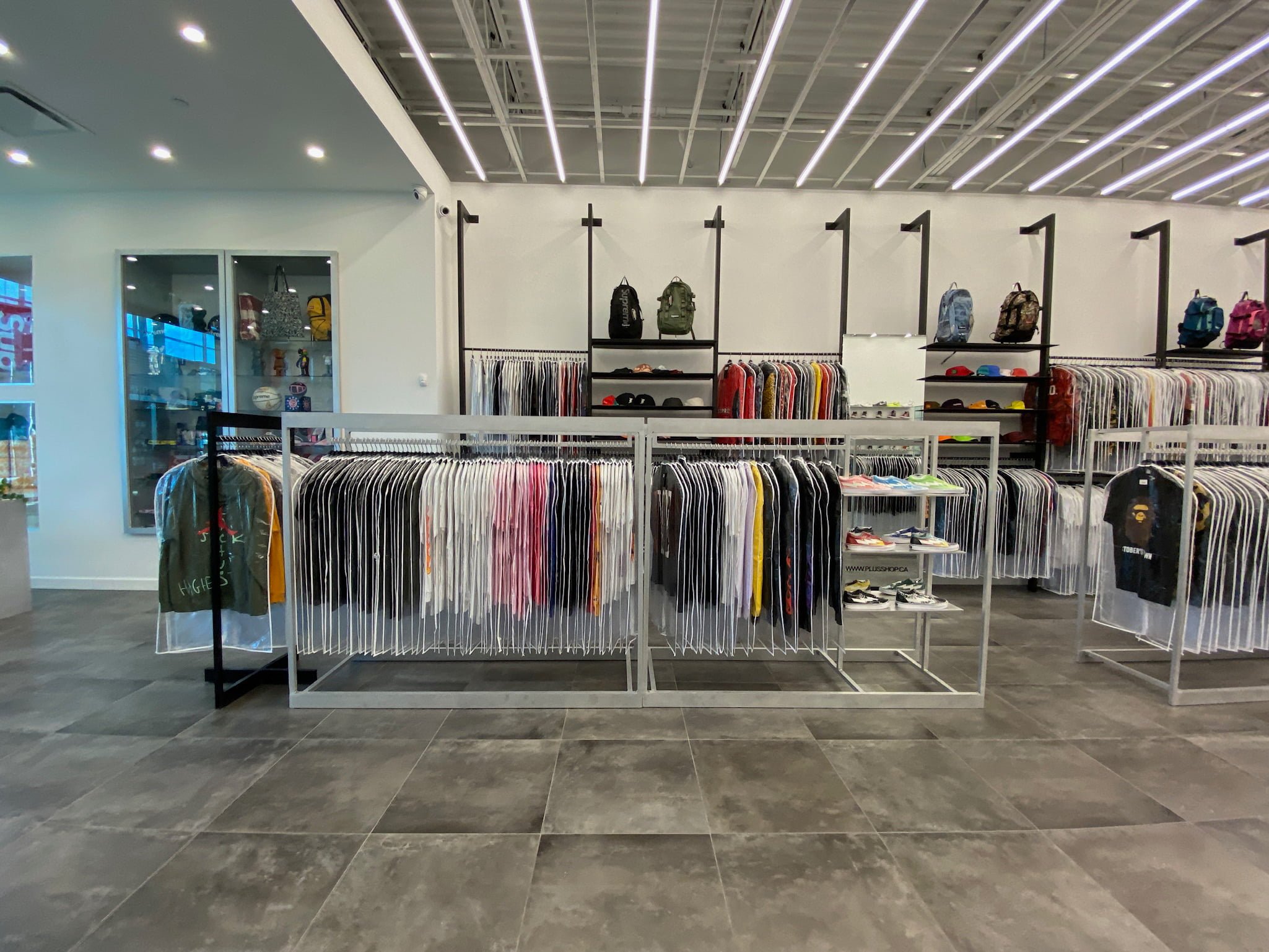
Evolve is a Toronto-based, full-service sales agency, bringing premium international men’s and women’s clothing and accessories to retailers across Canada.
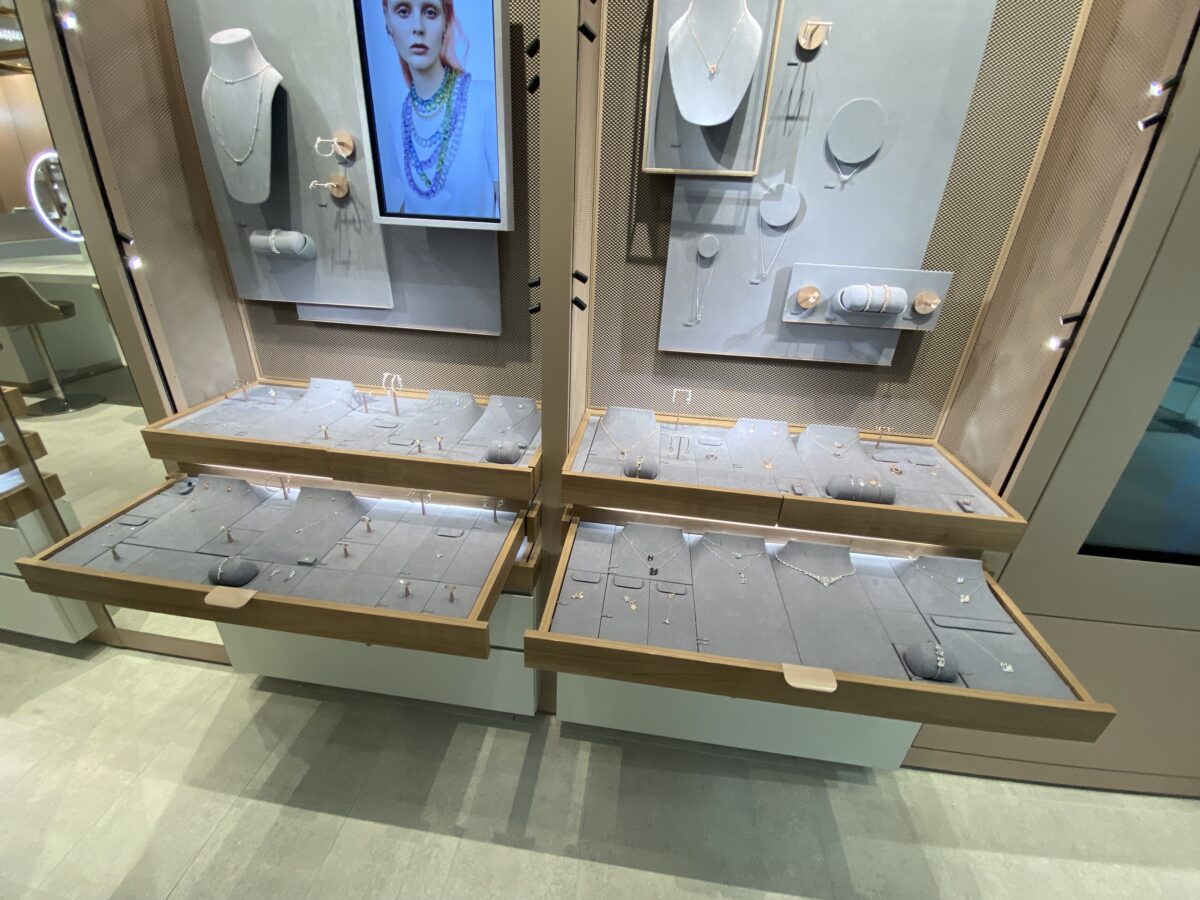
As a wholesaler, Gecelter acts as the middle man between the retailer and the brand. Her business has 15 brands that she sells to retailers. Most of the brands get booked six months in advance for the next season. She’s been in the industry for about 15 years but has had her own showroom for about three and a half years. The showroom is a large space with samples of each brand.
“Things that were booked six months ago for this upcoming spring season have now had to be put on hold because the retailers are closed and they can’t take it so we’ve had to put those orders on hold or cancel them and so there’s a lot of uncertainty for them to buy or put more money into buying new product because of what’s happened,” she said.

“We haven’t been able to see our buyers in person. We’ve had to do virtual appointments with them. That’s all been a whole other ball game for them to see the brands they’re going to bring into their stores and really understand the feel, and the fit and the quality of what they’re buying. It’s been different.

“My business rides on the retailers. If they don’t survive through this, then I won’t survive through this. It really is a domino effect. A lot of them have been doing an incredible job pivoting through this and going online, working really hard on social media and things like that. And that thankfully saved me as well. But they have to be open at some point for us to continue growing our businesses.”

JLL Report Shows How Retailers and Foodservice Businesses in Canada Have Pivoted with Delivery and Curbside Pick-Up

General Assembly subscription user unboxing delivery of frozen pizzas. Photo: General Assembly Pizza

The COVID-19 pandemic, and its associated lockdowns and public health measures, has forced traditional retailers and those in the food industry to think like e-tailers.

In its latest report, Resilient Retail: How Canadian retailers are pivoting and showing signs of resilience, commercial real estate firm JLL said technology has stepped in to bridge gaps as customers change their habits in search of convenience and safer interactions.

“With only a handful of exceptions, Canada’s top 50 retailers now offer delivery services and around 40 percent offer curbside pickup, in-store pickup of online purchases, or both,” said the report.

As society moves forward from the pandemic, the JLL report indicates these will be key trends for the retail industry:

  • Food services will continue to champion off-premises solutions that bring both safety and convenience to customers;
  • Both landlords and retailers are expanding their online platforms, making the customer experience more integrated;
  • Retailers will increasingly leverage video chats to translate in-store events and experiences to a virtual environment;
  • Retailers will adapt their offerings to address the increased need for comfort and health; and
  • Retailers will tighten cost structures and think strategically to absorb new expenses.

Graham Smith, Senior Vice President, Agency Retail Group with JLL, said the sector on a whole is in a period of upheaval and transition.

“I think we’re seeing that the retailers that are really putting a strong focus on not only pivoting their business but looking to kind of reinvent or reimagine their business are the ones that are going to be successful once we come out on the other side of this,” he said.

Graham Smith

“As it specifically relates to foodservice, I think from a bricks and mortar perspective we’ve seen a lot of physical requirements downsize and everyone’s trying to right size now that require smaller spaces that can accommodate both pick up and delivery without having a large rent overhead as a lot of retailers are just uncertain about occupancy levels will reach pre-COVID days.

“Retailers are looking at tightening a lot of their cost structures and are strategically thinking about how to absorb new expenses and how that works in the greater scheme of locations and also potentially delivering e-commerce as well.

“One thing that we noticed during the pandemic is that there were certain operators that were hungry, innovative, driven, that had the ability to pivot their business, and those are the ones that are going to make it through and be a success at the other side of this pandemic.”

Smith said many of the changes that have taken place over the past year or so due to the pandemic will remain for the long term in the foodservice industry.

“Everyone is seeing the merits right now about delivery service and how much pick up there’s been with not only e-commerce but obviously with all the different delivery apps and grab-and-go. I think that’s a trend that’s going to be here to stay,” said Smith. “I don’t think the restaurant experience of going in to dine with friends is ever going to be completely replaced and I think that’s an important attribute to have of any food and beverage operator. But the new trends that we are seeing are absolutely here to stay. The convenience. The quality. And more importantly just the ability to get it to an end-users’ hands quickly and easily is absolutely paramount. That’s what the population was starving for not only during COVID but in the future as well.”

Ali Khan Lalani

Ali Khan Lalani, Founder and CEO of General Assembly Pizza in Toronto, who was featured in the JLL report, said that the early stages of the pandemic were very scary with having to lay off 90 percent of staff and walking into a restaurant that was empty. And dealing with the reality that the company likely had only enough cash to last about three months.

“It forced us to come up with new ideas quickly. We launched a pizza kit in March of last year which was crazy how quick we were able to do that because everything we needed was in front of us the whole time. The light bulb didn’t go off until that day,” said Lalani. “We launched the pizza kit to some success that week and almost 48 hours later we saw the opportunity in the freezer aisle in the grocery store as frozen pizza was in very high demand if not sold out at most grocery stores that did have it and had limits on how much you could buy.”

A year ago in April the company sold its first frozen pizza out of its own restaurant.

“We sold a lot of them in the first few days and we developed a strategy to start approaching local grocers, small to medium size grocers, who I knew were having a hard time keeping frozen pizza on their shelves,” said Lalani.

“Our business started scaling relatively quickly in the grocery space and then we made a decision to take it to the next level and develop an e-commerce recurring revenue subscription model. I had never built an e-commerce business before. I thought I was going to do it in a few weeks. That did not happen. It took six months. I grossly underestimated the infrastructure, costs, and resources required to do that. But once we figured out how to do it in September of last year we launched our e-commerce model and a lot of restaurants, including General Assembly, are now what we call omni channel brands. So they have their traditional restaurants. Some of them have grocery products and retail products. They’ve been able to successfully reach their customers in different ways.”

Lalani said tough economic times, like the one we’ve been experiencing due to the COVID pandemic, forces innovation out of necessity for businesses.

“That necessity is the desire to stay relevant and not lose the hard work and the years or days or decades it took to get to that moment of where you are,” he said. “Most people can’t do it alone. Most people need a supportive team behind them to realize those goals and to help turn those opportunities into reality.

“In the beginning it’s survival. We need to do this to survive. And then if just a little bit of that work you actually are in a position to make your business better for the future – on the retail side a lot of businesses have figured out ways to bring in revenue from different places. So that when things get back to normal over the coming year or two most businesses that have made it through this might actually be in a much more robust, stronger position, because they’re not relying on just one revenue source.”

Video Podcast [Interview – Part 1]: Fashion Icon Jeanne Beker Interviewed by Retail Insider’s Craig Patterson

Retail Insider’s Editor-in-Chief Craig Patterson recently interviewed fashion icon Jeanne Beker in a two-part podcast. Most notably, Ms. Beker was host of Fashion Television between the years 1985 and 2012.

Craig and Jeanne discuss retail and fashion and where things are going as consumer preferences shift during the COVID-19 pandemic. Included is new information that some may not know including Jeanne’s first fashion job at Toronto’s Yorkdale Mall where she also held her Sweet 16 party. Also stay tuned for part two of the podcast where Ms. Beker discusses her career on television including her current role as a host of Style Matters on TSC Today’s Shopping Choice.

Jeanne Beker, who recently marked her 69th birthday, grew up in Toronto and launched her career in 1968 with an acting role on CBC television sitcom Toby. Craig and Jeanne discuss her brief history of studying as a mime in Paris prior to moving back to Canada to work at CBC in Newfoundland as an arts and entertainment reporter before moving back to Toronto in 1978 to The NewMusic prior to landing in the fashion space.

Watch the video podcast below (Ad Blockers need to be disabled as they may block video player):

Alternatively, listen to the ‘audio only’ version of the video podcast here:

Jeanne Beker Books

Jeanne is the author of six books, including:

The second part of the series has been released and is available to watch here.

How Pickers, Packers, and Drivers Are More Important to the Brand Experience Than Ever in Canada

Pickers, packers, and drivers are more important than ever.

Ryan Webber, SVP of Enterprise Mobility, SOTI

Despite the retail industry experiencing a drop in overall sales during the pandemic, online shopping continues to boom globally. This surge has created an entirely new landscape in the retail and transportation and logistics (T&L) sectors and will likely influence new trends far into the future for both.

One trend, however, is already here. As online sales surge, efficiency in the supply chain and reliable last-mile delivery are becoming even more critical to creating a positive shopping experience that consumers expect and now demand.

Consumer Expectations Drive Need for Adoption

The increasing demand for online purchasing options has raised expectations for painless and seamless, delivery and return experiences. 38% of those surveyed in a recent SOTI study, From Bricks to Clicks: State of Mobility in Retail 2021 Report, said that they would look elsewhere if a retailer could not offer delivery in two days or less. Additionally, 63% said they would prefer an automated returns process, and 59% said they view an easy returns process as a major incentive to buy more product from a retailer. These expectations are having a serious influence on how consumers view brands and their loyalty to those brands in the future.

Warehouse Staff and Drivers Are Crucial

To best address the demand for optimized delivery and return options, retailers must focus on their supply chain and empowering staff, such as pickers, packers, and drivers, to facilitate a better process. As it stands, last-mile delivery remains the weakest link in the supply chain. Over 60% of those surveyed in another SOTI study, The Last Mile Sprint: State of Mobility in Transportation and Logistics, shared that last-mile delivery is the least efficient stage in the delivery process.

Supply chain workers, however, pointed to a technological deficit as the main culprit in these inefficiencies. 49% in that same study said the technology they are being instructed to use on the job is out of date and is holding them back from being able to operate as efficiently as possible.

If businesses believe they can thrive in a retail landscape that relies on pickers, packers, and drivers more than ever before, without providing the technology those professionals need to succeed, they are likely to be left behind.

Better Technology to Meet Expectations

Retailers should ask: what are the technologies that can support and empower these workers to operate at peak efficiency? The professionals in the T&L industry (IT Managers, IT Directors, Senior Management, and C-Suite Executives) that were surveyed noted that a mobile-first strategy — and a platform that can manage it — is essential to creating an efficient supply chain in today’s retail landscape; 76% of those surveyed in the T&L study stated a mobile-first strategy enables a better customer experience, and 58% agree that a mobile-first strategy for last-mile delivery has reduced their operational costs.

Insights like geolocation, analytics, and real-time inventory data can be used to gain visibility over the full supply chain and keep delivery operators updated. As a result, the entire supply chain is optimized, empowering professionals within it to react and adjust in real-time to any discrepancies or issues.

Those already using such a strategy are seeing the benefits. 48% of respondents from that same study agreed new technology has improved their productivity, and 46% agreed new technology increased visibility into their supply chain.

If deliveries and returns continue to be so important to the consumer experience, retail and T&L companies will need to be prepared to expand their delivery operations and use a mobile and IoT management platform designed with scaling up in mind.

Ryan Webber is Senior Vice President of Enterprise Mobility at SOTI where he oversees global mobility strategies for Fortune 100 companies looking to harness the power of mobility to transform their operations. Ryan leverages his unique expertise with more than 15 years of experience working in the mobile space, to help SOTI customers across a variety of sectors including retail, healthcare and field services. Prior to joining SOTI, Ryan held different roles at KORE Telematics and TELUS Business Solutions. Ryan holds a B.A. from McMaster University (Canada) and a MA from Griffith University (Australia).

What’s Next?

As retailers and T&L companies look to the future and how to best adapt to the changing demands of consumers, they must view delivery and return options in a new light. Those with the quickest and easiest deliveries and returns will not just survive the future, but also thrive. They will lead the pack with the strategies and technologies needed to empower their workforce to be efficient and productive, delivering exceptional customer service.

Canadian Retail News From Around The Web For April 19, 2021

Canadian Retail News From Around The Web

Advertisement

Top Stories: National

Advertisement

Central/Eastern Canada News

Western Canada News

Retail Profile: The CORE Shopping Centre in Downtown Calgary (Spring 2021)

The CORE from Stephen Avenue Mall (8th Ave SW) in Calgary.
The CORE from Stephen Avenue Mall (8th Ave SW) in Calgary. Photo: Ivanhoe Cambridge.

Retail Insider continues its Photo Tour series of Canadian malls to provide a glimpse into shopping centres which may be less visited lately due to the COVID-19 pandemic. This edition takes us to The CORE Shopping Centre in downtown Calgary, which spans across over three blocks and emcompasses four major office towers: TD Canada Trust TowerHome Oil TowerDome Tower, and the historic Lancaster Building.

Unlike suburban shopping centres, adapting existing architecture to evolve the shopping centre into the three-city-block, modern, unified retail centre presented a unique challenge for its owners, Ivanhoé Cambridge (50%) and Alberta Investment Management Corporation (AIMCo, 50%). The centre is managed by Cushman & Wakefield. For the horticulture enthusiast, another draw to The CORE is the Devonian Gardens — an indoor botanical garden with overhead vistas displayed through a continuous 85-foot-wide (26m), 656-foot-long (200m) suspended glass skylight down the heart of the centre.

Google Map of Calgary with "The Core" circled
Google Map of Calgary with The CORE circled. Photo: Google Map with highlight by Retail Insider
Google Satellite Map of "The Core" spanning across three downtown streets
Google Satellite Map of The CORE spanning across three downtown streets. Photo: Google Map with highlight by Retail Insider

The CORE is an indoor shopping centre with approximately 120 retail stores spanning over 600,000 square feet of floor space. The three main anchor tenants for The CORE include:

  • Holt Renfrew (146,887 square feet)
  • La Maison Simons (95,080 square feet)
  • Harry Rosen (27,821 square feet)

History of The CORE

The CORE has an interesting and complex history on how the three city blocks became the modern-day shopping centre. It all began with one city block through the opening of an Eaton’s Department store in 1929. The second city block was added when Eaton’s was joined by the neighbouring TD Square to the east in 1977. The third city block was added when Eaton’s moved one block west in 1990 while vacating the original first city block, which was redeveloped into the Calgary Eaton Centre and was anchored by a 27,000-square-foot Holt Renfrew. Thus the three city blocks (the new Eaton’s store to the west, the Calgary Eaton Centre in the centre, and TD Square to the east) took shape into what would eventually become one retail centre.

As Eaton’s faded into Canadian retail history in 1999, Sears Canada took over the western building from 2002 to 2008, prior to Holt Renfrew taking over most of it in 2009. The CORE now consists of Holt Renfrew (510 – 8 Ave SW) to the west, Calgary Eaton Centre (751 – 3 St SW) at the centre, and TD Square (317 – 7 Ave SW) to the east.

A three-year redevelopment of the centre was completed in 2011 and included the installation of the largest point-supported structural glass skylight in the world. MMC Architects and GH+A Design Studios collaborated on this project as lead architect and retail design consultant respectively.

Wayfinding Map of  "The Core"
Wayfinding Map of The CORE. Photo: The CORE website

Breaking Up The CORE

In order to make this photo tour manageable, the shopping centre has been divided into four tour zones based on the floor/level.

  • Ground Floor: The first floor is accessible from numerous street-level entrances, including from the pedestrian-friendly 8th Avenue SW (Stephen Avenue pedestrian mall) to the south and 7th Avenue SW (LRT Corridor rapid transit line) to the north.
  • 2nd Floor: The second floor is the highest foot traffic floor of the entire shopping centre due to its interconnection points to adjacent buildings to the north, east, and south through Calgary’s elevated Plus 15 pedway network.
  • 3rd Floor: The third floor is bathed in sunlight beneath the suspended glass skylight with retailers running the length of the floor. Not to be greedy, light wells share the natural light to the second level as well.
  • 4th Floor: While not truly a fully-fledged floor, the fourth level acts more like a tiara crowning the third level, housing a food court and the 2.5-acre (1.0 ha) Devonian Gardens. Most of the food concessions are perched upon the roofs of the third floor retailers as to not obstruct the view and natural light from cascading to the floors below.

The CORE at Ground Level

The retail areas on the ground level of The CORE are disjointedly separated due to the nature of the overall shopping centre spanning across three city blocks. While three distinct retail areas appear to be marooned with moats of city streets on ground level, the foot traffic from the 7th Avenue “light rail only” street and the pedestrian-only 8th Ave SW (also known as Stephen Avenue Mall) encourages a steady flow of potential patrons to the centre.

The only drawback is the two north-south flowing city streets which naturally split the centre into its three parts based on the bases of each respective office tower. The centre’s second and third floors unify the three city blocks, spanning over the two high-traffic streets, creating physical tunnels to allow traffic to flow with the adjoining high-density ‘Beltline’ residential neighbourhood to the south.

Ground level "Tunnel" created by 2nd Floor Retail Level spanning across 5th Street SW
Ground level Tunnel created by 2nd Floor Retail Level spanning across 5th Street SW. Photo: Jessica Finch

Any ambiance for foot traffic at street level is forcibly interrupted by the physical tunnels becoming acoustic tunnels as vehicles roar from red lights and pass beneath the second floor overhead walkways above each street. Pedestrians unwilling to wait for the crossing signals or wanting to evade the outside weather mostly duck into the closest entry point to ascend by escalator to the unified second floor.

Here our tour starts on 4th Street SW between 7th Avenue and 8th Ave SW.

Satellite Map on West side of "The Core" on 4 Street SW between 7th Ave and 8th Ave SW.
Satellite Map on West side of The CORE on 4th Street SW between 7th Ave and 8th Ave SW. Photo: Google Maps with highlights by Retail Insider

On the left side of the map above is the ground level of the first building that makes up The CORE. The westernmost building on the west side of 4th Street SW is home to Holt Renfrew and its luxurious stone-clad entrance, accompanied with various window displays for high-end retail brands including Gucci, Prada, Miu Miu, Burberry, Celine, Tiffany & Co. and the recently-opened Chanel boutique which we profiled in June 2020.

Holt Renfrew entrance at "The Core" in Calgary
Holt Renfrew entrance at The CORE in Calgary. Photo: Jessica Finch

On the east side of 4th Street SW (opposite Holt Renfrew) is the entrance to the former Calgary Eaton Centre which is the second (of three) buildings making up The CORE. The office tower is home to TD Canada Trust offices and its main lobby is located on the ground floor of this portion of The CORE. Before heading into the ground-floor entrance off of 4th Street SW, one of the key retail tenants is Brooks Brothers, which has access to 8th Avenue (Stephen Avenue) to the south and extends up to the second floor as well. The ‘tunnel’ spanning across 4th Street SW is noticeable on the left side of the following photo.

Brooks Brothers entrance at "The Core" in Calgary
Brooks Brothers entrance at The CORE in Calgary. Prior to 2009, this building housed a much smaller Holt Renfrew store featuring a pleasant wood-heavy interior. Photo: Jessica Finch
Ground Level at base of "TD Bank" building of  "The Core"
Ground Level at base of TD Bank building of The CORE. Brooks Brothers and Hy’s were both occupied by Holt Renfrew’s accessory, beauty and men’s departments until 2009 when the store relocated across the street. Photo: Map from The CORE website with Leasing Plan from Ivanhoe Cambridge inserted

Pictured below is one of the street level entrances to The CORE bringing visitors into the TD Square component of the shopping centre.

"The Core" entrance in Calgary
The CORE entrance in Calgary. Photo: Jessica Finch

Aside from Brooks Brothers, the rest of the ground floor for this section is occupied by a Second Cup, a Bell mobility store, a TD Canada Trust branch, and a Hy’s Steakhouse Restaurant accessible from 8th Ave (Stephan Avenue) through the historic Eaton’s façade which still remains as a nod to its retail history.

South exterior doors of Hy's Restaurant at "The Core" in Calgary
South exterior doors of Hy’s Restaurant at The CORE in Calgary. Eaton’s once occupied the building and Holt Renfrew leased the space until 2009. Photo: Jessica Finch

Another key traffic artery, 3rd Street SW, needed to be crossed to get to the third — and larger — ground floor retail section in TD Square. The building is home to the Home Oil offices and the tower lobby for the oil company is intermixed with the retail found on this floor.

Satellite Map on West side of "The Core" on 3 Street SW between 7th Ave and 8th Ave SW
Satellite Map on West side of The CORE on 3rd Street SW between 7th Ave and 8th Ave SW. Photo: Google Maps with highlights by Retail Insider
Crossing 3rd Street SW from TD Building (left) to the Cactus Club (right) under the 'tunnel' at "The Core" in Calgary
Crossing 3rd Street SW from TD Building (left) to the Cactus Club (right) under the tunnel at The CORE in Calgary. Photo: Jessica Finch
Ground Level at base of the main "The Core" building
Ground Level at base of the main The CORE building. Photo: Map from The CORE website with Leasing Plan from Ivanhoe Cambridge inserted

Included within the ground floor retail area sandwiched between 4th Street and 3rd Street SW is a Shoppers Drug Mart on the north side facing 7th Avenue.

Shoppers Drug Mart at "The Core" in Calgary
Shoppers Drug Mart at The CORE. Photo: Jessica Finch

Across the corridor to the south is a standalone Beauty Boutique by Shoppers Drug Mart, which is unusual, and is next to a Cactus Club Restaurant. Other retail tenants on the ground floor in TD Square portion of The CORE include a Bentley Leathers store and an Indigo Spirit bookstore.

Beauty Boutique (operated by Shoppers Drug Mart) to left of Cactus Club at "The Core" in Calgary on the South Side
Beauty Boutique (operated by Shoppers Drug Mart) to left of Cactus Club at The CORE. Photo: Jessica Finch
Indigo Spirit and Bentley at "The Core" in Calgary.
Indigo Spirit and Bentley at The CORE. Photo: Jessica Finch
Exterior Entrance to Indigo Spirit at "The Core" in Calgary
Exterior Entrance to Indigo Spirit at The CORE in Calgary. Photo: Jessica Finch

Outside of the Indigo Spirit exterior door on 8th Ave SW (Stephen Avenue) is the The Galleria Trees, which are formed by ten tree sculptures. The galleria was a gift from Trizec Hahn Office Properties to the City of Calgary in 2000 following the completion of the second Bankers Hall building located south of The CORE, which is interconnected by Calgary’s Plus 15 pedway network. Since it is difficult to grow trees in Calgary, it was decided that the ten sculptures comprised of two design types would take the form of stylized trees. They also project heat on cold winter days which is a benefit for the homeless trying to keep warm.

The Tree Galleria outside of IndigoSpirit at "The Core" in Calgary
The Tree Galleria outside of IndigoSpirit at The CORE in Calgary. Photo: Jessica Finch
The Tree Galleria seen from 2nd Street SW outside of La Maison Simons at "The Core" in Calgary
The Tree Galleria seen from 2nd Street SW outside of La Maison Simons at The CORE in Calgary. In years past, Austrian hosiery brand Wolford had a store at the corner. Photo: Jessica Finch

Returning inside The CORE’s ground floor, the second largest anchor tenant for the centre is Quebec City-based large-format fashion retailer La Maison Simons. Nestled against 2nd Street SW, the 95,080-square-foot retailer rises up three levels in the historic Lancaster Building which is part of the TD Square section of The CORE. This became Alberta’s second location for Simons when it opened in March 2017 and it connects with Hudson’s Bay on the second level which sits across 1st Street SW from The CORE.

The CORE on the Second Level

Ascending the escalators in Simons within the Lancaster Building brought our retail tour to the second floor. As mentioned above, the interconnected Plus 15 pedway network is a key pedestrian access point for downtown office workers to traverse the downtown regardless of outside weather conditions. The shopping centre is interconnected with other buildings not associated with The CORE, including the Hudson’s Bay and Scotia Centre buildings to the east, the Bank of Montreal (BMO) to the north, and Banker’s Hall to the south.

Second Floor Level of the main "The Core" building
Second Floor Level of the main building. Photo: Map from The CORe website with Leasing Plan from Ivanhoe Cambridge inserted
Simons entrance at "The Core" in Calgary
Simons entrance at The CORE in Calgary. Photo: Jessica Finch

Similar to the ground level, Simons continues on the second level along the main corridor that interconnects the Plus 15 pedway network. Foot traffic from the Hudson’s Bay building passes through Simons to enter The CORE on this level. Harry Rosen, the third largest tenant with 27,821 square feet of retail space, can be found on this level adjacent to the north Plus 15 entrance from the BMO building.

Harry Rosen and ShopMADE at "The Core" in Calgary
Harry Rosen and ShopMADE at The CORE in Calgary. Photo: Jessica Finch
Looking east from Harry Rosen towards Simons and the +15 to HBC at "The Core" in Calgary
Looking east from Harry Rosen towards Simons and the +15 to HBC at The CORE in Calgary. Photo: Jessica Finch

Other retailers on the second level in the TD Square portion of The CORE include Banana Republic, Aritzia, MAC, Browns Shoes, Curatedly, Just Cozy, Club Monaco, Femme De Carriere, Sephora, and GAP.

Montreal-based jewellery retailer Maison Birks is currently under renovation with construction signage noting a spring 2021 reopening. The store spans about 5,500 square feet over one level according to lease plans, including a small Rolex boutique that is connected and not in the photo below. In decades past, the Birks store at the former TD Centre was considerably larger and spanned two levels that were joined by a circular staircase. The Birks store shrank when it gave up its street-level space and then shrunk again when its space was demised to create a 2,700 square foot corner retail unit that was recently vacated by US fashion brand Michael Kors.

Birks "Coming Soon" at "The Core" in Calgary
Birks “coming soon” at The CORE in Calgary. Photo: Jessica Finch
Corridor between retailers open up to level 3 at "The Core" in Calgary
Corridor between retailers opens up to level 3 at The CORE in Calgary. Photo: Jessica Finch

Retailers on the third level have the privilege of being beneath the suspended skylight and light wells provide sky views for shoppers on level two as well. The unified second floor of The CORE crosses over 3rd Street SW and includes retailers suspended above the roadway below.

Second Floor Level within the "TD Bank" building of  "The Core"
Second Floor Level within the TD Bank building of The CORE. Photo: Map from The CORE website with Leasing Plan from Ivanhoe Cambridge inserted

In the Calgary Eaton Centre portion of level two, the monolithic entrance to Brooks Brothers is accessible. In years past, the space was occupied by Holt Renfrew’s women’s designer floor.

Brooks Brothers (2nd Level Entrance) at "The Core" in Calgary
Brooks Brothers (second floor entrance) at The CORE in Calgary. Photo: Jessica Finch

Other retailers on the second floor of the Calgary Eaton Centre portion of The CORE include Bellissma Fashions, Tip Top, L’Occitane, Aldo, Labels, and Tristan.

At this point within The CORE, the building transitions from the Calgary Eaton Centre to the Holt Renfrew section and some retailers occupy space in the suspended galleria above the 4th Street SW roadway below.

Dex10, Canada’s first fully-automated furniture retailer, opened in March 2021 in the Holt Renfrew building at the westernmost point of The CORE.

Couch display outside of DEX 10 at "The Core" in Calgary
Couch display outside of DEX 10 at The CORE in Calgary. Photo: Jessica Finch
Holt Renfrew 2nd Level entrance at "The Core" in Calgary
Holt Renfrew second Level entrance at The CORE in Calgary. Photo: Jessica Finch

Holt Renfrew is a key tenant for The CORE, especially since its signifiant expansion into the vacated Sears Canada space in 2009. The retailer announced plans to add a fourth floor in September 2014, which was set to include a restaurant and personal shopping suites. Oil prices crashed shortly thereafter and the expansion still hasn’t happened.

Holt Renfrew escalators (ascending from 2nd Level to 3rd Level) at "The Core" in Calgary
Holt Renfrew escalators (ascending from the second floor to the third) at The CORE in Calgary. One can see the main floor women’s footwear hall downstairs, the women’s designer floor including a Gucci boutique on this level and a men’s floor directly upstairs Photo: Jessica Finch

The CORE on the Third Level

The third floor of The CORE is the architectural icing on the metaphorical cake for the shopping centre. Before we go into the details of the suspended glass skylight, we start the retail photo tour on the west end as we emerge from Holt Renfrew.

Holt Renfrew 3rd Level entrance at "The Core" in Calgary.
Holt Renfrew’s third level entrance at The CORE in Calgary. This level is home to the menswear floor which features a dramatic high ceiling. Photo: Jessica Finch
Third Floor Level within the TD Bank building of  The Core
Third Floor within the TD Bank building of The CORE. Photo: Map from The CORE website with Leasing Plan from Ivanhoe Cambridge inserted

Through novel architectural design and construction, the gigantic skylight, which spans three city blocks, is suspended under structural arches by special spider fasteners which secure the four corners of each glass panel. It consists of 1,740 glass sections, and is 90 feet wide and 656 feet long, with 95 arches suspending the glass sections.

H&M at "The Core" in Calgary
H&M at The CORE in Calgary. Photo: Jessica Finch

The key tenant on the west side of the third floor, besides Holt Renfrew, is H&M’s 25,992-square-foot store. Next door to H&M is the soon-to-be-closing Le Chateau which is above the 4th Street SW roadway below.

Le Chateau (Closing) at "The Core" in Calgary
Le Chateau (closing) at The CORE in Calgary. Photo: Jessica Finch

Other retailers in the Calgary Eaton Centre section of the third level includes Suzy Shier, Ricki’s, Lenscrafters, Vivid Beige, Recreation World, and The Source.

Continuing eastward under the glass skylight brings our retail photo tour to the TD Square section of the third floor.

East end of the third level at The CORE in Calgary with Showcase and Glamous Secrets on the left. Photo: Jessica Finch
Third Floor Level of the main The Core building
Third floor of the main The CORE building. Photo: Map from The Core website with Leasing Plan from Ivanhoe Cambridge inserted

Other retailers on the third floor of the TD Square section of The CORE include David Jones, About the Bra, Echo Bridal, Roots, Showcase, Soft Moc, Rocky Mountain Soap, and La Vie En Rose.

Simons 3rd Level entrance at "The Core" in Calgary
Simons third level entrance at The CORE in Calgary. Photo: Jessica Finch

The CORE on the Fourth Level

The fourth floor of The CORE is home to the food court as well as the Devonian Gardens.

Food Court on Level 4 at "The Core" in Calgary
Food Court on the fourth level of The CORE in Calgary. Photo: Jessica Finch
Fourth Floor Level of "The Core" building
Fourth floor of The CORE building. Photo: Map from The CORE website with Leasing Plan from Ivanhoe Cambridge inserted

The original Devonian Gardens opened in 1977 at a cost of $9 million dollars. The park was closed in 2008 for four years while the major redevelopment of The CORE unfolded and reopened on June 27, 2012. It features additional seating for the CORE food court, a playground, and space for corporate events.

Devonian Gardens on Level 4 at "The Core" in Calgary
Devonian Gardens on level four at The CORE in Calgary. Photo: Jessica Finch

The CORE is a beautiful shopping centre property that we’d consider to be one of the most under-rated in North America in terms of overall design. It is worth a visit for those seeking a unique urban experience. The Holt Renfrew store has valet parking in its basement, and La Maison Simons is unlike any store in Canada in terms of its configuration and design.

Overall, we had a very interesting photo walk around The CORE in downtown Calgary and we hope you enjoyed coming along with us. Don’t forget to check out our other retail photo tours over the past few months. Thank you for taking this tour with us, feel free to leave your comments below and tell us what you think.