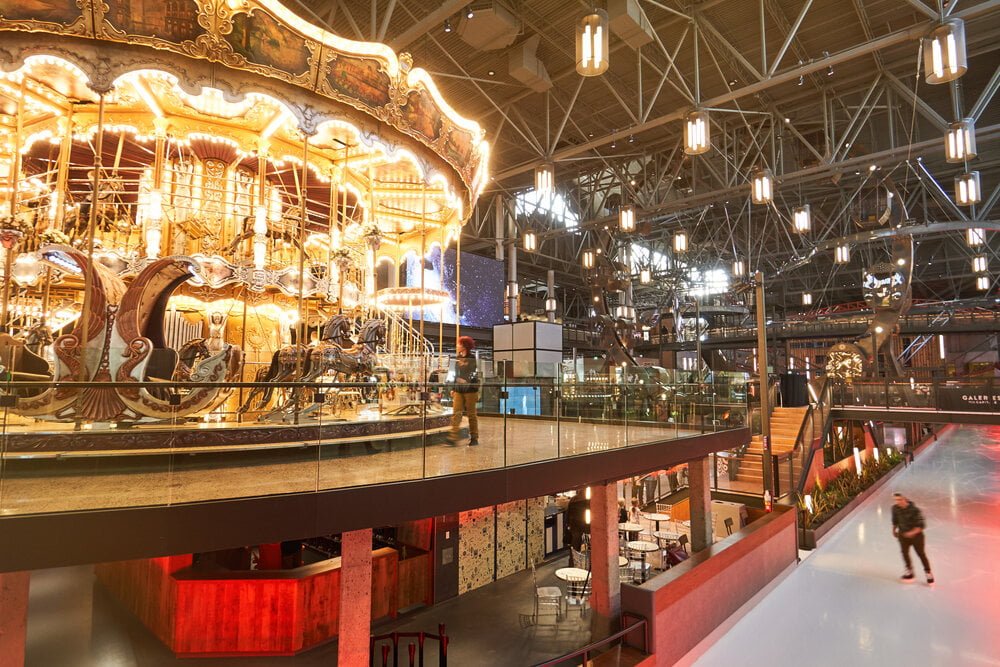
Les Galeries de la Capitale, a 1.5 million-square-foot shopping complex in Quebec City and owned by Oxford Properties, recently celebrated one year of re-opening its Méga Parc which attracted more than two million visitors.
Stéphan Landry, Director and General Manager of the shopping centre, said the amusement park re-opened January 18, 2019 following a massive $52-million redevelopment.
The shopping centre re-opened its fully redesigned Méga Parc with 18 rides, including 14 new ones, with a Steampunk theme as well as the first spokeless Ferris Wheel in North America. Construction took about 16 months for the transformation.
It was originally built in 1988.
MEGA PARC (PHOTO: LES GALERIES DE LA CAPITALE)
“When Oxford acquired Les Galeries de la Capitale back in 2013, they had a plan to redevelop the entire property including the renovation of the mall of course and what existed was the old Méga Parc,” said Landry.
“After two years of analysis and looking at other parks in Canada and the U.S. – most of them in the U.S. – Oxford decided to invest $52 million. We did a complete extreme makeover of the park. The only ride that stayed in place was the rollercoaster because it’s really hard to move and relocate that big track.
“Before we had an ice rink with a real big ice surface. We just removed it so that gave us a lot of room and just in the middle of the park to put other rides and attractions and we kept the skating activity, which is very popular. We transformed the ice rink to a nice trail – the longest indoor skating trail in Canada.”
Landry said the new rejuvenated park also increased overall traffic in the mall which was up nine per cent from the previous year.
“Which is very, very great compared to the other malls in the country where everyone is having a little bit of a bad time these days,” he said. “So to end the year at plus nine for us was quite a big success.”
MEGA PARC (PHOTO: LES GALERIES DE LA CAPITALE)
Overall traffic to the shopping centre in 2019 was 10 million people.
It is becoming increasingly more important these days for shopping centres in Canada to offer an entertainment experience to augment retail sales.
“Everywhere in the world the online sales are going up,” explained Landry. “So our customers are looking for something different. With Méga Parc and we also have the IMAX Theatre just next to the park within the mall and that’s the biggest screen in the country as well. So those two big entertainment components close together gives some really, really good reasons for young families – even adults and older people – to come.
“The entertainment component is a traffic driver. But also in our property we added a new food market that opened on October 29 of 2019. That’s a little bit different than the traditional retail. The future of the mall is there. We were successful this year with our big traffic increase. Same thing with the average sales of our retailers. We added another five per cent increase in sales per square feet. The strategy behind it is working and let’s say in the future everything that is food and beverage will get more and more important with that entertainment component.”
Landry said the shopping centre over the last five years has undergone renovations, the addition of new retailers, the renovated park, the introduction of the food market and all those initiatives have paid dividends as the results clearly show and the customers are happy.
MEGA PARC (PHOTO: LES GALERIES DE LA CAPITALE)
1 of 3
MEGA PARC (PHOTO: LES GALERIES DE LA CAPITALE)
PHOTO: LES GALERIES DE LA CAPITALE
PHOTO: LES GALERIES DE LA CAPITALE
MEGA PARC (PHOTO: LES GALERIES DE LA CAPITALE)
The impressive new food hall, Les Galeries Gourmandes, has more than 20 tenants in about 46,000 square feet of space, including the l’Atelier Gourmand, a 48-seat demo-kitchen space.
Les Galeries de la Capitale has existed for about 40 years.
The Oxford Real Estate Group is an international platform working in investments, development and management in the real estate field. The company hires more than 2,000 employees and has nearly $ 37 billion under management assets. Oxford was founded in 1960 and operates offices in Toronto, London, and New York. Its portfolio includes more than 56 million square feet of office space, retail space as well as industrial space in addition to having assets in the hotel and multi-residential sectors.
Canadian fragrance retailers must cater to the needs of customers inside the country while considering the possibility of expanding beyond the country’s borders. Fortunately, e-commerce allows them to do just that.
Shifting Content Strategies to Match the Digital World
Michel Germain Parfums is one of the biggest Canadian fragrance brands. One of the moves that bolstered their success was to change content strategies to account for the fact that people consumed content differently when viewing the material online versus through another method. Michel Germain runs his brand with his wife Norma from a 100-acre property near Almonte, Ontario.
Norma writes most of the company’s content, and she explained how operating in a digital world has changed her methods: “The digital world is the new reality. It’s a changing world, and you have to stay relevant, or you die. We write in sentences rather than in paragraphs and are moving to video to create visuals.”
IMAGE: PERFUME ONLINE WEBSITE
Indeed, today’s skilled content creators know that people want content they can skim or easily view on their phones. They’re also aware that video-based content is a trend that seems to have staying power. Shorter content and video supplements make it easier for people to learn about products more efficiently.
Michel has also capitalized on the storytelling trend that’s particularly powerful in e-commerce. He often mentions that he grew up focusing on sports and knew nothing about perfumes. Once Norma told him that none of the fragrances on the market made her feel desirable, Michel decided to make a change by creating a brand that’s now a hit.
Michel Germain Parfums can attribute its success to numerous factors, but digital-friendly content and a fascinating story that helps drive sales are two aspects that have undoubtedly gotten people interested.
Appealing to Cross-Border Shoppers
The internet makes it extremely easy for brands to grow their profits by letting people in either the United States or Canada shop without leaving home. A trend that’s gaining momentum involves brands that are firmly established in one country determining that it’s time to branch out.
In June 2019, for example, news broke that Ulta Beauty would start opening stores in Canada as well as running e-commerce operations there. Stores that operate primarily online in Canada often find success by making it as easy as possible for people to buy things no matter if they’re in the United States or Canada.
Perfume Online markets itself as Canada’s #1 Online Perfume Store. It offers free shipping to both customers in the United States and Canada as long as they spend at least $99. That’s one strategy that could make people feel encouraged to buy more than they otherwise might. Near the top of the Perfume Online site, people can toggle between seeing prices in U.S. or Canadian dollars, a handy function that eliminates guesswork and surprises when someone is using a particular currency.
A report from Research and Markets examined the North American perfume market from 2019 to 2024. It expects the sector to see a combined annual growth rate of more than three percent over that period. Analysts clarified that two of the reasons behind the increase are that people are spending more on beauty and personal care products in the region, and they’re also more likely to prefer using several scents instead of a single signature fragrance.
Canadian fragrance brands with a presence in the e-commerce market can capitalize on the expected market rise by simplifying the process people go through if they’re shopping in either the United States or Canada. Getting rid of border-related friction could increase sales.
FINE LINEN SPRAY FROM CANADA SCENTS INC. IMAGE: CANADA SCENTS INC FACEBOOK PAGE
Fragrance as Part of a Broader Well-Being Strategy
A trend that’s becoming apparent in the global fragrance industry that could easily become prominent in Canada is that people are starting to see fragrance differently. They no longer think of it as only a bottle of perfume. Instead, fragrance is starting to be viewed as a tool for well-being. For example, a person might buy a scented pillow spray or a fragranced candle to help them relax at the end of a stressful day.
Canada Scents, Inc. is already prepared for that trend. In addition to fragrances, the e-commerce site sells natural body care, shower gel, hand wash, and even scented drawer liners. Numerous studies show that pleasing scents can improve a person’s mood, make them more productive and help them unwind. Canada Scents, Inc. makes it simple for people to buy the scented stuff they love.
Since people don’t have to go to multiple websites to get plenty of superbly scented stuff, Canada Scents, Inc. boosts their likelihood of becoming more profitable. Shoppers can get products from various brands in one place, which could make per-order totals go up.
PHOTOS: WILD COAST PERFUMERY
PHOTOS: WILD COAST PERFUMERY
An Increased Appreciation for Natural Products
A survey commissioned by Tom’s of Maine and conducted by Leger Marketing found that most Canadians prefer natural personal care products. Additionally, the results showed that 72% of those polled believe in supporting brands featuring all-natural ingredients. The e-commerce sector makes it easier for people to buy such products from wherever they are.
Wild Coast Perfumery is a Canadian fragrance brand that leaves no doubt about the company’s commitment to all-natural ingredients. That fact features on the homepage as well as throughout the supporting content. The site also comes up among the top results for a “Canadian natural perfume” search on Google.
The brand’s e-commerce strategy emphasizes natural ingredients. That approach should serve it well as Canadian consumers continue to prefer natural products or at least explore the brands offering them. One large e-commerce trend is that many people research products online before buying them. However, when stores provide trustworthy information and a smooth shopping process, customers can do both in the same place.
Tuning Into Trends Brings Success
This overview shows how paying attention to broader trends can pay off for Canadian fragrance retailers. Those that remain aware of how the e-commerce market evolves will be well-positioned to prosper.
Kayla Matthews
Kayla Matthews is a researcher, writer and blogger covering topics related to technology, smart gadgets, the future of work and personal productivity. She is the owner and editor of ProductivityTheory.com and ProductivityBytes.com. Previously, Kayla was a senior writer at MakeUseOf and contributing freelancer to Digital Trends. Kayla’s work on smart homes and consumer tech has also been featured on Houzz, Dwell, Inman and Curbed. Additionally, her work has appeared on Quartz, PRNewswire, The Week, The Next Web, Lifehacker, Mashable, The Daily Dot, WIRED and others.
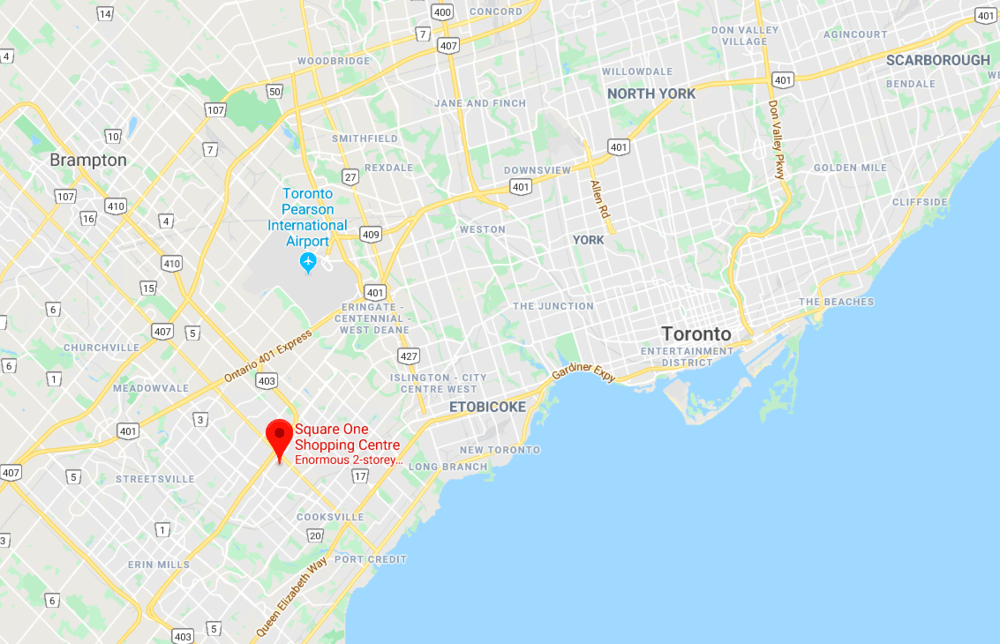
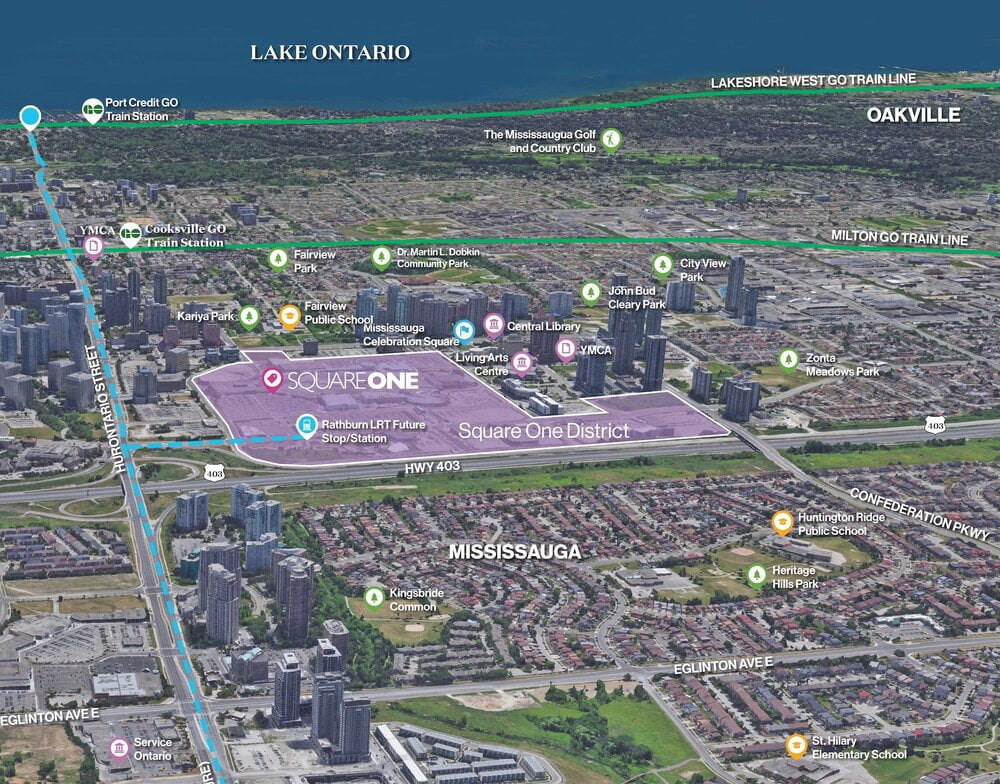
Landlord Oxford Properties has revealed details on a groundbreaking development that will transform the area around Mississauga’s Square One shopping centre into the largest mixed-use development in Canadian history. The massive ‘Square One District’ project will see thousands of residential units added to the property as well as new office buildings, park space, and a major transit hub, all of which will redefine downtown Mississauga for generations to come.
The incredible project will be made possible by densifying the vast under-utilized parking lots and buildings surrounding the existing Square One shopping centre. Oxford Properties owns the 130-acre site which includes one of Canada’s leading shopping centres as well as several low-density buildings surrounding it. The Daniels Corporation partnered with Oxford Properties and AIMCo on the first phase of the redevelopment.
Groundbreaking developments on the Square One District will begin in the fall of 2020 and and the project will be completed in phases over several decades. Hariri Pontarini Architects are responsible for the masterplan. The existing shopping centre property will remain intact though it too will see changes in years to come.
CLICK IMAGE FOR INTERACTIVE GOOGLE MAP
RENDERING: SQUARE ONE DISTRICT SITE IN MISSISSAUGA
The 18 million-square-foot master-planned mixed-use development is being touted as a “neighbourhood of the future”. Swaths of parking lots will be densified with 37 residential towers housing more than 18,000 residential units that will become home to an estimated 35,000 residents when completed. More than half of the units will be rental apartments.
Residential towers will be built in phases in the years to come and the first two residential towers will break ground this fall. A 36-storey rental tower will include 420 rental apartments and a 48-storey tower housing 570 condominium units. Pre-sales for the condominium tower will begin this spring. An additional 5,000 residential units on the site will be launched over the next five to seven years.
Residential units in the Condominiums at Square One District will span be between 444 square feet for studio units to 844 square feet for two bedroom plus den units — the Greater Toronto Area is known for its relatively small condominium units when compared to markets such as Chicago. In the rental tower, units will start at 408 square feet for a studio and will go up to 1,121 square feet for a three bedroom unit.
RENDERING: STREET VIEW OF THE STRAND, THE WALKABLE AND PEDESTRIAN-FRIENDLY HEART OF SQUARE ONE DISTRICT
Several new office towers will be part of the project as well, which will be the first commercial development in downtown Mississauga in a generation. Oxford Properties will begin marketing the first office tower to prospective tenants in the second quarter of 2020. New office buildings will provide employment on the site, further strengthening Mississauga’s economy for years to come. Mississauga is already a significant employment hub and is home to numerous corporate headquarters and other employment nodes.
At the heart of the new Square One District will be ‘The Strand’, which is described as a pedestrian-friendly connected civic space that will be anchored by a transit hub as well as a community park. The district will be connected to both the Hurontario LRT line as well as Rapid Bus Transit that serves the region. The development is said to align with the City of Mississauga’s vision of creating a vibrant downtown core.
In an effort to create a complete community, the Square One District will also include community buildings as well as various parks and green spaces in addition to The Strand.
Thousands of jobs will be created as part of the Square One District project. The first phase of construction will create 3,500 jobs and in the first five years, about 6,500 direct jobs will be created. Over the life span of the project, 35,000 direct jobs will be created.
RENDERING: ARIEL VIEW OF THE STRAND LOOKING WEST WITH TRANSIT MOBILITY HUB CONNECTED TO HURONTARIO LRT IN FOREGROUND
When the Square One mega project is completed, downtown Mississauga will be one of the most populous in Canada. Over the next two decades, downtown Mississauga is expected to double in population and could approach 100,000 residents. Downtown Toronto’s population is said to be approaching 300,000 people within its boundaries. The downtown Vancouver peninsula houses more than 110,000 residents and downtown Montreal is home to about 125,000 residents currently.
Square One has seen significant updates over the years which has made it one of Canada’s leading shopping centres. Square One ranked as Canada’s seventh most-productive shopping centre in terms of annual sales per square foot in 2019, surpassing $1,100 for the first time. The centre spans nearly two million square feet and sees about 23 million visitors annually, making it one of the largest and busiest shopping centres in Canada. That’s according to Retail Council of Canada’s latest Canadian Shopping Centre study which was recently released to the public.
RENDERING: PUBLIC SPACE WITHIN THE STRAND
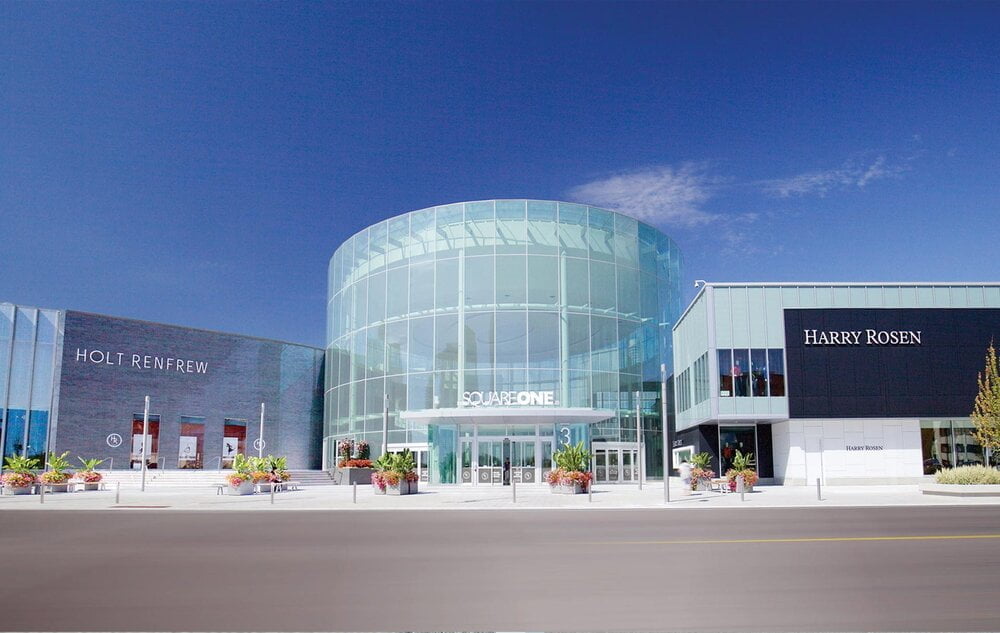
The 2.2 million-square-foot Square One shopping centre itself could be considered to be the most diverse centre in Canada in terms of its retail offerings. Anchors range from value-priced to luxury stores. A 225,000-square-foot Walmart store is located at one end of the centre and in the summer of 2016, Holt Renfrew opened a stunning 140,000-square-foot store in a newly opened luxury wing which also houses names such as Harry Rosen and Salvatore Ferragamo.
The mall’s other anchors include a 109,000-square-foot La Maison Simons store which opened in 2016 as well as a 203,500-square-foot Hudson’s Bay store which is one of the leading stores in the chain. Square One houses more than 360 stores and 100 bars, restaurants, and eateries. About 9,500 people are employed at Square One, which opened in October of 1973.
Last spring, Square One also added a new food hall called the Food District, as well as food and entertainment concept The Rec Room. Various new retailers such as Uniqlo and Indigo were added to the property. Other retailers at Square One range from international concepts to local brands. Over the past five years, Square One has seen more than $500 million invested into the property. That includes elevating the customer offering while strengthening food, beverage, and entertainment options.
SQUARE ONE SHOPPING CENTRE. RENDERING: OXFORD PROPERTIES
Entertainment will continue to drive traffic to Square One. A Dr. Seuss experience was added to a building on the property near the mall last year, and a new interactive and educational and entertainment centre is also now under construction and is set to open later this year, with details to follow.
Oxford Properties is intensifying several of its other shopping centre properties in the Greater Toronto Area. A proposal for Toronto’s Scarborough Town Centre could see 36 new residential towers added to the site that would eventually house as many as 30,000 people while the existing mall remains operational. Toronto’s Yorkdale Shopping Centre will also see a significant intensification in years to come that will include new residential towers as well as office buildings and a new hotel. Other Oxford malls such as Hillcrest in Richmond Hill will also see significant changes.
It’s part of a larger endeavour on the part of Canadian landlords to intensify shopping centre sites. Landlords stand to profit greatly as developers intensify low-density sites, adding much-needed housing in areas that may have housing shortages. That’s particularly the case in the Toronto and Vancouver markets, where most of the large shopping centre properties are in line for significant intensification, often with a focus on residential buildings to create complete communities.
SQUARE ONE THE FOOD DISTRICT. PHOTO: TARA NOELLE
Adding housing to shopping centre properties makes sense. It supplies a resident population to shop in the on-site mall, adding vibrancy to the area. Furthermore, most shopping centre sites are accessible by transit which makes residential intensification desirable. A recent study by International Council of Shopping Centres found that 87% of Canadians would consider living on such properties, which is considerably higher than in years past.
The most recent Retail Council of Canada shopping centre study lays out dozens of shopping centres in Canada that will see intensification in years to come. The study can be downloaded here. The study lays out which centres will see redevelopments and what they might entail. Ultimately, the face of Canadian cities will change as a result as shopping centre properties are transformed to become mixed-use community gathering places.
RENDERING: THE FIRST PHASE OF DEVELOPMENT FEATURING TWO RESIDENTIAL TOWERS
Mississauga is Canada’s sixth largest city with a population approaching 800,000. By 2041, the city is expected to be home to 920,000 people and will boast about 565,000 jobs. Interestingly, Mississauga is a “net importer” of jobs — that is, more people come to work in the city than leave for employment elsewhere.
The Hurontario LRT line will start construction this year, and will be the largest infrastructure investment in Mississauga’s history. The LRT corridor will connect thousands of jobs and businesses and will spur development of more than 12,000 new housing units. The LRT will include a stop in downtown Mississauga at City Centre and will connect thousands of people in the area.
We’ll continue to follow this story, which is part of a larger trend that will transform Canadian society in decades to come.
The Toronto Gift + Home Market is bringing a new level of excitement and adventure to the show floor for this 5-day, trade-only event! The market will be hosted exclusively at the Toronto Congress Centre and includes an incredible list of must-have products and once-in-a-lifetime seminars.
For the first-time ever, the Canadian Gift Association is hosting a sold-out presentation by Dragons’ Den personality, entrepreneur and marketing communications expert Arlene Dickinson. This show will also include an inspiring breakfast seminar and lunch & learn sessions that will leave retailers feeling empowered to take new strides in their businesses.
With a focus on products and trends for 2020, Market Ambassador and Designer, Andrew Pike will be executing brand-new merchandising tours of his fantastic display areas in the North Lobby. From cost saving shortcuts to innovative merchandising ideas, Andrew will open retailers’ eyes to new and inventive ways to merchandise their stores.
ANDREW PIKE. PHOTO: TORONTO GIFT + HOME MARKET
A new and exciting addition to the spring market is the Live Lab! The Canadian Gift Association has joined forced with Sheridan College Merchandising students along with Professor and CanGift Retail Coach Karen Kritzer to create two themed window displays in this feature area and presentation space. Catch these budding merchandisers live in action as they build displays focused on Children’s Products and Fashion.
For retailers searching for the latest merchandise representing the tourist and resort industry, TRIPS East is returning this January and caters to destination markets such as resorts, attractions, seasonal businesses, souvenir shops, galleries, museums and gift stores.
With more than 600 exhibitors and millions of products to source, The Canadian Gift Association invites qualified buyers to attend, January 26-30, 2020 at the Toronto Congress Centre.
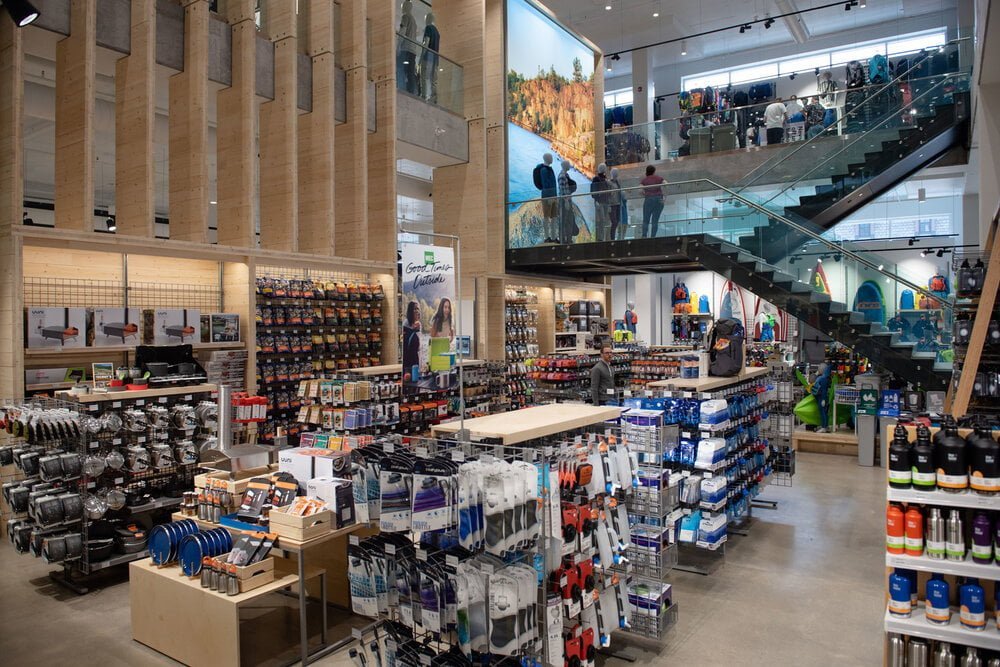
Vancouver-based outdoor gear retail cooperative MEC, known to some as ‘Mountain Equipment Co-op’, is shifting its retail strategy and cutting some employees while putting forth efforts to bring the company back to a financially healthy state at a volatile time in Canadian retailing. We spoke with MEC’s CEO Phil Arrata who joined the company in July of 2019 after former CEO David Labistour retired last year.
After going over the financials after joining MEC in the summer, Mr. Arrata said that he saw a need to streamline MEC’s operations in an effort to keep it operational. The cooperative had rapidly opened stores over the past several years and the related costs saw the company lose millions of dollars. Mr. Arrata said that his goal is to see the almost 50-year-old cooperative survive another 50 years and beyond, by making changes to MEC’s business model to address consumers as well as staff working in its stores.
Mr. Arrata explained that he’s looking to make the company financially viable after difficult times that saw the cooperative lose $11.487 million last year on sales of $462 million. Mr. Arrata is the former CFO of Best Buy Canada and said that there will be cost savings from several new initiatives.
1 of 6
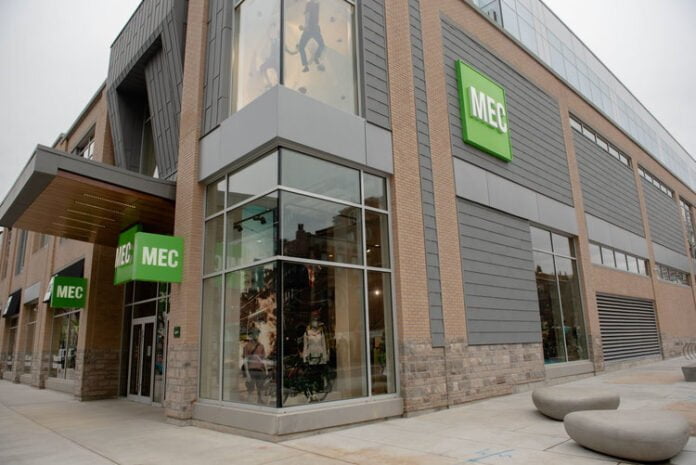
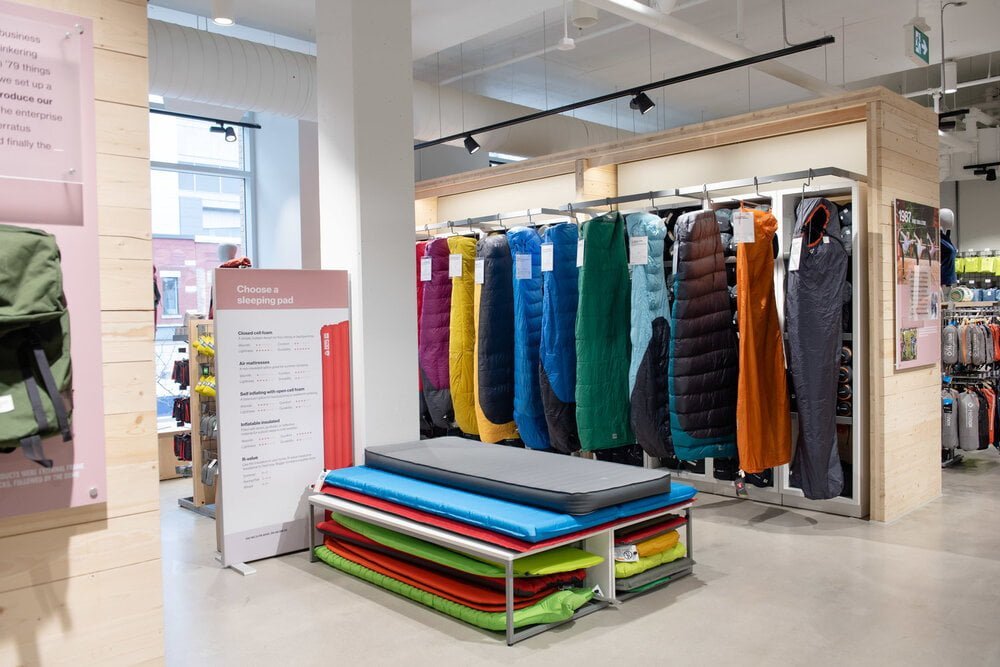
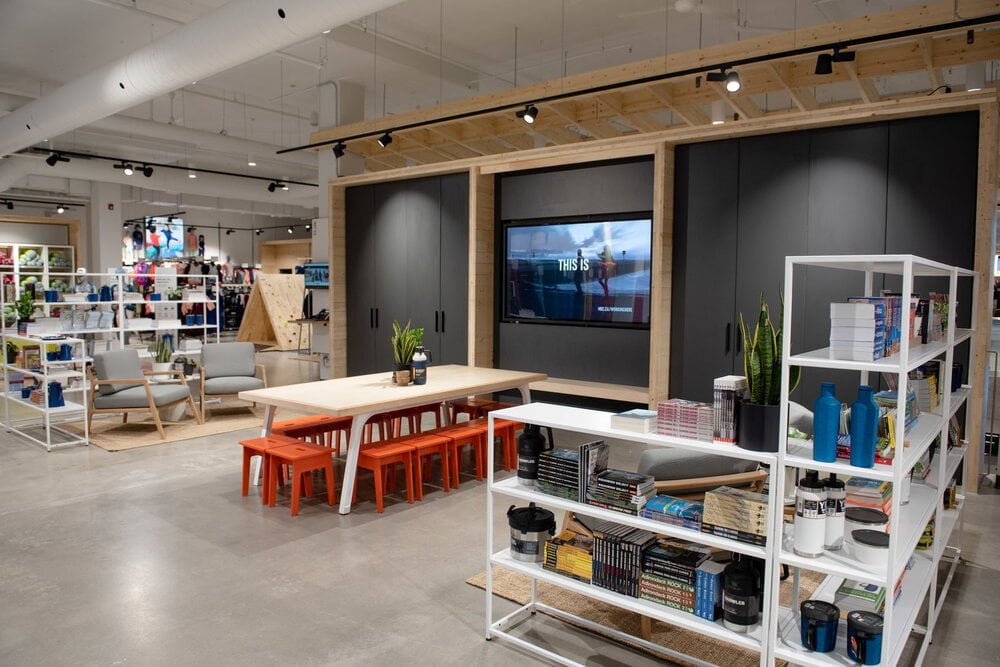
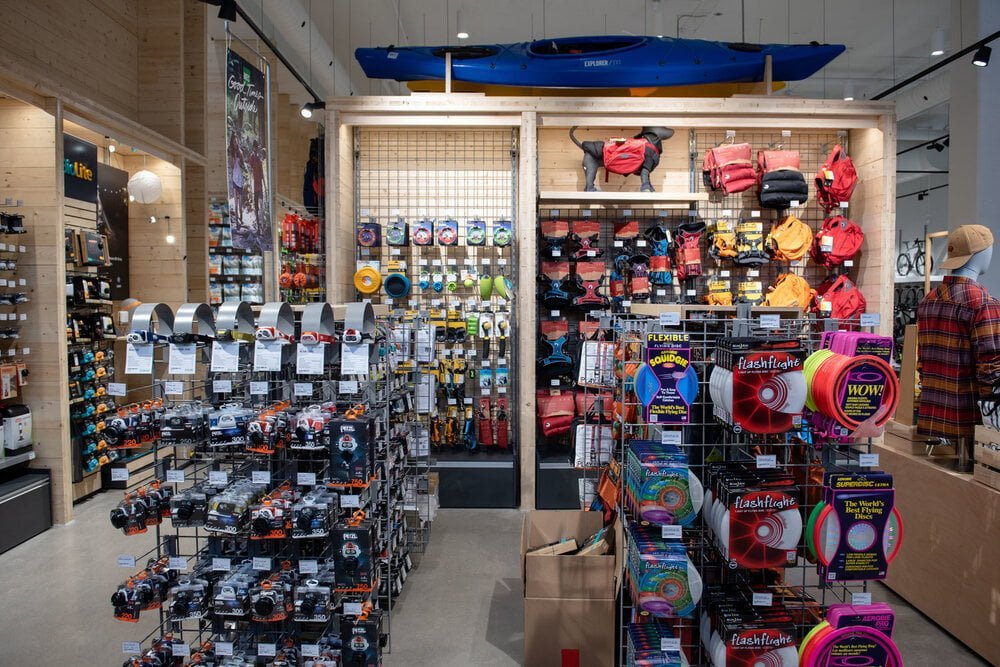
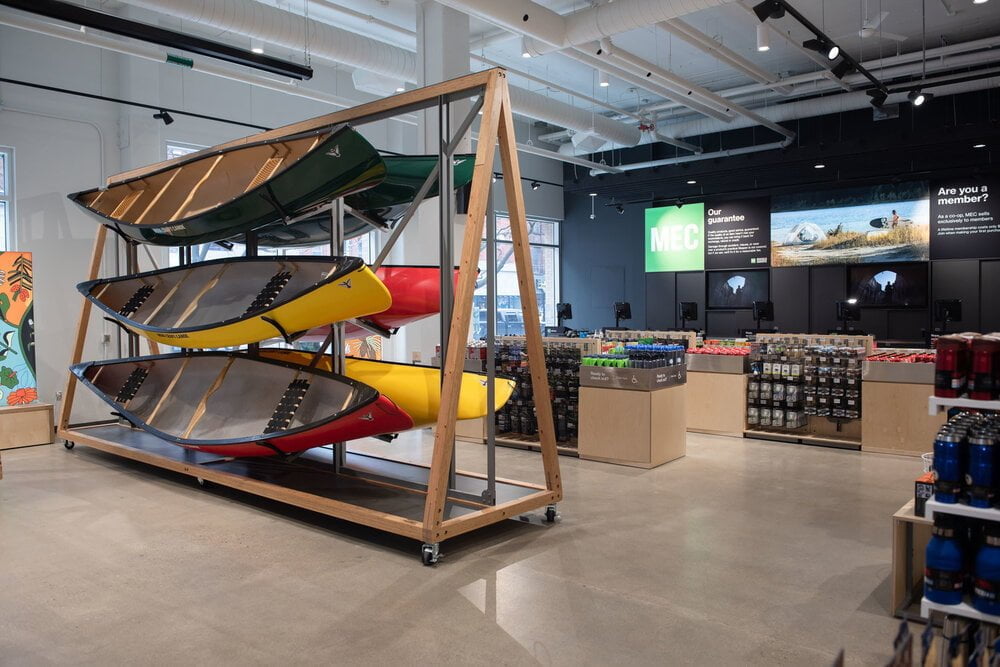
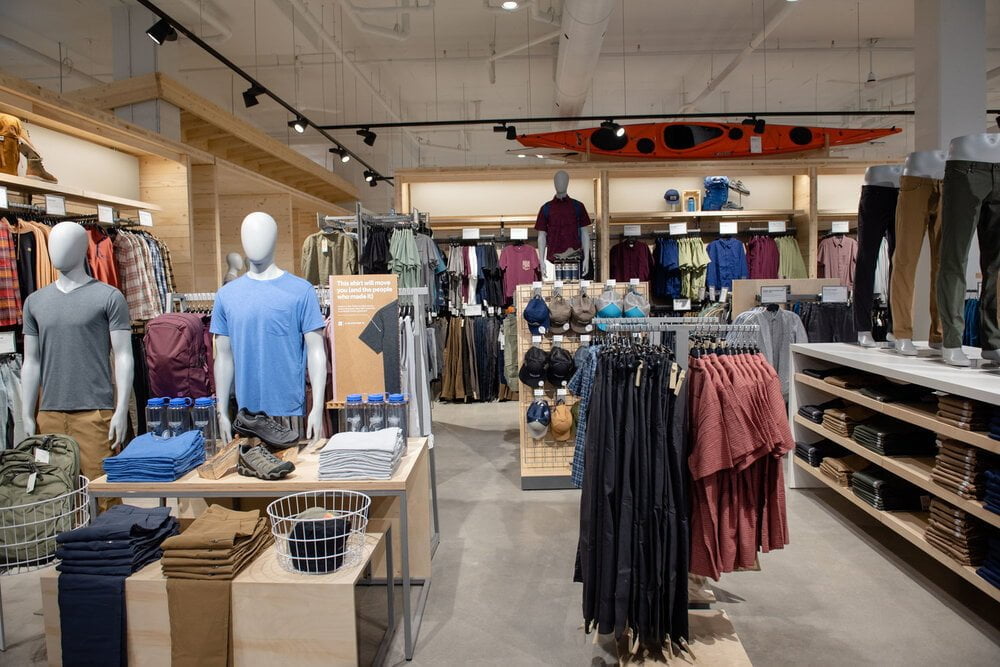
MEC QUEEN STREET FLAGSHIP, TORONTO. PHOTO: MEC
MEC QUEEN STREET FLAGSHIP, TORONTO. PHOTO: MEC
MEC QUEEN STREET FLAGSHIP, TORONTO. PHOTO: MEC
MEC QUEEN STREET FLAGSHIP, TORONTO. PHOTO: MEC
MEC QUEEN STREET FLAGSHIP, TORONTO. PHOTO: MEC
MEC QUEEN STREET FLAGSHIP, TORONTO. PHOTO: MEC
That includes subleasing MEC’s head office space in Vancouver’s False Creek Flats area on Great Northern Way — the current space is considerably larger than needed, he said, and the cooperative will seek out a new smaller space in an effort to reduce overhead costs. MEC moved into the building in 2014.
Other efficiencies are ongoing, including introducing efficiencies in technology spending as well as supply chain improvements and operations. That includes modification to e-commerce fulfillment from stores and how to make it more efficient. New technology will be introduced and the supply chain will be tightened, including changes to the frequency of deliveries to MEC’s stores — in some cases, four shipments were being made to stores weekly when three would have sufficed.
TORONTO FLAGSHIP LOCATION. PHOTO: MEC
PHOTO: MEC
PHOTO: MEC
Mr. Arrata said that while revenue was up last year over the year prior, those sales gains were a result of new store openings. Same-store sales decreased over the same period, which was concerning. While MEC continues to gain control of its operations, he said that opening dates in Saskatoon as well as in suburban Calgary have yet to be confirmed.
The Saskatoon store was announced to open in the city’s Midtown Plaza, situated in Saskatoon’s downtown core. The Calgary store was set to open near the city’s Olympic Park. A new Vancouver flagship store will still be opening in March of this year — MEC is waiting for permits and has a lease agreement with a developer.
Some of MEC’s financial losses were blamed on spending vast amounts on the new flagship stores in Toronto and Vancouver. Retail Insider profiled the new Toronto flagship store in April of 2019, which is located on the popular Queen Street West strip in an expansive building on a retail stretch that is otherwise characterized with smaller storefronts. The new Vancouver flagship will feature eco-elements that resulted in high construction costs.
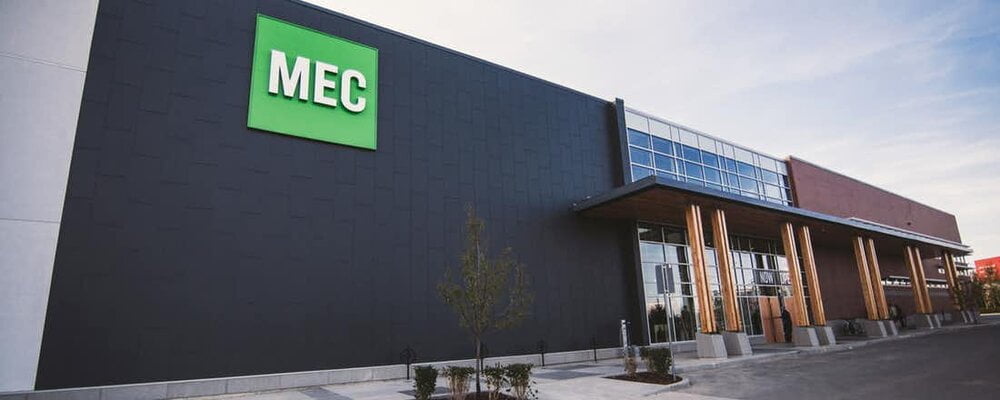
MONTREAL MEC LOCATION. IMAGE: MEC
How MEC stores are laid out will be re-strategized as well. Mr. Arrata explained how retail is changing and as a result, MEC stores will aim to be more experiential. That includes allocating space for consumer events as well as clinics and education. A climbing wall in a Toronto flagship that opened last year is said to be a hit.
At the same time, the size of MEC stores may be too large in many instances, and the overall retail footprint is being examined. As part of the experiential initiative, MEC is aiming to drive its net promotor score by providing consumers with positive experiences. New member surveys launched under Mr. Arrata’s direction are seeing 6,000 responses per month — prior to that, only about 200 members filled out the surveys on a monthly basis which is minimal, given that MEC operates 22 stores.
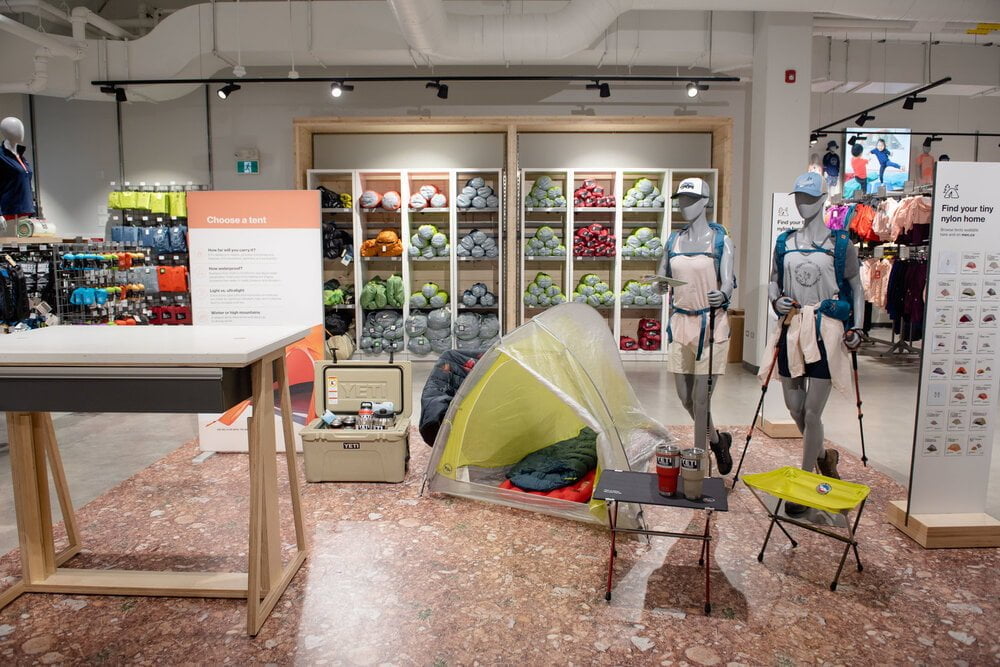
In-store displays will further drive sales. One example provided was the displaying of tents on the roof of cars — sales of the items were slow until showcased in stores, which resulted in a spike in sales of the tents.
PHOTO: MEC
Consumer preferences are shifting and consumers are also highly educated, he said. Creating more experiential stores will be a way to bring in shoppers while also enhancing brand awareness. The focus will be on in-store experiences primarily — last year MEC launched adventure eco travel tours and the number of people who signed up was considerably fewer than had been expected.
A curated assortment of product and showcasing brands in a meaningful way will be critical, and staff will be provided extensive product knowledge training to better serve MEC’s consumer base.
The aim is to make MEC’s stores community hubs that include learning, meet-ups, and other activities, and the brick-and-mortar experience will remain critical to the retailer’s success. Mr. Arrata noted that digitally native brands such as Casper and Amazon have opened physical stores.
SOUTH CALGARY MEC LOCATION. IMAGE: MEC
The employee experience is also critical to MEC’s success, noted Mr. Arrata. Staff in MEC stores in Vancouver and Victoria recently unionized, which was something of a wakeup call for the cooperative. In an effort to enhance employee loyalty, MEC has invested in its staff in a variety of ways.
That includes converting more than 950 of MEC’s existing casual-non-permanent roles into a combined 950+ full and part-time roles. MEC’s full and part-time employees receive a benefits package that includes extended health and dental coverage, tuition assistance benefit, RRSP matching plan and maternity and parental leave top-ups. Store and service centre staff also have access to the MEC staff paid volunteerism program. The shift was a response that MEC received from its staff regarding its casual- non-permanent staff designation, and the changes aim to improve job stability as well as member experience, employee engagement and product knowledge. Furthermore, staff who prefer non-permanent status are eligible to apply for seasonal fixed term positions during peak periods.
Casual staff turnover was about 80% prior to these changes, while only 18% for full and part-time employees, who stay with MEC for an average of five years. MEC will also work with its union partner to implement similar changes in the unionized Vancouver and Victoria stores as well.
Some employees will be let go as part of the announcement, though an exact number wasn’t provided.
MEC LOCATION
MEC LOCATION
Online sales are an important component to MEC’s revenue model and are approaching 30% of its sales. Some consumers may buy online and pick up products in stores, offering an opportunity to further engage with the consumer base while at the same time presenting the opportunity for up-selling. Consumers expect exceptional websites with a seamless experience that includes fast and easy checkouts — MEC is further ensuring that it will compete with big players entering and expanding into Canada.
MEC’s revival efforts couldn’t come soon enough. Sporting goods retail concepts are expanding throughout Canada and consumer preferences are changing. That includes a rapid growth in online sales while consumer spending dollars are in many cases tighter than in years past.
1 of 3
Interior image of Toronto's Queen Street MEC store. Photo: MEC
TORONTO FLAGSHIP LOCATION. PHOTO: MEC
Interior image of Toronto's Queen Street MEC store. Photo: MEC
French sporting goods behemoth Decathlon is expanding rapidly throughout Canada, and its stores are also known to be highly experiential while its pricing is competitive. Other retailers such as Sport Chek, Sports Experts, SAIL, Sportium and Sporting Life also continue to open stores, adding to the already intense competition.
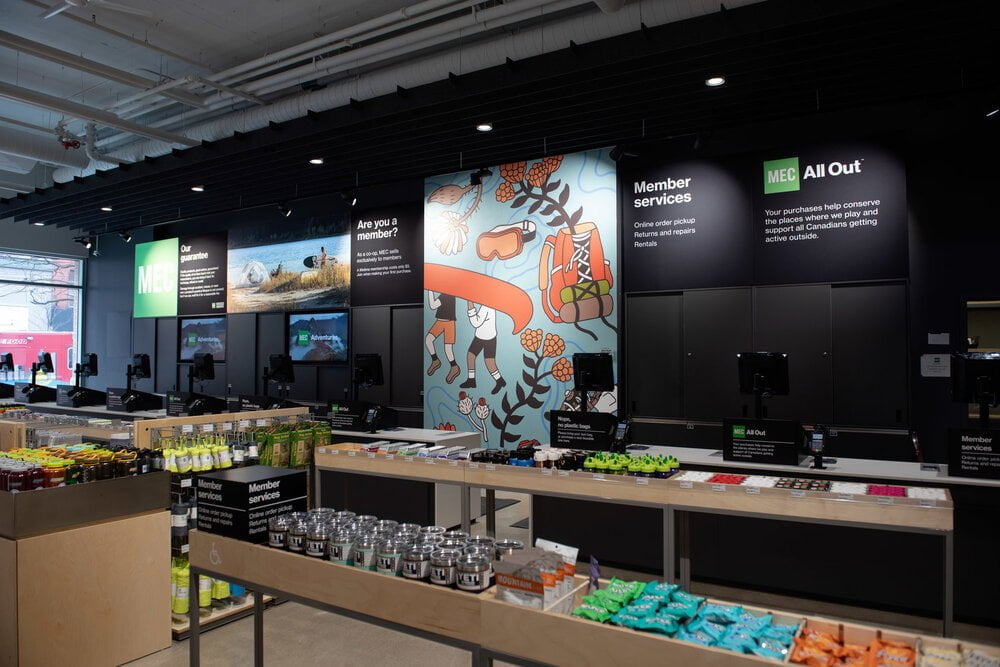
Given MEC’s aim to be experiential, the cooperative could see considerable success with its new initiatives. Consumers are seeking out convenient experiences and MEC is looking to offer those both in its stores as well as online. MEC’s social initiatives will also play well with its consumer base — the company is known to give back. The company has an internal program called MEC All Out, which recently replaced its 1% for the Planet program. Overall, MEC’s brand is strong and the cooperative boasts an expansive member base.
MEC, which was founded in Vancouver in 1971, has expanded to 22 stores in 20 cities across Canada and has about 2,700 employees. The retailer is considered to be Canada’s largest supplier of clothing and recreational gear and is also known for its dedication to protecting the environment.
With 87 per cent of Canadian adults saying they would consider residing in ‘live, work, shop, play’ environments, it’s clear that shopping centre owners are listening carefully to the desires of today’s consumer, which include easier access, greater simplicity, enhanced convenience, and fabulous shopping experiences, states the national Study of Canada’s top 30 most productive malls. In addition, landlords are not only investing in superb shopping spaces, they are also adding more non-retail amenities such as destination entertainment attractions, food markets and restaurants, fitness centres, parks, offices, and residential towers that are increasingly transforming their shopping centres into all-encompassing community hubs.
RENDERING: MILLWOODS TOWN CENTRE
The Study also shows that the move toward creating mixed-use communities is happening in most urban centres across the country, particularly in markets where land prices have risen over recent years, promising to fundamentally change the way landlords look at and develop their properties.
“Until recently, shopping centre developers ran with the idea of making money off of leasing retail space,” says Retail Insider’s Craig Patterson. “What I think is really fascinating is the fact that we’re witnessing the invention of the modern shopping centre as complete communities.”
RENDERING: COQUITLAM CENTRE
He lauds the idea of adding residential rental spaces to the shopping centre, explaining that it creates a consistent income stream for the landlord while adding people on site. And, because shopping centres are well-located in terms of transit and close proximity to desired amenities, they are becoming increasingly attractive places for people to live.
Sustaining the Trend
Not only does the 2019 Canadian Shopping Centre Study provide a comprehensive overview of the top 30 malls across Canada, it also offers a sneak peek at more than 40 future developments and intensification projects that have been planned from coast-to-coast, many of which focus on providing visitors with ‘experiences’ as value in real estate assets continue to grow.
Cadillac Fairview and TD Greystone announce Bold Vision for CF Fairview Mall (CNW Group/Cadillac Fairview)
“By carefully curating compelling and productive retailer mixes, upping square footage devoted to food and beverage options, introducing innovative, one-of-a kind, destination-worthy entertainment attractions, and building more residential and office complex options on their properties, shopping centre owners in Canada are setting the groundwork for a renaissance,” said the national Study.
Retail veteran Mal Coven says that he is launching his BIWAY $10 STORE concept in August (now November) of this year in a 15,000-square-foot retail space in Toronto. The store will be twice the size of a previously announced location that was supposed to open in the summer of 2019. Mr. Coven was instrumental in growing the once prominent BIWAY chain of stores that still have name recognition amongst many Canadians.
The new BIWAY $10 STORE will be located in a newly built commercial complex at the southwest corner of Orfus Road and Dufflaw Road — a soon-to-open Roots ‘Last Chance’ outlet store will be located next to it. The immediate area is known for its value-priced and outlet stores as well as office and warehouse facilities for many Canadian brands. Mr. Coven said that he has been building stock for his first store, and that he plans to open multiple locations in years to come as the retailer takes off.
As part of the concept, the new BIWAY $10 STORE will utilize the guiding principals that “will be no different than the original Biway stores”. That includes choosing products that consumers are seeking while presenting them in a “non-confusing manner” with a depth of product to make visiting a store compelling. Quality will be an important factor to the assortment — the stock will include many well-known brands, according to Mr. Coven, which will act as a draw for shoppers seeking value-priced quality merchandise. Pricing will be competitive and will be lower than almost all competitors, which will provide a significant competitive edge as Canadian consumers seek out bargains.
A FIRST LOOK AT THE NEW BIWAY $10 STORE LOGO FOR THE RETAILER’S LAUNCH THIS SUMMER
LOCATION OF THE NEW BIWAY STORE. CLICK IMAGE FOR INTERACTIVE GOOGLE MAP
Stores will be interactive and will include such things as a monthly reading by a parent or author from one of BIWAY $10 STORE’s expansive offering of children’s books. According to a company strategy document, the launch of the new store concept will be more dynamic than the original Biway chain which shuttered in 2001. The new chain will feature “better quality, better brands and better layout” which will “make shopping a more enjoyable and comfortable experience for the whole family”.
As per the name, the store concept is based on $10. Items can be bought five for $10, four for $10, three for $10, two for $10 or one for $10. Nothing will be sold for more than $10. Regular retail prices for many items would be considerably higher he said.
MAL COVEN
Mr. Coven explained how he and his business partners are working with key suppliers to obtain stock for the new chain. While many brands will be recognizable to consumers, he didn’t want us to name them. Mr. Coven did say that brands would include well-known children’s brands, world-famous men’s and women’s apparel brands, along with a world-renowned Italian import company known for its confectionary. The food selection will include a large assortment of Aurora Kosher products that will sell $10 for 10 items, in many instances.
The product mix in the stores will be diverse, and interestingly a substantial assortment of children’s wear will be a key attraction to the new store concept. About 35% of the BIWAY $10 STORE merchandise will be children’s wear (newborn through to size 14) from name brands. Home goods, including the likes of linen, bedding, bath, sheets, pillow cases, bath towels, tea towels and such will make up about 10% of the initial stock. Ladies wear will make up about 15% of the assortment and will include name-brand underwear, t-shirts, fleece, stretch wear, leg wear, and other categories. About 10% of produce will be for men and will include branded underwear, socks, t-shirts, fleece, headwear, and other items. About 10% of merchandise will fall under the food, health, and beauty categories and he said that his company has partnered with a world-renowned kosher food brand.
Merchandise will be showcased on the perimeter walls of the store as well as on tables or racks for hanging merchandise throughout the space. As with the former Biway chain, the new store concept will feature display tables that will have “one idea and one price line to make shopping and decision making easier. The same will be true for the hanging merchandise on the racks” with “all of the sizes and classifications being well identified”.
Stores themselves will have wider than usual aisle space to make for a more comfortable experience, while allowing for shopping carts and deliveries to be made more easily. Additional cashiers will be available to “shorten the wait time when checking out” and the one-price strategy is also expected to “speed up the process”.
To make the chain successful, Mr. Coven said that the company is currently training key people to be used as buyers for the BIWAY $10 STORE concept and that key employees would be offered equity in the corporation.
The chain could be very successful. Given research conducted by Mr. Coven and his business associates, the Biway name is still recognizable with many consumers. Based on the lingering reputation alone, 91% of those interviewed said that they wold be interested in visiting the new concept store. Survey answers indicated considerable interest from both men and women in all regions.
Mr. Coven sees the potential to open many BIWAY $10 STORE locations throughout Canada in the years to come, though the retailer will first test the concept and perfect it before expanding outwards. Locations will span between 8,000 square feet to in excess of 11,000 square feet and will be located in strip centres, power centres and shopping malls.
As the founder of the new BIWAY $10 STORE chain, Mr. Coven will have the title of CEO and Merchandise Manager. Barry Weinberg will become Senior Vice Present — Mr. Weinberg has an expansive history in retailing and was the original licensee for Italian women’s luxury brand Max Mara in North America.
The former Biway chain had an overall strong brand perception on the part of consumers. According to a Goldfarb Associates survey, 96% of people in Ontario were aware of the Biway name. Of those old enough, 52% said that they shopped at Biway regularly and 32% shopped occasionally. Ninety percent of respondents said that Biway sold good quality merchandise and 95% said that the chain provided good value. The survey also found that “interest is high even among those who have never shopped there personally”, coming in at 80% of respondents.
Mr. Coven has more than 60 years of retail experience and recently turned 91. He says that he has a lot of energy left and that he plans to make the new BIWAY $10 STORE concept successful. He was one of the leaders in building the discount Biway store chain, which had about 250 stores across the country over 28 years. After selling the company in the late 1990’s, the Biway chain shuttered in 2001.
MAL COVEN’S AUTOBIOGRAPHY. CLICK IMAGE LEADING TO AMAZON.CA
Mr. Coven, who resides in midtown Toronto, was born in Boston and grew up in the area. After graduating from university, he worked for US department store Filenes for over a decade. After a trip to Canada in 1956, he struck a business partnership that saw him become a partner in a discount store chain. In 1962 he relocated to Toronto to lead the 1,600-square-foot Biway store in Toronto’s west end and in the 1970’s spearheaded a significant expansion to create the Biway chain of stores. At its peak, Biway was the fifth largest seller of apparel in Canada. Conglomerate Dylex acquired a 50% stake in Biway in the late 1970’s and Mr. Coven left the company in 1990. A US dollar chain subsequently acquired Biway prior to its closure in 2001.
We’ll update this story when the first BIWAY $10 STORE opens in Toronto in August.
Toronto-based Cultivar Holdings has launched a new tested artificial intelligence technology (“PredictMedix”) that it says will revolutionize how companies and law enforcement are able to test sobriety by detecting impairment for alcohol and cannabis. The company recently went public and its shares began trading on the Canadian Securities Exchange (CSE:CULT).
Shares have already seen a spike as the word gets out about Cultivar Holdings’ PredictMedix technology, as well as other business endeavors focused on cannabis that includes low cost grow operations in Jamaica.
IMAGE: PREDICTMEDIX/CULTIVAR HOLDINGS
The PredictMedix artificial intelligence technology uses facial and voice recognition to identify cannabis and alcohol impairment. The company says that it has filed US patents while also having recently signed agreements with two multi-billion-dollar conglomerates. Workplaces are said to be particularly interested in the new impairment technology.
Research has found that THC detection via a breathalyzer or any other methodology cannot work for cannabis impairment because THC lacks correlation with impairment. The latest US Congressional report has also indicated that THC has no correlation with impairment and any technology to detect THC in breath or bodily fluids will not identify impairment. Several researchers, and the National Highway Traffic Safety Administration, have observed that using a measure of THC as evidence of a driver’s impairment is not supported by scientific evidence to date. Moreover, someone can take THC pills and be highly impaired and this will not show up in any breathalyzer.
IMAGE: PREDICTMEDIX/CULTIVAR HOLDINGS
Cultivar Holdings’ AI based PredictMedix technology is able to detect impairment by identifying cannabis and alcohol impairment using artificial intelligence powered technology based on multiparametric approach to identify unique features based on facial and voice recognition. Cultivar Holdings recently signed a teaming agreement with Tech Mahindra, which is a multi-billion-dollar technology player with global operations that was ranked among top 15 IT companies by Forbes magazine. Tech Mahindra’s global client base includes companies in mining, manufacturing, automotive sector where impairment is a huge concern. Their interest in the technology stems from the unmet need for impairment detection tools in workplace.
Cultivar Holdings also recently signed an agreement with Hindalco, one of the world’s largest aluminum players, which also owns Novelis. They are part of the parent corporation Aditya Birla Group which has annual revenues exceeding $44 billion USD. Hindalco is looking to pilot Cultivar Holdings’ AI based PredictMedix technology in Hindalco’s mining division and subsequently explore business opportunities together in mining.
In 2020, Cultivar Holdings will launch its first product for workplace impairment, targeting both cannabis and alcohol. The technology will be backed by a study of more than 3000 participants and is the largest of its kind. Cultivar Holdings says that it has clients ready to purchase and deploy the PredictMedix technology. Breathalyzers for alcohol lack utility in workplace whereas Cultivar Holdings’ facial/voice recognition technology can be easily deployed, according to the company. PredictMedix technology does not require any body fluids or human intervention, thereby helping to remove human error and the potential for discrimination and prejudice.
There are companies which are developing a breathalyzer for cannabis, designed to measure levels of THC. However, the state of Michigan officials decided not to set a THC level in blood or saliva to constitute impairment when driving. This is in recognition of numerous research studies showing very low or no correlation between THC level and impairment. Although, the breathalyzers will have the ability to identify presence of THC, the issue of impairment is not being addressed and impairment is the concern when it comes to workplace as well as law enforcement. It is the unmet need for identification of impairment which is being addressed by Cultivar’s PredictMedix technology.
IMAGE: PREDICTMEDIX/CULTIVAR HOLDINGS
In August of 2018, the Federal Minister of Justice approved the Drager Drug Test 5000 as the Approved Drug Screening Equipment (ADSE) for all Canadian police services. The device itself is costly ($6,000 per device, and $60 per swab) and has to be used under ideal conditions for proper analysis, according to experts.
The device tests for commonly used drugs in oral fluids including THC, which is the major psychoactive component in cannabis. Although the device may excel at identifying presence of THC, it does not address the issue of impairment specially when studies do not support a strong correlation between THC levels and impairment. Currently, there’s an urgent demand for a device to assist Canadian police officers in their drug impairment investigations which is where PredictMedix is likely to fill an unmet need.
Cultivar Holdings is in the process of initiating conversations with police services in Ontario along with several other jurisdictions for the roll out of PredictMedix technology for impairment. PredictMedix can be used in the initial stage of an impairment investigation where the officer has reasonable grounds to suspect that a person has alcohol or drugs in their body. Time is of the essence with impairment investigations and are crucial to laying criminal charges.
Cultivar Holdings’ PredictMedix technology is considered to be a non-intrusive tool, which will be important to being accepted in workplaces and in law enforcement. The technology’s compact size allows for easy transport for a greater range of accessibility for personnel. Cultivar Holdings’ PredictMedix technology is also likely to better withstand court challenges given its high accuracy, leading to higher conviction rates.
A global expansion is expected and will be possible by encryption and cloud computing that will allow access to entities worldwide seeking to further improve roadway and workplace safety.
Cultivar Holdings is also focused on becoming a premier cannabis producer offering low-cost production targeting initially the Caribbean marketplace based in Portland, Jamaica, with plans to expand globally. That includes distribution of cannabidiols (CBD oils) and when laws permit, tetrahydrocannabinols (THCs) in Jamaica. The company has been granted four pre-licenses from the Jamaican government. These include Issuance of License to Cultivate, Process, Transport and for Retail from the Cannabis Licensing Authority in Jamaica.
There is an unmet need for cannabis impairment detection in both workplace and for law enforcement. The use of breathalyzers cannot solve the problem due to the lack of THC detection with impairment and as such Cultivar Holdings’ PredictMedix technology is expected to be pathbreaking and disruptive since it is truly addressing the global issue of cannabis as well as alcohol impairment.
For more information, visit: cultivarholdings.com and http://predictmedix.com. For more information about Cultivar, contact Dr. Rahul Kushwah (COO and Co-founder) at +1 647 889 6916
Ottawa-based Rewind, which focuses on backing up data that lives in the cloud, has developed a business to help retailers avoid disaster and wrongdoers.
“Rewind is a cloud to cloud backup solution that does focus initially on e-commerce applications. So we back up store data for Shopify and BigCommerce customers as well as QuickBooks Online accounting data,” said Mike Potter, co-founder and CEO of Rewind, which was founded in 2015 with partner James Ciesielski.
“Most people when we tell them that we back up Shopify are sort of wondering why anyone would need to back up Shopify. It’s hosted in the cloud. The same thing with BigCommerce. It’s hosted in the cloud.
“And the reason that the business exists, while they have a backup at macro level – they back up everything on their platform – but as a store owner if one thing happens to one of your products or something in your store, you can’t call them and have them go into that backup. Their backup is kind of like an all or nothing thing. If the whole platform has a problem, they can recover it exactly the way it was. But if one store has a problem – your store has a problem – you can’t call them and have them go into their backups.”
So clients like Shopify and BigCommerce are responsible for the security of their own data and Rewind provides retailers that security by backing up their data to a third-party service.
Potter said Rewind has more than 10,000 customers who are the store owners on Shopify and Big Commerce. The customers range in size and the type of retail industry. Customers are located in more than 100 countries. The United States makes up the majority of the customer base.
“We’ve certainly got a diverse group of customers. Really customers of all sizes. We’ve got small mom and pop stores that are selling very, very little. We’ve got solo entrepreneurs that are really not selling anything at all and we’ve got some of Shopify’s and BigCommerce’s largest brands who are using Rewind to protect their stores,” said Potter.
On the company website, Potter describes himself as a data backup fanatic, with backups to his backups – and backups to those backups. But this wasn’t always the case.
“While working at Adobe as a Technical Evangelist a few years ago, I was giving a presentation at a PHP conference to a few hundred developers and my boss. In the middle of my presentation, my computer suddenly and unexpectedly froze. I restarted it but was then greeted with an icon of a hard drive with a big question mark on top,” he writes.
“This was known as ‘the kiss of death’ for hard drives, and immediately I realized I’d just lost everything on my computer. Needless to say, all of my hours’ worth of work on this presentation had gone to waste – and at the worst possible time. Fast forward to Ottawa in early 2015. It was impossible not to notice Shopify’s explosive growth, so I began scouring their forums for app ideas. I soon discovered a recurring problem: many customers were asking how to backup their Shopify stores.
“In some cases, they had accidentally deleted all their blog posts. In even worse cases, their entire store was lost due to some mistake. Weren’t we all moving to the cloud to make data storage easier? So why were so many people losing critical business data? This seemed counterintuitive, and why were these cloud platforms unable to get it back? That’s when I learned that cloud services are not always backed up in the way we think they are.”
Potter said losing data on a computer can be the worst feeling in the world for people and businesses. The company has more than 30 employees and is considered one of Ottawa’s fastest growing companies.
“We’ve certainly done quite well in picking Shopify as the platform and then obviously BigCommerce has also grown quite a lot in the time we’ve been working with them,” he said.
Potter said that growth in the e-commerce business has been amazing but what continues to surprise him is the amount of sales that smaller companies or smaller brands can get. That’s what Shopify is enabling – smaller companies can now compete with the larger brands.
“That’s a massive change that we’re seeing now. It continues to amaze me how small some of these companies are and yet they’re doing extremely well on e-commerce,” he said. “I don’t see it stopping. I don’t see it changing in any way.
“As consumers get more confidence in online purchasing, the barrier to entry for starting a brand online continues to go down and if you can build a good product that gets good word of mouth through a community you can make some good sales.”
TORONTO, ON – (January 16, 2020) – Beattie Tartan, Canada’s leading integrated communications agency, has launched a specialist Amazon advertising and marketing division.
Spearheaded by director Daniela Young, the three-person team will focus exclusively on helping consumer brands drive sales on Amazon in North America and around the globe.
“Lots of digital agencies claim they know how to build brands and drive sales on Amazon,” says Young. “The truth is – most of them don’t and that’s why brands are not getting the sales and financial returns they expect. To be commercially successful, brands need an expert team that lives, eats and sleeps Amazon advertising.”
Beattie Tartan, managing director Deirdre Campbell revealed the agency is planning to rapidly grow its fledgling Amazon advertising team and has not ruled out mergers and acquisitions.
“Amazon is the biggest search to view and search to buy engine in the world and there are only a handful of specialist agencies out there,” says Campbell. “Our goal, alongside the UK team, is to become the dominant player in Canada through a mixture of organic, merger and acquisition growth.”
Headquartered in London, Beattie has 16 offices across the UK, Ireland and North America including Victoria, Vancouver, Calgary and Toronto.