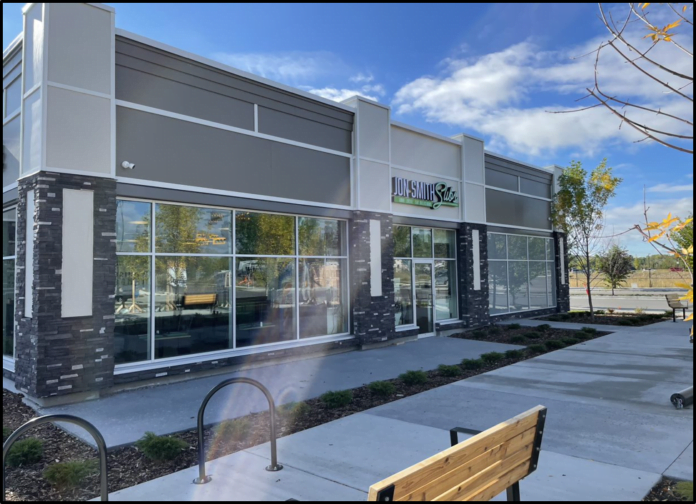
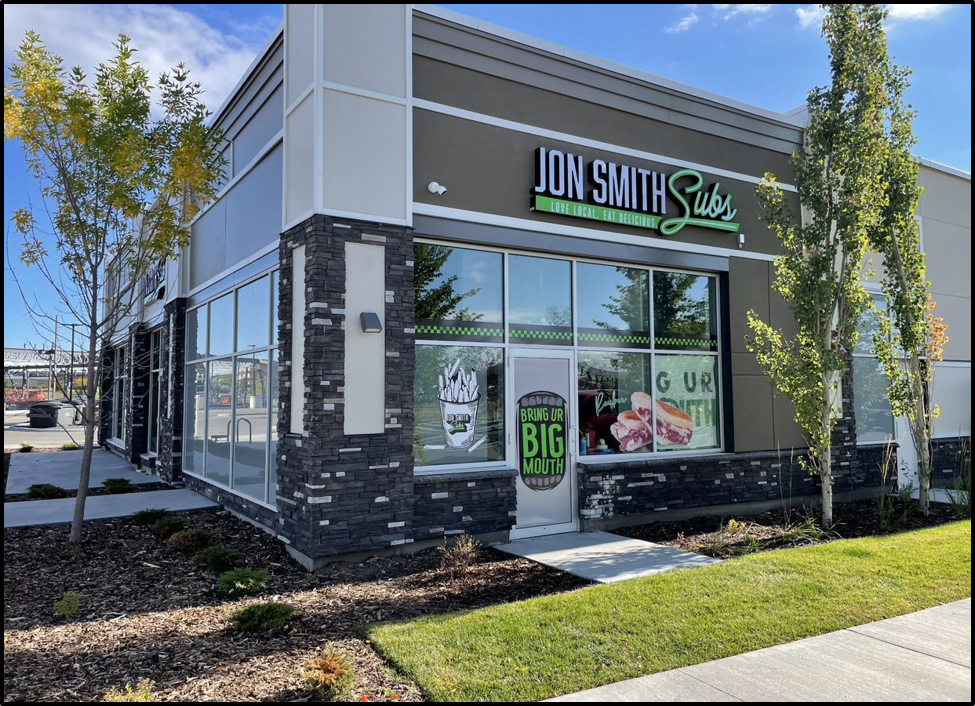
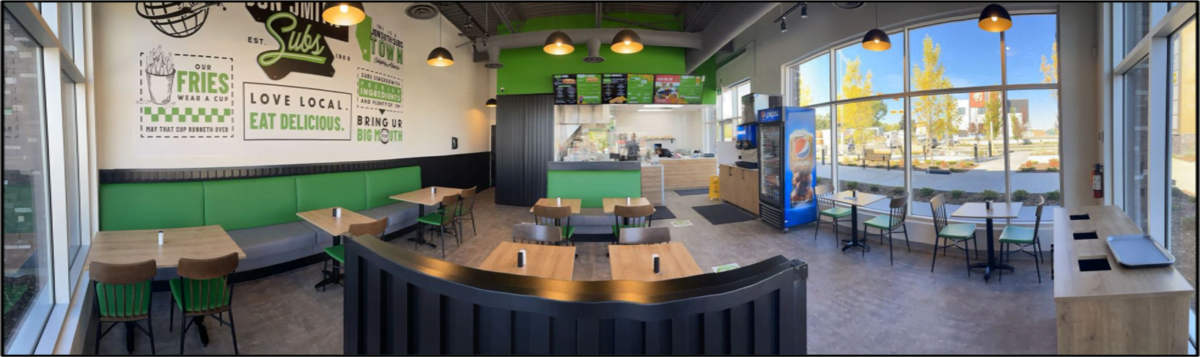
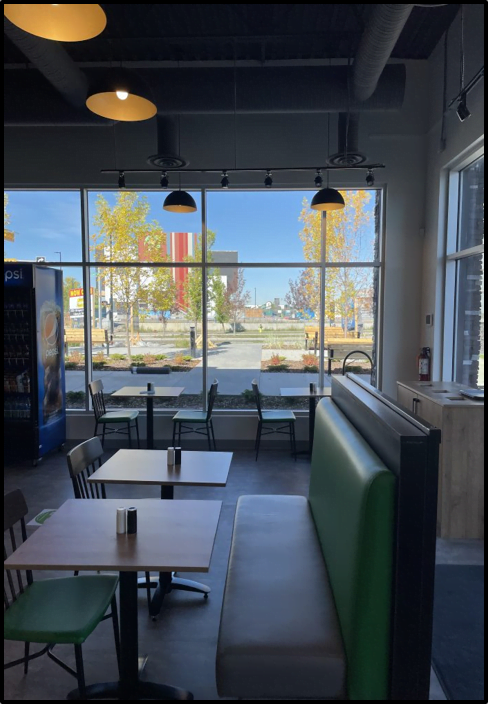
Florida-based sandwich shop, Jon Smith Subs, has opened its first Canadian location in Calgary with plans to significantly grow the brand across the country.
Jim Butler
The foodservice company began operations in 1988 with its first location in West Palm Beach.
Jon Smith started the company and grew it to a chain of sub shops in Palm Beach County, Florida.
“He had that until probably five, six years ago. We partnered up with him and then we took over the franchising rights outside of Palm Beach County. We’ve been franchising for only about four years. We have 25 locations that are up and operational. We have about 42 that are in development right now and we’re in five countries – UK, Canada, US, Panama and Colombia,” said Jim Butler, Brand President of Jon Smith Subs.
Image: Jon Smith Subs
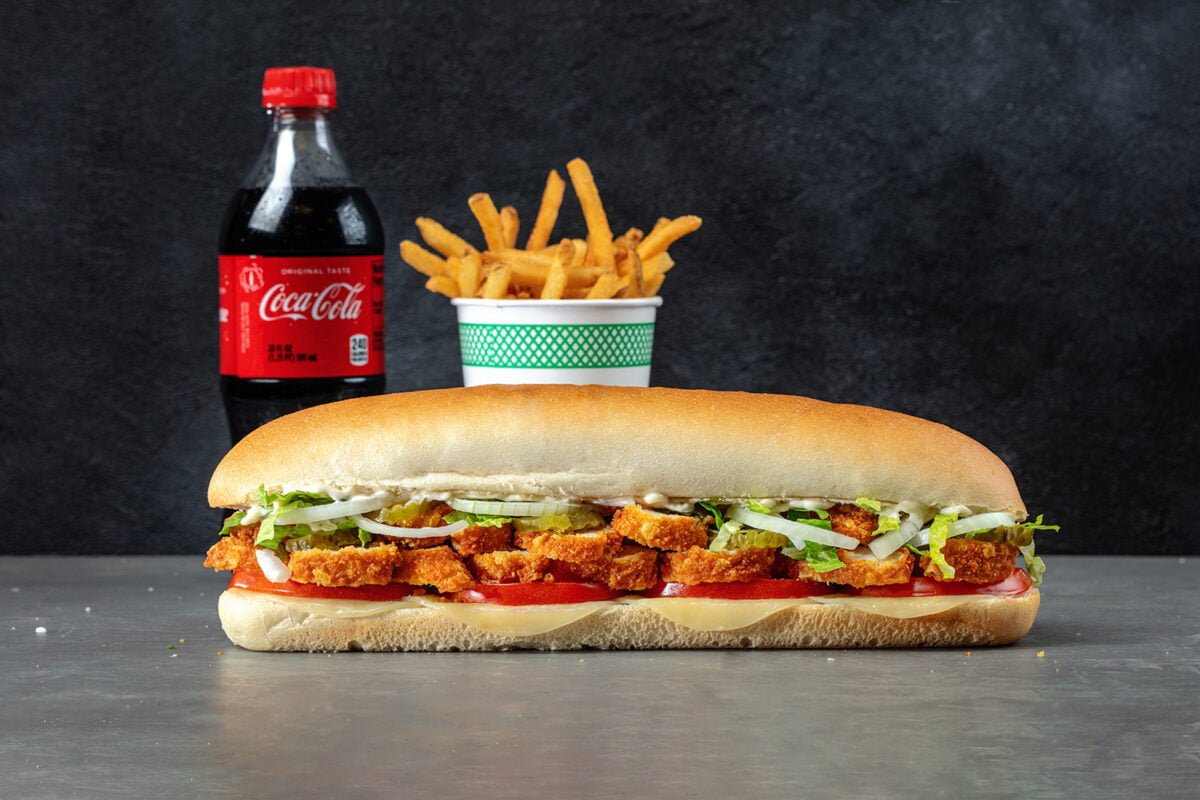
“We’re in the fast casual sector. Everything is cooked to order. So you come in, you place your order at the front counter and we’re going to be actually cooking it right in front of you. You can see your order being cooked. We also are unique as far as the fries are concerned. Most sub shops they have the potato chips or things to that degree. We added fries to our menu items.
“The biggest thing is we’re a national company but we want to localize the brand so no matter where you are in the world you’re going to have your local specialty that we actually have on the menu in some capacity.”
The brand is set to open an additional 25 to 30 locations throughout Alberta in the next five years with anticipated growth into other Canadian markets beginning in 2022.
The new location in Calgary is part of a master franchise agreement with an Alberta company co-owned by local Calgary residents Gurbinder Singh, an established IT and business professional, and Amrinder Cheema, an operations practitioner. Singh and Cheema both have family history in the restaurant business and share a passion for delivering exceptional quality food and service to the community.
Image: Jon Smith Subs
“We are thrilled to be bringing Jon Smith Subs to Canada and look forward to offering the community a fresh alternative in the sandwich category with our specialty subs,” said Singh. “Our approach to every aspect of the Jon Smith Subs experience is to not only provide our guests with delicious, fresh subs, but also to create a warm and welcoming environment with a focus on excellent guest service. Our team is ready and excited to show Calgary what Jon Smith Subs is all about.”
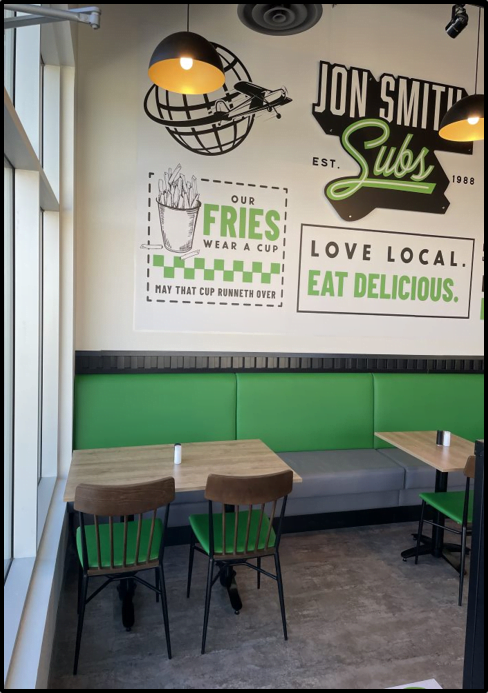
Butler said the company recently completed its redesign and rebrand and the Calgary store is the first one in the chain with the prototype new look.
“We plan on growing of course across Canada. We’ve got a lot of activity and interest as well as domestically. We are part of a much larger organization called United Franchise Group which is a 35-year-old company and we already have our inroads into Canada with many of our brands already,” he said.
Image: Jon Smith Subs
Image: Jon Smith Subs
Image: Jon Smith Subs
Its affiliated family of brands include Signarama, Fully Promoted, Experimax, Jon Smith Subs, Transworld Business Advisors, Accurate Franchising, Venture X, The Great Greek Mediterranean Grill, Network Lead Exchange, Resource Operations International (ROI) and Graze Craze.
“In a five-year window I’m hoping to, in Canada alone, to be anywhere between 75 and 100 locations,” added Butler.
“The uniqueness of us is we predominantly focus on the hot subs. People like the fact that it’s cooked to order, the freshness and also the ability to localize our brand in no matter what country, especially Canada. We can give the feel that we are a local brand. Even though we’re nationalized we want people to feel we are that neighbourhood sub shop. Our tag line is love local, eat delicious.”
The David Sobey Centre for Innovation in Retailing & Services is hosting the fifth annual National Retail Innovation Awards on the afternoon of October 28, 2021. The virtual event is free to attend and Retail Insider readers are invited.
The event takes place from 4:00-5:30pm Atlantic Time, or 3:00pm-4:30pm Eastern Time/Noon-1:30pm Pacific Time. [Register Here]
The National Retail Innovation Awards was created in 2017 and it recognizes up-and-coming retailers, or companies supporting the retail sector, for their innovation and unique contribution to Canadian retailing over the past year. Join the David Sobey Centre as it celebrates the achievements of four impressive companies who have demonstrated retail excellence in the categories of Retail Design, Sustainability, Technology and Community Service.
This year’s keynote speaker is Neil Hoyne, Chief Measurement Strategist at Google. He has led over 2,500 engagements with the world’s biggest advertiser, helping them acquire millions of customers, improve conversion rates by over 400%, and generate billions in incremental revenue. In his upcoming book Converted: The Data-Driven Way to Win Customers’ Hearts (Penguin Random House, 2022), he shows us how to sharpen our long-term marketing strategy and unleash true value.
Normally an in-person luncheon ceremony in Halifax, Nova Scotia, the awards had to pivot to a virtual live stream in 2020 due to the pandemic. To register, visit this link.
*Retail Insider partnered with the David Sobey Centre for this announcement.
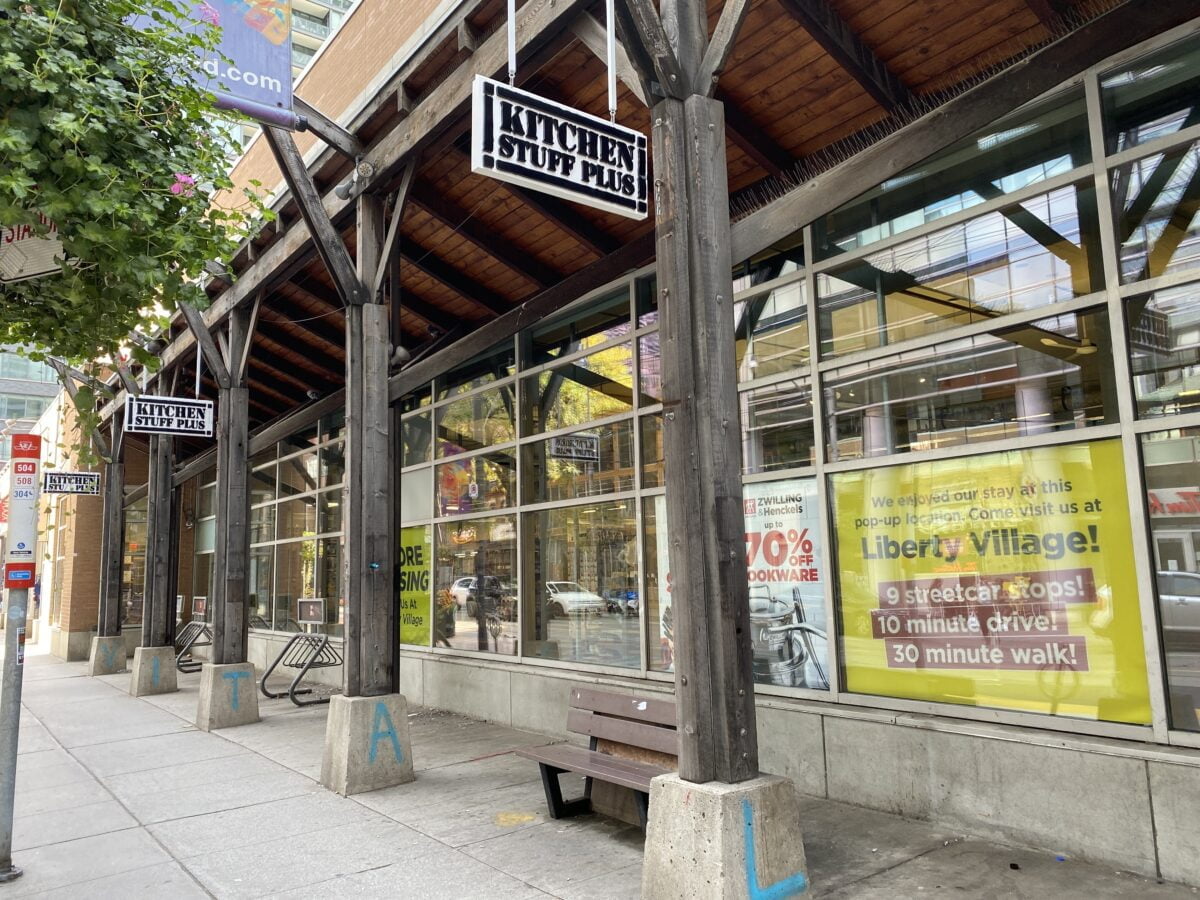
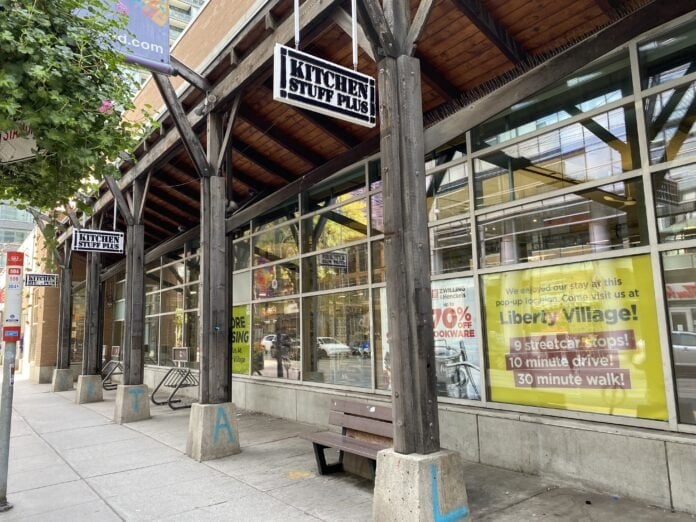
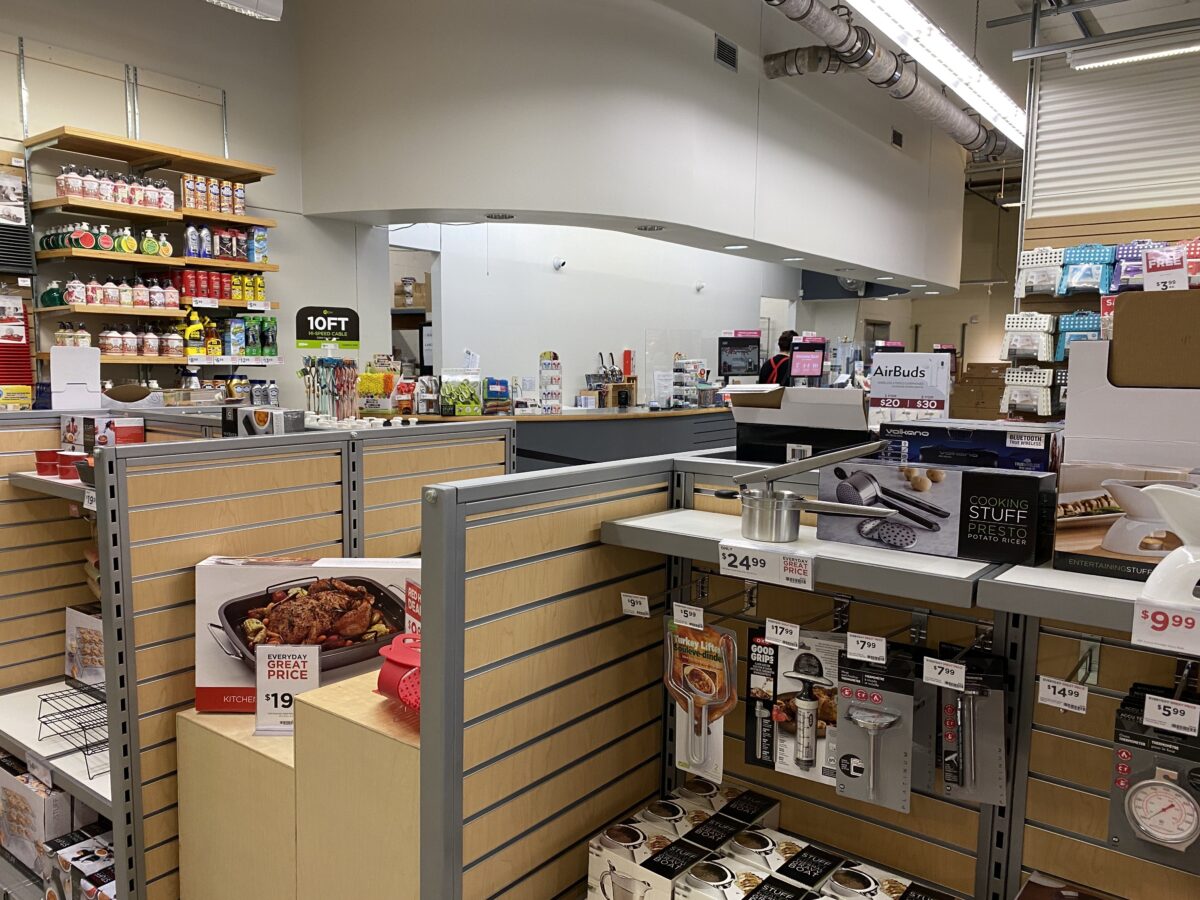
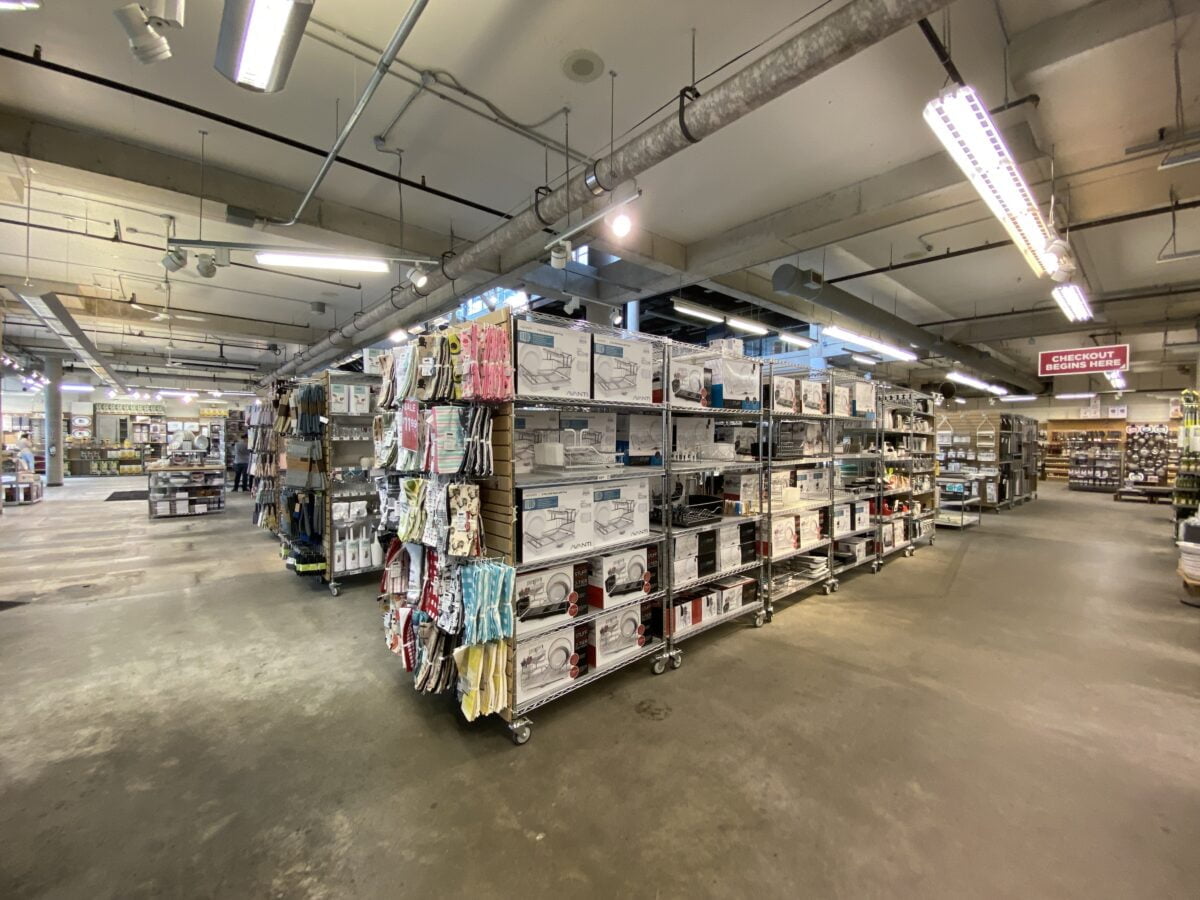
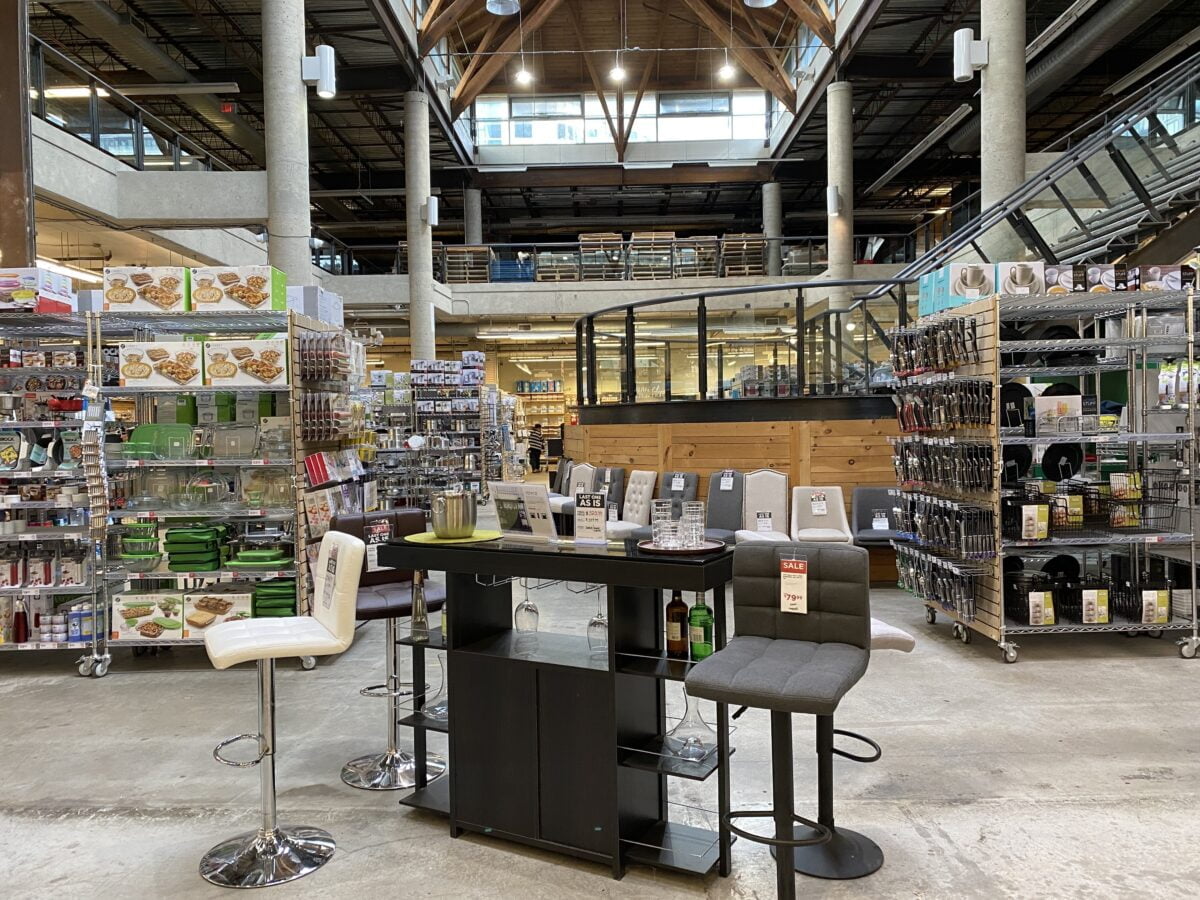
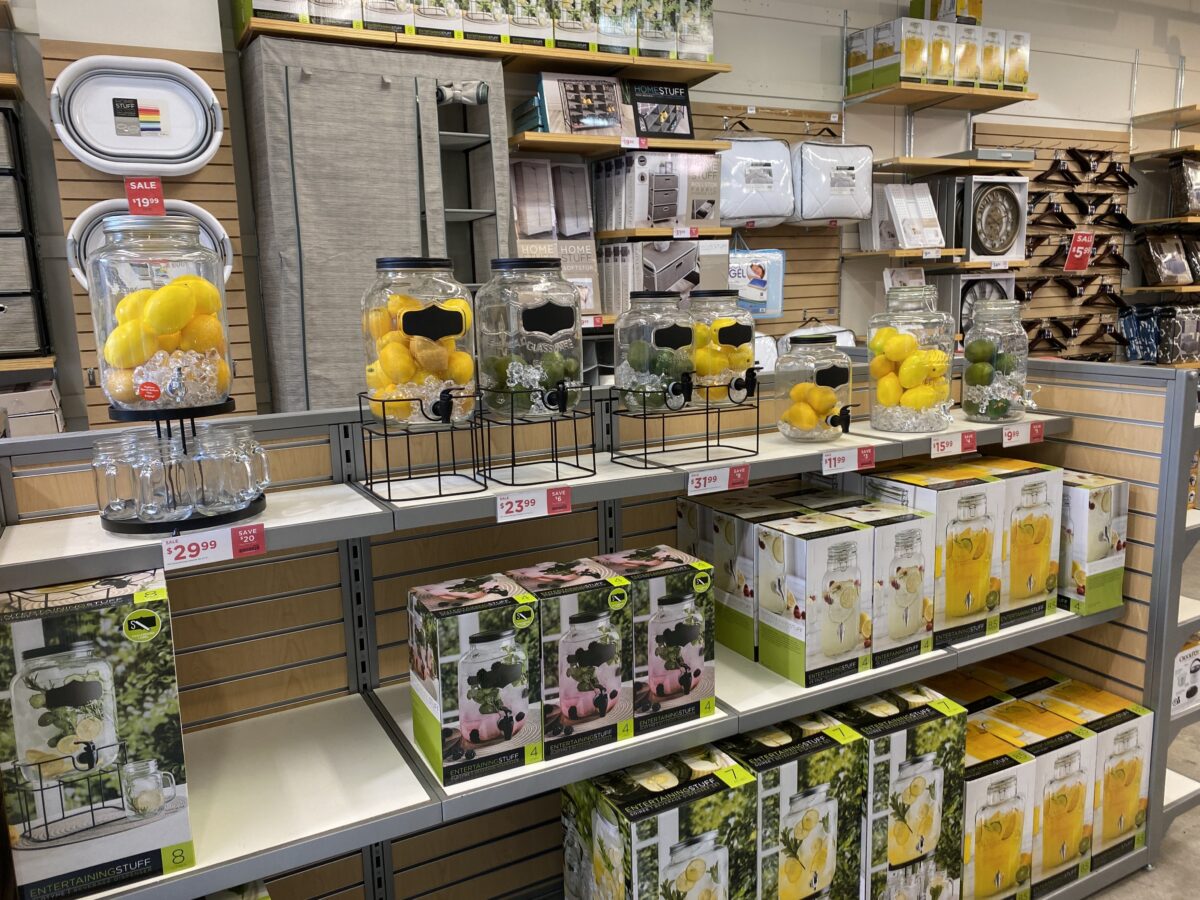
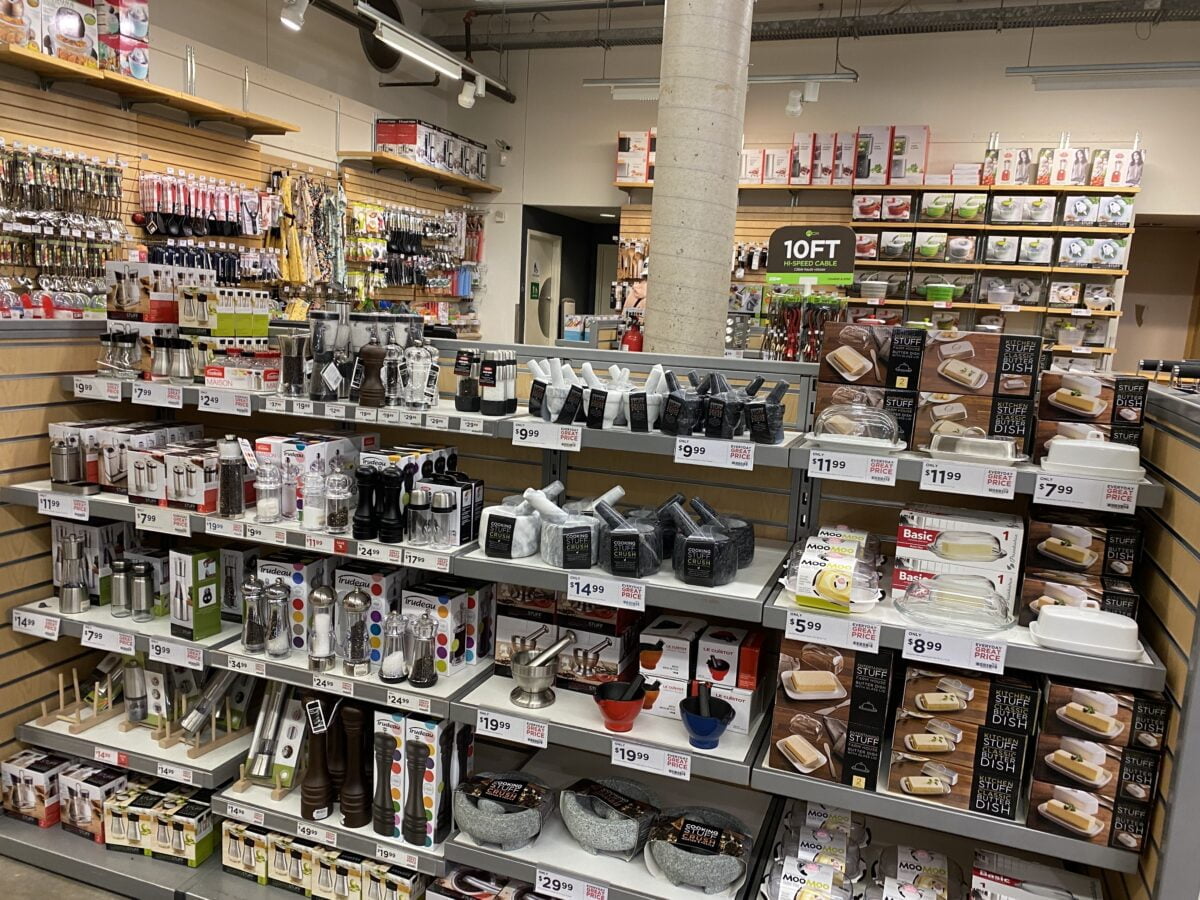
Kitchen Stuff Plus at 400 King Street West (Photo by Dustin Fuhs)
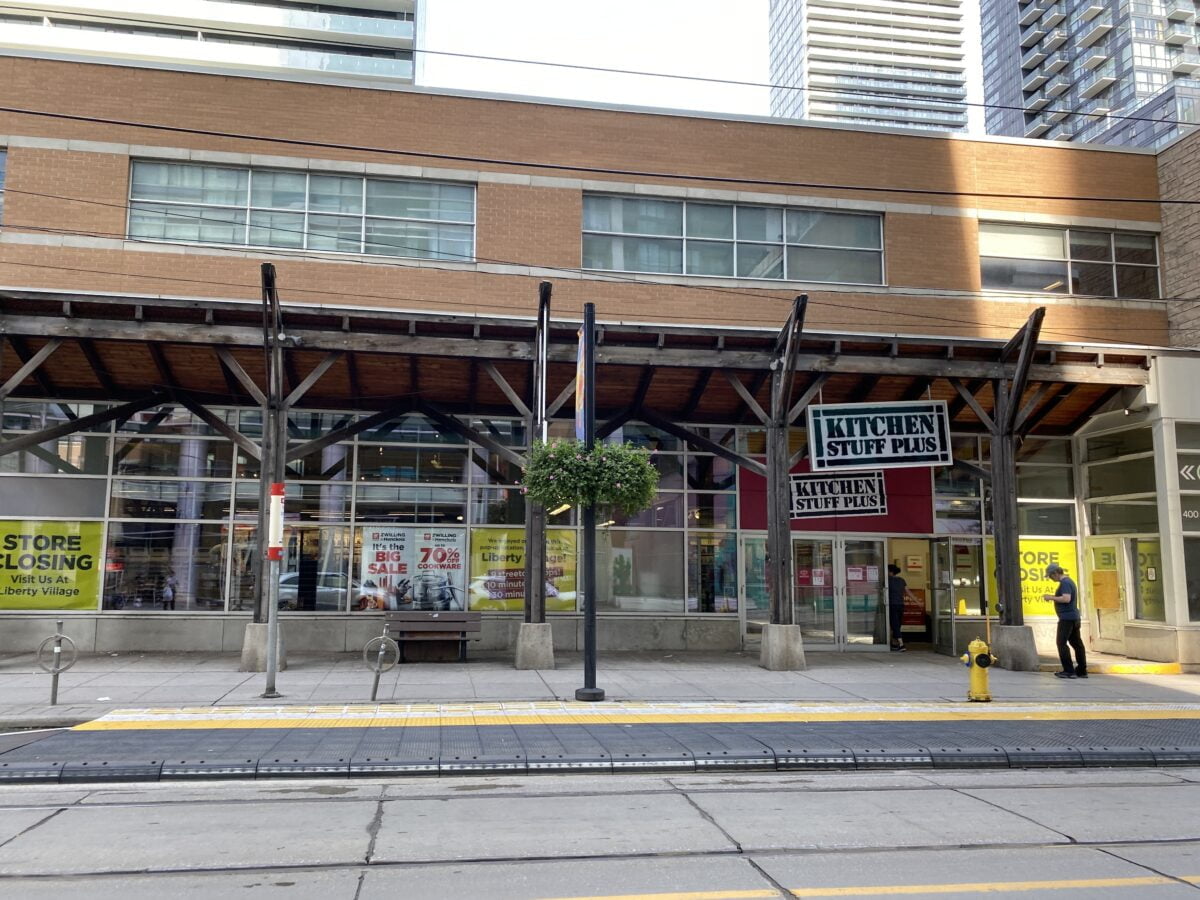
Ontario-based housewares & home decor discount retailer Kitchen Stuff Plus will be closing its store at 400 King Street West in downtown Toronto. Signage indicating the closure went up this week.
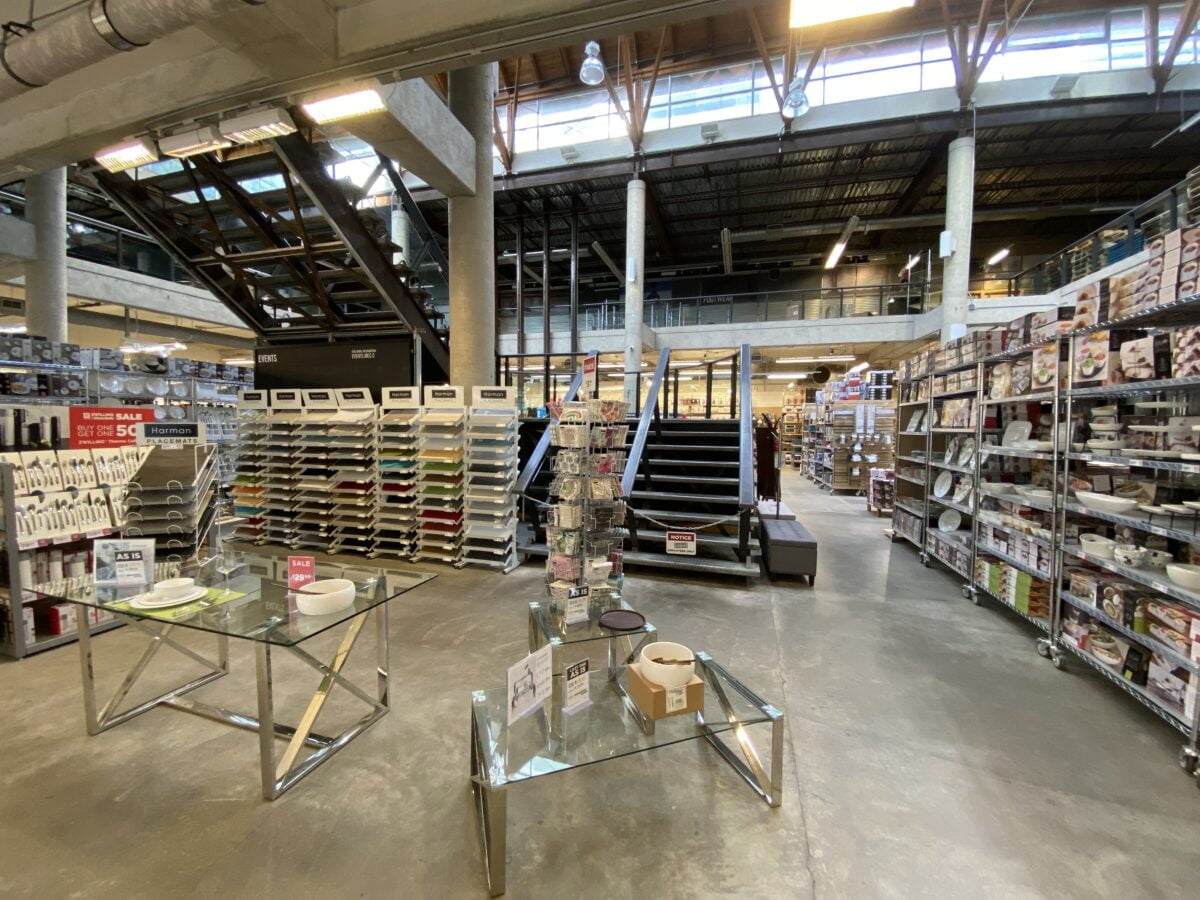
The 22,000 square foot location became available as a temporary space for Kitchen Stuff Plus after MEC moved its flagship to 300 Queen Street West in April 2019. Kitchen Stuff Pluss announced in January 2020 that the store would open in the 300 King location in February – a month before the COVID-19 pandemic began. They stock a wide range of supplies from grey kitchen cabinets to the latest trends in kitchen faucets, appliances, and home organization.
With the construction of “Pure Plaza“, a 47-storey BDP Quadrangle-designed residential condominium building due to commence, the existing long-term retail tenants at 400 King had relocated or closed in the recent years and saw a number of short-term pop-ups.
Kitchen Stuff Plus at 400 King Street West (Photo by Dustin Fuhs)
These included The Detox Market, which took over for Timothy’s Coffee in 2015. Sportley, which moved in to The Adventure Travel location in 2019 and the aforementioned housewares retailer which opened in the former MEC space.
Toronto sports fans would recognize the “Sportley” brand as being the neighbour of Tim Hortons at 322 King Street, at the northwest corner of King & John Street.
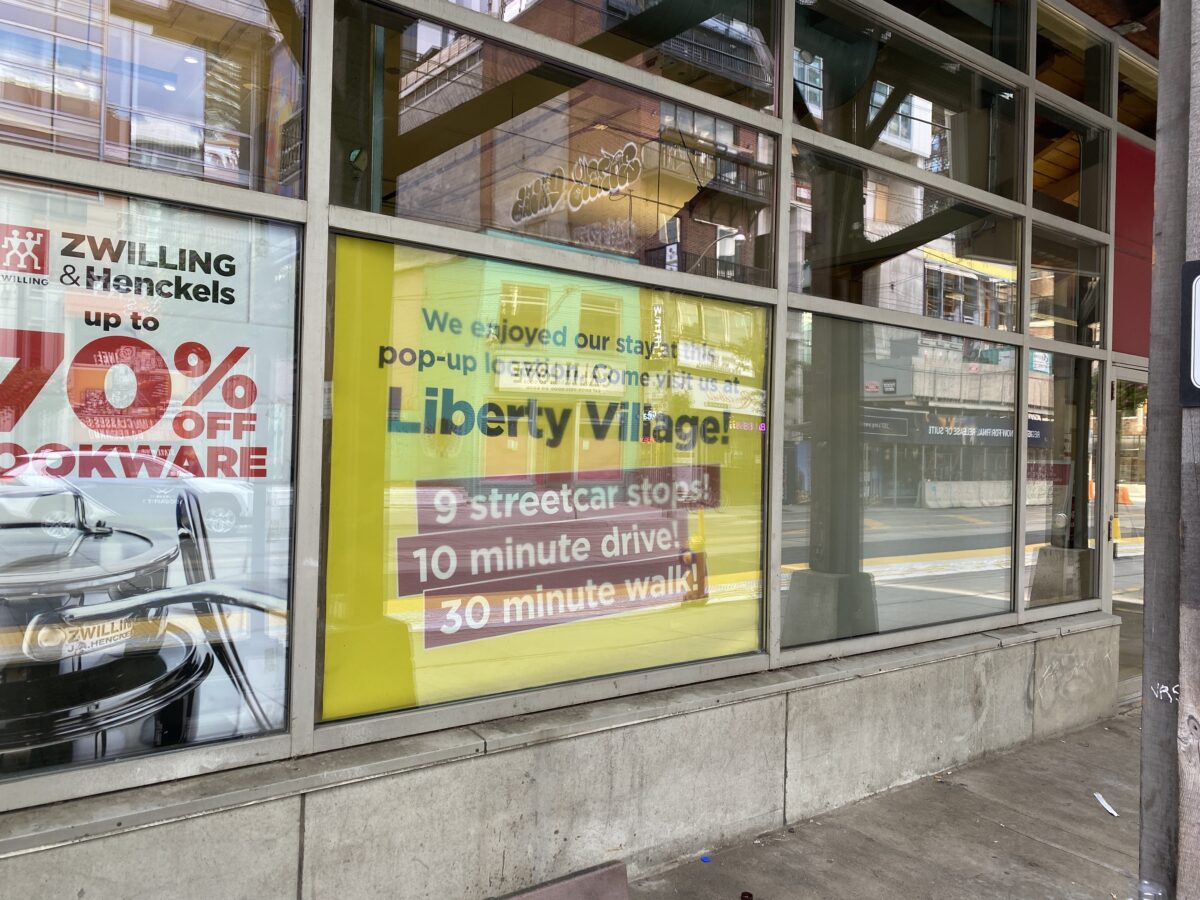
Signage on Kitchen Stuff Plus is directing customers to the Liberty Village location, which opened in 2012 and is “9 streetcar stops! 10 minute drive! 30 minute walk!” from the current King & Peter store.
Kitchen Stuff Plus has 24 locations in southern Ontario, including a location at Yonge & Bloor, Orfus Road at Dufferin and on the Danforth at Pape.
Additional Photos from Kitchen Stuff Plus on King Street
Kitchen Stuff Plus at 400 King Street West (Photo by Dustin Fuhs)Kitchen Stuff Plus at 400 King Street West (Photo by Dustin Fuhs)Kitchen Stuff Plus at 400 King Street West (Photo by Dustin Fuhs)Kitchen Stuff Plus at 400 King Street West (Photo by Dustin Fuhs)Kitchen Stuff Plus at 400 King Street West (Photo by Dustin Fuhs)Kitchen Stuff Plus at 400 King Street West (Photo by Dustin Fuhs)Kitchen Stuff Plus at 400 King Street West (Photo by Dustin Fuhs)Kitchen Stuff Plus at 400 King Street West (Photo by Dustin Fuhs)Kitchen Stuff Plus at 400 King Street West (Photo by Dustin Fuhs)
Last March, when the pandemic surprised us all by closing small businesses across the country, many retailers quickly realized the importance of having a digital strategy.
Until COVID, adoption of digital technology was comparatively slow, with less than 30% of SMBs offering eCommerce and less than 25% investing in digital marketing.
Today, as more national and local retailers turned to e-commerce, delivery, and digital tools like GetintheLoop to stay in touch and ultimately find ways to stay in business, the commercial landscape has seemingly changed forever.
The Shop Local Movement Made Real
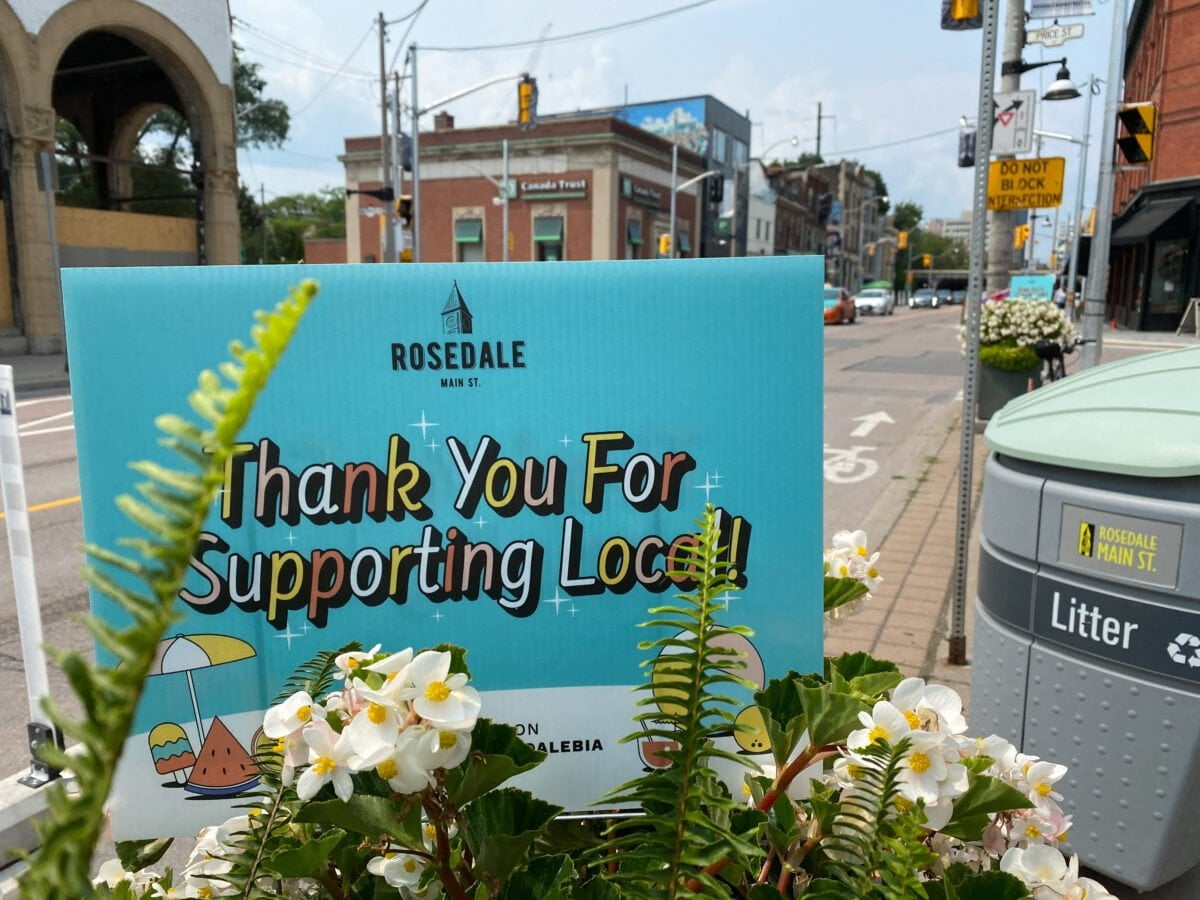
Rosedale BIA Supporting Local – Photo by Dustin Fuhs
In early April, I realized the shop local trend would become a massive movement. Fortunately, our shop local platform and platoon of entrepreneurs were well-positioned to step up and make a difference for thousands of businesses in communities across the country.
At the time, it seemed like we were riding a trend of consumers who now truly cared about supporting local businesses. While at the same time, companies had to adapt overnight to using more digital tools to attract and engage with local customers.
After 18-months on a pandemic roller-coaster, it’s become clear that this is not a trend but rather a deepening of the shop local movement. A movement that I believe is key to our local business communities surviving and thriving.
As Canada’s shop local platform, we are at the core of what’s happening with local businesses in communities across the country. Here are a few indicators that tell me the shop local movement is here to stay.
Business Adoption
An average of 10% of retailers ever created local eCommerce offers on GetintheLoop. Today, local eCommerce offers have bloomed with over 40% of our partners having now created an eCommerce offer on our platform.
According to the 5th Small and Medium Business Trends Report conducted by The Harris Poll this summer, now 63% of SMBs offer eCommerce, with another 14% planning to add eCommerce to their strategy over the next 12 months.
The driving factors for adopting this technology have been to continue serving customers safely, customer convenience, and remaining competitive.
Savvy, scrappy, solution-minded business owners are meeting their customers where they want to be met, and today that’s on their phone, whether it’s to discover, pre-order, or pay.
In all, 72% of small businesses have increased their online presence, and here at GetintheLoop, we have seen our platform partners grow 600% to over 6,000 companies across Canada over the past 18 months.
Consumer Growth & Engagement
During the pandemic, as consumers were discouraged from going out unnecessarily or businesses locked down, we observed that in-store consumer traffic quickly became online traffic.
Digital-ready businesses benefited, including those on GetintheLoop. We saw member engagement in our app increase by 400% during the periods of the pandemic, as consumers sought information on businesses in their community and how they could support them.
The Rise of Collaboration and Strategic Partnerships
Image: GetintheLoop
When the chips are down, more often than not, people pull together. The pandemic has spawned numerous collaborations and strategic partnerships across North America, supporting small businesses and their communities.
Organizations like supportlocalbc.com, which has helped keep cash flowing for small businesses in BC through the pandemic by facilitating the sale of over 1M in gift cards, have sprouted from the grassroots.
Digital Main Street, a Government collaboration that originated in Ontario and has grown to multiple provinces, has also served as a template for others to mobilize funds and training for small businesses.
At GetintheLoop, we recognized the value of collaboration early on, partnering with dozens of BIAs and Chambers of Commerce to support and promote their business members and help execute digital shop local events like the annual Jaywalkers Jamboree in Camrose, Alberta. BIAs and Chambers also stream local community offers to their websites to add value and help connect their members with local consumers.
This year we partnered with BenefitHub, the world’s largest employee lifestyle benefits company, as their members have expressed their desire for local offers and the ability to support local businesses. We also recently announced a partnership with Retail Insider to bring the publication’s business and consumer audience closer together.
It seems everyone understands the importance and value of connecting to “local”, and these are a few creative collaborations and partnerships empowering the local shop movement.
Investment
The Government has invested millions of dollars in supporting local businesses through the pandemic because they’re essential to our local economies.
Local businesses continue to undergo an accelerated digital transformation as they invest in new technology and tools at a pace over 18 months of the pandemic equaling the entire prior decade.
Or let’s talk in terms of capital investment. Since the pandemic began, 45 entrepreneurs across the country invested their financial resources and own time to help further build their communities by becoming GetintheLoop franchise owners signaling a grassroots upswell of demand for local businesses. (These Entrepreneurs and their passion for local is what gets me out of bed excited every day!)
Long term change
The 2021 Harris Poll also validates my belief that many of the changes brought on by the pandemic will remain long-term.
According to the study, 75 percent of small business owners think the operational shifts they’ve made during the pandemic will benefit them long term.
For example, 91% of retailers expect to offer contactless services after the pandemic. GetintheLoop for Business partners have access to our digital loyalty system. The system enables businesses to create contactless ‘punch cards’ and has become one of the fastest-growing features in GetintheLoop.
But more importantly, communities everywhere have demonstrated how committed they are to local businesses, with people often going out of their way, paying more, and waiting longer for goods they could have otherwise received much quicker by shopping online. The pandemic has raised the collective consciousness of consumers and the value of shopping their local downtown or shopping centre that employs thousands of people in their community.
At GetintheLoop, our mission is to make it easier to shop locally, while giving businesses easy and affordable digital tools to reach those consumers that want to support them. We’re excited for what the future holds.
Matt Crowell
Contact our team if you’re a business with a brick-and-mortar location and would like to learn more about how GetintheLoop can help you connect to nearby consumers.
If you’re an entrepreneur and are interested in bringing GetintheLoop to your city, reach out to our franchise team.
Matt Crowell is the Founder & CEO of Kelowna-based GetintheLoop, a shop local community that delivers consumers more ways to explore, discover and shop local, wherever they are.
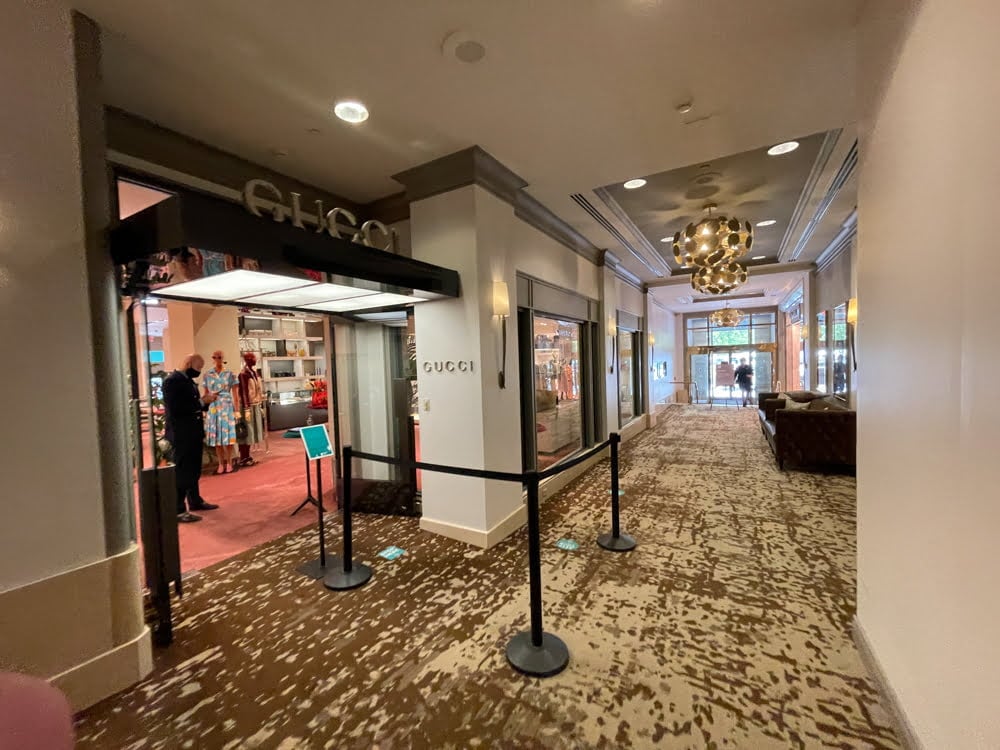
Gucci Construction Signage at Fairmont Hotel Vancouver (Oct 2021). Photo: Shanon Thornley (LinkedIn).
Retail Insider reported in July 2021 that Italian luxury brand Gucci will renovate and expand its standalone downtown Vancouver store at the Fairmont Hotel Vancouver.
Construction signage is now up on the store which will be substantially larger when it reopens in 2022.
GUCCI interior entrance at Fairmont Hotel Vancouver (June 2021). Photo: Lee Rivett.
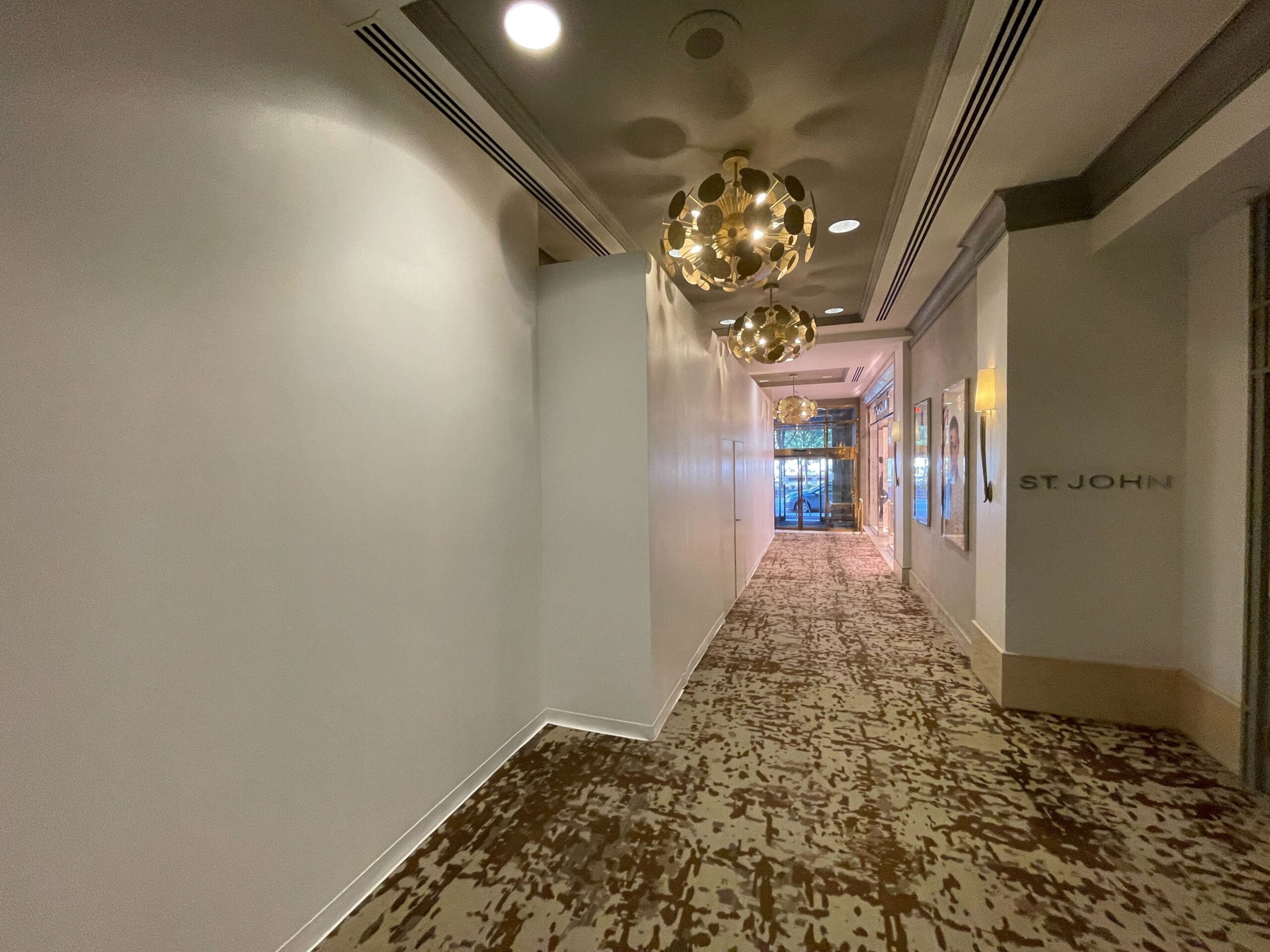
Former interior Gucci entrance with construction hoarding erected at Fairmont Hotel Vancouver (September 2021). Photo: Lee Rivett.
Gucci Construction Signage at Fairmont Hotel Vancouver (Oct 2021). Photo: Shanon Thornley (LinkedIn).
The current 3,900 square foot Gucci store, which opened in the Hotel Vancouver in 2006, is annexing the 2,300 square foot Omega store next to it to create a flagship-sized 6,200 square foot location to house Gucci’s entire collection of ready-to-wear for women and men as well as bags, accessories, footwear, jewellery and other categories.
The current Gucci store does not carry the men’s ready-to-wear line which is available nearby at Vancouver’s Holt Renfrew store.
The expanded Hotel Vancouver store will feature Gucci’s most updated store concept that was recently rolled out with new Gucci stores at West Edmonton Mall in Edmonton and a renovated Bloor Street flagship store in Toronto. Interiors will be plush with velvet, marble and wood.
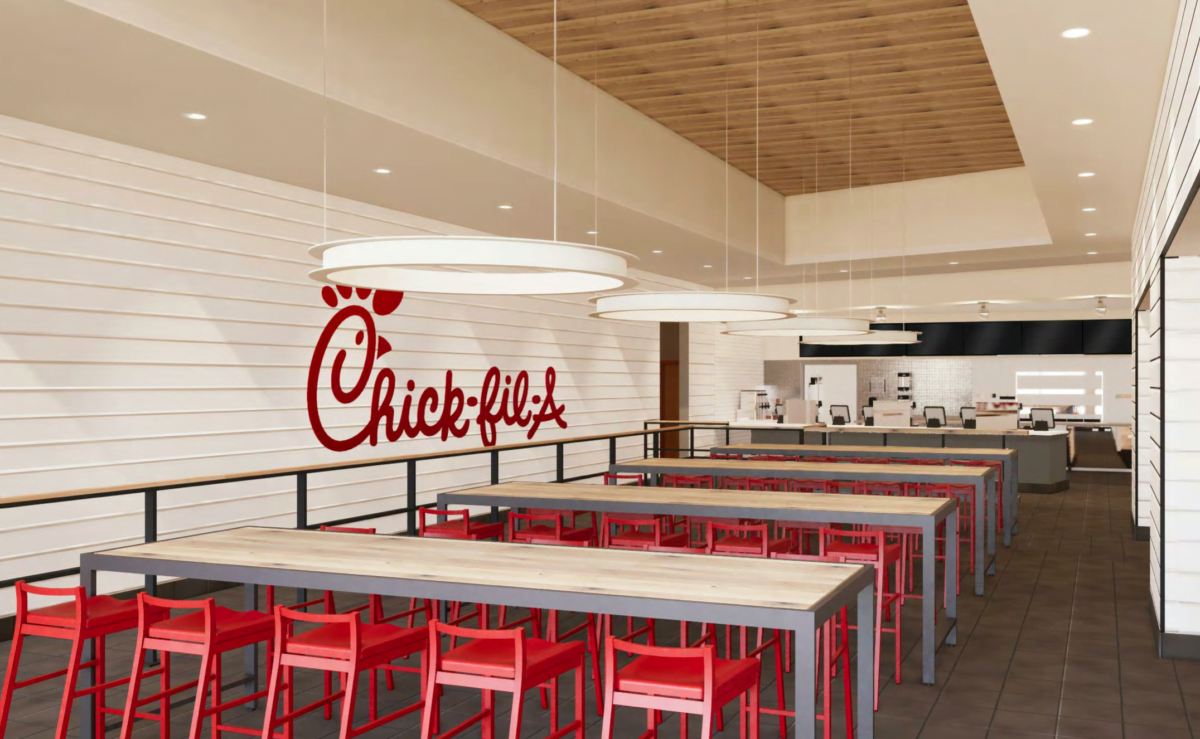
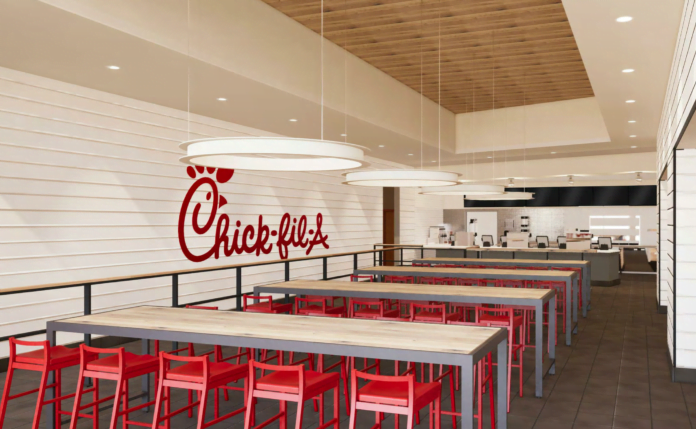
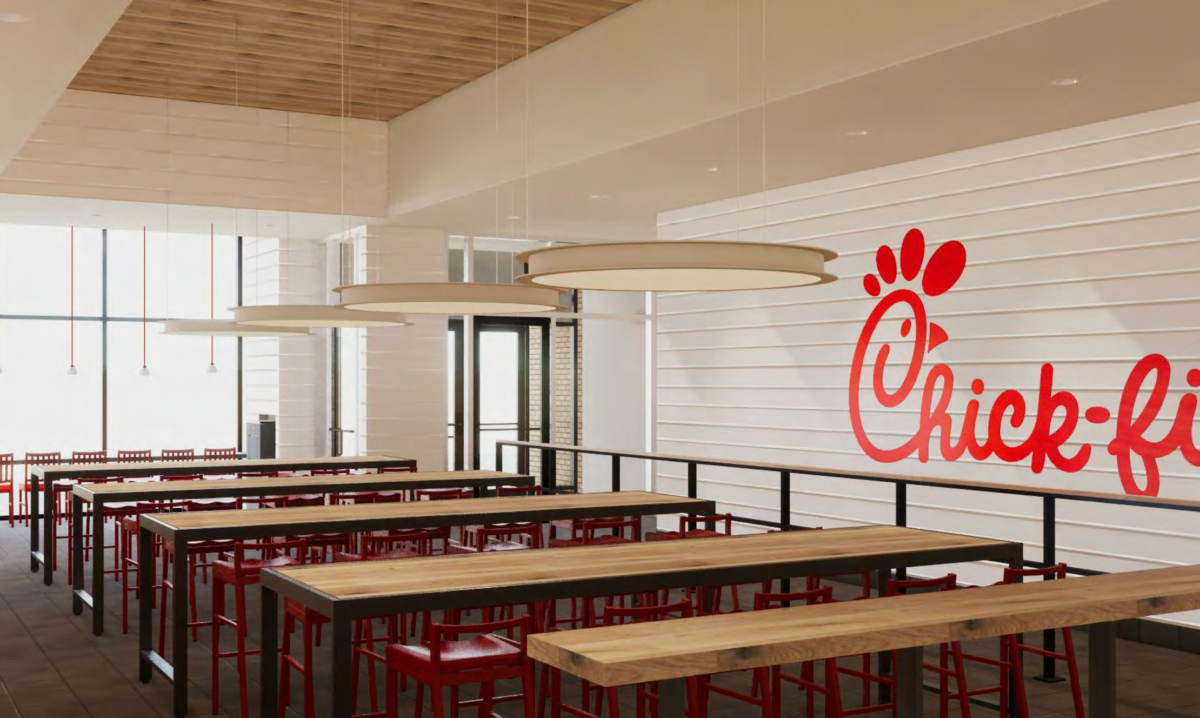
Chick-fil-A Queen Street West (Rendering: Provided)
Atlanta-based Chick-fil-A has announced that it will be expanding the Canadian portfolio of stores with a new location at 336 Queen Street West in downtown Toronto.
The restaurant will be a tenant in the four-storey building which has been under construction since 2019.
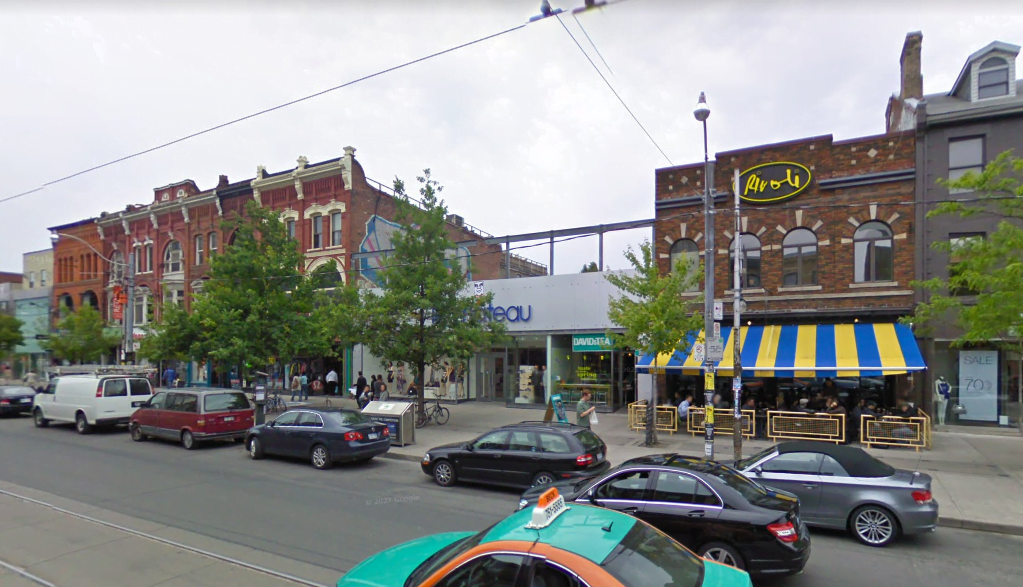
Tenants of the former Queen Street West location included Le Chateau until 2013 and Urban Behaviour until 2018. David’s Tea also had a storefront pre-2009 until late 2014 before relocating to 278 Queen Street West, taking a Soft Moc location. The new 336 Queen building replaces these former businesses.
Chick-fil-A added two new restaurants in Ontario in August 2021, with new storefronts opening at Scarborough Town Centre in Toronto and in Kitchener. The brand will have five Canadian locations including Yonge & Bloor and the Yorkdale Shopping Centre in Toronto after Queen Street opens.
Future Chick-fil-A at 336 Queen Street West (Photo by Dustin Fuhs)Former tenants at 336 Queen Street West (Google Maps)
Anita Costello, executive vice president of International at Chick-fil-A Inc. shared a statement on the expansion in Canada.
“We’re thrilled to continue growing in Canada by opening restaurants in Kitchener and Toronto,” said Costello. “During these times, we’re grateful for the positive response we continue to receive from our Canadian customers and we are honoured to serve our new communities great-tasting food made with high-quality ingredients.”
“Like our first two locations, each restaurant will be locally owned and operated. The success of our business is built on local owner/operators who truly care about their restaurant and the community they serve.”
The privately-held company is planning to open an additional 20 restaurants in Canada by 2025. Michael Calderone and Bryce Dymond of brokerage Urban Reform Realty Inc. represent Chick-fil-A for its real estate selection in Canada.
Chick-fil-A Queen Street West (Rendering: Provided)
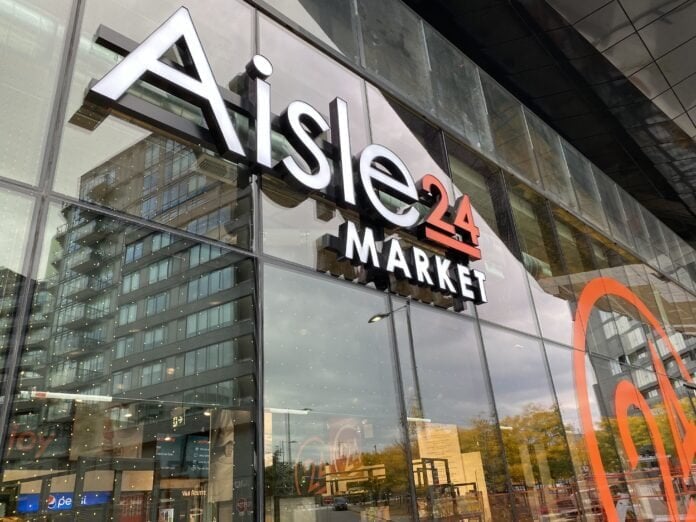
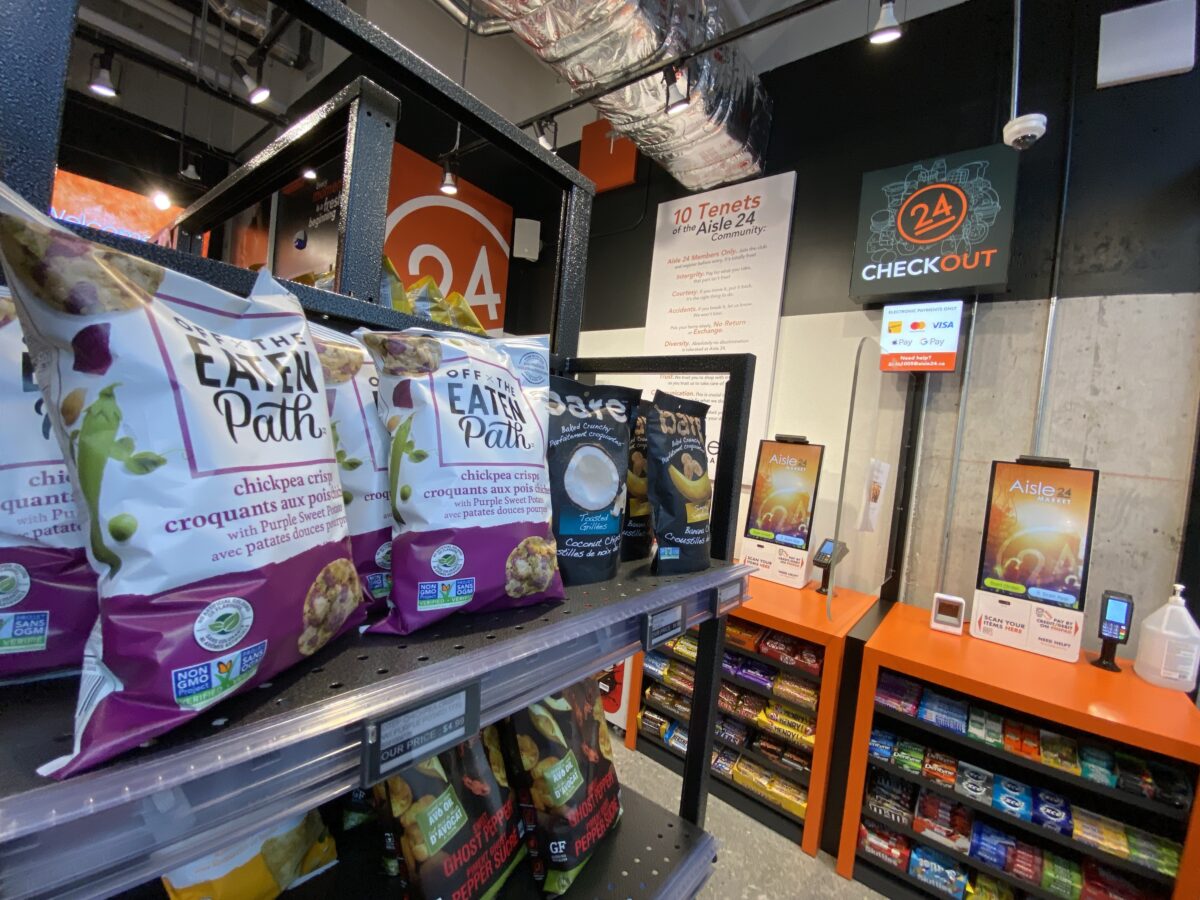
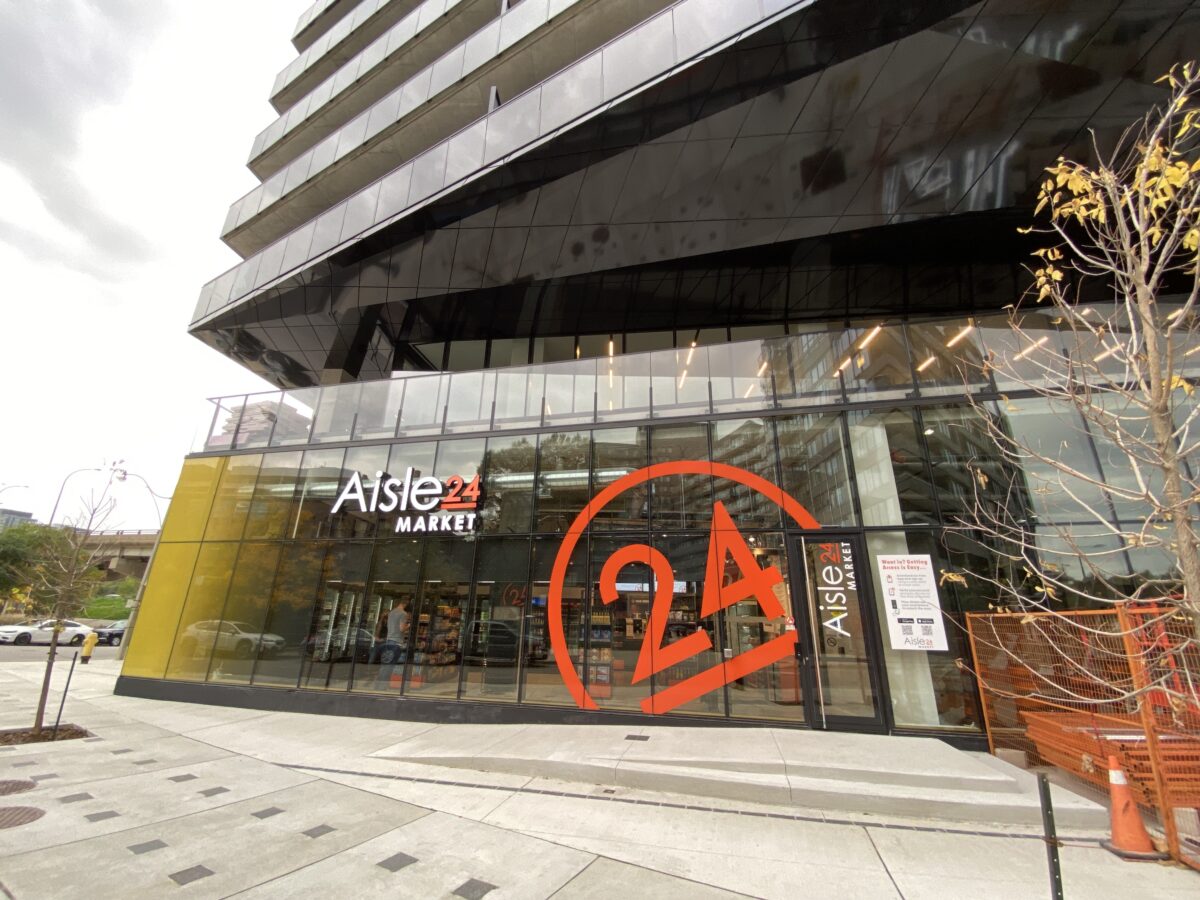
Aisle 24 Market in River City 4 (Photo by Dustin Fuhs)
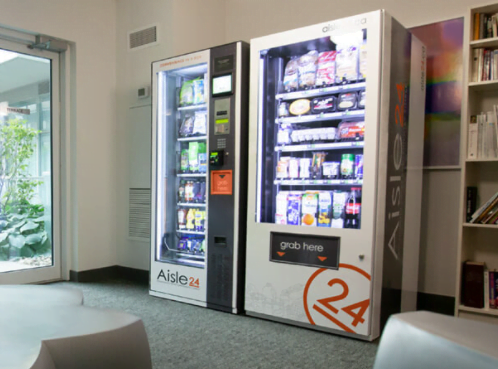
Aisle 24, a fully automated, cashierless grocery store concept that is open 24/7, is in expansion mode with plans to open numerous locations across the country.
John Douang, Co-Founder & CEO of the company which opened its first location in Toronto in 2016, said the hyperlocal, unmanned market is in nine locations currently in Ontario and Quebec and about 30 stores are in the queue in either lease discussions and construction including in British Columbia.
“We utilize a lot of technology to supplement the store operations and we use a lot of our own platform of technology in order to secure the stores. All the stores are unmanned. We don’t have cashiers and we don’t have staff that are on site to greet customers or anything like that,” said Douang.
“The stores are 24/7, 365 days a year and the way it works is that all of our customers download our mobile app. They create their account and then they get access to the stores.”
Aisle 24 Market in River City 4 (Photo by Dustin Fuhs)
Douang said there are two sizes for the stores. The first is the resident format which is typically inside the common area of a building. It’s about 350 to 600 square feet. The second is the community format which can go into a standard commercial space and those typically range from 1,000 square feet plus.
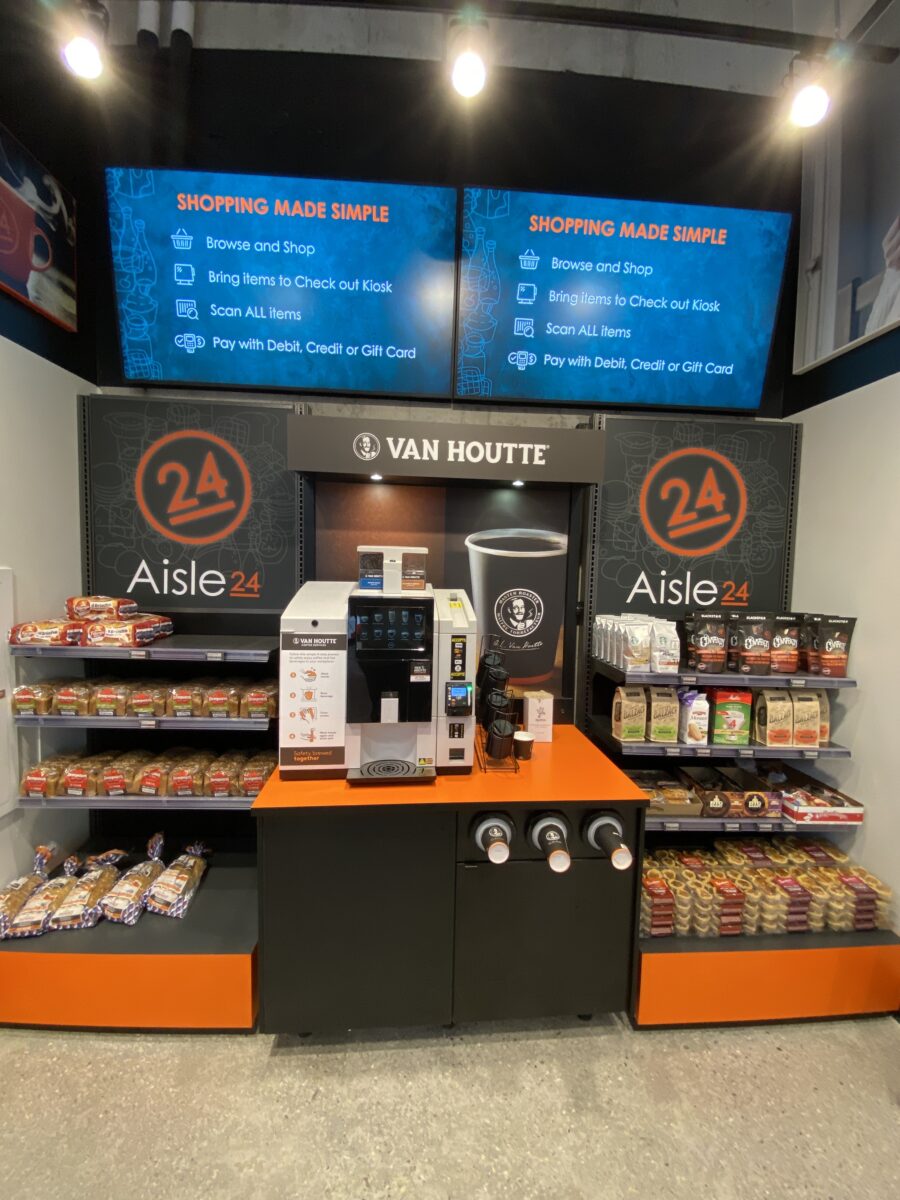
“We are more so a market rather than a convenience store because we don’t sell age-restricted products . . . We carry a wide range of grocery products. We’re like a mini market where you can find fresh prepared foods like sandwiches, soups, salads. A wide variety of frozen type goods. Your typical pantry type items. So canned goods, confectionary items like snacks and drinks as well. Mostly around grocery products. We do carry things like electronic accessories like cables and chargers and home goods like cleaning products and personal hygiene products,” he said.
“Our strategy for our store growth has been around placing our stores into residential communities. So we’re working with a lot of major national and international property developers to spec out space within their master planned communities – mostly around densely populated areas. We like to be in communities that have a dense population, usually by way of condominiums and apartment buildings . . . Our strategy has always been bringing the convenience to the customer so they don’t have to travel far to get some items.”
The company started franchising in 2020 and is supported by major investor and advisor, the newest Dragon on CBC’s Dragons Den – Wes Hall.
“I quite honestly feel that Canada can support literally thousands of Aisle 24 stores. When you look at the market as a whole, right now in Canada there’s about over 27,000 convenience stores and over 65 per cent of those are independently owned,” explained Douang. “We feel there’s a big gap in the market and that we can help to consolidate the market and bring a more consistent experience to the consumer.”
Aisle 24 Market in River City 4 (Photo by Dustin Fuhs)
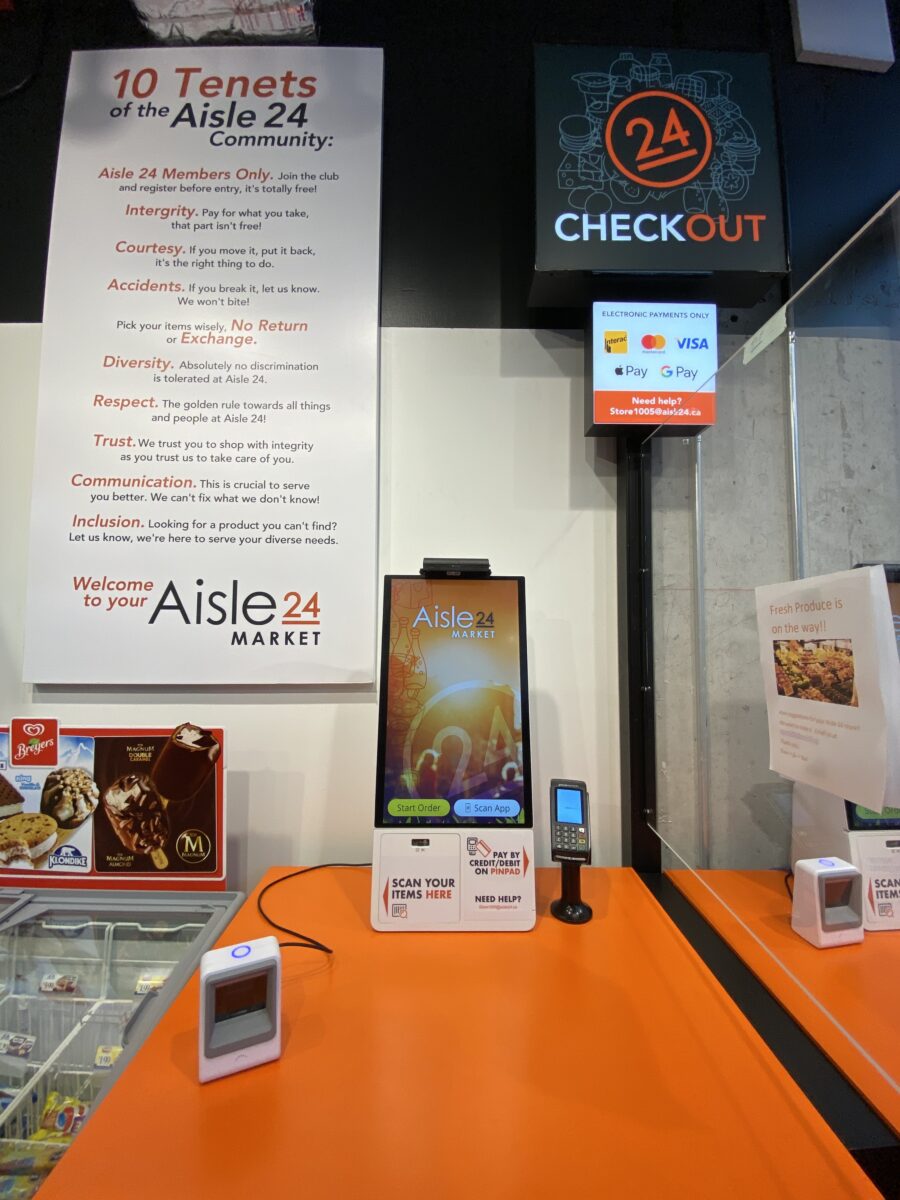
Aisle 24 Market in River City 4 (Photo by Dustin Fuhs)
In September 2016, in partnership with Knightstone Capital and Centennial College, Aisle 24 launched Canada’s first cashierless grocery store at Centennial Place student residence, tailored to the specific purchasing habits of their community.
“COVID has changed a lot of things. I think even pre-COVID we were on the right trends – what the younger generation, the Gen Z’s, the Millennials, what they want because those people in those age categories are not shopping for the whole week. They’re doing two to three shopping sessions per week and they’re shopping for today and they’re shopping for tomorrow,” said Douang.
“Along those lines, people don’t want to have to deal with grocery shopping in a mega store. It’s almost become a burden now. They want to get in, they want to get out. Shopping is a necessity but it’s not enjoyable and they want to get on with their lives and that’s what we’re about. Our main motto is saving you time so you can focus on what is really important.
“Pre COVID we were already seeing a lot of interest and a lot of growth in our sector. COVID hit and I think it’s even more important now that our customers feel safer shopping closer to home where they have less risk and less exposure to potentially COVID. Their shopping behaviours are changing. They’re shopping more local. They are enjoying the touchless aspect of the business. They don’t need to speak with anybody in the store. They can go in, get what they need and leave in a few minutes.”
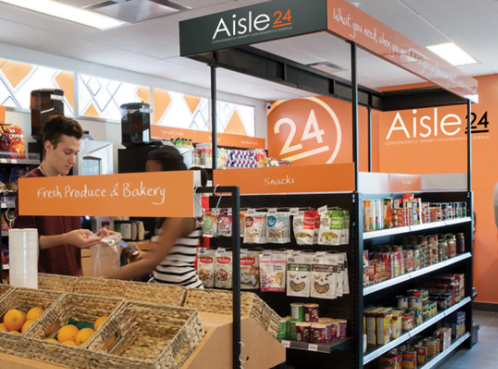
Image: Aisle 24
Image: Aisle 24
Aisle 24 Market in River City 4 (Photo by Dustin Fuhs)
The Aisle 24 process is simple. People download the mobile app, register an account and can get access right away. The mobile app also delivers special promotions and customer surveys. Customers use the app to unlock the door and start browsing. Every store includes enhanced security systems to discourage theft and reconciles inventory each week to closely track shrinkage.
Residents use the self-service kiosk to scan the products they want to purchase. Products are neatly displayed on open shelves and grocery freezers. If shoppers can’t find something, they can make requests via the kiosk for specific dietary requirements or preferences.
When it comes to paying, the only thing shoppers need is their smartphone, payment card, and a bag to carry their groceries.
The Aisle 24 store is serviced at least three times a week to clean, replenish shelves and check inventory.
Calgary-based Air Sniper is targeting retailers and shopping centres in Canada with its technology that is proven to kill COVID-19 at a very reasonable price point.
Air Sniper is an air sanitization technology that utilizes UVC technology to reduce airborne pathogens. Air Sniper equipment is confirmed to continuously kill up to 99.9% of airborne COVID-19 particles in laboratory conditions.
The cost for a convenience store-sized retail business would be about $3 per day, making it extremely cost effective.
Features and benefits of Air Sniper include:
Commercial, industrial-scale air purification.
Covers to 7,500 cubic feet with recommended air turnover every 10 minutes.
Destroys 99.9% of airborne pathogens including COVID-19, influenza, staph, mould, and more.
“We’re proud to be one of the first to be third-party tested and proven to kill 99.9% of COVID-19 as well as many other viruses and pathogens,” said Stuart Henley, President at AIR, a claim independently verified by use of EPA approved surrogate virus Bacteriophage MS2 to be accurate in laboratory conditions by a custom environmental testing chamber by Airmid HealthGroup of Ireland. “We hope that more businesses and facilities will take advantage of this solution in order to remain open safely.”
Calgary-based Air Sniper was founded about 20 years ago to filter air in commercial buildings. Testing was done last year to confirm that Air Sniper technology could also kill the novel Coronavirus COVID-19. The proven technology has since been introduced into the Peel District School Board as well as many other businesses.
Retail Insider is partnering with Air Sniper on this announcement as the Air Sniper technology may help keep businesses and shopping centres open at a time when many are concerned about closures as a pandemic fourth wave takes hold into the fall/winter cold and flu season.
Employees and visitors to businesses and shopping centres utilizing Air Sniper can enter with more confidence knowing that Air Sniper is handling air purification to kill unwanted germs.
For businesses and landlords interested in learning more about Air Sniper, feel free to contact the company below in this partnership with Retail Insider.