Retail Insider’s Editor-in-Chief Craig Patterson recently interviewed fashion icon Jeanne Beker in a two-part podcast. Ms. Beker was host of Fashion Television between the years 1985 and 2012 and the conversation includes a discussion of some of the most memorable moments, including exclusively announcing the retirement of iconic fashion designer Valentino.
Jeanne Beker captured the hearts and minds of Canadians by showcasing a glamorous world that Fashion Television also aimed to make accessible to the masses. Fast forward today and we see a democratization of designer brands in Canada and beyond.
Watch the Part 2 Video directly below. As well, last week we published the first video podcast where Jeanne Beker discusses the future of retail in Canada as well as some highlights from her past, including her first job which was at Toronto’s Yorkdale Shopping Centre [See the Jeanne Beker video podcast #1 here].
Watch the part 2 of the video podcast below (Advertising Blockers need to be disabled as they may block video player):
–
Alternatively, listen to the ‘audio only’ version of the video podcast here:
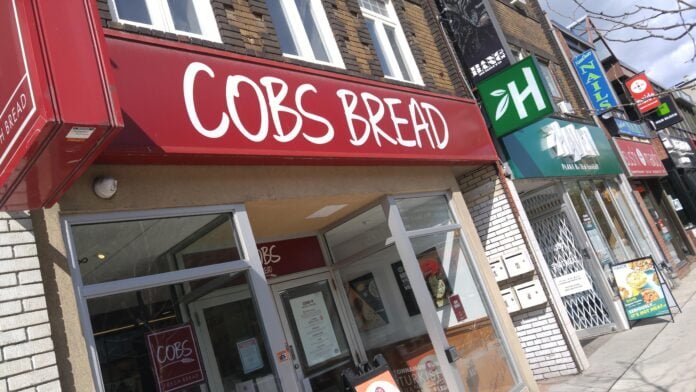
Exterior of Cobs Bread on Bloor Street in Toronto. Photo: Dustin Fuhs
COBS Bread is looking to aggressively expand its footprint across Canada in the next few years.
The company’s first COBS Bread location was in North Vancouver in 2003. The concept originated about 45 years ago in Australia as Bakers Delight.
Brad Bissonnette
“We continue to grow and expand with a focus on franchising,” said Brad Bissonnette, VP of Marketing and Franchising with COBS Bread. “What really truly hasn’t changed over the 45 years is our value proposition which is to deliver a very high quality product with outstanding customer service and ensuring that we also take care of the communities that we do business in by franchising with local franchisees and donating all of our leftover bread and baked treats to various charitable organizations across Canada.”
The company currently has 128 locations in six provinces. It has 26 commitments to open new locations in Canada over the next year.
“We had some incredible momentum prior to COVID. We were trending along very, very well with same store sales growth in and around six percent. Transaction growth at three percent. COVID ultimately hit back in March of last year and there was a significant amount of uncertainty for a couple of weeks there. But what we found over the last year in the way that Canadian consumer habits have changed has really allowed for the stars to align for our brand. Consumers are now eating more at home,” said Bissonnette.
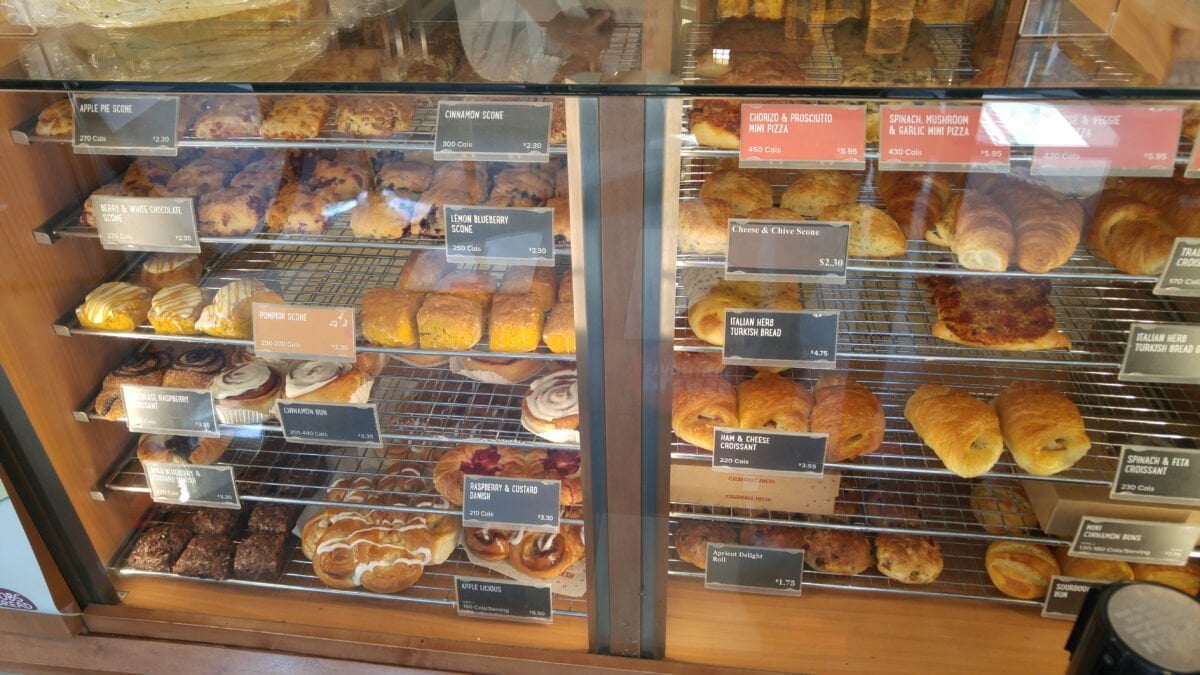
Interior of COBS Bread store on Bloor Street, Toronto. Photo: Dustin Fuhs
“There seems to be a stronger effort to really take care of our communities which truly is part of the DNA of COBS Bread. There’s significant opportunity here with changing consumer demand and a need for fresh baked bread and treats. What we’ve found whether it’s through a recession or the global pandemic is that demand for bread and baked treats is a staple. It’s an essential. And it’s never been stronger.
“Over the last 52 weeks, we’ve been very pleased with the performance of our bakeries. We went from about six percent store sales before the pandemic and now same store sales is close to 17 percent.”
Average transaction has also grown slightly in the past year.
“We believe the market in Canada can support anywhere from 400 to 500 locations. Currently we haven’t put an exact number on where we want to expand but we do think we can double our footprint in the next five years,” said Bissonnette. “We believe we can be anywhere between 20 to 30 openings a year for the next four to five years.
“Since March of last year, we’ve had 37 commitments to either open a new location or to purchase an existing location. We currently have 26 commitments to open new franchises and have sealed deals in a lot of great markets across the country.
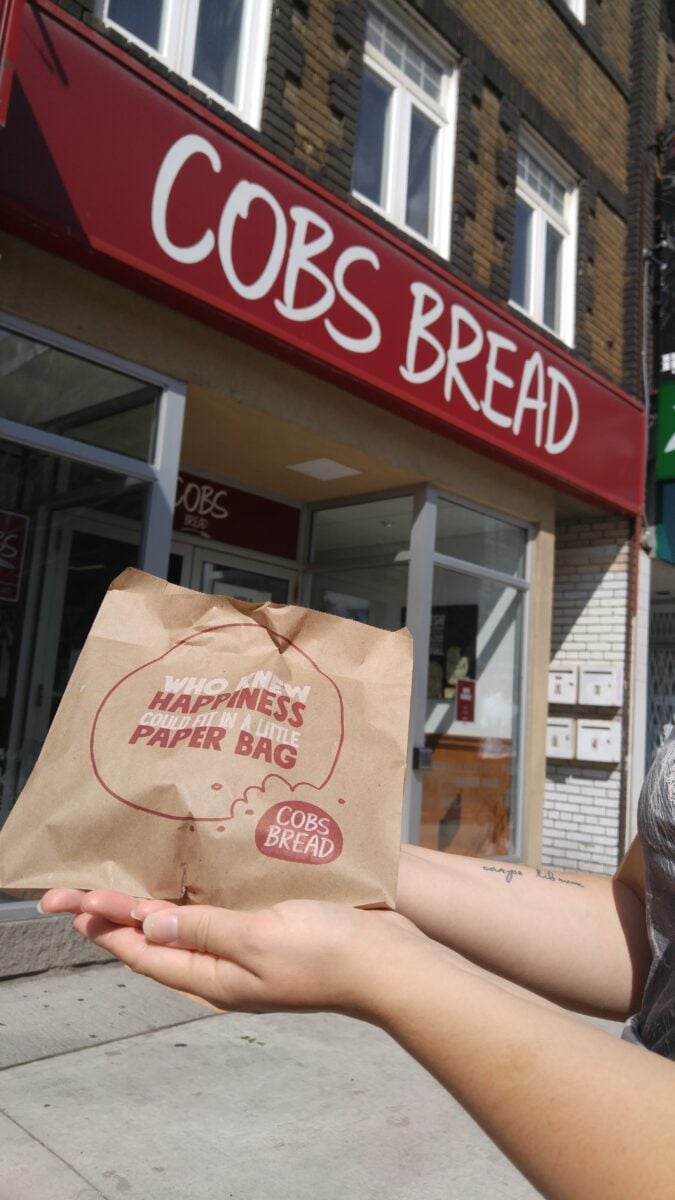
Photo: Dustin Fuhs
“The overwhelming interest in the COBS Bread brand has never been higher. What we’re very proud of is the brand’s ability to not only be able to provide fresh, high-quality products and great customer service, but we’re also very proud of the fact that the brand has been able to deliver a very healthy return to our franchisees. As well, with operating profit really driving high since the global pandemic, and because of all those consumer trends, we don’t feel it’s going to subside significantly post pandemic. Our current rolling 12-month operating profit is $263,000 and so when you take into consideration that the average build is between $700,000 and $750,000, the average franchisee is getting a return on their investment in just under three years. I don’t think there’s too many brands out there that can articulate and create a return like that.”
He said the company is seeing incredible growth in the Ontario market.
Recently, COBS launched a pilot for its new program called COBS Club which is a digital loyalty program that will grow to more locations in the future.
“We have a saying at COBS Bread that we want to deliver a customer experience that cannot be matched. This is now transcending to ensuring that customers can ultimately order COBS Bread whether that’s in bakery or wherever and whenever they would like to purchase COBS Bread. So we’re now on a journey to deliver a customer experience that cannot be matched across all platforms including digital platforms,” said Bissonnette.
“With the pandemic, we really had to take a look at our business to ensure that we were positioned to work our way through the pandemic, deliver a high-quality product and good customer service. We also wanted to ensure that our customers had an avenue to order COBS Bread during the uncertainty. The global pandemic really expedited our work on the digital customer experience side. Early last year we started partnering with delivery companies to ensure customers could receive COBS Bread if they weren’t able to leave their homes.
“We also rolled out an online ordering platform as well. We (recently) rolled out our COBS Club which will in time become a fully-immersive club that provides loyalty and rewards for all of our amazing customers. We’re moving into the digital age when it comes to loyalty, transitioning from a COBS Bread club card to a digital loyalty program.”
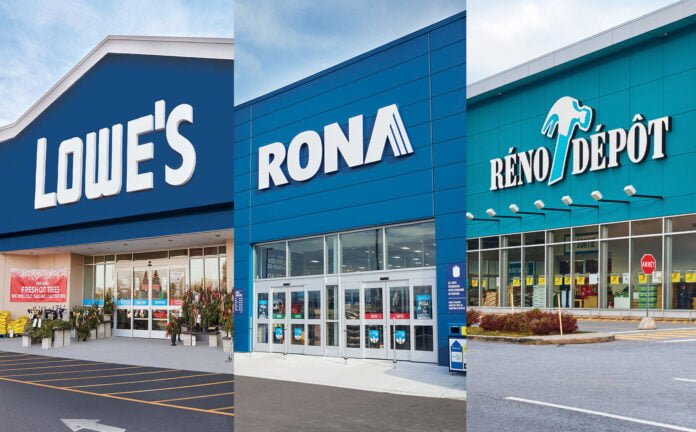
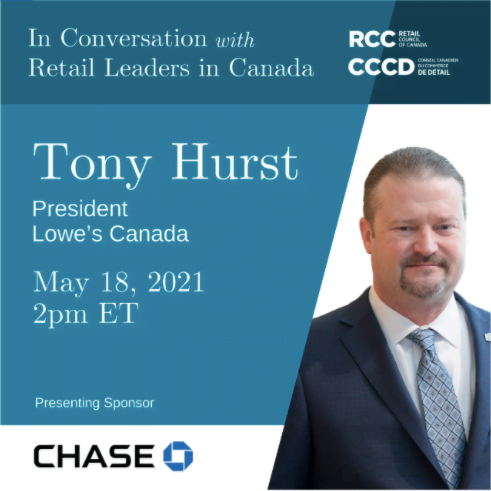
Tony Hurst, President, Lowe’s Canada will join Retail Council of Canada’s President and CEO, Diane J. Brisebois, on Tuesday May 18, 2021 at 2:00pm ET for an in-depth conversation about how Lowe’s Canada over the last year adjusted their business practices to continue to provide their world-class customer service while ensuring the critical COVID-19 safety protocols were carefully enforced. [Register: RCC Members $64.99 | Non-members $129.99]
Over the past few years, we have been witnessing a transformation in the retail industry. With the COVID-19 pandemic, many organizations had to implement significant strategic changes to maintain or improve the customer experience. Tony Hurst took the helm of Lowe’s Canada as President in January 2021, just a few months before the health crisis began. Learn how Hurst has led the organization over the past year by making its associates, customers and surrounding communities’ well-being his top priorities. Whether it is through special measures to support associates, new technology roll-outs to improve the in-store and online experience, supply chain transformation or special community support programs, Lowe’s Canada adopted several new practices to adapt to this new reality.
This is the third of four In Conversation With Retail Leaders webinars where Canada’s most visionary retailers and industry insiders will discuss innovation in retail and provide critical insights to successfully lead businesses through disruptive times.
Other In Conversation With Retail Leaders guests this spring include:
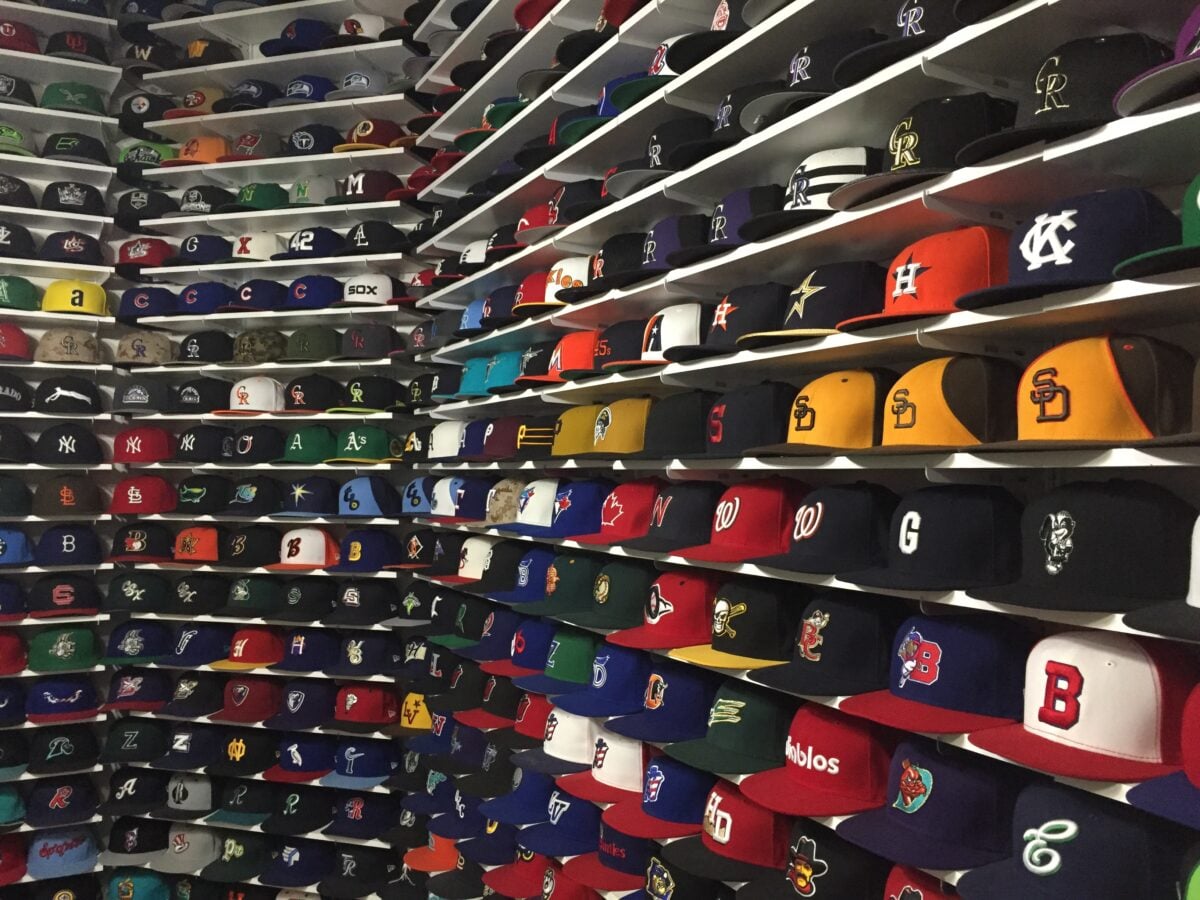
Leading sports retailer Lids, known for selling headwear, is partnering with Designer Brands to launch 45 shop-in-shop concept stores at DSW Designer Shoe and The Shoe Company locations throughout Canada.
“At Lids, we’re always looking for new ways to bring our unparalleled assortment of licensed sports apparel and headwear to more customers,” said Lawrence Berger, Co-Founder and Partner at Ames Watson and Chairman of FanzzLids Holdings which is the owner of Lids. “Designer Brands offers a one-stop-shop for footwear and accessory needs and we’re looking forward to complementing that with Lids’ diverse offerings to better serve Canadian customers.
Lawrence Berger
“There’s a number of reasons why we’re doing this. We love the Canadian market. It’s among our strongest markets and we think it’s going to bounce back very strongly after it opens up from COVID. We believe that there’s an opportunity to bring to the Canadian market a lot of really interesting products.
“We got approached by DSW to do this and we jumped at the opportunity to work with them for a number of reasons. We love their stores. Many of their stores are bigger. They’ve got a lot of space. A lot of our buyers who are buying hats and jerseys have just come from buying a pair of shoes. So they’re buying hats and jerseys to match. If you look at where our Lids stores are in the mall they’re often near a Footlocker or some other shoe company.”
Indianapolis-based Lids carries licensed and branded gear and is the largest headwear retailer in North America, with over 28 million sold per year across their 1,200 locations. The company has about 200 stores in Canada. Stores sell not only hats but jerseys, T-shirts, and other products.
Berger said about two-thirds of the stores are hat stores while one-third are larger stores that sell various licenced sports products. The larger stores are about 1,500 to 2,500 square feet while the smaller stores are about 1,000 square feet.
In the United States, the company also has a partnership with the retail giant Macy’s where Lids operates a store within a store in the larger department retailer.
“We’ve tried to bring far more interesting product into our stores. A lot of exclusive product,” said Berger.
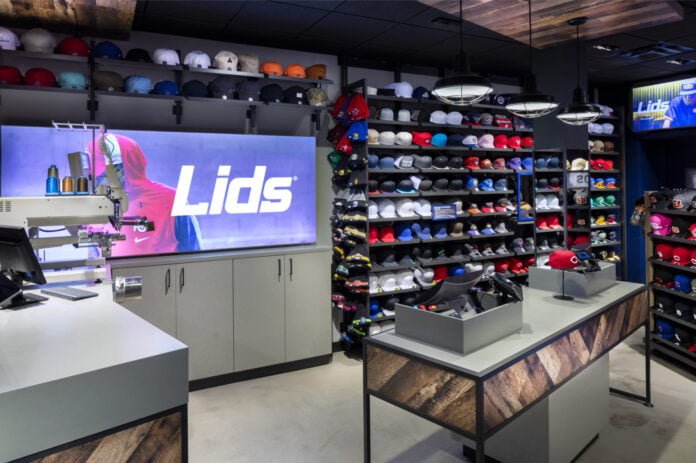
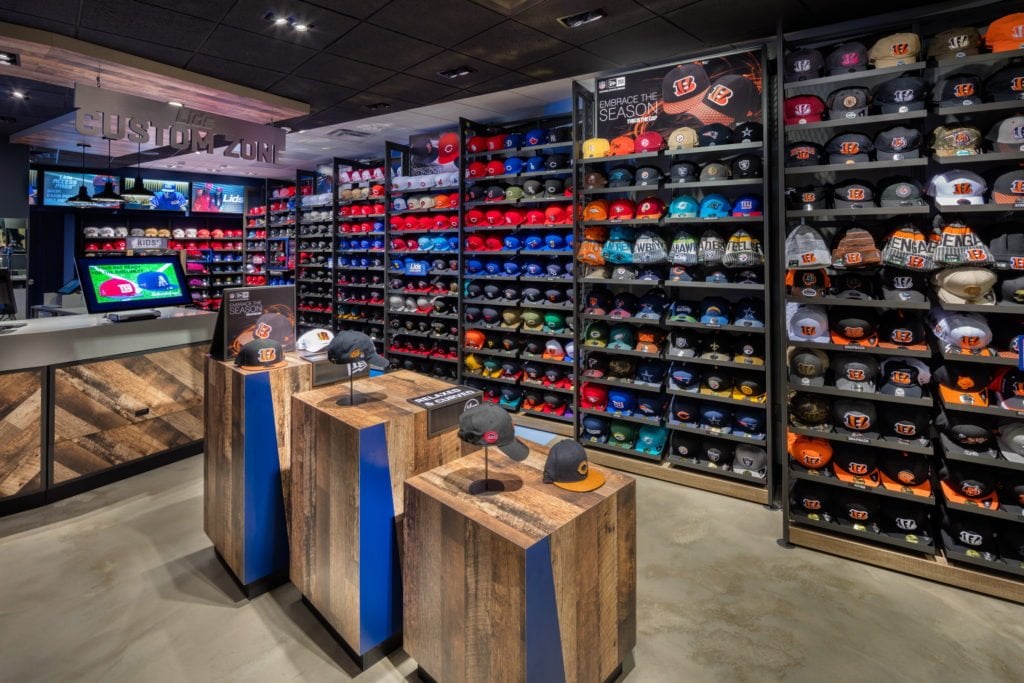
Interior of Lids store. Photo: Lids
Interior of Lids store. Photo: Lids
He said the company has seen strong sales even during the pandemic.
“We might be the only retailer in the country or in North America that’s been actively expanding. So in the last six months, we’ve added almost 70 stores. We do believe that there’s opportunity to expand. We do believe that coming out of COVID people are going to want to get out into the mall. We believe that the shopping experience in our stores is complementary to the shopping experience online . . . We think people want to get out,” said Berger.
“And we think that also coming out of COVID who isn’t thinking about going back to a baseball game or a hockey game. We think there’s going to be really strong demand for product . . . So we’re very, very bullish on expansion and we’re very bullish on trying to do interesting product for fans.”
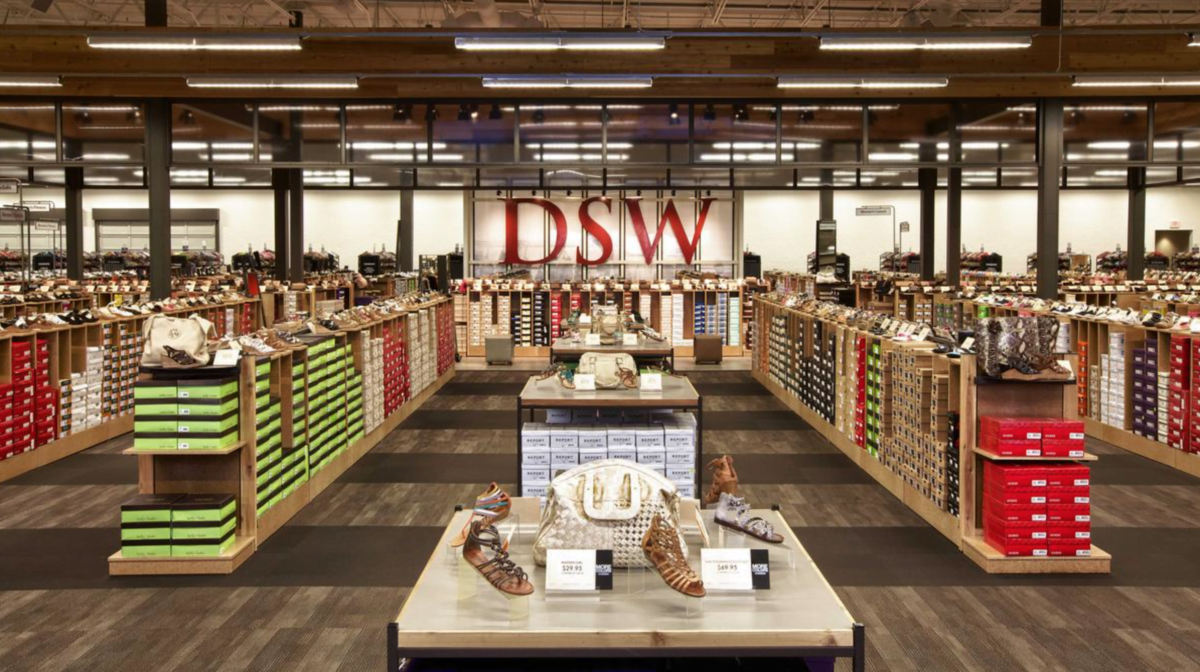
Interior of DSW store. Photo: DSW
The shop-in-shop formats with DSW and The Shoe Company will range from headwear displays to mini shops that include licensed jerseys.
Product will primarily include licensed headwear and jerseys, with an emphasis on gear representing top Canadian sports teams.
“We are thrilled to partner with Lids on the roll-out of store-in-store boutiques offering licensed sports merchandise to local fan communities across the country,” said Mary Turner, President of Designer Brands Operations in Canada. “We believe that Lids’ merchandise provides great synergies with our growing athletics assortments while allowing us to tap into a younger customer demographic.”
The first in-store shop-in-shop concept between Lids and Designer Brands will launch on May 15 along with the online assortment. Berger said the Lids store-within-a store will be about 1,000 to 1,500 square feet.
Berger said this is a first step for the company and he’s hoping to launch more shop-in-shop locations.
“We think it’s going to be successful. We believe DSW thinks it’s going to be successful and if that’s the case we would expect to grow in Canada and also the United States,” he said.
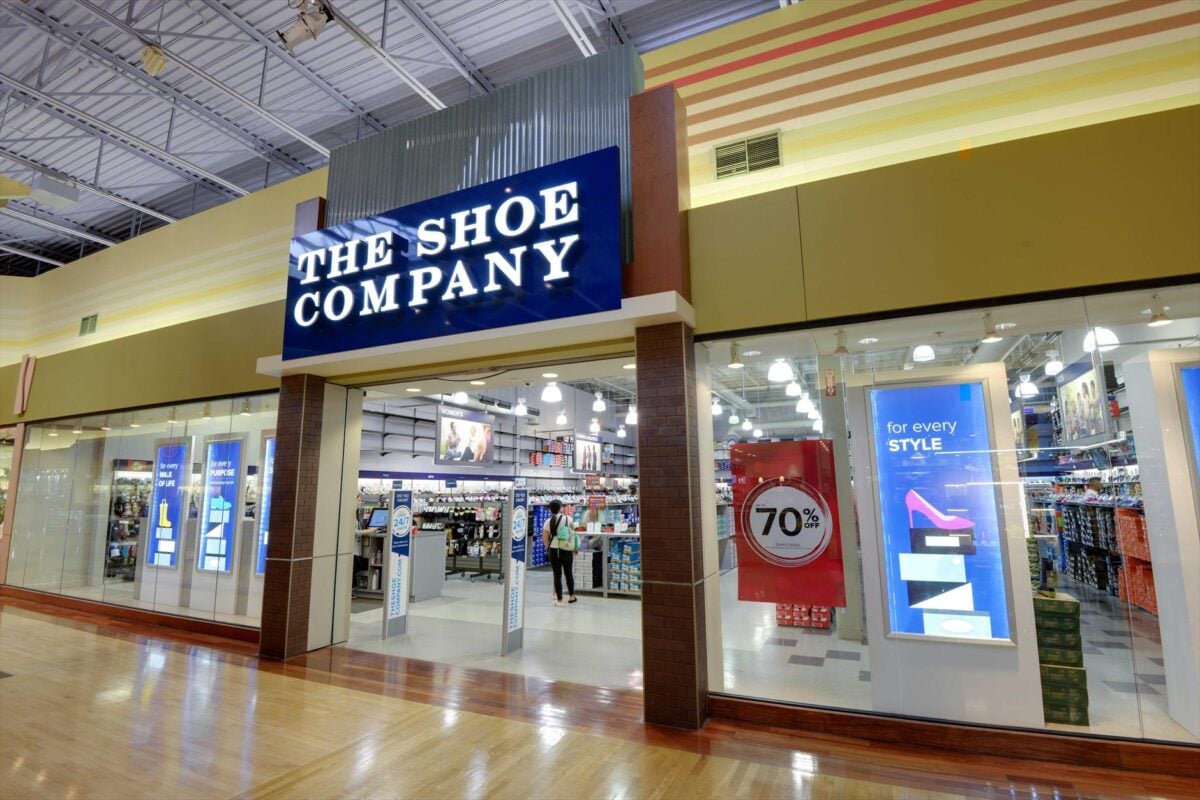
Exterior of The Shoe Company. Photo: Ivanhoe Cambridge
“Our hope is to expand with a lot of other big retailers. We love the store within a store model. We think it works great for us. We think that the customer finds it really interesting. We think they’re pleasantly surprised walking into a Macy’s and seeing the whole set up and we think they’ll be pleasantly surprised walking through DSW seeing the set up there now.”
Berger said the female customer share for Lids has grown substantially over the years and will continue to grow.
“The female buying for herself has grown but a very big driver for us is that females are buying for their kids and they’re buying for their spouses,” he said.
Mary Turner
“We think that customers are obviously going to lots of different stores. They’re shopping in different ways and we believe that there are lots of ways to reach those customers. And we think it’s a very, very broad customer base. “
Lids Sports Group operates stores under the Lids, Locker Room by Lids, Fanzz, Yankees Clubhouse Shops, Dodgers Clubhouse, Cardinals Clubhouse, and numerous other nameplates.
Designer Brands is one of North America’s largest designers, producers, and retailers of footwear and accessories. The company operates a portfolio of retail concepts in nearly 700 locations under the DSW Designer Shoe Warehouse, The Shoe Company, and Shoe Warehouse banners.
Hudson’s Bay Partners to Launch Beauty Recycling Program
Hudson’s Bay this week announced a partnership called Pact Collective, which is described as being the first not-for-profit recycling program dedicated exclusively to the beauty industry. Founding members include Hudson’s Bay, Credo Beauty, MOB Beauty, and Element Packaging.
On Earth Day on April 22, Pact launched across North America with recycling bins available in 20 Hudson’s Bay stores in Canada and all 10 Credo stores in the United States. Hudson’s Bay says that it plans to roll it out to all 87 of its Canadian stores through 2021. The materials collected in the take-back bins will be sent to a recycling partner where they are sorted, cleaned, and then recycled, upcycled, or reused.
Julie Yan, Director of Sustainability for Hudson’s Bay, says “By bringing together beauty industry stakeholders through the Collective, Pact is enabling change from within. As a purpose-driven retailer, it was a clear opportunity for Hudson’s Bay to help drive that change, reduce our own impact on the planet, promote education and provide sustainable solutions for our customers”.
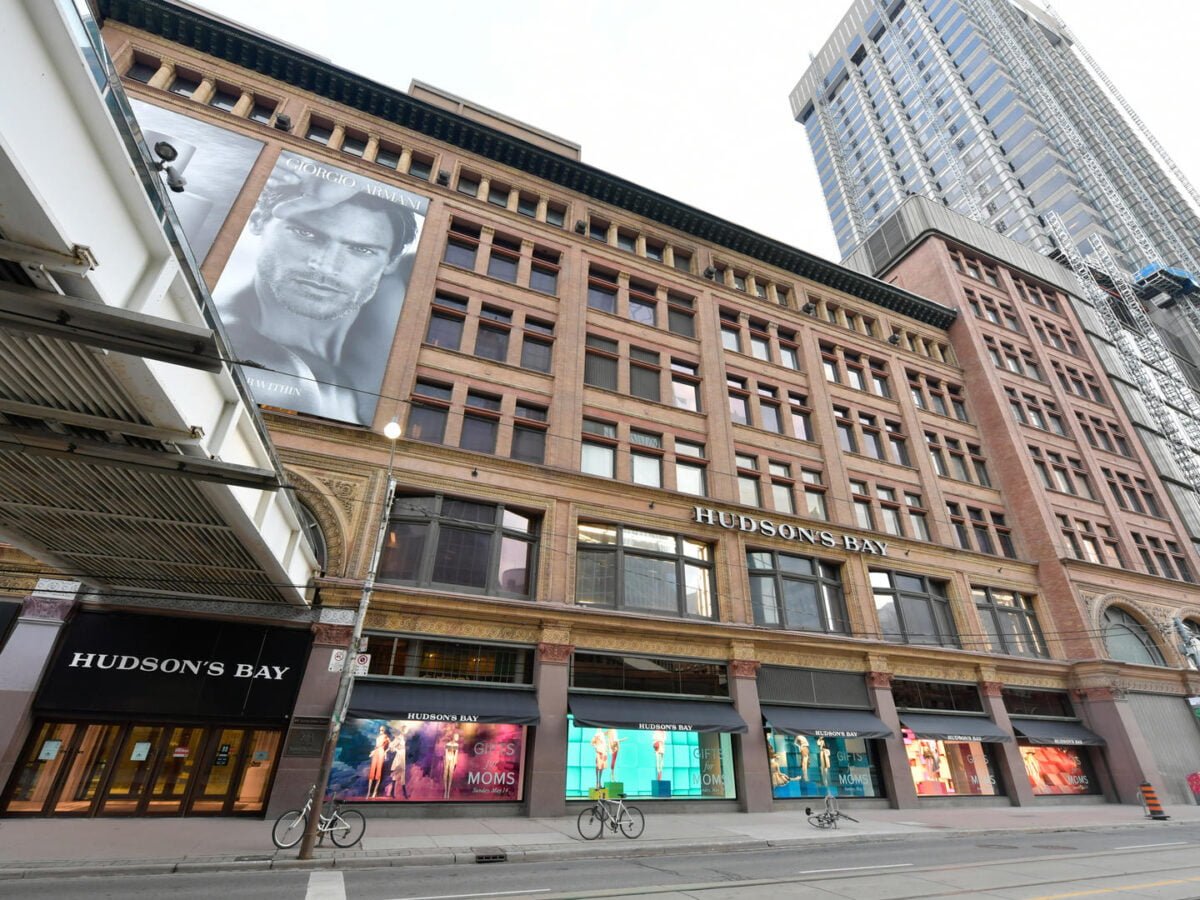
Exterior of Hudson’s Bay store on Queen Street, Toronto. Photo: Hudson’s Bay
The Beauty Industry is said to generate an estimated 120 billion cosmetic packages annually, and most are made with virgin plastic and a small percentage are successfully recycled. Pact’s mission is to provide a sustainable solution for hard-to-recycle beauty packaging including plastic packages smaller than a yogurt cup, squeezable tubes, fragrance bottles, pumps, caps, and other common formats that are unlikely to be recycled in curbside programs.
Tim Hortons Innovation Cafe Shuts Down in Toronto’s Empty Downtown Financial District
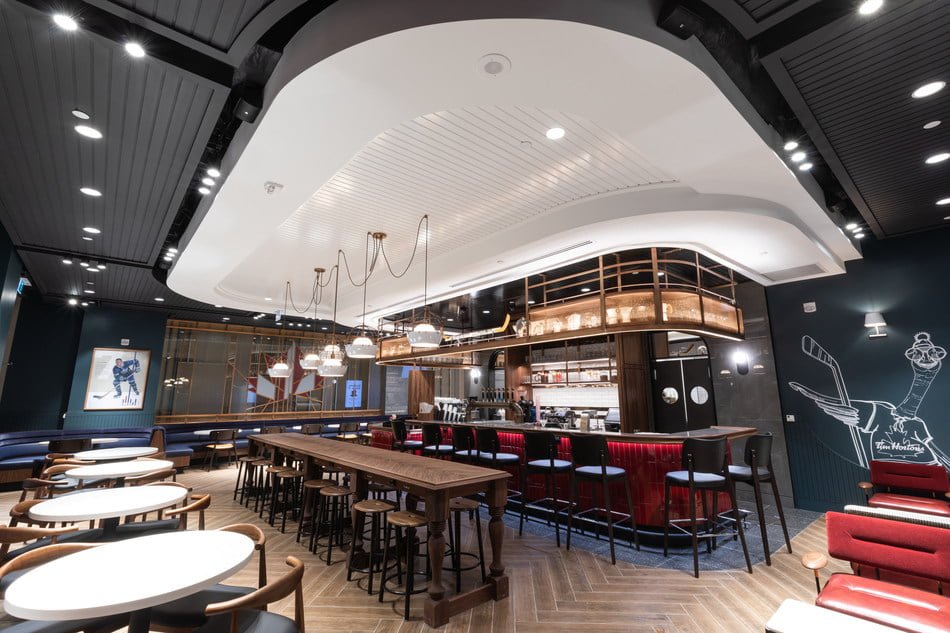
Interior of the Tim Hortons Innovation Cafe. Photo: CNW Group/Tim Hortons
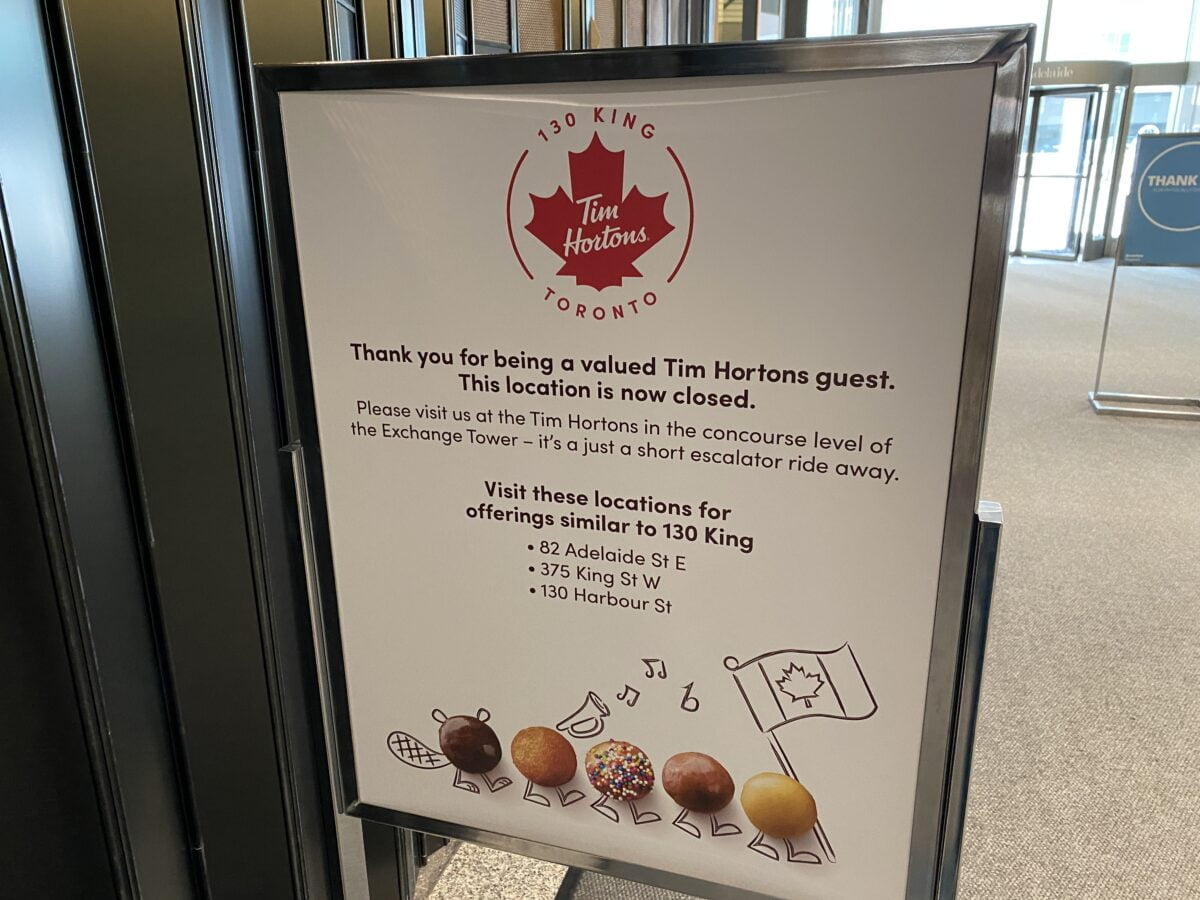
Tim Hortons’ attempt at becoming a boutique coffee shop has fallen flat after less than two years in operation. The Tim Hortons Innovation Cafe on King Street West has closed, largely due to COVID-19 and the mass exodus of office workers from the city’s downtown core.
“The reality of COVID-19 has meant that the downtown core has been largely vacant for 13 months and will likely continue to be for the foreseeable future,” reads a statement from Tim Hortons.
Sign on Tim Hortons Innovation Cafe announcing its closure. Photo: Dustin Fuhs
The location was the first of its kind for the Canadian staple, elevating the usual no frills Tim Hortons experience with ‘Dream Donuts’, draft lattes, and matcha.
“Tim Hortons 130 King was one of several innovation restaurants that we developed – where we try new menu innovations and new design concepts as we continue to grow and evolve the Tim Hortons brand.”
Retail Insider reported on the opening of the Innovation Cafe in the summer of 2019 and initially the location was greeted with long lineups and general excitement.
It’s tough to say whether or not this concept would have prevailed long term with the Canadian public if it had not been for COVID-19. At the time many thought Timmies should probably just stick to what they know. In a statement, however, the company promised further innovation and exiting things to come.
“We closed Tim Hortons 130 King last week and will continue to trial new ideas and concepts in our innovation restaurants.”
Porsche Centre Markham Opens at CF Markville Mall
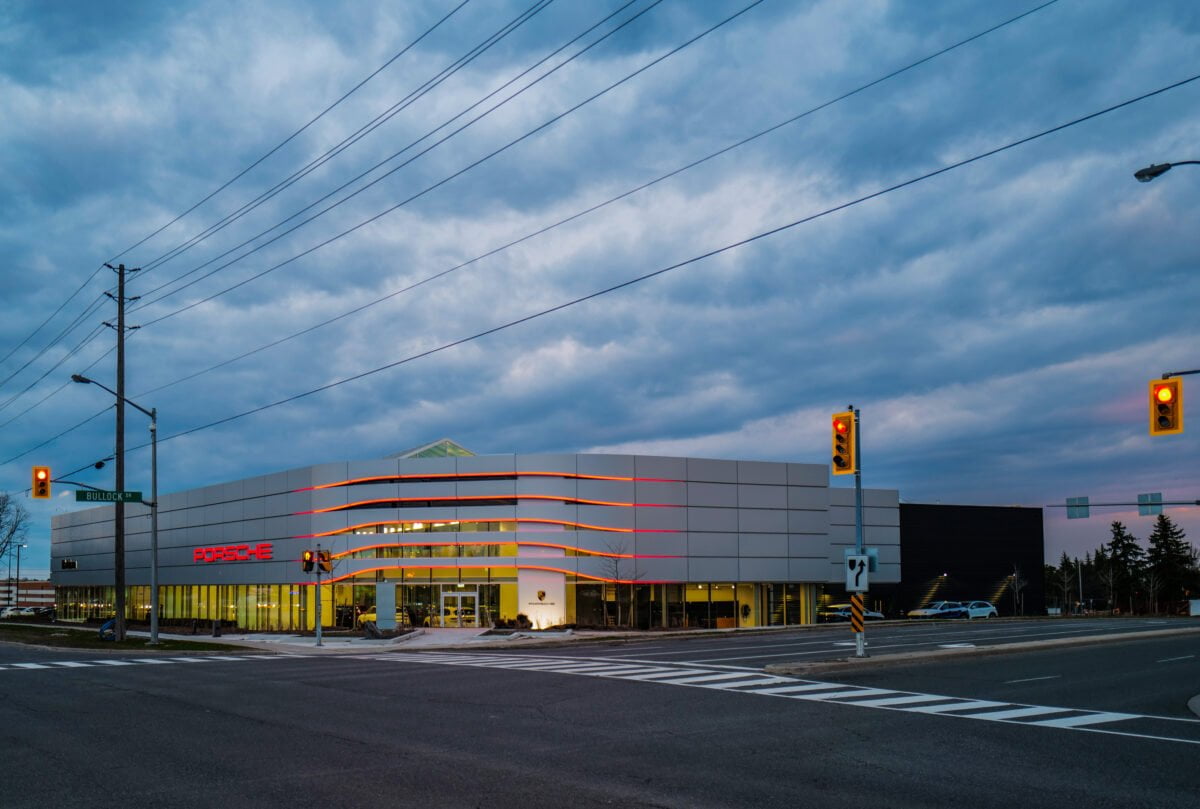
Exterior of the Porsche Centre Markham at CF Markville. Photo: CF Markville
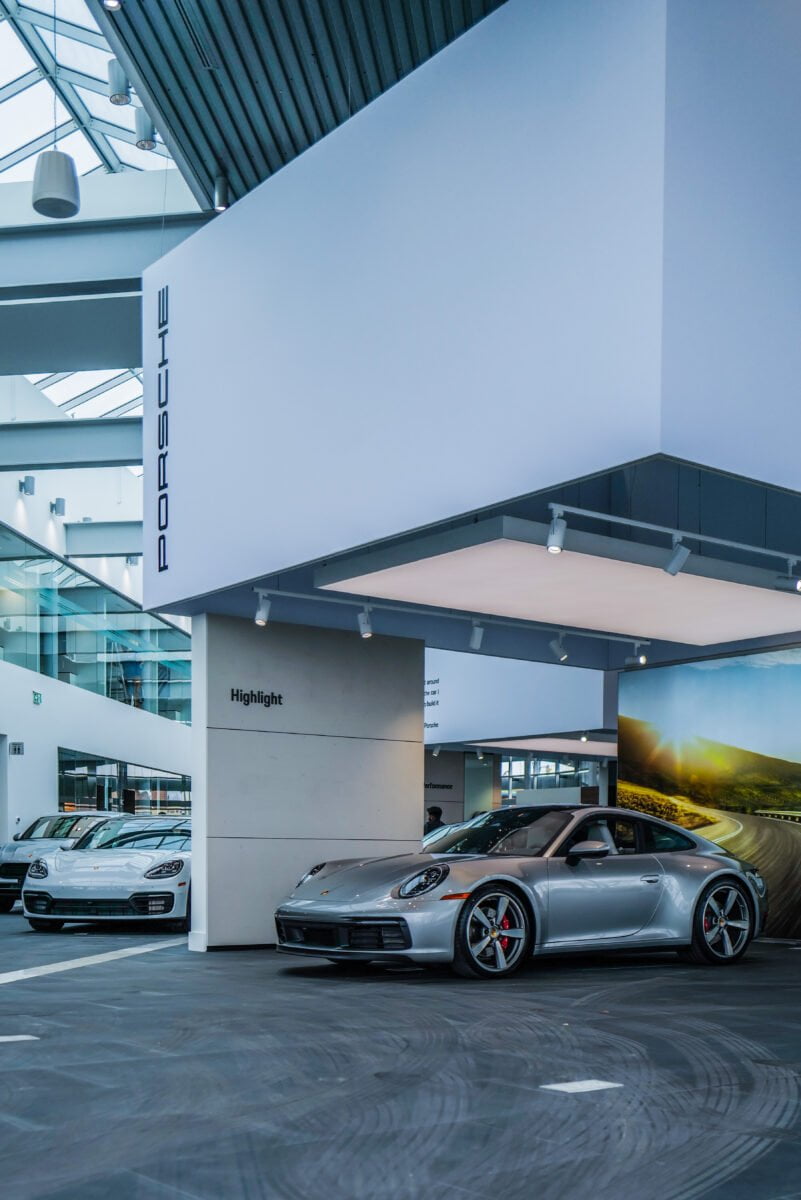
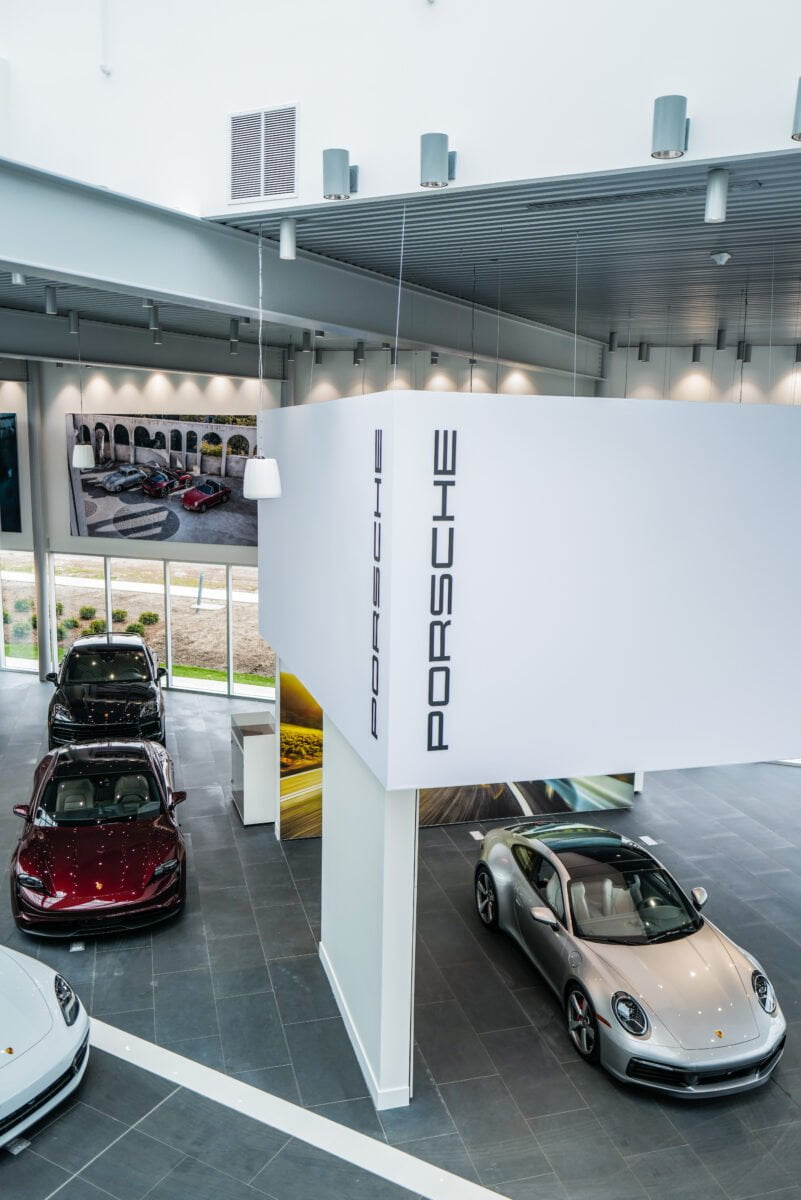
CF Markville Mall has officially welcomed Canada’s newest Porsche dealership. Located at 8590 McCowan Road at the northwest corner of the CF Markville site, the Porsche Centre Markham is the first car dealership in Canada that is fully-integrated with a regional shopping centre. A full-service dealership with new and pre-owned vehicle sales, parts, and service, the centre is also the latest addition to the portfolio of Toronto-based premium automotive group Pfaff Automotive Partners.
The 53,000-square-foot dealership is one of the first in the world to feature Porsche’s new global retail architecture, ‘Destination Porsche’, and it is connected directly to CF Markville’s underground and above-ground parking structures, and features pedestrian access.
Additionally, the dealership has integrated a full parts and service operation, as well as a Porsche Driver’s Selection boutique. Customers needing service have the flexibility of 24/7 pick-up and drop-off with a contactless kiosk, and the dealership has the capacity to accommodate service appointments on short notice.
Interior of the Porsche Centre Markham. Photo: CF Markville
Interior of the Porsche Centre Markham. Photo: CF Markville
Interior of the Porsche Centre Markham. Photo: CF Markville
Porsche Centre Markham is also fully-equipped to accommodate the brand’s electric models, with dedicated electric vehicle charging stations on-site, as well as an electric vehicle battery repair room, future-proofed for servicing the new Porsche Taycan and future electric Porsche models.
The addition of the Porsche Centre Markham to CF Markville is just the latest in a growing list of shopping centres adding auto retail showrooms to their mix. The latest example is West Edmonton Mall’s 317,000-square-foot Mayfield Toyota dealership which opened last year.
During the Ontario-wide stay-at-home order, Porsche Centre Markham’s sales and service departments are operating on an appointment-only basis, with Porsche parts and boutique items available for curbside pickup. Appointments can be booked online at porschecentremarkham.com.
BonLook Acquires Virtual Optical Measurement Tool
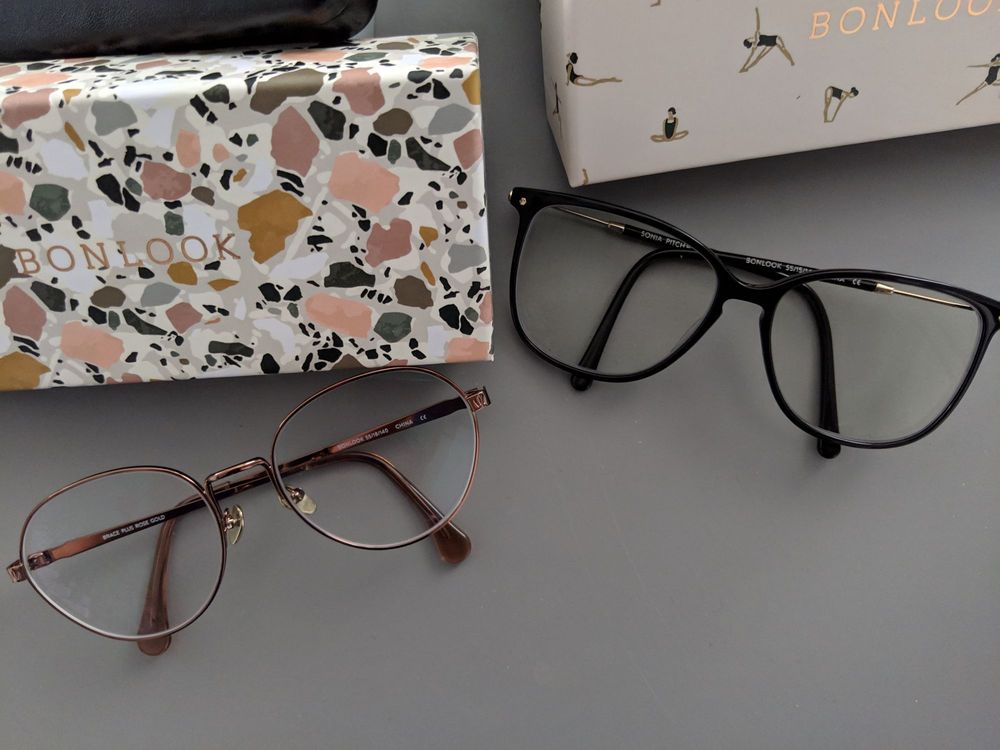
Montreal-based eyewear company, BonLook, has announced its acquisition of EyeMeasure — a technological application that obtains various measurements necessary for prescription eyewear purchases.
EyeMeasure is a simple application that allows the user to measure pupillary distance (the distance between the centre of each pupil) and bifocal segment height. This technology allows for instant measuring with increased precision when compared to other technologies currently used in the e-commerce sector. The application also includes virtual try-on and frame digitization features that can greatly contribute to a smoother customer experience, replicating to in-person service.
EyeMeasure in action. Photo: BonLook
“Innovation is one of BonLook’s core values, and this new acquisition allows us to move closer to our objective of improving eye care service and prescription eyewear purchase accessibility in-store and online. For several months now, BonLook has been working to identify solutions that can address changes in the industry, while developing new technological tools that we will not only be able to use but also share with other players in the industry. We are currently reinventing systems that will allow eye care professionals to gain access to greater potential for expansion in terms of e-commerce and to reach more customers in an innovative and efficient manner,” expressed Louis-Félix Boulanger, BonLook’s Chief Operating Officer and cofounder.
BonLook has pursued an aggressive expansion plan over the last five years or so. Between growing its brick-and-mortar presence and widening its range of services, this newest acquisition is part of BonLook’s strategic growth plan within an increasingly competitive market. In addition to pursuing its sales operations in-stores and online, the company aims to act as a vector of technological innovation in the field of optics.
The company will enable other businesses equipped with a transactional site to implement the application to take measurements and to access its software development kit (SDK). This will allow partners to develop their own mobile applications and to benefit from the measurement and virtual try-on features. From now on, the EyeMeasure application will be included among BonLook’s services while remaining available to the general public without charge on the Apple App Store.
Altitude Sports Launches Next-Day Delivery in Western Canada
Altitude Sports warehouse. Photo: Altitude Sports
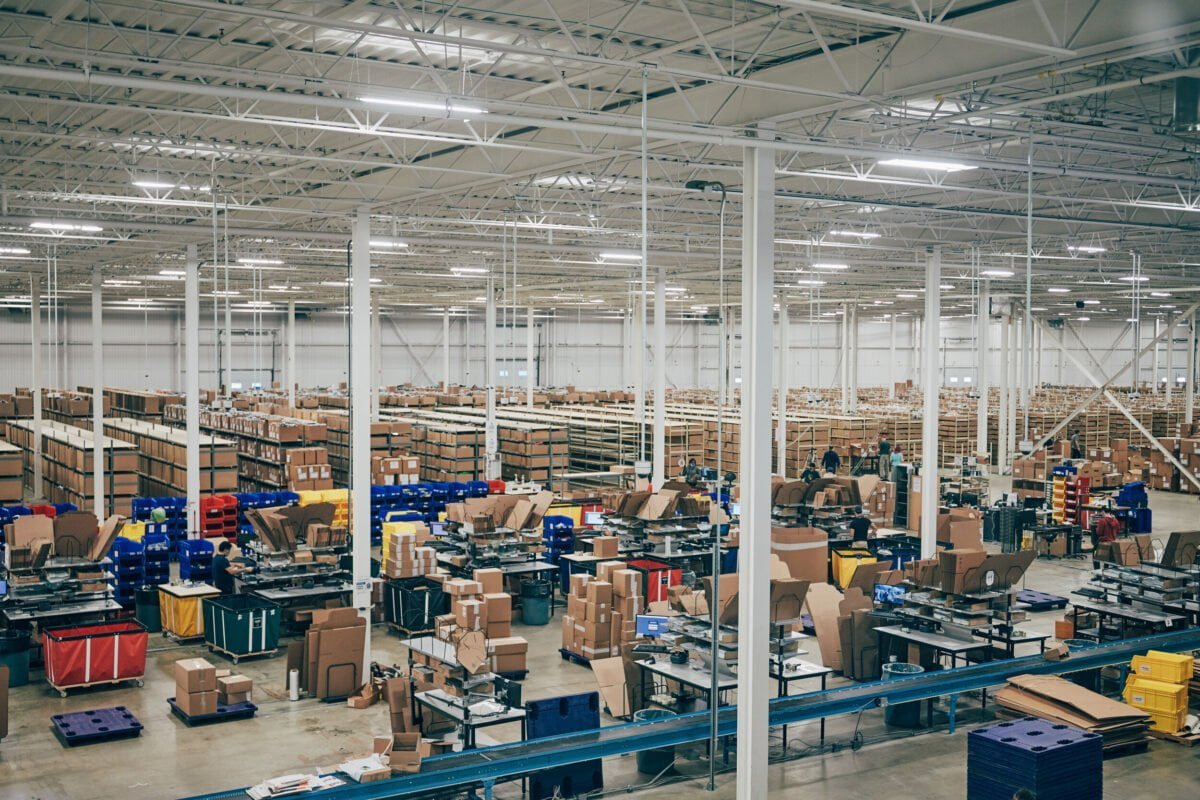
Montreal-based Altitude Sports has announced the introduction of next-day delivery to Vancouver, Victoria, Calgary, Edmonton, Winnipeg, and Regina, all from its Montreal distribution centre starting on April 26, 2021.
After its most successful year to date, Altitude Sports, Canada’s only exclusively online outdoor retailer, is building on last year’s launch of same day/next day delivery to Montreal and Toronto.
When compared to the same time period in 2019, last year between September and December the brand saw a 62 percent increase in new customers across Canada, a 99 percent increase in new customers in Montreal, and a 39 percent increase in new customers in Toronto. Additionally, from July 2020 to February 2021 over 25,000 customers used same day/next day in Montreal to deliver over 35,000 packages.
Altitude Sports
“We constantly look to push the boundaries for what’s possible as an ecommerce business,” says Maxime Dubois, CO-CEO. “Same Day/Next Day Delivery was an initiative that was clearly worth it.”
Now available in Western Canada’s biggest cities, orders placed by 2 pm EST will arrive by 8 pm local time the following day . Prices for next ay delivery will range from $7.99 to $12.99, depending on the shipping location. Orders placed after 2 pm EST will be eligible for two-day express delivery.
Altitude Sports continues to increase its product offering, partnering with new and exciting brands from Canada and around the world, with a focus on high-quality products, especially those that have the lowest impact on the environment. This season’s new brands include: Tentree (Canadian sustainable activewear brand), Praise (Montreal run and après run apparel) and Fox (gear and apparel for mountain biking).
“Our customers come back to us time and again because we evolve with the industry and we listen to them to ensure we are bringing in the best assortment of outdoor gear and apparel,” adds Dubois. “Our goal is to become Canada’s one-stop destination for outdoor living.”
This announcement comes days after Retail Insider reported that Gap-owned Athleta is entering Canada with stores, further intensifying the competitive athleisure and outdoor apparel market in Canada.
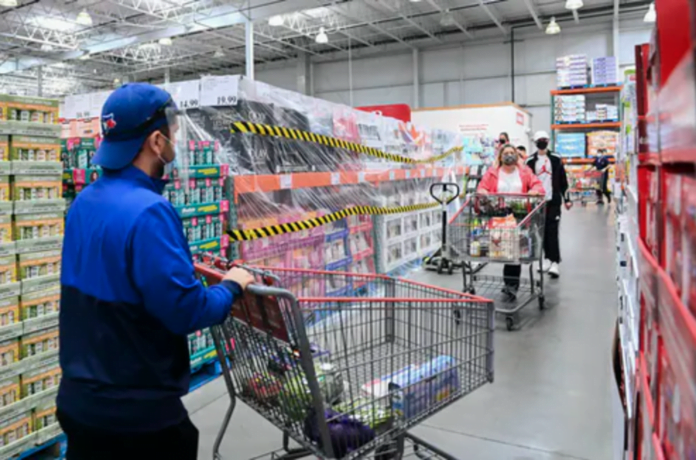
People in masks shop for essential items at Costco in Mississauga, Ont., on April 18, 2021. Costco insists its in-store customers wear masks even if they claim exemptions. THE CANADIAN PRESS/Nathan Denette
Masking is currently required to access retail stores across Canada amid the COVID-19 pandemic. Presently, every province has regulations in place that require customers to wear masks before entering stores to shop.
The inability to mask for medical reasons raises important questions about the application of well-established principles of human rights law to the retail sector.
In the accommodation process, employees have a right to privacy — they don’t need to disclose their diagnoses or provide more information than is necessary to establish their work-related limitations. How much information is sufficient varies with the circumstances. However, it usually involves documentation from a medical professional that substantiates and explains these limitations.
Both parties have a duty to participate in the process; it’s a shared responsibility. There can be several exchanges before an accommodation is agreed upon, often including requests for further medical information. Accommodation is highly discretionary, and parties are encouraged to be creative when exploring various accommodation measures.
Square Peg in a Round Hole
This process, with its back-and-forth nature, is suited to a situation in which the parties have an ongoing relationship. But in a retail setting, there’s no such relationship, so established principles of accommodation are an awkward fit.
Take, for example, a case at the Ontario Human Rights Tribunal. A claimant took the City of Toronto to task, alleging that he was discriminated against at various local businesses owing to the city’s masking bylaw. The bylaw directs organizations to create a policy mandating mask wearing with exemptions for those with an “underlying medical condition,” further stating that no proof of such condition will be required.
Ultimately, the tribunal dismissed the complaint, saying the city “cannot be faulted” for others’ misapplication of its bylaw. In doing so, the tribunal acknowledged that accommodation is a “shared responsibility.” In a retail setting, according to the tribunal, that means that a customer must “identify to a business” that they have an exemption-qualifying condition, but don’t have to provide proof.
Merely identifying a condition, however, falls short of the exchange that usually accompanies requests for accommodation in settings where parties have an ongoing relationship. A business and a customer can hardly share responsibility for accommodation in the same way an employee and a supervisor do.
Proof, What Proof?
The question about how much information a customer should supply to retailers was also relevant to a recent case in British Columbia. A person was denied entry to a store for refusing to wear a mask, even after identifying a medical condition to the security guard. Since the claimant declined to provide details to the B.C. Human Rights Tribunal about their alleged disability, the claim was dismissed.
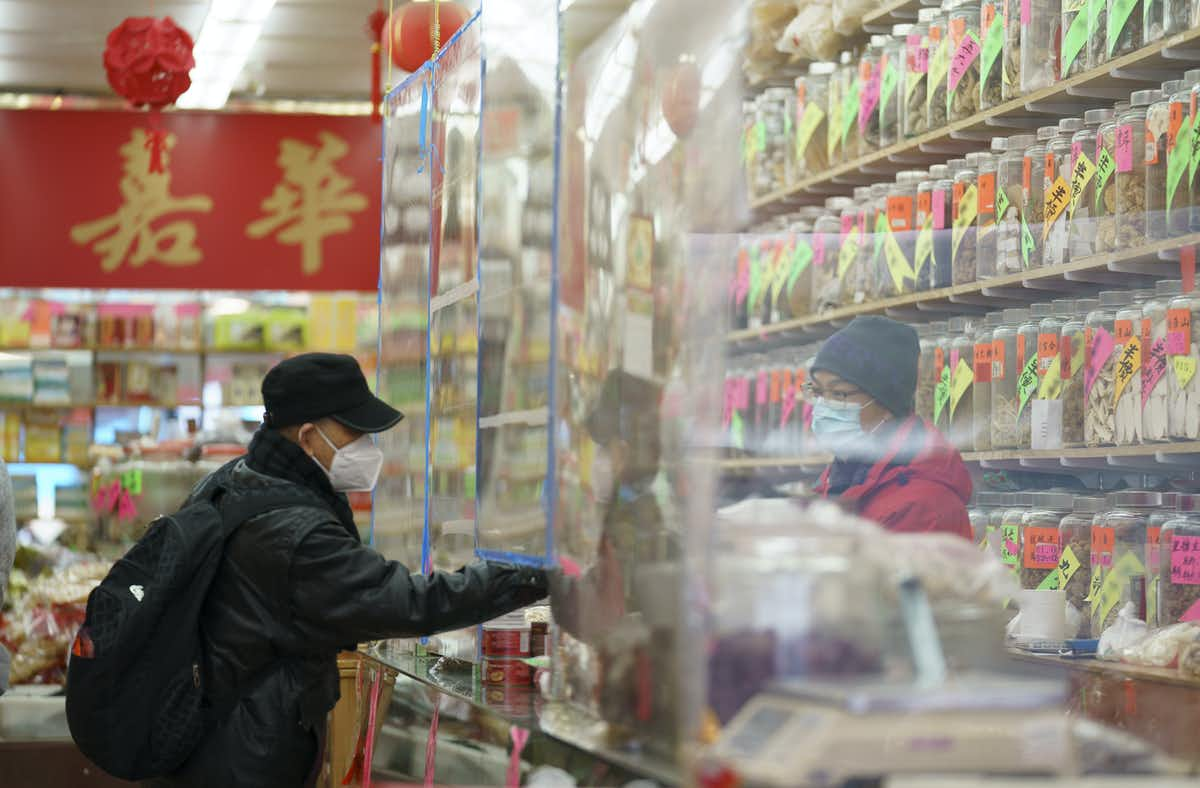
People shop in Chinatown in Vancouver in February 2021. THE CANADIAN PRESS/Jonathan Hayward
The B.C. tribunal, unusually, made public its decision to make clear that claims require evidence of a disability because, as it rightly stated, the Human Rights Code “does not protect people who refuse to wear a mask as a matter of personal preference.”
However, this doesn’t answer the most pertinent question: What information is a customer required to supply to an organization before the fact, rather than to a human rights tribunal after the fact.
The B.C. tribunal is awaiting a more suitable complaint to determine how much medical information customers must give retailers to be exempt. But are exemptions the only answer?
Exemptions Ripe for Abuse
The need to substantiate mask-exemption claims in the retail sector is genuine, more so as the pandemic worsens. Masking has been politicized, and merely claiming an exemption can be ripe for abuse. Possibly in response to this reality, Costco altered its masking policy in November by removing medically based exemptions. Other retailers followed suit. Removing exemptions has proven controversial, and it’s unclear whether it’s lawful.
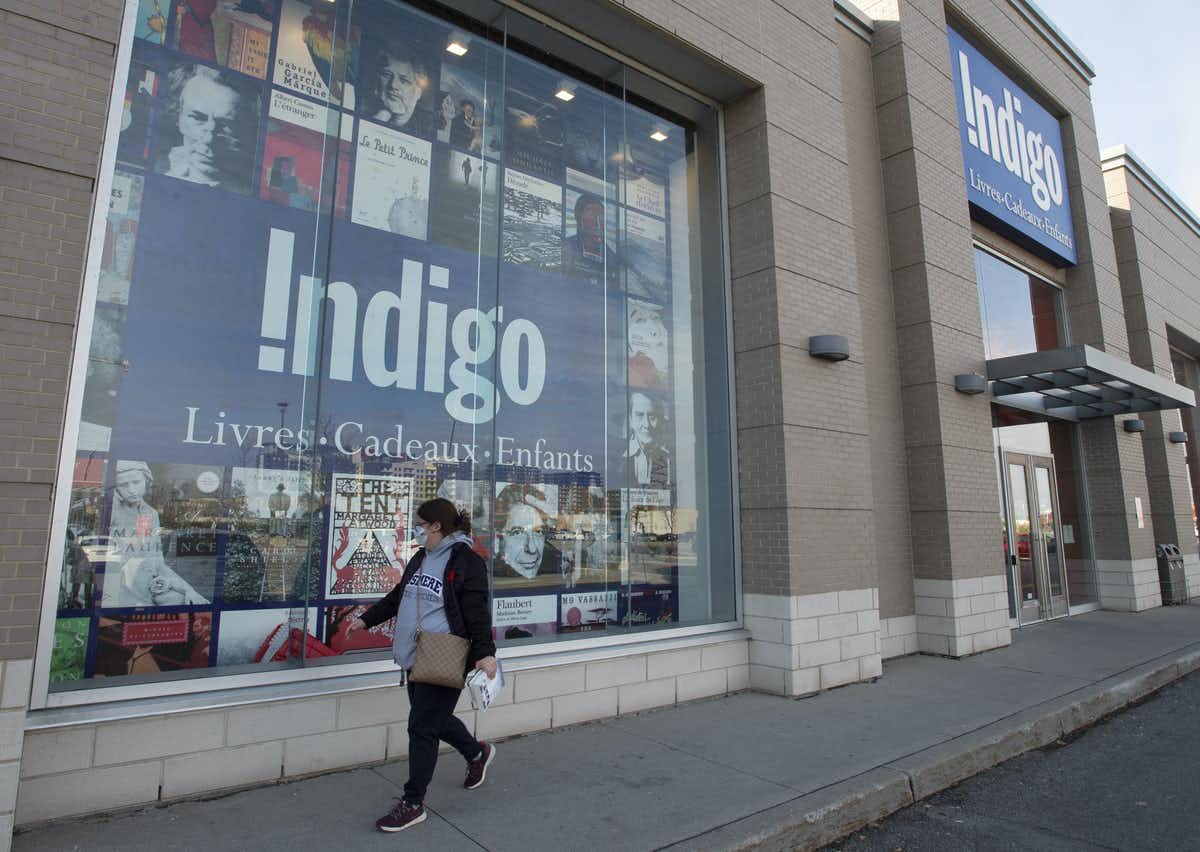
Both Costcoand Indigo identify alternatives to in-store shopping for those unable to mask. These include shopping online and curbside pickup.
An Indigo bookstore is seen in November 2020 in Laval, Que. THE CANADIAN PRESS/Ryan Remiorz
This appears consistent with advice from some human rights commissions. The Ontario Human Rights Commission, for example, in its non-binding policy role, suggests “offering curbside pickup” as a possible accommodation measure since this “would generally allow a person to receive a retail service.” The Saskatchewan Human Rights Commission has offered a similar view.
Alternative accommodation measures short of exemptions aren’t ideal for some. However, another principle of accommodation is that people have a right to an adequate accommodation — but not necessarily their preferred accommodation.
Accommodation or Exemption?
Current alternatives to in-store shopping are arguably consistent with human rights accommodation principles. Even prior to the masking regulations, some businesses had already insisted their customers wear masks when they enter their stores, in response to the pandemic.
They could do so, as long as they were abiding by those accommodation principles. And given the potential for abusing masking exemptions, the in-store shopping alternatives may also better coincide with legal duties under health and safety legislation across the country.
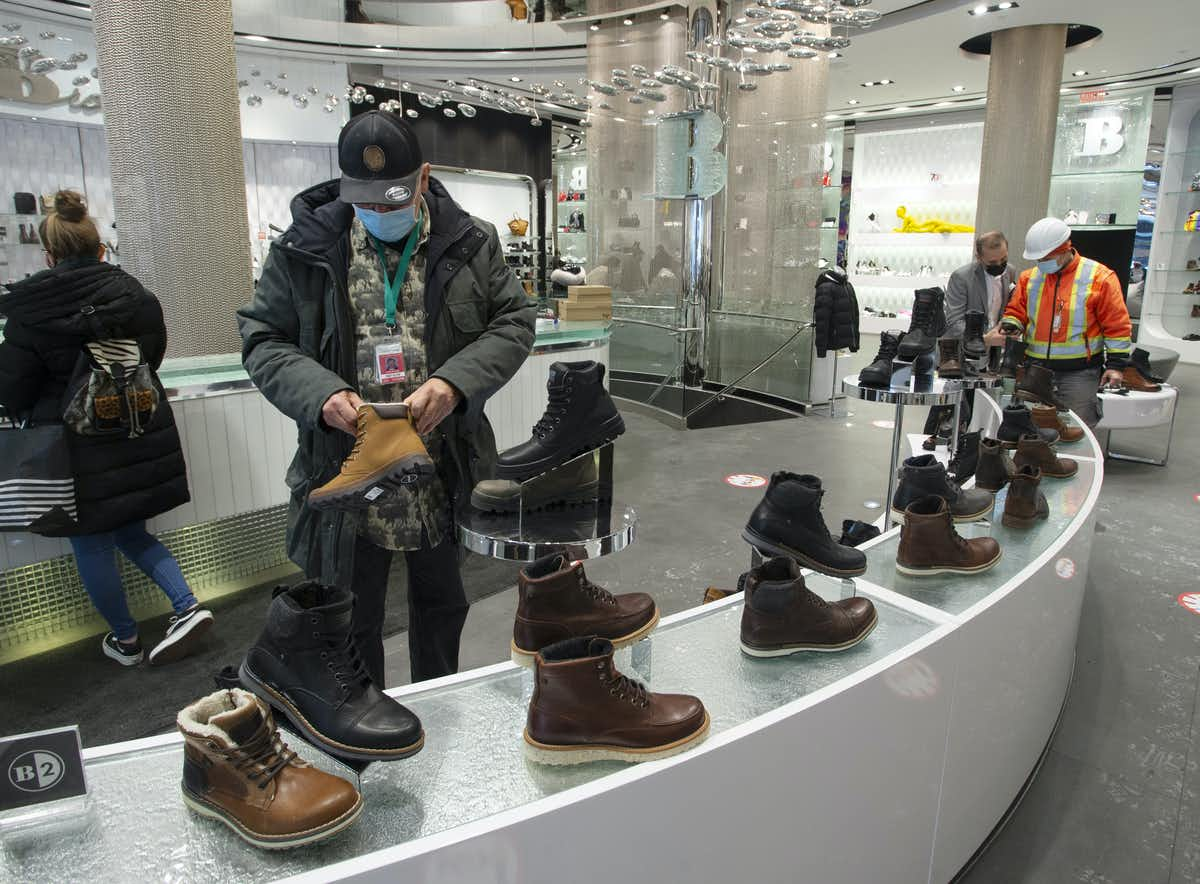
Customers shop for shoes at a Browns Shoes store during an easing of COVID-19 restrictions that allowed non-essential stores to reopen in Québec in February. THE CANADIAN PRESS/Ryan Remiorz
Alison Braley-Rattai, Assistant Professor, Labour studies, Brock University.
As vaccination efforts roll out across the country, the end of the COVID-19 pandemic may finally be in view. Issues of mask-wearing exemptions and accommodations by retailers may soon be moot and the situation could remain unresolved — until the next public health crisis.
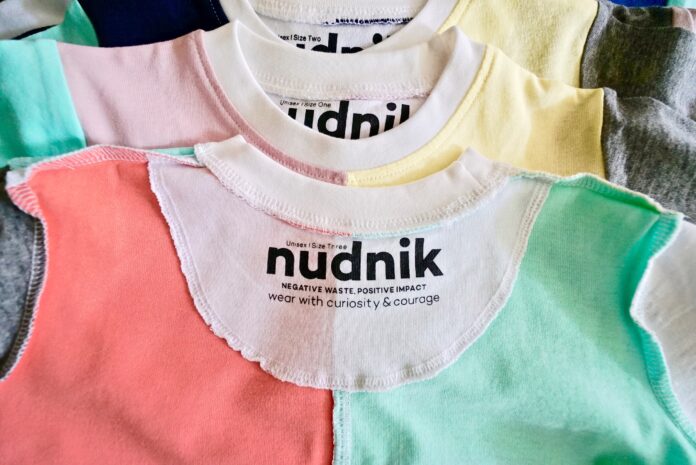
Close up of nudnik's classic t-shirts. Photo: nudnik
Impacts of the COVID-19 global pandemic have provided people the world over with a number of learnings, imparting lessons in humility, dignity, discretion, and restraint as we continue to collectively work through this challenging time. Similarly, retailers and businesses everywhere have also received a sort of unorthodox education during this period, helping to affirm for many just how resilient their operations are and how innovative their organizations can be when faced with this kind of adversity. And, these teachings arrived swiftly. Subsequent to government-imposed lockdowns and societal restrictions, the industry was charged with reinventing itself, pivoting, and shifting in order to address the significant acceleration of trends, the most noticeable of which reflected in the sharp increase in online activity and simultaneous digitization of the retail ecosystem. However, as more data is gleaned from events of the past twelve months, the more granular our understanding becomes with respect to changes in behaviour and sentiment as well as the further shifts that might be required by some. For fashion retailers, the recent rise in eco-consciousness and awareness among consumers will be of significant note, and could potentially signify the sustainable apparel tipping point and decline of fast fashion in the country.
Going Green
According to a recent report published by Boston Consulting Group titled COVID-19: The Pandemic Is Heightening Environmental Awareness, the attitudes toward and appreciation of the impact that we as humans have on the world around us have become more acute, sparking a change or escalation in our green behaviour. For instance, 70 percent of survey respondents stated that they are more aware now than they were previous to COVID-19 of the ways in which current human activity threatens the environment and how, in turn, that degradation threatens humans. One-third of respondents say that they currently practice green behaviours consistently, with 25 percent admitting to have increased those behaviours since the onset of the pandemic, and a further 40 percent who say that they intend to integrate more sustainable behaviours in the future. What’s more, the survey also found that 87 percent of its participants believe that companies should be doing more to help protect the environment.
They are findings that are, in fact, consistent across multiple reports and surveys concerning the topic. McKinsey & Company released its Survey: Consumer sentiment on sustainability in fashion, in which respondents cited ‘a reduction of negative environmental impacts’ as one of their top recommended actions (38 percent) for fashion brands to adopt going forward. And, the first ever Canadian edition of the EY Future Consumer Index indicates that the vast majority of Canadian consumers (70 percent) experienced a shift in product preferences as a result of the pandemic, with 47 percent stating that the social and environmental impact of products has become a prominent driver of their current behaviour. It’s data that reflects a seemingly significant uptick in environmental awareness among consumers — a growing trend that’s recognized by Anwar White, Faculty Lecturer, Bensadoun School of Retail Management and Program Director for the Master of Management in Retailing at McGill University.
Anwar White
“Today’s consumer has access to a world of information,” he says. “And they’re becoming more conscientious and considerate when it comes to the choices they make. As a result, they’re increasingly more curious about the origins of the garments they purchase, how they were sourced and how they were made. They want to better understand the impact that apparel products have on the environment and the gravity of the choices that they make as consumers. This is primarily evident in the attitudes of today’s younger generations who consider social and environmental practices as a top consideration with respect to their perception of and engagement with brands. Many fashion brands have dipped their toes in the water when it comes to sustainability and the fashion circular design. And some are realizing that without this being a focus, they’ll potentially lose more and more of their millennial customer-base who’s purchase behaviour is heavily influenced by this core value.”
Destructive Practices
White’s observations, combined with the plethora of available research, underscore the rising tide of eco-consciousness among the general public while calling into question the very real and dramatic nature of the environmental impact that the fashion industry is responsible for. According to a report published prior to the COVID-19 outbreak by the World Bank Group, the fashion industry accounts for 10 percent of all annual global carbon emissions. And it warns that, based on its findings, at current production, maintaining the contemporary means by which garments are typically produced, the industry could conceivably increase its greenhouse gas emissions by more than 50 percent over the course of the next ten years.
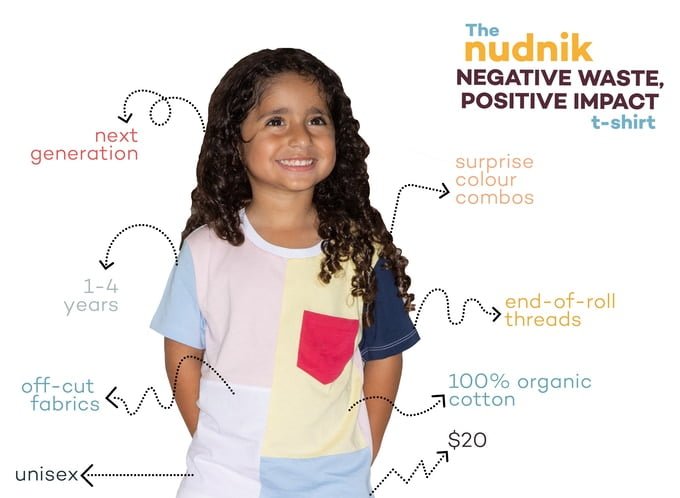
The Nudnik Negative Waste Positive Impact t-shirt. Photo: Nudnik
If this trajectory is preserved, the repercussions could be devastating. Emissions, however, represent just one line on the considerably lengthy ledger of negative effects that apparel manufacturing has on our planet ongoing, which also includes the industry’s consumption and pollution of water, releasing of microfibres into our water supplies, use of chemicals that are both harmful to the environment as well as the consumer, degradation of soil, destruction of rainforest, and creation of waste, among other things. The list begins to illustrate the amount of work required by players in order to clean up the apparel production process. And, according to White, it’s work that has already been started by some within the industry — pioneers that are beginning to pave a new way forward for manufacturers and retailers of fashion.
“The research and evidence related to the fashion industry’s negative environmental impact can’t really be disputed,” he recognizes. “It can only be improved upon by those operating within the space. And, driven by the attitudes and preferences of younger generations, we’re seeing the development of so many patterns of change with the emergence of things like rental streams and business models around vintage and resale product. These are trends that are really beginning to thrive as many consumers within the country and beyond are starting to turn away from fast fashion as a means to build their wardrobe. And, as societal and cultural sensibilities around these issues continue to evolve and change, the industry is increasingly transforming, moving in a direction toward a real environmental and social tipping point. There are a lot of companies today who are trying to affect change, and many others who are beginning to take notice of these patterns and trends, placing sustainability at the forefront of their operations and embracing it as a core value of their brands.”
Waste Not, Want Not
One such company helping to move the industry forward in the direction of sustainability is nudnik — a producer and online purveyor of contemporary kidswear and one of the country’s leaders in circular fashion. Founded and led by twin sisters, Lindsay and Alex Lorusso, the brand believes that waste is one of the world’s largest resources and is dedicated to producing its stylish items using organic cotton off-cut fabrics that would have otherwise been sent to landfill. It’s a passion that the sisters developed while working with their father who co-owns waste management company, Wasteco, amassing more than 20 years of collective experience and witnessing firsthand the astonishing amounts of textile waste that’s collected every day.
Alex (left) and Lindsay Lorusso
Today, just five years since the inception of the company, which began as more of a thinktank than anything else, nudnik boasts an impressive range of gender-neutral garments for children ages one to six made entirely of pre-consumer textile waste. It’s a way in which the sisters are providing an example for the rest of the industry to follow. And, according to Lindsay Lorusso, they consider the work they’re doing to be imperative in helping to minimize the negative impacts of fashion production on the environment and to contribute positively toward the future health of the planet and those who occupy it.
“The real drivers behind what we’re doing are the generations that will follow us,” she says. “And, with our understanding of the significant impact that fashion manufacturing has on the environment, we set out to shake things up, to disrupt the way clothing is made, packaged, and consumed. The mindset of today’s consumer is shifting with respect to their own consumption of apparel. They increasingly want to know where and how product is sourced and made and are showing a greater appetite to support the brands that they know are doing good. And this of course extends beyond the product itself. We’ve taken more of a holistic approach to sustainability, working with ethical supplier partners who share our vision with respect to waste and sustainability. A truly circular business model requires considerations to be made throughout the entire process, from sourcing to the packaging used, and everything else in between.”
Made to Last
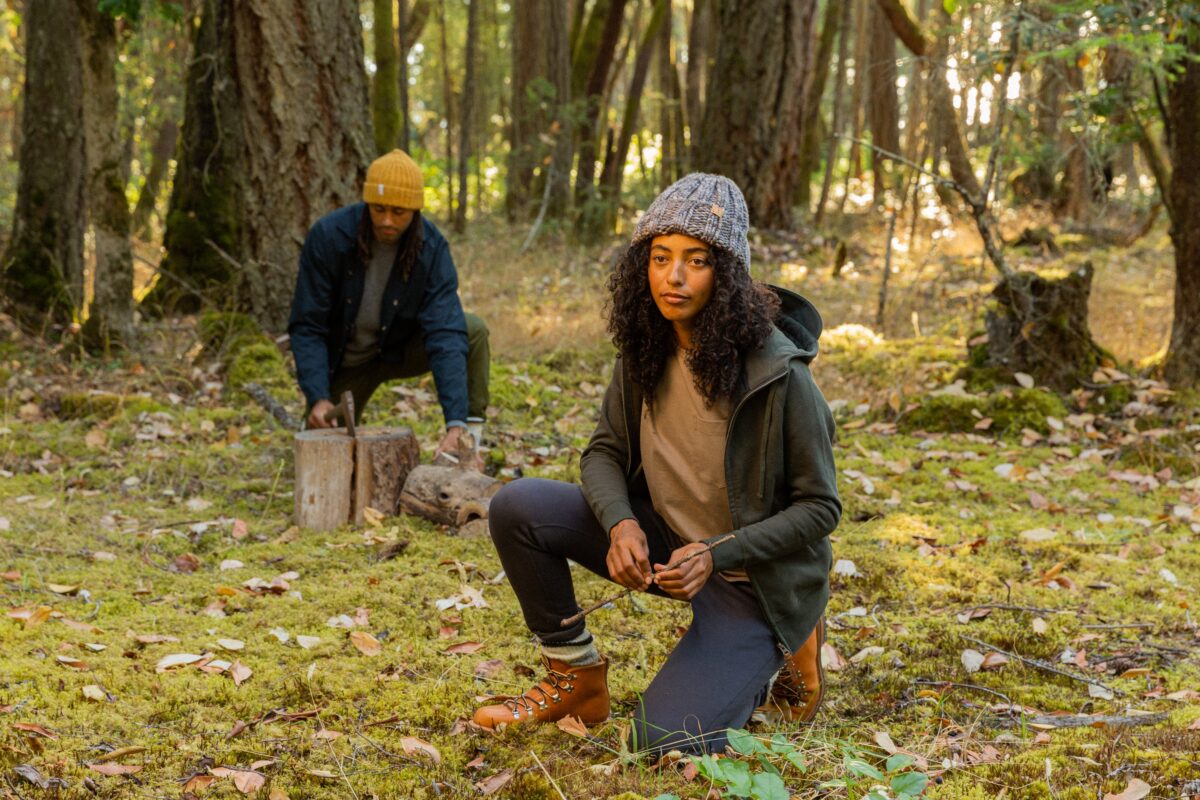
Another company doing its part is British Columbia-based men’s and women’s sustainable apparel provider Ecologyst. Founded more than 20 years ago, with locations in Victoria and Whistler, the brand is a firm believer in what it refers to as the ‘reciprocal power of nature’ and in the environmental benefits of a sustainable approach to apparel manufacturing. Producing all of its apparel in Canada and the United States, Ecologyst is able to support local jobs and economies. And, in place of the traditional use of synthetic materials like polyester, acrylic, and nylon to make their clothing — materials that are made from petroleum and create microplastics — it instead uses all-natural, biodegradable materials like organic cotton and Merino wool to lessen its impact on the environment. In addition, Ecologyst prides itself on the quality and durability of its apparel, guaranteeing all items for life, promoting the value and responsibility inherent in owning fewer, better made pieces. With these things in mind, the brand is on a mission to become the ‘world’s most sustainable apparel company’. It’s a lofty ambition, one that Founder and CEO, Rene Gauthier, says is supported by constant recognition, awareness and innovation.
Rene Gauthier
“We try to approach our business with as much respect for the environment as we can,” he asserts. “We believe that what a company takes needs to be balanced by the amount that it gives back, resulting ideally in a net positive for the environment. For us, it means considering our impact, as well as the impact of all of our stakeholders in our ecosystem, with respect to every single choice that we make. And it also means constantly evolving and discovering new ways to improve our standards and way of doing things. For example, we use organic cotton, which requires a lot of land and water to grow. And because those are two resources that we’re running out of on the planet, we knew that we needed to find alternatives to the way we’re producing our clothing. So, we started doing some work with the University of British Columbia to find a newer, better way to recycle cotton. Our belief is that we already have enough cotton out there. We don’t need to grow any more and instead just need to develop a way to recycle it so it retains its strength and softness. We were recently able to prove something out in a lab and will now be taking it to the next level, scaling it up. It’s the way we need to be thinking — constantly innovating and exploring newer, better ideas — for the survival of our planet and our brand. Consumers aren’t going to put up with the status quo much longer. And, from our point of view, in order to address the issues and satisfy the preferences of today’s consumer, the industry needs to make sustainability its number one focus going forward.”
A Sustainable Trend?
Despite this current moment in history being a time of true disruption and adversity, a period underscored and overwhelmed by uncertainty, something of a happy consequence seems to have resulted in our collective recognition of the things that really matter. The pandemic has brought our health into sharper focus and elevated the action required to preserve the planet we live on to that of a priority. Whether or not this rise of eco-consciousness in today’s consumer is a trend that will be maintained going forward remains a question unanswered. But, as McGill’s Anwar White points out, it’s a sentiment that’s been steadily growing long before the impacts of COVID-19 began to grip the world, and it’s one that he believes will only continue to increase in significance.
“Sustainability and eco-conscious thinking and behaviour has been something of a movement for quite some time now. But, most recently, it’s been resonating with more people at a much deeper level than at any time previous. It’s increasingly becoming a statement for people, a representation of the person who wears sustainably made clothing, providing them with a way to convey who they are and the core values that they live by. And I don’t think that it’s a fad or a trend that’s going to diminish. Driven by today’s youth, sustainable and ethical practices are going to be demanded more and more of the brands that they interact and shop with. The industry’s slowly beginning to recognize this and embracing their responsibility in reducing the negative impact of the fashion industry on the environment.”