Groupe Dynamite is increasingly directing store growth toward the U.S. and international markets while upgrading and selectively reducing parts of its mature Canadian network. The strategy is tied to a broader transformation of Garage, where the customer, merchandise mix and approach to real estate have changed substantially over the past several years.
The geographic split was clear in the Montreal-based retailer’s second-quarter results. Canadian revenue declined 1.9% to $145.1 million with 13 fewer stores, while U.S. revenue increased 52.2% to $271.6 million. Management expects future brick-and-mortar growth to come primarily from the U.S. and, over time, the U.K.
Garage already has nearly six times the store density per capita in Canada that it has in the U.S., according to management. Canada offers less white space for conventional store expansion, while its established network includes locations opened during earlier stages of Garage’s development.
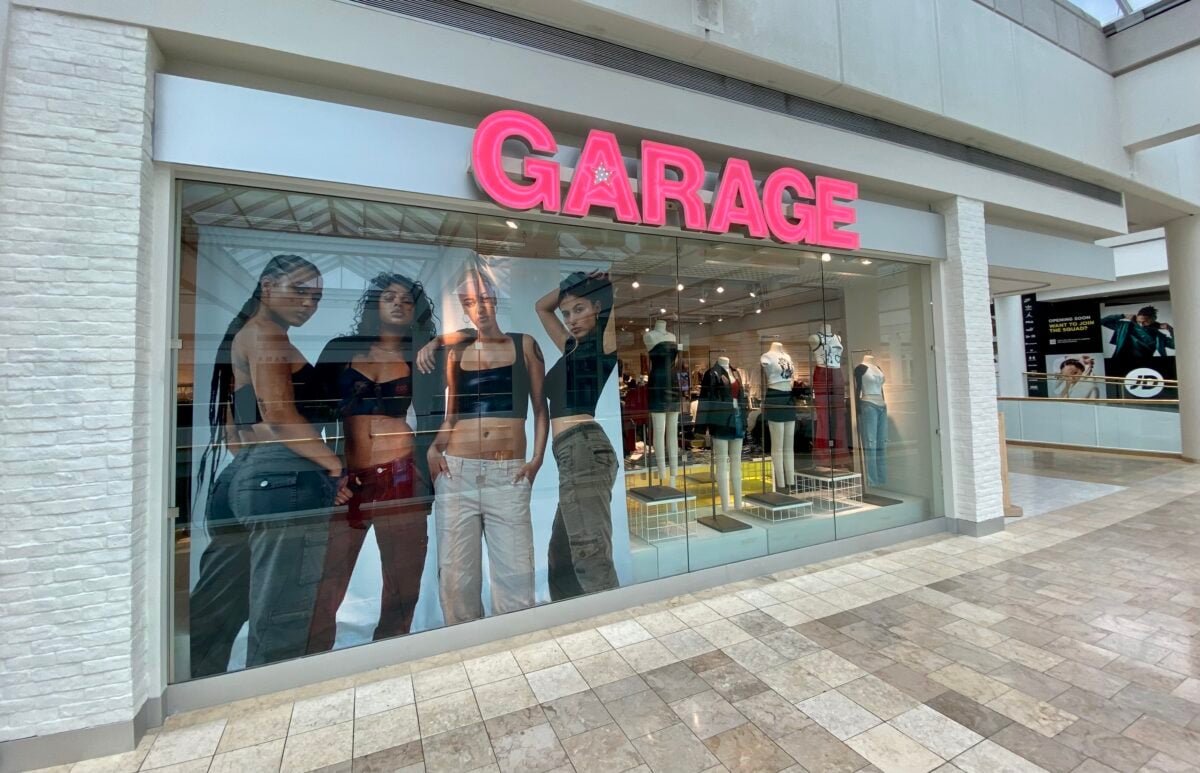
The Garage being expanded internationally is also different from the brand on which much of the Canadian network was built.
Garage Has Changed With Its Customer

CEO Andrew Lutfy told analysts that Garage’s target customer, or “muse,” was approximately 16 years old six years ago, while its actual customer was closer to 14. Today, the brand targets a 24-year-old customer and its actual customer averages approximately 22.5 years old.
The assortment has changed along with that customer. Lutfy estimated that “casual street” categories, including denim, sweaters and woven shirts, may have represented roughly 70% of Garage sales six years ago. He estimated that figure at approximately 15% today as the company has expanded further into activewear, athleisure and lifestyle dressing.
That evolution creates different circumstances on either side of the border. Canadian shoppers have a longer history with Garage as a denim and casual-fashion retailer, while many U.S. consumers are being introduced to the brand after much of the repositioning has already taken place.
It also gives Groupe Dynamite an opportunity to build much of its U.S. network around the current Garage concept rather than reworking a store base as extensive as the one it already operates in Canada.
Canadian Network Is Being Optimized
Groupe Dynamite continues to invest in Canadian locations through renovations and relocations, but the company has also accelerated closures within the mature network. It closed six Canadian stores during Q2, including four Garage and two Dynamite locations, after closing four Canadian Dynamite stores during Q1.
The 1.9% decline in Canadian Q2 revenue should be considered alongside that reduction in store count. Canadian revenue remained up 2.1% for the first half of the fiscal year, while management characterized Q2 comparable-store performance as approximately flat.
Stifel Managing Director Martin Landry noted that Q2 represented the company’s first year-over-year decline in Canadian sales in four years. He estimated, however, that the reduction was driven largely by store closures rather than deterioration in sales at the remaining locations.
The Canadian strategy is increasingly centred on portfolio productivity. Groupe Dynamite has a large established network in its home market and is determining which stores warrant continued investment, which should be upgraded or relocated, and which no longer fit the economics it wants from the portfolio.
Investment-Grade Real Estate Takes a Larger Role
Groupe Dynamite classifies Tier 1 through Tier 3 properties as investment-grade real estate and has steadily increased its exposure to those locations. Lutfy has described the philosophy as being the “smallest house on the best street,” reflecting the company’s preference for stronger retail environments over larger stores in weaker locations.
Investment-grade stores accounted for approximately 28% of Groupe Dynamite’s sales in 2017. They now generate roughly 72%.
There is an important difference between that sales concentration and the composition of the physical network. Landry estimates that approximately 57% of Groupe Dynamite’s stores are currently investment grade, while management is targeting approximately 70% by fiscal 2028. He estimates the company will need to renovate or relocate approximately 32 stores over the next two-and-a-half years to reach that level.
The productivity difference between the stores entering and leaving the portfolio is substantial. Landry estimates that new investment-grade stores can generate four to five times the revenue of non-investment-grade locations, with an even larger difference in earnings. New openings are concentrated primarily in Tier 1 and Tier 2 properties, while closures are focused on Tier 4 and Tier 5 stores.
Net store count therefore provides an incomplete picture of Groupe Dynamite’s growth. Replacing a low-volume location with a substantially higher-productivity store can add significant selling capacity without a large increase in the overall size of the network.
Garage’s international expansion reflects that approach. The retailer has entered major U.K. shopping destinations including Bluewater Centre and Oxford Street, with management reporting encouraging early results. In the U.S., locations such as SoHo and the planned New York expansion represent the type of high-productivity real estate Groupe Dynamite is prioritizing.
Inventory Follows Store Productivity
Groupe Dynamite’s real estate strategy is closely connected to how it manages inventory. The company deliberately operates with lean inventory and uses a pull model in which relatively small initial quantities are distributed before subsequent allocations respond to demand.
Stores producing stronger sales and full-price sell-through can pull additional merchandise from the available inventory pool. Management is allocating inventory to maximize productivity and gross-margin dollars across the network rather than attempting to keep every location equally stocked.
The model favours stores where merchandise is moving fastest. A high-productivity location can sell through its initial allocation, pull additional product and create further opportunities for full-price sales, while a weaker store may receive less inventory as merchandise is directed elsewhere.
Lutfy used Sudbury, Ontario, to illustrate the trade-off. If stores in markets such as SoHo and Oxford Street are pulling aggressively against limited company-wide inventory, a tertiary Canadian location may receive less product and effectively “pay the price.”
Real estate and merchandise allocation are therefore working in the same direction. Groupe Dynamite is investing in locations with higher sales potential while its inventory system directs additional product toward stores demonstrating the strongest demand.
The model requires the retailer to replenish winning merchandise and respond quickly when customer demand changes. Stifel estimates that Groupe Dynamite averaged approximately 37 days of inventory in 2025, with about 75% of SKUs moving from fabric to store in less than 15 weeks and 31% doing so in fewer than eight weeks.
Those lead times allow the company to preserve in-season buying capacity rather than committing the full assortment well in advance. During Q2, President and Chief Operating Officer Stacie Beaver said Groupe Dynamite identified a need for greater newness and made targeted adjustments during the season, including responding to colour requests received from consumers through social media. Sales strengthened as the quarter progressed.
Lutfy also said Groupe Dynamite is using data and AI-supported forecasting as part of its inventory decisions while maintaining open-to-buy capacity for in-season adjustments. The technology supports a broader operating model built around making more merchandise decisions closer to actual demand.

Higher Prices Follow a Different Garage Proposition
Garage’s changing merchandise and customer profile have contributed to a significant increase in average selling prices. Groupe Dynamite’s average unit retail has roughly doubled since 2019, which management says reflects changes in product and category mix rather than simply charging substantially more for equivalent merchandise.
The shift toward activewear and more technical products provides room for higher price points, while Garage is increasingly operating in locations serving consumers with greater spending power. Lutfy said Groupe Dynamite made a strategic decision roughly six years ago to respond to a K-shaped economy by targeting a global customer in approximately the top quartile for disposable income.
Management has described its approach as a “luxury-inspired business model.” Garage remains an accessible fashion retailer rather than a luxury brand, but parts of the operating model resemble strategies used higher in the market: stronger real estate, controlled inventory, an emphasis on full-price selling and a customer with sufficient income to support a more elevated merchandise proposition.
The changes in customer age, merchandise mix and average unit retail are closely connected. Groupe Dynamite has spent several years repositioning Garage around a consumer and product assortment capable of supporting the economics of the locations it is now pursuing.
Garage Drives Growth Outside Canada
Garage has become Groupe Dynamite’s primary vehicle for expansion outside Canada, while Dynamite remains considerably more concentrated in the domestic market. Stifel estimates approximately 95% of Dynamite stores are Canadian, while Garage has a much larger U.S. presence and is leading the company’s U.K. expansion.
Landry forecasts Garage growing from 238 stores in Q2 to 262 in fiscal 2027, while Dynamite remains at approximately 69 locations. Groupe Dynamite ultimately expects its combined network to reach approximately 350 stores by fiscal 2028.
The 350-store target tells only part of the story. Groupe Dynamite is simultaneously changing the composition of the network, replacing lower-productivity real estate with stores capable of generating substantially higher volumes.
For Canadian landlords, that points to continued portfolio activity even as most incremental store growth is directed outside the country. Landry’s estimate of approximately 32 renovations or relocations over the next two-and-a-half years suggests substantial work remains within the existing network.
Groupe Dynamite’s growth strategy is increasingly centred on concentrating real estate, merchandise and capital in locations capable of generating higher productivity. Garage, meanwhile, gives the company a relatively underpenetrated platform for U.S. and international expansion.
For Canada, the next phase is likely to involve continued investment in stronger stores alongside further scrutiny of locations that no longer fit the economics of Groupe Dynamite’s evolving network.