Empire Company Limited is accelerating its store expansion plans as Canada’s major grocers continue to add capacity despite cautious consumer spending and pressure on industry volumes.
The parent company of Sobeys, Safeway, FreshCo, IGA, Foodland, Farm Boy and Longo’s now expects to open more than 25 stores in fiscal 2027, up from its previous target of more than 20. President and CEO Pierre St-Laurent said recently opened stores are meeting or exceeding expectations, supporting the decision to increase the target.
Empire expects the expansion to increase its retail square footage by approximately two per cent, including the addition of Mayrand stores in Quebec. The company plans approximately $850 million in capital spending this fiscal year, with about half allocated to renovations and new stores.
The increased target comes as competitors are also adding locations, particularly in discount grocery. With several major operators expanding at the same time, the amount of new grocery space entering the Canadian market is becoming an important consideration for existing-store productivity and future market share.
Empire Adds Stores Across Multiple Banners
Empire’s expansion extends across several banners and regions. The company opened its first FreshCo stores in Atlantic Canada in August and is continuing to grow the discount banner across Western Canada and Ontario. Recent openings include two FreshCo stores in Calgary and another in Paris, Ontario.
The company has also opened an IGA Extra in Montreal, an IGA in Edmonton and a Safeway at Oakridge Park in Vancouver. The Oakridge location gives Safeway a presence within one of Canada’s largest mixed-use redevelopment projects and represents a different type of opportunity from Empire’s discount expansion.
Empire has also completed its acquisition of Mayrand Food Group, adding four stores in the Greater Montreal area. A new Mayrand location is under development in Trois-Rivières, and management has indicated that it sees further expansion potential for the business.
FreshCo provides Empire with its primary discount growth vehicle, while Safeway and IGA provide conventional formats in markets where those banners are established. Mayrand adds another platform for growth in Quebec.
St-Laurent said the higher fiscal 2027 target includes stronger activity within Empire’s original real estate pipeline as well as the four acquired Mayrand stores. Management hopes to continue increasing the pace of development beyond the current year.
New Stores Support Expansion Plans
Early performance at recently opened stores is giving Empire confidence to continue investing. St-Laurent told analysts that new locations are meeting or exceeding the company’s expectations.
Those openings should have a greater effect on overall sales growth as the stores mature. Food sales increased 1.7 per cent in the first quarter, compared with same-store food sales growth of 1.2 per cent. CFO Constantine Pefanis said the difference between total and same-store sales growth should widen as new stores contribute more revenue.
Empire is investing in its existing network at the same time. Approximately half of the company’s planned $850 million in fiscal 2027 capital expenditures will go toward renovations and new-store development.
More Grocery Space Raises Questions About Existing Stores
Empire is not expanding in isolation. Loblaw Companies Limited has been adding grocery and pharmacy locations at an aggressive pace, with much of its grocery growth concentrated in discount banners including No Frills and Maxi. Metro is also adding discount capacity through Food Basics in Ontario and Super C in Quebec.
That expansion prompted BMO Capital Markets analyst Tamy Chen to ask Empire management how existing-store tonnage could be affected as multiple grocers increase square footage over the next one to two years.
The question highlights a potential challenge for the sector. New stores can capture customers in underserved or growing markets, but they do not create grocery demand on their own. If square footage grows faster than the market, some sales generated by new locations can come at the expense of existing stores.
St-Laurent said Empire views the current weakness in the consumer environment as cyclical and does not believe it should dictate real estate decisions intended to generate returns over many years.
“When we are investing in real estate, we are investing for the long term,” he told analysts.
Empire Is Looking Market by Market
St-Laurent said Empire assesses opportunities market by market, looking for areas where individual banners have room to grow. Management is not basing its investment decisions on a national assumption that Canada needs a certain amount of additional grocery square footage.
Grocery competition varies considerably across the country. Discount penetration, population growth, existing competitors and banner recognition differ between markets, creating opportunities for additional stores even when industry-wide sales growth is modest.
Empire says its recent openings have been concentrated in locations where it sees white space and believes its brands can compete effectively. The performance of those stores will be an important measure of whether that strategy can offset the broader risk of industry capacity growing faster than demand.
FreshCo Remains Central to Expansion
FreshCo remains one of Empire’s most important vehicles for new-store growth as Canadian consumers continue to prioritize value.
The company opened its first two FreshCo stores in Atlantic Canada on August 20 and expects additional openings across Western Canada, Ontario and Atlantic Canada during fiscal 2027. The move gives Empire a dedicated discount banner in a region where Sobeys already has a substantial conventional grocery presence.
Management said early customer response to the Atlantic locations has been encouraging. FreshCo is also expanding in established markets, including Calgary and Ontario, as Empire increases its exposure to the discount segment.
St-Laurent said Empire has been gaining market share in its full-service business while maintaining its position in discount despite rapid expansion by competitors. Management expects its growing discount footprint to contribute more meaningfully to market-share gains over time.
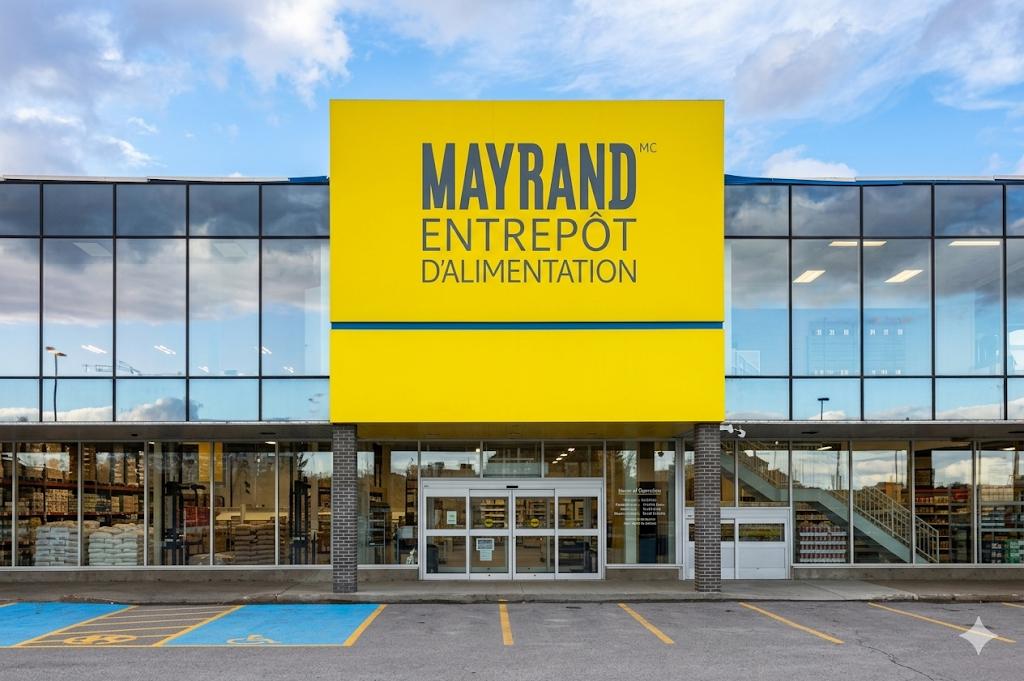
Mayrand Adds Another Quebec Growth Platform
Empire’s acquisition of Mayrand adds a different format to its expansion strategy. The Quebec retailer operates large-format stores serving consumers and foodservice customers, giving Empire a business outside its conventional supermarket and discount models.
The acquisition closed in June, adding four Mayrand stores to Empire’s network. The company has already broken ground on a new location in Trois-Rivières and says there is potential for further expansion.
Mayrand accounts for part of the increase in Empire’s fiscal 2027 store target, but management said the revised outlook also reflects additional activity within its existing real estate pipeline. The higher target therefore goes beyond adding the four acquired stores to Empire’s network.
Expansion Intensifies Competition for Customers and Sites
For Empire, additional stores have to capture enough business to justify the capital being deployed while limiting cannibalization within its own network. Competitors are pursuing many of the same population-growth markets and value-oriented customers, increasing the importance of site selection and banner choice.
There is also a real estate dimension. Grocery stores remain important anchors for shopping centres and mixed-use developments because of their recurring customer traffic, while large sites suitable for new supermarkets can be difficult to secure in established urban markets.
Competition for those locations could increase as major grocers continue building their development pipelines. Empire’s portfolio gives it flexibility to pursue different types of opportunities, from FreshCo discount stores to conventional supermarkets and Mayrand locations.
Empire Takes a Long-Term View
Empire’s increased fiscal 2027 target is part of a broader real estate program that includes new stores, conversions and renovations across its network. The company is committing significant capital to physical retail while consumers remain cautious and competitors continue adding capacity.
The risk is that Canadian grocery square footage could grow faster than demand, putting pressure on productivity at existing stores. Empire is betting that market-level opportunities can still support new locations and that current economic weakness should not determine investments intended to operate for many years.
For now, the early performance of Empire’s newest stores is supporting that argument. Management is increasing the pace of expansion, putting greater weight on its ability to choose the right markets and banners as competition for Canadian grocery spending intensifies.