Since Vancouver-based apparel company DUER started in 2013, several crowdfunding Kickstarter programs have been created to finance the venture. That process – seeing where the demand was and then meeting it – allowed co-founder and president, Gary Lenett, to look at a more efficient, cost-effective way to get the customer what they wanted. It also gave him better insight into the amount of waste created by the apparel industry.
“Creating speculatory inventory, which everyone does, bringing it in (to stores) and then spending all this money on marketing, trying to sell it. It’s completely inefficient,” explains Lenett.
Especially when much of the unsold product is marked down at a deep discount to customers or outlet stores or ends up in the landfill.
So when DUER was forced, due to the COVID-19 crisis, to pivot, quickly and hard, Lenett and his team were ready with a new way of doing business.
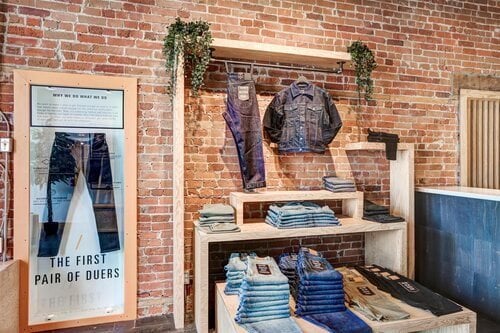
PHOTOS: DUER 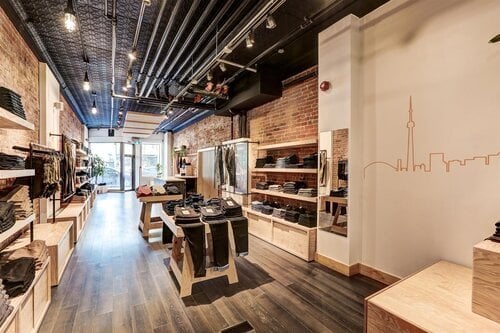
PHOTOS: DUER
DUER had just shipped most of its spring product to their wholesale network of retailers (approximately 1000 doors around the world). They had a solid business strategy and plans to expand. But, in mid-March, within a week they lost 70% of their business when two of three sales channels – wholesale and two retail locations of their own in Vancouver and Toronto – were forced to close.
E-commerce became the only source of revenue. And so they returned to their roots - and to their loyal customers - to help steer the ship.
Living Their Brand: How do You do More with Less?
“I went to our suppliers and said the world is changing, how are we going to respond?” describes Lenett.
They decided to change to a quick response model. They create and market a prototype of a product: new washes, new colours, or a completely new style. Customers order and then if enough of the design is purchased, Duer puts it into production and delivers the garment in 4 to 6 weeks.
DUER’s significant competitive advantage? Two of their four suppliers are also investors, (and one is a co-founder).
“I didn’t want just a supplier, I wanted people who were going to support and build a brand, long-term,” explains Lenett, a 30-year veteran of the apparel industry. “I’ve been in the business long enough and I know the only constant is change. I needed people who would be invested.”
And that’s why they were able to get traction on the new way of doing business so quickly. They’re turning the main mode of sales - from brick and mortar stores to online pre-sales - from concept to delivery in 8 weeks.
Keeping it Simple
DUER came out of Lenett’s personal ambition to make a pair of pants that are versatile and comfortable, no matter what activity you’re doing. But he’s also a self-described “fashion guy”, so he didn’t want his clothes to be too outdoorsy, either. They took streetwear and made a comfortable, technical product that is fashionable enough to go from day to evening events without losing its impact or stylishness.
“We have a “core basic program”, which is seasonless, so there is less waste,” he points out. “It’s sophisticated but we’re not slaves to fashion. We have three proprietary fabrics with different colours and washes.”

“When our customers tell us (through our website, by taking out their credit card) that there is enough demand for a product, then we’ll put it into this core program.”
He believes customers will support this new paradigm in the apparel industry for several reasons: it will be less expensive (DUER plans to pass the savings from production efficiency onto their customers) and there is less waste. There will be a 4- to 6-week wait for customer delivery but its a small price to pay for more sustainable clothing.
Get Dressed. Get Real. Get on with it.
“It’s a bit of an anti-consumerist message, our brand statement. We’re just giving some really good, basic products you can wear throughout your day that are easy-care,” he says. “So you can focus on what’s important.”
While Lenett is hesitant to make predictions about the retail garment industry’s future, he does admit that the predominant view is that the pandemic will be catastrophic for independent clothing retailers.
“Our retail plan will be very aggressive, once the market opens up again,” Lenett predicts. “We have three new stores slated but there may be more. But that’s because of our business model where we have this direct supply chain.”

Lenett describes DUER as a ‘Surprise and Delight’ brand which are found just off the prime shopping district. They create ‘denim playgrounds’ in each of their stores, with monkey bars and swings, so their stores are at least 800 square feet. Customers can try out the product and play around (to see how it fits and moves).
“We’re only going to open one location per city,” he says. “It’s more about projecting our brand than sales.”
His Advice for Other Retailers
“Chaos can reward the bold. Find new ways of doing things, there are a lot of options,” Lenett says. “I’ve been in this business a long time and I know we’ll get through this. The singular trait that you need in this industry, or any retail, is resiliency. If you have the resolve, you’ll be OK. It won’t be easy but you’ll be OK.”
And DUER seems to be doing more than OK. They’re currently exceeding their pre-COVID-19 E-commerce sales projections by 25 percent, with 20 percent of the original budget. Not bad for a small business that began with Kickstarter financing.