Future of Shopping Centres: Beyond Tradition

Date:

Share post:

By George Minakakis, Founder and CEO of Inception Retail Group

Reimagining the future of shopping centres is often on the minds of retailers and developers, whether through digital transformation, experiential retail, or omnichannel strategies. While these often-discussed concepts are essential, they overlook shifts that will shape the future of these spaces. As we move further into the 21st century, shopping centres will not only change, but may become entirely reimagined spaces that serve multiple functions extending far beyond their original purpose. This transformation, driven by the needs and expectations of Generations Alpha and Beta, presents an innovative and intriguing vision of the future of retail. Shopping mall operators should consider them now to secure the future of indoor and outdoor malls.
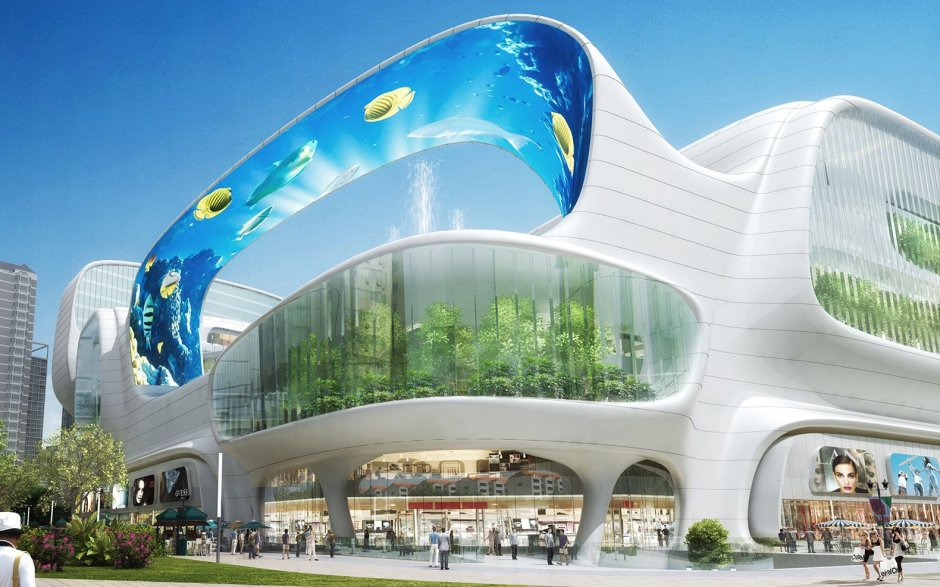
Futuristic shopping centre – Image: IDEA.club

Rising generations

Within the next 20 years, the landscape of shopping centres will be intensely influenced by the needs and expectations of generations Alpha and Beta. These generations are coming of age in a world where economic challenges and technological adoption persist, demanding more from these spaces than previous generations – a refuge and shopping access that inspires rather than promotes disillusion. Today, sixty per cent of the population lives paycheck to paycheck—and this will be a future economic reality that will be passed down—so shopping centres must evolve to offer value, accessibility, and purpose-driven experiences that resonate with these future consumers. Their parents, in their 30s and 40s, worry about their children’s futures. As such, malls have a unique opportunity to empower and shape the communities they serve.

Shopping centres can become social ecosystems, where retail is only one of many purposes, filling a more reflective social need in a world progressively defined by remote work and digital everything. Shifting into community hubs, shopping centres can host coworking spaces, educational workshops, and even wellness centres, blurring the lines between commerce and community.
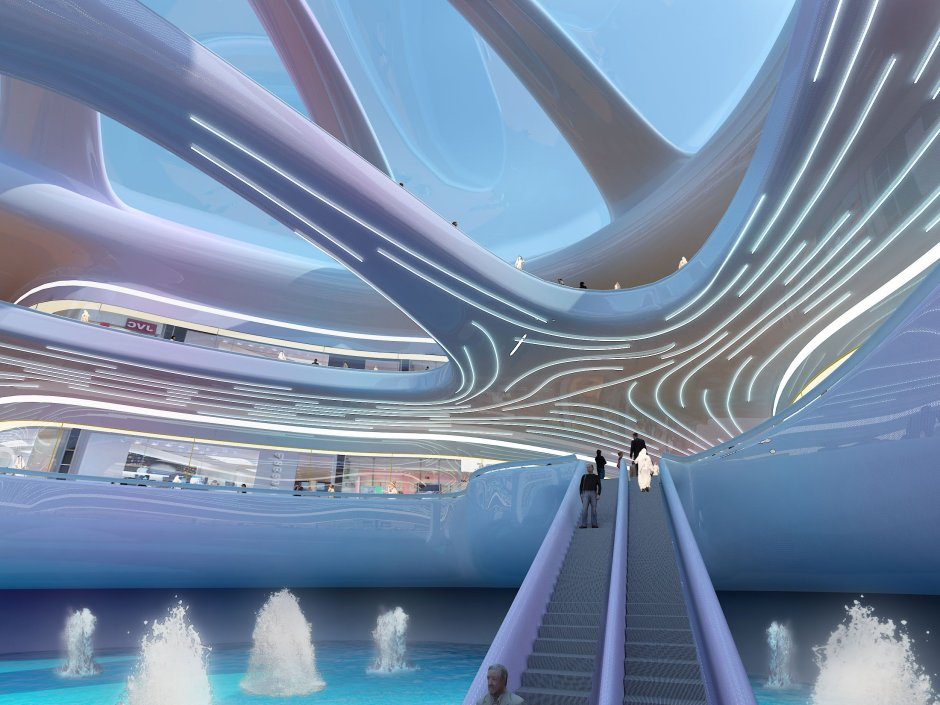
Futuristic shopping centre – Image: IDEA.club

Urban spaces will become more congested, and shopping centres could evolve into micro-urban environments. Shopping centres where you can live, work, play, and shop are already planned. These centres would reduce the need for transportation, tapping into the planning vision of municipalities of 15-minute commutable cities.

As the environmental issues continue as a global challenge, shopping centres can integrate green functionalities and create settings supporting, promoting, and providing clean water, air, and energy. They may even identify sustainable retailers for consumers to find more easily. As consumers demand more transparency, developers will have to deliver it.
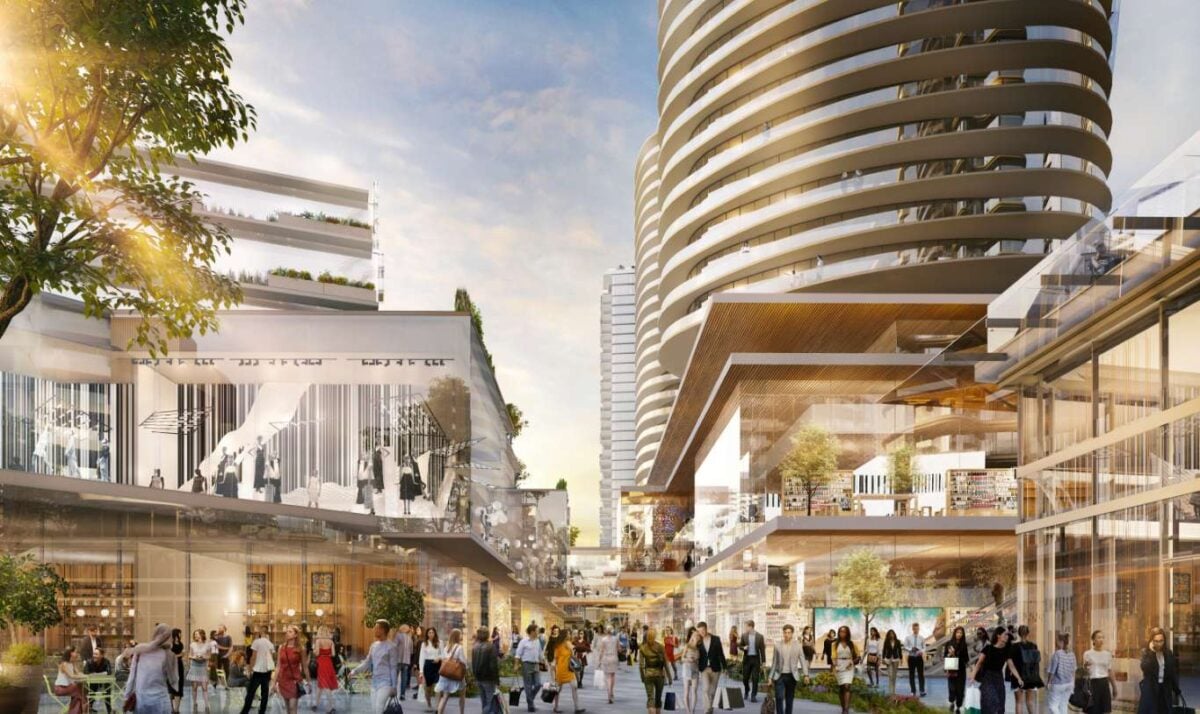
Oakridge Park in Vancouver. Rendering: QuadReal

Shopping centres must evolve

Their one-size-fits-all model is getting stale. Shopping venues should reflect the social and economic dynamics of their local demographics. Some might feature innovation labs, tech expos, and maker spaces in areas with a high concentration of tech companies. In contrast, a centre in a suburban district might prioritize restaurants, entertainment, and art events to allow consumers to decompress.

While the integration of digital and physical retail is a common categorization of how and what technology has changed, the future of shopping centres must embrace emerging technologies to keep up with customers and retailers alike. Machine-driven AI experiences will unify humans and their devices, creating an opportunity for the physical space of a shopping centre to engage digitally. Personal AI assistants are coming, and they will create immersive experiences, creating a significant opportunity for retailers and shopping centres.
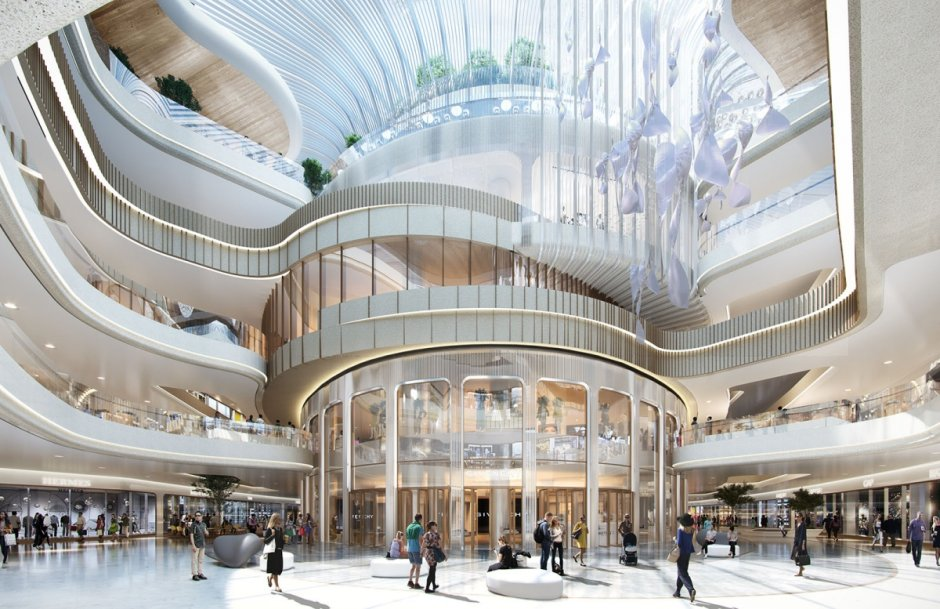
China Trade Center Architecture Project. Image: IDEA.club

Retail as a service

My favourite opportunity is retail as a service (RaaS). It is a concept that’s sure to raise some eyebrows across the industry. Both in terms of what it means as well as the ways by which it can be delivered. Both retailers and consumers can benefit from these platforms which can be introduced as subscription services.

For retailers, it could mean services like logistics, customer data and technology infrastructure for those less advanced. Consumers would be able to access new product launches or personalized customer experiences. This type of integrated model would allow shopping centre operators to adapt quicker to market changes and consumer preferences.

Of course, there is also healthcare, which has been limited to dentistry and eyecare in shopping centres. Other services will increasingly become consumer-centric, integrating healthcare devices into various physical services, offering exclusive and holistic treatments, and strengthening one’s wellness. This would be akin to new retail therapy aimed at health and longevity for all demographics.

Ultimately, the goal is to continue driving foot traffic. However, this transformation, like most others, calls for leadership with a vision to not just adapt to new trends, but to become dynamic entities that serve a broader purpose.

George Minakakis. Photo: LinkedIn.

George Minakakis is the CEO of Inception Retail Group, author of three books, and keynote speaker.

*This article was originally published in Retail Insider the magazine. Read the latest issue here.

More from Retail Insider:

LEAVE A REPLY

Please enter your comment!
Please enter your name here

RELATED ARTICLES

Subscribe to the Newsletter

Subscribe

* indicates required

RECENT articles

From The Desk: Navigating Growth and Resilience in Canadian Retail

This week in Canadian retail, growth initiatives, rising real estate demands, and strategic leadership shifts highlight sector resilience amid market challenges.

Retail Insider “Policy & Regulation Report”: Affordability Promises Collide With Retail Costs

Retail Insider’s Q2 2026 policy report finds affordability promises colliding with rising compliance, trade, labour and public-safety costs, while grocery property controls and public-store proposals expose how government action is reshaping Canadian retail operations today.

Crombie REIT Reports Strong Rent Growth Driven by Grocery-Angled Retail

Crombie REIT posted a seventh consecutive quarter of double-digit renewal rent growth as demand remains strong for grocery-anchored retail space across Canada.

How Quarks Built a Canadian Footwear Business Over Nearly Five Decades

Winnipeg-based Quarks is approaching its 50th anniversary while continuing to expand across Canada. Retail Insider examines the family-owned footwear retailer's growth strategy, merchandising approach and plans for the future.

Tim Hortons Targets Stronger Canadian Growth With New Stores, Beverages and Loyalty

Tim Hortons is opening 80 Canadian restaurants while expanding cold beverages and loyalty initiatives after same-store sales growth slowed to 0.1%.

Canada’s Freight Market Is Shifting Unevenly. Here’s What Retailers Should Watch

TFI International’s latest results and analysis from supply chain strategist Gary Newbury suggest Canadian retailers should prepare for uneven freight conditions, changing transportation capacity and evolving logistics costs.

Jamieson Wellness enters into definitive agreement to be acquired by Kirin in C$2.5 billion transaction

The transaction values Jamieson at approximately C$2 billion on a fully diluted equity value basis and approximately C$2.5 billion on an enterprise value basis.

Slate Grocery REIT reports second-quarter results, citing leasing gains and rent growth potential

Completed more than 569,000 square feet of leasing activity during the period as it continued to see rental growth across its U.S. grocery-anchored real estate portfolio.

Premium Brands reports record second-quarter revenue and earnings, revises 2026 outlook

The specialty food producer and distributor said second-quarter revenue reached a record $2.4 billion, up 26.3 per cent, or $495 million, from the same period a year earlier.

SmartCentres reports steady leasing gains in second quarter as occupancy rises, FFO unchanged

The Toronto-based REIT said occupancy reached 98.1 per cent as of June 30, up from the previous quarter.

Daily Synopsis: August 6, 2026

Retail Insider published 12 articles today on Canadian retail including Birks’ market move, Mattel’s strategy shift, Realm Fitness’ community, and McDonald’s new beverage platform.

Leon’s Furniture reports higher net income in second quarter despite lower sales

Revenue declined by $12.9 million from a year earlier, with furniture delivered sales down 4.2 per cent against what the company described as a strong prior-year comparison.

Retail Insider “Marketing & Media Report”: Live Events Shift Attention to Dynamic OOH

Major cultural events are redirecting Canadian retail marketing toward physical spaces. The Q2 2026 report examines how motion-based DOOH, local sports activations, loyalty platforms and measurable sustainability practices are shaping competition for consumer attention across Canada.

Birks to Leave NYSE American as Canadian Jeweller Reshapes Finances

Birks Group will leave the NYSE American for the OTCQB as the Canadian jeweller reports stronger sales, refinances debt and continues retail investment.

What Mattel’s Strategy Says About the Future of Canada’s Toy Market

Canada's toy market is evolving, and Mattel's latest strategy shows how Hot Wheels, building sets, collectibles and Barbie are shaping the industry's next chapter.

Realm Fitness Builds 2,500-Member Community Inside Calgary Industrial Property

Realm Fitness has grown to 2,500 members in Calgary, combining fitness, retail, recovery and community inside a 44,000-square-foot industrial space.

Baffin joins the Royer Group of Companies 

Baffin will operate as Baffin Footwear Inc., preserving the Baffin brand, its leadership team, employees, customer relationships and day-to-day operations while benefiting from Royer's long-term investment and manufacturing expertise.

First T&T Supermarket in Manitoba coming to CF Polo Park in Winnipeg

The “cult-favourite” Canadian supermarket is bringing its signature Asian groceries, prepared foods, bakery favourites, and beauty products to Manitoba for the first time.

Corby to sell Lamb’s rum brand and assets for $39.2 million as it shifts focus to growth categories

Corby said the transaction is intended to concentrate its resources on priority growth platforms, including ready-to-drink beverages and premium spirits, while freeing capital for higher-return opportunities.