

Ten years ago this week, the Canadian retail landscape was rocked by the sudden and dramatic closure of Future Shop, once the country’s largest and most prominent consumer electronics retailer. The announcement on March 28, 2015, that the brand would cease to exist—effective immediately—came as a shock to customers and employees alike, abruptly ending a legacy that spanned over three decades.
This retrospective marks the tenth anniversary of that pivotal moment in Canadian retail, exploring Future Shop’s meteoric rise, its acquisition by Best Buy, and the factors that led to its eventual demise.
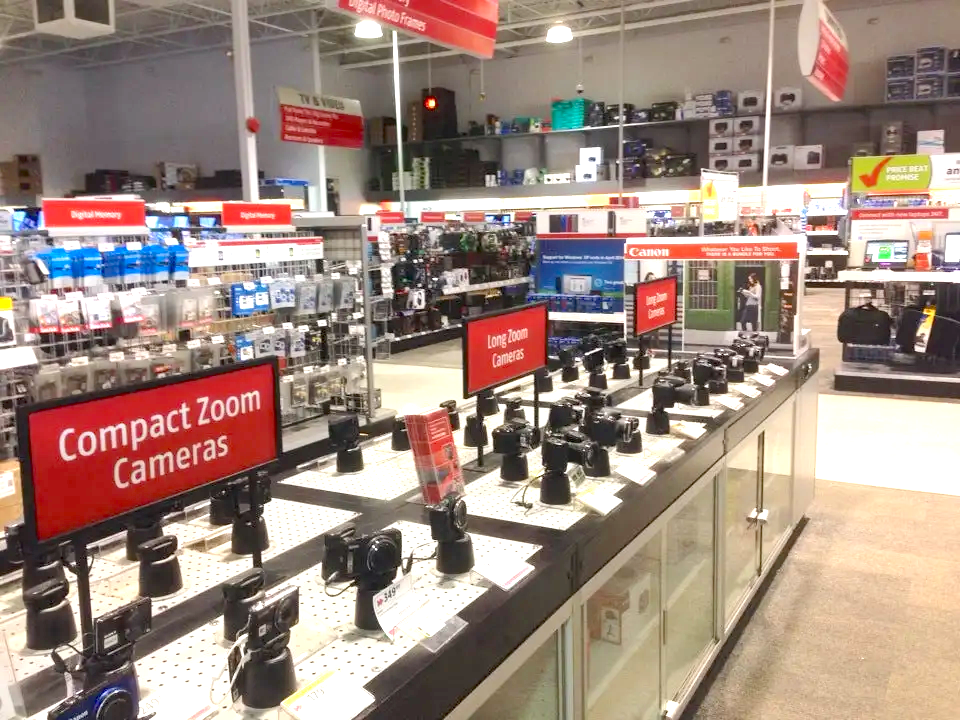
A Vancouver Start-Up That Changed Canadian Retail
Future Shop was founded in 1982 in Vancouver, BC, by Iranian-Canadian entrepreneur Hassan Khosrowshahi. The company began as a single store, but thanks to Khosrowshahi’s ambitious growth strategy and a favourable consumer appetite for electronics, the chain quickly expanded. By 1990, Future Shop had become the largest retailer of computers and consumer electronics in Canada.
Future Shop became a household name by offering an expansive selection of products at competitive prices, bolstered by a commissioned sales model that rewarded staff based on performance. This strategy helped the company build a reputation for product expertise and high-touch service, distinguishing itself in a rapidly evolving retail sector.
In 1993, Future Shop went public, trading on the Toronto and Vancouver stock exchanges. The company operated 36 stores at the time, with plans to open 16 more by year-end. It was also expanding into the United States, seeing the potential for growth south of the border.
Expansion Stumbles in the U.S. Market
While Future Shop was flourishing in Canada, its American ambitions proved more challenging. After opening 23 stores in the U.S., the company faced mounting losses in a highly competitive market. In 1999, Future Shop made the decision to pull out of the United States entirely, refocusing its efforts on its Canadian operations where it remained dominant.
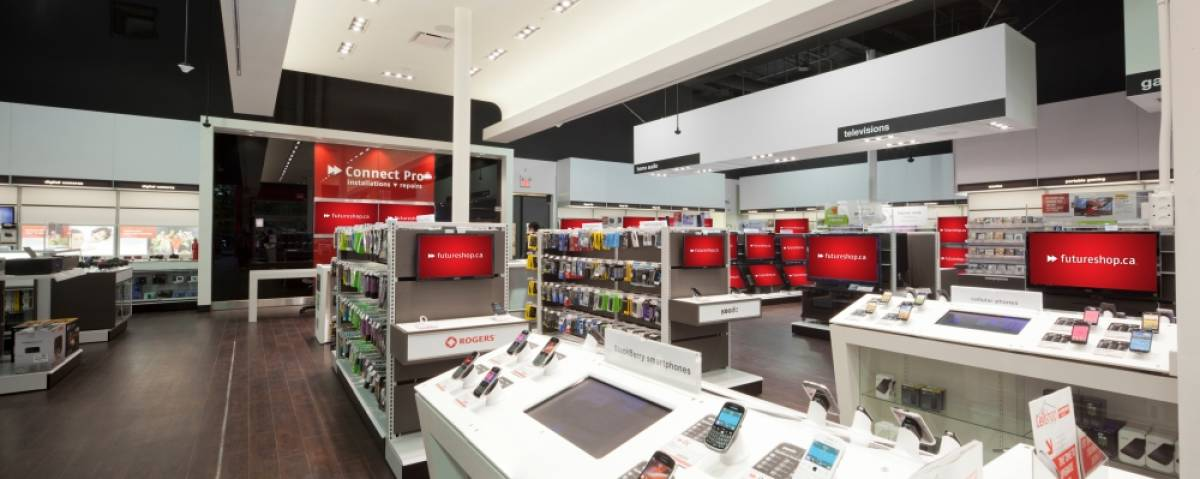
A Major Acquisition: Best Buy Enters the Canadian Market
In a pivotal moment in 2001, U.S.-based Best Buy Co. acquired Future Shop for CAD $580 million. Rather than phasing out the Canadian brand, Best Buy decided to run both banners concurrently. New Best Buy stores were introduced to Canada, positioned as an alternative to the more commission-driven Future Shop model. At the time, it was seen as a dual-pronged strategy to capture a broader market.
Throughout the early 2000s, Best Buy and Future Shop stores could often be found within close proximity to one another. While both carried many of the same products, Best Buy operated with a non-commissioned sales force and a different store layout, while Future Shop retained its original formula.
Changing Market Forces and Strategic Shifts
As consumer preferences changed and e-commerce gained ground, the consumer electronics retail category began to shift dramatically. Best Buy faced mounting pressure from online competitors, especially Amazon, and began streamlining operations.
By the early 2010s, cracks in the dual-banner strategy were becoming evident. In 2013, Best Buy began closing some Future Shop locations and consolidating others. Retail analysts speculated that a full integration was inevitable, though few expected it to occur as suddenly and dramatically as it did.
March 28, 2015: The End of Future Shop
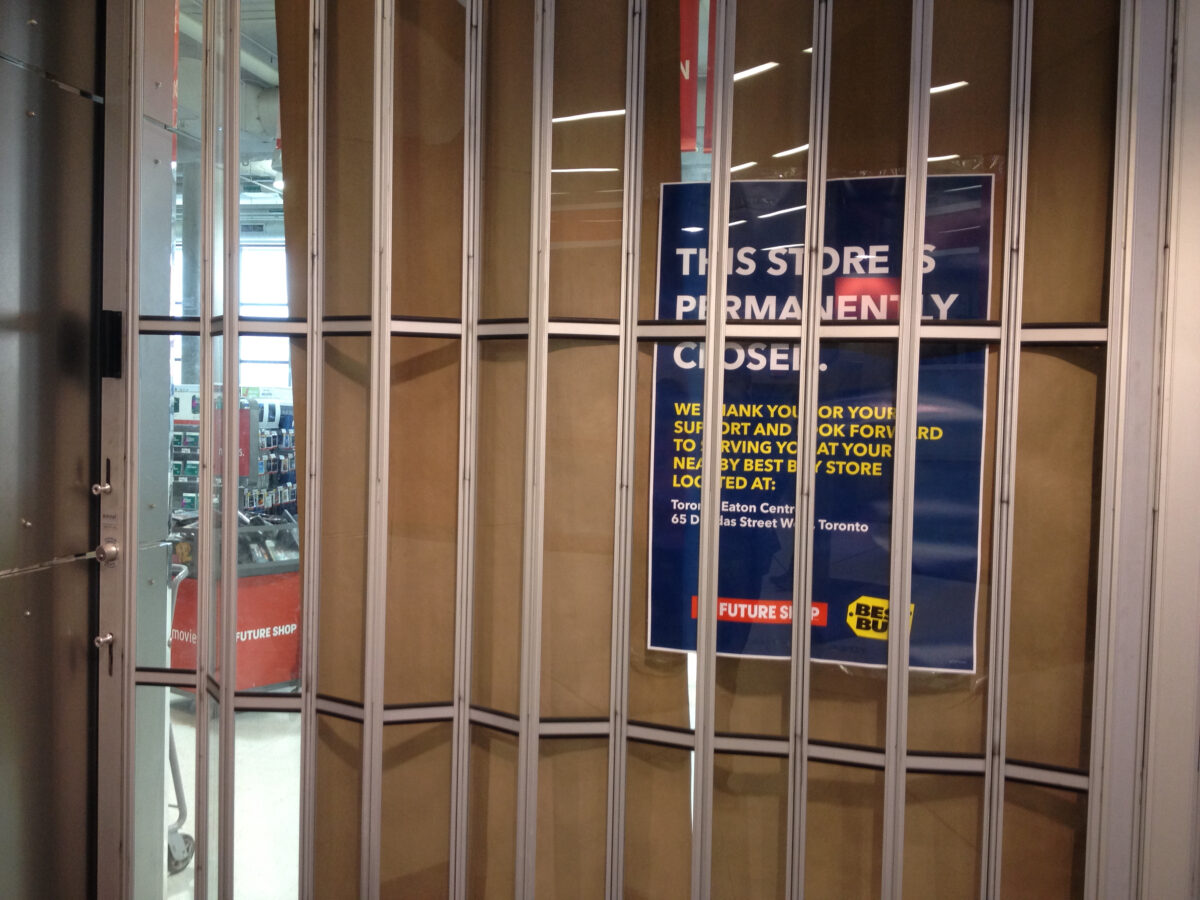
On the morning of Saturday, March 28, 2015, employees at Future Shop stores across Canada arrived at work only to be informed that the stores would not be opening. Some were told their locations would be shuttered permanently, while others learned their stores would reopen as Best Buy locations within days.
In total, 66 Future Shop stores were permanently closed, and 65 were earmarked for conversion into Best Buy. Approximately 500 full-time and 1,000 part-time employees were laid off. Best Buy Canada moved swiftly to assure customers that product orders, warranties, gift cards, and service appointments would be honoured. Affected employees were offered severance packages and outplacement support.
Ron Wilson, then President and COO of Best Buy Canada, said in a statement at the time, “We recognize the impact of this decision on our employees and customers, and we will work to support them through this change.”
A Post-Future Shop Retail Strategy
Following the closures, Best Buy Canada announced a $200 million investment over two years to enhance the customer experience. This included introducing major appliances to all stores, expanding vendor-branded areas, increasing staffing, and improving the online shopping experience. The company also invested in in-store pickup, ship-from-store services, and digital platforms to better compete in the omnichannel environment.
The abrupt closure of Future Shop served as a wake-up call to the Canadian retail industry, highlighting the speed at which consumer behaviours and market conditions can shift. It also underscored the risks of maintaining two brands with overlapping footprints in a market increasingly dominated by digital innovation.
A Legacy That Endures
Even a decade later, Future Shop remains a nostalgic brand for many Canadians. Its distinctive red signage, commissioned sales force, and boxed DVD walls left a lasting impression on generations of consumers. For former employees and loyal customers, the brand’s closure marked the end of an era—one that reflected both the promise and perils of Canadian retailing in the modern age.
As the Canadian retail industry continues to evolve in the face of economic uncertainty and digital disruption, the story of Future Shop serves as a compelling case study in rapid growth, strategic missteps, and the relentless pace of change.
More from Retail Insider:














Great article and a large portion was missed in this article – the unionization drive at Future Shop and its impact in the decision making process to close all the stores.