

As the Canadian retail sector braces for the impact of newly imposed 25% tariffs on imported goods, one local retailer is taking a bold stand against price inflation. Soccer World Central, Southern Ontario’s leading soccer specialty retailer, has pledged to absorb the added costs rather than passing them on to customers.
Owner and CEO Chrys Chrysanthou, a seasoned business leader and former CPA, believes that maintaining fair pricing is crucial in supporting the community during these uncertain times. “We need to work together to get through this very tough period,” Chrysanthou stated in an interview. “It is wrong to profit while so many people are struggling.”
Putting Community First
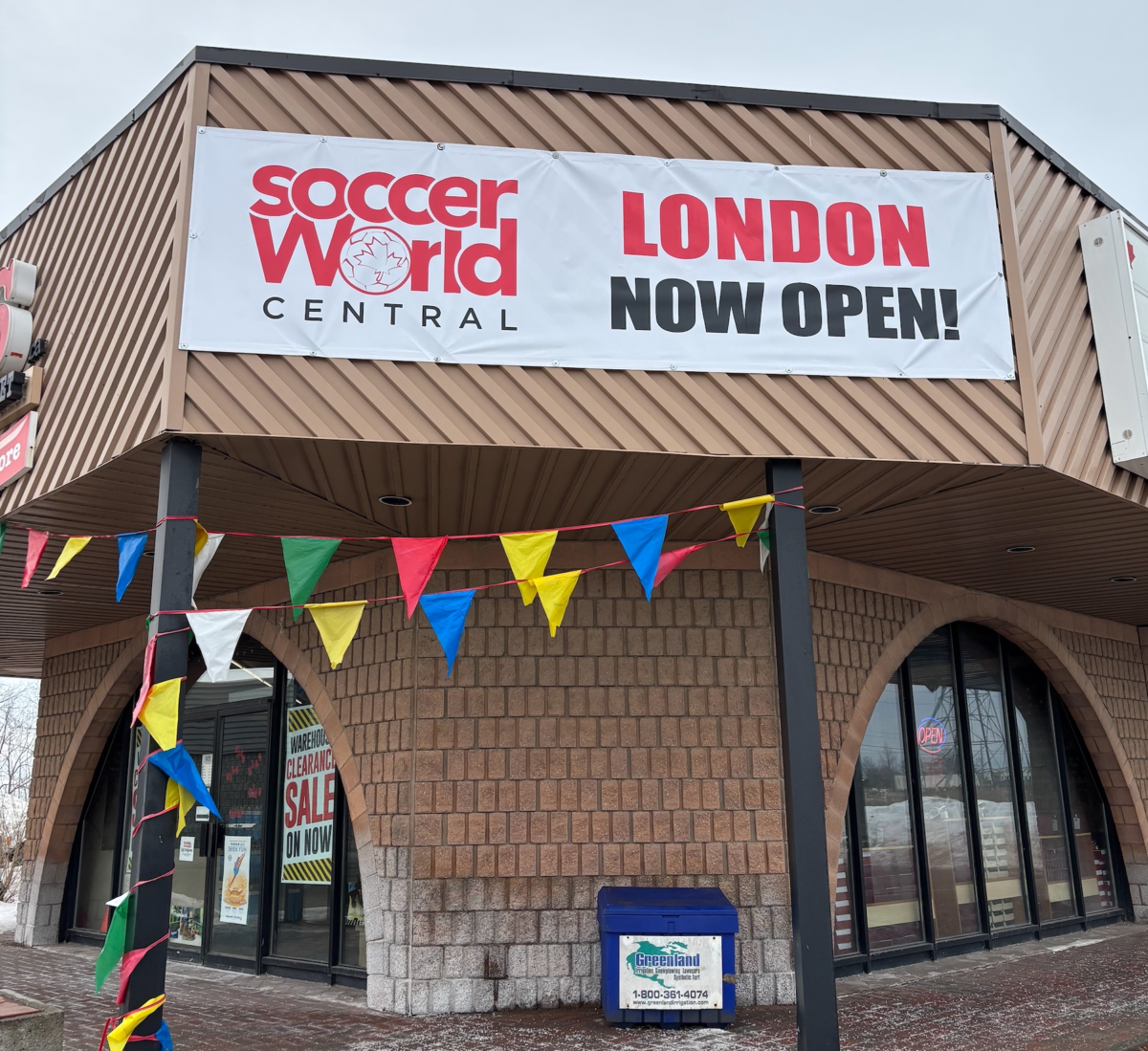
Soccer World Central, founded in 2001, has grown into a premier destination for soccer enthusiasts in Ontario. With flagship stores in Oakville and London (opened March 1), and plans for expansion into Mississauga and Burlington, the retailer has long prioritized community engagement. This latest move underscores the company’s dedication to its customers at a time when many are facing rising costs on all fronts.
Chrysanthou’s decision to absorb the tariff costs stems from firsthand experiences with struggling customers. “We see a lot of different people coming through our doors—some are affluent, but many are struggling to put food on the table,” he explained. “I’ve had customers ask if they could pay for their child’s soccer shoes in installments. We even had someone over Christmas tell us they wanted to buy a gift for their kids but couldn’t afford it upfront.”
These personal interactions have solidified Chrysanthou’s stance on pricing. “For me to profit off their pain? That’s not something I could live with,” he said.
The Tariff Dilemma: How It Works
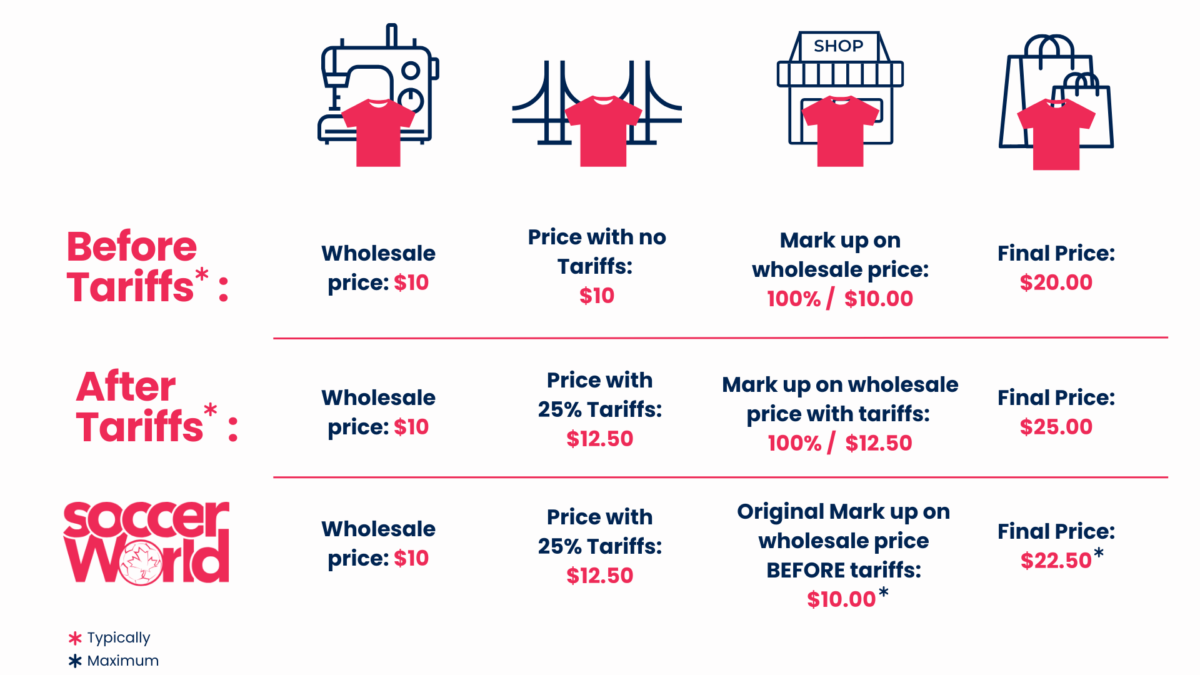
Typically, retailers apply a standardized percentage markup on wholesale goods. If a product costs $10 at wholesale and the markup is 50%, the retail price would be $20. However, with a 25% tariff, the wholesale price increases to $12.50. Many retailers would apply their traditional markup to this new cost, pushing the retail price up to $25. This means customers would pay not only for the tariff increase but also an inflated margin.
Chrysanthou, however, has chosen to do things differently. “Instead of marking up the new tariff-inflated price, I’m keeping my markup at the pre-tariff level,” he said. “So instead of charging $25, I’ll charge $22.50. I’m still covering the increased costs, but I’m not profiting from them.”
While this approach will reduce Soccer World Central’s percentage margins, Chrysanthou argues that his dollar margins will remain stable. “What I was making yesterday is what I’ll still be making tomorrow. My percentage profit might take a hit, but I refuse to profit from an artificial increase.”
Retail Challenges Beyond Tariffs
The tariff situation is only part of a larger economic challenge for retailers. The declining Canadian dollar is expected to further drive up prices, as most goods in the supply chain are denominated in U.S. dollars. “I’ve already had my brands call me to say that if the tariffs come into play, the Canadian dollar will drop, increasing the cost of everything we buy,” Chrysanthou explained. “That’s a reality we’re going to have to navigate as well.”
In addition to currency fluctuations, retailers are contending with rising operational costs. “My rent has doubled in the last four years. Minimum wage has jumped from $12.50 to $17.50. Every aspect of running a business is more expensive,” he noted. “But I firmly believe that as retailers, we have to be part of the solution.”
A Call for Collective Action
Chrysanthou is encouraging other retailers to adopt a similar approach. “If every retailer chose not to profit from tariffs, we could collectively ease the burden on consumers,” he said. “We’ve seen what happens when major corporations prioritize profits over people—the cost of living skyrockets, and more families turn to food banks. We need to do better.”
He argues that the responsibility extends beyond small businesses. “If the big grocery chains, gas companies, and other retailers committed to this, we could ride out this storm. But if we remain ignorant of the pain the average consumer is feeling, we’re going to lose this battle.”
Expanding with a Mission
Despite the economic headwinds, Soccer World Central is continuing its ambitious expansion plans. In addition to its existing location in Oakville and new store in London, the company is in the process of opening a 20,000-square-foot experience store in Mississauga and a 30,000–40,000-square-foot location in Burlington.
These new stores are designed to be more than just retail spaces. “We’re creating soccer entertainment facilities,” Chrysanthou revealed. “Yes, we’ll have retail, but we’re also integrating interactive experiences—turf areas where kids can try on shoes and play, TV lounges for watching games, and even foosball and video game stations. We want to be the local hub for all things soccer.”
This approach mirrors trends in the U.S., where major retailers like Dick’s Sporting Goods have been launching large-scale experiential stores to attract customers. “Retail is evolving,” Chrysanthou said. “If we want to remain relevant, we need to offer more than just products—we need to create experiences.”
A Business Rooted in Giving Back
Beyond pricing strategies and store expansions, Soccer World Central has long prioritized community support. The company has donated over $300,000 to various charities and grassroots soccer initiatives, reinforcing its commitment to accessibility and inclusion in the sport.
“Our mission statement is simple: to make every experience with the beautiful game a positive one,” Chrysanthou said. “That means eliminating barriers—whether they be financial, racial, or otherwise. Absorbing these tariff costs aligns perfectly with that mission.”
As Canadian businesses brace for the full impact of tariffs, Soccer World Central stands as an example of how retailers can put community first. “At the end of the day, it’s not about making a quick profit,” Chrysanthou said. “It’s about doing the right thing. And if more businesses take that approach, we’ll all be better for it.”








There are essentially no soccer products made in the USA, so essentially no new tariffs.