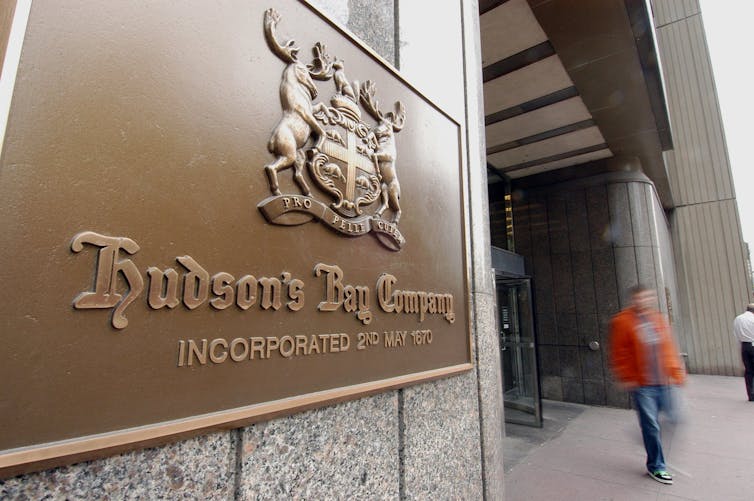
The proposed liquidation of many of the Hudson’s Bay Company’s (HBC) collections that together trace over three centuries of Indigenous and European interaction across this continent represents a profound threat to Canada’s collective memory and identity.
An Ontario Superior Court judge ruled that the company could move forward with an auction of 4,400 items — including historic artifacts and artworks.
Several government and non-government cultural agencies, including the Manitoba Museum and the Indigenous Council of the Canadian Museums Association, have expressed concern to HBC and the financial advisory firm it’s working with.
First Nations leaders and scholars say many of the objects likely have profound significance to Indigenous Peoples and are calling for repatriaton.
As an art history professor who has researched curatorial and museum practices, I can attest to the cultural and scholarly value of keeping documentary and cultural collections intact, rather than being scattered across the globe or disappearing into private hands.
This situation exposes the reach and limits of Canada’s Cultural Property Export and Import Act (CPEIA). The act has provisions to delay or block export of cultural property, defined broadly as “any cultural or heritage object, regardless of its place of origin, which may be important from an archaeological, historical, artistic or scientific perspective.” Yet, this legislation offers no guarantees that the objects will end up in Canadian museums or under Indigenous stewardship.
Importance for memory
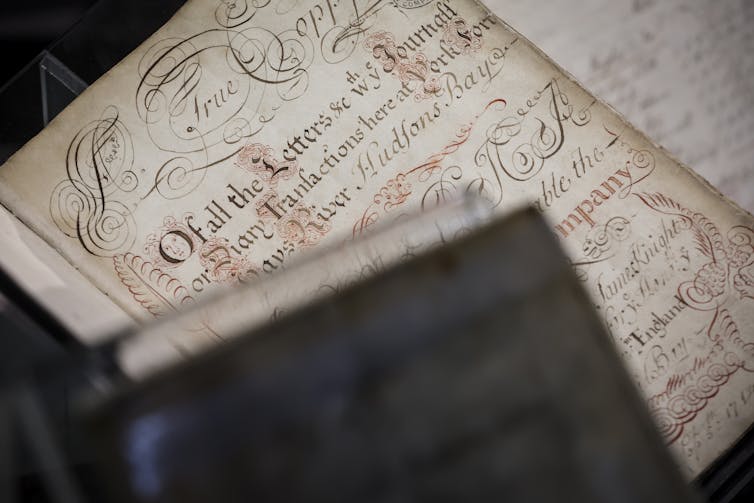
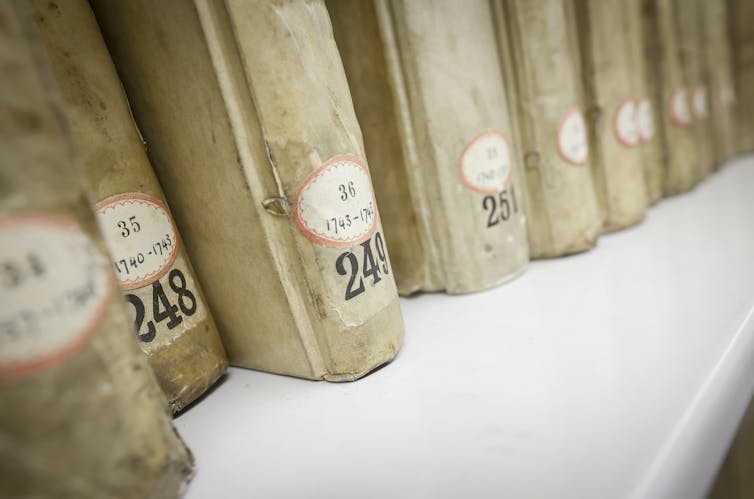
After moving its head office from London to Canada in 1970, HBC first loaned records to the Archives of Manitoba in 1974 and then donated them in 1994 to the province. The vast collection includes about 130,000 images and all minute books from meetings of HBC’s governor and committee from 1671 to 1970.
The United Nations Educational, Scientific and Cultural Organization (UNESCO) designated a substantial part of that collection as part of the Memory of the World Register. Items with this designation are recognized as showcasing and preserving the most significant documents of human heritage.
If the items heading to auction are similar, they, too, would be embedded with stories of political negotiation, cultural exchange and economic transformation that helped forge Canada over three centuries.
Some HBC records have provided a window into Canada’s climate history and ecology, offering valuable long-term data to environmental researchers. Others show evidence of Indigenous trade, land occupation and cultural presence relevant to genealogical research, band membership documentation and land claims.
The Assembly of Manitoba Chiefs, citing the United Nations Declaration on the Rights of Indigenous Peoples, has called for transparency and consultation in any discussion concerning the disposition of HBC items and stopping any sale or transfer of artifacts that “may belong to or be linked with First Nations.”
1977 legislation
Prior to Parliament passing the CPEIA legislation in 1977, the federal government had few legal mechanisms to safeguard cultural heritage at home or abroad.
The 1951 Massey Report into the development of Canadian arts and culture acknowledged the sale and export of important collections, including Indigenous cultural belongings. It noted that some Canadian museums had been requesting “an embargo on the sale abroad of objects of particular national significance as well as for suitable grants to the museums which should preserve these objects ….”
Global concern for cultural property
An emerging global consensus on the need for a stronger cross-border regulatory system also shaped CPEIA’s development. The 1954 UNESCO Hague Convention for the Protection of Cultural Property in the Event of Armed Conflict was the first international legal framework for the protection of moveable “cultural property.” This was created in response to the Nazi looting of private and public collections.
By the 1960s, Canada was studying British and French laws, particularly the U.K.’s 1952 Waverly Report, as models for export controls. Borrowing from the Waverly Report, CPEIA relied upon, in the words of Canadian diplomat Ian Christie Clark, a “co-operation of the collector-dealer fraternity” working together with the government to ensure compliance.
The final push to develop national policies flowed from the 1970 UNESCO Convention on the Means of Prohibiting and Preventing the Illicit Import, Export and Transfer of Ownership of Cultural Property. This obliged signatory states to develop their own laws to protect cultural heritage and facilitate the return of illegally exported property. To claim the reciprocal benefits of the convention, Canada had to act.
Relevance of the CPEIA
An independent committee of specialists, established through the CPEIA, can designate parts, or the entirety, of the HBC collection as “of outstanding significance and national importance” if the HBC proposed to donate or sell items to a designated Canadian institution.
In such a circumstance, the HBC, in tandem with a collecting institution, can request a review to unlock generous tax incentives if certified.
This designation could also arise if the owner — either the HBC or a successful buyer — applied for an export permit to move the collection out of Canada. This application would be screened against CPEIA’s export control list, which covers everything from archaeological and scientific specimens to documentary records and artworks that exceed age and value thresholds.
If those thresholds were met, and an export permit is denied, the works would be referred to an expert examiner for a full Canadian Cultural Property Export Review Board assessment. A private sale within Canada would not alone prompt the review.
Receiving a cultural property designation would, at least temporarily, restrict the possibility of exporting items.
Importantly, the delay would give federally designated institutions like public museums or archives, as well as Indigenous-led organization with the mandate to preserve and support Indigenous heritage, an opportunity to purchase cultural property that has been denied an export permit. For this, CPEIA offers grants and loans for designated institutions to match the appraised value. Those grants and loans can also be used to repatriate collections that are abroad.
HBC’s historic archive is a prism through which we view Canada’s origins.
Dispersing or exporting this collection would significantly diminish our understanding of Canada. While CPEIA may play a role in retaining it, it offers no certainties.

About the Author: Norman Vorano is an Associate Professor of Art History and Head of the Department of Art History and Art Conservation at Queen’s University.
*This article originally appeared in The Conversation.