

A new audience analysis using data from Environics Analytics provides insight into Hudson’s Bay’s men’s clothing shoppers, highlighting a high-value, family-oriented consumer that Canadian menswear retail has yet to fully replace.
By Tanishah Nathoo and Anna Racovali
A year after Hudson’s Bay Company closed its doors, retailers across Canada are still assessing where displaced shoppers have gone. Much of the focus has been on real estate, including which retailers are taking over former locations and how quickly space is being backfilled. Less attention has been paid to the customers themselves.
This article is the first in a series examining displaced HBC audiences by department. While other categories such as beauty and women’s apparel reflect different shopping motivations, the men’s clothing customer presents a distinct profile shaped by household dynamics, cultural background, and shopping behaviour.
Drawing on Environics Analytics data, which integrates and models multiple sources including Census data, Statistics Canada datasets, social values research, and Vividata’s retail panel down to the local geographic level, the portrait of the HBC men’s clothing shopper is both nuanced and highly specific. The findings challenge some long-held assumptions about who Canadian department stores were actually serving, revealing a customer profile that extends beyond traditional perceptions and is shaped by a distinctive combination of demographic, attitudinal, and purchasing characteristics.
A Customer Base More Diverse Than Expected
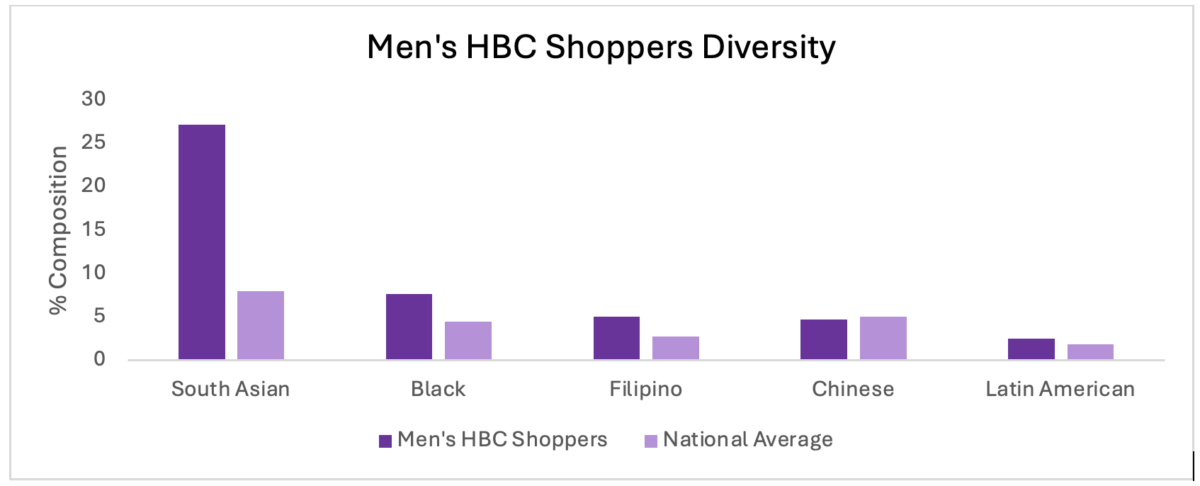
The most significant finding in the data is also the most underreported: more than half of HBC’s men’s clothing shoppers identified as a visible minority, nearly double the national share. Using Environics Analytics’ behavioural datasets to identify the consumers most likely to shop for men’s clothing at HBC, we were able to develop a detailed portrait of who these shoppers are, including their demographic and cultural characteristics. South Asian Canadians represented the single largest group, accounting for more than one in four shoppers in this category, at more than three times their share of the general population. Sikh, Hindu, and Muslim shoppers were all dramatically overrepresented, highlighting the important role these communities played in HBC’s men’s apparel customer base.
More than half of this audience was first-generation Canadian, the majority having arrived from South Asia. Third-generation-or-more Canadians, the demographic HBC’s heritage brand identity was largely built to serve, were significantly underrepresented. By the time Hudson’s Bay closed, its men’s floor was functioning as a destination for a new Canadian mainstream, not a legacy one.
This community is also still growing. In the suburban neighbourhoods where HBC’s stores were most heavily used by this audience, recent immigrants from India represent arrivals at double the national rate. These are shoppers still establishing their retail relationships in Canada, and HBC, imperfect as it was, had become part of that introduction.
A Suburban-Centric Shopper
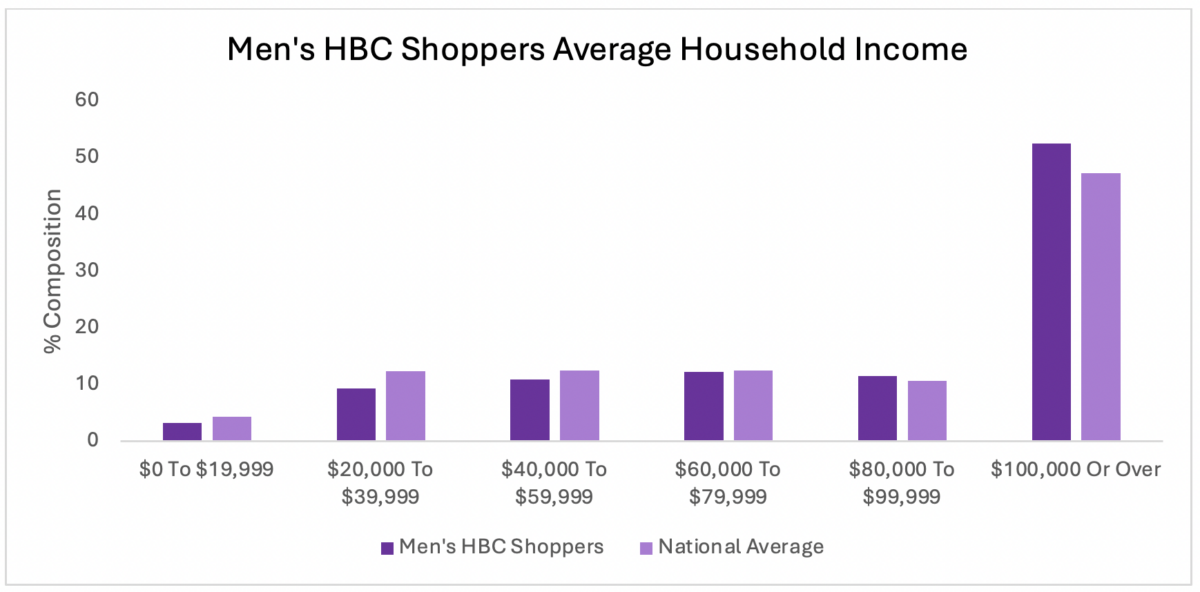
The geography of this audience is as revealing as its demographics. This shopper overwhelmingly lives in an owned, family home in an established inner-ring suburb. Semi-detached and row houses, often found in Brampton, Mississauga, Surrey, and Laval, are nearly double the national rate in this audience. He has been in the same neighbourhood for years, and his household income sits well above the national median, with an aggregate household income of $127,679 and more than half of households earning over $100,000.
This data indicates HBC stores that served him were not the flagships on Queen Street or Ste-Catherine. They were the suburban mall anchors: Bramalea City Centre, Square One, Scarborough Town Centre, Guildford Town Centre, and CF Carrefour Laval. The retail vacancy his departure leaves is a suburban one, and addressing it requires a suburban answer.
Shopping Behaviour Driven by Household Needs
Compared to other HBC customer segments, men’s clothing shoppers show a stronger orientation toward family-driven purchasing.
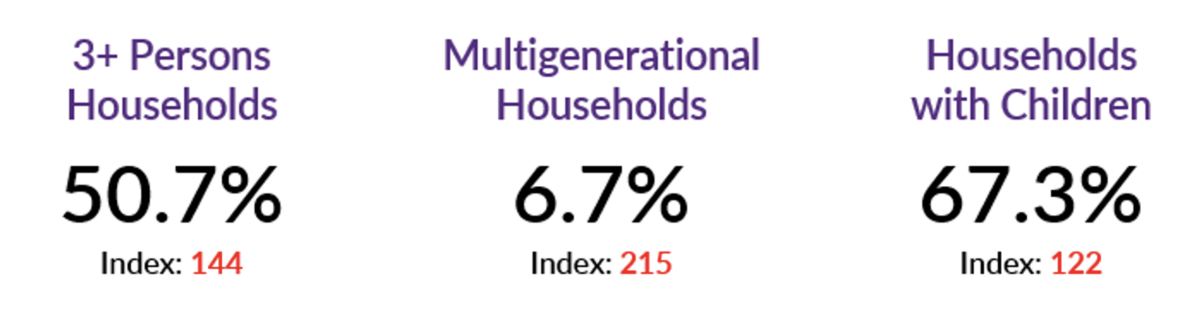
Households of five or more people are nearly double the national average in this audience. Multigenerational living arrangements, multiple generations under one roof, occur at more than twice the national rate. More than half of these households include children at home, and children’s clothing and footwear purchases across all age groups are well above average.
Importantly, HBC functioned as a one-stop retail destination. Shoppers could purchase apparel for themselves alongside children’s clothing and other household items within a single trip. This level of convenience is less common among the retailers that have since absorbed portions of this demand.
Brand Awareness and Marketing Responsiveness
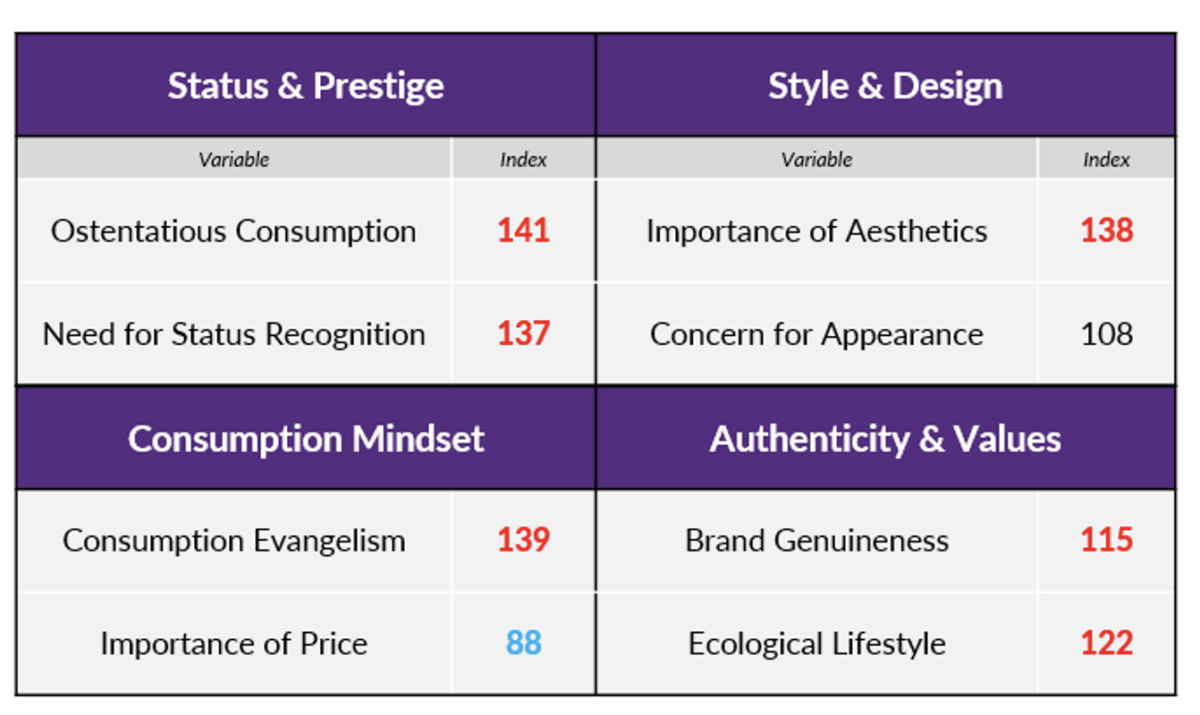
The Social Values profile of this shopper challenges a common assumption — that family-oriented, suburban shoppers are primarily value-driven and brand-indifferent. This audience is the opposite. Status recognition (Index: 137), the visibility of consumption (Index: 139), and the importance of aesthetics (Index: 138) all score well above the national average. He pays close attention to how he looks, he spends accordingly, and perhaps most importantly for retailers thinking about word-of-mouth: he actively shares and recommends purchases to the people around him (Index: 121). He is not just a customer. He is an influencer within a tightly connected community.
His confidence in advertising is above average (Index: 128), and he responds to brand communication through newsletters, podcasts, and social media at higher-than-typical rates. He is not a hard audience to reach. He is simply an audience that most Canadian retailers are not currently speaking to in any meaningful way.
Higher Spend in Key Categories
This is not a price-driven shopper. Price sensitivity scores below the national average, and utilitarian consumerism, shopping purely for function, scores well below it (Index: 65). The top annual spend tiers for men’s clothing are the most overrepresented in this audience. Premium footwear is a particularly strong signal: spending more than $500 on footwear annually is meaningfully above average, and spending more than $1,000 on footwear is even more so. He buys footwear both in-store and online, after doing his research.
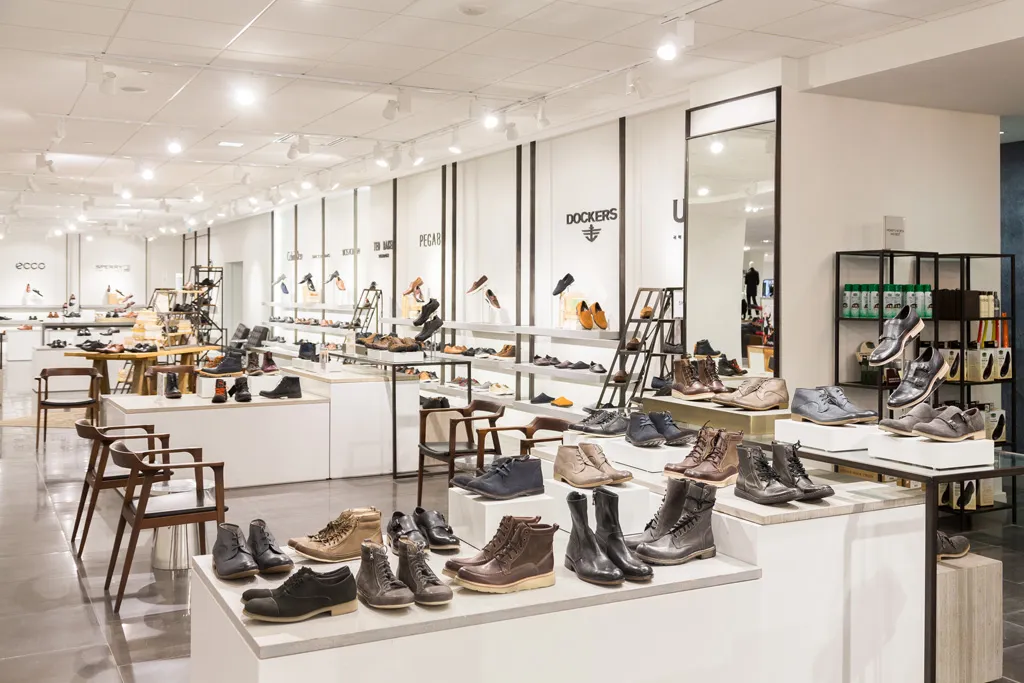
For retailers like Brown’s Shoes, which has been opening new locations in secondary suburban markets, including some formerly anchored by HBC, this data provides a clear directional signal. The appetite for premium footwear among displaced HBC men’s clothing shoppers is real, underserved, and concentrated in exactly the markets Brown’s is targeting.
Jewelry is another elevated category, with engagement ring purchases running significantly above the national average — consistent with a demographic in active family-formation years and with strong cultural traditions of gift-giving around weddings and cultural celebrations.
Where Spending Has Shifted
The retailers that absorbed the most immediate displacement from HBC’s men’s-wear closure were those already embedded in this shopper’s routine. Nike and Adidas were already important for brand-driven sportswear purchases. Winners, Old Navy, Costco, and H&M absorbed the family-trip basics. These were logical landings, and they have held some of the audience in the short term.
But the combination that made HBC useful for this shopper, credible brands, a genuine range across formal and casual, children’s clothing in the same building, and a suburban mall location, does not exist anywhere in the Canadian market at a comparable scale. He has not found a replacement. He has found workarounds.
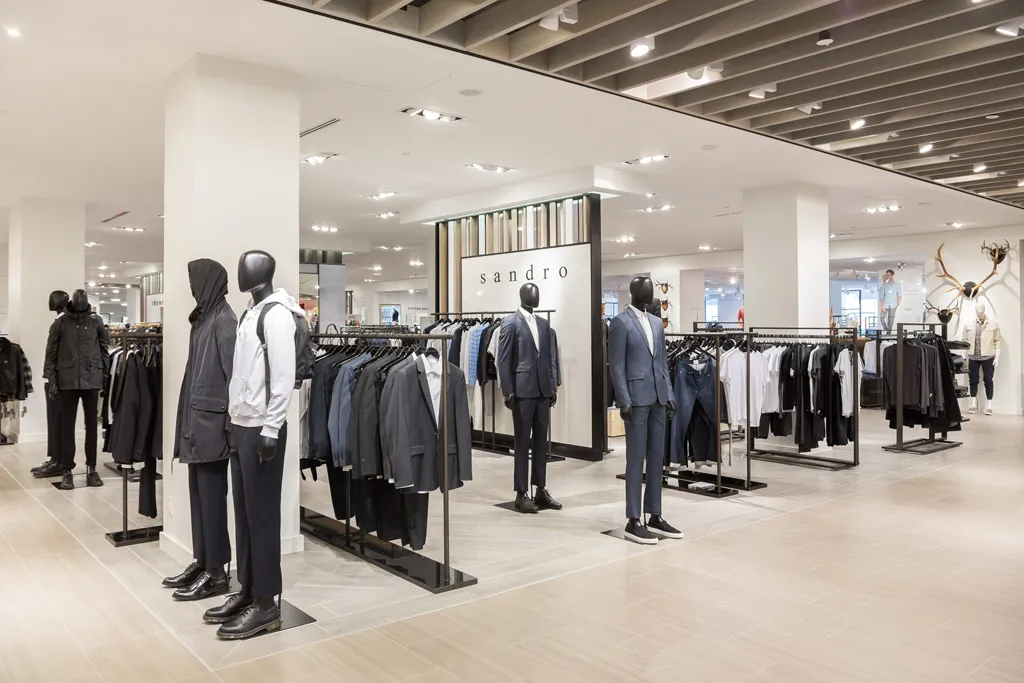
La Maison Simons is well-positioned in Quebec and parts of Ontario, and its men’s range has been expanding. Tommy Hilfiger aligns closely with the brand-heritage preferences of this audience. Caulfeild Apparel’s HANK. brand is positioning itself directly for the displaced HBC male shopper, with an accessible premium menswear proposition. None of these, individually, has the suburban footprint or category range to absorb this audience at scale, but any of them, with genuine messaging and the right locations, could earn an outsized share of it.
Implications for the Market
The profile of the HBC men’s clothing customer points to a segment that is brand-aware, family-oriented, and concentrated in growing suburban markets.
Despite the redistribution of spending, there is no clear, single replacement for the role HBC previously played within this segment. Instead, demand is being met in a more fragmented way.
For retailers, this presents an opportunity. Those able to combine relevant brand assortments, family-oriented offerings, and accessible suburban locations may be better positioned to capture a larger share of this audience over time.
The opportunity is not simply to replace lost retail space, but to rethink how menswear can be delivered within a family-oriented shopping context.
Methodology
This analysis draws on three data sources from Environics Analytics, applied to the audience of confirmed HBC men’s clothing shoppers identified through Vividata’s Opticks retail panel.
- Vividata Opticks is a nationally representative consumer research platform that tracks purchase behaviour, retail channel preferences, and category spending across Canadian households. HBC men’s clothing shoppers were defined as respondents who confirmed purchasing men’s clothing at Hudson’s Bay in the prior twelve months.
- Environics Analytics DemoStats provided demographic profiling across household type, family structure, immigration status, language, housing tenure, and income.
- Environics Research Social Values provided psychographic profiling, drawing on decades of attitudinal and values research.
All index values compare the HBC men’s clothing audience to the Canadian national average. An index of 150, for example, indicates that a given characteristic is 50% more prevalent in this audience than in the general Canadian population. Index values are derived from Vividata Opticks survey data and Environics Research’s Social Values data, fused with Environics Analytics’ segmentation and values frameworks.
Executive Perspective
“What this data reveals is a significant disconnect between how Canadian retailers have historically thought about their men’s clothing customer, and who that customer actually is. The Hudson Bay men’s clothing shopper is younger than assumed, more family-oriented than assumed, and overwhelmingly part of Canada’s South Asian communities, a demographic that is growing faster than any other in the suburban markets where these stores were located. The promotional calendar, the brand communication, and the store format that Canadian menswear retail has relied on for decades were not built for this shopper. Retailers who want to capture this audience need to start by understanding when he shops, where he lives, and what he values, and right now, very few of them do.”
Interested in understanding who these shoppers are in your market and how to better engage them? Reach out to Tanishah Nathoo (Tanishah.Nathoo@environicsanalytics.com) and Anna Racovali (Anna.Racovali@environicsanalytics.com) at Environics Analytics to explore a deeper analysis of the HBC men’s apparel shopper, uncover where these consumers live, how they shop, and identify opportunities to better align your assortment, marketing, and customer strategy to capture this growing segment.





I do miss some of the more premium brands that were at Hudson Bay – some amazing deals on sale!
Otherwise now I shop at Simons & Uniqlo mostly. Some Zara & lululemon. Or I will shop Reiss, Lacoste and Wax London online!
That’s a reasonable observation and it aligns with what often happens when a major retailer exits a market. Customers rarely disappear—they typically migrate to the closest competitor that offers a similar product, price point, and shopping experience.
In the case of Newmarket, Ontario, when the Hudson’s Bay menswear department at Upper Canada Mall disappeared, many customers likely looked for a convenient alternative. Moores Clothing for Men is a natural fit because it specializes in suits, dress shirts, tailoring, and business attire, and it’s located only a short distance away.
A reported increase of 30%–40% in suit sales would not be surprising if:
Former HBC customers were already familiar with the Moore’s brand.
There are few other dedicated menswear retailers in the immediate area.
Customers still require clothing for weddings, graduations, business events, and formal occasions.
Moore’s was able to absorb the demand without major changes to its operations.
Across Canada, it’s likely that the business displaced by HBC has been spread among several retailers rather than going to a single company. Potential beneficiaries include:
Moores Clothing for Men
Tip Top Tailors
RW&CO.
Mark’s
Harry Rosen
The Bay’s remaining online business (if applicable)
What’s particularly interesting is that many former HBC customers were older, loyal shoppers who preferred in-person service. Those customers often don’t move immediately to online-only retailers; they tend to seek out another physical store where they can try on clothing and receive assistance. That makes specialty menswear retailers such as Moore’s particularly well-positioned to capture that business.
The broader retail lesson is similar to what you see in the bicycle industry: when a major player exits a market, demand doesn’t necessarily disappear. The customers simply redistribute themselves among competitors that are best positioned to serve them. In Newmarket’s case, Moore’s appears to have been one of the primary beneficiaries of that shift.
Out west, Simon’s is located in Edmonton at West Edmonton Mall where it is bordered by suburban and other retail/commercial land has exterior and interior entrances. In Vancouver, Simon’s is at Park Royal Shopping Centre, a large mall in a mixed-use area of residential and retail/commercial businesses.
In Calgary where I’m based, Simon’s is downtown only. The city would benefit from a Simon’s at either CF Chinook Centre which has vacant Bay, Saks and Nordstrom spaces. Southcentre in Calgary has a vacant space where the Bay was located. Both malls have the demographics to support a second Simon’s location.
I think Simons may share your opinion about having a second suburban Calgary store 😉
Do you think that Simons can grow into the space left behind by the Bay? Does Simons even want to? I’ve visited the Toronto locations and find it’s a mix of a few limited size runs on “name brand” merchandise and a LOT of cheaply made (though not cheaply priced) house label stuff. This was the same mix I encountered whenever I visited their Quebec stores 20 years ago. Is there an appetite for another US retailer to make a go of it? Or did Nordstroms and Targets and Saks failures scare any remaining suitors off?