

Cassels Brock & Blackwell LLP has spent decades building depth in real estate and development law. In recent years, the firm has sharpened its edge in retail leasing, assembling a cross-country team that many market participants now view as the benchmark for complex, time-sensitive commercial leasing work. The Cassels leasing practice did not arrive at that position by accident. It reflects deliberate recruitment, industry leadership, and a client service model tuned to the speed and nuance of retail and mixed-use deals.
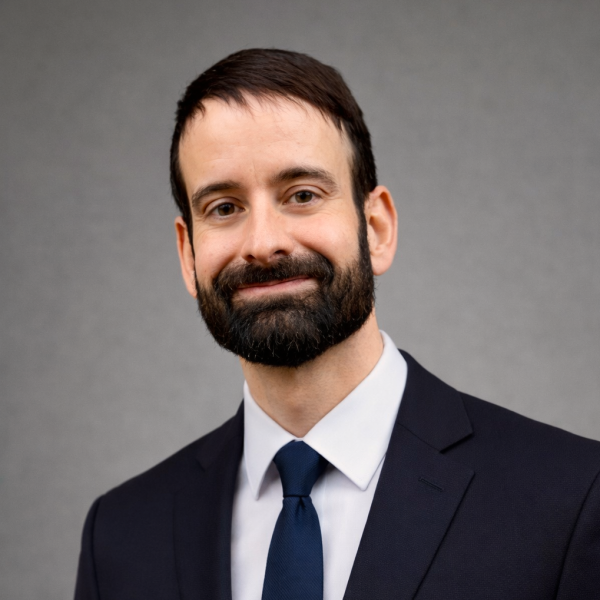
In an interview, Senior Counsel and Commercial Leasing team lead Cory Sherman described how the group reached scale and why it resonates with retailers and landlords navigating a fast-changing market. “Cassels has a progressive attitude coupled with an old school way of servicing its clients. As long as I’ve been practicing, Cassels has had a robust real estate team,” he said, noting the profiles of partners such as David Redmond, Jonathan Freeman, and Natasha Jimeno, and the active leasing and broader real estate expertise of Andrew Salem and Armen Khajetoorian. Sherman joined in spring 2023 after leading a boutique firm for roughly 30 years, a move that served as an accelerant for the leasing practice at Cassels. “It has been really fantastic,” he said. “The performance of our practice group has exceeded the expectations that any of us had within the firm.”

For retailers, developers, REITs, and financial institutions, that momentum matters. Canada’s shopping centres and urban high streets are resurfacing after a decade of anchor store retrenchment and redevelopment. Restaurant and hospitality concepts are scaling quickly, and new-to-Canada banners continue to enter gateway markets before expanding nationally. In that context, capacity, judgment, and relationships carry real value at the negotiating table. The Cassels commercial leasing practice has been built with those realities in mind.
Building a national team with sector depth
Sherman recounts that Cassels’ leadership approached him in late 2022 about deepening the platform around a full-blown retail leasing team. The proposition was straightforward. The firm had strong leasing DNA led by Armen Khajetoorian, a national footprint in Toronto, Vancouver, and Calgary, and a bench already trusted by sophisticated clients. With the right additions, it could set the market standard for retail and mixed-use leasing across Canada.
“We talked for three to six months and eventually made the decision to come here,” said Sherman. “Cassels was open and welcoming. They gave me a lot of autonomy over what I felt I needed to do to move the practice to a large firm.” That autonomy included practical elements that matter in this specialty. “We have a volume-based practice,” he explained. “They allowed us to continue to be flexible on billing arrangements and rates, which are really important to our clientele.”
Sherman arrived with long-time colleague and rising star Caterina White, immediately strengthening the senior end of the roster. The group then added a partner and a senior associate from large national firms, deepening coverage for both landlord and tenant mandates. Home grown associates joined to scale up on time-critical transactions, and the team formalized collaboration with colleagues in Calgary and Vancouver. “We now have a truly national presence,” said Sherman, “which is something our clients need as they grow nationally themselves. I believe that our clients appreciate the business-like approach that we bring to every transaction that we are retained on.”
Cassels growth in this sector aligned with where leasing demand has been strongest. “We do a lot on the restaurant and hospitality side,” said Sherman. Apparel remains active, but the runway today is in experiences, quick-service, and chef-driven concepts that can backfill large footprints or stitch into mixed-use podiums with heavy foot traffic. The Cassels commercial leasing practice evolved in step with that shift, keeping pace with the cadence of rollouts and the realities of construction and operations in dense urban settings.
Why specialization matters for retailers
Sherman is clear about why sector-specific counsel helps retailers. “Larger companies and smaller growing companies have realized that they’re much better off seeking someone that has the very specific expertise that they need,” he said. In leasing, that expertise is partly technical and partly relational. “The relationships that we have in our commercial leasing group with opposing landlords, and their legal counsel, add value to what we can offer to our clients. We know each other. It’s a small bar. Over time there’s a trust.”
That trust lowers friction when speed matters. Many deals arrive at counsel’s desk after tenants and landlords have aligned on business terms. Sherman frames the lawyer’s role succinctly. “It is our job as counsel to finalize that agreement in order to enhance the relationship that has already begun,” he said. “We need to advise our clients, point out issues, and look for middle ground. The last thing we want to do is interfere with the deal or to delay it.” It is a philosophy that prioritizes outcomes and preserves relationships, two things retailers value when rollouts hinge on tight critical paths.
The clause that saved a client seven figures
Experience shows up most clearly in the fine print. Sherman shared a matter that underscores how small drafting choices can protect a client’s business. Several years ago, he represented a retail apparel company leasing a large building for a distribution centre in British Columbia. During construction, a dispute erupted over who had to pay for significant structural work related to seismic upgrading.
“We had made some changes during lease negotiations,” he recalled. The team inserted “two or three words” into the clause covering upgrades, clarifying that if general structural upgrading was required, it was the landlord’s responsibility. The dispute went to court. The tenant prevailed. “That one sticks with me,” said Sherman. “Words matter in our practice.” It is a message he passes on to his associates and students. Diligence at the negotiation stage can determine whether a store opens on time or a P&L absorbs an unexpected capital expense.

Training the next generation to serve at speed
Cassels’ internal culture is another part of the story. The group has institutionalized a mentorship track to accelerate the development of younger lawyers. “We try to include students and junior associates in calls and files from the very beginning,” said Sherman. “We want to provide client-facing experience as quickly as we can so they can learn the soft skills.” The technical side is tackled through a monthly meeting led by partners such as White and Khajetoorian, walking through topics such as operating costs, transfer provisions, and the compromises that mark real time negotiations. “We also have a broad range of precedents,” he added, giving new lawyers a practical scaffold for drafting under time pressure.
The emphasis on service etiquette is deliberate. “How you treat a client, how you talk to people, the whole client service aspect,” said Sherman. “We start from the very beginning on that. I believe that we are able to form true partnerships with our clients.” For retailers and restaurant chains that are balancing openings across multiple provinces, those soft skills and predictable workflows are as important as red-line prowess.
Mixed-use, podium retail, and the realities of opening day
Leasing into mixed-use projects is now a mainstay of Canadian development. Retailers increasingly occupy ground and second levels beneath residential or office towers, bringing unique constraints that can surprise first-time entrants. Sherman’s team has advised on several of the country’s most prominent projects, including Sugar Wharf in Toronto, as well as several First Capital developments in key urban nodes such as Yorkville Village.
“If there’s a condo above, you have to be very careful and aware of the condominium documents,” he said. Declarations, bylaws, and rules can restrict hours of operation, amplified music, loading windows, and food odours. “A restaurant may have to limit its hours from what they’re normally used to unless they can get an exception from the condo board.” Office components bring their own constraints, although typically less restrictive than residential.
Timing is another flashpoint. “A restaurant doesn’t want to open when there’s construction all above and around them,” Sherman noted. Hoarding, noise, and restricted access can damage first impressions. “You only get one chance to open,” he said. Getting the opening conditions right in the lease is now standard practice for experienced tenants and a point of negotiation where the Cassels commercial leasing practice invests considerable attention.

After anchors: how Canadian malls are being rebuilt
Sherman remains bullish on Canadian retail, even as the department store era recedes. “There’s obviously been a transition over the last decade with the department stores,” he said, pointing to closures that hit Canada more sharply than the United States. Yet the story after anchors is one of adaptation. “Those old Target and Nordstrom boxes were carved up in the better shopping centres into all kinds of interesting retail,” he said. New-to-market banners, expanding global brands, and a wave of restaurants and entertainment uses continue to backfill space at properties with strong trade areas and transit.
Where the reckoning has been more acute is in the B and C malls, which have struggled to re-tenant efficiently. That is where large-scale redevelopment and residential intensification are most visible. Gateway centres and top regional malls, by contrast, continue to attract international brands and capitalize on densification, adding non-retail anchors such as clinics, fitness, and culture.
Process, not theatre: a practical approach to negotiation
Sherman’s description of day-to-day work at Cassels is pragmatic. Deals arrive either with a binding offer or a detailed term sheet. Retailers want issues identified, but they do not want the business relationship jolted by legal theatre.
That approach is one reason that the Cassels commercial leasing practice is busy across both sides of the table, acting for landlords on signature developments and for national tenants moving at pace. It is also why the team is visible at industry forums. Cassels partners are frequent speakers at the International Council of Shopping Centers and other professional gatherings where case law, best practices, and drafting trends are debated.

Canada’s retail rebound favours the prepared
Canada’s retail landscape continues to evolve, from luxury to quick-service to experience-driven formats designed for dense communities. Redevelopment is reshaping centres, and mixed-use projects are redefining what it means to be a “mall.” In this environment, retailers need legal partners who can operate at speed, protect downside risk, and preserve relationships with landlords who may be partners on future locations as well.
Cassels has positioned itself for that reality. The firm’s history in real estate and development, combined with targeted recruitment and a mentorship engine, has yielded a team that understands both the business and the law of opening doors. “We’re working in good faith to quickly and efficiently come to an agreement so that the parties can then move on,” said Sherman. That is a simple statement, but it doubles as a strategy for a sector where time to opening is everything. For retailers mapping growth over the next two years, it is exactly the posture they will want at the table.
For more information on Cassels Retail Practice, visit: cassels.com
This article was created in partnership with Cassels. To collaborate with Retail Insider, contact insider@retail-insider.com.










GREAT