One of Greece’s most prominent value retailers is preparing to enter the Canadian market with ambitious plans for large-format expansion. Jumbo S.A., known widely throughout Europe and the Eastern Mediterranean for its vast assortments of toys, seasonal décor, home goods, party supplies, stationery and everyday household items, will open its first three Canadian stores in Ontario in 2026. The development was first reported by Kathimerini Cyprus, which outlined the timing and scale of the company’s move into North America.
These initial locations represent the first phase of a multi-year rollout. Under an exclusive franchise agreement with Israel-based Fox Group, Jumbo expects to open between five and 10 Canadian stores in the first three years of operation, depending on real estate availability and project timelines. Starting in Ontario mirrors how many international retailers establish a foothold in Canada before expanding into other provinces.
To enter Canada, Jumbo is leveraging a franchising model that has already proven successful in several other markets. Rather than building a corporate presence from scratch, the company is partnering with Fox Group, an experienced multi-brand retail operator with a broad portfolio of stores in Israel and Canada. The arrangement allows Jumbo to focus on brand oversight and sourcing while Fox handles real estate negotiations, store construction, staffing and operations.
Fox Group is well established in Canada through banners such as Nike, Mango, Laline and Fox Home. Its experience opening large-format and prime-location stores across the country positions it well to support a concept of Jumbo’s scale. As Fox continues to expand European lifestyle and value brands in Canada, Jumbo becomes a natural addition to its portfolio.
Inside Jumbo: From Greek Toy Specialist to Multi-Category Powerhouse
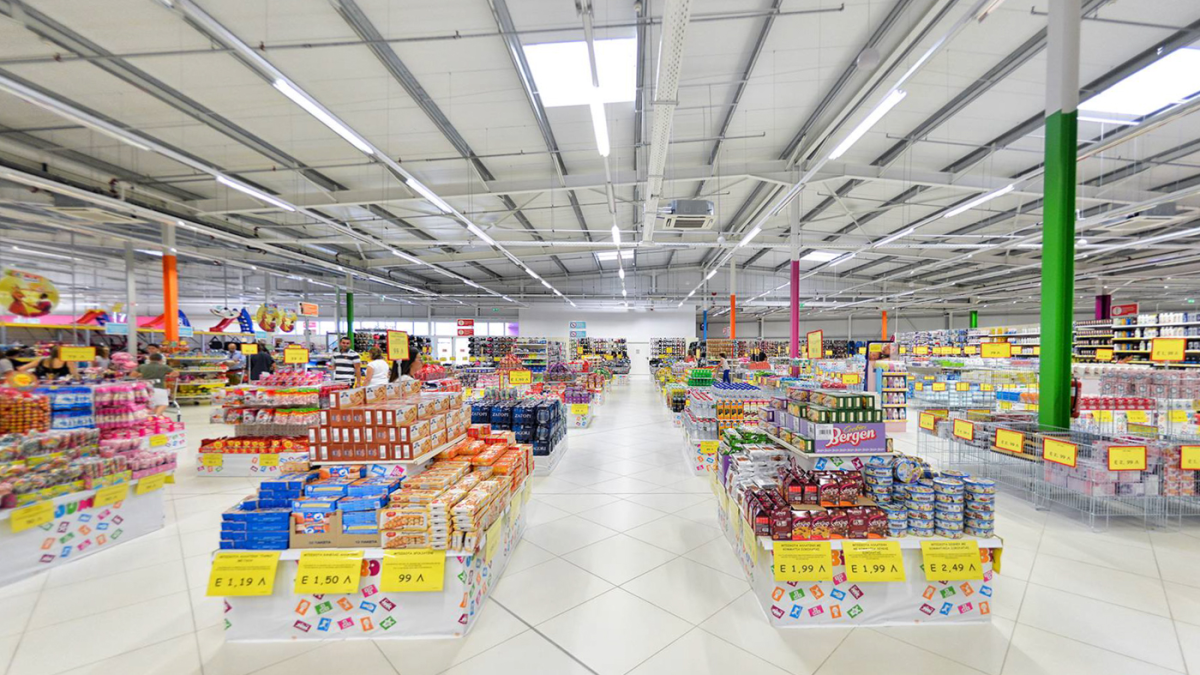
Jumbo began as a toy-focused retailer in 1986 and has since developed into one of Greece’s most powerful multi-category value chains. The brand is known for its extensive aisles of toys, party goods, seasonal décor, home basics, crafts, stationery, baby products and many other categories. The stores emphasize breadth, affordability and discovery, encouraging shoppers to browse entire departments and return frequently for new assortments.
Jumbo operates both retail and wholesale channels, supported by highly centralized sourcing strategies designed to keep prices competitive across diverse markets.
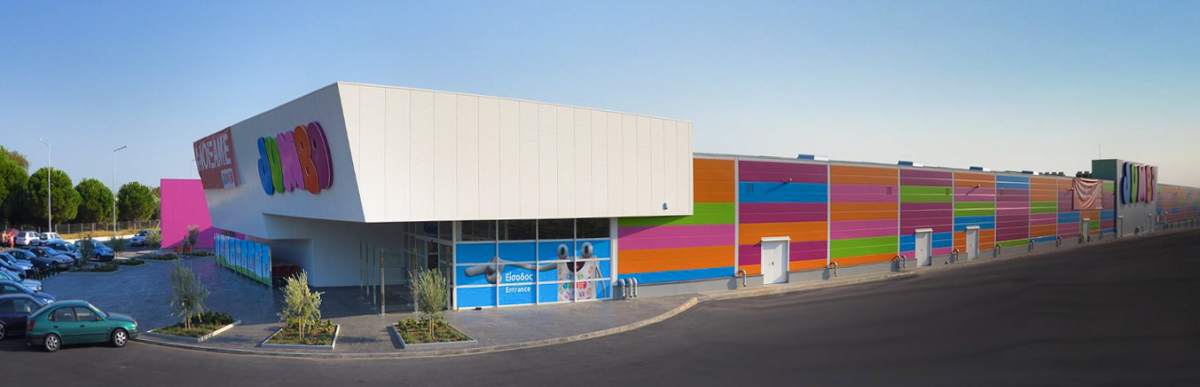
Today, Jumbo’s footprint extends across Europe and the Eastern Mediterranean. The company operates 89 corporate-owned stores in Greece, Cyprus, Bulgaria and Romania and more than 40 franchised locations across seven other countries, including Albania, Kosovo, Serbia, North Macedonia, Bosnia and Herzegovina, Montenegro and Israel.
Israel has emerged as an important example of how the franchise model can scale. Fox Group opened its fourth Israeli Jumbo store in November 2025 and has announced plans for an additional five to six stores in 2026. These developments reinforce Fox’s confidence in the concept and mirror the multi-store acceleration expected in Canada.
Jumbo approaches the Canadian market from a position of strength. The company generated approximately EUR 1.15 billion in sales in 2024 and recorded net income of around EUR 320 million. Its 2025 performance has also been robust. From January to November, sales increased eight percent year-over-year, with November alone rising six percent as strong seasonal activity drove growth across Greece, Cyprus, Bulgaria and Romania.
Hyper-Store Format: What Landlords Can Expect
Jumbo’s preferred format is a full-scale hyper-store spanning roughly 97,000 to about 110,000 square feet of selling space. In several markets, total building areas can reach 130,000 to 140,000 square feet. This makes the concept larger than many Canadian big-box stores and places it close to hypermarket scale.
The large format enables deep assortment breadth and heavy seasonal rotation, key to Jumbo’s high-traffic “treasure hunt” experience.
Jumbo’s preferred real estate format is a large standalone or power-centre box, consistent with the brand’s international footprint across Greece, Cyprus, Bulgaria and Romania, where most stores operate as freestanding hyper-stores with substantial surface parking and direct arterial access. The company’s franchise markets follow the same playbook, placing Jumbo in purpose-built large shells or big-box clusters that function as regional destinations rather than traditional inline mall tenants.
While a small number of locations are attached to or adjacent to enclosed shopping centres abroad, they typically maintain their own entrances and dedicated parking fields. In Canada, this suggests that the most likely sites for Jumbo under Fox Group will be major power centres, standalone highway-adjacent pads or anchor-box conversions at top regional malls, rather than conventional interior mall units.
Large-Format Opportunities in a Market Reshaped by Department Store Closures
The timing of Jumbo’s arrival aligns with significant shifts in Canadian retail real estate. A typical Jumbo store, at roughly 100,000 square feet, matches the type of anchor space that has become increasingly available following the shuttering of the Hudson’s Bay retail chain in the summer. These closures released some of the largest and most prominent retail floor plates in the country back to landlords, particularly in major enclosed malls and suburban centres.
In this landscape, a value-focused hyper-store like Jumbo presents a potentially appealing option. Its scale and family-oriented positioning offer the potential to restore traffic patterns, increase dwell times and support surrounding retailers. For Fox Group, converting former Hudson’s Bay or Sears locations could accelerate its rollout while helping landlords activate large, underused anchor spaces.
A New Wave of Large-Format Retailers Expanding in Canada
Jumbo’s arrival comes as Canada experiences renewed momentum in the large-format retail segment. Several other entrants have recently begun expanding into the country, demonstrating that the value and discount sector continues to attract significant investment.
One of the newest international arrivals is Panda Mart, a Middle Eastern value-chain operator that recently opened a large-format store in Toronto. The retailer has indicated that additional Canadian locations are planned, adding another competitive presence in the multi-category value segment.
Meanwhile, the Benitah family is relaunching the heritage Zellers brand in standalone stores ranging from approximately 30,000 to 50,000 square feet. These mid-sized units contribute to the broader trend of retailers stepping into the anchor space left behind by departed department store banners.
Together, these developments suggest that Canada is entering a new period of anchor reactivation, with global and local players seeking to fill a void in value-oriented, family-focused retail formats. Jumbo’s scale and category breadth position it as one of the most significant additions to this emerging cohort.