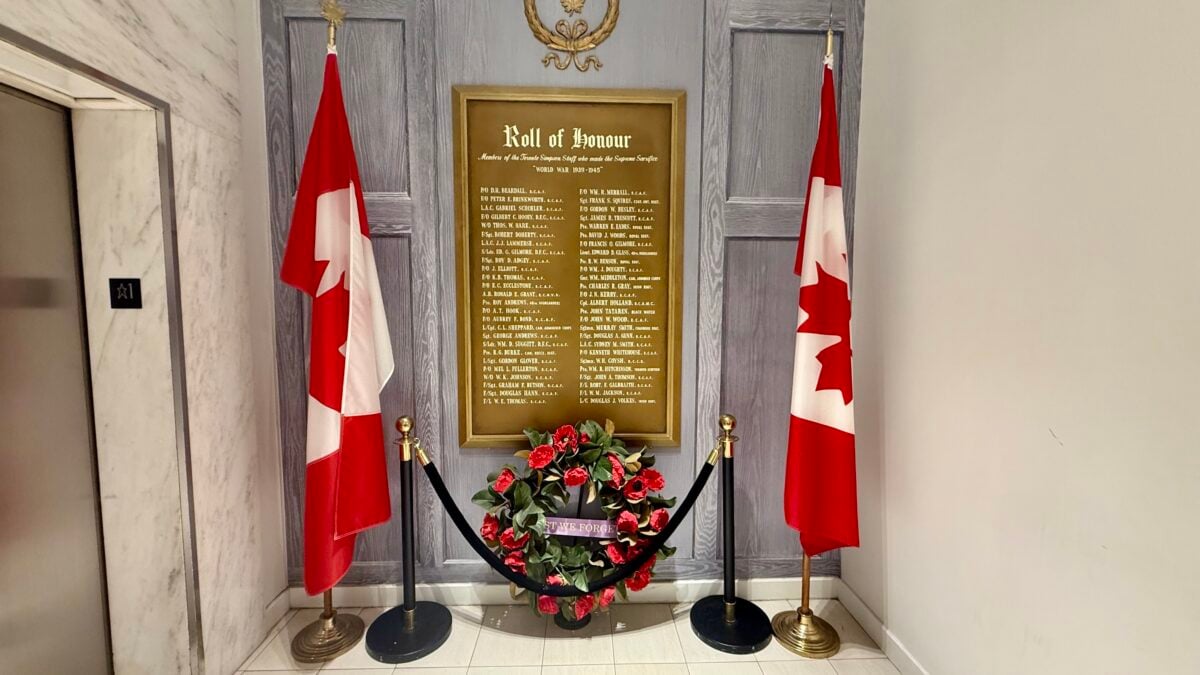
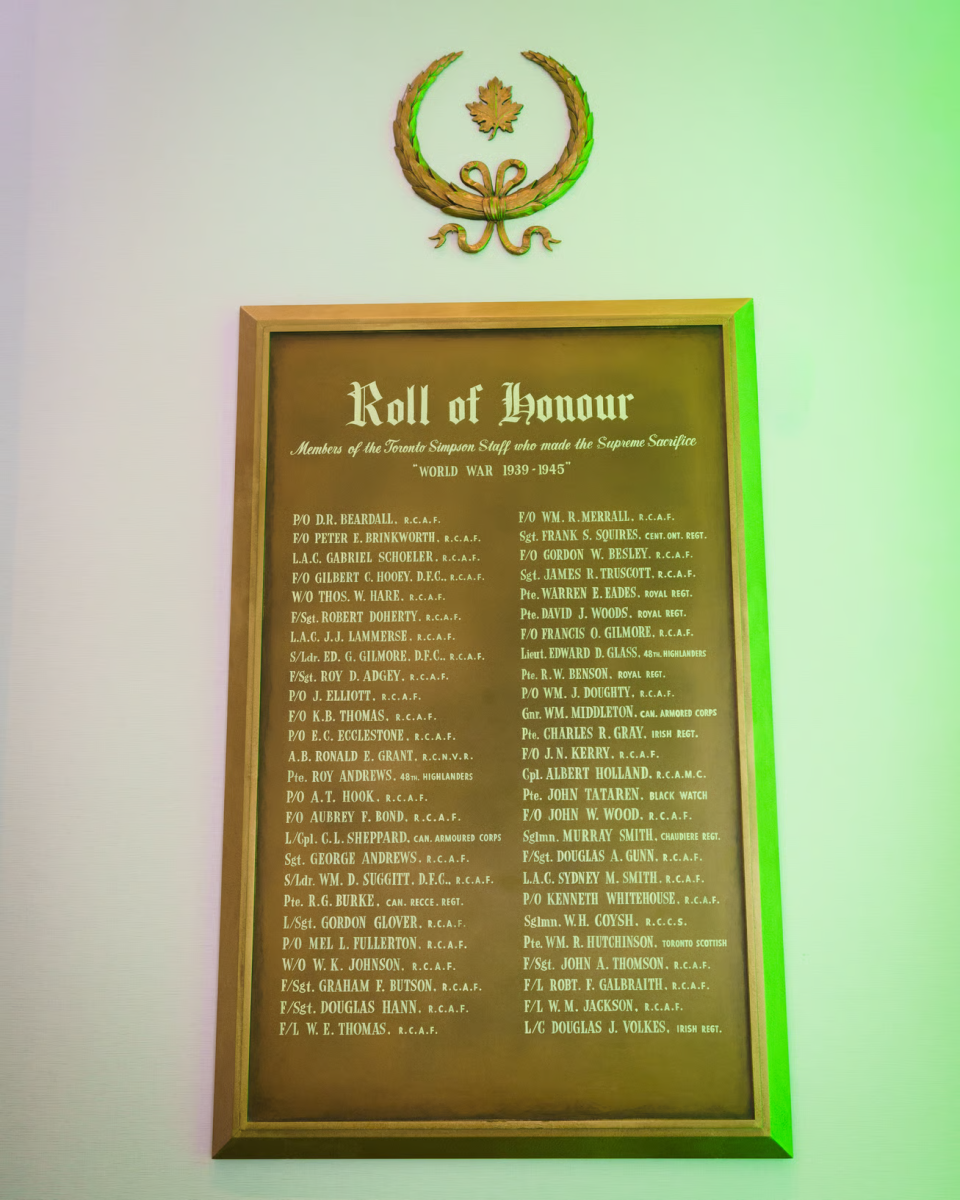
An important piece of Canadian retail and wartime history has found a permanent new home in downtown Toronto. The Simpsons Roll of Honour, a historical memorial commemorating employees of the former Simpsons department store who died during the Second World War, has been installed at the TD Terrace museum on Front Street West.
The plaque, which lists the names of employees who “made the supreme sacrifice,” was unveiled in November at TD’s publicly accessible museum space. Its installation marks the preservation of a rare retail-based war memorial at a time when the physical legacy of Canada’s traditional department store sector is rapidly disappearing.
From Department Store Landmark to Cultural Artifact
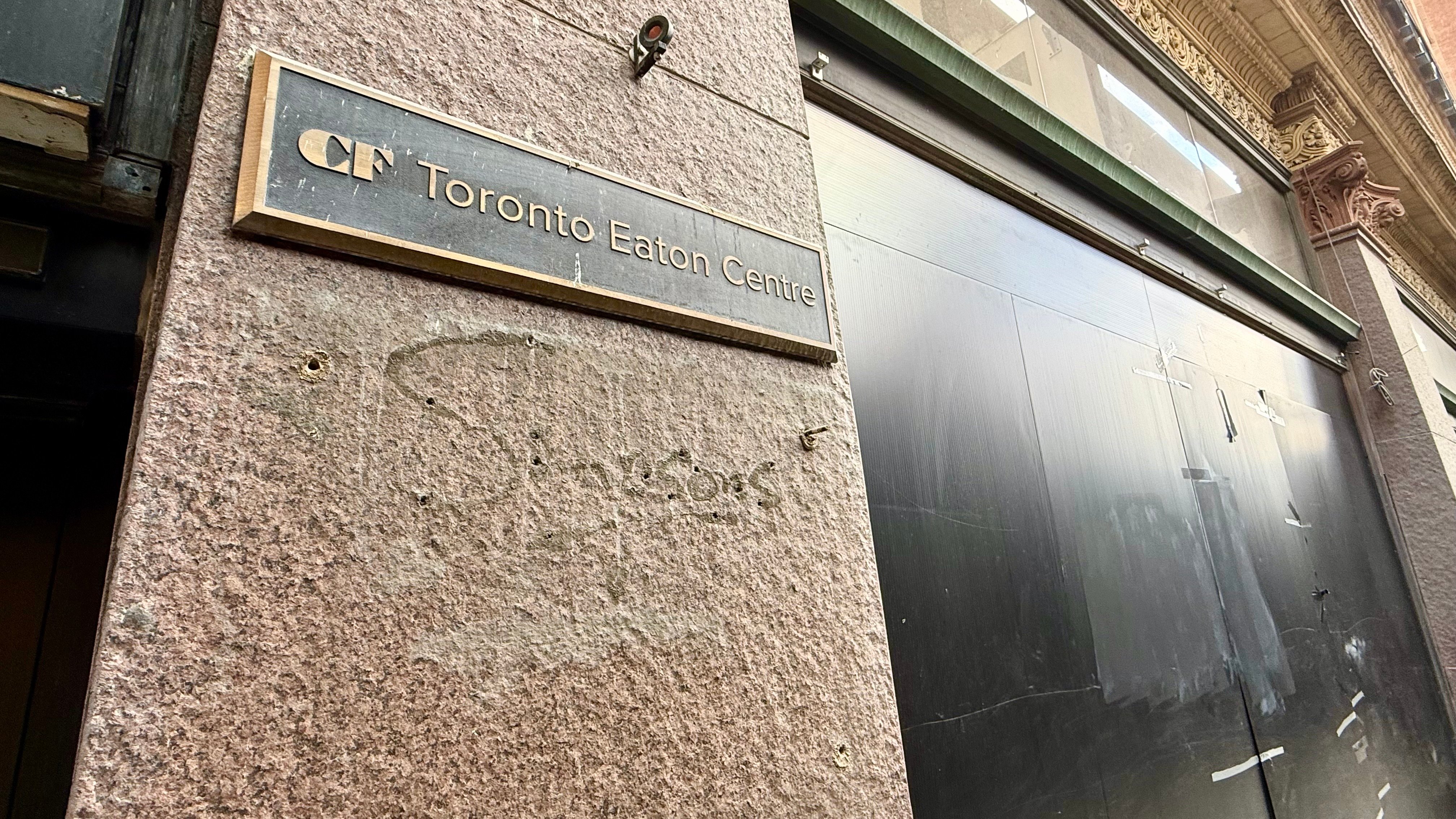
For decades, the Roll of Honour was displayed inside Hudson’s Bay Company’s flagship store on Queen Street in Toronto. Hudson’s Bay acquired Simpsons in 1978, inheriting not only the retail business but also responsibility for the memorial, which remained on display through multiple store renovations and ownership changes.
The memorial’s future became uncertain in 2025, when Hudson’s Bay closed its department stores across Canada amid insolvency proceedings. As locations shuttered and assets were prepared for liquidation, historically significant artifacts housed within the stores, including war memorials, required urgent decisions about their long-term care.
Rather than being sold or placed into private collections, the Simpsons Roll of Honour was gifted to TD Bank Group, ensuring its preservation and continued public access.

A Meaningful Return to a Historic Site
The Roll of Honour now resides in TD’s museum inside the street-level branch of the TD Terrace building. The location carries historical resonance. The site was once home to the R. W. Simpson Warehouse, established in 1905 by Robert Simpson as part of the mail-order business that later grew into the Simpsons department store empire.
“The museum is a publicly accessible site, so we can maintain the connection between the Roll of Honour and the community,” said Amy Korczynski, Curator and Manager, Corporate Heritage Collections at TD.
“It’s now the Bank’s to care for in perpetuity, alongside the TD war memorials that document the service of TD employees.”
The placement connects multiple layers of Canadian commercial history, linking a legacy retailer, a major Canadian bank, and the individuals whose names are inscribed on the memorial.
Ensuring Public Access and Long-Term Stewardship
Korczynski emphasized that the decision to install the memorial at TD Terrace ensures it remains visible and accessible to the public.
Installing the plaque at the museum allows anyone, whether they have a personal connection to the people listed, have served themselves, or have family members who served, to visit and reflect on its significance.
The museum setting also places the Roll of Honour within a broader historical narrative, surrounded by artifacts documenting more than a century of Canadian business, banking, and civic life.

A Ceremony of Remembrance
The Roll of Honour was officially unveiled during a small ceremony attended by members of TD Salutes, the bank’s employee resource group made up of veterans, reservists, and allies across North America.
Korczynski said the ceremony carried a powerful reminder of the importance of remembrance.
“There was a really meaningful remark at the event about how after you die, you die a second death when no one says your name anymore,” she said.
“We’re giving visibility to the names of these people who put everything on the line and did not come home.”
The ceremony reinforced the memorial’s purpose, not only as a historical artifact but as a living reminder of individual sacrifice.
War Memorials in Canadian Retail Spaces
War memorials embedded within retail environments represent a lesser-known but important part of Canada’s cultural landscape. Department stores such as Simpsons and Hudson’s Bay historically served as major employers and community hubs, particularly during the first half of the twentieth century.
The memorials honoured young men who worked in retail before enlisting, many of them in their late teens. As the decades passed, these plaques became, in many cases, the final physical record of their lives and service.
By 2025, nearly 80 years after the end of the Second World War, few direct personal connections to those named on the memorials remained. The plaques themselves became critical carriers of memory.