Elizabeth Grant Skin Care is pursuing continued international expansion and deeper e-commerce engagement as it builds on a 78-year history rooted in direct-to-consumer television retail and in-house manufacturing, according to vice-president Margot Grant Witz.
Grant Witz, the granddaughter of founder Elizabeth Grant who turns 103 today, said the Toronto-based company is focused on opening new markets overseas, strengthening its digital storefront and maintaining control over manufacturing as it navigates a rapidly changing global beauty industry.
“I just want to be in everybody’s bathroom around the world,” Grant Witz said in an interview, describing what she called a long-standing goal that has guided the company’s growth strategy.
A multigenerational business model
Elizabeth Grant Skin Care was founded more than seven decades ago and relaunched in its current form in 1999 after Elizabeth Grant closed the business in 1992 and later returned to the market alongside her daughter-in-law. Grant Witz said the company’s longevity is tied to a multigenerational approach that treats leadership not only as operators, but also as customers.
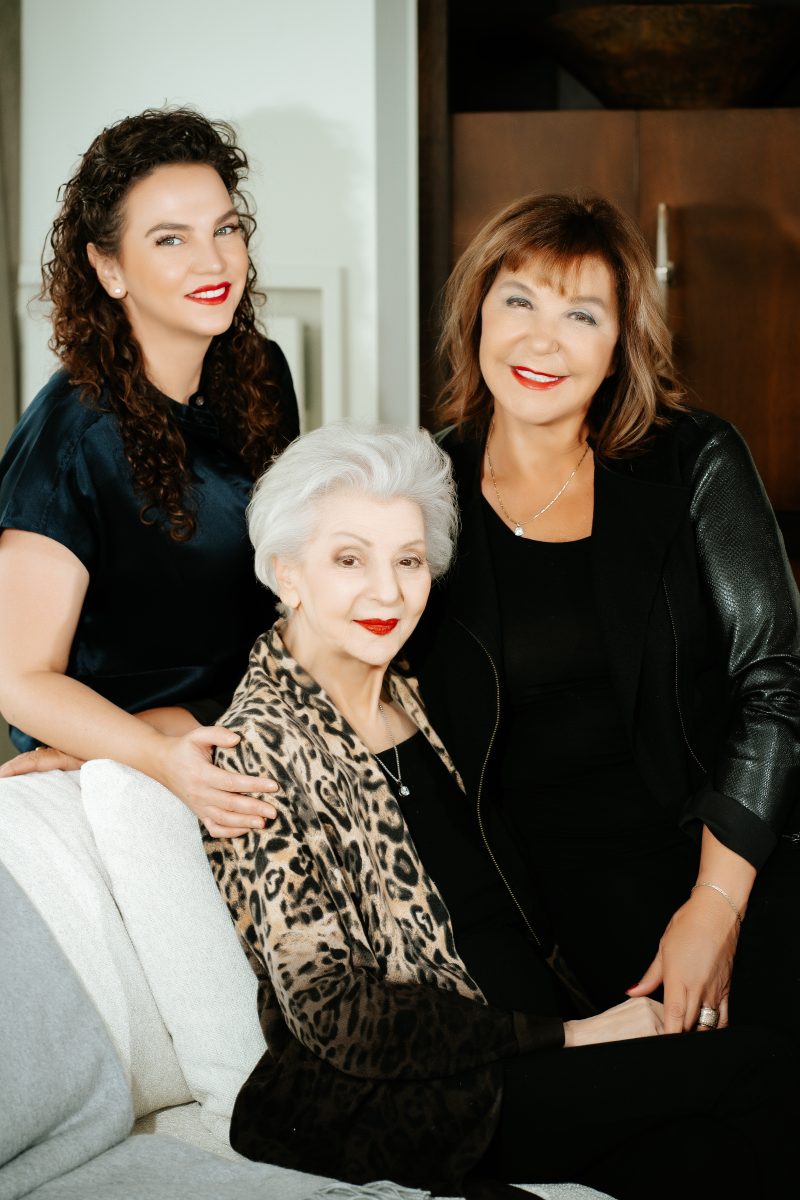
The company’s leadership spans three generations, with Elizabeth Grant now 103, her daughter-in-law Marion Witz in her 70s, and Grant Witz, 41, representing the current executive generation. Grant Witz said that perspective shapes how the company develops products and positions itself in the market.

“We approach it as customers,” she said, adding that the company’s head of research and development is also a woman, grounding decisions in what she described as lived experience around aging and skincare.
Grant Witz said the company’s culture emphasizes adaptability rather than relying on past success. “It’s not, ‘We’ve done something well, now we’re good,’” she said. “It’s how do we constantly improve, how do we constantly evolve, and how do we respond to the world as it is today.”
Direct-to-consumer focus without brick-and-mortar
Elizabeth Grant Skin Care operates without physical retail stores, relying instead on television shopping channels, e-commerce and online marketplaces. The company sells through The Shopping Channel and equivalent platforms in 10 countries, as well as through its own website and Amazon.
Grant Witz said the business has never pursued brick-and-mortar retail and has no plans to do so, citing the efficiency and reach of its current model.
When the company relaunched in the late 1990s, television shopping was the sole distribution channel. Grant Witz said the timing coincided with a shift in the format, from static product images to live presenters, which created an opening for the brand.
Her grandmother, she said, was initially reluctant to restart the business due to the demands of traditional retail. The emergence of live television shopping eliminated the need to “knock on doors,” prompting the family to audition for the channel and relaunch the brand.
Germany emerges as top market
While Canada remains a core market, Germany has become the company’s largest by volume, Grant Witz said. The brand is now the number two skincare brand on QVC Germany, behind a domestic German manufacturer.
Grant Witz attributed Germany’s scale to population size and the strength of televised retail in the market. Canada is the company’s second-largest market, where it is the top skincare brand at TSC and one of the channel’s leading vendors.
“It’s an interesting dichotomy,” she said, pointing to the contrast between Germany’s size and Canada’s smaller population but strong brand performance.
Despite its global footprint, Grant Witz emphasized the company’s Canadian identity, noting that manufacturing and headquarters operations are based in Toronto.

Manufacturing as a competitive lever
Elizabeth Grant Skin Care manufactures its own products, a decision Grant Witz described as both costly and strategically important. She said roughly 90 per cent of skincare companies globally rely on white-label manufacturing, while Elizabeth Grant has invested in its own production capabilities.
The company operates out of a 124,000-square-foot manufacturing facility and employs a workforce that is approximately 85 per cent women, according to Grant Witz.
“Manufacturing is the most expensive,” she said, but added that controlling production allows the company to maintain quality and respond more directly to customer needs.
Grant Witz said the business does not spend on traditional advertising and has never done so, relying instead on word of mouth, media coverage and direct engagement with consumers through television and digital platforms.
Financing challenges and early constraints
Grant Witz said the company’s modern incarnation was built under tight financial constraints. When her mother sought financing in the 1990s to relaunch the business, she was turned down by multiple banks before securing a $5,000 loan from RBC Business Banking.
“That $5,000 in the ’90s” ultimately supported the relaunch that led to the company’s current scale, she said, calling the experience a defining chapter in the company’s history.
Grant Witz said that history informs how the company views growth today, balancing ambition with discipline and operational control.

Leadership lessons and long-term outlook
Grant Witz credited her grandmother with shaping the company’s leadership philosophy, particularly around resilience and persistence.
“No doesn’t mean no,” she said, recalling advice passed down from Elizabeth Grant. “It might mean not right now.”
Looking ahead, Grant Witz said the company is focused on expanding into new overseas markets, strengthening its e-commerce presence and continuing to evolve alongside consumer expectations.
She described the brand’s future as an ongoing conversation with customers rather than a fixed roadmap, shaped by changes in technology, shopping behaviour and global demand.
“How do we continuously strengthen our footprint in the Canadian market while opening new doors internationally?” she said.
For Grant Witz, the company’s long-term success is rooted less in scale than in relevance. “If we continuously make a great product,” she said, “our community will keep telling others.”
More from Retail Insider:
- Graydon Skincare navigates a changing Canadian beauty landscape
- Bubble Skincare targets deeper Canadian expansion as affordable skincare gains traction