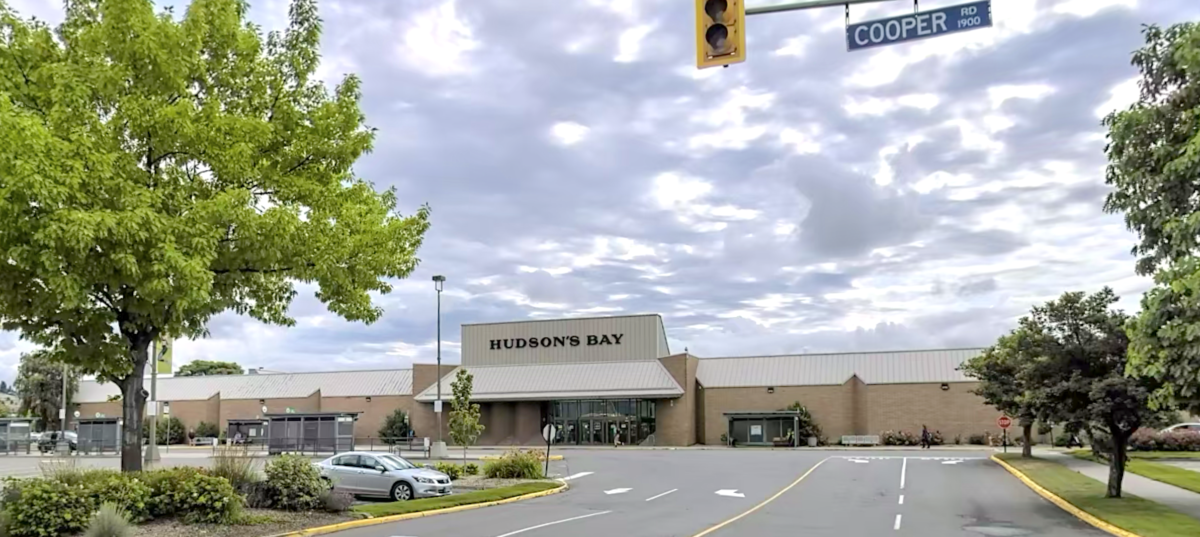
The widespread closure of Hudson’s Bay department stores has raised persistent questions across the Canadian retail and real estate industries about how such a large volume of anchor space will be absorbed. A new national research report from JLL suggests the situation, while complex, is far from unmanageable. According to the January 2026 outlook, approximately 65 percent of vacant Hudson’s Bay retail space across Canada is expected to be committed within two years, signalling that the market is already adapting to one of the most significant retail disruptions in decades.
The report analyzes 96 former Hudson’s Bay locations representing close to 15 million square feet of retail space nationwide. While the scale of the closures is unprecedented in modern Canadian retail, the findings indicate that landlords, leasing teams, and retailers are responding with strategies shaped by current market realities rather than nostalgia for the department store era.
The closure of Hudson’s Bay stores marked the end of an institution whose origins date back to 1670 and whose physical footprint helped define shopping patterns in cities and malls across the country. At its peak, Hudson’s Bay occupied some of the most prominent retail real estate in Canada, often in transit-oriented urban locations or as the dominant anchor in regional and super-regional shopping centres.
While the emotional and historical significance of the closures is considerable, the practical implications must be viewed through a contemporary market lens, according to JLL. Canada today has lower retail density than many peer markets, limited new shopping centre development, and a constrained supply of high-quality retail space in major urban centres. These factors are creating the conditions for former Hudson’s Bay boxes to be reabsorbed rather than left dormant.
Why Retail Is Winning Over Redevelopment
One of the clearest conclusions in the report is that most former Hudson’s Bay space will remain in retail use, at least in the near to medium term. Approximately 78 percent of the vacated square footage is expected to continue operating as retail, with redevelopment playing a more limited role than some observers initially expected.
The reason is not a lack of ambition among property owners, but rather the current economic environment. High construction costs, challenging financing conditions, slow municipal approval processes, and a deeply constrained residential condominium market have collectively reduced the appeal of large-scale mixed-use redevelopment. In response, landlords are prioritizing faster, lower-risk strategies that generate income while preserving long-term optionality.
This has led many owners to pursue interim or phased retail solutions, including short-term leases, while deferring major redevelopment decisions until capital markets and housing fundamentals improve. The approach reflects pragmatism rather than retreat, grounded in the realities of 2026.
The Size Mismatch Driving Strategy
At the core of the challenge is scale. The average Hudson’s Bay store measures approximately 152,000 square feet, compared with the average Canadian shopping centre lease size of roughly 3,700 square feet. In practical terms, one former Hudson’s Bay box can equal the footprint of about 40 average retailers.
This mismatch makes single-tenant backfilling difficult outside a narrow group of operators. Only a limited pool of tenants, such as large grocery chains, mass merchants, automotive services, department stores, and select entertainment or fitness concepts, can realistically absorb an entire Hudson’s Bay box on their own.
As a result, subdivision has emerged as the dominant strategy. Approximately 64 percent of the vacant square footage is expected to be repurposed through multi-tenant configurations. These typically involve breaking former department stores into mid-format units ranging from 15,000 to 40,000 square feet, allowing three to five tenants to occupy a single former box.
Multi-Tenanting Becomes the Default Solution
The move toward multi-tenanting reflects broader shifts in retail demand. Mid-format spaces are increasingly attractive to fashion flagships, home furnishings retailers, sporting goods operators, health and wellness brands, dining concepts, and entertainment uses. These tenants benefit from the visibility and infrastructure of former anchor locations without the operational burden of oversized footprints.
Only a small share of former Hudson’s Bay space is expected to be absorbed by single tenants, while a further portion has been earmarked for longer-term redevelopment or alternative uses. This distribution underscores how rare true one-for-one anchor replacements have become in Canada’s retail landscape.
For landlords, the process is rarely simple. Subdividing large, often multi-storey department stores requires significant investment in mechanical, electrical, and structural systems, many of which were originally designed to operate independently from the rest of a shopping centre. Nonetheless, these investments are increasingly justified by demand for well-located, adaptable retail space.
Major Urban Markets Provide a Cushion
Market conditions in Canada’s largest cities are playing a critical role in supporting absorption. Retail availability in Toronto sits at approximately 1.8 percent, while Vancouver’s availability is around 2 percent, placing both among the tightest retail markets in North America.
These low availability rates give landlords leverage, particularly when repositioning former Hudson’s Bay locations that occupy prime, transit-oriented sites. Many of these properties benefit from decades of proven retail performance, making them attractive to expanding tenants despite the complexity of reconfiguration.
Geographically, the majority of Hudson’s Bay boxes are located in Canada’s largest metropolitan markets. Secondary and tertiary markets face longer absorption timelines, particularly for lower-tier locations or multi-floor properties that are more difficult to subdivide efficiently.
Lessons From Past Retail Vacancies
The Hudson’s Bay closures fit within a broader historical pattern of large-format retail disruption in Canada. Previous exits by Sears, Target, and Nordstrom also raised concerns about long-term vacancy, yet in each case, the retail real estate industry ultimately adapted through a combination of subdivision, re-tenanting, and selective redevelopment.
Experience gained during those earlier transitions has positioned landlords and leasing teams to respond more effectively this time. Brokerage activity, retailer interest, and underlying market fundamentals all point toward a phased but achievable path to re-leasing the majority of Hudson’s Bay retail boxes.
Case Studies Highlight the Range of Viable Outcomes
The JLL report makes clear that there is no single formula for repurposing former Hudson’s Bay retail boxes. Instead, outcomes vary significantly based on market strength, location quality, building configuration, and capital conditions. To illustrate this point, the report highlights a series of Canadian case studies that together demonstrate how landlords are adapting large-format retail assets to meet current and evolving demand.
In Vancouver, Metropolis at Metrotown offers an example of a mixed-use anchor redevelopment that extends beyond conventional retail. Formerly occupied by Sears and Toys “R” Us, the approximately 140,000-square-foot site is being demolished to accommodate two residential towers with ground-floor retail integrated into the podium. The redevelopment will also create a new indoor entrance to the shopping centre, reinforcing Metrotown’s role as a dense, transit-oriented retail destination while layering residential density onto an already high-performing asset. This case illustrates how, in select top-tier urban markets, former department store boxes can support ambitious mixed-use redevelopment when long-term fundamentals align.
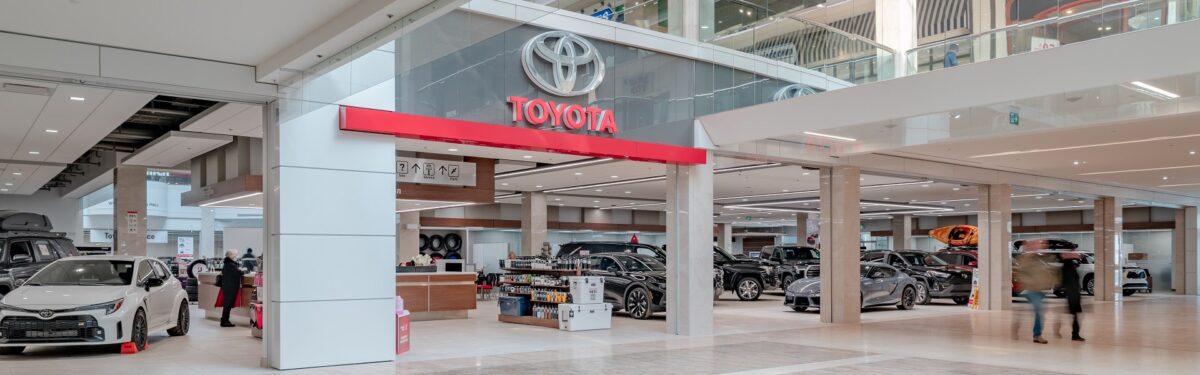
West Edmonton Mall presents a very different approach, one that prioritizes non-traditional retail uses while maintaining the asset’s role within a retail-driven environment. A former 180,000-square-foot Sears location was redeveloped to house a Toyota dealership on the lower level, including showroom and service operations, while the upper level was converted into a flagship-format The Brick home furnishings store. The strategy demonstrates how large enclosed malls can integrate automotive retail alongside conventional retail, broadening the tenant mix and generating new reasons for customer visits without relying solely on fashion-led anchors.
In Calgary, Southcentre Mall provides a clear example of how subdivision and tenant diversification can fully stabilize a large vacant box. The former 240,000-square-foot Sears space was reconfigured across multiple levels to accommodate Dollarama, PetSmart, and Winners on the first level, with Earls, Decathlon, and an entertainment concept occupying upper floors. The redevelopment achieved full occupancy by deliberately blending retail, dining, and experiential uses. It also required extensive upgrades to mechanical and electrical systems that had previously operated independently when the space functioned as a single anchor.
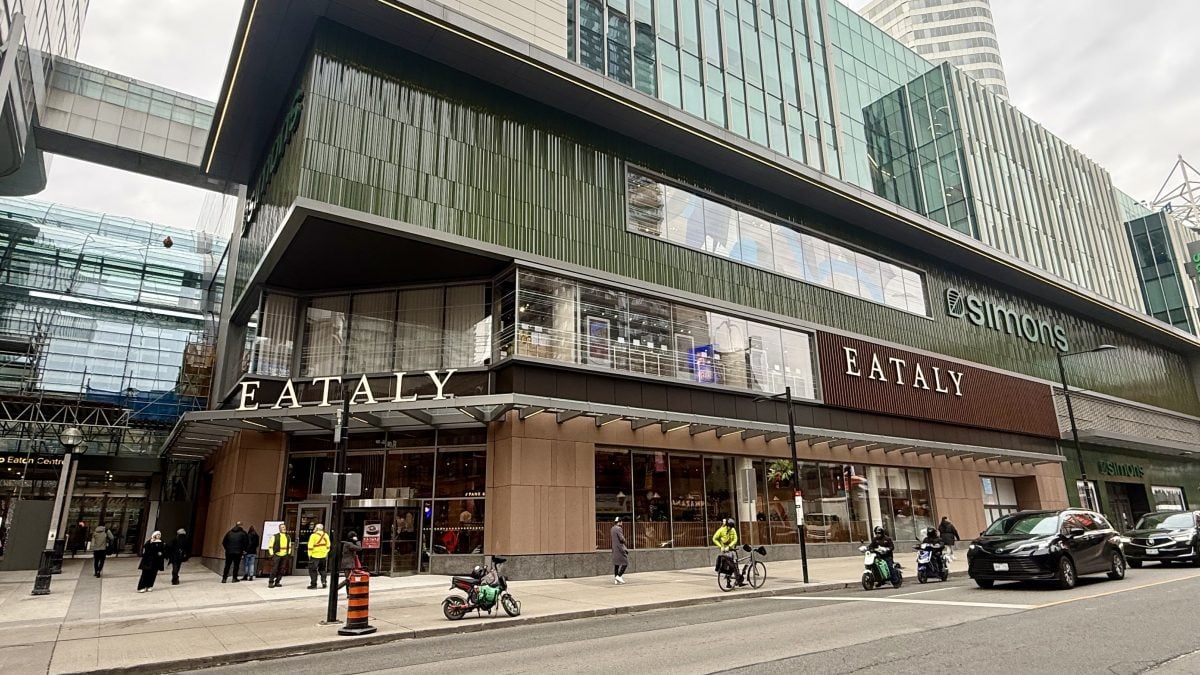
Toronto’s CF Toronto Eaton Centre demonstrates how premium urban locations can absorb large-format vacancy through high-profile multi-tenanting. The former Nordstrom space, totaling approximately 220,000 square feet, was strategically subdivided among Eataly, a flagship Nike store, and Simons. The phased openings allowed the centre to preserve its flagship and luxury positioning while replacing a single large tenant with multiple high-traffic brands. The case also reflects a broader evolution of the asset, as floors above the former Nordstrom were converted into office space, further diversifying income streams and strengthening the property’s long-term resilience.
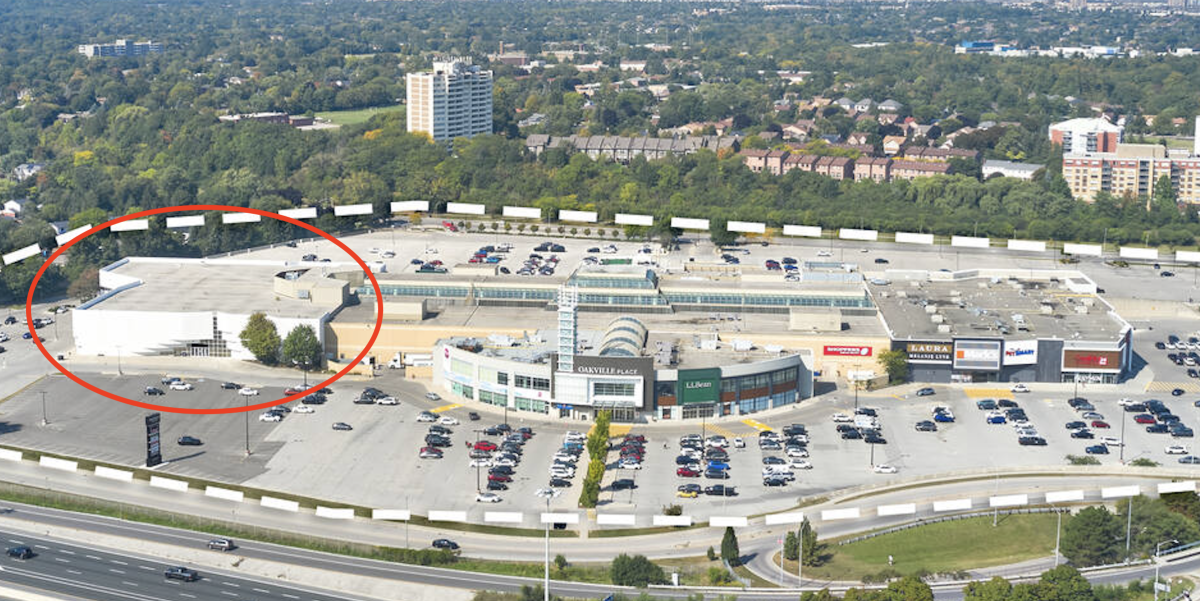
Also in Toronto, RioCan Stockyards highlights the growing role of grocery and food-driven anchors in backfilling oversized retail spaces. A former 127,000-square-foot Target location was replaced with Nations Fresh Foods, an Asian grocery concept that incorporates entertainment elements such as a children’s playground and party rooms. The success of the Stockyards location later led Nations to announce plans to replicate the model in a former Hudson’s Bay box at Oakville Place, reinforcing the viability of grocery-led, experience-oriented anchors in large-format retail environments.
In Ottawa, Carlingwood Shopping Centre pursued a more traditional anchor replacement strategy, albeit with a modern execution. The former 179,000-square-foot Sears box was demolished and replaced with a flagship-format Canadian Tire. The new store features a large click-and-collect canopy, a garden centre, and an auto service department with a customer lounge, reflecting the evolution of big-box retail toward omnichannel functionality. The project required several years of planning and development, but ultimately resulted in one of the retailer’s largest and most advanced Canadian locations.
The most ambitious example in the report comes from downtown Montréal, where a nine-storey, 655,000-square-foot Hudson’s Bay building is proposed for full cultural and mixed-use transformation. Plans associated with a $400 million acquisition bid envision a museum dedicated to the fur trade and the historical exchanges between the Cree and the Hudson’s Bay Company, an urban Indigenous cultural centre, experiential retail components, mixed-use facilities, and a hotel complex. Unlike other examples in the report, this project represents a long-term reinvention rather than near-term retail backfilling, illustrating how certain landmark properties may ultimately transition away from pure retail altogether.
Taken together, these case studies reinforce the report’s conclusion that former Hudson’s Bay retail boxes are being repurposed through a wide spectrum of strategies rather than a single dominant model. From subdivision and experiential retail to grocery-led anchors, non-traditional uses, and long-horizon cultural redevelopment, the future of these spaces is being shaped by local market conditions and asset-specific realities rather than a uniform national playbook.
What This Means for the Future of Hudson’s Bay Retail Boxes
While the scale of Hudson’s Bay’s exit is historic, the structural characteristics of the Canadian retail market are helping to absorb the shock, according to JLL. Tight availability in major cities, a shortage of quality large-format space, and retailer demand for flexible mid-sized units are all supporting the reactivation of former department store locations.
Timelines will vary significantly by property, with some locations requiring more than two years to fully stabilize. Even so, the broader outlook suggests that Hudson’s Bay retail boxes will continue to play an active role in Canada’s retail ecosystem, though in forms that look markedly different from the department stores that once defined them.