After a challenging period marked by inflation, interest rate pressure, and declining consumer confidence, the Canadian apparel market delivered a stronger than expected performance in 2025. According to newly released data compiled by Randy Harris, publisher of Canadian Apparel Insights at Trendex North America, apparel sales are on track to increase by approximately 8.5 percent, reversing a 2.8 percent decline in 2024.
Harris notes that while final totals will not be confirmed for several months, the direction of the market is already clear. Apparel emerged as one of the stronger performing retail categories in Canada during 2025, despite ongoing economic uncertainty and structural disruption across the sector.
The rebound was not evenly distributed. Instead, 2025 exposed widening fault lines between retailers that adapted quickly to shifting consumer priorities and those that entered the year with structural weaknesses.
Value Dominates Consumer Apparel Spending Decisions
One of the defining characteristics of the Canadian apparel market in 2025 was the consumer’s increasing focus on value. Harris points to a combination of negative economic headwinds and declining confidence that reshaped purchasing behaviour across income groups.

Rather than abandoning apparel purchases altogether, many consumers recalibrated how and where they spent. Price sensitivity increased, promotional responsiveness intensified, and perceived value became more important than brand loyalty. This shift influenced everything from assortment planning and pricing strategies to store traffic patterns and inventory management.
Retailers that were able to clearly communicate value, whether through pricing, quality, or versatility, were better positioned to retain customers. Those that relied on legacy brand equity without adjusting to the new value equation struggled to maintain momentum.
Resale Apparel Moves From Alternative to Mainstream
The growing emphasis on value directly contributed to the continued rise of resale apparel. Trendex estimates resale apparel sales in Canada increased by approximately 16.7 percent in 2025, making it one of the fastest growing segments within the broader apparel market.
Harris attributes this growth to several converging factors. Economic pressure pushed more consumers to seek lower priced alternatives, while the number of resale outlets and platforms continued to expand. At the same time, consumer attitudes toward secondhand apparel evolved, with resale becoming increasingly normalized across age groups.
The expansion of resale has meaningful implications for traditional retailers, particularly those operating in entry level and mid priced segments. As resale gains share, it adds a new layer of competition that did not exist at scale a decade ago.
Omnichannel Execution Becomes a Baseline Requirement
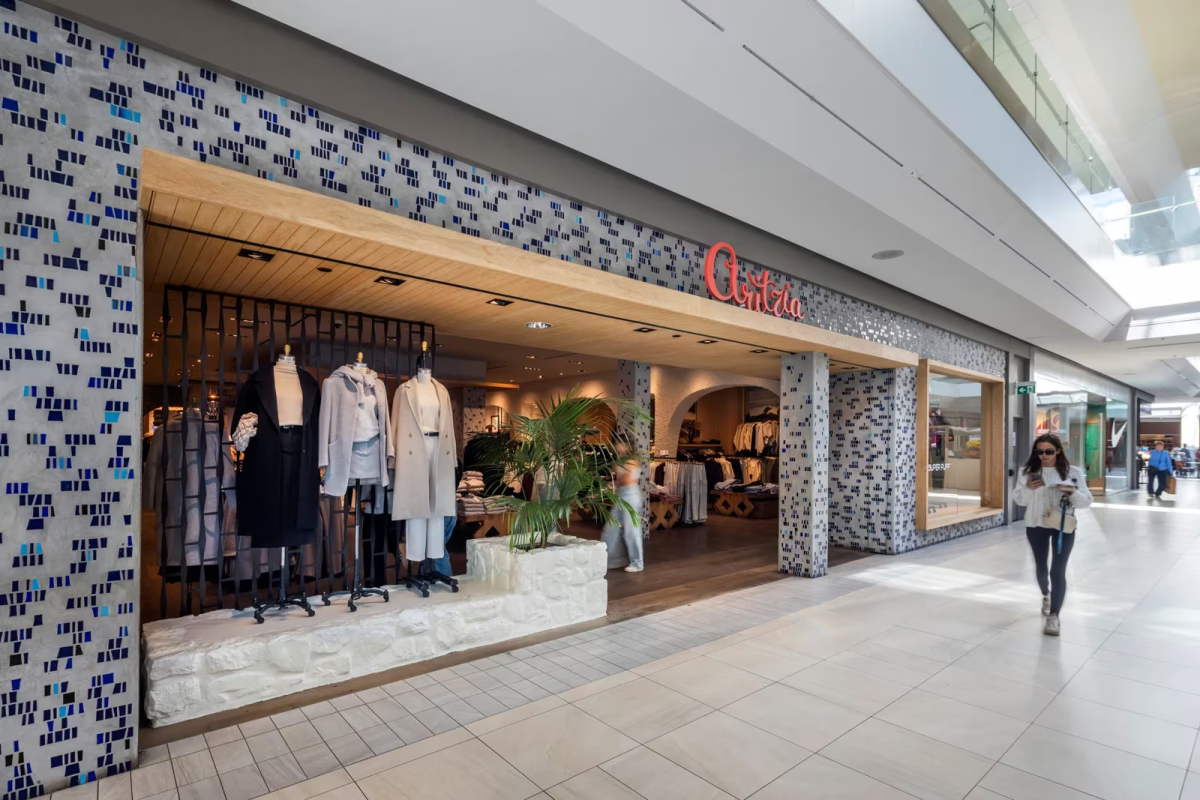
By 2025, omnichannel retailing was no longer optional. Harris notes that the success of retailers such as Harry Rosen, Aritzia, and Groupe Dynamite reinforced a critical reality for the industry. From the consumer’s perspective, seamless integration between physical stores and digital platforms is now expected.
Retailers that invested heavily in e commerce infrastructure, inventory visibility, and fulfillment flexibility benefited from stronger engagement and higher conversion rates. Those that underinvested or treated digital as a secondary channel experienced stagnation, even as overall market sales increased.
The result was a widening performance gap between omnichannel leaders and laggards. In 2025, execution mattered more than intent, and the cost of falling behind became increasingly visible.
Apparel Sourcing Continues to Diversify Beyond China
China remained Canada’s largest apparel sourcing market during the first ten months of 2025, accounting for approximately 34 percent of apparel imports. Imports from China increased by an estimated 3.8 percent during the period.
However, Harris highlights that apparel imports from other countries grew at significantly faster rates. Vietnam, Bangladesh, Cambodia, India, and Indonesia all posted double digit growth, reflecting a continued shift toward lower cost sourcing markets.
This diversification has had a direct impact on pricing dynamics within the Canadian apparel market. Combined with aggressive promotional activity at retail, the migration away from higher cost production helped push apparel inflation into negative territory.
Apparel Prices Decline Despite Broader Inflation
In contrast to many other consumer categories, apparel prices in Canada declined in 2025. Trendex estimates apparel inflation fell by approximately 0.6 percent during the year.
For consumers, lower prices provided some relief amid broader cost of living pressures. For retailers, however, the environment created additional margin pressure, particularly for those already contending with rising labour, occupancy, and logistics costs.
Promotional intensity increased across much of the market, reinforcing value driven behaviour while compressing profitability. The pricing environment further rewarded scale and operational efficiency, advantages that smaller and highly leveraged retailers often lacked.
Canadian Apparel Exports Perform Better Than Expected
Despite tariff uncertainty and geopolitical friction, Canadian apparel exports showed surprising strength in 2025. Apparel exports to the United States increased by approximately 14.8 percent during the first ten months of the year, while total apparel exports rose 7.7 percent overall.
Exports to China declined sharply, falling more than 30 percent, but this was partially offset by a significant increase in exports to Hong Kong. According to Harris, the data suggests Canadian apparel suppliers were able to navigate trade challenges more effectively than anticipated, particularly in the US market.
Limited Insolvencies Mask Deeper Structural Issues
Only six apparel retailers filed for creditor protection in Canada during 2025, a relatively modest number given the scale of disruption in the sector. However, the list included several high profile names, including Hudson’s Bay, Ssense, Frank And Oak, Comark, Claire’s Canada, and Boutique le Pentagone.
Harris attributes these failures to a combination of poor management decisions, adverse economic conditions, and highly leveraged balance sheets. While the number of filings was limited, their impact was significant, accelerating store closures, job losses, and consolidation across the industry.
Foreign Apparel Retailers Continue to Target Canada
The Canadian apparel market continued to attract foreign entrants in 2025. Eleven international apparel retailers entered the market during the year, up from eight in 2024. Only two of the new entrants were US based, highlighting Canada’s appeal beyond North American brands.
The influx increased competitive intensity in major urban centres and further fragmented consumer attention. For domestic retailers, the continued arrival of foreign brands added pressure to differentiate and sharpen value propositions.
Luxury Apparel Rebounds as Market Reshapes
Luxury apparel sales in Canada increased by an estimated 4.1 percent in 2025, despite the exit of Saks Canada and Nordstrom and ongoing challenges at Ssense. Harris notes that growth was driven primarily by high income consumers and foreign visitors taking advantage of the weaker Canadian dollar.
Traditional aspirational luxury consumers remained cautious, constrained by economic uncertainty. At the same time, an increase in luxury store openings raised questions about whether new supply expanded the market or simply divided existing demand into smaller pieces. Holt Renfrew lost market share during the year, underscoring the shifting dynamics within the luxury segment.
E Commerce Growth Remains Uneven Across the Sector
Apparel e commerce growth improved modestly in 2025, increasing by an estimated 3 to 4.2 percent after a weaker 2024. However, Harris emphasizes that growth was highly uneven.
Retailers that invested aggressively in digital capabilities, including Aritzia and Groupe Dynamite, recorded double digit e commerce growth. Many traditional apparel chains, by contrast, reported minimal or no growth, reinforcing the divide between digitally advanced operators and those struggling to keep pace.

Market Leaders Extend Their Advantage
No Canadian apparel retailers delivered stronger sales growth in 2025 than Aritzia and Groupe Dynamite. During the first nine months of the year, Groupe Dynamite’s sales increased approximately 33.3 percent, while Aritzia’s rose 36.5 percent.
Both retailers achieved double digit growth in Canada and the United States, demonstrating the benefits of scale, brand clarity, and disciplined execution. Their performance further highlighted the increasing polarization of the Canadian apparel market.
Structural Change Defines the Path Forward
In Harris’s assessment, the performance of the Canadian apparel market in 2025 reflects more than a cyclical rebound. The year exposed structural shifts toward value, resale, omnichannel execution, and operational discipline that are unlikely to reverse.
While overall sales growth was strong, success was concentrated among retailers with the capital, infrastructure, and strategic clarity to adapt. As the industry moves further into 2026, the lessons from 2025 are clear. The market is growing, but it is less forgiving, and the gap between winners and losers continues to widen.