

With Canadians facing ongoing cost-of-living pressures, Prime Minister Mark Carney recently announced food affordability measures to help ease the burden on consumers.
Yu Ma, Professor at McGill University’s Desautels Faculty of Management, said the expanded Canada Groceries and Essentials Benefit does not reduce the grocery bills.
“Instead, it increases the purchasing power of the targeted Canadians. To lower the grocery bills, we need to improve our food supply chains in Canada. In fact, it is often overlooked that the government also announced that they will set aside $500 million from the strategic response fund to encourage greenhouse development, funding food banks, and develop a National Food Security Strategy to strengthen domestic food production,” he said.
“These supply-side measures are what can ultimately lower grocery bills. Although the impact will not be immediate, I think this approach is the only sustainable way to make groceries more affordable in the long run.”
Ma said there is a risk that retailers feel less pressure to engage in aggressive pricing, knowing that 12 million Canadians would receive a cash injection.

“Also Canada’s grocery sector is a clear oligopoly, which also leads to lack of competition. While the Competition Bureau has flagged this in recent reports, they currently do not have power to force structural changes or break up the dominant players,” he said.
Ma said shoppers are already aggressively pivoting to discount banners and ethnic grocers to stretch their budgets.
“I don’t think this benefit will reverse that structural shift. Given the 27% cumulative increase in food costs over the last five years, this measure feels more like a desperate catchup. It provides a temporary relief but would not restore the lost purchasing power of Canadians,” he said.
How do the announced measures fit into the broader challenges and structural issues in Canada’s food system?
“I see two main points. First, Canada’s food system is heavily dependent on external inputs. Geopolitical uncertainty and ongoing trade disputes will continue to stress our supply chain,” explained Ma.
“While the government is on the right track by incentivizing domestic production (like greenhouse expansion), these systems require deeper, long-term investment to truly build resilience. Second, the high concentration of the grocery sector remains a barrier to competitive pricing. This is a fundamental structural issue that requires perhaps government intervention.”
Ma said these measures are well intentioned, and he can see how they help many Canadians immediately.
“I remain concerned that injecting cash without addressing supply constraints can inadvertently keep prices high. I think the focus should shift more weights from immediate relief to long-term structural reforms.”
Recently, the federal government said the global landscape is rapidly changing, leaving economies, businesses, and workers under a cloud of uncertainty.
“In response, Canada’s new government is focused on what we can control: building a stronger economy to make life more affordable for Canadians. To that end, we are securing new trade and investment partnerships abroad and building our strength at home – to create good career opportunities with higher wages for Canadians,” it said.
“Our plan is moving Canada’s economy from reliance to resilience, though some of the biggest long-term payoffs of this transformation will take time to be felt. To ensure Canadians have the support they need right now, the government has introduced a series of new measures to bring down costs – including cutting taxes for 22 million Canadians, supercharging homebuilding, and protecting and expanding vital social programs.”
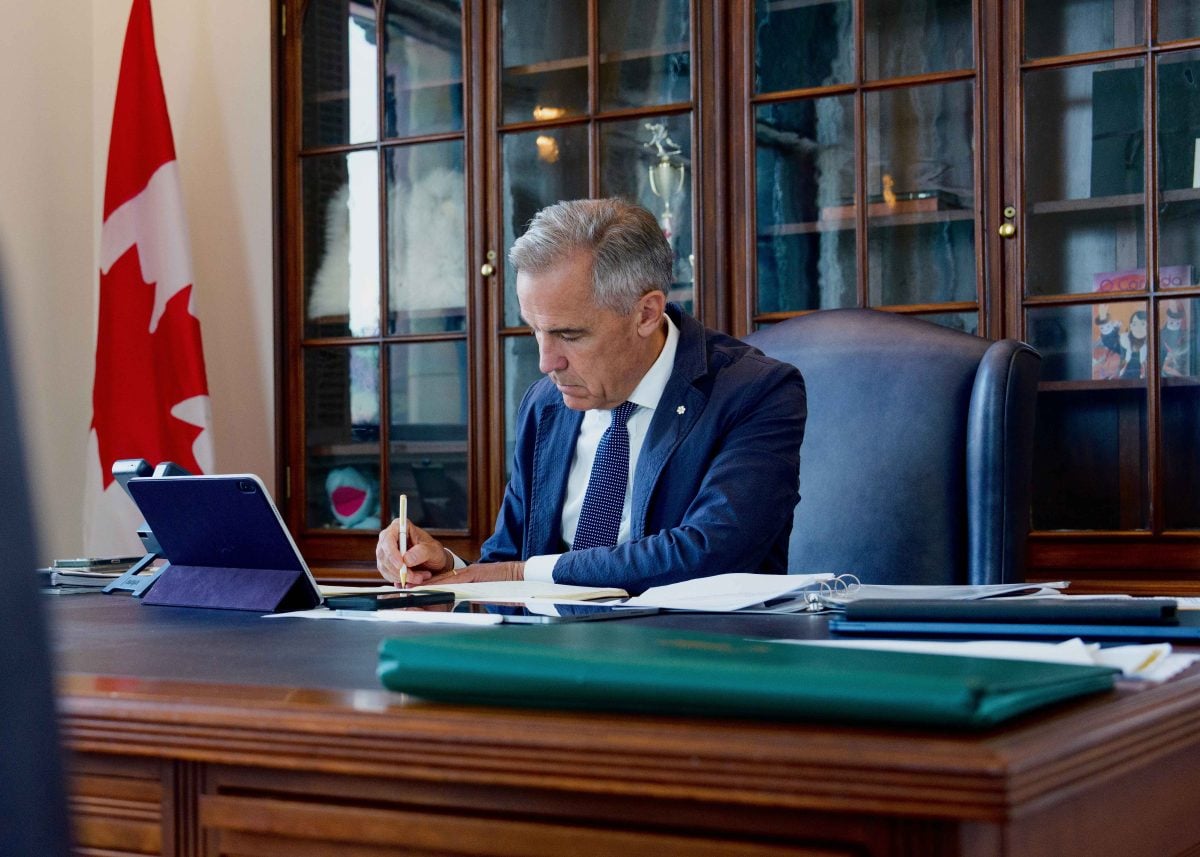
Carney introduced new measures to make groceries and other essentials more affordable:
1. Putting more money back in Canadians’ pockets
- The government is introducing the new Canada Groceries and Essentials Benefit – formerly the Goods and Services Tax (GST) Credit. We are increasing its amount by 25% for five years beginning in July 2026.
- In addition to that, we are providing a one-time payment, equivalent to a 50% increase this year.
- Combined, this means that a family of four will receive up to $1,890 this year, and about $1,400 a year for the next four years; and a single person will receive up to $950 this year, and about $700 a year for the next four years.
- The new Canada Groceries and Essentials Benefit will provide additional, significant support for more than 12 million Canadians.
2. Tackling food insecurity, supporting producers, and strengthening supply chains
- The government is setting aside $500 million from the Strategic Response Fund to help businesses address the costs of supply chain disruptions without passing those costs on to Canadians at the checkout line.
- For the same purpose, the government will create a $150 million Food Security Fund under the existing Regional Tariff Response Initiative for small and medium enterprises and the organisations that support them.
- To lower the cost of food production, we are introducing immediate expensing for greenhouse buildings. This allows producers to fully write off greenhouses acquired on or after November 4, 2025, and that become available for use before 2030. This measure supports increased domestic supply and investment in food production over the medium-term.
- To ease immediate pressures with food banks, the government is providing $20 million to the Local Food Infrastructure Fund. This supports food banks and other national, regional, and local organisations to deliver more nutritious food to families in need.
- To tackle the root causes of food insecurity, we are developing a National Food Security Strategy – one that strengthens domestic food production and improves access to affordable, nutritious food.
- This strategy will also include measures to implement unit price labelling and support the work of the Competition Bureau in monitoring and enforcing competition in the market, including food supply chains.
More from Retail Insider:












Carney’s “new measures” as described above will do absolutely nothing to the balance in my bank account.
On one hand putting some $$ in while taking more $$$$$ out in the form of the taxes that are imposed on our food chain!.
Try as they will to make this government look like they are doing something for “the people”!
Where pray tell is all this $$$$ coming from? Oh right the taxes from all of us.
Disgusting election vote buy for the uneducated.
(edited)
You are the uneducated. The lack of competition in Canada is a big problem. It is not just about macroeconomic inflation. Lack of competition contributes and exacerbates inflation. We have lack of competition in our auto industry and our food chain supply, just to name 2.
In Canada there are 5 major food chains and they control about 80% of the market. When there is low competition, these corporations can raise prices as much as they want, because they have no fear of losing customers. Because the 20% left do not have the means to compete with these big corporation. These corporation do the same thing globally to developing countries too. Free market, free trade is nothing free to the people, or the country.
They use profit push, which just means they can raise prices more than extra cost and just blame it on inflation, which gives them a greater profit.
There is also no resistance in low competitiveness. So they can push the whole extra cost on materials and energy etc on to consumers, because we have no choice but to buy what is there in the food chain, but in a competitive food chain, they have to absorb a lot of that cost to stay competitive, because in a competitive food chain purchasing power is ours, the people have a choice.
Again, supply and demand plays a role. Low competitive food chains can ratio certain products (supply) that are in demand, so that they can raise the price on that product, because people need it. GREAT PROFITS, for them.
That is just a few things about low competitive food chains, or anything that is low competitive. Then there is the macroeconomics inflation primary issues, like unemployment that low competitiveness contributes and exacerbates unemployment. Inflation/Deflation which affects our purchasing power. There is also Balance of payments and exchange rates, which has to do with international trade and financial transactions. But thats taking us into some other things.