Canada’s Grocery Code of Conduct came into full effect as of Jan. 1, 2026. Governed by an independent organization, the code sets out guidelines for dealings between retailers and suppliers.
It’s intended to provide transparency and predictability in the relationship between food retailers and their suppliers. All five of Canada’s largest grocers — Empire, Loblaw, Metro, Walmart Canada and Costco Canada — have registered with the code.
The code sets out specific objectives: to contribute to a “thriving and competitive grocery industry,” promote trust between grocery value chain stakeholders, allow for informed business decisions and provide an effective and fair dispute settlement mechanism.
That dispute resolution mechanism, administered by the Office of the Grocery Sector Code of Conduct (OGSCC), is intended as a last resort. The possibility of mediation may encourage parties to resolve disagreements informally before they escalate to formal adjudication.
In addition, the OGSCC will publish an annual report highlighting key trends, challenges, recommendations for code improvements and anonymized case studies of disputes, without naming specific companies.
Was the code ever about food prices?
Public discussion of the code was often conflated with a desire to reduce food prices. While food price regulation is not part of the code, it has been raised in wider discussions about food price inflation.
Statistics Canada data shows that food prices continued to rise across the country in 2025. Prices increased by 3.4 per cent across Canada’s 10 provinces and three territories between May 2024 and May 2025.
Concerns about food price inflation have been longstanding. In 2023, the federal Standing Committee on Agriculture held a meeting to investigate the issue. Members questioned Walmart Canada CEO Gonzalo Gebara and Galen Weston, then president and CEO of Loblaws (and now chair of the board).

Liberal MP Heath MacDonal asked Gebara:
“What do you say to us when we’re seeing the hesitation of Walmart to sign on to the grocery code of conduct? How do we relay that message back to our constituents, who, over the past couple of years, due to all the items and many of the issues you talked about, have been facing a lot of challenges, including the price of groceries?”
While this question does not explicitly tie the code to food prices, many interpreted this, and other statements, as suggesting the code might lower food prices.
Could the code raise prices?
Some industry leaders, however, have suggested the code could increase prices. For example, Weston says he was hesitant to participate in the code due to fears that prices would go up.
The mechanism of potential price inflation is relatively straightforward. The code discourages certain charges and states payment schedules should be negotiated. If grocers lose some benefits due to the limitations of the code, it will cost them money. In such a scenario, it is difficult to imagine that grocers would forgo money from consumers by lowering prices.
Walmart and Loblaws, who were originally resistant, eventually accepted the code after further negotiations. Loblaws’ new president, Per Bank, said the company was content with the revised code and no longer felt it would raise prices. It is worth noting, however, no one has said the code will reduce prices.
Some observers have suggested the code could lower food prices over the longer term. But they were commenting about the benefits of lower charges to suppliers and the potential for investment and innovation in the Canadian food processing sector. These indeed may be long-term benefits, but they’re not written into the code and would take time to materialize.
Are there any benefits to consumers?
There will likely to be some indirect consumer benefits. A more predictable and transparent relationship between retailers and their suppliers could increase choice for consumers by reducing the barriers to new product introduction.
Price stability and predictability make life easier on suppliers and could help sustain Canadian food processors. A loss of food processing capacity in Canada would lead to increased prices.
The code would also help smaller retailers with less bargaining power. By limiting the concessions large grocers can extract from suppliers, it narrows the gap between big and small chains and makes smaller grocers more viable. This is especially important in under-served neighbourhoods where limited retail options restrict consumer choice.
What actually drives food prices?
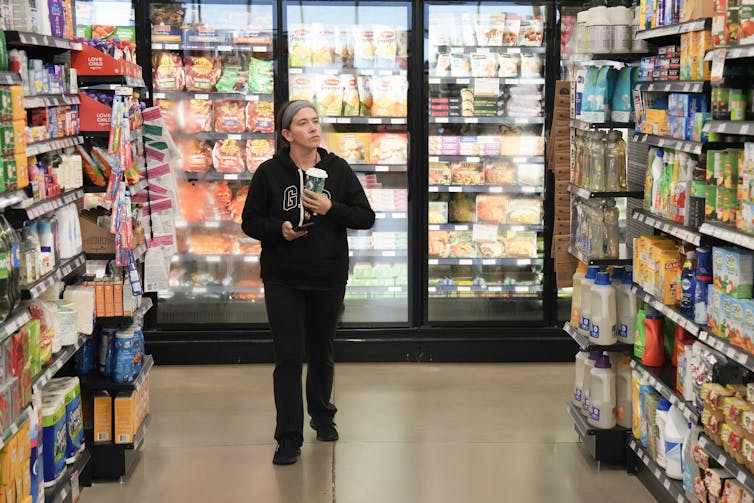
Food price inflation is primarily driven by supply-side factors and, to a lesser extent, demand. Between Jan. 1 and Dec. 31, 2025, food prices rose by four per cent — faster than the rate of general inflation. Much of that increase was driven by sharp price rises in beef (16.8 per cent), coffee (30.8 per cent), and sugar and confectionery (12.5 per cent).
Beef and coffee prices have been affected by the increasing frequency and severity of extreme weather events. Beef cow herds are at their lowest point in almost 40 years, due in part to drought in Western Canada and the midwestern United States. High beef prices have also pushed consumers toward other proteins, such as pork and chicken, which saw smaller price increases. Turkey prices remain relatively flat, providing an option for those feeling protein price pressure.
Coffee prices tell a similar story. Extreme weather and disease pressures have reduced yields in producing regions and led to increased prices.
Sugar and confectionery prices increased largely due to tariffs. The U.S. already had protection for its sugar industry, but introduced significant new tariffs on Brazil, Argentina and Columbia, raising organic sugar prices and pulling conventional sugar prices up with them.
Canada responded with reciprocal tariffs, increasing prices here. While some of the tariffs have been reduced, there remains considerable uncertainty. Notably, despite the 12.5 per cent annual increase in prices, prices for sugar and confectionery fell by 4.1 per cent in December 2025.
What comes next?
Canada has experienced significant food price inflation, but the drivers are largely external to and outside the scope of the Grocery Code of Conduct.
While the code may enhance transparency, fairness and competition in the grocery sector, it is not a tool for controlling or lowering grocery prices directly.
But there is room for optimism about grocery costs. The rate of food price increases will slow and we might see some price reductions. Beef cow herds are expected to recover over time, which should ease prices. Beef prices went down marginally in December by 0.2 per cent. Weather remains unpredictable, but in the absence of new extreme events, supply issues should improve and prices should ease for those commodities.
These changes, however, will not be due to the Grocery Code of Conduct, though they will be welcome nonetheless.
About the Author: Michael von Massow is a Professor of Food Economics at the University of Guelph.
*This article originally appeared in The Conversation.