By Michael von Massow and Alfons Weersink
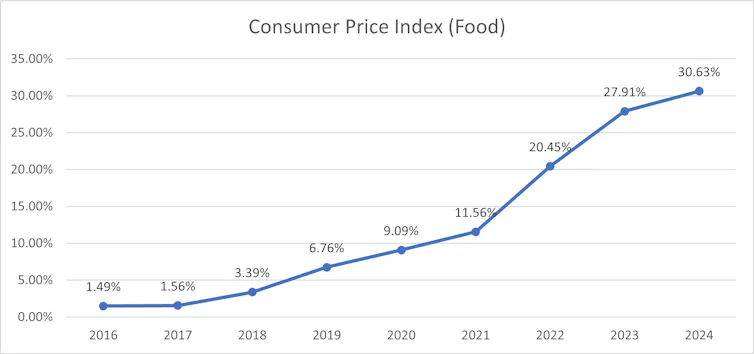
Food prices in Canada have been rising at a faster rate than overall inflation for the past several years. In fact, food prices are 30 per cent higher than they were a decade ago.
In the face of this pressure, consumers are increasingly worried about the impact of the war in Iran on food prices. While there is currently a ceasefire in place, it appears fragile, and oil and fertilizer prices will be slow to fall.
The conflict will undoubtedly have an impact on food prices, but in the short term it will likely be fairly small. If the disruption lasts longer, we could start to see more significant price increases.
Unlike previous shocks, Iran is not a major food exporter, and no Canadian food imports pass through the Strait of Hormuz. Instead, any impact on food prices will come indirectly through rising petroleum prices driven by uncertainty around oil infrastructure in the Middle East and disruptions to the strait.
Approximately 20 per cent of the world’s oil moves through the strait, and the loss of that flow has dramatically increased fuel prices. Oil is currently trading above US$100 per barrel, up from under $60 at the end of January.
Fuel costs and food transportation
There are three main ways high oil prices can affect food prices. The first is the direct impact on the cost of moving food through the supply chain.
The United States Department of Agriculture estimates that transportation accounts for roughly 3.5 to four cents of every food dollar. This suggests that even large increases in fuel prices will not have a substantial impact on average food inflation.
Fuel is only one component of transportation costs, so increases are not reflected one-to-one on food prices. There are, however, significant differences across food categories.
Fresh fruits and vegetables are the most exposed. Transportation accounts for about eight per cent of of every food dollar for fresh fruits and vegetables — the highest share among food categories.
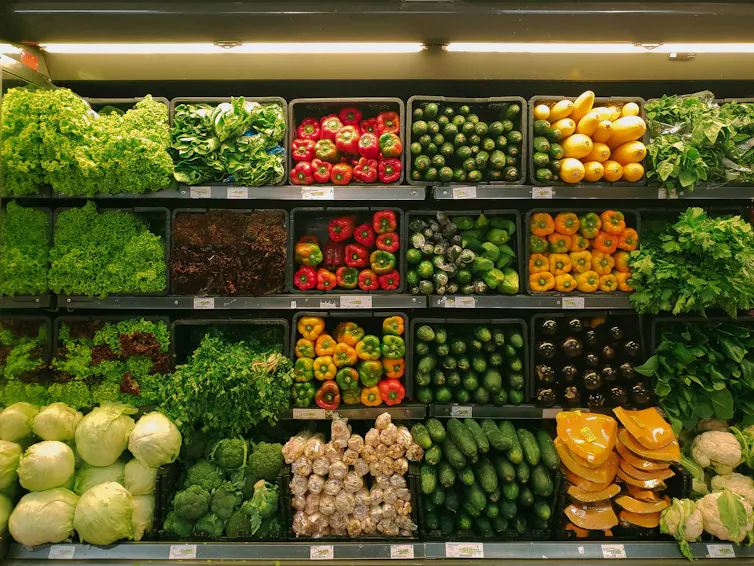
These products travel long distances and require refrigeration, which can be up to 30 per cent more expensive than dry freight by truck and three times more expensive than dry freight by sea.
Taking into account seasonal variation and Canada’s geography and location, transportation could represent 10 to 15 cents of every dollar spent on fresh produce this time of year. As a result, prices for imported fruits and vegetables could rise quickly in grocery stores.
These effects should moderate in spring as transport distances shorten, the weather warms and production moves closer to domestic markets. Smaller increases may also occur in other less processed foods like meat, which are heavy and also require refrigeration.
Fertilizer prices and pressure on farmers
The second mechanism is the impact of higher oil and fertilizer prices on food producers. Nitrogen fertilizer prices have risen more than 70 per cent since the start of 2026, although many farmers are partially protected in the short-term because fertilizer is often purchased in advance.
There is, however, a risk of fertilizer shortages since 25 per cent of the world’s urea flows through the Strait of Hormuz.
In practice, shortages are unlikely in Canada. Western Canada exports more than 700,000 tonnes of urea, with most of it going to the U.S., while Eastern Canada imports similar volumes from regions outside the Middle East. Prices will likely be higher, but supply constraints should be limited.
Farmers, rather than consumers, are likely to bear the brunt of higher fuel and fertilizer costs. Because commodity prices are determined by global supply and demand, farmers have limited ability to pass higher input costs down the supply chain.
Typically, crop and fertilizer prices move in tandem, allowing higher costs to be at least partially offset by higher returns. For example, the most recent fertilizer price spike followed Russia’s invasion of Ukraine, which also drove up commodity prices amid concerns about reduced wheat production from a major growing region.
In response to higher input costs, farmers may reduce fertilizer application rates or shift away from fertilizer‑intensive crops. While these adjustments can ease some pressure, crop producer margins will remain under strain unless commodity prices rise enough to offset higher energy and fertilizer costs.
Broader impacts across the food system
The third mechanism is the more diffuse effect of petroleum-based products used in food supply chains. Plastics and many chemicals are derived from petroleum, so higher oil prices will increase the cost of producing these goods.
Plastic food packaging alone represents approximately one-third of all plastic packaging in Canada. Canadians throw out more than four million tonnes of plastic waste a year, with only a small portion recycled.
Higher production costs in food processing are typically passed on to consumers through food processing and packaging. As a result, a sustained increase in oil prices will gradually scatter through the food value chain.
A muted impact on fuel prices — for now
The war in Iran will undoubtedly affect prices, particularly through higher fuel costs that are already affecting transportation and other energy-intensive sectors.
However, this may be one of the few instances in recent years where food inflation trails general inflation. The war in Ukraine had a more dramatic impact on food prices because Ukraine is a major exporter of food, and that food disappeared from the market.
By contrast, the effects of the conflict in Iran are more indirect and will take time to work through the system.
If the war in Iran persists, however, it could have profound global impacts, with most of them extending beyond food prices. The duration of the conflict is the primary consideration for what the longer-term impact will be on food prices.
About the Authors:
- Michael von Massow is a Professor of Food Economics at the University of Guelph.
- Alfons Weersink is a Professor, Dept of Food, Agricultural and Resource Economics at the University of Guelph
This article originally appeared in The Conversation.