Canadians are exhausted and public transit has become the most honest place you can see it. Eyes close, heads lean, bodies slow… then a jolt awake and a quick look around, as if being “caught” napping is something to be embarrassed about.
That moment is at the heart of sleep shaming and it’s exactly what Sleep Country set out to normalize during Sleep Awareness Month in March.
Building on their Stop Sleep Shaming movement, Sleep Country reinforced a simple message: there’s no shame in prioritizing your sleep and, by extension, your health and day-to-day performance.
A new national survey commissioned by Sleep Country found that seven in 10 Canadians feel exhausted at least a few days per week and it shows up most clearly on public transit, where 82% of riders have felt the urge to fall asleep during their commute however more than half feel self-conscious about dozing off in public.
To bring that reality to life during Sleep Awareness Month, and help normalize rest without shame, Sleep Country transformed a TTC streetcar into a calm “Permission to Snooze” zone with live musical performances featuring popular lullabies, travel pillows, and sleep masks.
The message: if you can find a quiet 10 minutes of rest between stops, take them. Permission to snooze: granted.

John Myhal, Brand Marketing Director, of Sleep Country, said the brand unveiled last year its new Sleep Awareness Month campaign around “Stop Sleep Shaming.”
“This topic was super interesting. Basically, the idea here is that there’s this taboo, mini cultural tension that we have where a lot of people inadvertently—and it’s actually half of Canadians—shame other people about getting rest and sleep,” he explained.
“So it’s about one in two Canadians who shame somebody for sleeping. Whether it’s, “Hey, why are you going to bed at nine o’clock? Why are you leaving the party early? Why are you sleeping in?”—all those things. And more than one in two Canadians have been shamed.
“So it’s this very interesting topic that hits at this cultural tension: we have such a hustle culture, it’s all about glorifying burnout, it’s all about the grind, and it’s leading people to neglect their sleep, but then also shame others when they do get good sleep.
“As Sleep Country, we’re all about wanting to awaken Canadians to the power of sleep. We want to champion sleep for the industry, for Canadians across the country. We loved this topic because it hit on this cultural truth—that this behaviour is happening and people don’t even realize it.
“It was actually really interesting when we developed this. When we first landed on it with our agency, Mechanism, once they brought this forward, we all were like, “Oh my God.” In the room, you could see the light bulbs go off. I was like, “Oh my God, I’ve been shaming my wife for going to bed at nine o’clock at night.” Everyone was like, “Oh my God, I just got shamed earlier.” So it was just such a unique, great thing. We’ve done a bunch of research since then to support that.”
The campaign was launched last year and brought this taboo topic to life. For this year, Sleep Country wanted to take it a step further. In January and February, there were a lot of return-to-work orders happening across the country. This push to go back to offices was, for Sleep Country, another signal of hustle culture and burnout.
“One of the most common places where this was physically manifesting was on transit. You were seeing hugely packed—especially in Toronto—Union Station was packed, GO Train, TTC, completely full of people being ushered back into work. Again, this idea of hustle culture,” noted Myhal.

“We did further research on the fact that for people who commute into work, a vast majority want to sleep. More than half of people — 82% of riders — feel an urge to rest on transit, but more than half of them are self-conscious about it. So they choose not to give themselves permission to rest.
“So the idea here was — inside the campaign, with what was happening culturally and this self-conscious feeling — it led us to an activation where we could literally have a musician come into a TTC streetcar. We took over a TTC streetcar, had them play lullabies, and the idea was to give permission to riders on transit to get some rest anytime they could.”
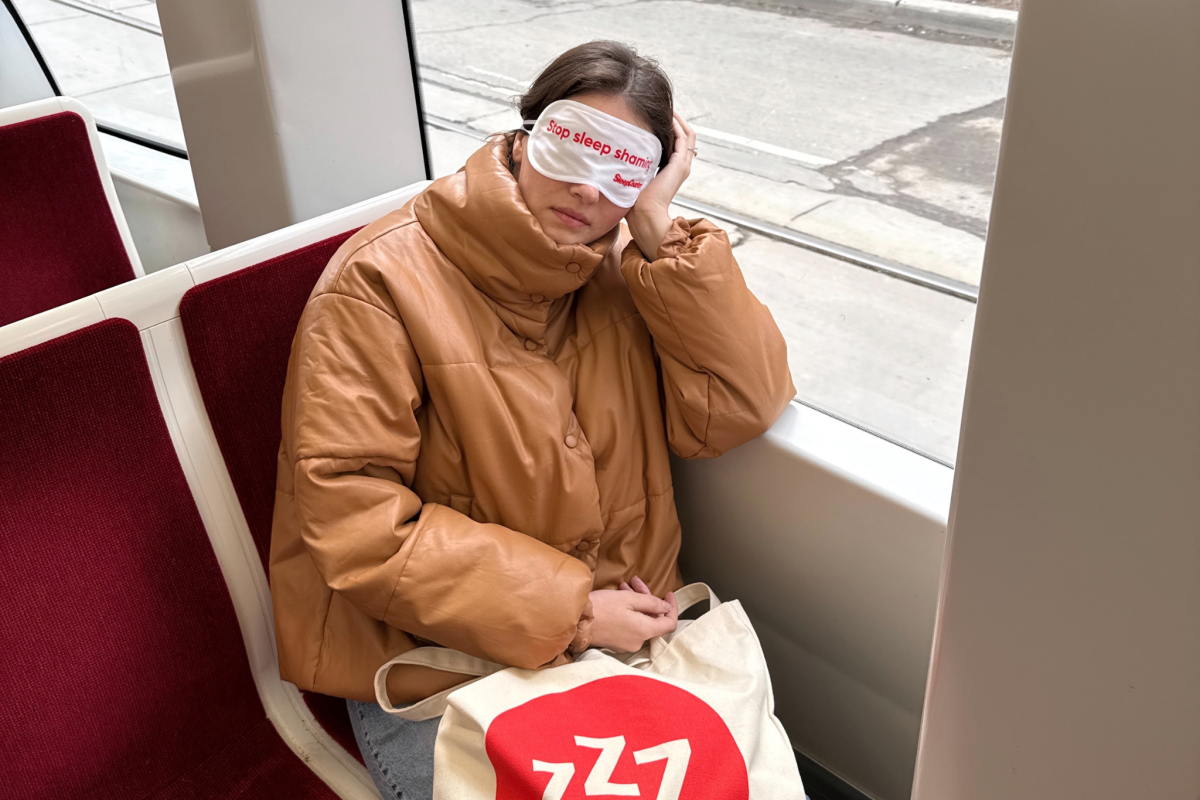
Sleep Country gave away some items like travel pillows, sleep masks, and a coupon they could take to their local Sleep Country and redeem.
In Montreal, a similar campaign was held for Dormez-vous, which is under the Sleep Country umbrella, on the REM (Réseau express métropolitain) with a violinist from Cirque du Soleil.”
More from Retail Insider: