When Warehouse One acquired Bootlegger in 2025, the deal appeared to represent a rare survival story in Canadian apparel retail.
One year later, both chains are headed for liquidation.
The collapse of Warehouse One under Companies’ Creditors Arrangement Act (CCAA) protection this week reflects a deeper structural shift underway across Canadian apparel retail, particularly among middle-market mall brands that once formed the backbone of shopping centres across smaller cities and regional communities.
Court documents filed in Manitoba show the Winnipeg-based company plans to liquidate all 128 stores nationwide after years of mounting losses, shrinking liquidity, and rising pressure from online competitors and ultra-low-cost fashion platforms.
The filing specifically cites “consumer uptake of ultra low cost fashion retailers and other online competition” as a key factor in the company’s collapse.
That language is significant because it directly acknowledges a retail environment that has fundamentally changed in recent years, particularly with the rise of platforms such as SHEIN and Temu, which have dramatically altered pricing expectations in apparel retail.
The Failed Bootlegger Rescue
One of the most striking aspects of the Warehouse One collapse is the role played by the company’s acquisition of Bootlegger just one year earlier.
At the time of the April 2025 transaction, Warehouse One appeared positioned as one of the surviving players in Canada’s shrinking mid-market apparel sector. The deal preserved stores, jobs, and a recognizable Canadian denim brand following earlier retail distress connected to the Comark Group insolvency proceedings.
Instead, the acquisition ultimately became part of the problem.
Court materials filed this week state that Warehouse One experienced “operational challenges and losses” following the Bootlegger acquisition.
The filing also reveals that shareholders and affiliated lenders advanced more than $39 million to sustain operations since 2020, including approximately $20.5 million following the Bootlegger transaction period beginning in early 2025.
While the acquisition boosted revenue, costs rose sharply as well. Court documents show that store-level, corporate, and overhead expenses increased by approximately 50% year-over-year after the acquisition closed.
Ultimately, the filings state that ownership was no longer prepared to continue funding ongoing losses.
The result is an unusual and symbolic retail outcome: Warehouse One effectively collapsed while attempting to rescue a former rival.
A Different Kind of Retail Collapse
Unlike the recent failures of department store operators or luxury-oriented chains, Warehouse One occupied a very different part of the Canadian retail landscape.
The company’s footprint was concentrated heavily in regional malls, working-class suburban markets, and smaller Canadian communities. Stores operated in markets such as Cold Lake, Quesnel, Meadow Lake, Thompson, Prince Rupert, Weyburn, Flin Flon, Whitehorse, and Stephenville.
This was not a retailer built around downtown luxury shopping districts or flagship urban corridors.
Instead, Warehouse One represented a generation of Canadian mall apparel retail that expanded across regional Canada during the growth years of enclosed shopping centres.
That distinction matters because many of these communities are already facing broader retail challenges. Enclosed mall traffic has declined in numerous secondary markets as consumers increasingly shift spending online, while many regional shopping centres continue to grapple with aging infrastructure and shrinking national tenant rosters. In some smaller communities, replacing a longtime apparel tenant can also prove difficult, particularly as fewer national fashion retailers continue expanding into tertiary Canadian markets.
Court documents state that some smaller-market locations experienced sales declines exceeding 10% year-over-year.
The collapse also raises potential concerns for secondary shopping centres that rely heavily on apparel tenancy. In smaller communities, the loss of a longtime fashion retailer can have broader implications for mall traffic and leasing stability.
The Middle of Canadian Apparel Retail Is Disappearing
Warehouse One’s liquidation also reflects a growing divide within Canadian retail.
At the high end of the market, luxury and experiential retail continue to expand in major urban centres. Shopping destinations such as Yorkdale Shopping Centre, CF Pacific Centre and Royalmount are attracting international luxury tenants and major redevelopment investment.
At the lower end, discount formats and ultra-low-cost online marketplaces continue to gain market share.
The middle of the apparel sector, however, has become increasingly unstable.
Over the past decade, Canada has seen the collapse, retrenchment, or restructuring of numerous apparel chains including Le Château, Smart Set, Jacob, Ted Baker Canada operations, and several Comark-owned banners.
Warehouse One now joins that list.
The company’s filings repeatedly point toward an industry under pressure from changing consumer behaviour, rising costs, and aggressive online pricing competition.
Most of the company’s inventory was sourced internationally and purchased in U.S. dollars, placing additional strain on margins as the Canadian dollar weakened.
At the same time, consumers increasingly shifted spending toward cheaper online alternatives.
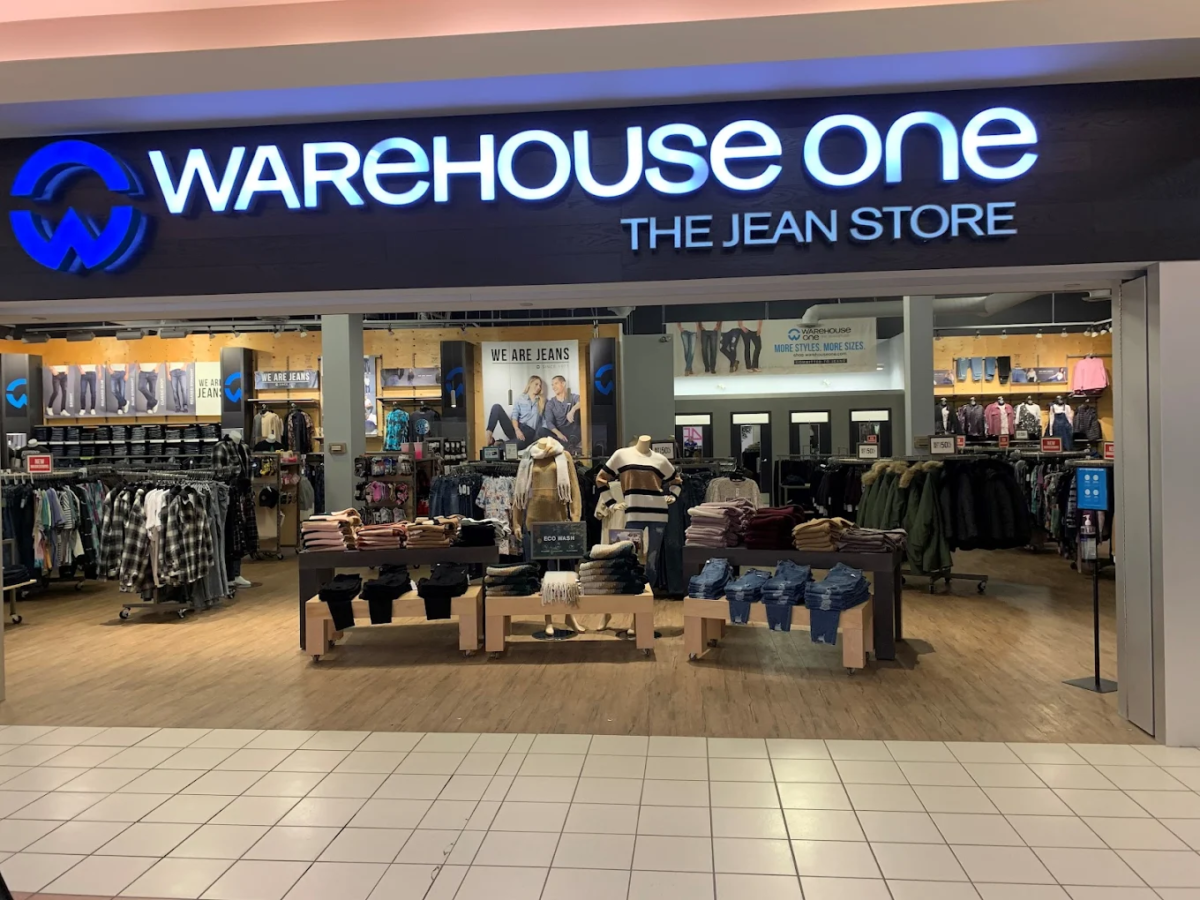
The End of a Prairie Retail Institution
For Winnipeg, the liquidation represents the loss of a retailer with nearly five decades of local history.
Warehouse One was founded in 1977 by Max Maryk, who reportedly began selling denim from the trunk of a car before opening the company’s first physical store.
The business eventually grew into one of Canada’s best-known regional denim retailers, operating a large corporate office, warehouse, and distribution centre in Winnipeg while employing hundreds of Manitoba workers in merchandising, logistics, planning, and retail operations.
Court filings indicate that approximately 232 employees are based in Manitoba alone.
The liquidation now marks the end of a nearly 50-year retail story that once appeared resilient enough to survive earlier waves of Canadian retail disruption.
Instead, Warehouse One became one more casualty of a rapidly changing apparel market.