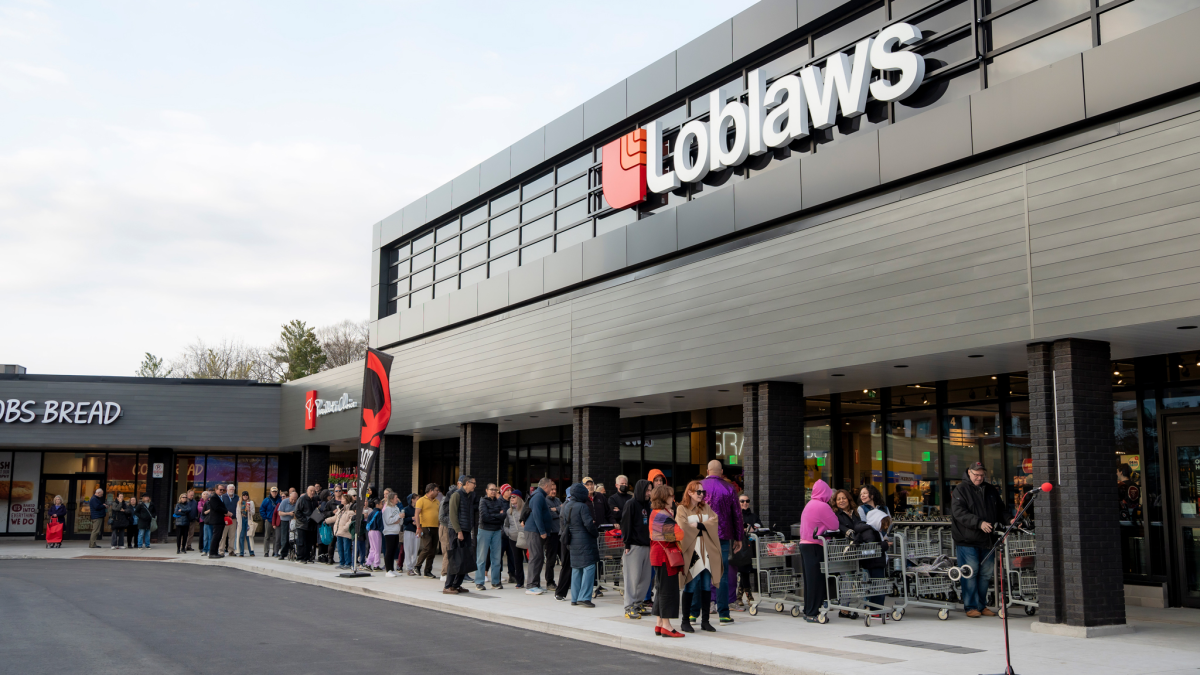
Loblaw Companies Limited expects to open approximately 75 stores again in 2027, maintaining one of the largest retail expansion programs currently underway in Canada as it continues investing in No Frills, Maxi and its pharmacy network.
The company is now on track to open about 75 locations in 2026, modestly above the approximately 70 stores included in the investment program it announced earlier this year. During Loblaw’s second-quarter earnings call, Chief Financial Officer Richard Dufresne said the pace of openings is expected to remain largely unchanged next year.
“We think our number next year is going to be probably very close to that also,” Dufresne told analysts. “I think the pace will be stable. We don’t see it accelerating nor decelerating.”
The annual total includes grocery stores, Shoppers Drug Mart and Pharmaprix locations, as well as healthcare clinics. Loblaw’s original 2026 investment plan called for 31 No Frills and Maxi stores, 34 new pharmacies and care clinics, and nearly 200 store renovations.
The expansion forms part of Loblaw’s five-year plan to invest $10 billion in Canada through 2030. The company committed $2.4 billion to its Canadian operations this year, including new stores, renovations and supply-chain infrastructure.
By the end of 2026, Loblaw expects to have opened approximately 200 stores over three years. Management said the total will be divided roughly evenly between food stores and pharmacies, with discount banners accounting for most of the grocery openings.
A Long-Term Bet on Discount Grocery
Loblaw’s expansion strategy reflects where the company continues to see some of its strongest growth. Comparable sales at its hard-discount banners increased close to four per cent during the second quarter, compared with overall food retail same-store sales growth of 1.6 per cent. The company said it continued gaining market share in discount grocery while also outperforming competitors through its conventional banners.
Seven of the 11 food stores opened during the quarter operated under the No Frills or Maxi banners, underscoring the importance of discount formats within Loblaw’s current development pipeline.
President and Chief Executive Officer Per Bank said the company views consumers’ preference for discount grocery as a lasting shift, not a temporary response to inflation. That view is reflected in how Canadians are shopping.
According to Loblaw, customers continue seeking promotions, purchasing more private-label products and adjusting their grocery baskets as they look for ways to manage household spending.

Bank pointed to one particularly clear example during the earnings call. Frozen vegetables gained more than 500 basis points at Loblaw’s hard-discount banners, reflecting how shoppers are making practical adjustments to stretch grocery budgets while continuing to buy essential food items.
The company also reported positive customer traffic and basket growth during the quarter. Loblaw said its internal measure of food inflation has remained below Canada’s grocery consumer price index for more than four years. The company attributed that performance to promotional activity, changes in customer purchasing patterns and efforts to reject supplier cost increases it considers unjustified.
Recent Openings Illustrate the Strategy
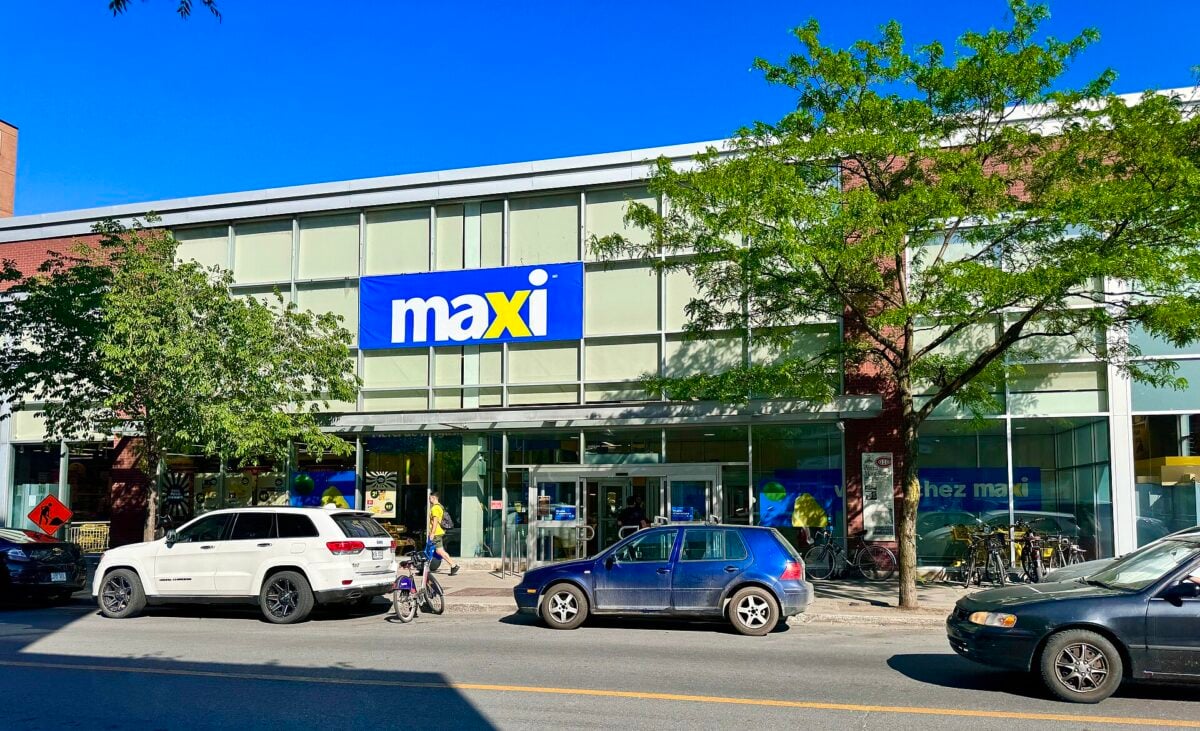
Recent store openings show how Loblaw is applying its discount strategy across different regions of the country. During the second quarter, the company opened four No Frills stores and three Maxi locations.
Among them was a new No Frills in Lloydminster, Alberta, giving the community its first hard-discount grocery store, according to Loblaw.
The company also converted a No Frills store in Bathurst, New Brunswick, into a Maxi, creating only the second Maxi location in the province. Bank said sales at the Bathurst store more than doubled following the conversion, exceeding the company’s expectations.
While one store does not establish a broader trend, the early results suggest the Maxi banner may have opportunities beyond its traditional Quebec footprint. Loblaw has not announced wider conversion plans for Atlantic Canada.
In Ontario, a new Brockville No Frills became the banner’s 200th location in the province. Other recent openings include stores in Burnaby, British Columbia, and Windsor, Ontario.
Several newer No Frills stores also feature refreshed interiors, expanded fresh-food departments, bakeries, hot-food offerings and PC Express pickup. The enhancements modernize the shopping experience while maintaining the banner’s value-oriented positioning.
New Stores Are Delivering Strong Early Results
Loblaw said recently opened stores are performing well as they mature. Locations that have entered the company’s comparable-store sales base are generating double-digit comparable sales growth, according to management. The results have reinforced the company’s confidence in maintaining its current pace of expansion.
The company also models how much business may shift from existing stores when a new location opens nearby. Dufresne said those internal assumptions have so far proven conservative, with cannibalization running below expectations.
“We’re seeing less cannibalization than what we had expected in our plans,” he said during the earnings call.
The early performance suggests Loblaw is adding grocery capacity without significantly weakening nearby stores, giving management confidence that additional locations can be supported in many markets.
During the second quarter, the company reported grocery square-footage growth of approximately 1.5 per cent, while pharmacy square footage increased about 2.6 per cent.
Competition for Value-Focused Shoppers Remains Intense
Loblaw’s expansion comes as Canada’s major grocery retailers continue investing in new stores, particularly discount formats.
Empire Company Limited plans to open approximately 70 grocery stores over three years, with discount banners expected to account for most of that growth. Metro Inc. continues expanding its Food Basics banner in Ontario and Super C in Quebec, while Walmart Canada is investing in new Supercentres, supply-chain infrastructure and store modernization.
Although each retailer is pursuing its own strategy, the common theme is continued investment in value-oriented grocery formats at a time when many Canadian households remain focused on everyday food costs.
For Loblaw, No Frills and Maxi remain central to that strategy. Conventional banners including Fortinos and T&T Supermarket continue to perform well, but the company’s newest grocery development is concentrated primarily within its discount network.
Looking Beyond 2026
Maintaining approximately the same store-opening pace into 2027 suggests Loblaw believes today’s shopping patterns are likely to persist.
Management has repeatedly described consumers’ preference for discount grocery as a lasting shift, and the company’s investment decisions reflect that outlook. The combination of strong performance at recently opened stores, continued market-share gains in hard discount and lower-than-expected cannibalization provides support for another year of expansion.
Behind the scenes, Loblaw continues investing in the infrastructure needed to support that growth. The company is ramping up its automated distribution centre in East Gwillimbury, Ontario, while construction continues on a second facility in South Caledon. Online sales also increased 19.3 per cent during the quarter, adding further demand across Loblaw’s retail and distribution network.
Rather than slowing its pace of development after several years of expansion, Loblaw is preparing to maintain it. As the company continues adding stores across Canada, its investment strategy indicates that discount grocery will remain one of the country’s most active areas of retail growth in the years ahead.