Nearly two decades after Brian Misko began bottling flavours developed on the competition barbecue circuit, one of his best-known sauces is again earning recognition south of the border.
House of Q, the Vernon, B.C.-based company founded by Misko and his wife, took second place in the Mustard Sauce category at the 2026 International Flavor Awards in Wisconsin for its Slow Smoke Gold BBQ Sauce. According to the company, the competition drew more than 320 entries from 12 countries.
The award marks another milestone in a much longer business story. Misko says House of Q products are now carried in more than 600 stores across Canada and over 150 in the United States, with much of that footprint built outside conventional grocery.
For years, the company concentrated on independent butcher shops, gourmet stores and a growing network of specialty BBQ retailers. That route to market emerged from the same competition culture that produced the sauces themselves.
“Our mission in creating products is plain and simple: to win awards at BBQ Pitmaster competitions,” Misko told Retail Insider. “If it was a regional event or a world championship, we need to perform at the highest level of our ability.”
From Software to the Competition Circuit
House of Q traces its beginnings to Misko’s earlier career in software. Regular travel to American cities exposed him to slow-smoked barbecue and eventually led him into competition cooking.
What began as a hobby became increasingly serious. Misko started developing sauces and spice blends for contests at a time when the commercial BBQ selection available to Canadian pitmasters was much smaller than it is today.
The first sign of a business opportunity came directly from consumers. At competitions, people who sampled the food began asking whether they could buy the sauces.
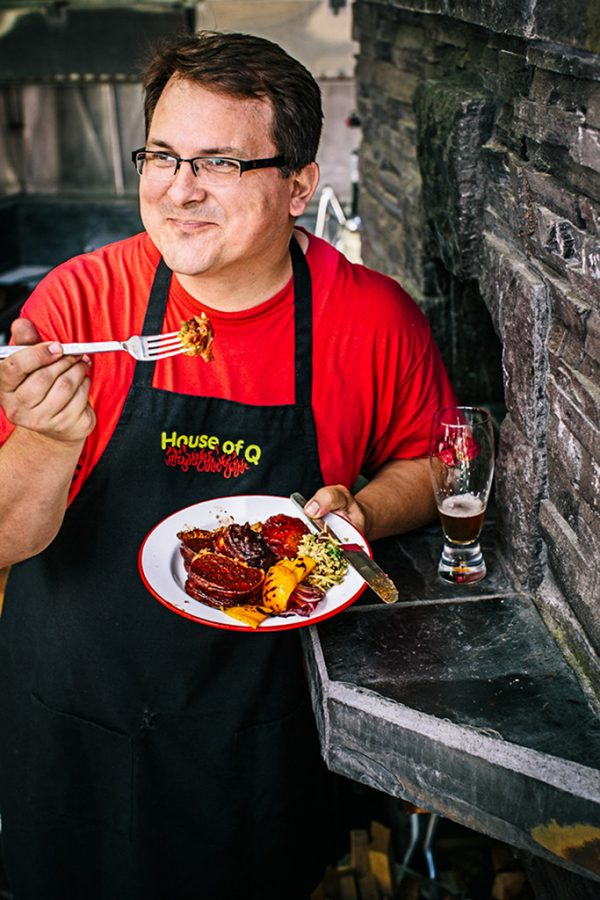
“Do you have any of that sauce that was on that pulled pork sample you gave me?” Misko recalled.
The question pointed to a market. People wanted access to the same flavours being prepared for competition.
Misko and his wife placed their first order with a co-packer in the spring of 2007, and retailer interest followed.
“That was the beginning of House of Q,” he said.
The business remained closely tied to competition BBQ as Misko’s profile expanded. His record would eventually include a sixth-place pork finish at the Jack Daniel’s World Championship Invitational Barbecue and first place in ribs at the World Food Championships.
A major turning point came in 2010, when he was invited to participate as a guest chef at the B.C. Pavilion during the Vancouver Winter Olympics, showcasing British Columbia agricultural products for international media. He left the software industry shortly afterward.
As Misko remembers the decision, the experience prompted a straightforward thought: “Maybe you should put some energy on this BBQ thing.”
His public profile continued to grow through television, trade shows, cooking demonstrations, a national bestselling cookbook and more than 75 BBQ segments on Global TV’s B.C. Morning News. He has also appeared on Food Network Canada programs including Fire Masters.
The retail business, however, was shaped by a decision that proved especially important: where House of Q products should be sold.
Building Through Specialty Retail
Many emerging food brands look first to supermarkets. House of Q followed another path.
Misko said the earliest retailer inquiries came from independent butcher shops and gourmet stores. Those channels became central to the company’s go-to-market strategy.
“There is an instant polarity for food creators to go to grocery stores when you bring a product to market,” he said. “The first phone calls we received from retailers asking for our sauces and spices, however, were from butcher shops and gourmet stores. It wasn’t grocers.”
House of Q focused on merchants Misko describes as having a “value-added relationship with their customers.”
For a BBQ brand, the fit was practical. Independent butchers could recommend sauces and seasonings alongside meat purchases, while gourmet retailers could introduce shoppers to products they might not encounter in a conventional grocery aisle. Store employees also had opportunities to explain how a rub, binder or sauce fit into the cooking process.
Another channel became increasingly important as Canada’s BBQ market developed.
Misko recalls that the country had only a handful of dedicated BBQ stores when House of Q entered the market in 2007. As home grilling and smoking became more established, specialty retailers selling grills, smokers, fuels, accessories, rubs and sauces expanded with the category.
For House of Q, BBQ retail has been its fastest-growing segment over the past five to 10 years, according to Misko. Independent butcher shops represent another major channel.
The company effectively grew alongside Canada’s specialty BBQ retail ecosystem.
“In short, grocery stores haven’t been a focus for our go-to-market strategy, but maybe that could be next,” Misko said. “We learned early on that we wanted to focus on merchants with a value-added relationship with their customers and that has proven to be with BBQ shops, butcher stores and gourmet outlets.”
The approach also gave House of Q a way to expand without depending entirely on supermarket shelf space, where smaller brands often compete for attention against significantly larger suppliers.
In more recent years, selected distributors have helped extend the company further across Canada by bringing the products to their own retail customers. Misko said that distributor-led growth has been central to House of Q’s expansion over the past five to 10 years.
From Independent Stores to Larger Retail Channels
Canada remains House of Q’s more established market.
After nearly two decades of selling and marketing BBQ products in this country, Misko said the company has developed a stronger understanding of how to explain the category to Canadian consumers. The U.S. market is considerably more crowded.
“There are more stores in Canada that carry House of Q sauces and spices than down south,” he said. “After 19 years of marketing in Canada, there may also be a bit of experience in describing BBQ to Canadians.”
The company’s growth has also included setbacks.
Misko pointed to the 2025 collapse of Peavey Mart as an example of the disruption suppliers can face when an established retail customer disappears. Roughly 90 Peavey Mart stores moved into closure during the retailer’s collapse, removing a significant retail channel from the Canadian market before the banner was later revived on a smaller scale under new ownership.
For a smaller supplier, the failure of a retailer can quickly alter distribution plans even when demand for the product itself has not changed.
House of Q has continued broadening its reach. Misko said the company has added distribution through TJX-owned stores in Canada, taking the brand beyond the independent and specialty merchants that historically formed the core of the business.
Retail Insider has also observed House of Q products on shelves at a HomeSense connected to Winners on Bloor Street in Toronto.
The presence points to a gradual evolution in the company’s retail mix. House of Q remains closely associated with specialty BBQ stores and independent butchers, while consumers are also encountering the brand in larger national retail environments.
Turning Competition Recipes Into Retail Products
House of Q’s product development process grew directly from competition.
When Misko began competing, specialized commercial BBQ products were less widely available. Pitmasters often needed to create their own sauces and spice blends, then refine them through repeated testing.
For House of Q, that meant adjusting recipes week after week in pursuit of better results from trained judges. The Kansas City Barbeque Society was a major presence in that world, with formal judging standards and a competition structure that rewarded consistency.
“When we first started competition BBQ, there wasn’t the same volume of commercial food products available, and we needed to make our own sauces and spices,” Misko said. “That meant crafting a recipe and making minor changes week after week until we consistently won awards from the trained judges.”
Once a recipe performed consistently, the company knew it had something worth keeping in its competition lineup. The next challenge was determining whether it could work as a commercial product.
Misko said early meetings with the company’s co-packer became an education in production at scale. Ingredients had to perform consistently, recipes needed to be repeatable, and commercial manufacturing could require changes that would never arise in a home kitchen or competition setting.
“Learning how to create recipes that are scalable and easily adjustable for commercial production posed a learning curve early on,” he said.
The company also had to accept that a recipe might need to change as it moved into manufacturing.
“Learning how things are made is one thing, but having the willingness to adapt your home recipe is another,” Misko said. “But we got there.”
That path from competition to commercialization became one of House of Q’s defining characteristics. Products were developed to perform in contests, refined through repeated judging and later adapted for home cooks and commercial production.
Slow Smoke Gold reflects that history.
Misko originally created the mustard-based sauce as a competition slather applied to raw meat before dry rubs or seasonings. The layer helps seasoning adhere during cooking and became part of his competition approach.
The sauce later developed into one of House of Q’s best-known retail products. Its tangy, gold-coloured profile differs from the thick, sweet, tomato-and-molasses sauces many consumers associate with barbecue, and the latest International Flavor Awards result adds to a longer record of recognition for the product.
A B.C. Production Network and a Growing BBQ Culture
House of Q is based in Vernon, but its production and logistics network extends across British Columbia.
The company’s sauces are manufactured in Vancouver, its spice rubs are produced in Burnaby and its warehouse is located in Abbotsford.
Misko said the COVID-19 period created ingredient and packaging challenges, though those pressures have since stabilized. He described the company’s current co-packer relationships as strong, with reliable turnaround times and high-quality production partners.
The pandemic also brought more consumers into home cooking. Misko said House of Q benefited as people experimented with grilling and smoking, followed by continued interest in outdoor cooking.
Canadian consumer research points to the depth of that behaviour. A survey by Caddle and Dalhousie University’s Agri-Food Analytics Lab, reported by Canadian Grocer, found that 42 per cent of Canadian consumers barbecue more than once a week during the summer.
For House of Q, the customer base extends well beyond serious pitmasters.
Misko said consumers encountered at trade shows across Canada often look surprisingly similar from one region to another. Many are families with several people to feed. Others are backyard enthusiasts who have become more sophisticated about multi-step cooking processes involving rubs, sauces and binders.
The common thread, he said, is an interest in flavour and product quality.
“Everyone just wants something that really tastes fantastic and makes them smile,” Misko said.
Looking South as the Category Evolves
House of Q sees further opportunity on both sides of the border.
In Canada, Misko believes the company can increase coverage through additional distribution and regional retail relationships. Grocery, historically outside the core strategy, could become a larger part of the mix.
The U.S. presents a different challenge. House of Q already has a retail presence there, according to Misko, along with American manufacturing relationships. It is also competing in a denser market filled with established products, pitmasters, creators and social media personalities.
“Meanwhile, we are still navigating how to market to the American consumer and differentiating our award-winning flavours, or should that be flavor?” he said.
Misko is also watching changes in the wider sauce and condiment business.
In May 2026, The Marzetti Company completed its acquisition of fast-growing Japanese barbecue sauce brand Bachan’s. Reuters reported the transaction at roughly US$400 million amid broader investor interest in sauce and spice companies.
For House of Q, the relevance is not that an acquisition is necessarily the objective. The company has not indicated that it is seeking a buyer. The broader activity shows how differentiated brands in adjacent categories are attracting strategic attention as the market evolves.
Misko sees an increasingly complex environment in which independent food companies face choices around distribution, manufacturing and scale.
“Navigating the increasingly complex food product market means making more choices,” he said.
For House of Q, those choices could include deeper Canadian distribution, additional regional and national retail relationships, further U.S. expansion or a larger move into grocery.
“It all starts with letting merchants and distributors know who you are, what your story is and if they want to share our love of BBQ with their customers,” Misko said.
Challenging a Canadian BBQ Inferiority Complex
For all the company’s growth, Misko believes Canadian BBQ brands still face a credibility challenge at home.
Canadian consumers are heavily influenced by American BBQ personalities, social media and YouTube creators, he said. That exposure has helped build interest in outdoor cooking, while also reinforcing a perception that serious BBQ expertise comes from south of the border.
House of Q has spent nearly two decades competing in that environment. Its products have won international awards, Misko has earned major competition results in the U.S., and the company has built a retail network spanning both countries.
Yet Canadian brands can still encounter a familiar assumption.
“It’s from Canada, what do Canadians know about BBQ?” Misko said, describing the attitude.
For House of Q, the challenge remains one shared by many independent consumer brands: earning shelf space, building awareness and giving shoppers a reason to look beyond larger or louder competitors.
The latest award for Slow Smoke Gold adds another answer.
“It’s easy to say, yes, Canadians do know BBQ.”