Leon’s Furniture Limited sees room to expand its namesake banner further across Western Canada while The Brick is targeting additional growth in Atlantic Canada, as LFL Group continues investing in physical retail despite a difficult environment for discretionary spending.
The growth strategy varies considerably by banner and market. The Brick is using franchising to extend its reach into smaller Atlantic communities, Leon’s sees additional opportunities across a Western network that remains considerably smaller than its Ontario presence, and higher-end Appliance Canada has begun expanding beyond Ontario through a store-within-a-store concept in British Columbia.
LFL also expects to add two corporate stores during the third quarter, although management did not identify their locations during its latest earnings call. The company had 301 stores across Canada at the end of the second quarter.

Mike Walsh, President and CEO of LFL Group, was direct when asked where the company sees the greatest geographic opportunities for its major banners.
“Primarily for The Brick on the East Coast and for Leon’s on the West Coast,” Walsh told analysts.
The comments point to continued physical investment at a time when Canadian consumers remain cautious about major household purchases. LFL is not outlining a large-scale national store rollout. Its approach is selective, with different banners, store sizes and ownership models being used according to the market.
The Brick Expands Further Across Atlantic Canada
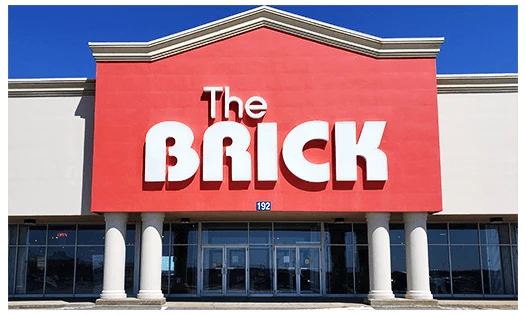
The Brick’s Atlantic strategy was already visible during the second quarter, when the retailer opened three franchise locations on Nova Scotia’s South Shore on the same day. New stores in Bridgewater, Liverpool and Barrington Passage officially opened May 28, extending The Brick into three smaller regional markets. The company described the openings as part of its continued franchise development and growth across Atlantic Canada.
The Bridgewater store is locally operated, while the Liverpool and Barrington Passage locations are operated by the Wilson Group, a multigenerational family business in southwestern Nova Scotia.
Franchising has become an established way for The Brick to reach communities that may not have the population or economics to support one of the chain’s conventional corporate locations. The retailer says its franchise network has grown to more than 67 stores, with the model particularly suited to rural Canadian markets.
The approach gives LFL a way to deepen its Atlantic presence without depending exclusively on large corporate-store investments. The three Nova Scotia openings also provide tangible evidence behind Walsh’s assessment that further East Coast opportunities remain for The Brick.
Leon’s Sees More Room in Western Canada
Management has identified Western Canada as the primary geographic opportunity for further expansion of the Leon’s banner. The chain currently has six locations in British Columbia and seven in Alberta, along with three each in Saskatchewan and Manitoba. Ontario remains by far its largest provincial market, with 43 locations.
That disparity provides useful context for the current expansion comments. LFL has not identified specific Western cities for future Leon’s stores or announced a large-scale rollout, but Walsh’s comments indicate that management sees room to add to the banner’s existing presence.
Leon’s has also shown a willingness to adapt its traditional showroom model when developing Western markets. In 2020, the retailer opened a 20,000-square-foot “smart store” in Kelowna, B.C., alongside a larger 50,000-square-foot Calgary location. The Kelowna concept followed an earlier smaller-format store in Coquitlam, B.C., using technology to give shoppers access to a wider assortment than could be displayed physically in the showroom.
Those stores predate the current expansion plans by several years, but they provide a useful example of Leon’s experience adapting its physical model for different markets. That experience could become increasingly relevant as LFL looks for locations where a smaller footprint can produce attractive economics.
Appliance Canada Pushes West
Some of LFL’s more recent experimentation in Western Canada has occurred through Appliance Canada, the higher-end appliance banner historically concentrated in Ontario. Its business includes retail customers as well as builders, designers and other commercial clients.
LFL has extended the concept west through an Appliance Canada store-within-a-store at an existing Leon’s location in Richmond, B.C. The Richmond operation was Appliance Canada’s first physical expansion west of Ontario and uses approximately half of the existing Leon’s store.
Walsh said the move was partly intended to diversify Appliance Canada beyond an Ontario builder market that has been under significant pressure. Management has been pleased with the performance in British Columbia and is examining other markets where the concept could work.
Appliance Canada also reaches a somewhat different customer from the broader Leon’s and Brick businesses. Walsh described it as a higher-end appliance operation, including customers working with designers on kitchens and purchasing premium appliance packages. That positioning gives LFL another way to grow geographically while reaching a more affluent segment of the home-products market.
Appliance Canada currently lists six showrooms in London, Mississauga, Ottawa, Richmond, Toronto and Vaughan.
The Richmond format allowed LFL to take Appliance Canada into a new region using space already occupied by Leon’s. Its performance will give management another reference point as it evaluates where the banner could expand next.
Franchising Opens Smaller Communities
LFL is also using franchising to reach markets considerably smaller than those normally associated with national furniture chains. Along with the three Brick openings in Nova Scotia, Leon’s opened a franchise location in Happy Valley-Goose Bay, Newfoundland and Labrador, during the second quarter.
The approximately 6,000-square-foot store is much smaller than a conventional Leon’s big-box showroom, illustrating how the company can adjust both ownership structure and physical footprint for different market sizes.
That flexibility broadens the range of communities available for expansion. Major urban centres can support large corporate showrooms, while franchise partners can bring the banners into smaller markets where local knowledge and a more compact store may offer better economics. The model is particularly relevant to The Brick’s Atlantic strategy, given the number of smaller population centres across the region.

Existing Stores Are Being Reworked
Physical investment across LFL’s network also includes existing locations. Shortly after the second quarter ended, Leon’s held the grand reopening of its Welland, Ont., showroom, with management reporting a strong initial customer response.
The company has also been reopening and modernizing stores in Brockville and Cornwall, Ont., while The Brick has invested in renovations and redesigns at locations including Richmond and Kelowna, B.C., and Lloydminster, AB.
These projects do not represent net additions to LFL’s national store count, but they show another part of its physical retail strategy. Existing stores can be refreshed, resized or repositioned as local markets and customer expectations change, meaning investment in the network extends beyond the number of new locations added each year.
Smaller Footprints Could Play a Larger Role
LFL has also signalled that store productivity could increasingly influence how its network evolves. Company investor materials discuss optimizing stores toward smaller, higher-traffic footprints where comparable profitability can be maintained.
The idea is particularly relevant for a retailer with an extensive distribution network and digital platforms capable of showing customers far more merchandise than any individual showroom can carry. Leon’s has experience with smaller-format showrooms, Appliance Canada has entered British Columbia using part of an existing Leon’s store, and franchise locations can be tailored to the size of individual markets.
Large-format stores will remain an important part of the network. Furniture and mattresses are categories where many consumers still want to see and experience products before making a major purchase. LFL’s evolving approach suggests that the amount of space needed to serve those customers can vary considerably by market.
Store optimization could also have implications for the company’s substantial owned real estate portfolio. LFL has said that moving some stores into smaller footprints could free land for other uses, connecting decisions about its retail network with longer-term opportunities to intensify selected properties.
Western Distribution Capacity Supports Growth
LFL has also invested in the distribution infrastructure needed to support its Western operations, including a major Edmonton distribution centre that opened in early 2025. The facility expanded the company’s distribution capacity in the region and is also home to The Brick’s corporate headquarters.
Leon’s recently agreed to acquire the remaining 50-per-cent interest in the Edmonton property for $45.75 million, which will give LFL full ownership once the transaction closes. Management has described the facility as central to its Western Canadian operations, improving product availability and service levels while providing capacity for future growth.
The investment gives additional context to Walsh’s comments about expanding Leon’s in Western Canada. Furniture and appliances require significant warehousing, transportation and final-mile delivery capacity, making the distribution network an important part of adding stores and serving a larger customer base across the region.
Expanding Through a Difficult Retail Cycle
LFL is making these investments during a period when the Canadian furniture market remains challenging. Second-quarter revenue declined 2.0 per cent to $631.2 million, while same-store sales fell 2.2 per cent. Consumers remained active, but many gravitated toward lower price points as affordability pressures continued to influence discretionary purchases.
The company is continuing to add locations and upgrade stores without assuming that a broad furniture-market recovery has already arrived. Walsh said LFL sees opportunities to gain market share through the current cycle and emerge in a stronger position as conditions normalize, pointing to its national brands, sourcing scale, distribution capabilities and financial position as advantages during a difficult period.
The expansion reflects that selectivity. LFL is concentrating investment in markets where management sees geographic opportunity, using franchise structures where appropriate and testing ways to make better use of existing space.
More Corporate Stores Coming
The physical network is expected to grow further during the current quarter, with CFO Victor Diab saying two corporate stores are expected to open around the middle of the third quarter. Management did not disclose their locations during the earnings call.
LFL will also have a full quarter of contribution from the four franchise stores opened during Q2. The company’s 301-store national network is evolving through a combination of new corporate and franchise locations, store reopenings, renovations and new concepts within existing properties.
Different Banners, Different Growth Strategies
LFL’s current plans do not point to a standardized national rollout. The Brick is using a well-established franchise model to deepen its reach in Atlantic Canada, including smaller communities. Leon’s sees additional opportunity in Western Canada, where its footprint remains substantially smaller than in Ontario. Appliance Canada is testing whether its premium positioning can travel beyond its traditional Ontario base, beginning with Richmond.
At the same time, LFL is modernizing existing locations, experimenting with more efficient uses of space and investing in the distribution infrastructure needed to support further growth. Digital remains part of that physical-store strategy as well, with management increasingly viewing the company’s websites as research and qualification tools that can send customers into showrooms with stronger purchase intent.
For categories where consumers often want to see a sofa, try a mattress or compare appliances before committing to a major purchase, stores remain central to LFL’s model. Its latest expansion plans suggest the next phase of the network will be shaped by where each banner has room to grow and by finding the physical format that makes sense for each market.