Lindt & Sprüngli Canada has opened its first Lindt Chocolate Shop in Banff, bringing the Swiss chocolate brand to one of Canada’s highest-profile tourism markets and an increasingly competitive destination for specialty confectionery.
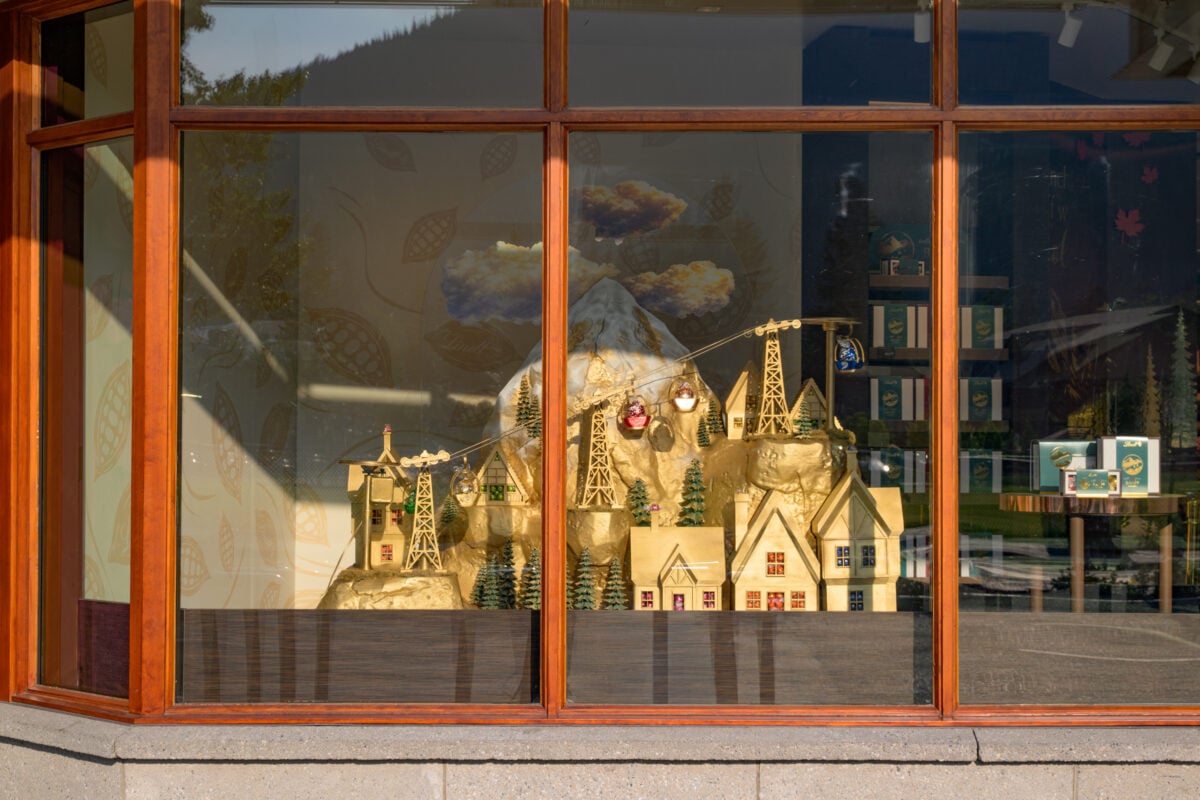
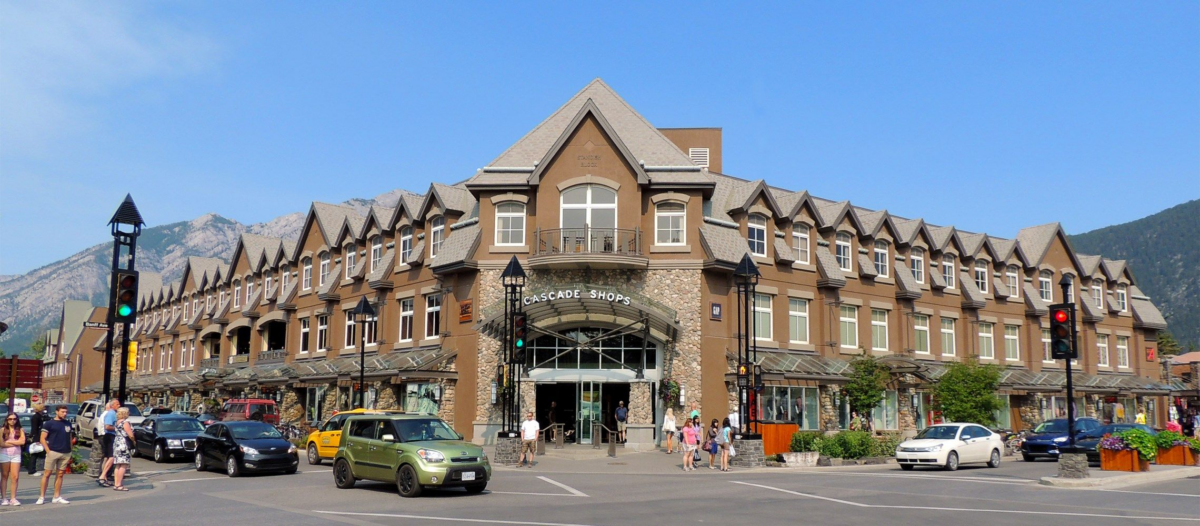
The new shop opened August 5 at 317 Banff Avenue, within the Cascade Shops property. It combines Lindt’s traditional chocolate assortment with prepared drinks, gelato, freshly crafted products and merchandise developed specifically for the mountain destination.
The opening comes as visitor activity in Banff is running at record levels. It also puts Lindt into direct competition with an established collection of confectionery businesses, including the recently launched Chocolate Board of Canada, Rocky Mtn Chocolate, The Fudgery and several other sweets and dessert operators along Banff Avenue.
Lindt has adapted parts of the shop specifically for the location. In addition to its signature LINDOR assortment, the Banff store carries freshly crafted chocolate bars, location-exclusive gift packaging and a Maple Sea Salt Leaf created by a Lindt Maître Chocolatier.
An on-site Drinks Bar serves hot and iced beverages made with Lindt chocolate, while the menu includes Lindt Crema Gelata and Crema Gelata shakes, introduced in 2026. Together, the assortment gives Lindt products for gifting and take-home purchases alongside drinks and desserts intended to be consumed during a visit.
The mix is well suited to Banff’s four-season tourism market. Hot chocolate and gifting fit naturally with winter and après-ski traffic, while gelato, shakes and iced beverages provide an offering for the much larger summer visitor period. It also gives Lindt a broader range of purchase occasions than a conventional boxed-chocolate shop.
Banff Adds a New Dimension to Lindt’s Canadian Network
The Banff opening appears to bring Lindt’s Canadian retail network to 52 locations. The company’s online store directory lists 51 other shops across nine provinces, with Ontario and Quebec accounting for 37 of those locations.
Banff becomes Lindt’s fifth Alberta store and its 11th across Western Canada. The company’s existing Alberta footprint includes Deerfoot Meadows in Calgary, CrossIron Mills north of the city and two stores in the Edmonton area.
The Banff shop gives Lindt a substantially different type of market, extending its presence beyond Alberta’s two largest metropolitan areas into a mountain community whose commercial economy is shaped by millions of annual visitors.
Lindt’s Canadian retail expansion has been underway for decades. Lindt & Sprüngli Canada has operated as a wholly owned subsidiary of the Swiss company since 1994, while Retail Insider reported in 2014 that the chocolatier had 20 stores in Canada and intended to add another 12 by the end of 2016.
Tourism destinations were already part of the company’s real estate strategy at the time. Lindt was considering locations ranging from outlet centres and super-regional malls to high streets, airports and tourist markets as it expanded nationally.
The current network reflects that variety. Lindt operates in major enclosed malls such as Yorkdale, CF Toronto Eaton Centre and Square One, alongside outlet and destination-shopping properties including CrossIron Mills, Tsawwassen Mills, McArthurGlen Designer Outlet Vancouver Airport and Outlet Collection at Niagara. It also has open-air and power-centre locations, downtown stores and a Vancouver Exchange Tower shop that has incorporated a café component.
Banff represents one of the clearest examples of Lindt applying its Canadian retail strategy to a tourism-driven destination.
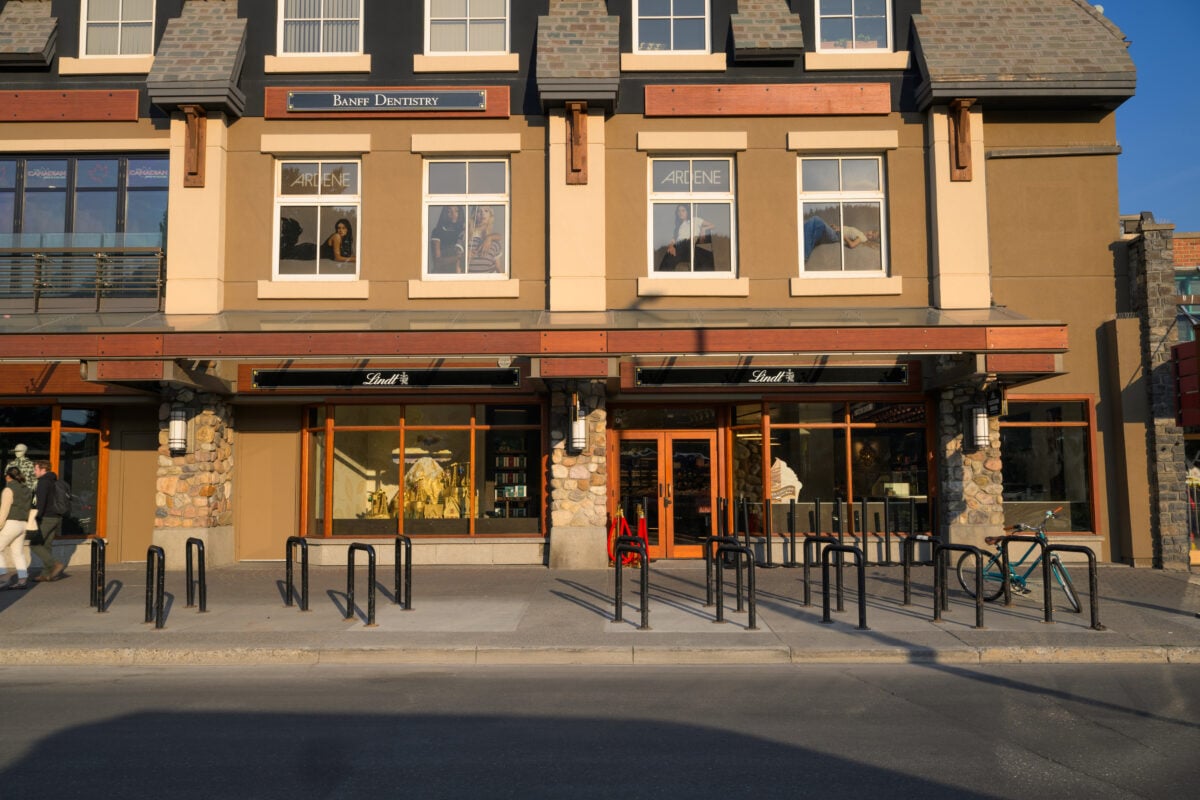
Lindt Takes Banff Avenue Frontage at Cascade Shops
The new Lindt shop is part of Cascade Shops, the mixed-use property formerly known as Cascade Plaza at Banff Avenue and Wolf Street. The store also has its own exterior entrance directly from Banff Avenue, giving Lindt street-level frontage and access to pedestrian traffic while remaining part of the shopping centre.
Cascade Shops describes itself as Banff’s largest indoor shopping centre and the town’s only indoor mall. The complex contains 126,999 square feet of rentable area, including 81,328 square feet of retail, along with office, residential and hotel uses.
The location gives Lindt direct exposure along Banff’s primary commercial street while connecting the store with the broader Cascade Shops property. It also positions the chocolatier farther north along Banff Avenue than several established confectionery businesses concentrated around the 100 and 200 blocks.
Jeff Berkowitz and Joel Patterson of Aurora Retail Group negotiated the Banff lease deal on behalf of Lindt. Aurora Retail Group works with Lindt on its real estate across North America.
Record Tourism Supports a Much Larger Retail Market
Banff’s relatively small permanent population tells little about the scale of its retail opportunity. Banff National Park welcomed approximately 4.5 million visitors in 2025, according to Parks Canada, setting a record and increasing from the previous year, while summer visitation also rose.
Banff Avenue therefore functions differently from the main street of a conventional small Canadian community. Its stores serve local residents alongside Canadians and international visitors moving through one of the country’s best-known tourism destinations.
Confectionery is well suited to that spending environment. Chocolate can be consumed during a visit, purchased as an accessible indulgence or carried home as a gift, while ice cream, fudge, beverages and other sweets benefit from high pedestrian traffic and spontaneous purchasing.
For Lindt, location-exclusive products add another dimension. LINDOR and many other Lindt products are readily available through supermarkets, pharmacies and retailers across Canada, meaning visitors do not need a Lindt shop in Banff to access the brand.
Banff-specific packaging and products give those customers a reason to purchase from this particular location. The Maple Sea Salt Leaf similarly incorporates a recognizably Canadian flavour cue into an international brand whose identity remains rooted in more than 180 years of Swiss chocolate-making.
A Competitive Chocolate Market
Lindt is entering a market where specialty chocolate and confectionery are already well established. One of the most significant additions came almost exactly a year earlier, when Chocolate Board of Canada opened its first location at 202 Banff Avenue in August 2025. The concept was created by the Canadian family behind Rocky Mtn Chocolate and launched in the historic Caribou Corner building, a prominent location that once housed Banff’s first Hudson’s Bay Company store.
Retail Insider reported at the time that Chocolate Board was developed as a more elevated concept than the company’s longstanding Rocky Mtn Chocolate format. Its assortment emphasizes artisan chocolates, hand-finished products, premium gift packaging and flavours intended to communicate a distinctly Canadian identity.
The Banff flagship also incorporates experience into the format. Customers can see elements of chocolate production taking place in the shop, while the assortment extends beyond packaged chocolates into handmade fudge, caramel popcorn, hot chocolate and ice cream.
Its operators deliberately chose Banff as the launch market for the new brand, giving Chocolate Board exposure to visitors from across Canada and around the world before taking the concept into other high-profile locations.
The arrival of Lindt creates an interesting contrast between two approaches to premium chocolate retail. Chocolate Board builds its identity around Canada, using domestic references, Canadian flavours, hand production and a brand created specifically to evoke place. Lindt arrives with international recognition, Swiss heritage and products familiar to consumers around the world.
In Banff, the strategies begin to overlap. Both businesses use premium presentation, destination gifting, beverages, frozen desserts and products associated with the visitor experience. Lindt’s Banff-exclusive packaging and Maple Sea Salt Leaf introduce local relevance to a global brand, while Chocolate Board uses Banff as a platform for an explicitly Canadian one.
Established Operators Add More Competition
Chocolate Board is far from the only established player Lindt will encounter. Rocky Mtn Chocolate continues to operate a separate store at 117 Banff Avenue, giving the company two distinct concepts in the market.
The Canadian Rocky Mtn Chocolate business traces its history to Whistler Village, where its first domestic location opened in 1988, providing decades of experience selling confectionery in mountain-tourism markets. Its more playful format, including highly visual products such as caramel apples, remains distinct from the premium positioning developed for Chocolate Board.
Other nearby businesses add further competition for sweets and dessert spending. The Fudgery offers handmade chocolates, fudge, brittle, truffles and other confectionery, while Banff Sweet Shoppe sells handmade chocolate, fudge and nostalgic candy. Banff Candy Store specializes in retro and international sweets, and COWS competes for dessert traffic through its premium ice cream business.
These businesses vary considerably in format, price and positioning, but they share the same underlying opportunity: capturing discretionary spending from visitors moving through a compact tourism district. For Lindt, that means competing for more than chocolate purchases, since a visitor considering a gelato or chocolate drink may also be choosing among ice cream, fudge, candy and other treats available only a short walk away.
Chocolate Retail Moves Beyond the Box
The growing Banff market also illustrates how specialty chocolate retail is evolving. For brands operating their own stores, the opportunity increasingly extends beyond shelves of boxed chocolates as drinks, desserts, fresh preparation, visible production and exclusive merchandise make the shop itself part of the experience.
Lindt’s Banff store reflects that shift with its Drinks Bar, Crema Gelata, shakes and freshly crafted chocolate bars. Chocolate Board combines chocolate retail with visible production, handmade products, ice cream and hot beverages, while Rocky Mtn Chocolate and long-established independents have similarly relied on preparation, aroma and visual merchandising to draw visitors into their stores.
The result is a broader set of purchase occasions. A customer might enter for a hot drink, buy gelato during an afternoon walk or pick up a Banff-specific package to take home. The same store can address immediate consumption, personal indulgence, gifting and souvenirs.
That flexibility has become particularly relevant as the global chocolate industry manages sharply higher cocoa costs and significant increases in retail pricing. Lindt has continued to grow its North American business, but the company has also acknowledged broader pressure on chocolate volumes following substantial price increases across the category.
Specialty retail gives Lindt a way to offer something different from the products consumers already encounter in conventional grocery and drugstore channels. In Banff, the value of the shop is tied to the experience, location and exclusivity surrounding the chocolate as well as the product itself.
Banff as a Showcase Market
Banff offers another advantage that is difficult to replicate in a conventional regional market: enormous geographic reach within a relatively compact retail district. A business operating on Banff Avenue can encounter customers from across Canada and around the world during the same trading day. Visitors are also experiencing the stores during leisure travel, when dining, shopping, gifting and other discretionary purchases are part of the trip.
Chocolate Board used that environment to introduce a new Canadian brand, while Lindt is using it to present a localized version of one of the world’s most recognizable chocolate names. Their approaches point to a wider evolution in destination retail, where recognizable products are increasingly combined with local references and experiences specific to the place where they are sold.
Banff remains built around mountain scenery, outdoor recreation and hospitality, but its commercial district also provides brands with a highly visible stage for concepts designed around experience, premium products and a strong sense of place.
Lindt’s arrival adds another international name to that mix while intensifying competition in a confectionery market that is already remarkably deep for a community of Banff’s size. For visitors, that means more choice. For the retailers competing along Banff Avenue, it raises the stakes in creating an experience memorable enough to travel home with the chocolate.