Empire Company Limited is preparing what management calls its “e-commerce 2.0 strategy,” less than a year after a major restructuring changed how the Sobeys parent approaches online grocery fulfilment in Canada.
Empire reported last week that e-commerce sales increased 11.3 per cent in its first quarter, driven primarily by growth through third-party delivery partnerships and continued growth at Voilà. Management now believes it can accelerate that pace while operating with a substantially different cost structure.
The parent company of Sobeys, Safeway, FreshCo, IGA, Foodland, Farm Boy and Longo’s is drawing a clearer line between the jobs its different e-commerce platforms are expected to do. Voilà is aimed primarily at the planned grocery trip, while third-party platforms can handle customers looking for more immediate delivery.
It is a more flexible model than the one Empire originally built around Voilà, and one that follows a significant reset of the company’s online grocery ambitions.
Empire Reshaped the Voilà Model
Empire made a substantial investment in automated customer fulfilment centres as it built Voilà. The original strategy separated much of the picking and packing of online orders from individual supermarkets, with dedicated infrastructure designed to support larger volumes as online grocery grew.
The Canadian e-commerce grocery market ultimately proved smaller and slower-growing than Empire had originally anticipated, contributing to greater earnings dilution from Voilà. The company responded by restructuring the business and reconsidering how much dedicated infrastructure it needed.
Empire closed its Calgary customer fulfilment centre as part of that restructuring and continued an earlier pause on its planned Vancouver facility. The company retained its Toronto and Montreal customer fulfilment centres, which continue to support Voilà in higher-density markets.
The financial impact was substantial. Empire recorded a significant impairment related to its e-commerce assets and said the restructuring was expected to improve annualized e-commerce operating income by approximately $95 million.
Voilà itself remains part of the strategy. Management said during Empire’s first-quarter earnings call last week that the service continues to grow and offers a strong value proposition for customers making planned grocery purchases.
What changed is Empire’s willingness to use different fulfilment options depending on the customer, market and shopping occasion.
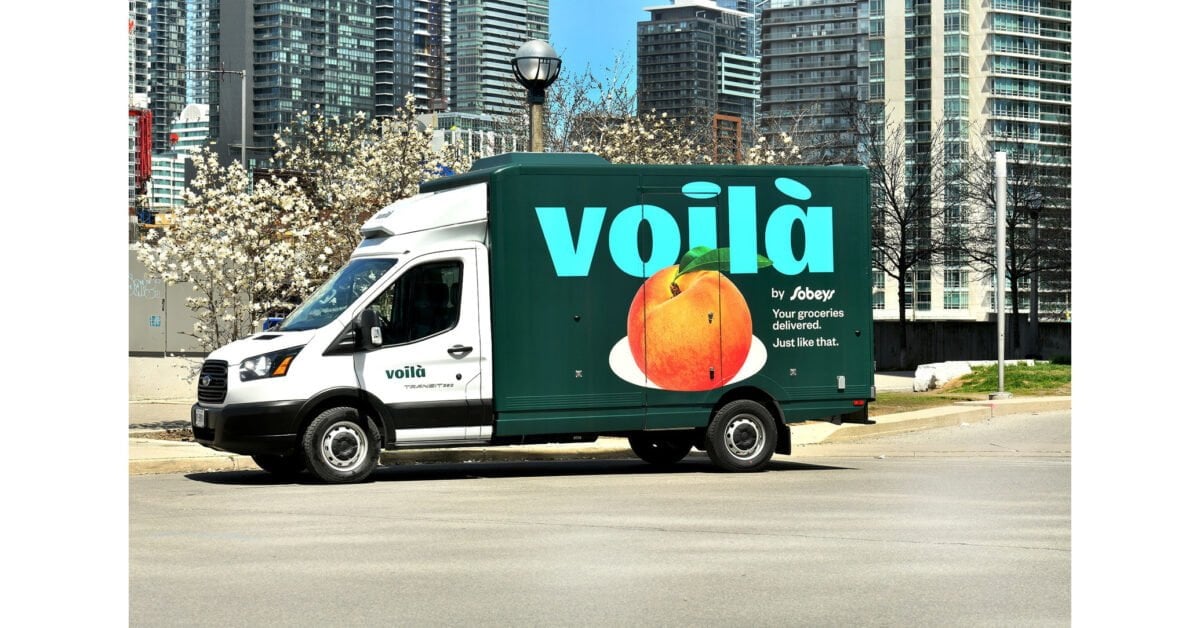
Voilà Handles the Planned Shop
Chief Customer Officer Luc L’Archevêque told analysts that Empire sees Voilà as well suited to the planned grocery trip. Third-party delivery platforms serve a different need, particularly when customers want products quickly.
A large weekly grocery order scheduled in advance is different from an order placed because a customer needs a handful of products immediately. Empire can now serve those transactions through different platforms instead of trying to make one fulfilment system handle both.
Management said Voilà and its third-party partnerships are growing.
The split also matters financially. Centralized fulfilment requires significant infrastructure and enough order density to support it. Third-party platforms give Empire another route to customers without requiring the company to build dedicated customer fulfilment centres in every market.
Empire has already demonstrated that it will pull back from centralized infrastructure where the economics do not support the investment. At the same time, it continues to use the model in markets where management believes the scale is there.
Customer Data Moves Up the Agenda
Fulfilment is only part of the next strategy. Empire also wants to make better use of customer visits and data to connect its platforms.
Scene+ gives the company a large and growing loyalty base across its banners. Management said membership continues to increase rapidly, while personalized offers are generating a strong response from customers.
The opportunity extends across Empire’s different points of contact with consumers. A customer may shop at a Sobeys or Safeway store, place a planned grocery delivery through Voilà and use a third-party service when speed matters.
Empire has not said those channels are fully integrated today. Management’s comments indicate that improving the connections between them is part of the work underway as the company develops e-commerce 2.0.
Empire Wants E-Commerce Growth to Accelerate
Online sales increased 11.3 per cent in the first quarter, but L’Archevêque said Empire expects to do better.
Management pointed to continued growth at Voilà and through third-party partnerships, better use of customer data and new technology leadership as areas that can help accelerate the business.
The growth target comes after Empire spent much of the past year reducing costs and restructuring an e-commerce network that was producing more earnings dilution than management had originally expected.
That puts more emphasis on the quality of the growth. Higher online sales would be positive, but Empire also needs to protect the operating improvements created by the restructuring.
The $95 Million Reset
Empire expects the Voilà restructuring to improve annualized e-commerce operating income by approximately $95 million. Management previously said some of that benefit could be reinvested to support future growth.
The size of the improvement shows why fulfilment economics matter. Empire had built significant infrastructure around the expectation that online grocery volume would eventually support centralized fulfilment across several major Canadian markets.
Calgary and Vancouver changed that calculation. Closing one customer fulfilment centre and keeping another planned facility on hold allowed Empire to reduce its cost base while retaining centralized fulfilment in Toronto and Montreal.
The company no longer needs to choose between Voilà and third-party delivery as competing models. Each can serve a different purpose, and Empire can determine where its own infrastructure makes economic sense.
That is the real test of e-commerce 2.0. Growing online sales above the current 11.3 per cent pace matters, but less so if Empire has to rebuild the cost base it just spent considerable effort reducing.
Stores and Digital Growth Remain Connected
Empire’s physical network remains important as the company increases its digital reach. Its stores provide the banners, customer relationships and loyalty participation that underpin much of the broader business, while third-party platforms provide another way for customers to access those banners.
Empire is also expanding that physical network. The company now expects to open more than 25 stores in fiscal 2027 while simultaneously targeting faster e-commerce growth.
Management is continuing to commit significant capital to stores while looking for more flexible ways to grow online. Customers can move between a full weekly shop, a scheduled online order and an immediate delivery without necessarily thinking about the different infrastructure behind each transaction.
For Empire, the challenge is making those channels work together without applying the same cost structure to all of them.
Empire Takes Another Run at Online Growth
Empire has already made a major adjustment to its e-commerce strategy. It closed the Calgary customer fulfilment centre, kept Vancouver on hold and absorbed a significant impairment rather than continuing to invest in centralized infrastructure where the economics were not meeting expectations.
Now it wants online growth to accelerate again. Voilà has a defined role around planned grocery orders, third-party platforms provide immediacy, and Empire wants to use customer data and personalization to build stronger connections across the business. The model gives management more options than the original strategy, particularly in markets that cannot support dedicated fulfilment infrastructure.
Management calls it “e-commerce 2.0.” The label matters less than the financial outcome. Empire has identified approximately $95 million in annualized operating income improvement from restructuring the original model; the next job is to grow without giving those gains back.