MEC is deepening its investment in trail running, a category the Canadian outdoor retailer expects will become a larger part of its business as it expands its product assortment and renews its focus on expertise and community programming.
The strategy builds on an area where MEC already has considerable experience. Rather than approaching running broadly, Chief Merchandising Officer Chris Speyer said the retailer sees a particularly strong connection between trail running and its longstanding position in hiking and other outdoor activities.
“When we think about running at MEC, we primarily think about trail running,” Speyer told Retail Insider. “We see a lot of people engaging and getting outside, and we love any way people get outside.”
MEC has historically been known for fitting customers with hiking footwear and outfitting them for time on trails. As consumer preferences evolve around how people move through those environments, Speyer sees trail running as an organic extension of expertise the retailer already has.
“We’ve been well known for fitting somebody to spend time on the trail in a hiking boot or hiking shoe. Now we’re seeing an evolution in what the customer is looking for in terms of how they run on the trail, or even walk in a pair of running shoes,” he said. “It’s a natural extension of an area of deep expertise for us.”
The investment comes as MEC continues its evolution following its return to majority Canadian ownership in 2025. A Canadian investor group led by Vancouver entrepreneur Tim Gu acquired control of the retailer from Kingswood Capital Management, with MEC CEO Peter Hlynsky and Speyer among the investors in the business.
Trail Running Becoming a Larger Business for MEC

Michele Guimond, MEC’s Vice President of Marketing, said the retailer is seeing increased participation in running generally, with particular interest in trails and longer distances. Some road runners are moving onto trails, while established trail runners are increasingly pushing into longer-distance events.
“There has been a massive increase in the uptake of running as a broader category, and certainly in trail running,” Guimond said. “We’re seeing people who may have been road runners looking to get out on the trails.”
Guimond and Speyer participate in the category themselves. Speyer recently completed an approximately 80-kilometre trail event, while Guimond completed her first two 25-kilometre trail races this year.
The enthusiasm extends throughout MEC. Guimond described the company’s latest trail-running initiative as “probably the most impassioned project” she has seen employees work on during her five years with the retailer.
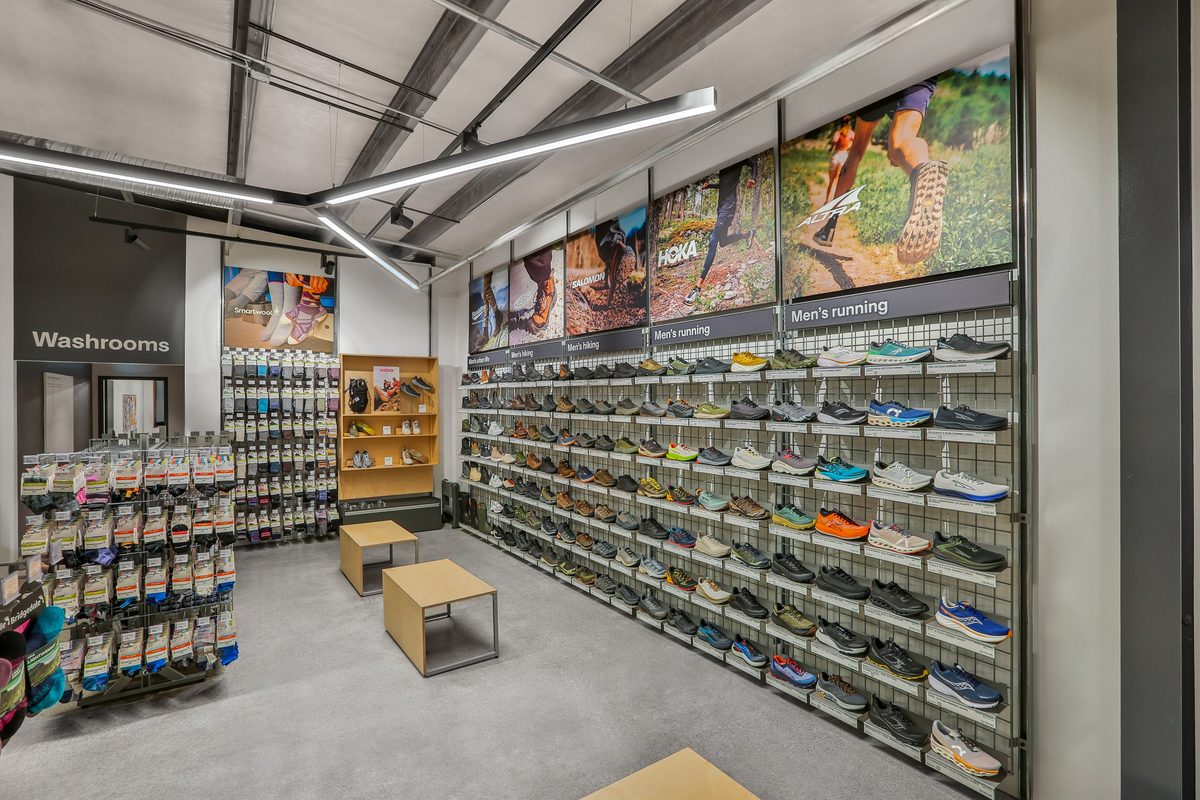
MEC is backing that enthusiasm with a significantly expanded product offering. Guimond said the company is entering the fall with “probably the best running assortment we’ve had in years,” extending well beyond footwear.
Speyer pointed to rapid innovation across running shoes, including changes in cushioning, traction, weight, toe-box width, stack height, materials and shoe geometry. Similar developments are occurring across apparel, hydration and equipment.
“Customers want to be comfortable, fast and light, and they have a tremendous number of options now,” Speyer said. “Their expectations have risen exponentially because the offerings in the market have innovated significantly.”
MEC’s assortment includes footwear, apparel, hats, hydration systems, packs and other carrying solutions, nutrition and equipment intended for runners across different distances and environments. The retailer is also emphasizing products that can move between activities, including trail running, hiking, fastpacking, Nordic skiing and other high-output pursuits.
Guimond said that versatility has become an important consideration for MEC’s merchandising team, particularly when consumers are investing in technical products they can use across seasons and activities.
Selling the Complete Trail-Running Kit
The breadth of the category could give MEC a way to distinguish its offering within an increasingly competitive running market.
As distances increase, runners have to consider considerably more than footwear. Guimond said questions around hydration, nutrition and carrying systems become increasingly important, particularly in remote environments where conventional aid stations may not be available.
“We get a lot of questions around what the right running pack is, whether it’s a hip belt or hydration vest, how much hydration someone needs to carry and how much nutrition they need,” she said. “There’s a big difference going from 10 kilometres to 50 in terms of what you need to sustain yourself when you’re out on the trails.”
That complexity plays into areas where MEC already has extensive product knowledge through hiking and backpacking. A runner visiting MEC can potentially assemble an entire system spanning shoes and apparel through to packs, hydration, electrolytes, nutrition, sun protection and other equipment required for longer periods outdoors.
“This has always been a natural part of who we are — understanding how to stay well fed and protected and how to carry your gear on the trail,” Speyer said. “If that was hiking and backpacking previously, and now the natural extension is going for a long- or short-distance run, it falls right into our existing areas of expertise.”
The opportunity for MEC therefore extends beyond competing for individual footwear purchases. Its broader specialty-retail proposition is built around outfitting customers for the complete trail-running experience.
Speyer identified three primary components of that proposition: expertise, thoughtfully curated merchandise and community.
MEC invests in hiring employees who have an interest in sharing their outdoor knowledge, while continuing to educate staff about the technology and brands represented in its stores.
“If you come into an MEC, one of the value adds we bring is our expertise alongside thoughtfully curated product assortments,” Speyer said. “We’ve made choices for varying levels of ability and the different ways customers participate.”
As technical choices proliferate and consumers can purchase many of the same brands online or directly from manufacturers, MEC is positioning knowledgeable staff as part of the value of visiting a physical specialty retailer.
Canadian Brands and MEC Label Part of the Mix
Canadian companies are playing a prominent role in MEC’s running strategy.
Speyer highlighted Montreal-based norda, Ciele Athletics and endurance nutrition company Näak among the Canadian brands contributing innovation to the category.
“There are some incredibly innovative and interesting Canadian brands in the trail-running space,” Speyer said. “We’re excited about the Canadian content we can put out there for people, and in a lot of ways I think Canadians are leading the charge in product innovation in this space.”
MEC is investing in its proprietary assortment as well, including its Pace collection of running apparel, packs and carrying products.
Speyer told Retail Insider that approximately 25 per cent of MEC’s overall business currently comes from its own MEC Label, with the retailer looking to increase that penetration over time.
“One of the things MEC was built on was demonstrating its expertise through the creation of product,” he said. “We think that’s an important space.”
The merchandising strategy involves determining where an outside brand provides the strongest solution and where MEC’s proprietary merchandise can complement the broader assortment. Running gives the retailer opportunities to expand both sides of that mix.

MEC Reconnects With Its Community Running History
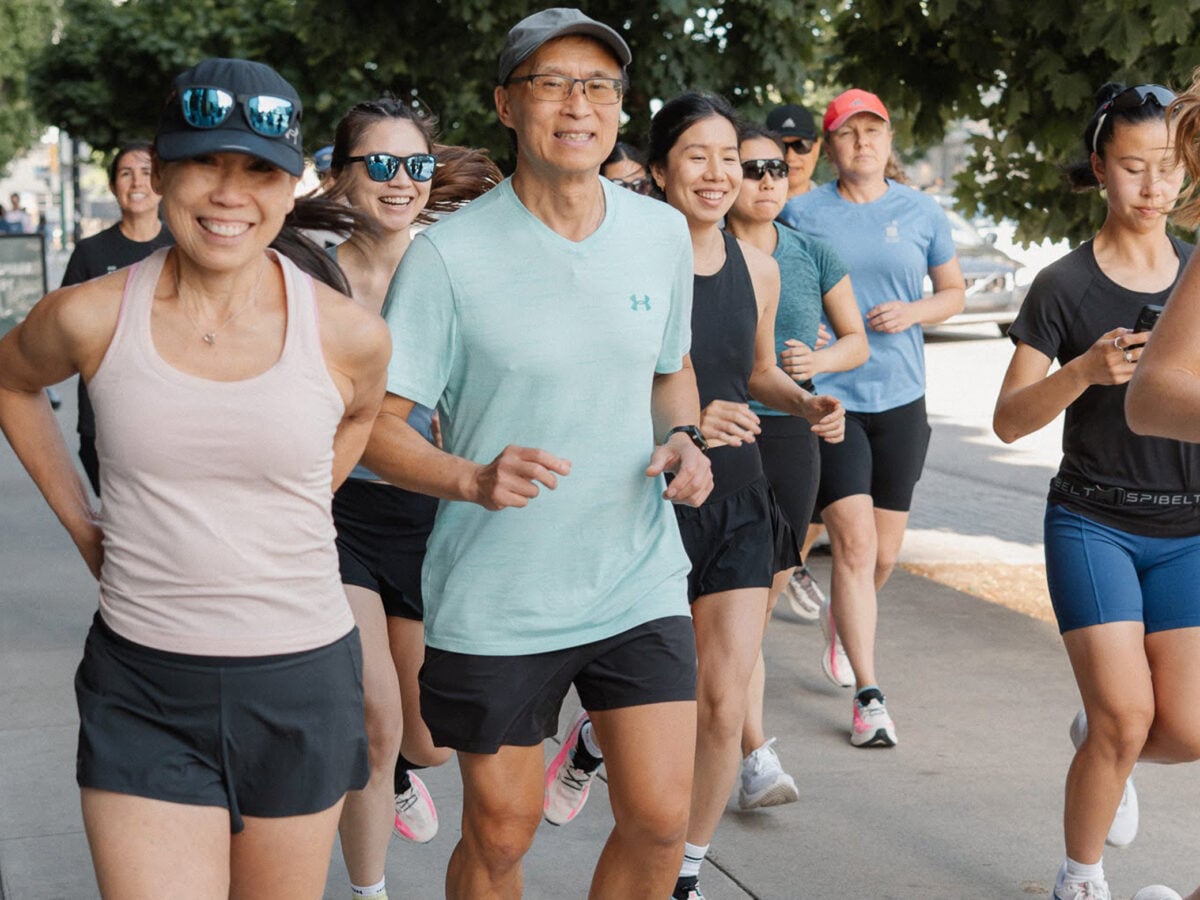
Product is one part of MEC’s renewed running push. The retailer is also introducing Train for the Trails, a nationwide four-week initiative combining free clinics, guided community runs, weekly training challenges and digital resources designed to introduce runners to trail running and help existing participants develop their skills.
Each participating MEC store will have a run champion helping lead programming and working with community running groups. Salomon is a key partner in the initiative and will participate in local activations, including opportunities for customers to try products.
The community component has considerable historical precedent at MEC.
The retailer once operated a popular race series across Canada, offering comparatively inexpensive events intended to make participation accessible. Running was part of a much broader community program at MEC that included thousands of events spanning outdoor sports, education and skills development.
Guimond said MEC continues to hear considerable affection for elements of that history.
“When I came into the brand, there were things people kept asking for: ‘Bring back the catalogue. Bring back the Trail Race Series,’” she said. “Those were strong passion requests from members and from staff internally.”
MEC isn’t bringing the former race series back. Instead, the retailer is revisiting some of the principles behind it for today’s customer.
“Community-led events and our stores being community hubs are 55-year-old concepts for MEC. That’s not new. How we’re doing it is new,” Guimond said.
The approach reflects what Guimond describes as MEC operating as a national brand while remaining a local retailer. Individual stores can work with running organizations already active in their markets, allowing local expertise and relationships to shape the programming.
“This initiative celebrates the passion our members have for running and enables our store teams to be the experts in their markets and partner with local community running groups,” she said.
Speyer sees an important distinction between MEC’s former race series and what the company is building now.
“I loved the races, but ultimately there are six months of running that go into one day of racing,” he said.
Races can be intimidating or simply unappealing to some runners, while running itself can be a highly personal activity. Community runs provide another entry point where participants can exchange knowledge, discover routes and develop relationships with other runners.
“The idea of creating run clubs in the community is to create a friendly place where people can connect with each other,” Speyer said. “I love the old race series, but this is a smart way to build community and connection over the long haul rather than around individual moments on the calendar.”

More Than 1,000 Sign Up in First Weekend
The initial response to Train for the Trails exceeded MEC’s expectations.
Guimond said the company initially released a single video and sent an email, with relatively little marketing support before the larger advertising campaign was scheduled to begin.
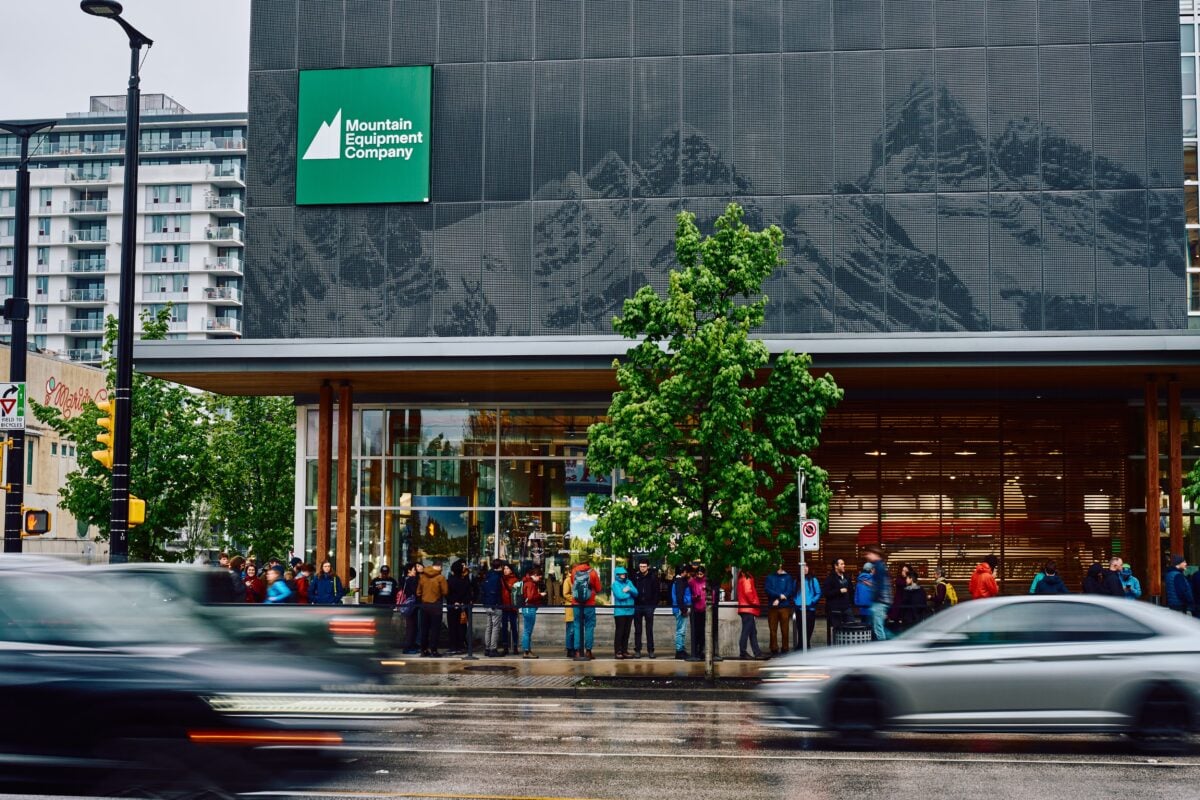
More than 1,000 people registered nationally during the first weekend. In Vancouver, where the initial program had capacity for 100 participants, the available spaces were gone within the weekend.
“We’re going to add spaces,” Guimond said. “With very little marketing, there’s such an appetite for this.”
MEC is introducing waitlists and looking for opportunities to expand capacity. The early response gives the retailer a tangible indication of interest as it considers how community programming could develop alongside the running business.
“This is the start,” Guimond said. “If you don’t get into this program, look for more. We’re going to keep doing it, and we’re going to learn every time we do it. It’s the start of the roadmap for us.”
People unable to participate in the physical programming will also be able to access a digital training guide developed with two B.C.-based trail-running experts. The beginner-oriented resource will address equipment, nutrition, hydration and terminology, providing another way for runners to engage with the initiative.
MEC Says It Is in Running for the Long Term
The running investment comes as MEC continues to define its direction under Canadian ownership, something Speyer said remains important to the company and its employees.
“We’re incredibly proud to be back under Canadian ownership,” he said, pointing to the passion for outdoor activities and local knowledge among employees in MEC stores across the country.
The Canadian connection also extends into the merchandise mix through MEC Label and the Canadian running brands the retailer is carrying.
For trail running itself, Speyer said MEC is planning well beyond a single season or community campaign.
“We’re in this for the long game,” he said. “We see this as a natural growth extension of everything we do on the trail.”
MEC expects trail running to become a larger percentage of its overall business as consumers use technical running footwear and equipment across different outdoor activities. Speyer also sees accessibility as an advantage, with trail running taking different forms depending on where Canadians live — from mountain terrain around Vancouver to Toronto’s extensive ravine and trail network.
“We think this is going to become a larger part of our business,” Speyer said. “It won’t be a trend for us. We’ll be following natural growth in how people choose to get out on the trail.”
Train for the Trails offers an early indication of how MEC intends to pursue that growth. Its expanded running assortment, proprietary products, staff expertise and community programming bring together several elements that have long been part of the retailer’s outdoor business, adapted to a category MEC believes has considerably more room to grow.