Miniso is preparing to open its second MINISO LAND store in Canada at CF Toronto Eaton Centre, bringing its large-format concept to one of the country’s busiest shopping centres as the global retailer becomes more selective about international expansion.
The forthcoming Toronto location follows the Canadian debut of MINISO LAND at West Edmonton Mall in November 2025. That flagship spans approximately 12,000 square feet and marked a significant increase in scale for Miniso in Canada, with more than 5,000 SKUs and an extensive assortment of licensed intellectual property, collectibles and character-driven merchandise.
The expansion comes as Miniso Group reassesses how quickly it adds stores outside China. During the company’s latest earnings call, founder and chief executive officer Ye Guofu said the international business is shifting from an approach focused heavily on scale toward one emphasizing store quality, productivity and profitability.
The change provides important context for Miniso’s next phase of Canadian growth. Canada and the United States are managed together as the company’s North American business, where revenue continues to rise rapidly despite some moderation in comparable-store performance during the second quarter.
Second MINISO LAND Coming to Toronto
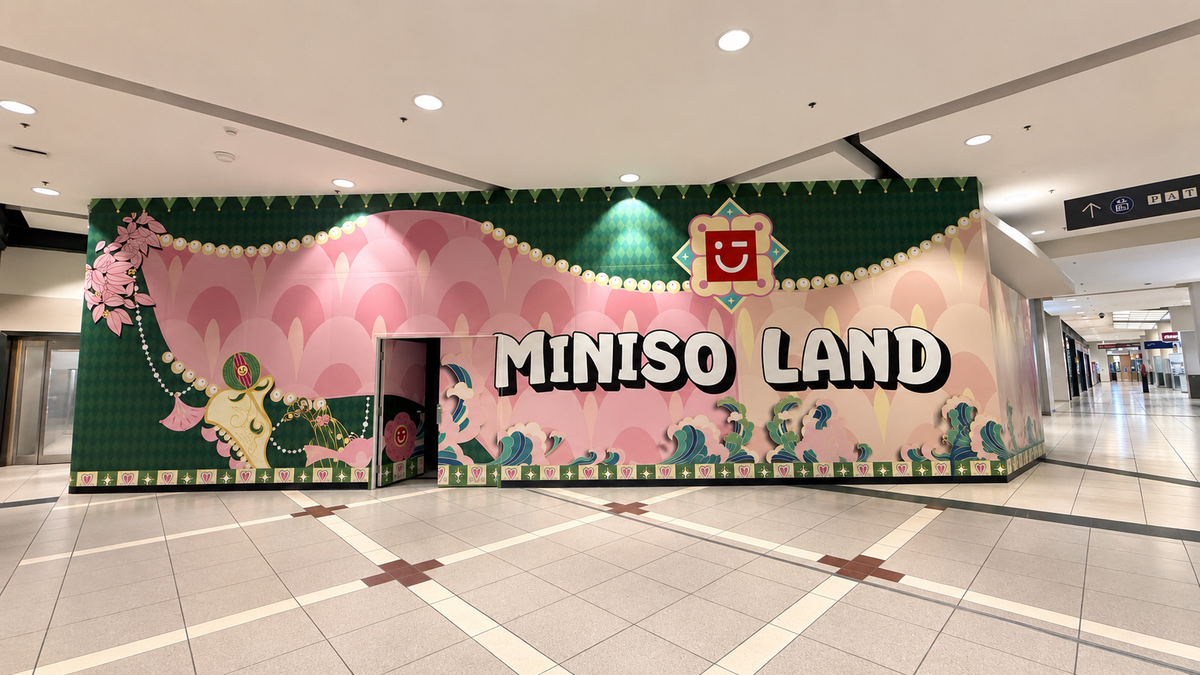
The new MINISO LAND at CF Toronto Eaton Centre is expected to occupy approximately 8,100 square feet on Level 1, combining space previously occupied by Bluenotes and Journeys. Hoarding for the concept is in place, although an opening date has not yet been publicly announced.
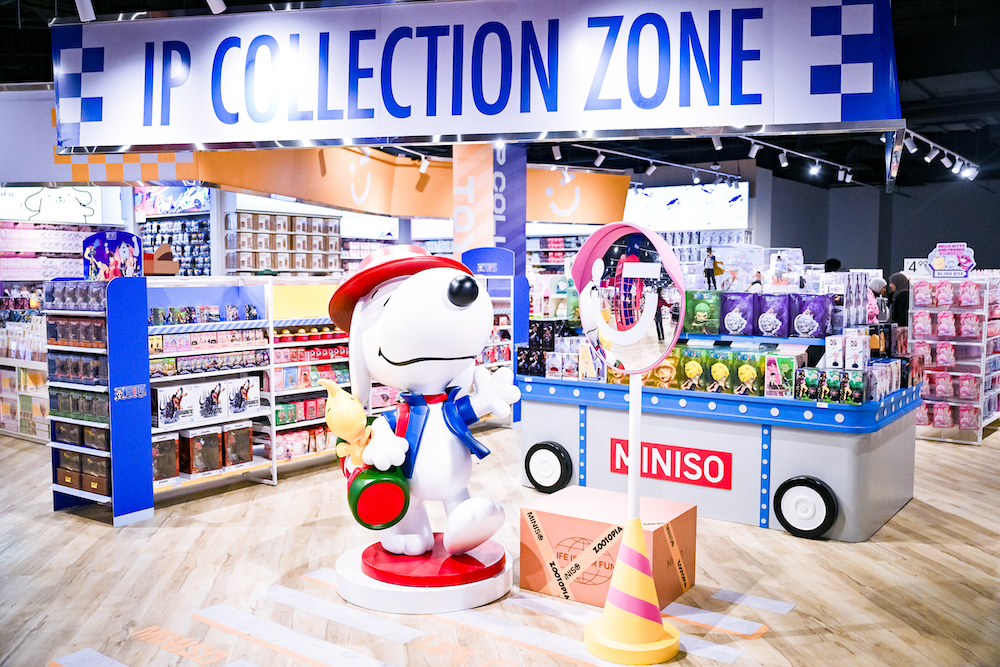
MINISO LAND represents a significant evolution from the smaller variety stores that initially established the Miniso brand in Canada. The format carries a larger assortment of licensed characters, collectibles, plush products and other IP-driven merchandise, presented through more elaborate displays and dedicated character environments. Miniso describes the concept as part of its “Super IP + Super Store” strategy.
Canada’s first MINISO LAND opened at West Edmonton Mall on November 1, 2025. At approximately 12,000 square feet, the store was roughly twice the size of what had previously been Miniso’s largest Canadian location and launched with more than 5,000 SKUs.
Miniso said the Edmonton flagship set a Canadian record for first-day sales. The strong opening provided an early indication of consumer interest in the larger format, which places substantially greater emphasis on licensed merchandise and collectibles than Miniso’s traditional stores.
Bringing the concept to Toronto less than a year later adds another major Canadian market to the MINISO LAND rollout, even as the company applies greater scrutiny to international expansion.
North American Revenue Jumps 37%
Miniso’s North American business remains one of the stronger parts of its international operation. Revenue in the region increased 37% year-over-year during the first half of 2026 to approximately RMB 1.8 billion, while comparable-store sales rose by a mid-single-digit percentage.
Miniso does not disclose Canadian revenue separately. During the earnings call, Ye said the company internally manages the United States and Canada together as its North American business. Management continues to target approximately RMB 4 billion in North American revenue for the full year, along with a net profit margin of roughly 10%.
Growth moderated as the first half progressed. North American comparable-store sales increased approximately 10% during the first quarter before slowing in the second quarter, with management pointing to product availability and the timing of IP merchandise launches as contributing factors.
Miniso added approximately 75 net stores in North America during the first half, nearly double the number added during the comparable period a year earlier. That pace brought higher upfront costs as newly opened directly operated stores moved through their initial operating periods.
Management now plans to devote greater attention to the stores already in operation, part of a wider reset taking place across Miniso’s international business.
From ‘Scale First’ to ‘Quality First’
While Miniso generated strong overall growth during the first half of 2026, management acknowledged that its overseas business fell short of expectations in several areas. Distributor revenue weakened, some directly operated international markets remained in an investment phase, and overseas inventory turnover deteriorated.
Ye described the next stage of Miniso’s international development as a shift from “scale first” to “quality first,” drawing a parallel with changes the retailer made to its Chinese business several years ago. The company wants international teams to be more selective about new locations and place greater weight on expected returns before committing to stores.
During the second half of 2026, Miniso plans to concentrate on improving approximately 800 existing directly operated overseas stores while refining its international operating model. The company is also removing weaker locations from its network.
Miniso expects a net reduction of approximately 50 to 70 overseas stores during the second half. That includes 40 to 50 net additions to its directly operated network and a reduction of approximately 100 to 110 distributor-operated stores.
For Canada, the shift is significant because Miniso continues to invest in prominent locations while becoming more cautious about overall international store growth. The expansion of MINISO LAND suggests that larger stores in major shopping destinations remain part of the company’s plans.
Bigger Stores Deliver Stronger Productivity
Miniso’s experience in China helps explain the emphasis on larger formats. The company has spent several years developing stores capable of carrying broader merchandise assortments and considerably more IP product, and management says those locations are producing stronger results than conventional Miniso stores.
According to management, MINISO LAND stores in China are generating sales per square metre at roughly twice the level of regular stores. Franchisee profitability across the Chinese Miniso network also reached its highest level since 2019 during the first half of this year.
Miniso says the larger formats can strengthen its position with shopping centre landlords as well. Ye told analysts that the stores are increasingly viewed as traffic generators, which can help the retailer secure prominent locations and improve occupancy economics.
Site selection remains central to the model. Management said it prioritizes high-traffic commercial districts, strong visibility, corner positions and locations directly along major customer circulation routes. West Edmonton Mall and CF Toronto Eaton Centre align closely with those criteria, giving Miniso exposure to substantial local, regional and tourist traffic.
The company has simultaneously been reducing its reliance on conventional stores in China. During the first half, Miniso recorded a net closure of 121 regular stores while continuing to add newer formats, showing how the retailer is reshaping its network around store productivity rather than store count alone.
IP Merchandise Reshapes the Miniso Model
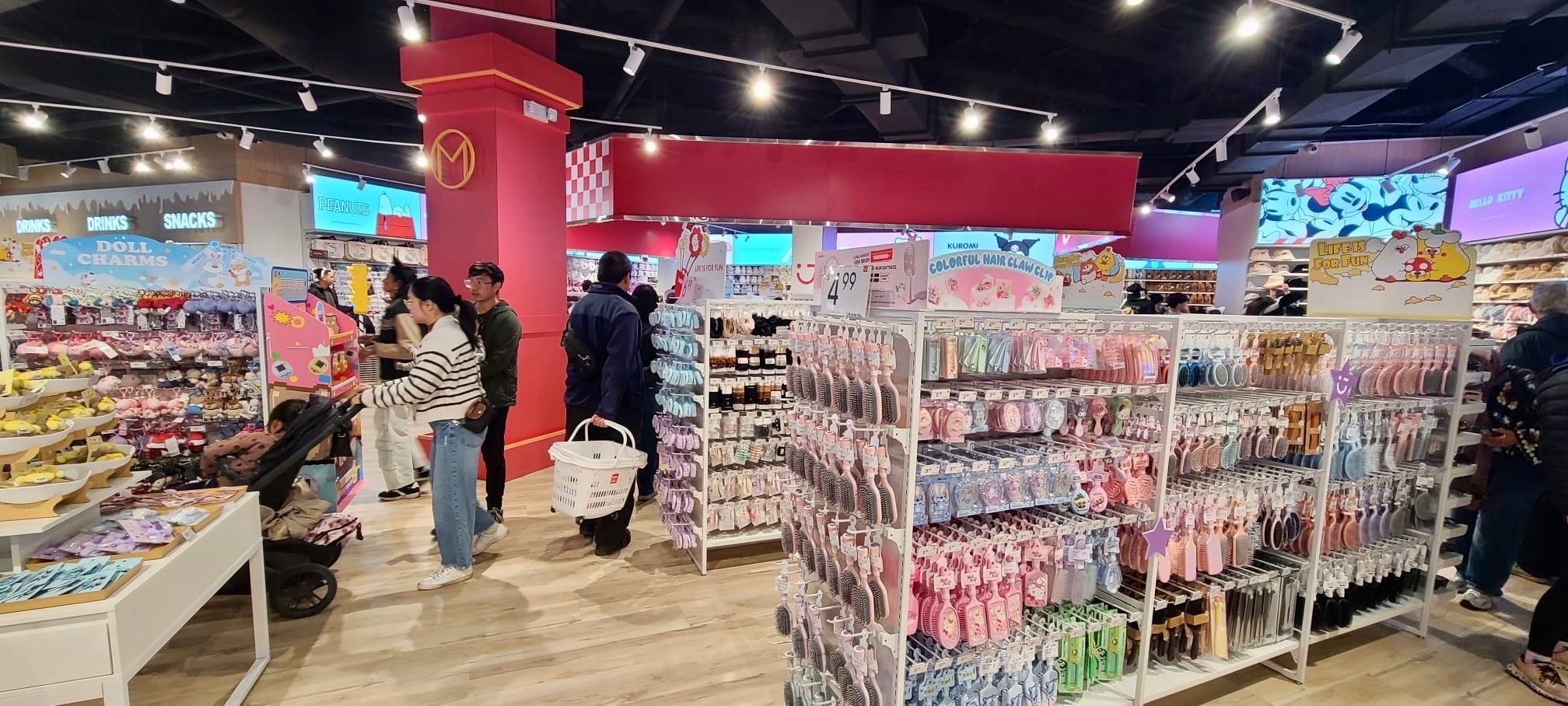
The move toward larger stores is closely tied to changes in Miniso’s merchandise mix. IP products now account for roughly one-quarter of sales, and the company has developed relationships with approximately 180 global intellectual-property partners across entertainment, animation and character brands.
Miniso is also investing heavily in proprietary characters that it can develop internally and distribute through its global store network. The company set a target at the beginning of 2026 of generating RMB 1 billion in proprietary-IP sales and said it had already reached that level by the end of July.
Developing its own intellectual property gives Miniso greater control over product development, marketing and distribution and creates another source of merchandise alongside its extensive licensed portfolio. Management said margins on proprietary-IP merchandise have been above the company average, while inventory turnover has generally remained between 30 and 40 days.
Larger stores give Miniso considerably more room to showcase these collections and build dedicated environments around individual characters. That is particularly evident at MINISO LAND, where collectibles, plush and character merchandise have a much greater presence than in the retailer’s earlier Canadian store model.
The changes are also shifting Miniso’s position within the broader value-retail market. Affordable lifestyle merchandise remains an important part of the assortment, while character collaborations and collectibles are increasingly being used to generate traffic, encourage repeat visits and support higher transaction values.
North America Particularly Sensitive to IP Launches
The growing importance of IP merchandise introduces operational challenges. Management said North America carries a particularly high proportion of IP products, leaving sales more sensitive to the timing of major launches and the availability of popular items.
Miniso acknowledged that it did not maintain a sufficiently consistent cadence of new IP releases during the first half. Several best-selling products also went out of stock during the second quarter, contributing to softer traffic and conversion. The company expects some of those shortages to ease in September and is developing a more structured international launch calendar around major IP releases and local shopping periods.
Maintaining a steady merchandise pipeline will become increasingly important as Miniso seeks to bring customers back for new collections. It also places the retailer within a growing area of discretionary spending driven by collectibles and character merchandise, which management describes as “interest-driven consumption.”
Other specialty retailers are pursuing the same consumer interest. Pop Mart has been expanding its Canadian footprint, including at CF Toronto Eaton Centre. Miniso carries a much broader merchandise assortment, but its increasing emphasis on collectibles and proprietary characters means the two retailers are participating in some of the same character-driven retail growth.
Canada Could Test Miniso’s Next Phase
Globally, Miniso Group generated RMB 11.5 billion in revenue during the first half of 2026, an increase of 22.4% year-over-year. Operating cash flow rose 45.5%, while the company ended June with 8,674 stores across its various banners and markets.
International growth remains central to Miniso’s long-term plans, although management is changing how it evaluates that growth. Store productivity, inventory health and profitability are taking on greater importance as the company becomes more selective about adding locations.
Canada offers an early test of that approach. West Edmonton Mall demonstrated strong initial demand for MINISO LAND, while the forthcoming CF Toronto Eaton Centre location will bring the format into the heart of Canada’s largest urban retail market.
Together, the two locations show where Miniso continues to see an opportunity to invest: prominent shopping centres, larger footprints and deeper assortments built around licensed and proprietary IP. As the company slows its broader overseas expansion, the performance of its Canadian flagships will provide another measure of how successfully the MINISO LAND model can travel beyond China.