By Tanishah Nathoo and Anna Racovali
A new audience analysis reveals that Hudson’s Bay’s women’s clothing shopper was among the more affluent consumer segments in Canadian retail, leaving behind significant purchasing power that no single retailer has yet fully captured.
A year after Hudson’s Bay closed its doors, much of the discussion has focused on real estate. Less attention has been paid to the customers themselves.
This article is the second in a series examining displaced HBC audiences by department. While the men’s apparel shopper reflected Canada’s growing suburban family market, the women’s apparel shopper tells a different story. She is older, more affluent and more likely to represent an established household with significant spending power. Understanding who she is helps explain why replacing HBC’s role in the market may be more difficult than replacing its real estate.
We developed a profile of Canadians most likely to purchase women’s apparel at Hudson’s Bay using a combination of Environics Analytics (EA) data assets. The analysis draws on demographic insights from DemoStats, consumer attitudes from Social Values and retail purchasing behaviour from Opticks Powered by Vividata. The resulting portrait challenges some perceptions of the traditional department store shopper and offers insight into one of the more affluent consumer segments in Canadian retail.
An Affluent Customer Base and Established Shopper
The defining characteristic of the HBC women’s apparel shopper is affluence. More than half of households associated with this audience earn over $100,000 annually. Nearly one quarter earn more than $200,000 annually, making them 34 percent more likely than the average Canadian household to fall into this income bracket (Index: 134). Households earning more than $300,000 annually are even more overrepresented (Index: 150). Average household income reaches $156,304, compared with a Canadian benchmark of $136,319.
This represents a consumer with meaningful discretionary income and the ability to spend across apparel, beauty, footwear and household categories.
Compared with the previously profiled men’s apparel customer, the HBC women’s apparel shopper skews mature and more established. The average age of this shopper is 44.4 years compared with 42.1 nationally, while household maintainers average nearly 58 years old. Households led by consumers aged 75 and older are significantly overrepresented (Index: 129) as well.
This is an established life-stage consumer with brand affinity and long-term shopping habits. That helps explain why Hudson’s Bay remained relevant to this audience even as department stores struggled to attract younger shoppers.
Value Over Price
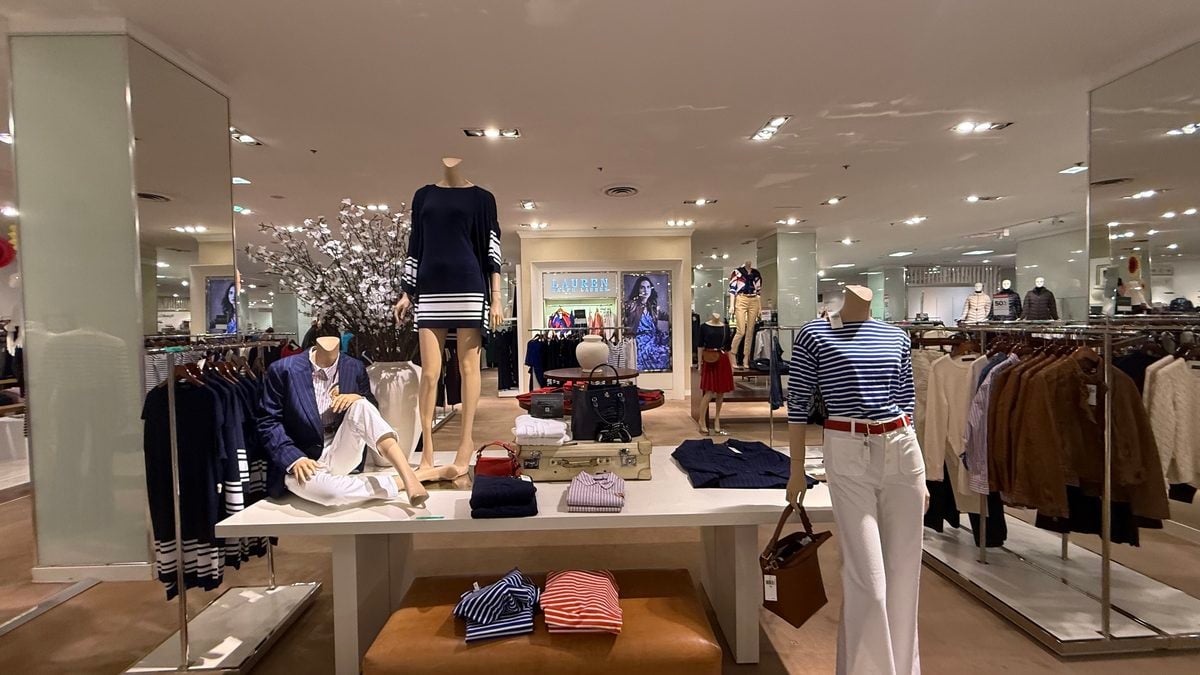
Compared with the average Canadian, HBC women’s apparel shoppers place greater importance on brands, status and how purchases reflect personal identity. They over-index for variables such as Importance of Brand (Index: 113), Consumption Evangelism (Index: 111) and Ostentatious Consumption (Index: 110).
This audience also appears to distinguish between value and price. While shoppers strongly over-index for Saving on Principle (Index: 126), they under-index for Importance of Price (Index: 77). They appreciate a good deal but are not simply looking for the lowest possible price.
This insight helps connect the shopper profile to the retail affinity data. The retailers most closely associated with HBC women’s apparel shoppers tend to offer recognizable brands, consistent assortments or strong value propositions. These shoppers appear to be seeking confidence that a purchase will be worth the money spent.
Income, housing and family structure reinforce the picture of a financially established customer.
More than 73.4 percent of households in this audience own their homes, compared with 65 percent nationally (Index: 112). Family households with children are also overrepresented (Index: 107).
Taken together, age, income, home ownership and household size point to an audience that is financially established rather than emerging. These consumers manage larger household budgets and spend across a range of categories.
For Hudson’s Bay, women’s apparel was rarely an isolated purchase. It existed alongside beauty, footwear, accessories, home décor and gifting. The spending opportunity extended well beyond clothing alone.
A Multicultural Mainstream
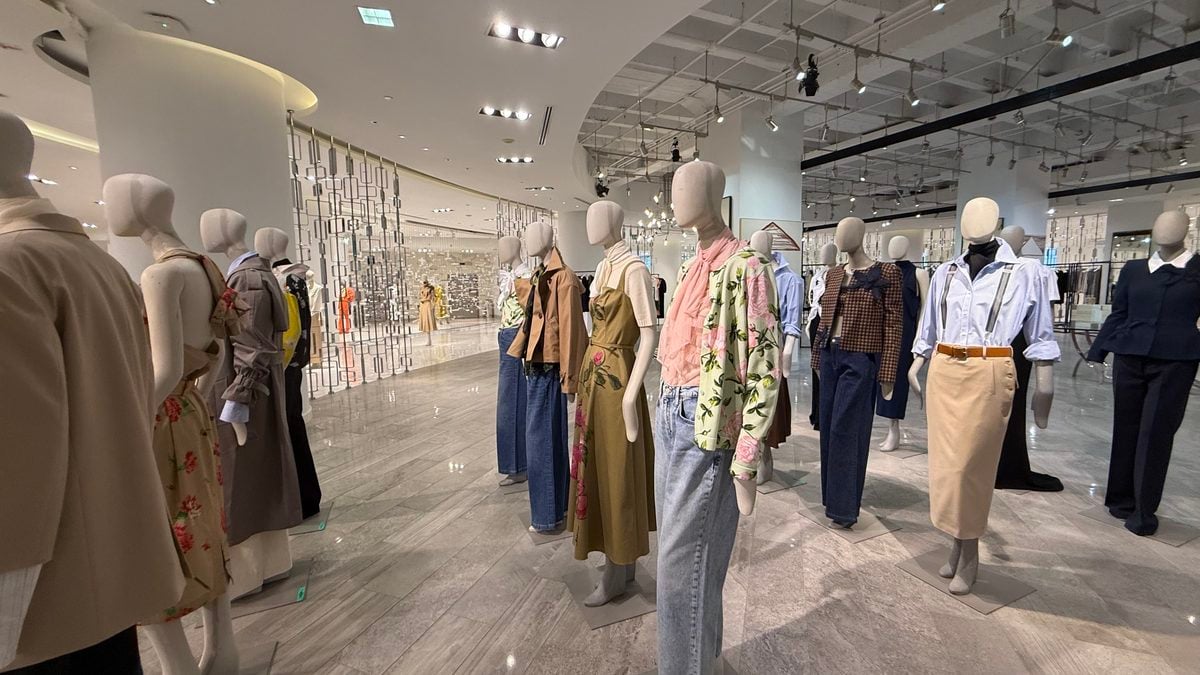
Like the men’s apparel audience profiled previously, HBC’s women’s apparel shopper reflects Canada’s changing demographic landscape.
Diverse consumers account for 44.5 percent of these shoppers, significantly higher than the national average of 29.2 percent (Index: 153). South Asian consumers represent the largest diverse segment at 11.5 percent of the audience, followed by Chinese consumers at 8.9 percent, Black consumers at 5.5 percent and Filipino consumers at 4.8 percent. First-generation Canadians account for nearly half of the audience, with an index of 153 against the national benchmark.
The result is a customer base that is simultaneously affluent, established and reflective of Canada’s increasingly multicultural consumer market.
Where HBC Women’s Apparel Shoppers Already Shop
Retail behaviour data provides insight into which retailers already had meaningful relationships with HBC shoppers purchasing women’s apparel before the chain’s closure. These relationships offer clues about which banners have an existing connection with this audience.
Several retailers attract a substantial number of HBC women’s apparel shoppers and show stronger-than-average appeal among this group. Aritzia (Index: 118), Zara (Index: 112) and Gap (Index: 112) all demonstrate stronger-than-average relationships with this audience.
Larger retailers capture even greater shopper penetration. Winners (12.4 percent) and Walmart (12.8 percent) have the largest reach among retailers in this audience. Costco’s reach is also notable, outperforming both H&M and Old Navy and reinforcing that value-oriented retailers are central to this audience alongside fashion-focused specialty chains.
No retailer appears positioned to fully replicate the role Hudson’s Bay once played. Instead, the HBC women’s apparel shopper hasn’t found a single replacement retailer. She’s assembled a replacement portfolio.
The pull of smaller retailers such as Laura/Laura Petites (Index: 123) and Northern Reflections (Index: 139) reinforces the finding that older, established female shoppers remain an important segment within the audience. At the other end of the spectrum, Melanie Lyne (Index: 82) shows below-average affinity with this audience, suggesting it serves a different customer base.
Implications for the Market
The profile of the HBC women’s apparel shopper reveals a consumer segment that is affluent, established, family-oriented and culturally diverse. Despite the attractiveness of this audience, there is no obvious single successor to the role Hudson’s Bay once played.
The challenge extends beyond replacing a fashion retailer. Hudson’s Bay served as a convenient destination for a broad range of household purchasing needs. Apparel may have brought these consumers into the store, but the broader relationship extended into beauty, footwear, accessories, home and other categories.
This fragmentation creates an opening for retailers seeking to attract former Hudson’s Bay shoppers. Retailers offering relevant brands, service, convenience and value may be positioned to capture a greater share of this audience over time.
While Hudson’s Bay has left the market, its former customers and their spending power remain. Building relationships with these consumers will depend on understanding the combination of merchandise, service and value that made the department store relevant to them.
Methodology
This analysis draws on three data sources from EA, applied to the audience of confirmed HBC women’s clothing shoppers identified through Opticks Powered by Vividata.
Opticks Powered by Vividata is one of Canada’s leading syndicated studies for single-source data on print readership, non-print media exposure, product usage and lifestyles, giving users access to comprehensive consumer insights across media, retail, lifestyle and behavioural topics. We defined HBC women’s clothing shoppers as respondents who confirmed purchasing women’s clothing at Hudson’s Bay in the prior twelve months.
DemoStats features variables, including both averages and distributions, on population, family structure, household size and type, ethnic diversity, labour force participation and income. For this analysis, household type, family structure, immigration status, language, housing tenure and income were used.
SocialValues is a Canadian psychographic product that measures the propensity to hold underlying beliefs, motivations and personal mindsets that influence consumer and community behaviour.
All index values compare the HBC women’s clothing audience to the Canadian national average. An index of 150, for example, indicates that a given characteristic is 50 percent more prevalent in this audience than in the general Canadian population. Index values are calculated using Opticks Powered by Vividata, Social Values, DemoStats and PRIZM®.
Want to understand who these shoppers are in your market? Reach out to Tanishah Nathoo (Tanishah.Nathoo@environicsanalytics.com) or Anna Racovali (Anna.Racovali@environicsanalytics.com) at Environics Analytics to explore a deeper analysis of the HBC women’s apparel shopper. We can help uncover where these consumers live, how they shop and identify opportunities to better align your strategy.
Executive Perspective
“What stands out most about this audience is the combination of affluence, household influence and established shopping behaviour. The Hudson’s Bay women’s apparel shopper is not simply buying clothing. She often makes purchasing decisions for her household across multiple categories and has the financial means to be selective about where she shops. The data shows a consumer who values trusted brands, quality and perceived value over chasing the lowest price. That helps explain why replacing Hudson’s Bay is so difficult. Retailers can replicate parts of the experience, whether through assortment, service, value or convenience, but very few replicate the entire proposition. The opportunity is not simply to capture a clothing shopper. It is to earn a place in the shopping journey of one of Canada’s most affluent and influential consumer segments.”