The average American invests US$120,000 throughout their lifetime in pursuit of love, spending significant money on romantic dinners, movie outings and thoughtful gifts, not to mention personal grooming and cosmetic products.
As a result, according to a survey by LendingTree, 22 per cent of millennials and 19 per cent of Gen Z have begun to incur “dating debt.”
Another study by Credit Karma found that 29 per cent of people aged 18–34 have accrued debt for a date, with 21 per cent exceeding $500 in dating debt in a year. Reasons include accidental overspending (29 per cent), an attempt to impress dates (28 per cent) and seeking intimacy (19 per cent).
But another survey by Finder also reveals that 44 per cent of Gen Zs consider debt a romantic deal-breaker when considering a partner.
This highlights potential ties between accumulating dating-related debt and barriers to the chances of success in forming meaningful romantic connections.

This conundrum is a problem for younger generations, where the pursuit of love and connection is intricately tied to an appetite for luxury, ultimately leading to debt accumulation.
The trend has implications for financial stability, emotional well-being and the very essence of modern relationships.
There are a few issues fuelling it, including the desire to signal status and the persuasive retail marketing of luxury as being synonymous with love, creating that false sense of connection between luxury and love.
‘Costly signalling’
Accumulating debt for romantic engagements has its roots in an innate human desire — namely, the urge to signal status. In a digital age where social media and online dating platforms are the norm, standing out in a crowd has never been more challenging, yet it’s also crucial.
The “costly signalling” theory may explain why such habits develop. It argues that humans and animals use resource-intensive or risky behaviours as genuine, hard-to-fake signals indicating their desirable traits and availability.
This is related to conspicuous consumption, which is driven by a desire for status and the clear signalling of this status to onlookers.
Signalling status in relationships or social circles isn’t uncommon, but it’s found a financial expression in younger generations. Young adults are increasingly associating luxury experiences and goods with a unique form of personal expression.
Whether it’s a lavish dinner at a high-end restaurant or gifting a designer handbag, these actions become markers of distinction and status. While these acts add a layer of individuality to a relationship, they come with the risk of potential financial instability.
Retail marketing
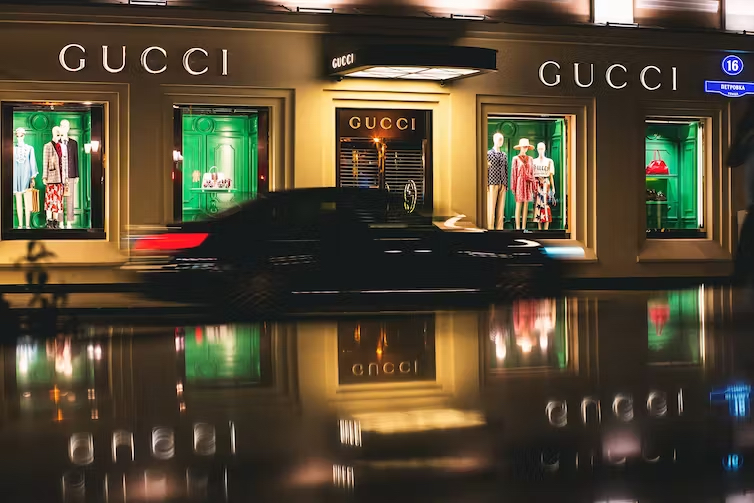
Retailers often employ strategic marketing tactics to link luxury with love, capitalizing on the emotional connection between these two powerful concepts to entice consumers into purchasing high-end goods.
For instance, luxury brands often release limited-edition Valentine’s Day collections, adorned with romantic motifs and themes, ranging from heart-shaped jewellery to high-end designer fragrances.
Additionally, retailers leverage the allure of love in their advertisements. They often showcase couples exchanging luxury gifts in opulent settings, fostering an aspirational connection between luxury products and romantic ideals.
For example, Tiffany & Co. released a “Believe in Love” campaign featuring stories of seven couples at different stages of their relationships, and how Tiffany has played a part in their love journey.
Retailers create an ambience of indulgence and luxury, presenting their offerings as tokens of affection and devotion.
Personalized engraving services on luxury items, such as monogrammed initials or special dates, further enhance the sentimentality and connection between the product and the act of gifting, convincing consumers to spend money on these high-end, emotionally charged offerings.
For example, Gucci’s “apple of my eye” limited-edition collection shows two interlocking red letter Gs that are meant to signify romantic love.
These strategic marketing tactics linking luxury with love contribute to more debt by enticing consumers to overspend on high-end goods with premium price tags. They promote impulse buying through limited-edition collections, foster unrealistic desires through aspirational advertising, encourage additional spending on personalized services and compel people to prioritize romantic gestures over financial responsibility.
This ultimately leads to the accumulation of debt as consumers strive to express their love through emotionally charged purchases.
False sense of connection
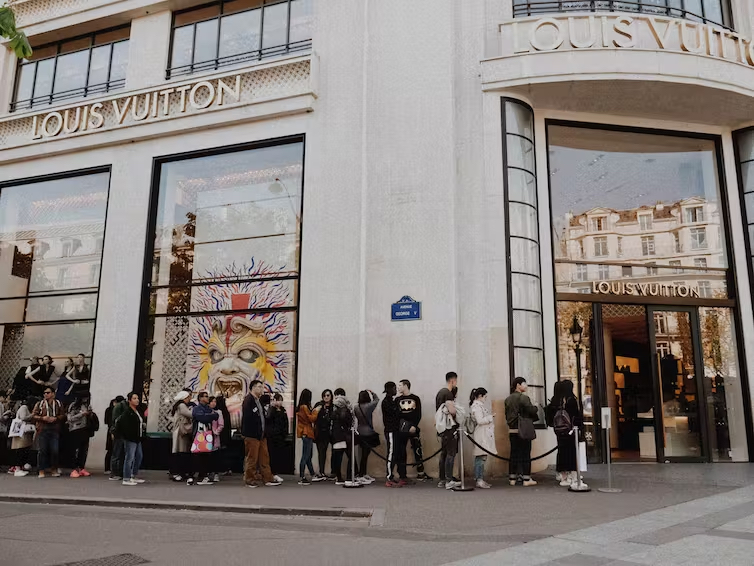
But there seems to be an intriguing paradox when it comes to luxury goods and their ties to social relationships.
While luxury items can enhance someone’s social image and boost self-perception, people also tend to view themselves more positively when they possess or experience luxury — even though they often hold a less favourable view of others who do the same.
This sheds light on a fascinating discrepancy in self-versus-other evaluations when it comes to luxury consumption.
In a dating context, a person boasting about the purchase of an expensive wine on a dinner date, for example, may over-estimate whether it will actually impress their date.

Gift-givers often believe that more expensive gifts are more appreciated, assuming they convey greater thoughtfulness. But gift recipients don’t necessarily share this belief because they don’t consistently link gift price to their level of appreciation.
This suggests that gift-givers may not accurately predict what gifts will be meaningful to others. And because they personally may connect expensive gifts with something meaningful, it may lead them to spend more, ultimately contributing to greater dating debt.
Interestingly, while it’s known that people use luxury items to signal their social status and earning capacity, the reactions to such gifts may be complex. Indeed, many people prioritize their independence and question the giver’s motives behind such gifts, fearing power imbalances and expectations.
Instead, they may value personal connections over materialistic displays and be cautious in the early stages of a relationship.
Ultimately, open and honest communication about expectations is crucial for navigating these complexities, ensuring that gift-giving aligns with the relationship’s goals and mutual desires.
The concept of luxury often gets mixed up with our quest for love, creating a captivating but misleading link between the two. In the realm of romantic relationships, luxury goods or indulging in extravagant experiences can sometimes make us feel closer to our partners than we really are.
But the ties between luxury and love can be deceiving. While luxury can certainly add to the romance, it’s important for younger generations to see the difference between flashy things and the deep, lasting connections that bring us closer to love.
By Omar H. Fares, Lecturer in the Ted Rogers School of Retail Management, Toronto Metropolitan University and Seung Hwan (Mark) Lee, Professor and Associate Dean of Engagement & Inclusion, Ted Rogers School of Management, Toronto Metropolitan University
This article is republished from The Conversation under a Creative Commons license. Read the original article.