By Vicki Madziak and Justin Cantafio
Since the onset of the pandemic, food prices have remained stubbornly high, even as grocery chains have made record profits. This has fuelled public frustration with so-called “greedflation”— a term describing large corporations raising their prices during times of crisis.
In response, Canada’s Competition Bureau has made the case for more grocery retail competition, recommending policies from the creation of a grocery innovation strategy to welcoming more international players and enacting consistent pricing legislation.
Absent from this policy conversation, however, is the role of local alternative food networks, like farmers’ markets, in supporting more resilient food systems. We currently have an incomplete picture of food price dynamics in Canada because of a research gap.
While the federal government has just launched a grocery affordability tool to provide more transparency around pricing, little is known about food price dynamics in local food systems like farmers’ markets.
Our recent study addressed this topic by exploring how food prices have changed in farmers’ markets compared to mainstream grocery retail since the pandemic’s onset.
Resilient food systems
Farmers’ markets provide a host of benefits to both consumers and farmers. They offer a localized alternative to global supply chains, which are often susceptible to delays and shortages.
Resilience — broadly defined as the capacity of a system to withstand, recover and adapt from disruptions while maintaining essential functions — is crucial for ensuring sustained access to safe and nutritious food for communities.
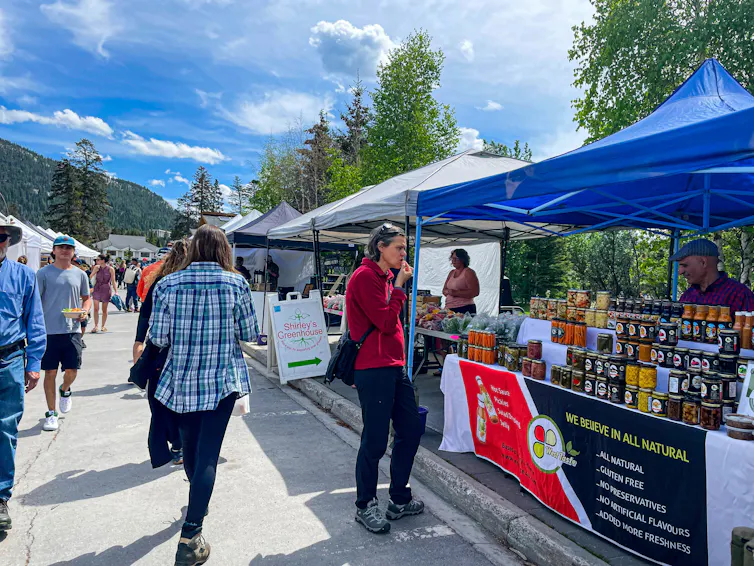
However, the highly concentrated, industrial food system has demonstrated a notable lack of resilience. It has failed to maintain its core function of ensuring access to food.
One reason for this lack of resilience in the mainstream food system is the extremely high levels of corporate concentration. Diversity — the opposite of uniformity that comes from such concentration — is a cornerstone of resilience.
Local food systems tend to be more diverse than mainstream ones. While they also experienced significant challenges during the pandemic, they demonstrated nimbleness and resilience that needs to be better recognized by policymakers.
Understanding how farmers’ markets fit into the current landscape is important for building more secure and resilient food systems, especially considering climate change will likely exacerbate the vulnerabilities of global, uniform food systems.
Farmers’ markets shield consumers
Using pilot data and interviews with farmers’ market vendors, our study provides much-needed nuance in the ongoing debate around food prices, competition and food system resilience. We interviewed 223 vendors across Canada.
Our study compared Statistics Canada’s monthly average retail prices over a five-year period (2018-23). Our findings revealed that inflation rates for the majority of selected food items were higher in mainstream grocery stores than in farmers’ markets. The selected food items included tomatoes, onions, eggs, salad greens, carrots, apples, strawberries, cabbage, potatoes and broccoli.
In interviews, farmers’ market vendors cited rising input costs as a driver of price increases. However, unlike large retailers, they noted that their profit margins were shrinking as they absorbed costs instead of passing the full burden onto consumers.
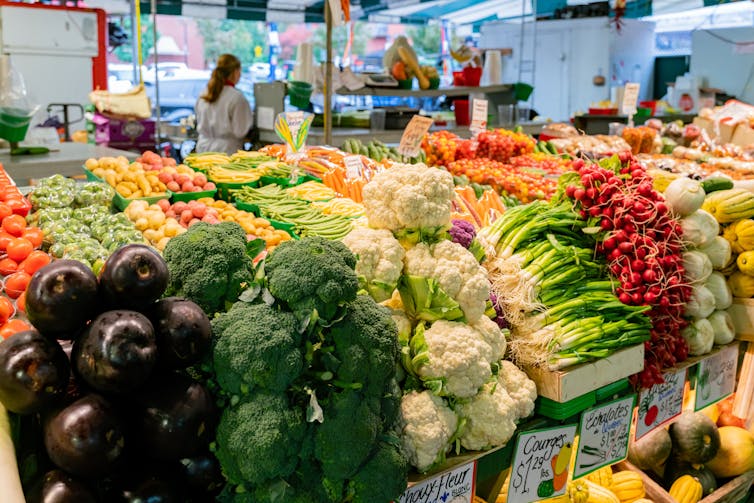
This highlights a significant contrast between food systems: while major grocery chains have reported record profits, vendors in farmers’ markets operate differently, even at the expense of their margins.
While the absorption of these costs is unsustainable for many local producers, it speaks to the increased accountability vendors feel when they are selling to the communities they themselves are embedded in.
In this sense, farmers’ markets demonstrated greater resilience as they adapted to the shock of the pandemic but maintained the core function of the food system — ensuring access to food.
Calls for policy changes
As a part of our study, we asked farmers’ market vendors how they and local food systems could be better supported. They frequently emphasized the need for appropriate regulations. Vendors said requiring local producers to meet the same regulations as industrial food producers was a burden to many of them.
Vendors also said that improved local food infrastructure would help local producers increase their capacities and market reach. Suggestions included providing access to commercial kitchens at low-rent costs, regional food distribution sites and food hubs.
Finally, they said incentive programs, such as farmers’ market nutrition coupons that encourage consumers to shop locally, would also help both producers and consumers.
Ultimately, our study highlights the value of local food systems in the era of corporate concentration and “greedflation” in Canada’s food system.
Given the federal government’s supposed commitment to enhancing food self-sufficiency and sustainability, the absence of local food systems in Canada’s national policy landscape is a critical oversight. Addressing this oversight could strengthen community-based food systems and create a more resilient food economy.
Vicki Madziak, community food co-ordinator, Ecology Action Centre and Justin Cantafio, executive director at Farmers’ Markets of Nova Scotia, co-authored this article.
This article is republished from The Conversation under a Creative Commons license. Read the original article.