For $25, you might walk out with a drone. Or a blender. Or a box of something you won’t identify until you tear through the tape.
At “binz” stores, bargain hunters line up early on Saturdays to gain first access to piles of surplus goods dumped into waist-high bins. The merchandise comes from major retailers and online platforms, which are purchased through liquidation auctions and resold.
Binz stores are one highly visible edge of the booming recommerce and liquidation economy. The global recommerce market, which resells returned, refurbished and second-hand goods, is projected to generate more than US$200 billion annually.
Binz stores attract not only low-income shoppers but a broad cross-section drawn by the thrill of discovery and ultra-cheap goods. As the high cost-of-living strains household budgets in Canada, more consumers have traded down, seeking discounts and secondary markets.
Binz stores represent a layer of the secondary market that is equal parts bargain hunt and chaos. Liquidation marketplaces, off-price retailers and salvage wholesalers form a vast ecosystem beneath traditional retail designed to recover value from goods that cannot be sold at full price.
The afterlife of surplus
To understand binz stores, it helps to understand how surplus is created in the first place. They are the cumulative result of supply chain logistics, prediction error and the extraction of value in what might be called retail’s surplus afterlife.
Modern supply chains are one-way highways that move goods from global manufacturers to centralized hubs, then to retail outlets. They are optimized for speed and efficiency, but they are rarely designed to run in reverse.
“Most of the supply chains are designed for moving goods from manufacturer to the consumer. They are not designed for returning stuff,” says Murat Kristal, professor of operations management at the Schulich School of Business at York University.
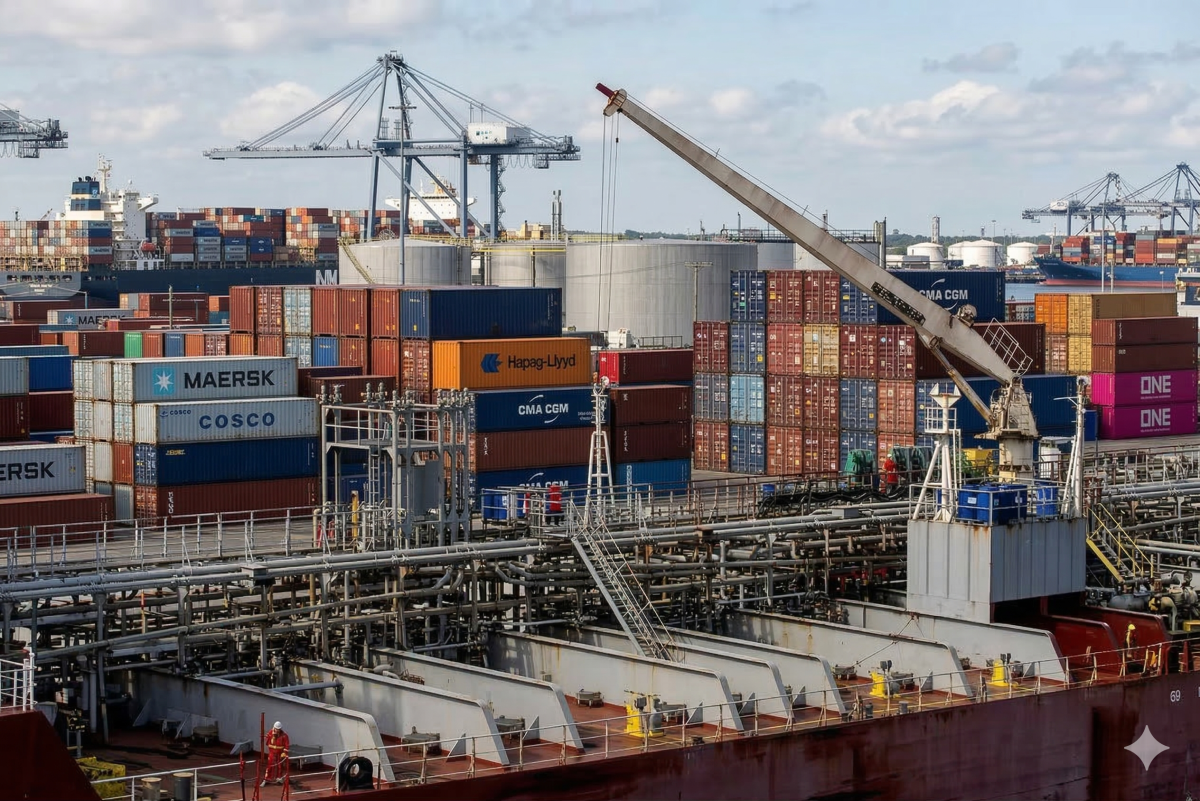
Going forward, you might drop off a box of 15 at every store, he says. Now imagine going backwards, collecting unsold items, two here, three there, store by store, and then having to transport, sort and store them all in the warehouse while the fashion cycle changes.
Reversing the system multiplies the cost of the “last mile” of delivery — typically the most expensive part of distribution, explains Kristal. These final legs of distribution can account for about half of total shipping costs in some supply chains, according to industry analyses.
In many cases, it is cheaper to liquidate excess inventory in bulk than to reintegrate it backwards through primary distribution channels.
Forecasting the future
Retailers must predict the future, months in advance. A shirt on the shelf today may have been ordered a year ago, after yarns were sourced and factories booked in Southeast Asia.
Shipping full containers lowers per-unit costs, while producing smaller batches increases them. The economics of global manufacturing favours volume and planning production far in advance — a classic example of economies of scale where the cost of producing each individual item falls as the total number of units produced increases.
Companies must forecast how many units will sell in a market: how many small, medium and large, which colours and styles. If they predict 100 and sell 80, 20 remain. This forecasting is not optional “because you need to give a number to your manufacturer,” Kristal says.
Error is built into that bet. Retailers forecast based on past sales and trends. To avoid running out of stock, companies routinely overproduce or over-order to prevent empty shelves and lost sales. In fashion, between 10 and 40 per cent of garments made each year may go unsold. That buffer helps ensure availability but inevitably generates surplus inventory when demand fails to materialize.
Returning items to the warehouse is costly, and storing last season’s inventory makes little economic sense in industries driven by cycles. Liquidation often becomes the rational choice.
But the future is becoming harder to read. “It’s just that the unpredictability of the world we live in is increasing,” Kristal says.
American tariffs, inflation rates and fast-fashion cycles have made retail demand more difficult to forecast. When forecasts are wrong, the surplus moves downstream to third-party liquidators.
Deflating value
Surplus goods lose value over time, but that value rarely disappears entirely. Instead, it continues to be extracted as goods move further downstream from manufacturers to liquidation channels, and ultimately to bargain-hunting consumers.
“With some exceptions, virtually everything that gets manufactured in the world gets sold,” says Mark Cohen, former director of retail studies at Columbia Business School. “Everything has an economic value that gets deflated as merchandise is bought, or merchandise is unsold” at its intended price and venue.
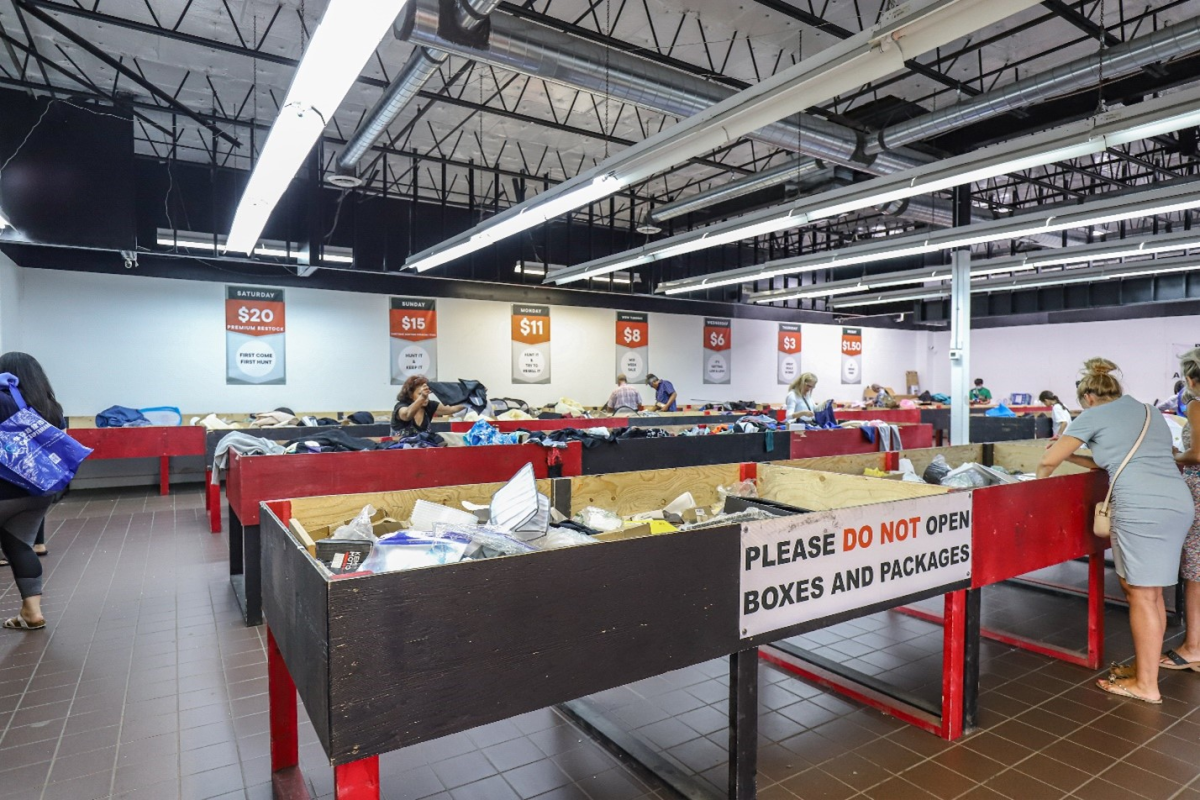
In binz stores, this value decay is prominently visible. Each day has a flat rate for binned items, with prices dropping daily until restock day renews the cycle. In one store, a board game that once retailed for $70 might sell for $25 on restock day, $10 by midweek and $1 by week’s end.
Each change of hands reduces margin, but value can persist longer than assumed. “Eventually, even if it winds up in a junkyard or in a garbage dump, there are increasingly attempts to extract value by repurposing or extracting material,” says Cohen.
The thrill of the hunt
Bargain hunting is not purely economic. It also has a psychological dimension. Research suggests that searching for deals can trigger feelings of excitement and reward, making binz shopping similar to a game of treasure hunt.
When consumers perceive they’re getting a good deal, the brain’s reward circuitry — associated with dopamine and feelings of satisfaction — can become more active, helping explain the emotional appeal of bargains.
“Go as early as possible to get the best merchandise,” says Jonatas Beltrão, a Toronto painter. He first stumbled across a binz store while walking by and became curious about the large tables piled with goods.
Beltrão still laughs about his proudest purchase: a coffee maker that cost $85 on Amazon that he bought for $8.99. He goes every two weeks for the fun of finding brand-name items at a fraction of their original cost.
The uncertainty of what might appear in the binz, and the bragging rights of finding a trophy, help explain why some shoppers keep coming back and how goods continue circulating long past their intended retail life.
Variable rewards can heighten engagement and motivation, making activities from gaming to bargain hunting more compelling because each search might uncover something valuable.
“There’s a buyer for almost everything,” Cohen says.
In that sense, binz stores show the afterlife of surplus goods: leftover merchandise becomes part of a shopping experience built around chance, discovery and the thrill of a good deal.
About the author:
Christopher Lo is Associate Professor of Public Health, University of Toronto; James Cook University
*This article originally appeared in The Conversation.