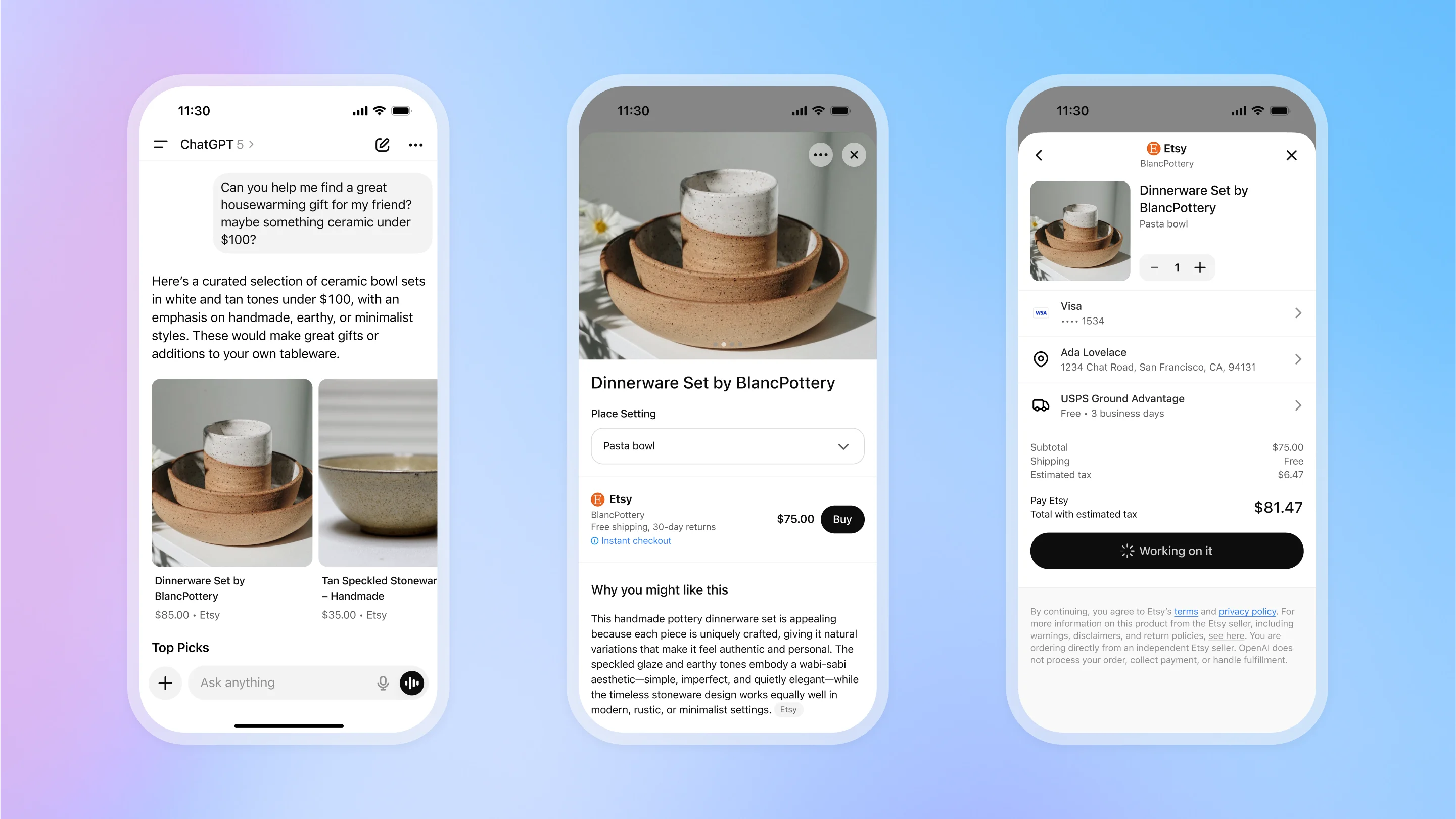
OpenAI has announced a landmark partnership with Etsy and Shopify that introduces “Instant Checkout” to ChatGPT, allowing users to purchase products directly within conversations without leaving the platform. This development has been described as a revolutionary shift in the e-commerce landscape, and according to Canadian retail expert David Nagy, it may signal the beginning of the end for traditional e-commerce websites.
“This partnership introduces something far more transformative than optimizing content for AI-generated responses,” said Nagy, founder of eCommerce Canada. “It represents the creation of an entirely new paid media channel that will fundamentally reshape how consumers discover and purchase products online.”

For years, the e-commerce journey followed a predictable flow: discovery via Google searches or social media, followed by transactions completed on merchant websites. The Etsy-ChatGPT partnership collapses this entire funnel into a single seamless conversation.
As Nagy explained, “Conversational commerce represents a fundamental shift in the buyer journey. Unlike traditional e-commerce, where discovery happens on search engines or social media and the purchase occurs on a merchant’s site, conversational commerce collapses the entire funnel into one dialogue.”
At launch, U.S.-based ChatGPT users can complete single-item purchases from Etsy sellers within the chat. Shopify integration, covering more than a million merchants including global names like Glossier, SKIMS, and Spanx, will follow shortly.
The New Paid Media Channel
The most significant change, according to Nagy, is not simply technical but economic. OpenAI will take a fee from every transaction completed through ChatGPT. That dynamic effectively transforms AI platforms into new paid media channels, rivaling Google, Meta, and Amazon.
“Here’s what retailers must understand: you’re no longer just paying for impressions or clicks. You’re paying a platform fee for transactions that happen entirely in someone else’s environment,” Nagy said. “It’s similar to Amazon’s marketplace model, but happening within a conversational interface.”
The market reaction has already been sharp. Etsy shares jumped as much as 16 percent following the announcement, reflecting optimism around the revenue potential of this new channel.
Shopify and Stripe’s Role
Shopify, the Canadian e-commerce giant, is set to become a major beneficiary of the integration as its merchants gain access to this new channel. The underlying technology, called the Agentic Commerce Protocol, was developed by OpenAI in partnership with payments processor Stripe.
Stripe’s role is crucial, according to Nagy: “Their infrastructure powers the Instant Checkout process, and because the protocol is being open-sourced, Stripe has positioned itself at the center of this transformation. Competing payment providers will need to adapt quickly or risk losing relevance.”
The initial rollout only supports single-item transactions, but OpenAI has plans to add shopping carts and expand internationally.
The Decline of the Traditional Website
Perhaps the most unsettling implication for merchants is the diminished role of e-commerce websites.
“When users can ask ChatGPT for the best hiking boots under $150 and complete the purchase right there, why would they visit your site?” Nagy asked. “The traditional playbook including SEO, site optimization, conversion rate optimization, becomes less relevant when the transaction doesn’t happen on your property.”
This raises urgent questions for retailers who have invested heavily in building and optimizing their websites. Increasingly, those digital storefronts may serve branding and customer service functions rather than driving transactions.
Concerns Over Bias and Transparency
OpenAI has said that product rankings within ChatGPT will be unsponsored and based purely on relevance. Yet Nagy warns that this neutrality may not last.
“Let’s be realistic. These platforms will inevitably face pressure to monetize through sponsored placements and algorithmic favoritism,” he noted. “That threatens the democratization of commerce online. Smaller merchants could be pushed aside in favour of those who generate higher fees.”
Such a shift would mirror the “pay-to-play” dynamics already seen on Google and Meta, but potentially with even greater influence given the closed conversational environment.
Implications for Stakeholders
For retailers, the message is clear: ignoring conversational commerce is no longer an option. “This isn’t experimental or niche. It’s a seismic shift requiring immediate strategic response,” Nagy emphasized.
Merchants will need to optimize product data for AI understanding, factor new platform fees into their financial planning, and rethink the role of their websites. Payment providers, meanwhile, must prepare for a future where transactions increasingly flow through AI-powered protocols.
Competing AI platforms, including Google, Amazon, and Meta, are expected to respond quickly by rolling out similar features. Nagy predicts fierce competition to recruit merchants and establish dominant conversational shopping ecosystems.
For consumers, the shift promises a more seamless shopping experience but raises concerns about transparency, privacy, and the potential for commercial bias in product recommendations.
From Assisted to Autonomous Shopping
The long-term trajectory points toward even more dramatic changes. OpenAI has signaled interest in “agentic” commerce, where AI agents could make autonomous purchases based on user preferences.
“Imagine telling your assistant once that you prefer organic, locally sourced groceries under $50, and it just orders them every week,” Nagy explained. “That’s the direction this is heading.”
Such automation could fundamentally alter not only how people shop but also how they interact with brands and retailers.
The Etsy-ChatGPT partnership represents a defining moment in retail history, one that moves commerce from websites into conversations.
“The future of e-commerce won’t be won on websites. It will be won in conversations,” said Nagy. “The question is whether retailers will be part of those conversations or left out entirely.”
With Shopify integration imminent, and other platforms sure to follow, the message for Canadian retailers is clear: develop an AI commerce strategy now, or risk falling behind.