Canada remained an active, though more selective, destination for global retail expansion in 2025, with 20 international brands opening their first standalone stores in the country. While this represents an increase from 15 entries in 2024, the year does not approach peak levels seen historically. Instead, it reflects a more measured and strategic phase of market entry shaped by economic conditions, real estate dynamics, and evolving consumer expectations.
At the same time, a clear pattern has emerged. International retail expansion into Canada is increasingly concentrated in a small number of urban markets, with Toronto firmly established as the dominant gateway.
Toronto Leads National Expansion with Strong Node Concentration
Of the 20 international retailers entering Canada in 2025, 14 chose Toronto for their first location, accounting for 70 percent of all entries.
Within the city, activity clustered heavily around Yorkdale Shopping Centre and the Bloor-Yorkville corridor, reinforcing the importance of these nodes for global brand entry.
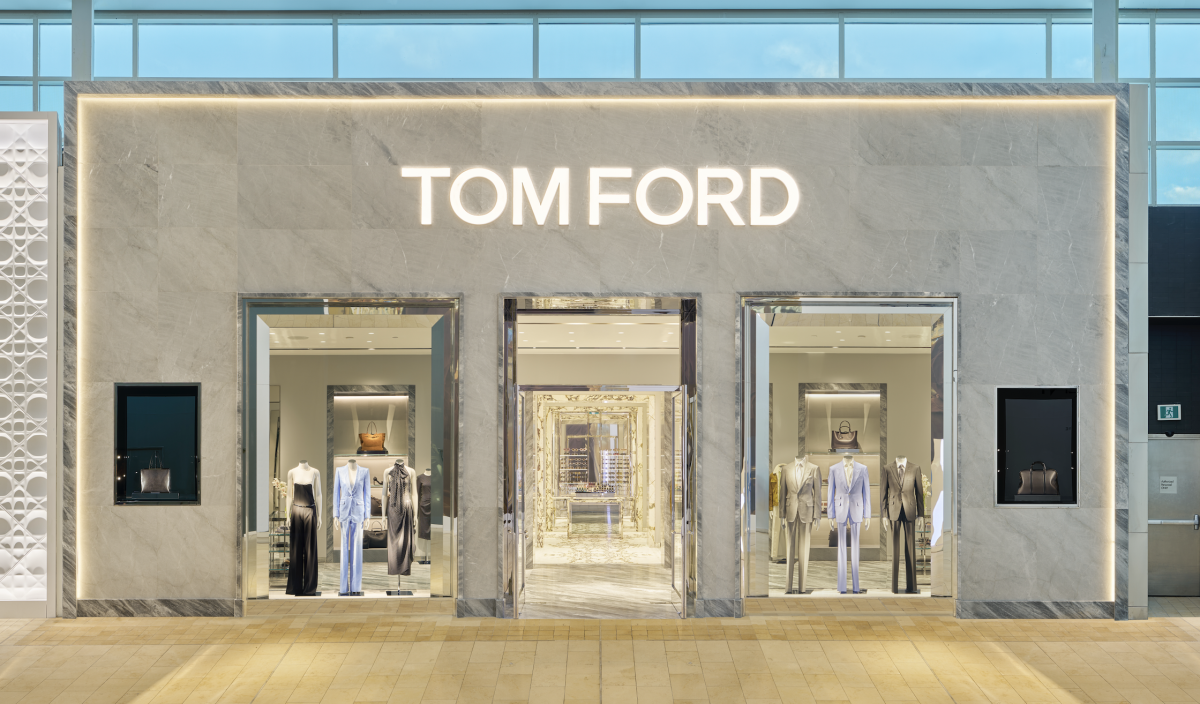
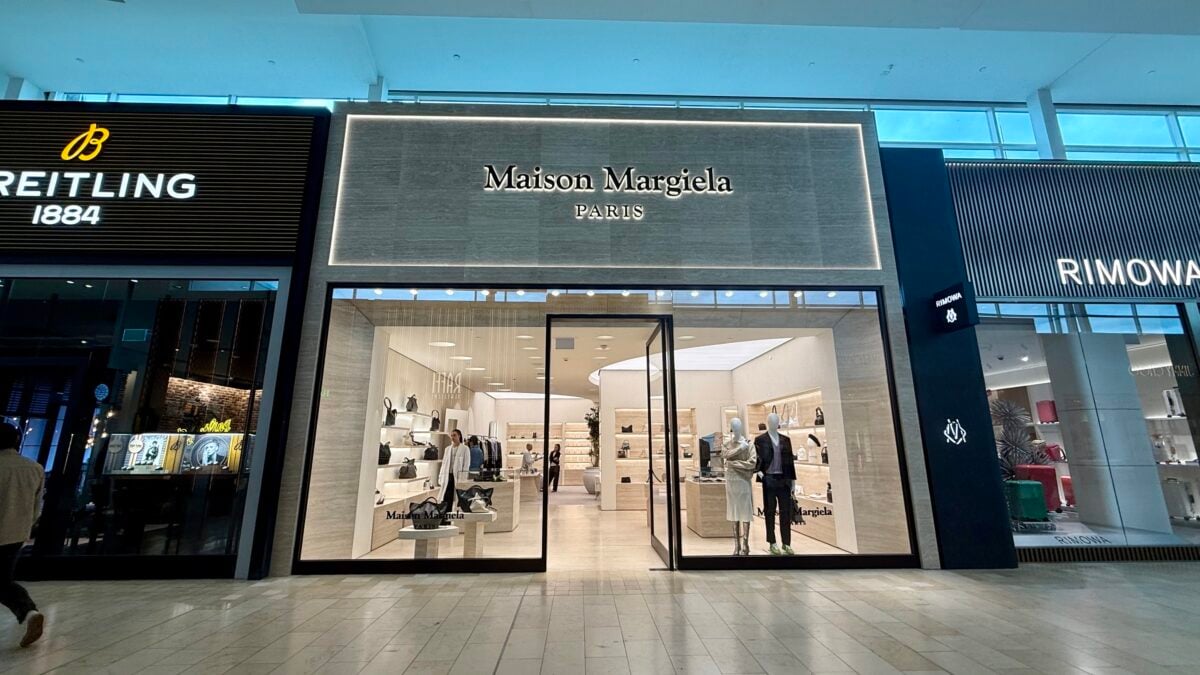
Yorkdale Shopping Centre continues to play an outsized role in shaping Canada’s retail landscape. The centre is widely regarded as having launched more first-to-Canada stores than any other retail node in the country and remains a preferred entry point for luxury and premium brands seeking immediate visibility and a curated environment. In 2025, Yorkdale welcomed several international entrants including Tom Ford, Gentle Monster, Ami Paris, Maison Margiela, and Creed.
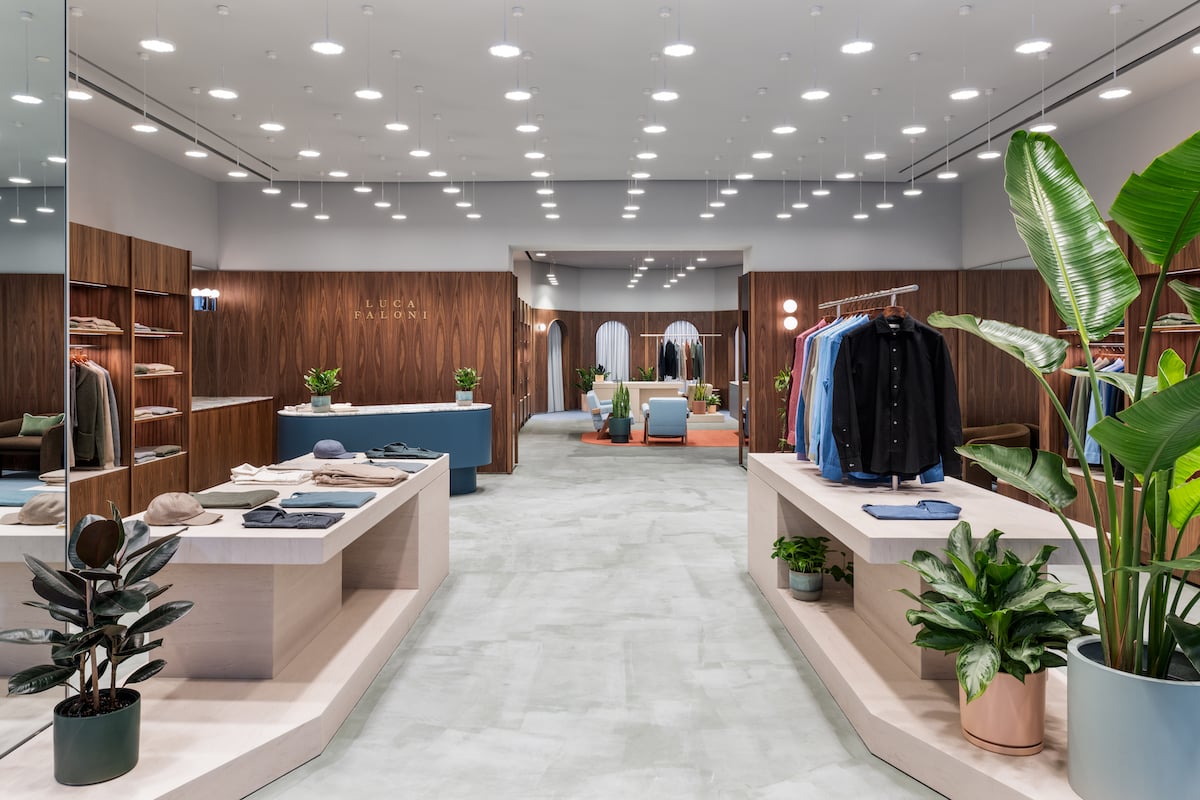
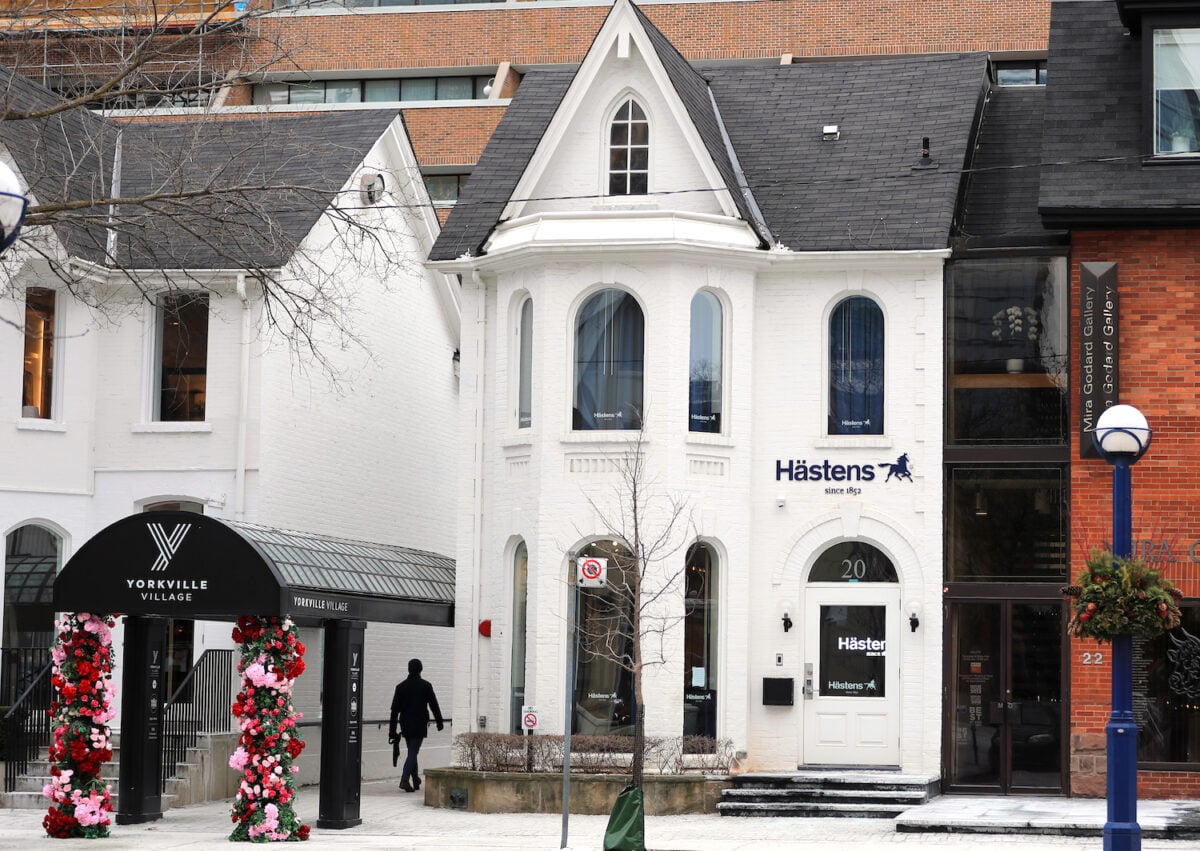
Meanwhile, Bloor Street and Yorkville attracted brands focused on flagship positioning and long-term brand building. Retailers such as Luca Faloni, Smeg, Eleventy, and Hästens opened experiential, design-led spaces that emphasize storytelling and customer engagement.
Beyond these prime corridors, Toronto also saw continued diversification in retail formats. Ossington Avenue attracted culturally driven brands such as Carhartt Work In Progress, while Liberty Village and CF Shops at Don Mills supported experiential and service-oriented concepts including Fisher & Paykel and Splash and Dash. In addition, Panda Mart’s large-format Scarborough flagship demonstrates ongoing demand for value-oriented retail in repurposed big-box environments.
While urban concentration is not new in Canadian retail, Toronto’s dominance has intensified in recent years, capturing a disproportionate share of international retail entry relative to other Canadian markets.
Vancouver Serves as a Complementary Gateway with Distinct Strengths
Vancouver accounted for five of the 20 international retail entries in 2025, reinforcing its role as Canada’s second most important market for global brands.
The city’s retail profile differs meaningfully from Toronto. Vancouver continues to attract contemporary luxury, lifestyle-driven concepts, and brands with strong connections to Asia-Pacific markets. Key entry points include CF Pacific Centre and the Kitsilano corridor.
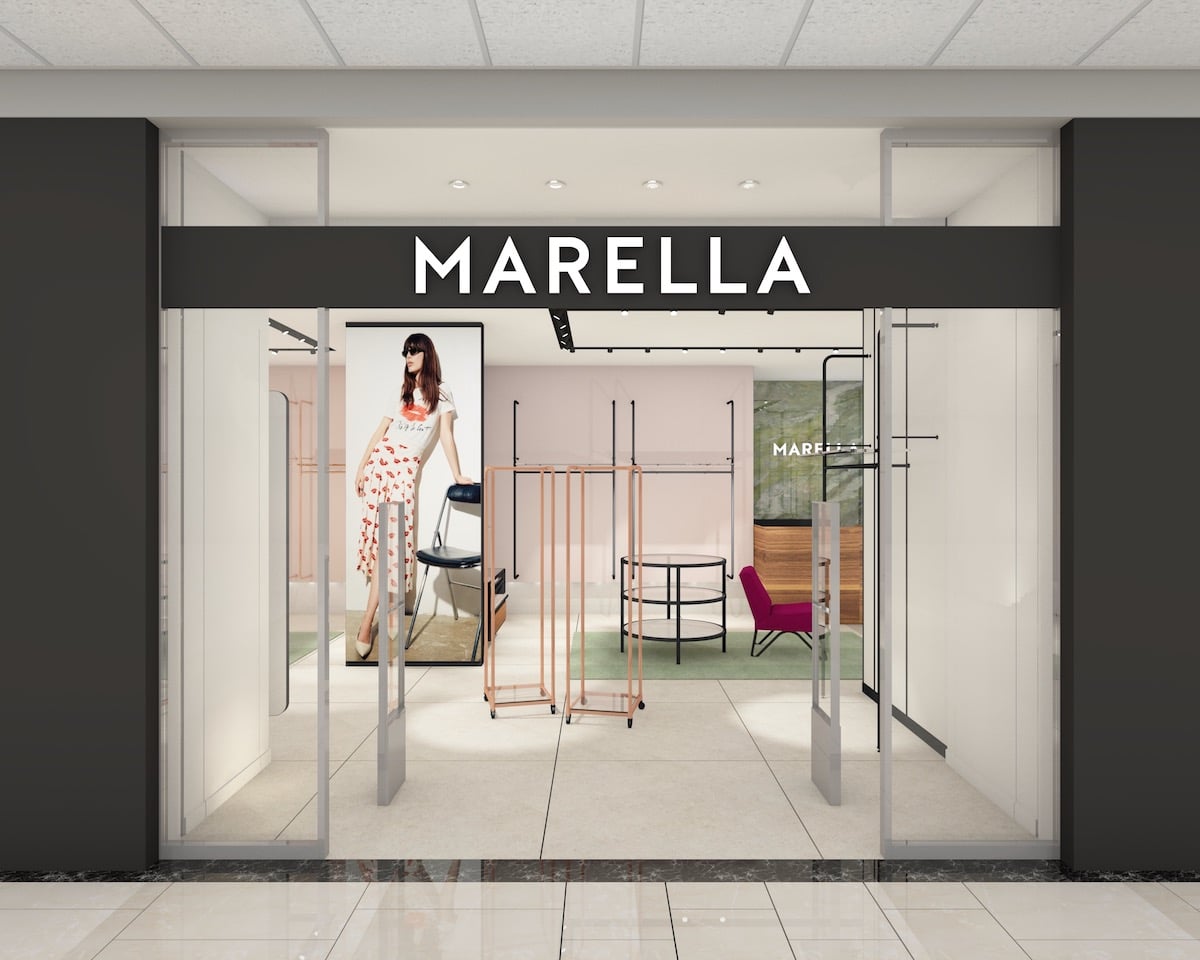
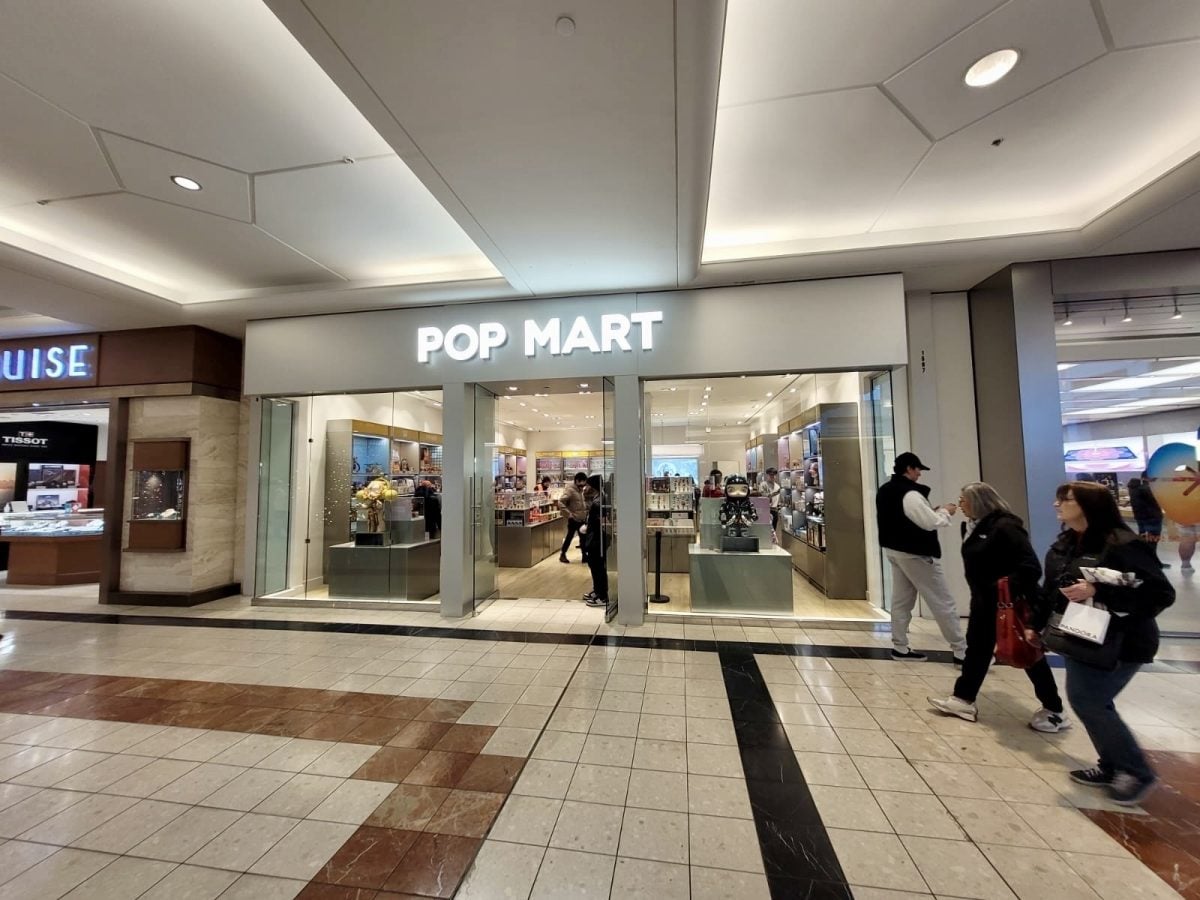
Retailers such as Marella, Max&Co., Rains, and Gerdene Mongolian Cashmere highlight Vancouver’s positioning at the intersection of fashion, lifestyle, and outdoor culture. Pop Mart entered Canada through a multi-store rollout strategy, beginning at CF Richmond Centre in Richmond, underscoring the importance of highly engaged consumer communities and regional demand.
Vancouver has long served as a key gateway for international retailers entering Canada, particularly for brands with strong ties to Asia-Pacific markets. While activity has slowed since the pandemic, the city continues to play an important role as a complementary entry point alongside Toronto.
Montreal Sees Selective and Localized Entry
Montreal recorded one international retail entry in 2025, with La Maison Générale opening on Laurier Avenue West.
Although limited in volume, the nature of the entry is significant. The concept blends European heritage with local Quebec and Indigenous products, reflecting a highly localized and community-oriented approach.
This suggests that Montreal remains an important market, but one that international brands are entering more selectively, often after establishing a presence in Toronto (and sometimes Vancouver).
Premium and Experiential Retail Continue to Drive Entry
A defining feature of 2025’s international retail entrants is the continued dominance of premium and experiential retail.
Luxury and contemporary fashion brands accounted for a large share of new openings, including Tom Ford, Ami Paris, Luca Faloni, Eleventy, and Maison Margiela. These retailers are using physical stores as platforms for brand storytelling and customer engagement, rather than purely transactional environments.

Experiential retail concepts also played a central role. Gentle Monster introduced a gallery-like store design with kinetic installations, while Smeg’s Bloor Street showroom integrates a café and live kitchen concept. Fisher & Paykel’s Experience Centre in Liberty Village targets architects and designers through immersive product demonstrations, and Hästens offers a wellness-focused “Sleep Spa” retail model.
At the same time, differentiated formats emerged outside of luxury. Panda Mart’s large-scale discount warehouse concept marked its first entry into both Canada and North America, while Splash and Dash introduced a membership-based pet services model.
Specialty retailers such as Pop Mart and PUEBCO further demonstrate the importance of community engagement, fandom-driven retail, and culturally distinct product offerings.
International Retailers That Entered Canada in 2025
The following is Retail Insider’s categorized breakdown of the 20 international retailers that entered Canada in 2025 with their first physical locations.
Luxury and Premium Fashion Entrants
Luxury fashion remained the most prominent category for new market entry in 2025, with several brands choosing Toronto as their initial gateway.
Tom Ford opened a flagship boutique at Yorkdale Shopping Centre, marking its first standalone Canadian store and consolidating its presence beyond department store partnerships. Ami Paris followed with its first Canadian location at the same centre, bringing its understated Parisian aesthetic to the market.
On Bloor Street, Luca Faloni introduced its “Casa Faloni” concept, blending retail with hospitality elements, while Eleventy opened a large flagship focused on its “smart luxury” positioning. Maison Margiela also entered Canada through Yorkdale, reinforcing the mall’s role as a luxury entry hub.
In Vancouver, Marella and Max&Co. opened their first North American standalone locations at CF Pacific Centre, marking an important step in expanding the Max Mara Group’s contemporary offerings into the Canadian market, with local partner Vestis Fashion Group.
Experiential and Design-Led Concepts
Experiential retail continued to gain momentum in 2025, with several brands prioritizing immersive environments.
Gentle Monster opened a large-format flagship at Yorkdale Shopping Centre, featuring art installations and kinetic displays that blur the line between retail and gallery space. Creed also opened its first standalone Canadian boutique at the same centre, offering a highly curated fragrance experience.
On Bloor Street, Smeg launched its first Canadian showroom, complete with a café and demonstration kitchen, while Hästens expanded its Canadian presence with a flagship “Sleep Spa” concept in Yorkville focused on personalized wellness.
In Liberty Village, Fisher & Paykel opened a flagship Experience Centre designed to engage architects, designers, and consumers through interactive product demonstrations.
Contemporary, Streetwear, and Lifestyle Brands
A number of contemporary and lifestyle brands entered Canada in 2025, often choosing neighbourhood-driven locations aligned with their target audiences.
Carhartt Work In Progress opened on Ossington Avenue, bringing its blend of workwear heritage and streetwear appeal to one of the city’s most culturally influential retail corridors. In Vancouver, Rains opened its first Canadian store in Kitsilano, targeting both functional and fashion-conscious consumers.
PUEBCO, a Tokyo-based lifestyle brand known for its use of repurposed materials, opened its first North American store in Toronto, reflecting growing demand for design-led and sustainability-focused retail concepts.
Value, Specialty, and Alternative Retail Formats
Several brands entered Canada with differentiated concepts that extend beyond traditional retail categories.
Panda Mart opened a 120,000-square-foot flagship in Scarborough, introducing a large-scale discount warehouse model focused on variety and value. Splash and Dash launched its first Canadian location at CF Shops at Don Mills, bringing a membership-based pet grooming concept to the market.
Pop Mart entered Canada through a multi-store rollout beginning in British Columbia, leveraging strong consumer demand for collectible designer toys and fandom-driven retail experiences.
In Vancouver, Gerdene Mongolian Cashmere opened its first North American store, emphasizing sustainability and cultural authenticity. In Montreal, La Maison Générale introduced a hybrid retail and community concept that blends European design with local artisanal products.
Editor’s Note: Historical Context on International Retail Entry into Canada
For more than a decade, Retail Insider has tracked the number of international retailers entering Canada with first brick-and-mortar locations.
While 2025 saw 20 international retailers open their first Canadian stores, the year sits within a broader historical range rather than representing a peak.
In 2024, Retail Insider reported that 15 international brands entered Canada, reflecting a slowdown compared to prior years. In 2023, 27 international brands entered the market, while both 2022 and 2021 saw 21 new entrants.
The impact of the COVID-19 pandemic was most evident in 2020, when just 13 international retailers opened stores amid widespread uncertainty.
Earlier years saw higher levels of activity. In 2019, approximately 30 international retailers entered Canada, consistent with 2018 levels. The most significant year on record remains 2017, when more than 50 international brands opened stores. Some have since closed.
Retail Insider also documented 21 new entrants in 2016 as part of a special edition for the Retail Council of Canada publication Canadian Retailer. In 2015, 28 international retailers entered Canada, while 2014 saw 20 new market entrants.
Taken together, the data suggests that 2025 represents a modest rebound from 2024 levels and a return to more normalized expansion activity.
Looking Ahead: 2026 Pipeline Points to Continued Momentum
Early indicators suggest that international retail expansion into Canada will continue into 2026.
A Bathing Ape has already opened its first Canadian store on Alberni Street, reinforcing Vancouver’s strength in global streetwear and luxury-adjacent retail.
In Toronto, Frette is expected to open soon on Hazelton Avenue, further establishing the area as a specialized luxury cluster.
Vancouver will also see significant activity with the anticipated opening of Oakridge Park before June 2026. The development is expected to introduce several first-to-Canada luxury brands at opening, including Miu Miu, Jacob & Co., Chaumet, and Giorgio Armani.
There is also potential for Chrome Hearts to open a location on Scollard Street in Toronto, although progress appears to be uncertain.
Beyond the luxury segment, value-oriented expansion is also emerging as a key theme. Jumbo S.A. is preparing to enter the Canadian market in 2026, with its first three Ontario stores expected to open during the year. Operated in Canada by Fox Group, the brand is known for large-format “hyper-store” locations typically ranging from 100,000 to 140,000 square feet. The expansion comes at a time when Canadian consumers are increasingly trading down to value-driven retailers, positioning Jumbo to potentially backfill large anchor spaces vacated by department stores.
Retail Insider has spoken with several international brands actively evaluating Canadian entry, some of which are expected to announce locations in the coming months.
A Market Defined by Concentration and Strategic Growth
The 2025 data highlights a Canadian retail landscape that continues to attract international brands, but with increasing precision in how and where those brands enter.
Toronto remains the dominant gateway, supported by highly productive retail nodes and strong consumer demand. Vancouver continues to show strength as a complementary market with distinct advantages, while Montreal presents opportunities for brands willing to adopt a localized approach.
As the market moves further into 2026, international retail expansion in Canada will continue, driven not by volume alone, but by targeted strategies focused on location, experience, and long-term brand building.
At the same time, the outlook for 2026 remains somewhat unpredictable. Ongoing geopolitical tensions, shifting trade policies, and broader economic uncertainty continue to create a complex environment for global retailers. Recent conflicts and rising energy costs have already begun to impact consumer confidence and supply chains in some regions , while businesses more broadly are navigating a period of heightened volatility and cautious spending .
Despite this uncertainty, many international brands remain committed to the Canadian market. In many cases, leases have already been signed and development is underway, meaning a number of planned store openings will proceed regardless of short-term macroeconomic conditions. At the same time, several retailers continue to view Canada as a stable and attractive long-term growth market, suggesting that expansion activity, while evolving, is unlikely to slow significantly.
International Retailers That Entered Canada in 2025 (Full List)
| Retailer | Origin | First Canadian Location | City |
|---|---|---|---|
| Tom Ford | USA / Italy | Yorkdale Shopping Centre | Toronto |
| Gentle Monster | South Korea | Yorkdale Shopping Centre | Toronto |
| Ami Paris | France | Yorkdale Shopping Centre | Toronto |
| Splash and Dash | USA | CF Shops at Don Mills | Toronto |
| Pop Mart | China | CF Richmond Centre | Richmond (Vancouver) |
| Panda Mart | South Africa | Warden Avenue | Toronto |
| Creed | UK / France | Yorkdale Shopping Centre | Toronto |
| Luca Faloni | Italy | Bloor Street West | Toronto |
| Smeg | Italy | Yonge & Bloor | Toronto |
| Gerdene Cashmere | Mongolia | Kitsilano (West 4th Ave) | Vancouver |
| PUEBCO | Japan | Dufferin Street | Toronto |
| Eleventy | Italy | Bloor Street West | Toronto |
| Maison Margiela | France | Yorkdale Shopping Centre | Toronto |
| La Maison Générale | France | Laurier Avenue West | Montreal |
| Marella | Italy | CF Pacific Centre | Vancouver |
| Max&Co. | Italy | CF Pacific Centre | Vancouver |
| Hästens* | Sweden | Hazelton Avenue | Toronto |
| Fisher & Paykel | New Zealand | Liberty Village | Toronto |
| Rains | Denmark | Kitsilano (West 4th Ave) | Vancouver |
| Carhartt WIP | USA | Ossington Avenue | Toronto |