As Canada prepares for a wave of major live events set to transform city streets, transit hubs and entertainment districts into high-traffic brand battlegrounds, new research suggests many advertisers risk fading into the background if they continue relying on static outdoor advertising.
A new report from Vistar Media, conducted in partnership with Omnicom and JCDecaux, found that motion-based creative in digital out-of-home (DOOH) campaigns significantly outperforms standard static creative when it comes to capturing consumer attention, driving recall and boosting brand awareness in crowded urban environments.
The timing is particularly relevant as Canadian cities prepare for a surge in tourism, foot traffic and advertiser competition tied to major cultural and sporting events. From FIFA World Cup activity in Toronto and Vancouver to the Calgary Stampede and Montreal’s Osheaga festival, brands will be competing for attention in increasingly saturated environments where consumers are constantly bombarded with visual messaging.
According to the report, creative execution itself may now be one of the biggest differentiators in campaign performance. The findings suggest that static outdoor ads are becoming easier for consumers to tune out, while dynamic, motion-led creative is proving far more effective at breaking through the noise.
Among the report’s key findings:
- 3D motion creative was found to be 67% more effective at driving brand awareness compared to standard DOOH creative
- Motion-enhanced campaigns also delivered stronger emotional engagement and memorability
- Consumers were significantly more likely to notice and recall ads featuring movement and dynamic storytelling elements
The research reflects a broader evolution underway across the advertising industry, as brands increasingly shift toward more immersive, visually dynamic and context-aware DOOH experiences designed to engage audiences in real time.
Scott Mitchell, Managing Director, Canada at Vistar Media, discusses the issue.

Question: Your research suggests consumers are increasingly tuning out static outdoor advertising — how serious is that problem for brands investing heavily in traditional billboard creative?
Answer: I wouldn’t frame it as consumers tuning out static advertising entirely. In fact, our research reinforces that static out-of-home (OOH) remain highly effective for building reach, recognition and brand presence.
One of the key findings from the study was that static digital out-of-home (DOOH) creative still delivered a significant lift in aided ad recall, which speaks to the inherent power of the medium itself. What’s changing is the broader media landscape and the level of competition for consumer attention. Consumers are moving through cities surrounded by content, screens, notifications, and live experiences. As a result, brands are looking for more ways to stand out and create memorable moments within those environments.
That’s where motion and dynamic creative can play an important role. Our research found that adding motion and dynamic creative can help amplify that impact, particularly in high-traffic urban settings. DOOH gives advertisers more flexibility to introduce movement, contextual messaging, and immersive storytelling that naturally captures attention in a very crowded visual landscape.
Importantly, this isn’t about replacing traditional OOH. It’s more about expanding the creative toolkit available to advertisers and using the right format for the right campaign objective, audience and environment.
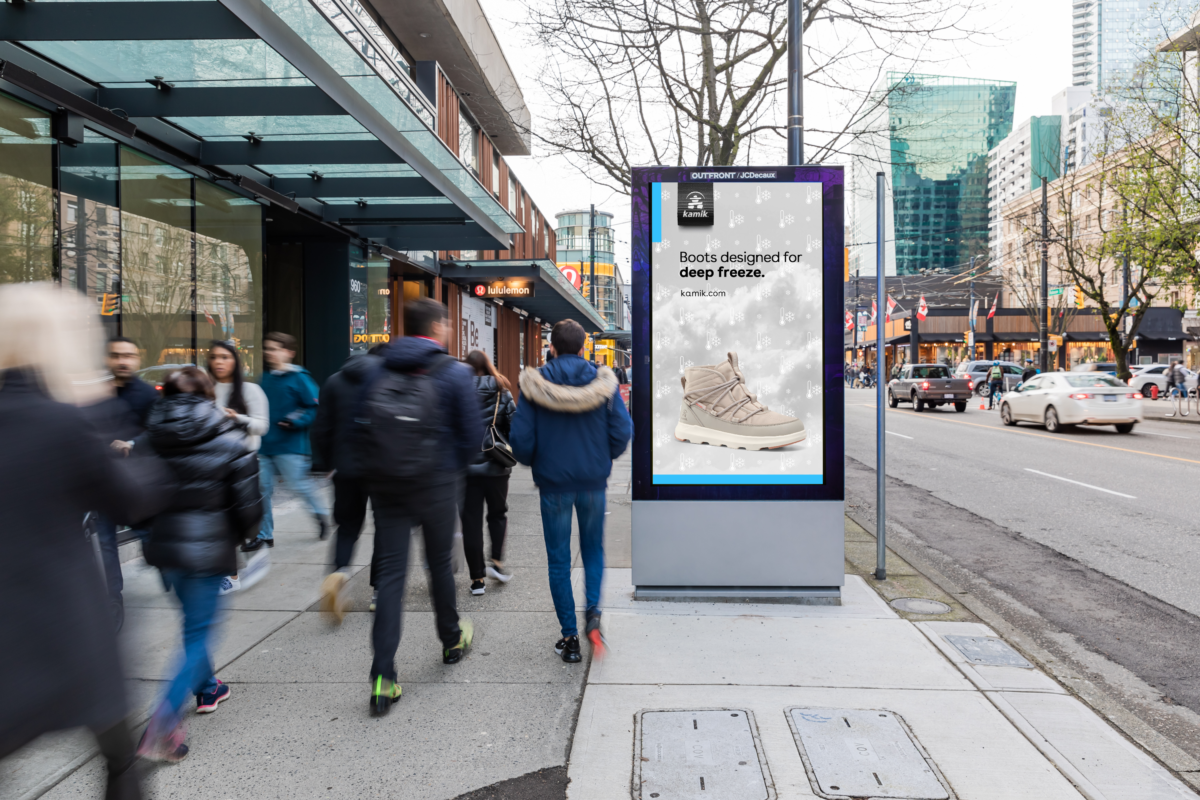
Q: Why does motion-based or 3D DOOH creative perform so much better in crowded urban environments, especially during major live events?
A: Motion-based and 3D creative tends to create a stronger emotional and sensory response because it feels more immersive and experiential. During major live events audiences are already highly engaged with their surroundings, so creative that feels dynamic,unexpected or visually striking can become part of that overall experience.
Our research showed that motion significantly improves both brand awareness and ad recall, with 3D creative emerging as the strongest performer for driving top-of-mind awareness.
There’s also a strong social amplification effect happening beyond the screen itself. The most effective DOOH campaign today doesn’t just live on the screen – it extends into social feeds, earned media, and consumer-generated content. The best campaigns are creating experiences people actively seek out and talk about.
Q: As cities like Toronto, Vancouver, Calgary and Montreal prepare for major tourism and event traffic, how should advertisers rethink their DOOH strategies to stand out?
A: Advertisers should think beyond traditional media planning and start thinking more like experience designers. Major cities become incredibly dynamic during high-traffic periods, and audiences are moving through those environments with different mindsets, behaviours, and expectations.
One of the biggest advantages of programmatic DOOH is flexibility. Brands can adjust messaging in real time based on audience movement, weather conditions, event schedules, time of day, or cultural moments happening in the city. That ability to deliver contextually relevant messaging creates stronger engagement and makes campaigns feel more connected to the environment around them.
Creative also matters more than ever. We’re seeing stronger performance when brands tailor campaigns specifically for the DOOH environment rather than simply repurposing creative from other channels. Consumers can tell the difference between creative that was designed for the medium and creative that was simply placed into it.
The brands that will stand out are the ones treating DOOH as a living medium – using data, timing, and creative flexibility to deliver messaging that feels relevant in the exact moment audiences encounter it.
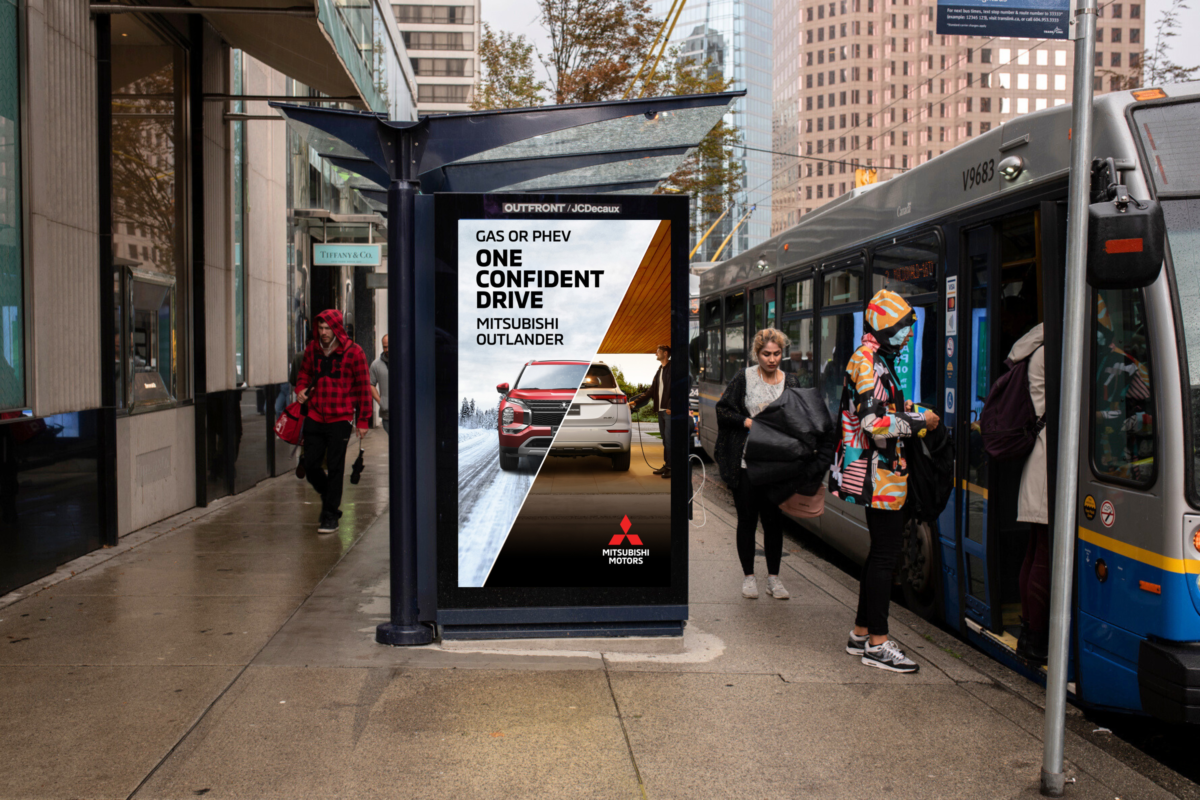
Q: Dynamic and immersive creative can be more expensive to produce. Are brands seeing enough measurable ROI to justify the additional investment?
A: Absolutely. One of the biggest shifts we’re seeing is that advertisers are becoming much more focused on attention metrics and business outcomes rather than just impressions alone. When you look at the performance data around motion-led and immersive creative, the lift in brand awareness, recall, and engagement is significant.
Our research found that 3D motion creative was 67% more effective at driving top-of-mind brand awareness than creative with no motion applied. At the same time, the study also reinforced that static DOOH remains highly effective for broad reach and recognition. That’s an important takeaway because it highlights that effectiveness isn’t about choosing one format over another – it’s about aligning the creative approach with the campaign objective.
It’s also important to remember that production costs for dynamic creative are becoming more accessible. Advances in creative technology, AI-assisted production tools, and modular asset development are making it easier for brands to scale high-impact creative across campaigns.
Ultimately, advertisers are recognizing that stronger creative execution can improve the performance of the entire media investment.
Q: What does this shift toward motion-led DOOH say about the future of outdoor advertising and consumer attention spans more broadly?
A: It reflects how quickly outdoor advertising is evolving from a primarily static awareness channel into a more responsive and adaptive medium.
Advances in programmatic technology, audience insights, and creative capabilities are giving brands the ability to deliver messaging that feels more timely and relevant.
Consumers today expect media experiences to feel more connected to culture, context, and real-world moments. DOOH is uniquely positioned because it combines the scale and physical presence of traditional OOH with the flexibility and responsiveness of digital media.
What we’re seeing isn’t a replacement of traditional outdoor advertising, but an expansion of what the channel can deliver. Static, motion, and 3D formats all have an important role to play depending on campaign goals, creative strategy, audience and environment.
The future of OOH will be defined by that balance: combining the proven effectiveness of classic brand-building formats with more dynamic, attention-driving creative executions that help brands connect more meaningfully with audiences in the real world.
More from Retail Insider: