Luxury retail in Canada continued evolving during Q1 2026, but the quarter’s defining story was not simply expansion or consumer demand.
It was control.
Across the luxury sector, brands increasingly focused on controlling the elements that shape long-term performance: customer relationships, distribution, pricing, inventory, store environments, and brand presentation. The strongest operators continued investing in physical spaces and business models that provide direct access to customers, while businesses dependent on wholesale channels, department stores, or increasingly complex e-commerce economics faced greater pressure.
The trend was visible throughout Retail Insider’s luxury coverage. Tiffany & Co. opened a flagship at Montreal’s Royalmount. Tudor expanded its Canadian boutique network while maintaining relationships with authorized dealers. OMEGA strengthened its presence with a flagship at Calgary’s Chinook Centre. Premium destinations such as Royalmount, Yorkville, and Oakridge Park continued attracting luxury investment because they provide environments where brands can shape the customer experience from beginning to end.
At the same time, Saks Global’s Chapter 11 filing and SSENSE’s restructuring demonstrated that scale alone does not guarantee stability. Distribution partners, wholesale channels, debt structures, and cross-border shipping economics all introduce variables that luxury businesses cannot fully control.
The quarter also highlighted the continued evolution of alternative luxury models. Rental platforms, resale concepts, and access-based offerings are creating new ways for consumers to engage with luxury brands, particularly among younger shoppers who value flexibility and participation alongside ownership.
Luxury remains a resilient category, but the businesses attracting investment and delivering growth increasingly share one characteristic: they exercise greater control over how customers discover, experience, and purchase their products.
Executive Summary
Several themes defined Luxury Retail coverage during Q1 2026:
- Luxury brands continued prioritizing flagship and mono-brand retail strategies.
- Control over customer relationships became increasingly important.
- Premium retail destinations strengthened their position within Canada’s luxury landscape.
- Department store challenges highlighted the risks of indirect distribution models.
- Luxury e-commerce faced increasing operational and financial pressure.
- Circular luxury and rental concepts continued expanding.
- Experiential retail remained central to luxury positioning.
- Real estate quality became increasingly important to luxury growth strategies.
The broader trend is clear: luxury retail is increasingly defined by who controls the customer experience.
Overall Luxury Retail Coverage by Retail Insider
Retail Insider published 17 Luxury Retail stories during Q1 2026, covering flagship store openings, luxury real estate developments, watch and jewellery expansion, luxury e-commerce, circular luxury concepts, and broader shifts within the premium retail landscape.
Taken together, the quarter’s coverage highlighted a growing distinction between businesses that maintain direct control over customer relationships and those operating through more complex distribution structures.
Luxury brands increasingly favour environments where they control merchandising, pricing, service standards, storytelling, and customer engagement. This helps explain the continued expansion of mono-brand boutiques, the growing importance of flagship stores, and the concentration of luxury investment within a limited number of high-profile retail destinations.
At the same time, the quarter highlighted challenges facing business models dependent on department stores, wholesale channels, or highly competitive digital platforms.
Luxury remains a growth sector, but growth is becoming increasingly selective and increasingly concentrated.
Flagships Become Strategic Assets
One of the clearest themes during Q1 was the continued importance of flagship retail.
Luxury brands are investing in stores that function as much more than sales channels. Flagships serve as brand showcases, service hubs, customer acquisition tools, and physical expressions of a company’s identity.
Tiffany & Co.’s Royalmount flagship reflects this strategy. The store introduces the brand’s latest global concept to Montreal while reinforcing Royalmount’s position as one of Canada’s most significant luxury retail developments. OMEGA’s flagship at Chinook Centre demonstrates the growing importance of Western Canada’s strongest luxury destinations, while Tudor’s boutique expansion illustrates how watch brands are strengthening direct relationships without abandoning broader distribution networks.
These investments share a common objective.
Flagships provide luxury brands with greater influence over merchandising, pricing, service standards, clienteling, events, and brand storytelling. In many cases, the flagship itself becomes part of the brand.
For landlords, the implications are equally significant. Luxury brands increasingly seek destinations capable of supporting elevated service standards, long-term investment horizons, and carefully curated tenant mixes. The result is a growing concentration of luxury activity within a relatively small number of premium retail nodes.
Mono-Brand Retail Continues Expanding
The continued growth of mono-brand retail does not signal the end of multi-brand luxury retail, but it does change the balance of power.
Luxury brands increasingly prefer direct relationships with customers. Mono-brand stores provide greater control over pricing, assortment, service, customer data, and overall presentation. They also allow brands to build deeper relationships that extend well beyond individual transactions.
Multi-brand retail continues to play an important role.
Department stores, luxury boutiques, and specialty retailers remain valuable discovery platforms, particularly for emerging brands and categories. Their role, however, is changing.
Aline Nasseh Artisan Chocolates’ pop-up at Holt Renfrew Yorkdale demonstrates how luxury environments can introduce new brands to affluent customers without requiring long-term real estate commitments. For Holt Renfrew, these activations bring novelty and local relevance. For emerging brands, they provide access to luxury consumers without the financial risk associated with permanent stores.
Clementine’s relocation into a smaller and more curated Toronto location reflects a similar strategy. Rather than pursuing scale, the retailer chose to focus on curation, expertise, and a more concentrated customer experience.
The common thread is selectivity.
Successful multi-brand retail increasingly depends on providing discovery, expertise, trust, and community rather than simply offering shelf space.
Department Store Risk Becomes More Visible
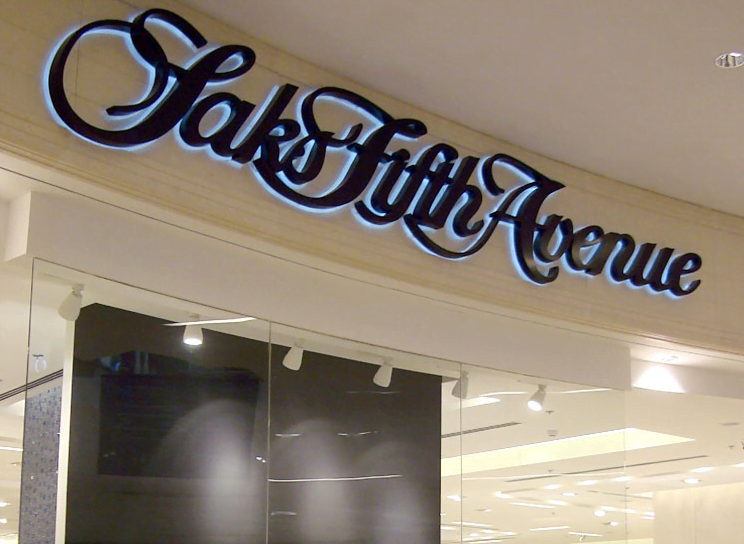
Saks Global’s Chapter 11 filing served as one of the quarter’s most important warning signs.
The lesson extends well beyond a single retailer.
For decades, luxury brands, landlords, and suppliers often viewed major department stores as stable distribution partners. Saks Global’s restructuring demonstrated how quickly those assumptions can change when debt levels rise and vendor relationships become strained.
For suppliers, department store exposure can quickly become financial exposure. Payment delays, inventory disputes, and restructuring processes affect businesses throughout the supply chain. For landlords, prestigious brand names do not eliminate operational and financial risk.
The broader takeaway is increasingly difficult to ignore.
Luxury brands that depend heavily on any single wholesale partner face concentration risk. Diversified distribution strategies, stronger direct-to-consumer channels, and careful management of receivables are becoming increasingly important.
Department stores remain important participants within the luxury ecosystem, but they no longer occupy the central role they once did.
Luxury E-Commerce Faces a More Difficult Reality
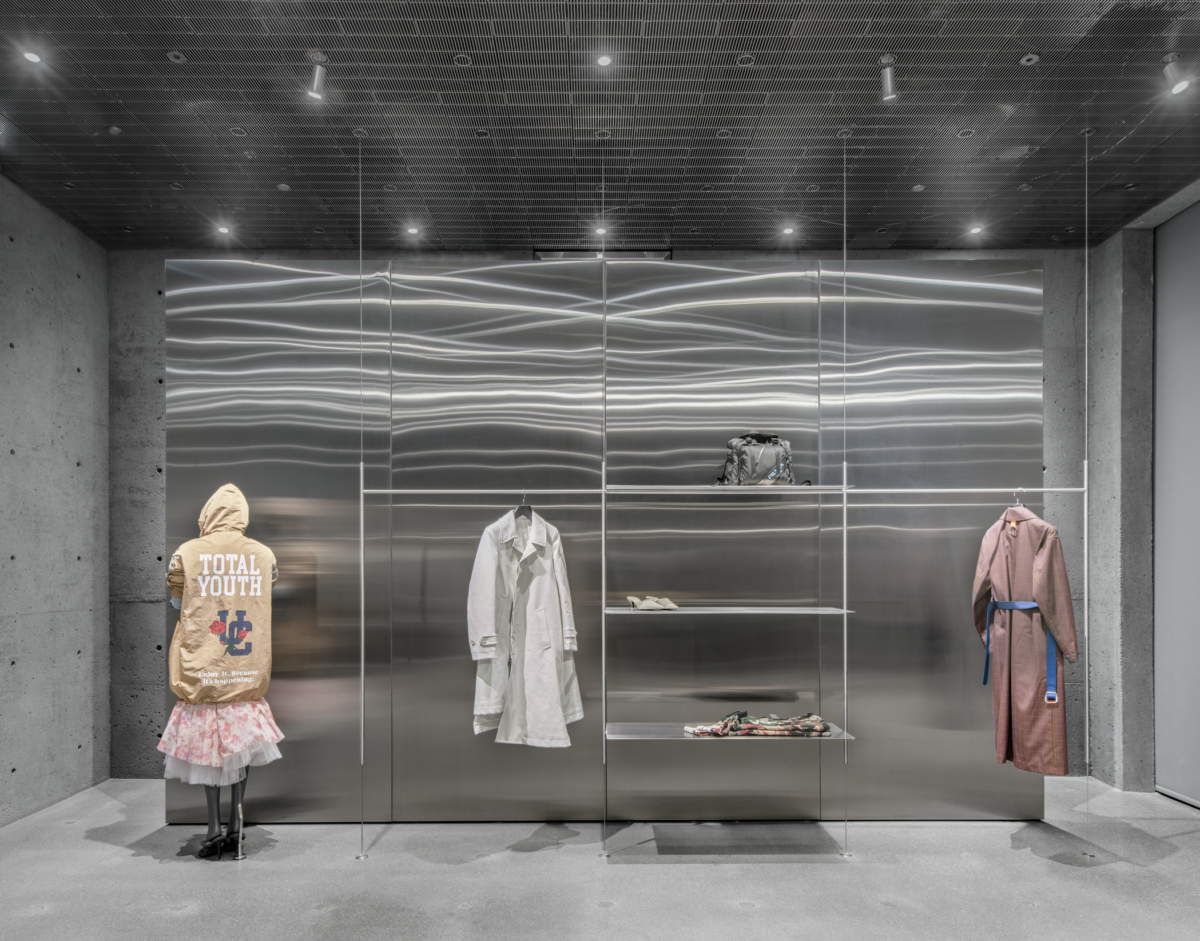
If Saks highlighted the risks associated with wholesale distribution, SSENSE highlighted the challenges facing luxury e-commerce.
The Montreal-based luxury platform entered creditor protection before securing a path toward founder-led ownership alongside a strategic partner. While the transaction may provide stability, the broader lesson extends far beyond a single company.
Luxury e-commerce has become significantly more complex.
The economics are proving less forgiving than many operators anticipated during the industry’s rapid growth years. Inventory management, discounting pressure, customer acquisition costs, returns, logistics, and shifting consumer demand all create operational challenges. Cross-border shipping economics add another layer of uncertainty, particularly following changes to U.S. de minimis rules that increase costs for certain international shipments.
For years, many digital platforms benefited from favourable market conditions and rapid growth. Today’s environment is far less forgiving.
Scale alone does not guarantee profitability. Traffic alone does not guarantee loyalty. Even highly regarded platforms must balance growth ambitions with operational discipline.
For luxury brands, the implications are significant.
Platform stability, payment terms, inventory control, and pricing integrity increasingly influence partnership decisions. As e-commerce economics become more challenging, brands may place greater emphasis on channels they can control directly.
Circular Luxury Expands Access
One of the more interesting developments during Q1 was the continued growth of circular luxury.
Rental, resale, and subscription-based models are gradually moving from niche concepts into practical business strategies.
Zero Collective’s luxury handbag rental platform illustrates the trend. Rather than focusing exclusively on ownership, the company provides consumers with access to premium products through a membership model built around rotation, reuse, and flexibility.
This reflects broader changes in consumer behaviour.
Many younger luxury consumers value participation and experience alongside ownership. Access-based models allow consumers to engage with brands at lower entry points while creating recurring relationships and ongoing engagement opportunities.
For luxury businesses, these models create additional revenue streams, support customer acquisition, extend product lifecycles, and provide new touchpoints throughout the customer journey.
The long-term impact remains uncertain, but the direction is becoming clearer.
Luxury access is increasingly becoming a business model in its own right.
Risks to the Thesis
Several factors could influence how these trends evolve throughout the remainder of 2026.
Luxury spending remains sensitive to broader economic conditions, financial markets, and consumer confidence. International tourism patterns continue influencing performance in key luxury destinations, while geopolitical developments and trade policy can affect both demand and supply chains.
Luxury brands must also balance control with scale. Direct distribution offers advantages, but it requires significant investment in real estate, staffing, technology, and operations.
At the same time, consumers continue demonstrating interest in luxury products, experiences, and services. The challenge is less about demand and more about identifying the most effective ways to capture and sustain that demand.
The competitive landscape remains dynamic, but the importance of control appears likely to increase.
Editor’s Take
Luxury retail has always been built on exclusivity, craftsmanship, and aspiration. Increasingly, it is also being shaped by control.
Brands want greater influence over how products are presented, where they are sold, how customers are served, and how relationships are maintained over time. That helps explain why flagship stores continue expanding, why mono-brand boutiques remain attractive, and why premium retail destinations continue attracting investment.
The businesses attracting capital today are generally those with the strongest ability to manage those variables. Whether through flagship stores, curated partnerships, direct-to-consumer strategies, or access-based models, the common thread is direct engagement with the customer.
At the same time, Saks Global and SSENSE demonstrate that scale alone is no longer sufficient protection against operational, financial, or market pressures. Luxury businesses that depend heavily on third-party platforms, wholesale partners, or external market conditions face risks that are increasingly difficult to ignore.
Luxury demand remains healthy.
The question increasingly facing retailers, landlords, and brands is not whether consumers will spend, but who will control the environment in which that spending takes place.
Selected Coverage
- Tiffany & Co. Expands Canadian Presence With Royalmount Store – Craig Patterson – Jan 8, 2026
- Tudor Expands Canadian Boutique Network with Bloor Opening – Craig Patterson – Feb 5, 2026
- SSENSE Co-Founders Set to Buy Back Luxury Retailer – Lee Rivett – Jan 12, 2026
- Saks Global Bankruptcy Reopens Canadian Retail Wounds – Craig Patterson – Jan 15, 2026
- Birks Group reports 11.8% holiday-period sales increase – Mario Toneguzzi – Jan 30, 2026
- OMEGA opens flagship boutique at Calgary’s Chinook Centre – Mario Toneguzzi – Jan 30, 2026
- Interest in circular economy buoys Zero Collective – Mario Toneguzzi – Feb 27, 2026
- Bang & Olufsen Returns to Yorkville With New Toronto Store – Craig Patterson – Feb 6, 2026
- Freed & Freed Expands Distribution for Canadian Outerwear – Craig Patterson – Mar 20, 2026
- Leading in Luxury: Teams, Talent and Culture – Craig Patterson – Mar 30, 2026
- STEFF ELEOFF Expands to Selfridges London – Craig Patterson – Jan 13, 2026
- Clementine’s Moving to The James in Rosedale – Craig Patterson – Feb 20, 2026
- Aline Nasseh Chocolates Pop Up at Holt Renfrew – Craig Patterson – Feb 14, 2026
- Fairmont partnering with Truman for new luxury Calgary downtown area hotel – Mario Toneguzzi – Jan 23, 2026