Value remains one of the most powerful forces in Canadian retail, but Q1 2026 demonstrated that delivering value is becoming increasingly expensive.
Consumers continue seeking lower prices, promotions, and ways to stretch household budgets. Retailers understand that demand. The challenge is that maintaining a compelling value proposition now requires substantial investment in supply chains, logistics, labour, real estate, technology, and store operations. Simply lowering prices is no longer enough.
The quarter highlighted a growing divide between retailers that can absorb those pressures and those that struggle to keep pace. Dollarama continued expanding while surpassing $7 billion in annual sales. Canada’s largest grocers invested heavily in discount banners, automation, supply chain infrastructure, and private-label programs. McDonald’s intensified competition in quick-service restaurants by freezing prices on key value offerings. Off-price retailers expanded into prominent urban locations and major shopping centres.
The common thread is operational leverage.
Retailers that can spread costs across large store networks, negotiate effectively with suppliers, invest in distribution infrastructure, and secure productive real estate are increasingly positioned to deliver value profitably. Those advantages become more important as operating costs continue rising.
Q1 did not suggest that value retail is becoming less important. It suggested that value retail is becoming more difficult to execute.
Executive Summary
Several themes defined Value, Discount, and Off-Price Retail coverage during Q1 2026:
- Scale increasingly determined who could compete on value.
- Discount grocery remained a primary growth vehicle for major operators.
- More discount banners did not necessarily translate into greater grocery access.
- Off-price and value-oriented retailers expanded into increasingly prominent retail locations.
- Partnerships provided a faster route to national scale than standalone expansion.
- Foodservice operators intensified competition around value platforms.
- Real estate continued shifting toward retailers capable of generating consistent traffic and frequency.
- Cost pressures increasingly influenced how value is delivered.
The broader trend is clear: value remains in demand, but delivering value increasingly favours retailers with scale, supply chain strength, and efficient operating models.
Overall Value + Discount + Off-Price Coverage by Retail Insider
Retail Insider tracked 22 meaningful developments across the value, discount, and off-price retail sector during Q1 2026. Expansion accounted for roughly half of all coverage, with additional reporting focused on financial performance, new formats, partnerships, store openings, and operational changes.
The mix of stories is revealing.
When expansion remains the dominant narrative within value retail, it suggests operators continue seeing significant opportunities despite cost pressures and economic uncertainty. Companies are not simply defending market share. Many are actively investing in growth.
At the same time, the quarter highlighted how demanding the value business has become. Successful operators increasingly require scale, disciplined execution, strong supplier relationships, efficient distribution systems, and access to productive real estate.
The result is a sector where growth remains available, but competitive advantages are becoming harder to replicate.
Scale Becomes the Real Competitive Advantage
One of the clearest themes during Q1 was the growing importance of scale.
Dollarama remains the strongest example. The retailer generated $7.26 billion in fiscal 2026 sales, added 75 net new Canadian stores, delivered comparable sales growth, and continued returning capital to shareholders. Even while acknowledging rising sourcing and transportation costs, the company maintained confidence in its growth strategy.
Dollarama’s performance helps illustrate a broader shift across value retail.
Scale provides advantages that become increasingly important when delivering value. Large operators can negotiate more effectively with suppliers, spread logistics costs across broader networks, maintain inventory availability, and absorb short-term cost pressures that might challenge smaller competitors.
The same dynamic appeared in foodservice.
McDonald’s decision to freeze pricing on selected value menu items for a full year demonstrated how larger operators can use scale to reinforce value positioning. Such decisions influence customer expectations across the category and often force competitors to respond.
Discount grocery follows a similar pattern. Loblaw, Metro, and Empire continue investing in discount formats, private-label programs, automation, and supply chain infrastructure. These investments require significant capital, but they help support pricing competitiveness while protecting profitability.
Value retail has always involved pricing discipline. Increasingly, it also requires operational scale.
Discount Grocery Expansion Masks a More Complex Reality
More discount banners do not necessarily mean more grocery access.
That observation emerged as one of the most important insights of the quarter.
Dr. Sylvain Charlebois noted that the number of grocery stores per 100,000 Canadians has declined since 2020. While discount formats continue expanding, overall grocery availability in some communities may not be increasing at the same pace.
Expansion and consolidation can occur simultaneously.
Major grocers continue investing in No Frills, Maxi, Food Basics, Super C, and FreshCo, yet some communities may still experience fewer grocery options, less competition, or longer travel distances for everyday shopping.
This distinction matters for landlords, municipalities, policymakers, and consumers.
Discount banners are becoming increasingly valuable because they continue generating traffic and supporting household budgets. However, growth in discount grocery does not automatically translate into broader grocery accessibility.
The major grocers appear committed to the segment. Loblaw continues investing in discount formats and supply chain automation. Metro is extending delivery capabilities into discount banners while growing digital sales. Empire continues advancing FreshCo conversions across Western Canada.
The common objective is clear: protecting value while maintaining operational efficiency.
The challenge is that urban discounting comes with additional costs, including security, shrink, labour, and occupancy expenses. Those realities create barriers for smaller operators while reinforcing the advantages enjoyed by larger incumbents.
Real Estate Shifts Toward Value Anchors
The relationship between value retail and commercial real estate continued evolving during Q1.
For decades, major shopping centres relied heavily on traditional department stores and full-price retailers to drive traffic. Increasingly, landlords are finding that value-oriented retailers, off-price chains, and discount concepts can generate comparable traffic with stronger operating performance.
Zellers’ continued expansion discussions provide an example of this shift. The retailer’s Edmonton location demonstrated that a smaller-format, value-focused department store can generate sustained customer interest while requiring far less space than traditional department store models. For landlords managing former Hudson’s Bay Company locations or other large-format vacancies, concepts such as Zellers offer an opportunity to reactivate space while longer-term redevelopment plans take shape.
TJX Canada continues demonstrating why off-price remains attractive from a real estate perspective. The company’s planned Marshalls location at Montreal Eaton Centre reflects a strategy built around density, frequency, and repeat visits. Off-price retailers encourage customers to visit regularly because inventory changes constantly, creating a sense of discovery that supports repeat traffic.
For landlords, that translates into dependable traffic and strong leasing demand.
More broadly, landlords increasingly favour value-oriented traffic drivers because they remain among the most active expansion categories in Canadian retail.
The quarter also provided a reminder that not every retail format benefits equally from value-oriented demand.
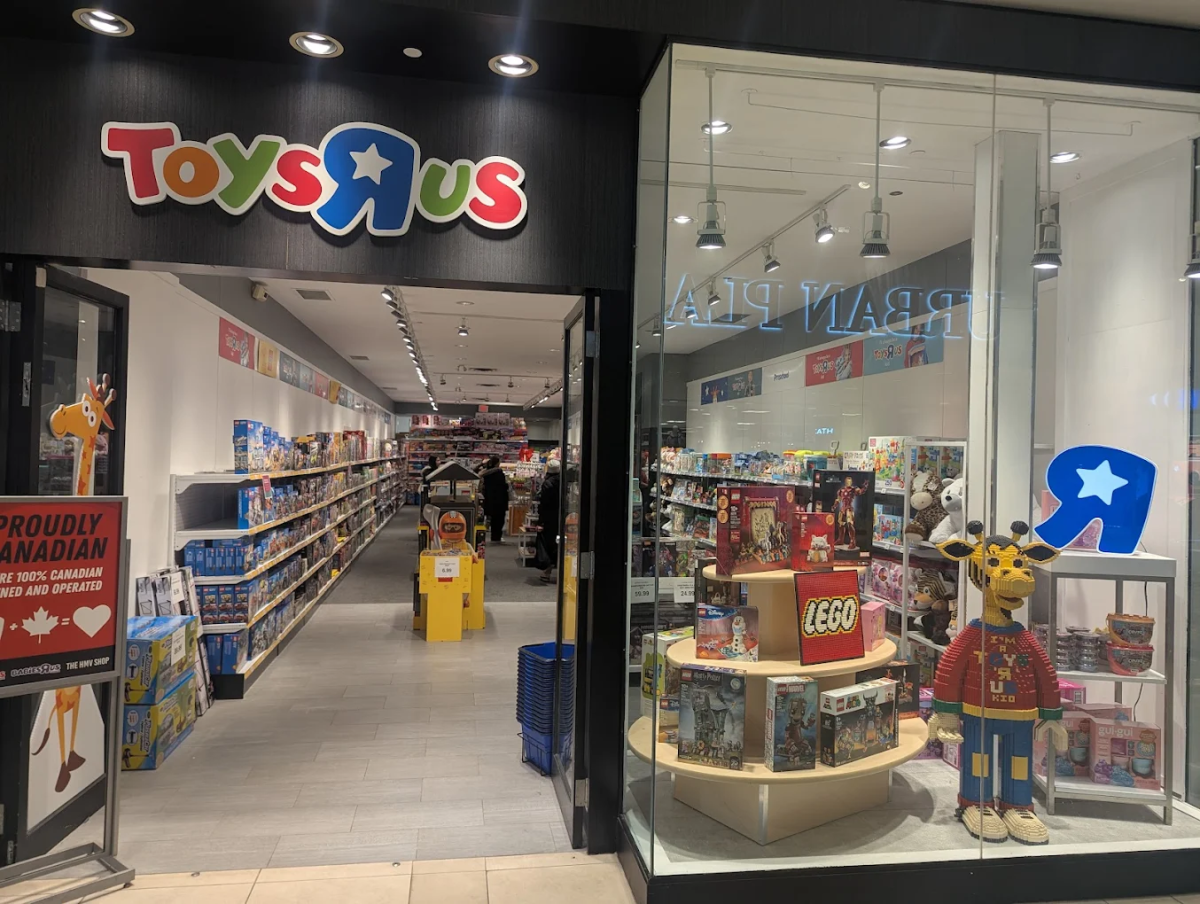
Toys R Us Canada’s abrupt closure of its final full-line British Columbia store highlighted the risks facing operators whose store economics and balance sheets come under pressure. Value demand alone does not guarantee success. Retailers still require productive locations, healthy financial structures, and sustainable operating models.
Partnerships Become a Growth Shortcut
One of the more interesting themes during Q1 was the growing use of partnerships as a route to scale.
Rather than pursuing expensive standalone expansion, several brands leveraged existing retail networks to accelerate growth and reach customers more efficiently.
Lane Bryant’s Canadian expansion through Walmart Canada illustrates the approach. By entering approximately 320 Walmart locations and Walmart.ca, the brand gained immediate national exposure without the capital requirements associated with building a traditional store network.
The strategy reflects a broader retail shift. For many brands, especially in a value-conscious environment, speed and reach can matter more than maintaining complete control over distribution.
Made With Local demonstrates a similar dynamic from the supplier perspective. The Halifax-based snack company expanded to more than 3,500 retail locations across Canada, including Walmart Canada and Costco Wholesale. The company’s ability to scale while maintaining Canadian production highlights the importance of operational discipline as brands grow within value-oriented channels.
Healthy Planet offers another variation of the model. While continuing to expand its physical footprint, the retailer is also investing in e-commerce, loyalty initiatives, private-label products, and omnichannel capabilities.
The company demonstrates that value does not necessarily mean competing solely on the lowest price. Accessibility, trust, assortment, convenience, and private label can all contribute to a compelling value proposition.
Smaller Formats Drive Food Expansion
Foodservice operators also continued adapting their models to reflect changing economics.
Kettlemans Bagel provided one of the quarter’s most interesting examples. The company is increasingly focusing on sandwiches while developing a hub-and-spoke model that uses centralized production to support smaller-format locations.
The strategy reflects a broader industry trend.
Smaller stores require less capital, lower occupancy costs, and can often enter trade areas that would not support larger formats. When supported by efficient production and distribution systems, these locations can accelerate growth while improving unit economics.
Taco Bell Canada’s expansion strategy reflects similar thinking. The chain continues growing while positioning its value menu as a permanent platform rather than a limited-time promotion.
McDonald’s reinforced this dynamic by freezing prices on key value offerings, raising the competitive stakes across the category.
Taken together, these examples illustrate how foodservice operators are becoming increasingly disciplined about format design, menu architecture, and operational efficiency.
Risks to the Thesis
Several factors could influence how these trends evolve throughout the remainder of 2026.
Transportation costs, labour expenses, tariffs, and supply chain disruptions continue creating uncertainty for retailers operating on thin margins. Shrink and theft remain concerns in many urban markets, while occupancy costs may challenge future expansion in high-demand locations.
At the same time, larger operators continue investing heavily in automation, distribution infrastructure, private-label programs, and store expansion, potentially widening the gap between industry leaders and smaller competitors.
The importance of scale appears likely to increase.
Editor’s Take
Q1 2026 reinforced an important reality about value retail.
Consumers continue seeking lower prices, promotions, and affordability. That demand is not disappearing.
What is changing is the cost of delivering value.
Retailers face rising transportation costs, labour expenses, occupancy pressures, security concerns, and growing supply chain complexity. Delivering a compelling value proposition increasingly requires substantial investment in infrastructure, technology, purchasing power, and operational discipline.
This helps explain why many of the sector’s strongest performers share similar characteristics.
Dollarama, Loblaw, Walmart, Costco, and TJX all benefit from scale. They can negotiate with suppliers, invest in distribution networks, secure productive real estate, and absorb short-term cost pressures more effectively than smaller competitors.
That does not mean smaller retailers cannot succeed. Healthy Planet, Made With Local, and Kettlemans demonstrate that focused strategies, strong execution, and differentiated operating models can still create opportunities.
The biggest winners increasingly share the same advantages: purchasing power, efficient distribution, strong real estate, operational discipline, and the ability to absorb cost pressures without undermining customer trust.
Consumers continue demanding value, but delivering value profitably has become more complicated. As costs rise across the retail ecosystem, scale increasingly determines who can keep prices low while continuing to grow.
Selected Coverage
- McDonald’s Canada Triggers a New Fast-Food Price War – Sylvain Charlebois – Jan 14, 2026
- Zellers Sets Sights on National Expansion After Edmonton Debut – Craig Patterson – Jan 22, 2026
- Loblaw Expands Maxi Discount Strategy in Quebec – Lee Rivett – Feb 9, 2026
- Grocers Double Down on Discount Banners in Canada – Craig Patterson – Mar 19, 2026
- Dollarama sales surpass $7 billion in its fiscal year – Mario Toneguzzi – Mar 24, 2026
- Dollarama Shares Fall as Australia Expansion Weighs on Outlook – Lee Rivett – Mar 25, 2026
- TJX Expands Downtown Footprint with New Urban Stores – Craig Patterson – Mar 19, 2026
- Eskasoni First Nation and Canada announce new addition to reserve and retail expansion with new Dollarama – Mario Toneguzzi – Mar 9, 2026
- Kettlemans Bagel eyes franchising push as sandwich sales drive growth: Amer Wahab interview – Mario Toneguzzi – Mar 10, 2026
- Healthy Planet expands across Ontario as Canada’s largest online health store bets on omnichannel growth – Mario Toneguzzi – Jan 27, 2026
- Canada’s Women’s Plus-Size Retail Market Shifts – Craig Patterson – Mar 19, 2026
- Toys R Us Closes Final British Columbia Store in Langley – Lee Rivett – Jan 15, 2026
- Taco Bell launches new Luxe Value Menu as it continues growth in Canada – Mario Toneguzzi – Feb 11, 2026
- Empire Company Limited reports Q3 financial results – Mario Toneguzzi – Mar 12, 2026
- Made with Local expands to 3,500 Canadian retail stores as Halifax snack brand scales nationally – Mario Toneguzzi – Mar 30, 2026