Advertisement
Home Blog Page 1077

Levi’s Expands Canadian Operations as it Unveils Canadian Flagship Store [Photos]

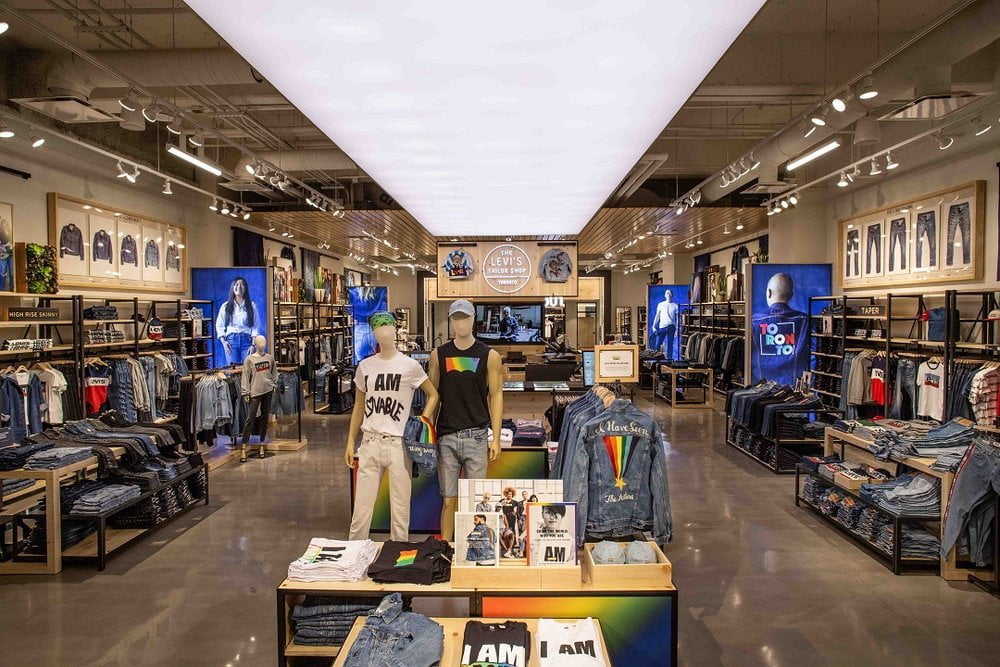
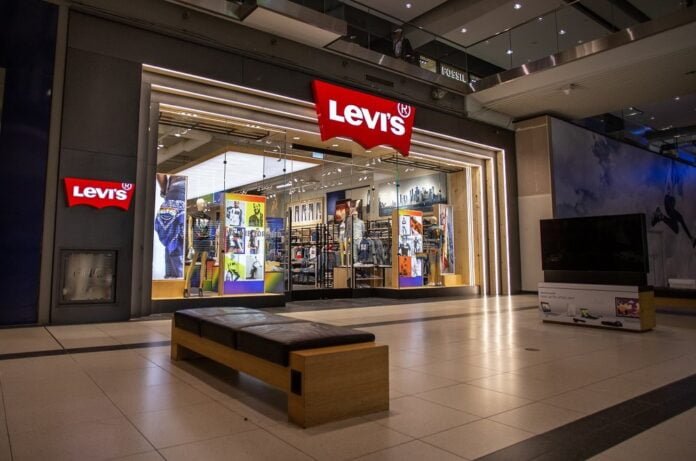
Levi's Toronto Eaton Centre Storefront

San Francisco-based fashion brand Levi’s, known particularly for its denim fashions, has opened its Canadian flagship at CF Toronto Eaton Centre. The impressive space features customization and localization, and the store is the only one in Canada to carry the ‘Levi’s Authorized Vintage’ line. Levi’s has been expanding its Canadian operations over the past couple of years by opening direct-to-consumer stores, which are said to be growing the brand’s overall awareness, not to mention increasing sales. 

“The heart of downtown Toronto, with its diversity, culture and vibrancy, is an ideal home for the Levi’s® brand,” said Roy Bagattini, Executive Vice President and President of Levi Strauss Americas. “We are elevating the consumer experience by putting customization front and centre. The heartbeat of the store is a Tailor Shop, where customers can have their favourite denim products altered and customized by a team of specialized tailors, as well as custom T-shirt printing.”

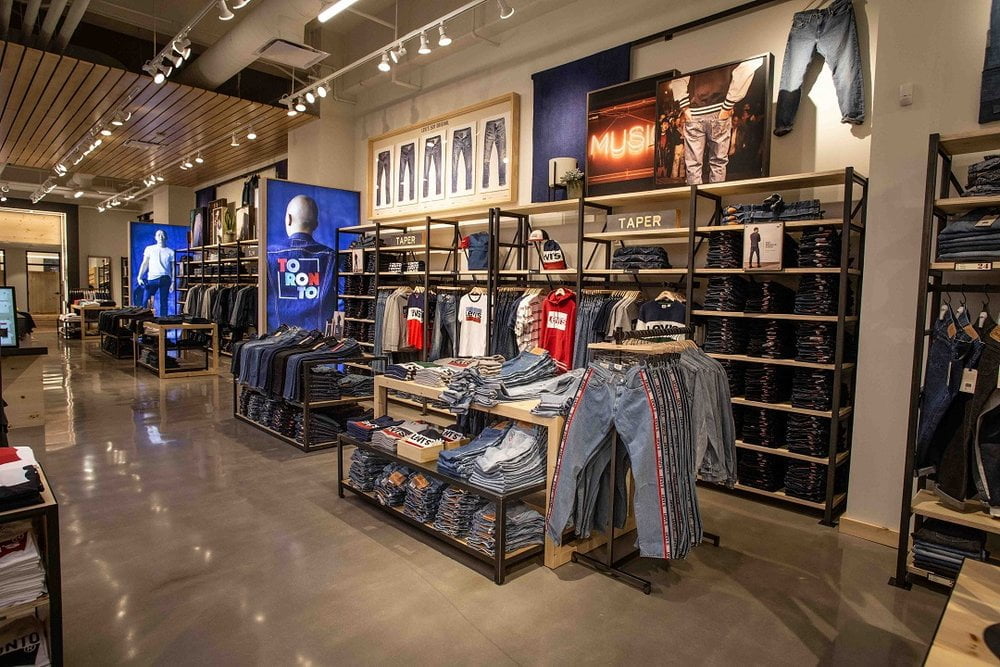
Levi’s Toronto Eaton Centre Tailor Shop

The Tailor Shop Mr. Bagattini mentioned is one of the customization features in the new store. Several of Levi’s Canadian stores now carry ‘Tailor Shops’ — over the past couple of years, Levi’s has been expanding its presence in Canada with standalone retail stores, several of which include these. Levi’s debuted its first two Canadian locations with tailor shops in November of 2016, at Toronto’s CF Sherway Gardens and at Square One in Mississauga. Two Alberta stores were added in the summer of 2017 and it’s been such a hit that more have since been added. 

Levi’s tailor shops offer custom embroidery, tailoring, hemming and a wide selection of pins and patches, addressing the trend towards product customization. Levi’s describes its tailor shops as having a “team of specialized craftsmen who will help you personalize your favourite denim pieces,” with customization spaces located at the back of each store.

The new CF Toronto Eaton Centre Levi’s store’s interior features about 5,300 square feet of retail space on Level 1, in part of what was formerly a location for US fashion retailer Express. The Levi’s store interior features a ‘natural look and feel’ that pays homage to the brand’s commitment to quality and sustainability, according to Levi’s. On a back wall near the store’s dressing rooms, for example, is a water bottle refill station with signage discussing how Levi’s aims to conserve and recycle water as part of its denim finishing. The range of product in the store includes Levi’s lines Made & Crafted®, Levi’s® Red Tab line for men and women and, new to Canada, Levi’s® Authorized Vintage. 

The Levi’s Authorized Vintage offering is particularly notable, given that the CF Toronto Eaton Centre store is the only one in Canada to carry the range of pre-worn pairs of jeans and trucker jackets that have been carefully remastered. The idea is to offer the “most authentic, most everlasting vintage on the market – made by Levi’s® from start to finish”, according to the company. 

The city of Toronto is a theme throughout the store, which includes a city skyline and wording on T-shirts, trucker jackets, pins and patches, paying homage to the city that many are saying is having its ‘moment’ (Drake, The Weekend and Megan Markle have all helped). One Levi’s jacket style features the word ‘Toronto’ in a marquee sign reminiscent of that of the iconic Honest Ed’s store which shuttered at the end of 2016. These products are said to be flying off the shelves, and the Tailor Shop is also said to be doing tremendous business in just its first week of operation. 

The CF Toronto Eaton Centre Levi’s store also features tech-supported touchpoints such as a call button in the fitting rooms allowing customers to directly request additional sizing and assistance without leaving the room. 

Levi’s has spent a considerable sum to advertise the new store as part of its “We Are Toronto” advertising campaign. For the past month, the Dundas TTC subway station adjacent to CF Toronto Eaton Centre has been ‘taken over’ with advertising promoting the new store, as well as various other billboards, a wrap of the 501 Queen Streetcar, and advertising throughout CF Toronto Eaton Centre which boasts more than 50-million annual visitors. As well, geo-targeted mobile ads were used to promote the new store.
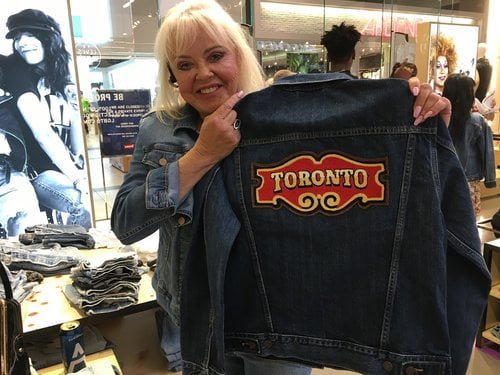
SUZANNE SEARS, FOUNDER OF LEADING RETAIL RECRUITMENT FIRM BEST RETAIL CAREERS INTERNATIONAL INC., HOLDS UP A TORONTO-THEMED TRUCKER JACKET. PHOTO: CRAIG PATTERSON 

Brands are increasingly going direct-to-consumer with stores and Levi’s is no exception — the company confirms that about a third of all global sales are from its stores, and the company has already opened several enhanced locations that include tailor shops in-store. Levi’s is expected to continue with its expansion plans, while also expanding its wholesale network that includes major retailers such as Hudson’s Bay. Levi’s operates a network of stores in Canada as well as internationally, boasting more than 2,800 stores globally. Levi’s was founded in San Francisco in 1853 by German entrepreneur Levi Strauss. 

Levi’s is seeing remarkable growth in Canada — sales have reportedly doubled since 2012 to more than $100-million. That’s what Chip Bergh, CEO of Levi Strauss told Marina Strauss (no relation) of the Globe & Mail in a paywalled article last week. Mr. Bergh also mentioned that the company’s women’s sales have tripled since 2015, and that the average age of its consumer has decreased over the past seven years or so since he came on as head of the company. It would appear that the company’s efforts to reach out to younger shoppers is paying off, including an expansive range of casual fashions as well as with its in-store customization and other initiatives that make Levi’s stores more experiential. 

White Paper Examines How Satisfied Retail Employees Result in Satisfied Customers 

White Paper Examines How Satisfied Retail Employees Result in Satisfied Customers 

Now more than ever, brick-and-mortar retailers must embrace exceptional customer service in order to attract and retain customers, particularly as e-commerce continues to grow and international retailers enter the market. This white paper shows the importance of having an engaged network of staff in order to make it happen — human resource teams are at the forefront of a battle to create efficiencies that drive improved productivity and profits.

Costs for retailers are rising rapidly, fueled by factors like increases in the minimum wage, predictive scheduling legislation (also called fair scheduling), and increases in leave allocations — not to mention uncertainty around NAFTA. So retailers are turning to their HR departments for help to weather the storm. Specifically, they’re seeking out smarter and more efficient ways to attract, retain, engage and utilize labour resources and talent. Like all industries, finding and retaining top talent is critical to growth and profit.

Technology solutions can help retailers tackle key HR challenges

According to Adrian Peace, Productivity and Development Manager at The Co-operative Group, “The financial benefits of a workforce management solution are significant. It provides the mechanism to deliver a more customer-focused business, creating a superior customer experience that drives loyalty, sales and profit.”

The white paper, from leading workforce management software and services company Kronos, provides insights and recommendations on how retailers can tackle today’s HR challenges. In particular, it addresses the fact that retailers are increasingly seeking out technology solutions to truly engage employees, leading to improved productivity, conversion rates and customer satisfaction.

The white paper delves into several key themes, with unique insights including the importance of reducing staff turnover, enabling flexibility and productivity, and fostering engaged associates to deliver greater retail performance.

You can download the white paper here. For more information on Kronos, visit: www.kronos.ca

Partner Content. To work with Retail Insider, contact Craig Patterson at: craig@retail-insider.com.

Bottega Veneta to Open 1st Standalone Canadian Flagship

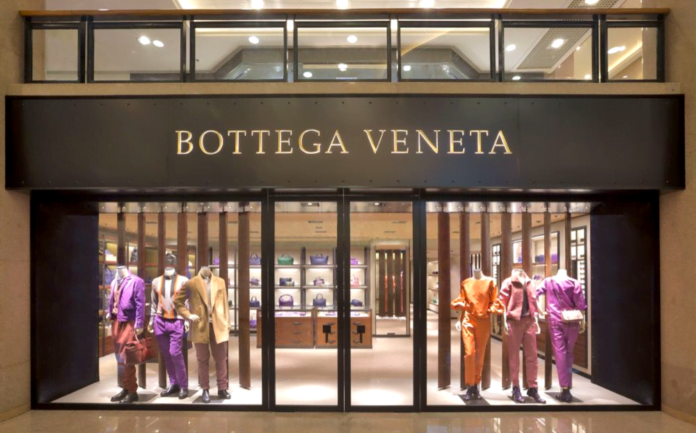
Bottega Veneta

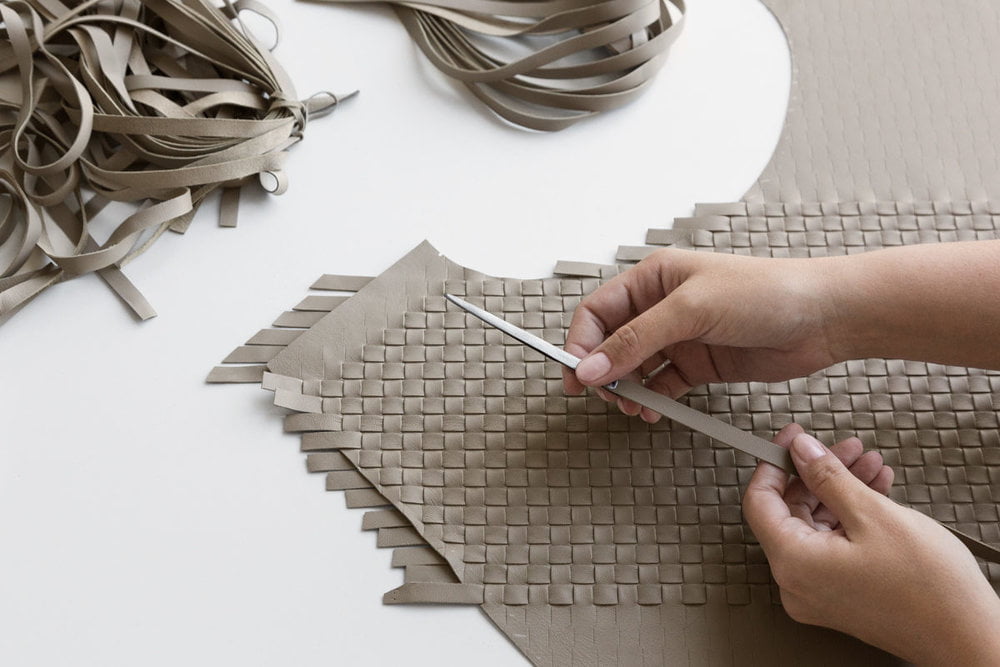
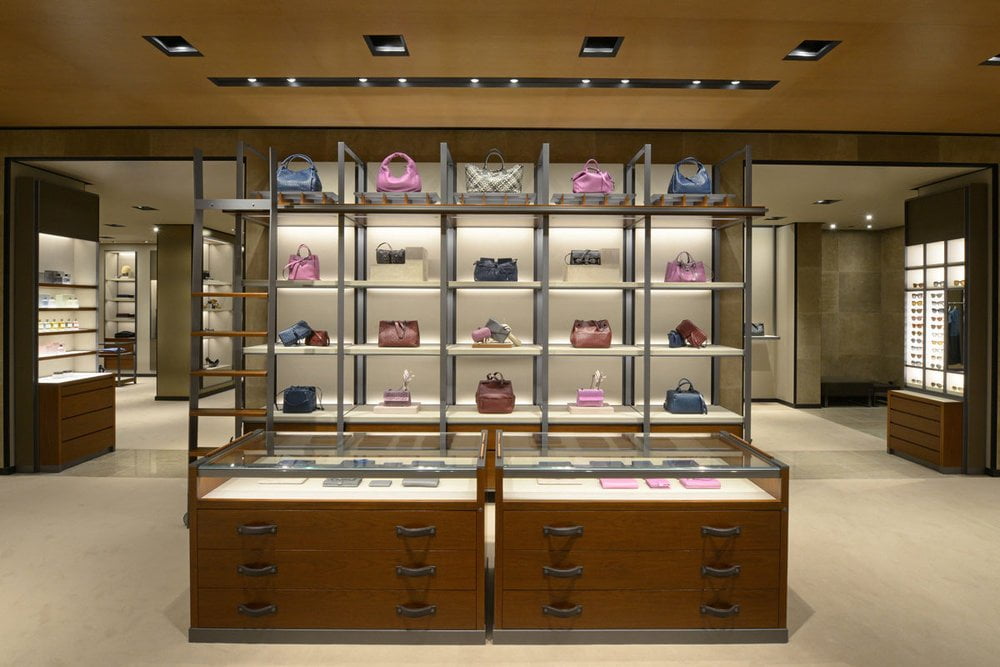
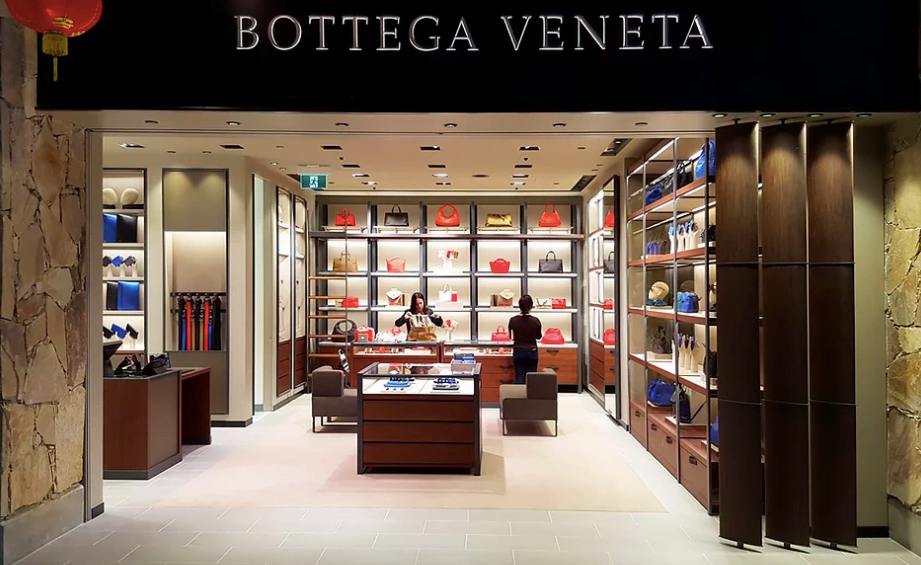
Luxury fashion brand Bottega Veneta, known particularly for its woven leather goods, will open a standalone store at Toronto’s Yorkdale Shopping Centre this winter. The brand is the latest luxury brand to open in the mall, which is becoming a top draw for global brands looking to open their first stores in Canada. 

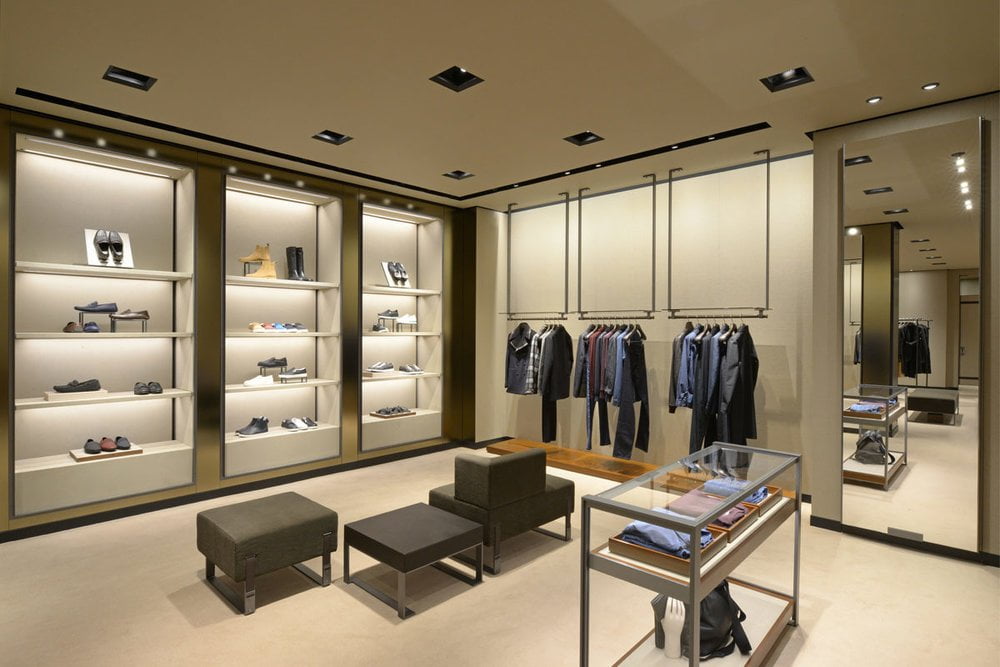
Yorkdale’s Bottega Veneta will be located in the mall’s 2012 expansion wing beside Hugo Boss, and across from the entrance to the Holt Renfrew men’s store. Bottega Veneta will span about 4,700 square feet on one level and is expected to carry the brand’s assortment of fashions, leather goods and accessories as well as footwear for both men and women. 

A smaller Bottega Veneta boutique also operates at Vancouver International airport. The concession, which carries mainly accessories, is part of the World Duty Free group of stores that are located behind security gates and are accessible to those traveling internationally. 

CLICK ABOVE FOR INTERACTIVE YORKDALE MALL FLOOR PLAN
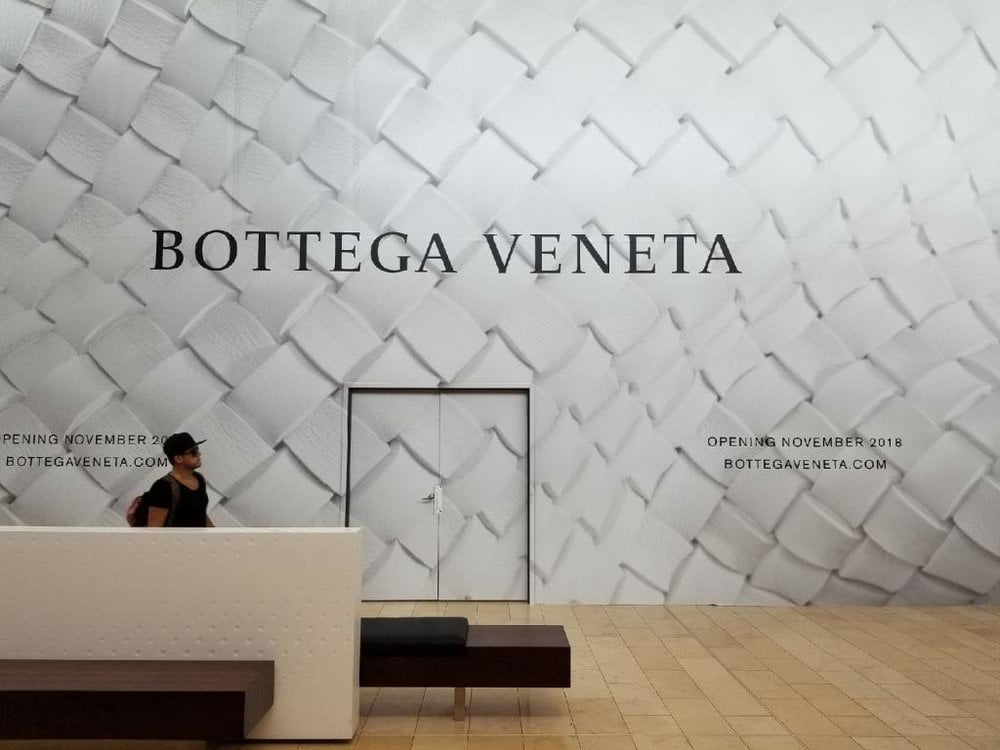
CONSTRUCTION SIGNAGE AT YORKDALE. PHOTO: ACT7/URBAN TORONTO

Bottega Veneta was founded in 1966 by entrepreneurs Michele Taddei and Renzo Zengiaro in Vicenza, Italy, and is known for its leather goods as well as men’s and women’s ready-to-wear, footwear, jewellery, eyewear, fragrances and even furniture. In the early 1970’s, the brand used the advertising tag line “when your own initials are enough” and its prominence grew as clients such as Jacqueline Kennedy Onassis and the empress Farah Pahlavi were seen wearing the brands. In 1980, Andy Warhol made a short film for the company.

After some struggles in the 1980’s that included temporarily adding branding to its products, Bottega Veneta was purchased by Gucci Group for $156-million in 2001. Gucci’s then creative director Tom Ford hired Tomas Maier (previously at Sonia Rykiel and Hermès) that year and the brand was repositioned to cater to ‘stealth wealth’ — in 2005 the company launched its first women’s ready-to-wear collection, followed a year later by men’s wear and jewellery. Earlier this month, Bottega Veneta parted ways with long-term creative director Tomas Maier in favour of 32-year old Daniel Lee

Bottega Veneta is the latest luxury brand to move into Yorkdale, which boasts more first-to-Canada luxury stores than anywhere in the country. Other brands opening this summer include Chloé (which opened last week) and in the fall, Oliver Peoples will open one of two Canadian stores at Yorkdale. 

International luxury group Kering S.A. is the parent company of Bottega Veneta, which also operates Saint Laurent and Gucci boutiques at Yorkdale (Gucci, which is located in Holt’s, will expand). Kering’s other brands include the likes of Balenciaga (opening a Holt’s boutique this fall), Alexander McQueen, Boucheron and Brioni, as well as the less-expensive Volcom brand.  

BOTTEGA VENETA CONCESSION AT VANCOUVER INTERNATIONAL AIRPORT. PHOTO: DKSTUDIO

Bottega Veneta operates stores globally, including almost 30 in the United States on some of the most prestigious streets as well as in some of its best malls. Bottega Veneta is also available in some of the world’s leading luxury retailers. In Canada, Bottega Veneta bags and accessories can be found at Holt Renfrew in Toronto (50 Bloor St. W. and Yorkdale), Vancouver, Montreal and Calgary, as well as at Saks Fifth Avenue at CF Toronto Eaton Centre, where Saks operates a licensed Bottega Veneta accessory boutique. 

Given the spending on luxury goods in Vancouver, one might expect Bottega Veneta to be considering space on or near the city’s Alberni Street ‘Luxury Zone’. As well, Toronto’s Bloor-Yorkville could be in the running for a full-sized standalone Bottega Veneta, and an expanded shop-in-store is also expected to open on the ground floor of Holt Renfrew at 50 Bloor Street West, which is in the process of undergoing a significant substantial expansion and renovation which is expected to be completed in 2020. 

Friday Harbour Resort to Expand Retail Component

Friday Harbour Resort

Friday Harbour All Seasons Resort is establishing itself as one of the most extraordinary escapes in Canada, and the developer is adding retail to the mix. 

The world-class waterside destination in Innisfil, just a short distance from Toronto, is now a year-round attraction on Lake Simcoe for homeowners and long time cottagers – “infusing nature, luxury, brilliance and entertainment into every moment,” says the resort on its website.

James DiRenzo, CEO of Friday Harbour, says the property spans over 600 acres, and he says that it is “a wonderful lifestyle mix of lake, beach, golf, tennis, 200-acre nature preserve and the largest in land marina in North America.”

DiRenzo says Friday Harbour also has an exclusive Beach Club as well as an array of recreation and leisure activities. There’s a swimming pool and children’s splash pad. And of course its signature 18-hole championship golf course designed by Doug Carrick with a certified PGA professional. There’s also a driving range.

“The location provides for a full array of winter, summer, all-season sports. We’re very pleased to be there because of the nature of the people that live in that area, visit that area,” says DiRenzo.

“It’s a sportsman’s paradise. It’s got some of the greatest summer fishing and winter fishing that you will find anywhere on the planet.”

DiRenzo says Friday Harbour Resort was designed with an emphasis on protecting the health of the woodlands and wetlands within the site and the quality of water within Lake Simcoe. Several components are aimed at enhancing environmental sustainability.

At various locations throughout the Nature Preserve, habitats have been restored or created to enhance the health and diversity of the ecosystem. Specific initiatives have been  implemented as a component of the development of Friday Harbour Resort. “Lifestyle starts at home in Friday Harbour, and we have a wonderful selection of resort living options from luxury townhomes to designer  condominiums and boardwalk flats that encompass the retail village,” he says.

Altogether there will be over 2500 resort homes at Friday Harbour when it is completed, consisting of one-third townhomes and two-thirds condos. Prices in the master-planned resort range from $350,000 to over $3 million, 1,100 units have already been sold. “Sales have been so brisk. We are getting more per square foot than some construction sites in Toronto as far as luxury value is concerned. We’ve got approximately 500 homeowners moved in now, occupied,” says DiRenzo.

“This is very unique unlike anywhere else where you have that combination of a resort and luxury private club mix.” DiRenzo knows about the creation and management of private clubs, which has been the hallmark of his career around the globe.

The Boardwalk retail area will span about 46,000 square feet. Phase One consists of 23,000 square feet of retail space and is leased out to, Starbucks, FH Fine Food, and Fishbone and Avenue restaurant, and negotiations continue with LCBO. There’s also a Friday Harbour Welcome Centre, and there will be a 3,500-square foot, state-of-the art life/fitness gym.

Phase Two, which is also 23,000 square feet, has retail spaces available ranging from 300 square feet to 10,000 square feet.

Antoinette Grossi, director of leasing with Metrus Properties, which is leasing the retail space, says, “We are doing an upscale Friday Harbour weekend wear clothing store and we are looking for unique, eclectic stores for the remaining balance of the retail units such as clothing, crafts, entertainment and services.”

“We would love a pub and quick service restaurants like sushi or burgers. We are also looking for home and decor. Another great option will be our pop-up store of about 1,000 square feet that every quarter we would have different vendors.” says Grossi.

“The first phase of the development is open and operational. We’re just finalizing the second phase of construction which will be completed by the end of August.”
“There will also be a hotel on site,” says Grossi. “We are also looking to do something of an indoor and outdoor spa facility as well. We have the land capacity to do that,” says Grossi.

Friday Harbour Resort is truly a resort lifestyle, in true north style and elegance. For more information on Friday Harbour you can visit their web site at www.fridayhabour.com or for leasing information, call Metrus at 905 669 9714.

Canadian Retail Sales Take a Dive

Canadian Retail Sales Take a Dive

Total Canadian retail sales gained only 2.6% year-over-year for the 3 months ending April 2018 on a not seasonally basis, according to the most recent Statistics Canada data. This was the slowest 3 month growth since mid 2015. Furthermore, all major retail sectors and most retail store types are suffering the same fate. 

The 3 month growth trend (orange line in the chart above) in fact started deteriorating last December, and has just continued to weaken ever since. The underlying 12 month growth trend (green line) has now turned downward, and is on track to weaken further in the next few months. 

The Food & Drug sector’s retail sales were up only a scant 0.2% year-over-year for the 3 months ending April 2018, the lowest consecutive 3 month gain in almost 7 years. As this measure weakens, the underlying 12 month trend is also headed downward, and without any relief in sight. 

Supermarkets & other grocery stores, which represent half the business in this sector, are leading the downward charge with a retail sales decline of 1.1% for the 3 months ending April 2018. The one bright spot was specialty food stores where retail sales increased 9.0% during the period, but this group is too small to offset the weakness at mainstream food retailers. 

Health & personal care stores are only adding to the sector’s woes. Their retail sales were down 0.9% for the 3 months ending April 2018, almost as bad as supermarkets & other grocery stores. 

In Q1 2018, Store Merchandise emerged as the sales growth leader versus the other retail sectors. Year-over-year retail sales were up 5.8%. On the other hand, this was lower than the 6.9% gain posted for last year, and momentum appears to be softening. After a meteoric rise in 2017, the underlying 12 month growth trend (green line in the above chart) now appears to be peaking out. 

The top Q1 performers in the sector were electronics & appliance stores with retail sales up 14.9%, and building material & garden equipment/supplies dealers gaining 7.5%. 

At the other end of the scale, retail sales at shoe stores declined 2.3% in Q1, while furniture stores were up only 1.0%. 

Note that Statistics Canada is now suppressing the breakdown of general merchandise stores for confidentiality reasons. The figures in the table below are estimates based on previous trends. 

The Automotive & Related sector used to be the Cinderella of Canadian retail sales, but the clock struck midnight at the end of 2017. Retail sales were up 3.8% year-over-year for the 3 months ending April 2018, which was the lowest such gain in a year and a half. 

The main culprit is to be new car dealers, whose sales were up just 1.0% for the 3 months ending April 2018. This is a mere shadow of the 9.4% annual increase recorded last year. 

Retail sales at gasoline stations did increase 9.6% in comparison, thanks to higher pump prices, but this was not nearly enough to compensate for mediocre new vehicle sales. When you pay more for gas, your car doesn’t go any further and the ride isn’t any better – you just have less money for everything else. 

By The Numbers

Special Note: Statistics Canada has made updates to 2017 numbers, and has also moved retail storefronts of telecom companies out of electronics & appliance stores and into a non-retail category, Telecommunications (NAICS 513). Retail trade statistics have been revised back to January 2012. 

For definitions of store types, see Statistics Canada NAICS

Canadian E-Commerce Stats

StatsCan started providing ecommerce retail sales data in January 2016. While the amount of data is limited, some trends appear to be emerging. Here are some results. 

Overall, e-commerce represented about 2.7% of total Canadian retail sales for the 12 months ending April 2018, including both pure play operators as well as the online operations of brick & mortar stores. Canadian consumers however also buy online from foreign websites which is not captured in these numbers. 

Canadian e-commerce sales were up 12.3% year-over-year for the 3 months ending April 2018, but this is less than half the 28.8% gain recorded in the same period a year ago. While e-commerce retail sales gains are still in double digit territory, it appears that their growth may be slowing down. 

Note that location based retail is the same as that in the preceding large “By The Numbers” table. It’s what’s normally reported as Canadian retail sales. Except that it isn’t. Location based retail excludes another section called Non-Store Retailers (NAICS code 454), which covers electronic shopping and mail-order houses, which in turn is where (mostly) pure play e-commerce businesses are. For the 12 months ending April 2018, electronic shopping and mail-order houses had an estimated $9.27 billion in e-commerce sales. 

But that’s not the only source of e-commerce, as (mostly) bricks & mortar location-based retailers also sell online. For the 12 months ending April 2018, this group had an estimated $7.02 billion in e-commerce sales. With electronic shopping and mail-order houses, there’s a grand total of $16.29 billion in e-commerce sales by Canadian operators over the year. Note that this does not include foreign e-commerce purchases made by Canadian consumers, but it does include e-commerce purchases made by foreigners at Canadian businesses. 

For electronic shopping and mail-order houses, an estimated 83.1% of their sales are allocated to e-commerce. For (mostly) bricks & mortar retailers, it can be estimated that just 1.2% of their total sales come from e-commerce. 

In the final section of the above table, (mostly) pure play operators (namely, under electronic shopping and mail-order houses) generated an estimated 56.9% of all e-commerce sales in Canada, while (mostly) bricks & mortar location-based retailers’ share of e-commerce is 43.1%. 

For more explanation on the e-commerce numbers, see Statistics Canada: Retail E-commerce in Canada

This analysis is updated monthly as new numbers are published by Statistics Canada. If you would like notification of when an update becomes available (and you’ve read this far), please connect with Ed Strapagiel on LinkedIn

La Maison Simons to Open 1st Standalone Home Store [Rendering]

La Maison Simons in Montreal (Image: La Maison Simons)

Quebec City-based large-format fashion retailer La Maison Simons will open its first standalone ‘mini-store’ in early 2019, which will involve relocating the store’s home furnishings ‘Maison’ concept downstairs to a separate floor from the existing Simons store. There will be no access to the upstairs Simons store from the new Maison home concept, which is a first for the company that is known to typically operate stores in the 80,000 to 120,000 square foot range. 

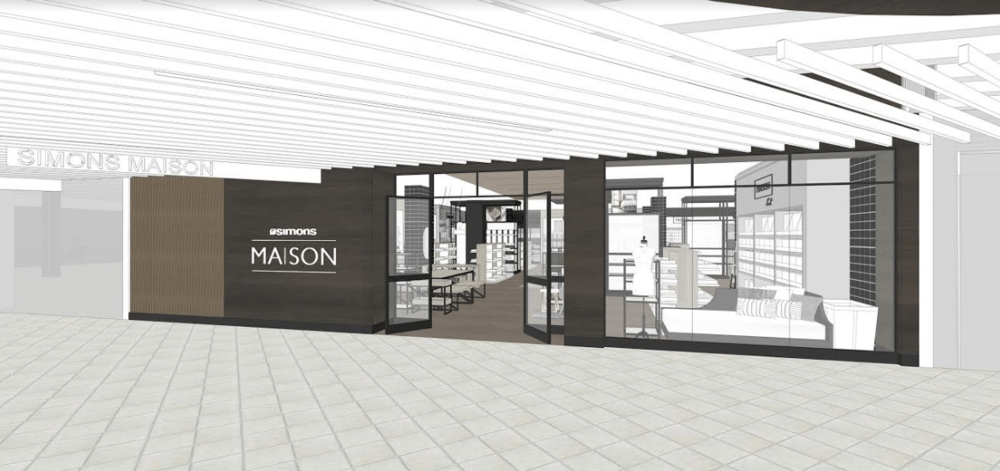
The new Simons Maison will span about 4,800 square feet and will be located across the corridor from the escalators at the Metro level that leads up to the ground floor of the multi-level Simons store. Simons boasts a popular private-label home furnishings offering that includes items for almost every room in the home. 

Construction on the new downtown Montreal ‘Maison’ home store will commence this fall, with an anticipated opening date of early 2019. Designstead is designing the new space. 

Simons is said to be reconfiguring a few departments in its Montreal store and room made by relocating the Maison department could help make space for more footwear. Simons has recently introduced dedicated shoe departments to some of its stores — Simons carries a wide range of fashions that include ready-to-wear and accessories, as well as home furnishings. At the same time, Simons stores lack the cosmetic halls found in traditional department stores, and its handbag offerings are less than that of a store such as Nordstrom or Holt Renfrew

At some point, the downtown Montreal Simons flagship is expected to see a larger renovation, though that’s been put on hold for the interim while the company sorts out financing for a new high-tech robotic distribution centre, as well as the building of a new store at CF Fairview Pointe-Claire in Montreal and an expansion of another store in nearby St. Bruno. Simons recently announced that for the first time in its 178 year history it is accepting outside investors to help further implement the company’s growth goals. 

RENDERING: SIMONS VIA JANE GILL PR

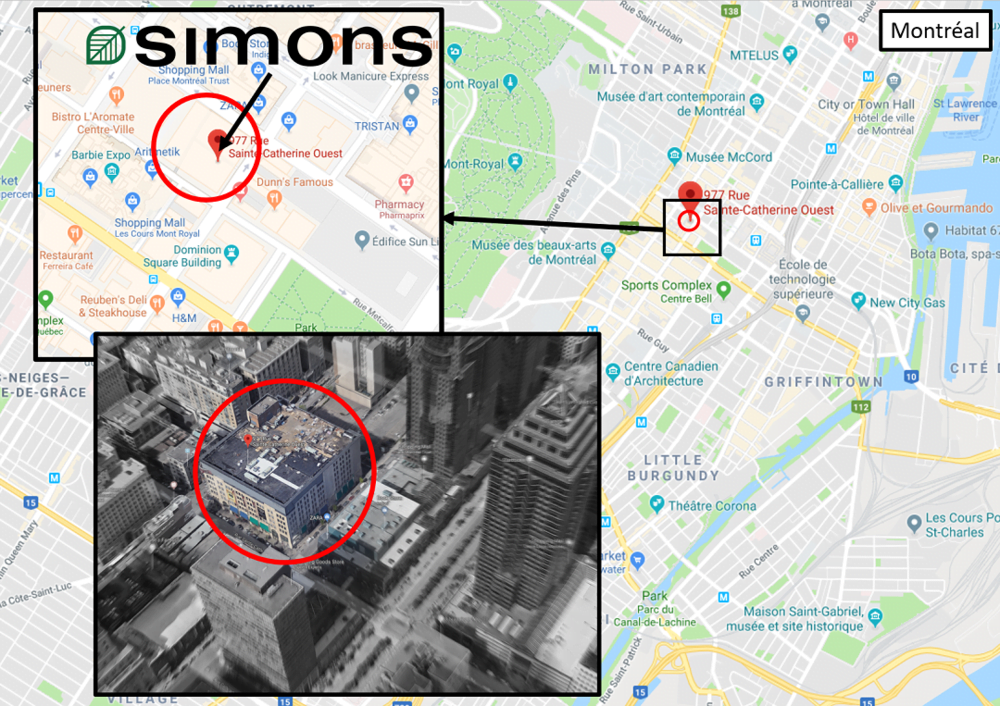
Simons is doing some exterior renovations to the Montreal building, however. Its Rue Mansfield entrance will be closed, while the store’s other entrances will see renovations that will include installing revolving doors. As well, there will be new lighting and an updated awning system that will repurpose some of the building’s original awning fixtures. Simons is located at 977 Ste-Catherine Street West in a 200,000 square foot building that once housed the city’s Simpson’s department store. Construction commenced in 1928 and finished in 1930, and the building was expanded in 1954. Simons occupies a portion of the mixed-use building which now also houses a cinema, boutiques and restaurants. 

This is an interesting time for Canadian retailing, and retailers and landlords are getting creative with their offerings. A retailer like Simons has the opportunity to also spin off other in-house labels into their own stores, which could be a creative solution to finding smaller retail space in locations where 80,000-120,000 square foot spaces are prohibitive. Simons is known for its expansive private-label offering as well as its edgy designer brands carried in its stores, which have been designed to be some of the most unique and attractive retail spaces in the country. 

‘UNTUCKit’ to Enter Canada this Fall with 1st Store

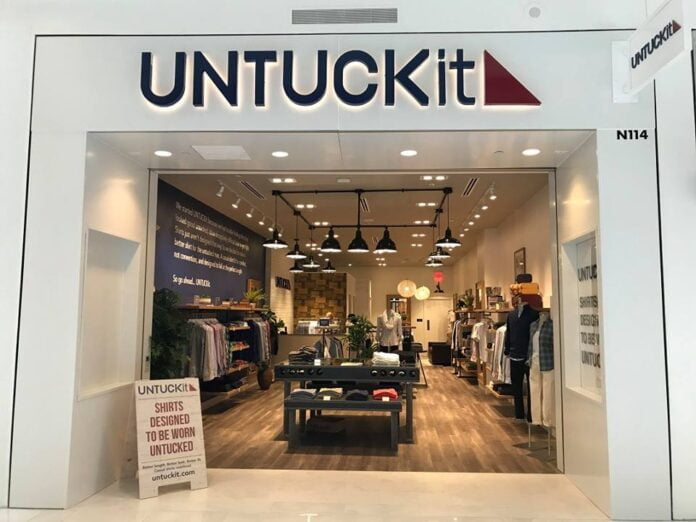
UNTUCKit at CF Sherway Gardens

New York City-based men’s casual brand UNTUCKit, known particularly for its shirts that are meant to be worn untucked, will open its first Canadian location this fall at Toronto’s CF Sherway Gardens. More locations are likely as the company continues to rapidly expand its base of standalone stores that operate as a direct-to-consumer model. 

The company is relatively new — it was founded in 2011 by Chris Riccobono, who later brought on Aaron Sanandres as a co-founder and CEO. “We’re excited to be opening our first international location this year in Toronto! Since we began opening physical retail locations across the U.S., moving into Canada has been a goal of ours. Customers in Canada have been shopping with us for years online, so we’re looking forward to offering them another way to experience UNTUCKit, this time up close and in-person,” said Mr. Riccobono in a quote for Retail Insider. 

The CF Sherway Gardens UNTUCKit location will span about 1,565 square feet, in a retail space located in the mall’s stunning expansion wing which debuted in 2015 and is anchored by Harry Rosen, Sporting Life and an elevated food court also featuring exceptional design. UNTUCKit replaces shoe retailer Duet, which was shuttered as part of parent company David’s Shoes strategy to expand the high-end footwear retailer’s operations nationally under one banner. Brokerage Oberfeld Snowcap represented UNTUCKit in the lease deal with landlord Cadillac Fairview, and Jessica Millett at Oberfeld Snowcap is also representing the retailer moving forward as part of its Canadian store expansion. 

Canada is UNTUCKit’s first international expansion market, and the company confirms that it began looking at retail spaces in the summer of 2017, both in malls as well as street front locations (we were aware of discussions to occupy 202 Queen Street West in Toronto, for example). Ultimately, CF Sherway Gardens won out in securing Canada’s first UNTUCKit location — the enclosed mall, located near the Mississauga border, boasts an exceptionally high productivity as well as an affluent base of shoppers for its stores that include the likes of Saks Fifth Avenue, Nordstrom, Tiffany & Co., De Beers and Tory Burch, among others. CF Sherway Gardens is also seeing other first-to-market retailers open in the centre — last month, mattress-in-a-box brand Casper opened its first permanent physical store in the shopping centre

UNTUCKit is said to have one of the fastest-growing retail brands in the United States and was founded as a casual brand with shirts that are designed specifically to be worn untucked. Since launching in 2011, UNTUCKit has grown to 13 product categories that range from T-shirts and polos to sports jackets and performance wear. The brand has also introduced lines for women and children, offering “perfectly contoured hemlines” and more than 50 tailored fit options for the whole family. 

The company has 35 stores in the United States and impressively, it plans to open 15 more stores in 2018, including its expansion into Canada where it is confirmed to be opening the one store. 

One of the reasons UNTUCKit says it chose Canada for an expansion is that the country already has plenty of online customers. Toronto, specifically, is one of UNTUCKit’s top e-commerce markets and so a store in the city just made sense. When asked if more Canadian stores would follow, the company says that it plans to open more but that its first priority will be to ensure that it gets its first Canadian location “right” and up-and-running later this year. 

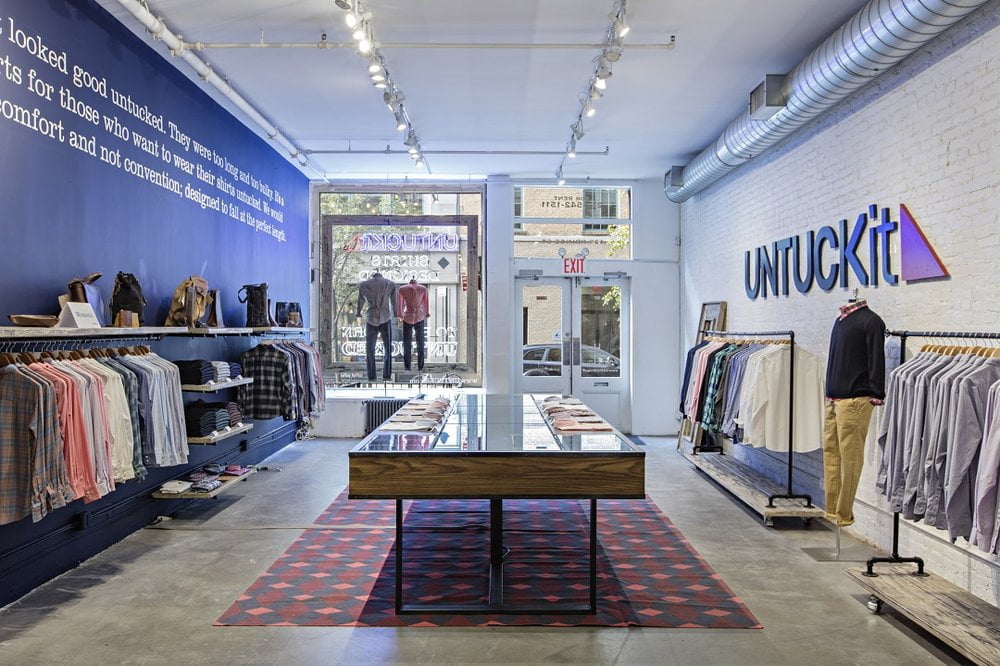
UNTUCKit confirms that the Toronto store will have the same look and feel as the company’s American stores, which feature “a blend of comfort and class” with deep blue walls and casual lounge area. UNTUCKit’s CF Sherway unit sill carries the brand’s full assortment of menswear, it says. Future locations are expanded to generally span between 1,500 square feet and 2,000 square feet, similar to that of its US stores.  

Canadians are going Trump-free — until it becomes too expensive

U.S. PRESIDENT DONALD TRUMP LEFT THE RECENT G7 SUMMIT IN A FURY ABOUT JUSTIN TRUDEAU AND VOWING AN ESCALATED TRADE WAR. CANADIANS ARE RESPONDING BY GOING TRUMP-FREE AT THE GROCERY STORES – BUT IT WILL LIKELY BE SHORT-LIVED. (AP PHOTO/EVAN VUCCI)

In a nutshell, here is what happened at the G7 summit: Justin Trudeau played nice with Donald Trump, Trump tore Trudeau apart on social media, Trudeau played nice again. While Trudeau showed very Canadian diplomacy, poise and resilience, the Canadian public seems to be taking another approach.

Everywhere on social media, Canadians are encouraging one another to go “Trump-free” — that is, to shop for groceries without buying a single American product.

Even restaurants are jumping on the bandwagon by serving “Trump-free” dishes. These are interesting reactions in the face of Washington’s somewhat contradictory foreign trade policies.

The “Buy Canadian” campaign targeting food products is nothing new. We have shown our solidarity in the grocery store before. Canadians tend to rally to support specific sectors when they’re faced with adversity.

In 2003, during the mad cow disease crisis in which the cattle industry took a $7 billion hit, Canadians showed their love for Canadian beef, so much so that Canada became the first country in the world to see its domestic demand for beef go up after its first native mad cow case.

But this support was short-lived compared to the crisis itself, which lasted for more than two years. In this case, retail sales for beef in Canada remained high for about the first nine months, and then decreased steadily afterwards.

That’s because consumers have busy lives, fixed habits and, most importantly, specific budgets. Once the media had moved onto the next crisis, most people had already forgotten there had ever been a mad cow crisis in the first place.

Mad cow did lasting damage

Many Canadian farmers ended up losing their farms because of mad cow. But the public tends to react to things that are front of mind, and that affect them directly.

Trade disputes are notorious for their capacity to damage economies, affecting everyone involved. We trade for a reason. Some nations can produce certain goods at a lower price than others.

A nation’s competitive advantage can both develop its own economy and serve other economies in need of innovative products they can’t produce themselves for one reason or another.

With food, however, innovation is not nearly as big an issue as food security. Food systems operate with the premise of serving a budget-stretched consumer. Studies have shown we are bargain-hunters, whether we realize it or not.

Food is temporary, and as such, cannot really help consumers impress a certain social class, perceptually speaking. Unlike durable products, consumers cannot show off their new jam, strawberries or freshly purchased chicken.

This is the nature of “cupboard economics.” People can visit a beautiful home but never see what’s kept inside the cupboards. At the restaurant, though, it’s different. Here, the “Buy Canadian” campaign is more fitting.

Buy Canadian as Canada Day approaches?

Patriotism ranks second to price. This is the ideal time of year to use patriotism to justify some of our retail purchases. As Canada Day approaches, more consumers will feel the urge to buy Canadian, and why not?

But here again, consumers are fickle and will opt for the product that offers the best quality for the lowest price. In other words, they will most often choose the lowest-priced item, regardless of country of origin.

But here’s another reality while consumers are on their quest to find Canadian products. The highly integrated nature of the U.S. and Canadian economies plays out on our grocery store shelves.

Many American food products have at least one Canadian ingredient, and vice versa. Defining what a Canadian product is can be tricky.

It’s hard to go Trump-free with processed foods

In the produce section, for example, it’s easy to choose Canadian items over American ones, since fruits and vegetables are clearly labelled as to country-of-origin.

It’s much less obvious with processed goods. Finding a maple leaf on the package is only half the battle. Many ingredients in packaged foods come from elsewhere, since current regulations only require Canadian manufactured food products to undergo the last stage of processing in Canada.

In short, if we want to be assured of buying Canadian, we should go out to eat Canadian more often, or buy fresh products in the grocery store.

Kudos to those Canadians willing to do so. However, if our trade war with the U.S. escalates, not only will we not have a choice in buying Canadian, it will also cost us a lot more to feed ourselves.

*This article was originally published on The Conversation. Read the original article

Laline Announces Canadian Entry with 7 Confirmed Store Locations

PHOTO: LALINE

International Bath/Body/Lifestyle retailer Laline has announced that it plans on entering Canada with multiple locations this year, beginning with a unit that is opening this morning that we previously reported on at CF Sherway Gardens in Toronto. The company has now revealed that it will open six other stores over the next year, all of which will be in Southern Ontario, prior to expanding into new markets in other parts of Canada. 

“Our new stores in Canada will be tailored after Laline’s unique design concept that offers a complete in-store pampering experience for customers,” said Lital Frankel, Laline’s VP of Marketing. “From our airy, open-concept and dreamy store design – completely outfitted with a bathtub for the complete customer ambiance – to our unique product range with a variety of fragrances, textures and ingredients, the Canadian consumers are in for a new and exciting experience.”

(PHOTO: MAGDA BIERNAT

The CF Sherway Gardens store spans about 750 square feet and is located in the mall’s new ’Nordstrom Wing’ which houses several smaller retailers such as Loding and L’Intervalle shoes, as well as larger flagship locations for Zara and Nordstrom

Laline is taking its Canadian expansion seriously. The company confirms that it has also secured leases for what appears to be six other stores in Ontario over the next few months, spread out across Southern Ontario in the cities of Toronto, Mississauga, Hamilton, Markham, Kitchener and London. These include the following locations: 

-Toronto: Yorkdale Shopping Centre

-Mississauga: Square One shopping centre,

-Markham: CF Markville

-Hamilton: CF Limeridge

-Kitchener: CF Fairview Park, and 

-London: CF Masonville

These locations indicate partnerships with landlords Cadillac Fairview (all malls marked with ‘CF’) as well as Oxford Properties for its Yorkdale and Square One locations. All seven malls are located at premium centres, with almost all of them ranking among Canada’s most productive shopping centres according to Retail Council of Canada’s Shopping Centre Study

Laline’s strategy of opening stores in various parts of Southern Ontario may be an indication that this is the beginning of a much bigger expansion that could see stores open in major as well as sub-markets Canada-wide. Often when brands enter Canada, they’ll typically choose to open one or more stores in a large city centre such as Toronto and Vancouver. Laline, which has chosen markets such as Kitchener, Hamilton and London early on in its expansion, is a refreshing deviation that could see the brand gain awareness in smaller markets. 

In a previous comment to Retail Insider, Laline stated, “As the Canadian market is one of our main strategic markets we expect to open dozens of branches in the next few years,” and when asked about its growth plans, Laline confirmed that its “main focus for 2018-2019 is the Ontario region”. 

The company has since confirmed that after it has developed a strong presence and loyal customer base in Ontario, Laline will seek to move into other Canadian markets such as Montreal and Vancouver. 

Laline was founded in 1999 by Revital Levi and Merav Cohen in Tel Aviv, and now boasts more than 100 stores in Israel, as well as international locations in Japan, Spain and in the United States in San Francisco and Hawaii. Laline is a division of the FOX Group and according to the company, Laline targets women, men, babies and teens, and its Canadian stores will have some collections tailored to the local market, with price-points being lower than luxury brands in order to become a ‘one-stop shop’ for beauty products. 

As part of its entry into Canada, Laline is promoting its fragrances as part of a ‘scent series’. Each scent series is designed to “benefit the body and enhance your well-being”, with several branded products within those ranges that include body care items, bath products, fragrances, skincare, gift sets and textile products as well as various bath sponges, pumices and candles. Laline also carries skin peeling products as well as nail polish, makeup and related accessories. The vast scent series collection is referred to as “The World of Scent” and consists of more than 20 products per the 10 signature scents and addresses several wellness benefits including stress relief, relaxation, nourishment and happiness.

In a previous statement, Laline told Retail Insider that, “Our new stores in Canada will be in Laline’s unique design concept that offers a complete pampering experience. From our white and dreamy store design to our unique products with a variety of fragrances, textures and ingredients, the Canadian consumers are in for a new and exciting experience”. 

How Shoplifters Justify Theft at Self-Service Checkouts

Self checkout in a store.

By Mario Toneguzzi

The proliferation of self checkout lanes in retail stores continues but companies need to consider some important things when implementing these systems, cautions a Canadian retail security expert.


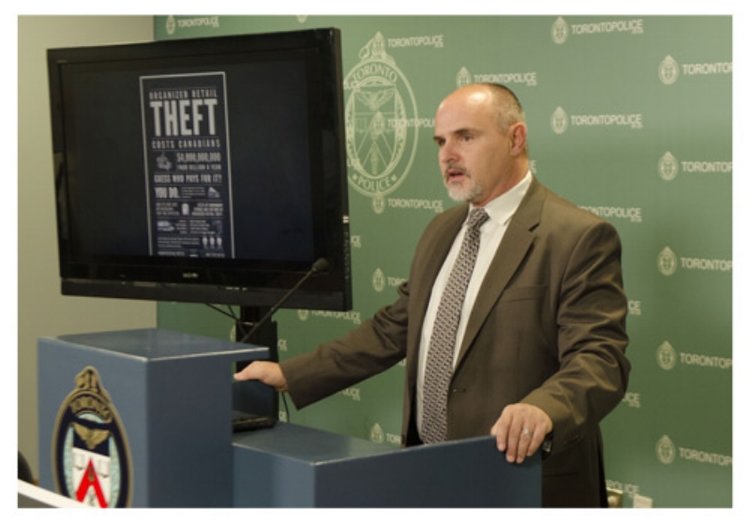
Stephen O'KeefeStephen O'Keefe

Stephen O’Keefe

And one of the major considerations is theft, said Stephen O’Keefe, a Toronto-based veteran of the retail industry.

He recommends that retailers do their math to inform a decision about self checkout registers. And that math would look at things like additional sales projections, the cost to implement such a system, the wage reduction benefit but also the overall risk of loss.

“If at the end of the day that math shows an ROI (return on investment), great. If it shows a bottom-line impact, then the retailer needs to decide if they will be the ones to lose market share if they do not put in self checkouts,” said O’Keefe, President of Bottom Line Matters, a web-based loss prevention and risk management solutions company for small to mid-sized retailers.

O’Keefe has had many years of experience with some of the giant retailers in Canada and globally.


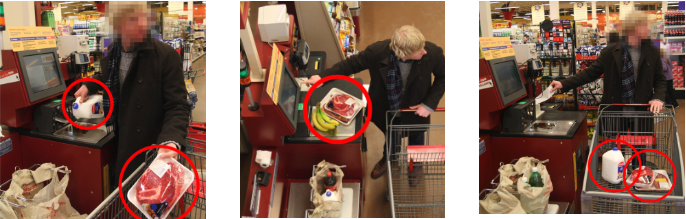
Scanning less expensive item and putting expensive item in cart. Photo:  PointOfSale.comScanning less expensive item and putting expensive item in cart. Photo:  PointOfSale.com

Scanning less expensive item and putting expensive item in cart. Photo: PointOfSale.com

“There are several things to consider when implementing a self checkout system. The sales must offset the anticipated increase in shrink just to break even,” he said.

“The retailer must also consider the advantage of synergy. One supervising chair can accommodate four to six transactions at a time. This must be factored in as well, and for the most part is the primary reason why a retailer implements the system, cost savings in wages. The unfortunate aspect of shrink is that the cost is not quantified until the retailer conducts an inventory, and then it is not an exact science to say what the contributing factor was.”

O’Keefe was Walmart Canada’s VP Loss Prevention & Risk Management for 15 years. He currently advises on loss prevention affecting shrinkage and profitability for retailers and has more than 30 years experience in retail theft prevention with some of Canada’s largest retailers.

He is considered a leading authority on loss prevention, security, risk management, health and safety and process improvement.


Before establishing his own consultancy firm, O’Keefe held a variety of loss prevention management positions with Sears Canada, Zellers, The Hudson’s Bay Company and Walmart Canada.

In 2016, he was awarded the Retail Council of Canada’s Loss Prevention Lifetime Achievement Award.

“The interesting part of self checkout is that they are used primarily in retail chains that have low margins. Low margin retailers cannot afford the additional shrinkage,” said O’Keefe.

“In retail chains with high margin, the system is not typically used as the customer interaction demands one-on-one attention, not one with a machine.”


Stephen-Okeefe-2a-500.jpgStephen-Okeefe-2a-500.jpg

O’Keefe said part of the problem is that there has not been a study that does any type of deep dive into the issue.

“It is an afterthought when a retailer discovers a high shrink and conducts a review to determine the cause. There is a race to the finish line of innovation. A retailer is reluctant to raise their hand to say there is an issue for fear of being outpaced by the competition.”

O’Keefe said the first generation of self checkouts were very problematic because thieves would be able to put more expensive merchandise within other merchandise that was being swiped at the counter.

The second generation of self checkouts had scales but O’Keefe said because of the amount of items that are in a large retailer’s inventory – thousands of items – not all products can be programmed into the system.

Some issues for first and second generation self checkouts also included the lack of detection for counterfeit bills.

“So people were actually using counterfeit cash and throwing them in there in order to launder their money. So they would put a $100 bill in for a chocolate bar and then they would get all of their change,” said O’Keefe.

Today, the problem is when only one person supervises a number of cash registers they can easily get distracted.


Capture.pngCapture.png

“The thing that the retailer needs to be cautious of is that they’re not looking at today’s expenses which are the salary dollars associated with processing the transaction versus the shrink dollars which are not going to hit the P&O (profit and overhead) for at least 12 months in some cases,” he said.

“So your shrink is not billed to your P&O the day you lose the merchandise. It’s only billed to the P&O the day you count your inventory and realize there’s something missing, which could be a year later. It could be deceiving.”

So his advice to retailers is simple. Do a full analysis and return on investment research. Take into consideration some of the deferred expenses.

“And they’re not living the high life today and suffering tomorrow,” said O’Keefe.

“There’s so many of them in place right now. You don’t want to necessarily discourage people and say the sky is falling but there’s been so many studies that suggest that shrink and risk go up. If you have more of the risk appetite, if you’re prepared to accept the fact that your shrink can go up a little bit because of that then you better make sure that your sales go up a lot more to offset it or at least to take market share away from a competitor. There’s got to be a strategic reason why you’re going to do it and not just I’m keeping up with the Joneses.”


Mario Toneguzzi, based in Calgary has 37 years of experience as a daily newspaper writer, columnist and editor. He worked for 35 years at the Calgary Herald covering sports, crime, politics, health, city and breaking news, and business. For 12 years as a business writer, his main beats were commercial and residential real estate, retail, small business and general economic news. He nows works on his own as a freelance writer and consultant in communications and media relations/training. Email: mdtoneguzzi@gmail.com