Bill Baker, founder and president of the company, says the store will offer 100 per cent natural, clinically-proven products but also act as a community hub and gathering place to support customers looking to achieve a holistic lifestyle.
“Queen Street West according to Vogue magazine is the second coolest street on the planet,” says Baker. “They call it the second coolest street on the planet because there’s so much exciting stuff happening down there . . . There’s a real mix of retailers here.
“They really thrive because it’s such an eclectic mix and a really easily shopable street. And there tends to be a lot of really cool retailers down there. So it’s become a destination for hipsters and for people who are looking for the latest in what’s happening in retail. It seems like a lot of international retailers when they come into Canada they go to one of a few places. Robson Street in Vancouver. Yorkdale Shopping Centre in Toronto. And Queen Street West is another popular location.”
Image: Consonant Skincare
Baker says the plan is to open the new store in mid-May with a grand opening June 1 at 819 Queen Street West.
The new store is 1,750 square feet and the company also plans to move its office to that location as well.
It will be the company’s third bricks and mortar location. The current flagship, which also houses its office, is at Yonge Street and Eglinton Avenue (2479 Yonge Street). A second store is in the city’s financial district at the PATH level of the Richmond Adelaide Centre.
The Yonge Street store, its current flagship, was opened in 2011.
“There’s a real movement that’s growing quickly now for people looking for health-care products . . . We have a track record. We’re already well-established. We’re running to keep up with business. This is going to be a new approach to retail for us and we absolutely look forward to rolling this out,” says Baker.
The Queen Street location will offer ongoing programming with industry experts and community leaders.
RICHMOND ADELAIDE CENTRE LOCATION
Baker says consumers these days are looking for experiences.
“For us, we’re going to adopt what I’ll call the Apple model. So when you walk into the store the first area that you walk into there will be no product for sale. We’ll just have a lot of display tables out,” he says. “And we’ll have our products out on the display tables for people to test and play with. Little tester containers they can take home with them.
“It will also be a community hub. We have a really loyal following of customers who tend to be living what I would call a wellness lifestyle. We really think of ourselves as a wellness company not necessarily just a skin care company or a cosmetics company. Because our products are 100 per cent natural, they’re also healthy.”
Baker says the new store will have a space where customers can come to for information on not just skin products but information on health in general. For example, information on nutrition for healthy skin.
“Consonant promises to help our customers achieve their best skin, but we recognize great skin is about more than just great skin care,” says Baker. “Our new Queen Street West experience store will be a community hub for healthy living and wellness, in addition to a destination for our clinically-proven, award-winning skin care products. We can’t wait to reveal our lineup of seminars, panel discussions, workshops and workouts.”
In addition of customers looking for an experience, he says they also want products or advice that is right for them.
“We developed a program called the Regimen Coach program. We don’t call the people who work in our stores associates, or sales reps, or customer service reps. They’re Regimen Coaches and their job is to work with our customers to help them achieve their best skin by coaching them on all aspects of their lifestyle and their regimen so that they can achieve that best skin by making healthier choices whether that’s nutrition, supplementation, lifestyle changes, and of course skin care.
“To back that up we are working with a panel of experts like a naturopathic doctor, registered esthetician, dietitian. They’ll be supporting us behind the scenes so we can give really good, meaningful advice to our customers that really is customized for them. And that Regimen Coach experience will be front and centre at the new store but it’s also something that we are going to start promoting to our other channels also. So you’ll be able to get Regimen Coach advice over the phone, online and eventually by text.”
Reports of a retail apocalypse have been prevalent in the news lately, especially after major department store chain, Sears Canada, announced its closure. However, it is not all doom and gloom—in fact, retail sales figures were up for 2017, revealing significant opportunities for retailers ready and willing to reinvent the in-store experience.
In order for retailers to drive steady sales growth and keep pace with their competition, let’s have a look at five strategies to adopt now:
MAGNUM POP-UP. SUMMER OF 2013, PHOTO: MAGNUM
Create experiences
Millennials will be the biggest demographic group within a few years, and for them it is all about experience. Entertainment-focused shopping events that grab their attention, enable conversations, encourage positive brand associations, and generate buzz are shifting the way consumers make purchasing decisions. Mobile associates with tablets is just the beginning: think live music events, in-store sports arenas, virtual dressing rooms.
Pop-ups are a big trend, showing up inside stores, shopping centres, even on street fronts. In fact, David Ian Gray, retail consultant and head of Vancouver-based think tank DIG360, predicts that 2018 will be “the year of the pop-up” in Canada.
Whether for deepening consumer relationships or testing new markets, pop-ups are no longer designed only for point-of-sales. Instead, they are deployed to engaged with customers in a memorable way. According to EventTrack, the largest experiential research report, 98 per cent of consumers feel more inclined to purchase after attending an experiential activation. Nordstrom is hosting pop-ups, such as Louis Vuitton and Gwyneth Paltrow’s GOOP.
GOOP POP-UP AT NORDSTROM AT CF TORONTO EATON CENTRE IN THE SPRING OF 2017
Technology offers other options too like digital large-format print that can transform spaces quickly and inexpensively. With Latex prints, retailers can create custom wall art that changes with the season or promotion for an evergreen experience.
Build community
Image: Rec Room
Retail is evolving to be more than a space for consumers to make a purchase. Today’s customers are after a sense of community, and they look to brands they trust to provide them. Consider Indigo Books & Music. While many traditional bookstores have closed, Indigo had double-digit growth in its general merchandise business. This “cultural department store” offers gifts, baby and lifestyle items and provides both adults and children with in-store engagement options, such as a tech area, play area, and coffee bar. In broader terms, leading malls are planning to open VIP Cineplex cinemas and The Rec Room this year, transforming malls into community gathering places where people spend time together, enjoy entertainment, and spend money.
Image: Rec Room
Go omni
Ecommerce remains below 10 per cent of all Canadian retail purchases and many retailers have been afraid to leverage ecommerce out of fear that they won’t be able to compete with established online sellers. It can be facilitated through cloud-based point-of-sale systems. The goal is an omnichannel approach that meets customers in a personalized and relevant way at each step of their journey.
Over the most recent holiday season, more shoppers shopped both online and in-store, versus online only or in-store only. These omnichannel shoppers also spent more dollars than online-only or in-store only shoppers. This hybrid model not only gives customers the ability to shop how, when and where they want, but also offers retailers new insights via data gathering.
Today’s in-store POS technology is equipped to deliver the performance and versatility retailers look for and provides an experience-focused shopping environment their customers increasingly expect. From traditional to mobile, retailers can transform the shopping experience with technology solutions that help empower employees and engage customers.
Investing in the POS system that works best for their business – whether that be supplementing their traditional point-of-sale system, or implementing a sleek, modern multi-function or mobile system – demonstrates commitment to providing solutions that meet growing customer needs for an engaging in-store experience. The result is new and retuning customers.
Know your customer
Part of the omnichannel approach is deploying customer data to continue the engagement from online to mobile to store, rather than starting over at each step. Connecting CRM tools to capture and seamlessly integrate data is the goal.
Nearly 40 per cent of Canadian consumers report that peer reviews and feedback on social media influences their shopping behavior, a number that grows upwards of 55 per cent for those 18–24 years of age. This further emphasizes the importance of retailers building strategies and tactics for social media to solicit feedback and engage in innovative ways to keep pace with competitors.
Make it easy and safe
Brands live on websites, so retailers can’t afford to alienate consumers with complicated or slow-going sites. Digital performance management company SOASTA found that optimal load time to achieve peak conversion and revenue ranged from 1.8 to 2.7 seconds; more than half of mobile site visitors will leave a page that fails to load in three seconds.
Sites must not only authentically reflect the brand, but also elegantly adapt to different devices, browsers and networks to ensure a consistent, easy and intuitive brand-reflective experience. This ease-of-use must be preserved while ensuring the strictest security, with massive breaches making headlines regularly. With mobile shopping on the rise—30 per cent of Millennials say phones will become their primary purchase tool—designing secure friendly, from-anywhere purchasing is critical.
The retail apocalypse might be better named the retail metamorphosis. Retailers ready to reinvent how they understand their business and customers will be primed to reap substantial rewards.
Mary Ann Yule is the President & CEO of HP Canada Co. As the leader of HP Canada Co., Mary Ann Yule’s central focus is delivering innovative technology that makes life better for all consumers, businesses and public sector organizations. In her role, she is responsible for all aspects of HP Inc.’s business and operations in Canada, including its market leading portfolio of printers, personal computers, commercial 3D printing technology, workstations, solutions and services.
U.S.-based candy store chain Dylan’s Candy Bar has officially made its debut in the Canadian market, with a new location at Toronto’s Pearson Airport, a distribution agreement with Hudson’s Bay Co., and plenty more plans for expansion.
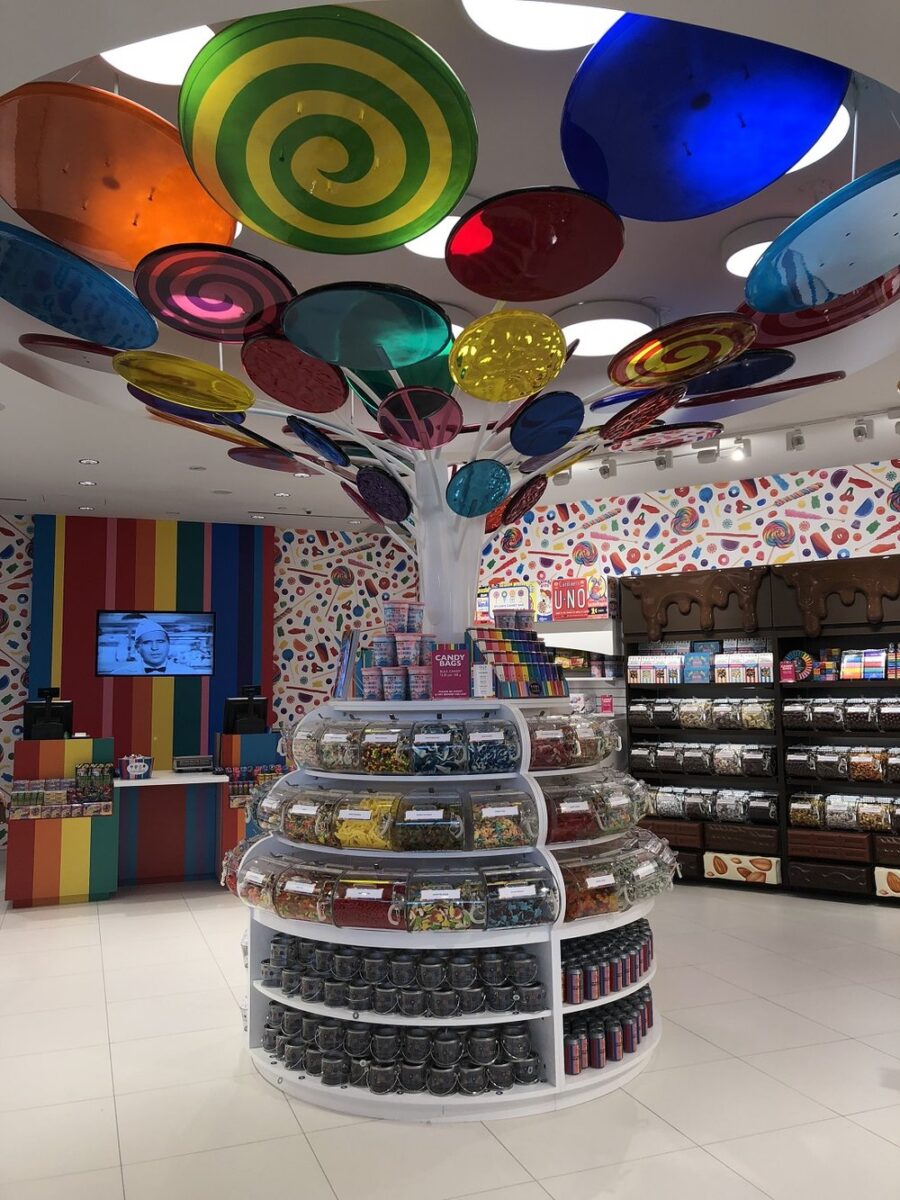
Dylan’s Candy Bar, which launched in 2001 with a store in New York City, aims to provide shoppers with an experience equivalent to a modern-day version of Willy Wonka’s Chocolate Factory.
“We are about creating an experience. It’s not just about the candy – it’s about everything that goes with it,” says Tushar Adya, president and COO of Dylan’s Candy Bar. “When you come into the store, it’s about the entire experience – how the product is merchandised, the smells, the look, the feel, the colour, the environment.”
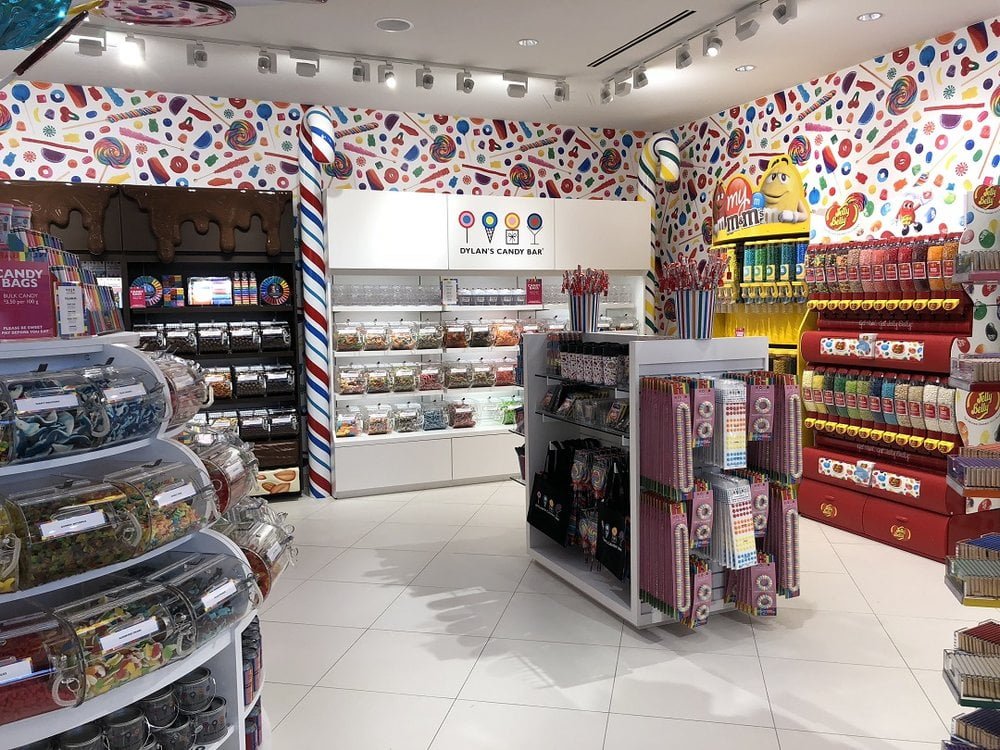
Dylan’s Candy Bar carries a vast selection of gummies, chocolates, jelly beans, lollipops and much more. The products include Dylan’s own private label items, along with various American nostalgic favorites and imported specialty sweets.
The retailer also carries a range of gifts and lifestyle items, such as toys and stuffed animals, accessories, apparel and stationary.
Although the enormous volume of sweets – on its own – creates a vibrant rainbow of colours, the stores present an even bolder and brighter backdrop.
Each Dylan’s store boasts a smorgasbord of colourful design features, such as bright coloured lights, candy-themed wallpaper, jumbo lollipop trees, candy cane columns and dripping chocolate shelves.
“It’s really ‘retail-tainment’,” says Adya.
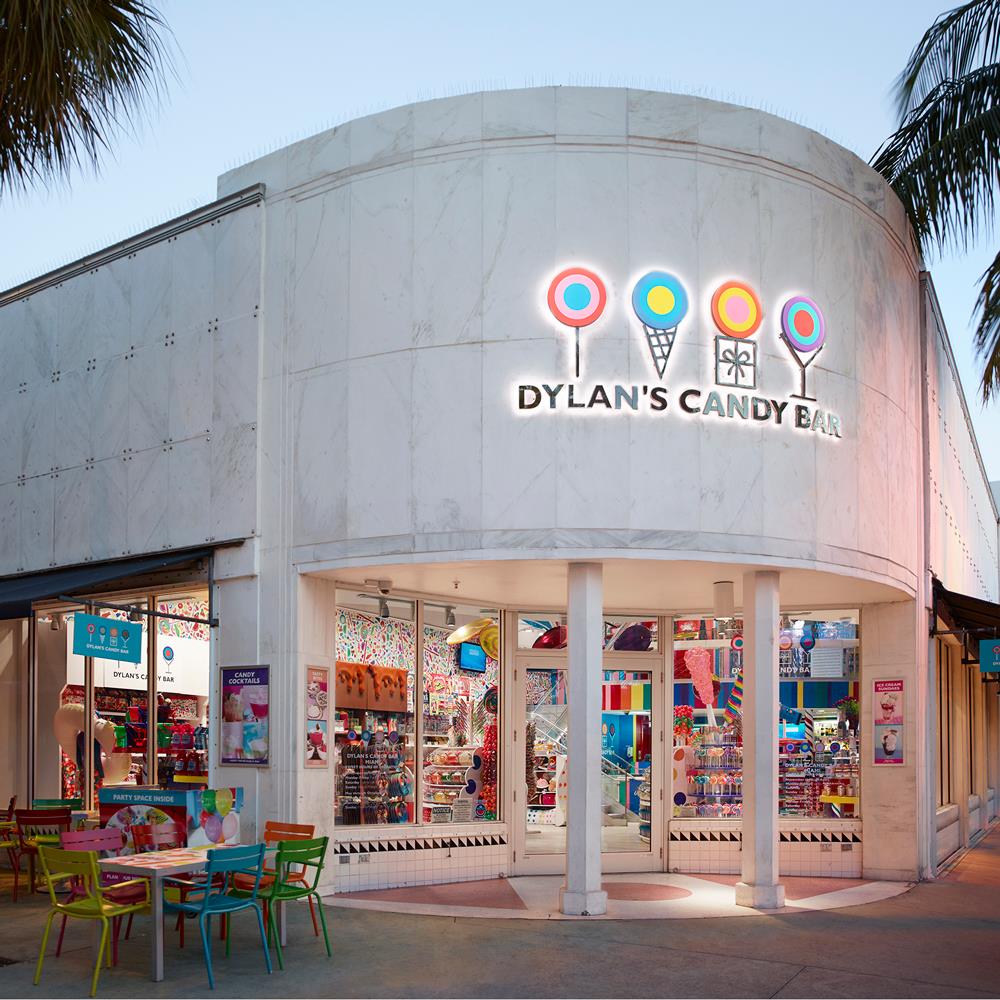
Dylan’s operates 27 stores, including the new Toronto location, and an additional three locations are set to open soon. Its stores are located primarily in major metropolitan cities such as Chicago, L.A. and Miami, and touristy hotspots such as Colorado and the Bahamas.
Chicago store
NYC Flagship
Miami Store
In addition to retail merchandise, some locations feature cafés and bars that serve a variety of food, drinks and desserts.
The company has long had plans to expand into the Canadian market, according to Adya. “Canada has always been on our radar,” he says. “It’s a great market, and Toronto is a great city.”
Dylan’s operates several stores in airports throughout the U.S., and has had success with those locations. So, when the opportunity emerged at Pearson, Adya says it was a perfect fit.
“A lot of airports have a lot of traffic, and candy makes for a nice surprise,” he says. “It’s a captive audience, and I think many travellers enjoy the experience given how much time they spend in airports.”
The new store, which is located in Pearson’s Terminal 1, is 1,100 square feet in size, and boasts the same colourful and attention-grabbing design features as Dylan’s other stores.
In the months to come, the retailer plans to explore possible locations for a Canadian flagship store in an urban area.
In the meantime, Dylan’s has established a distribution agreement with Hudson’s Bay, which will see certain merchandise available in 81 Bay stores across Canada. The company also is partnering with Holt Renfrew to further expand its Canadian distribution in the months ahead.
Partnerships with department stores in the U.S. have been successful for Dylan’s in the past, Adya notes.
“For our premium position product, we generally do well in department stores,” he says. “We’ve had department store distribution in the U.S. for a long period of time, and so going into Canada, that was kind of an obvious choice for us.”
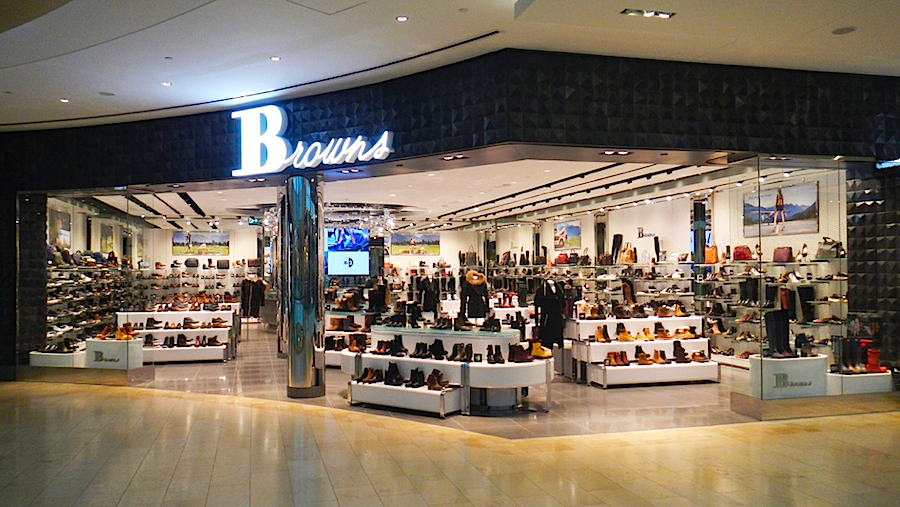
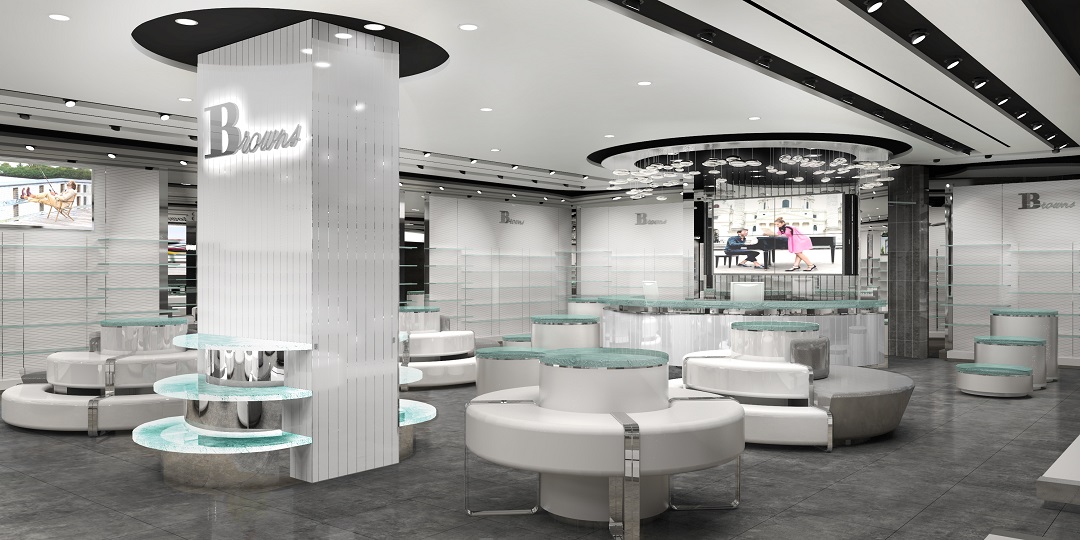
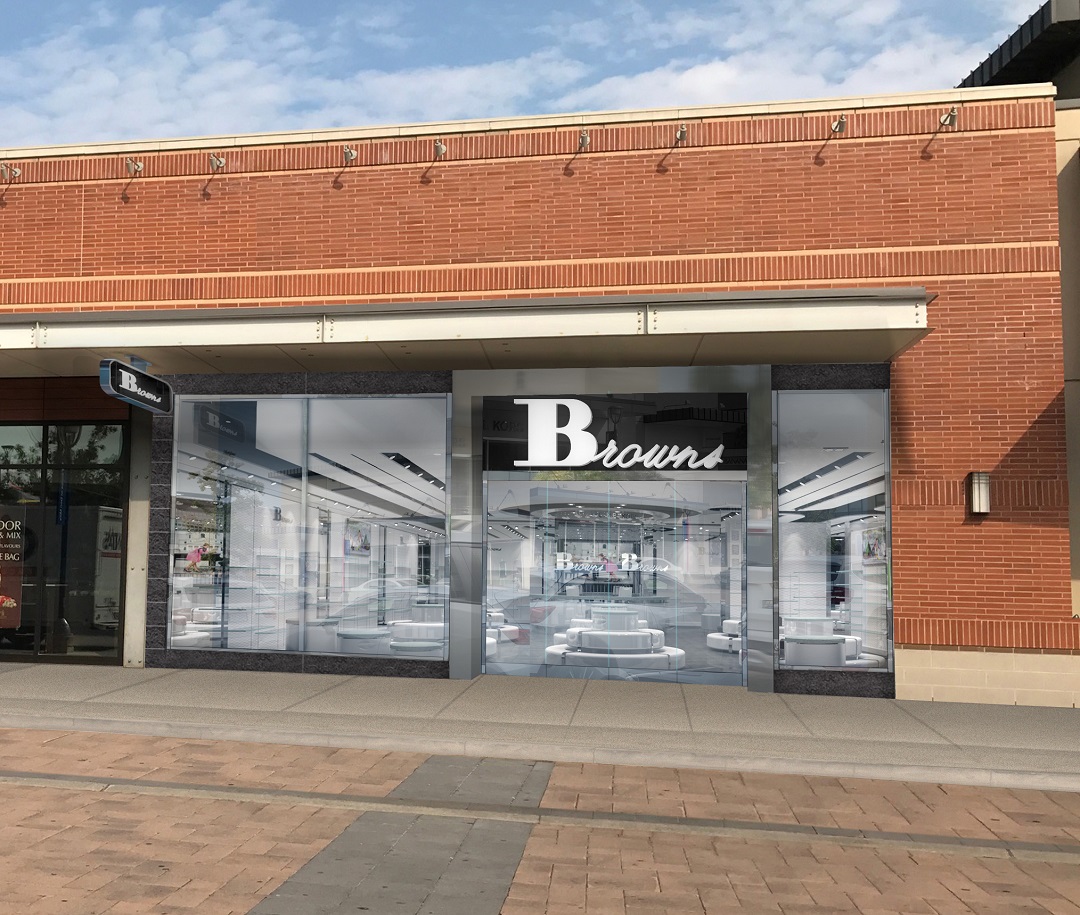
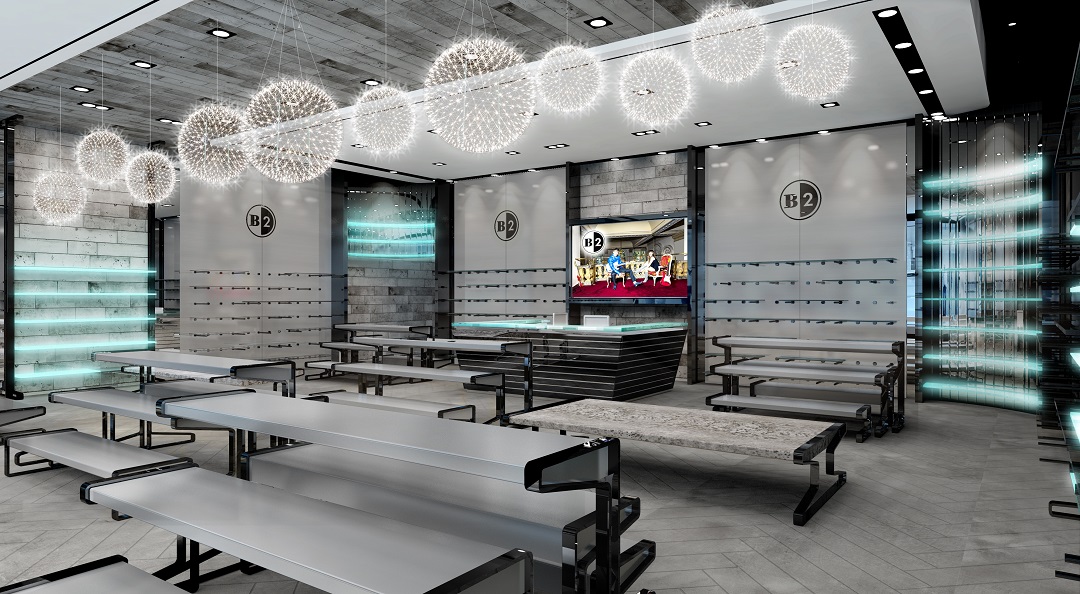
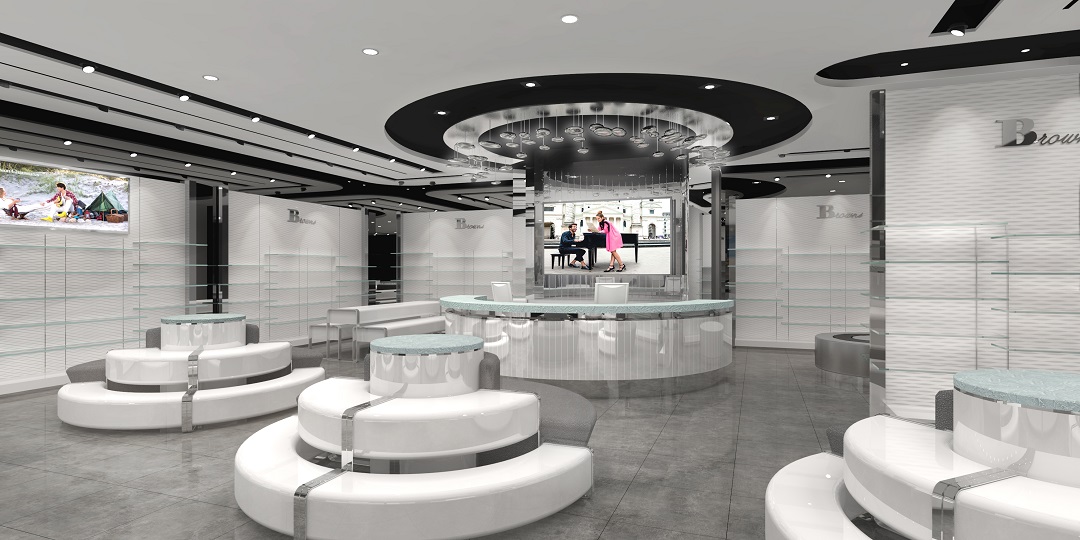
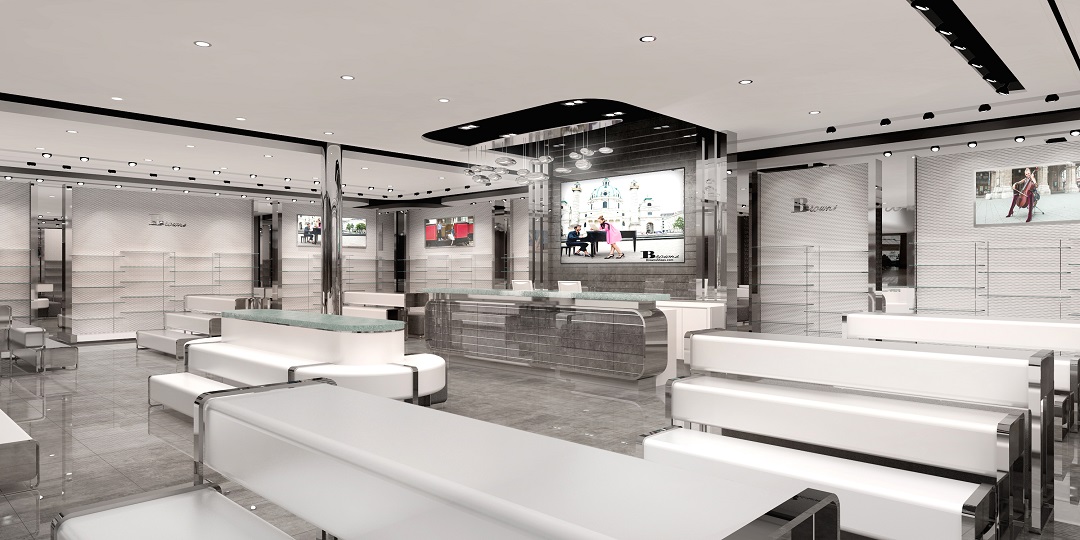
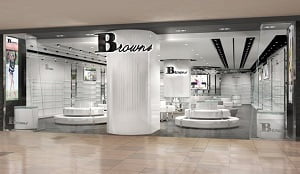
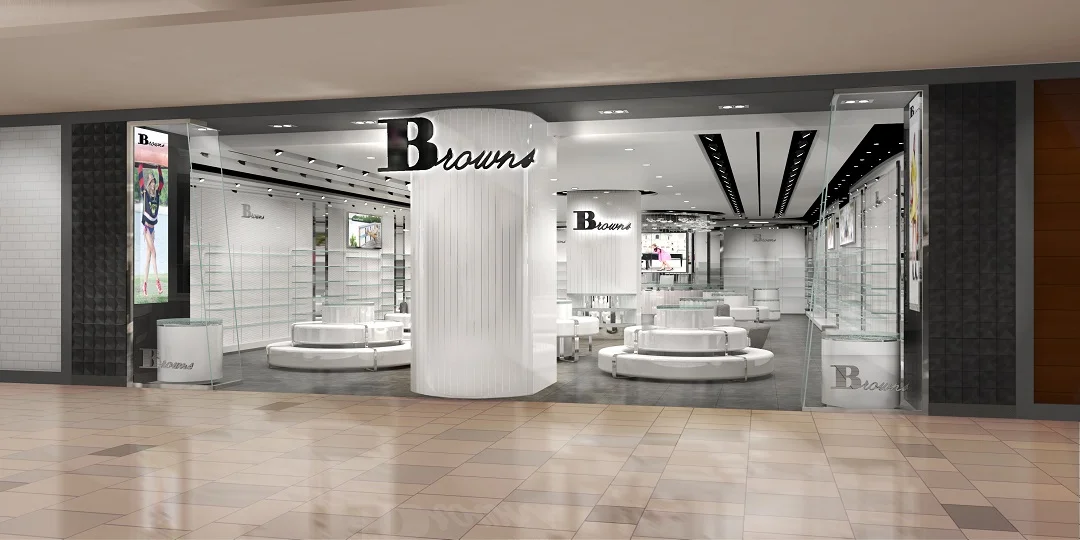
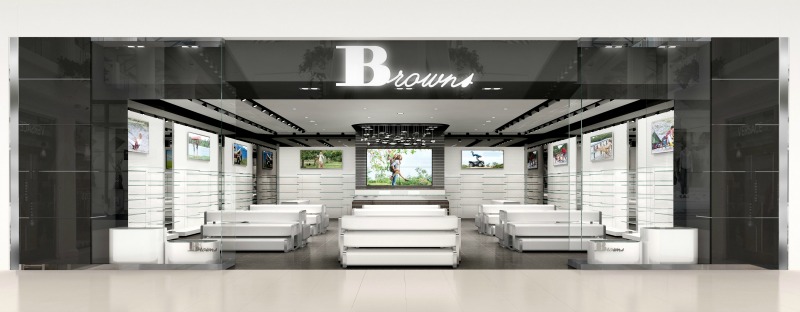
Montreal-based multi-brand premium footwear retailer Browns Shoes will open five stores over the next several months, as it continues to see same store sales growth. At a time when some retailers are closing stores, Browns Shoes is seeing success that it attributes to enhanced customer experience creating demand for new and expanded locations under both the Browns and B2 banners.
Part of Browns’ success is due in a large part to the company’s “obsession with customer experience”, according to Director of Retail Experience, Eric Ouaknine. “We try to look at everything we do from the customer’s perspective” explains Ouaknine. That includes exceptional customer service — Browns has invested a considerable amount in training to ensure that customers receive the best experience possible. Browns also recently deployed endless aisle stations in its stores allowing customers to shop Browns’ full collection — and if a pair isn’t available in store in the customer’s size, Browns will ship them to the customer’s home free of charge.
Browns CF Pacific Centre
B2 CF Sherway Gardens
Browns CF Shops at Don Mills
The store expansions will take place in Quebec, Ontario and British Columbia. The company’s store at Quartier DIX30 in suburban Montreal is relocating to a 5,265 square foot space in the complex, with the store expected to be open in May. The B2 location at Place Laurier in suburban Quebec City will be converted to the Browns banner, and as a result will expand to 4,232 square feet when it is unveiled towards the end of June.
In Ontario, Browns will open a new 3,293 square foot store at CF Shops at Don Mills in Toronto in early July. As well, at CF Sherway Gardens, Browns will open a 3,849 square foot B2 location in the mall’s Nordstrom-anchored wing in early May of this year.
At CF Pacific Centre in Vancouver, Browns will relocate its current store on the mall’s West Georgia Street level, across from Harry Rosen, to a larger 4,536 square foot space on the mall’s busy lower level and will be unveiled in early May.
B2 Cf Sherway Gardens
Browns Laurier Quebec
Browns CF Shops at Don Mills
Browns Laurier Quebec
In addition, in the fall of 2017, Browns opened stores at Hillcrest Mall in Richmond Hill, Ontario and at Les Promenades Gatineau in Quebec, near Ottawa. In 2017 prior to that, Browns opened locations in Calgary, Oshawa, and Winnipeg. It’s an impressive expansion that has seen Browns now operate over 65 stores from coast to coast under the company’s Browns, B2 and Browns Outlet banners.
Browns Shoes is a family-owned business, founded in 1940 in Montreal by Benjamin Brownstein. The company is now third-generation run. Stores feature designer brands as well as exclusive brands including Mimosa, Browns Couture, The Wishbone Collection, Luca Del Forte, Intensi and B2. Browns has plans to open and expand a number of additional stores between now and the year 2020. The retailer is represented in Canada by brokerage Oberfeld Snowcap.
In early 2017, Springbot, a data-driven marketing platform for eCommerce merchants, recruited a board of advisors who would focus on the development of Springbot Exchange and gathered an impressive list of executives with experience from Epsilon, LiveRamp, Ogilvy, and Adobe.
As the first data cooperative for eCommerce SMBs, Springbot Exchange provides retailers access to data and resources typically only available to large retailers. The first available feature is Audience Expander, which helps marketer’s access new audiences and expands the reach of their existing marketing efforts.
Audience Expander algorithmically matches a retailer’s anonymized customer data to identify look-alike prospects in Springbot Exchange. Automated email marketing campaigns are then sent to the consumers most likely to engage with the retailer’s brand. Privacy and security are enabled by managing the retailer’s access to the look-alike audience information. Retailers are only provided the prospect’s details when the consumer engages with the campaign. In addition, any Springbot Exchange participating retailer’s information is anonymized. The power of the data cooperative is the identity, location and transactional data across a broad set of retail verticals.
Image: Springbot
The 2018 roll-out will continue throughout the year with additional features to be added to help retailers identify and reach new audiences. SpringBot is pleased to share that since Q4 2017, beta customers have been testing Springbot Exchange with strong results and positive feedback.
For small businesses, finding new and effective methods for attracting new customers is critical for growth and sustainability. Kathleen Plate, founder & CEO of Smart Glass Jewelry is a SpringBot client. She says, “Having access to Springbot Exchange and Audience Expander has helped us step up our marketing. When applying look-alike audiences to our campaigns, we have been reaching prospects who were previously unavailable to us.”
“Larger retailers have been sharing anonymized data and insights for decades, but this valuable information has not been easily accessible to small and mid-sized retailers because of cost and complexity,” said Brooks Robinson, co-founder and CEO of Springbot. “Springbot Exchange helps SMB retailers unlock that valuable data and levels the playing field for all eCommerce businesses.”
With Springbot Exchange, small-to-medium sized retailers now have access to data from participating Springbot retailers, as well as a significant data pool provided through the Springbot’s partner connections.
After hitting a 20 year high last year, overall Canadian retail sales growth has eased off in recent months. For the 3 months ending January 2018, total sales were up 5.3% year-over-year. While still quite respectable, this is down from the 6.7% increase recorded for 2017.
The underlying 12 month growth trend (green line in the chart above) has now gone flat and is likely to weaken further. The 3 month growth trend (orange line) has been declining since mid 2017. This pattern is occuring to one extent or another in all the major retail sectors.
Food & Drug
The underlying 12 month trend for Food & Drug retail sales (green line in the above chart) slid steadily in 2017. The 3 month trend is tracking below this, implying further weakness ahead.
Sales at supermarkets & other grocery stores have been particularly slow, increasing a mere 0.4% year-over-year for the 3 months ending January 2018. This is less than inflation, and even less than population growth. It appears that combination stores (like Costco and Walmart, whose sales fall under the other general merchandise stores) are continuing to take share away from conventional grocers. On the other hand, specialty food stores are enjoying increased sales, gaining 9.9% in the last 3 months.
Health & personal care stores’ retail sales are also slipping. Sales were up 3.1% for the 3 months ending January 2018, markedly lower than the 5.7% annual gain recorded for 2017.
Store Merchandise
After hitting some record highs last year, retail sales growth in the Store Merchandise sector appears to be coming back down to earth. The 3 month sales growth trend has now dipped under the underlying 12 month trend, which is now poised to go south.
But there still are some shining stars in this sector. Electronics & appliance stores gained a whopping 18.0% year-over-year for the 3 months ending January 2018, while building material & garden equipment/supplies dealers gained 9.4%.
Furniture store sales however were down 0.8% on a last 3 months basis, and home furnishings stores eked out only a 0.1% gain.
Note that Statistics Canada is now suppressing the breakdown of general merchandise stores for confidentiality reasons. The figures in the table below are estimates based on previous trends.
Automotive & Related
Retail sales in the Automotive & Related sector also appear to be softening. For the 3 months ending January 2018, sales increased 7.4%, which would normally be a very good result. On the other hand, it was lower than any such comparable gain in 2017.
New car dealers’ sales were up “only” 4.9% for the 3 months ending January 2018. This however is about half of the 9.4% sales gain achieved in 2017.
On the other hand, gas stations are continuing to enjoy high retail sales increases, up 12.3% on a last 3 months basis. Of course, this is due to increases in pump prices for gasoline.
StatsCan started providing ecommerce retail sales data in January 2016. While the amount of data is limited, some trends appear to be emerging. Here are some results.
Overall, e-commerce represented about 2.6% of Canadian retail sales for the 12 months ending January 2018, including both pure play operators as well as the online operations of brick & mortar stores. Canadian consumers however also buy online from foreign websites, spending which is not captured in these numbers.
Canadian e-commerce sales were up 15.1% year-over-year for the 3 months ending January 2018. This however is only half of the 30.8% annual increase recorded for 2017 over 2016, indicating that e-commerce sales growth may be slowing down.
Note that location based retail is the same as that in the preceding large “By The Numbers” table. It’s what’s normally reported as Canadian retail sales. Except that it isn’t. Location based retail excludes another section called Non-Store Retailers (NAICS code 454), which covers electronic shopping and mail-order houses, which in turn is where (mostly) pure play e-commerce businesses are. For the 12 months ending January 2018, electronic shopping and mail-order houses had an estimated $8.98 billion in e-commerce sales.
But that’s not the only source of e-commerce, as (mostly) bricks & mortar location-based retailers also sell online. For the 12 months ending January 2018, this group had an estimated $6.86 billion in e-commerce sales. With electronic shopping and mail-order houses, there’s a grand total of $15.67 billion in e-commerce sales by Canadian operators over the year. Note that this does not include foreign e-commerce purchases made by Canadian consumers, but it does include purchases made by foreigners at Canadian e-commerce businesses.
For electronic shopping and mail-order houses, an estimated 82.9% of their sales are allocated to e-commerce. For the (mostly) bricks & mortar crowd, it can be estimated that just 1.2% of their total sales come from e-commerce.
In the final section of the above table, (mostly) pure play operators (namely, under electronic shopping and mail-order houses) generated an estimated 56.7% of all e-commerce sales in Canada, while (mostly) bricks & mortar location-based retailers’ share of e-commerce is 43.3%.
This analysis is updated monthly as new numbers are published by Statistics Canada. If you would like notification of when an update becomes available (and you’ve read this far), please connect with Ed Strapagiel on LinkedIn.
Canada represents a significant opportunity for global luxury brands looking to expand by opening stores: that’s the message being conveyed by experts that see this country as a market with room for further growth. Canada is a market that features a growing population of affluent residents, as well as a growing number of Chinese residents, students and tourists that are helping fuel the expansions of luxury brands into the country.
At the MAPIC retail conference that took place in Cannes in November 2017, London UK-based brokerage Savills identified Canada as the top market in the world that brands should consider. And it’s not just because Savills recently opened its first Global Retail Group Canadian office in Toronto — Savills’ Canadian Executive VP Jordan Karp explained that Savills research group has been analyzing the trends in the brick and mortar retail with a focus on luxury retailers and had identified Canada as having significant potential, particularly the Toronto and Vancouver markets.
Savills, whose Global Retail Team represents both property owners as well as luxury retailers, referred to a recent study it conducted that showed already impressive growth among luxury retailers in Canada. One category examined was mono-brand watch retailers — in 2017, Toronto saw five luxury watch brands enter the market by opening stores, and Vancouver saw three.
[YORKDALE. PHOTO: CRAIG PATTERSON]
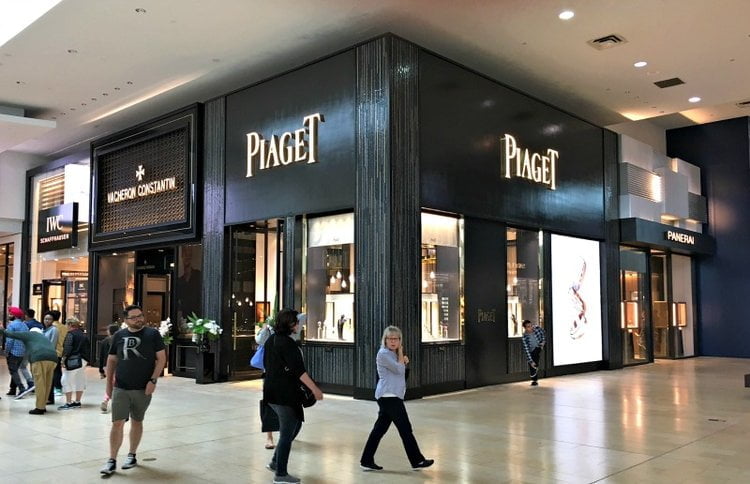
In fact, Toronto saw more luxury watch brands open in the city last year than any city in the world, according to Marie Hickey, retail research director at Savills in London. Of the five boutiques that opened, four were at Yorkdale Shopping Centre and one was in Yorkville. The Yorkdale openings included IWC Schaffhausen, Officine Panerai, Vacheron Constantin and Breitling. In Yorkville, super-pricey luxury watch brand Richard Mille opened a boutique at 118 Yorkville Avenue and, last month, it relocated to an impressive second-level space across the street at 135 Yorkville Avenue.
[CANADA’S FIRST BREITLING BOUTIQUE AT YORKDALE. PHOTO: BREITLING/VIA JANE GILL PR]
Vancouver saw remarkable watch store growth as well, with IWC Schaffshaussen, Panerai and Hublot opening stores on the 1000 block of Vancouver’s Alberni Street, considered to be the heart of the downtown ‘Luxury Zone’.
Ms. Hickey noted that Toronto, which sees more tourists annually than Sydney, Australia, has a similar level of wealth as the Australian city with retail rents that are less than half of those in Sydney. Vancouver’s Alberni Street ‘Luxury Zone’ rents in many instances are even lower than those on Bloor Street West in Toronto, making Canada an attractive market for luxury brands looking to operate standalone stores.
Australia’s two top retail cities, Sydney and Melbourne, both have standalone luxury brand stores that are currently not in Canada. A few examples include Bottega Veneta, Tod’s, Valentino, Givenchy, Céline and others — there’s plenty of room in Canada for growth from these and other luxury brands.
[IWC AND VAN CLEEF & ARPELS IN VANCOUVER’S ALBERNI STREET/LUXURY ZONE. PHOTO: HELEN SIWAK]
[HUBLOT OPENED ONE OF ITS LARGEST STORES IN THE WORLD LAST SUMMER IN VANCOUVER’S ‘LUXURY ZONE’. PHOTO: HUBLOT]
Toronto’s wealth is notable, though it is also relatively quiet when compared to Vancouver, which is known to be the ‘supercar capital of North America’. Toronto is a top market for some brands that offer custom apparel. Luxury brand Mary Katrantzou, for example, confirms that Toronto is one of its top markets globally for clients ordering custom pieces — other leading markets include London, Hong Kong, Dallas and Dubai. London-based Katrantzou’s designs are available in Canada at Hudson’s Bay’s ‘The Room’, with prices that can go well into the thousands.
Three ‘luxury nodes’ in Canada stand out in terms of luxury branded stores in Canada. Toronto’s Bloor-Yorkville and Yorkdale Shopping Centre are home to dozens of luxury brands, as is Vancouver’s downtown ‘Luxury Zone’ that is centred around the 1000 block of Alberni Street near the Fairmont Hotel Vancouver and Shangri-La Hotel. Other emerging nodes can be found in cities such as Calgary and Montreal, though Toronto and Vancouver continue to be the undisputed top markets for standalone luxury store offerings in this country
Ms. Hickey noted that many luxury brands are now looking to ‘emerging markets’ after establishing themselves in cities such as Paris, London, New York City, Tokyo and Hong Kong. Canadian cities are on the global radar and will therefore be seeing more luxury brands opening stores. Historically, one of the biggest challenges has been finding the ‘right’ space with the appropriate co-tenancies for certain brands, according to experts. However, in both Toronto and Vancouver, the conventional boundaries of the luxury zones continue to expand with it, a new supply of brick and mortar opportunities emerges. “The retail landscape of off Bloor Street locations, such as Avenue Road, Yorkville Avenue, Cumberland Street, Bellair Street and Hazelton Avenue in Toronto, and Robson Street between Burrard and Thurlow in Vancouver, have emerged as real options, and appeal to both luxury and aspirational luxury brands” says Mr. Karp.
[VANCOUVER LUXURY ZONE UPDATE, MARCH 25: JIMMY CHOO WILL BE OPENING SOON ON ALBERNI STREET. TO THE LEFT, ITALIAN KITCHEN RECENTLY CLOSED AND MONTECRISTO JEWELLERS HAS LEASED ITS SPACE. AROUND THE CORNER, MONTBLANC HAS CLOSED SO THAT THE SPACE CAN BE JOINED WITH A FORMER BELL MOBILITY AND SECOND-FLOOR HAIR SALON FOR A MASSIVE HERMES FLAGSHIP. PHOTO: LEE RIVETT]
As part of its research, Savills recognized Chinese consumers to be key to luxury brand success. Canada scored highly both in the number of residents from China, as well as with Chinese tourism. Canada is an immigration hub as well, Savills noted that Chinese tourism is expected to rise significantly.
Canada is a top destination for Chinese tourists and last year, only 4% of Chinese residents had a passport that would allow for such travel. That is expected to grow significantly over the next couple of years and Canada stands to gain substantially — about 50% of all global luxury sales are by travellers, and about 30% of all luxury sales globally are by Chinese nationals — with about half of that being outside of their home country.
Chinese students also represent an important and growing market. At the moment, an estimated 32% of international students in Canadian schools are Chinese, and according to Ahmed Hussen, Minister of Immigration, Refugees and Citizenship, Canada will “do whatever we can” to increase those numbers. Roughly 186,000 Chinese students are now in Canada, and some have discretionary allowances in the tens of thousands monthly.
The Canadian government is even encouraging its own retailers to get their businesses ready for Chinese visitors. On its ‘Canada-China Year of Tourism 2018’ website, the Canadian government notes that China is the world’s largest tourism source, and that Chinese nationals are the largest spenders in international tourism. In 2016, about 610,000 Chinese tourists visited Canada and spent approximately $1.5 billion here — that’s an average of almost $2,500 per visitor. China represents Canada’s third-largest tourism source market, behind the US and the UK, according to the Canadian government site.
The government website encourages Canadian retailers to adopt Chinese payment options — making it comfortable, familiar and easy to shop. The site describes mobile payment applications as digital wallets that allow users to make purchases by scanning their phones — something that’s gained hold in China and other markets overseas. When traveling overseas, the majority of Chinese tourists use mobile payments for hotels and tourist attractions with UnionPay, Alipay and WeChat Pay all being popular options, and Canadian retailers and malls are quickly jumping on the bandwagon by accepting Chinese payment methods.
The same government website also encourages retailers to provide communications in Chinese, recognizing that the standard language will help visitors feel more comfortable and welcome. Chinese language websites, information and signage are encouraged, as is social media and even Chinese-speaking employees in stores, where warranted.
[INSIDE SAKS FIFTH AVENUE’S CALGARY STORE, WHICH OPENED LAST MONTH AT CF CHINOOK CENTRE. LOUIS VUITTON, WHICH IS EXPANDING ITS PRESENCE IN CANADA IN CITIES SUCH AS VANCOUVER, EDMONTON AND TORONTO, WILL OPEN A 4,700 SQUARE FOOT STORE ACROSS FROM SAKS IN THE MALL LATER THIS YEAR. PHOTO: SAKS FIFTH AVENUE]
Chinese and other luxury consumers, particularly those who are quite affluent, are seeking out private spaces in stores and as a result, luxury brands are offering personal shopping suites in their stores. Vancouver is taking the lead in Canada with flagships for Tiffany & Co., Hublot, Van Cleef & Arpels and Prada all offering separate rooms for high-spending clientele. The new upper level Richard Mille in Toronto is another example, as are the nearby recently relocated flagships for Chanel and Hermès in Toronto, which both feature private shopping spaces where the rich can spend a fortune away from the masses.
In addition to the influence of the Chinese tourists and residents, there are other influencing factors that led Savills to recommend to its brokers and clients to focus on Canada. “The favorable currency, success of retailers already in Canada, sound government and the proximity to cultural and educational institutions, like The Royal Ontario Museum (ROM) and University of Toronto in Toronto, and the Vancouver Art Gallery clustered with five-star hotel accommodations, unique retail anchors like Holt Renfrew and Harry Rosen, fine dining and area amenities create retail destinations that stand out in the world” says Karp.
Canada’s three top ‘luxury nodes’ in Toronto and Vancouver will continue to see new luxury stores open this year and further into the future. We’ll be reporting on these as we watch Canada continue to become a hub for luxury brands looking to open stores in strong secondary markets.
ELXR Juice Lab, which provides healthy alternatives to conventional food products, continues to see a growing market in what it sells and that’s leading to expansion plans for the company.
It has opened three permanent retail locations in Toronto in the past few months with more opening by the end of this year.
Dan Gelshteyn, founder of ELXR, said more permanent retail locations are in the company’s long-term plans.
“Because of the format of our business, everything is grab and go a lot of it is made off-site. It’s kind of quick service. So we’re looking really for high traffic areas that work with our demographic. All of our stores are under 500 square feet. That’s kind of what we’re looking for throughout the city,” he said.
“We’re trying to open up at least a few more by fall and then continuing from there.”
Gelshteyn said the company is hoping to open three more permanent locations this year. It will also have a few pop-up locations.
“Here and there, wherever there’s opportunities and we feel it’s a good fit for our brand. I really like the idea of pop-ups because they give us a lot of knowledge on who our target customer is,” he added.
The company says it believes in going back to its roots to promote longevity and reliance on simple, unadulterated wholesome nutrition for whole body nourishment.
It sells cold-pressed juices, protein-dense plant-based milks, waters booster shots and cleanse packages.
“There’s a huge health movement going on . . . It’s a really convenient way for people to access their daily nutrients especially for a city like Toronto where people are on the go. Moving, moving, moving. And sometimes they forget to get a healthy lunch or don’t have time to fully sit down. So it’s a really great solution for people on the go,” said Gelshteyn.
“And with juices, effectively they’re absorbed into your bloodstream within 10 to 15 minutes so you instantly feel a lot better after consuming such a product with so many live enzymes and nutrients.”
The company launched at the beginning of 2015.
“The first year we just did strictly wholesale. We set up a lot of partners within Toronto where we supplied different cafes, grocery stores, with our cold-pressed juices. In the second year of business we started with our pop-up approach,” said Gelshteyn.
“We just wanted to test retail. We’ve always been really passionate about the retail side of the business and being able to communicate with our customers and being able to understand from a product development standpoint and to create more of an experience instead of just sending it to different stores and hoping that people understand our products. The pop-ups were a really big success.”
YORKVILLE VILLAGE ELXR LOCATION.
A location in Yorkville Village opened last October. It was the company’s first permanent location. The second permanent location at King and Spadina opened towards the end of November. And the third permanent location at Bayview Village opened in mid-March.
Brokerage RKF represented ELXR under the direction of Ali Fieder and Steven Alikakos, and are working with the company on future deals.
ELXR products can also be found in several other stores throughout Toronto.
ELXR at BAYVIEW VILLAGE
Gelshteyn said the company hopes to eventually expand to about 10 locations in Toronto with the possibility the brand could grow in the future outside the city.
“We work with different offices in downtown Toronto where we have different solutions depending on the amount of employees and the type of office it is. We do everything from setting up mini fridges in offices and replenishing daily juices for anyone working in the office to grab,” he said.
The company name derives from the word elixir which is a magical or medicinal potion, a substance believed to cure ills and maintain a healthy life.
TJX Canada continued in 2017 to expand its dominance of the Canadian Apparel Market thanks to the increase in its apparel sales coupled with the disappointing performance of Walmart Canada, the country’s second largest apparel retailer. Trendex estimates that TJX’s apparel sales totaled C$2,942 million in 2017, an 11% increase over its 2016 sales. Winners, the country’s largest apparel retailer, recorded a 6.2% sales increase last year. (So, who said you have to sell online to be successful?)
In total, TJX Canada’s sales during 2017 increased 14.9% to US$3.6 billion. Undoubtedly part of the conglomerates increase was due to its adding 36 new stores. Winners store count increased by 9 to 264, while Marshalls added 16 stores and ended the year with 73 stores. (Note, Trendex is now officially admitting that it was wrong when it forecasted three years ago that Marshalls would eventually never come close to operating 100 stores in Canada.) Whether the opening of Nordstrom’s Rack in Canada this year will effect TJX Canada in the short-term is questionable as it seemed that Off Fifth had minimal effect on TJX’s 2017 apparel sales. Undoubtedly TJX has, and will continue to benefit from Sears Canada’s demise. However, in the long-term the question, asked but not answered, is to what degree will Canada’s love affair with off-price apparel retailing continue?
Randy Harris is president and owner of Trendex North America, Inc., one of North America’s largest marketing research and consulting firms specializing in the Canadian and Mexican apparel markets. As owner of this Toledo, Ohio based company; his area of specialization is the NAFTA apparel market. Follow Trendex North America, Inc. on Twitter at @Trendexnainfo
BRIEF: Mastermind Toys Expanding, Avenue Road Comes to Van, Tesla Partners with CF
Mastermind Toys Undergoing Treatment for March Madness
PHOTO: MASTERMIND TOYS FACEBOOK
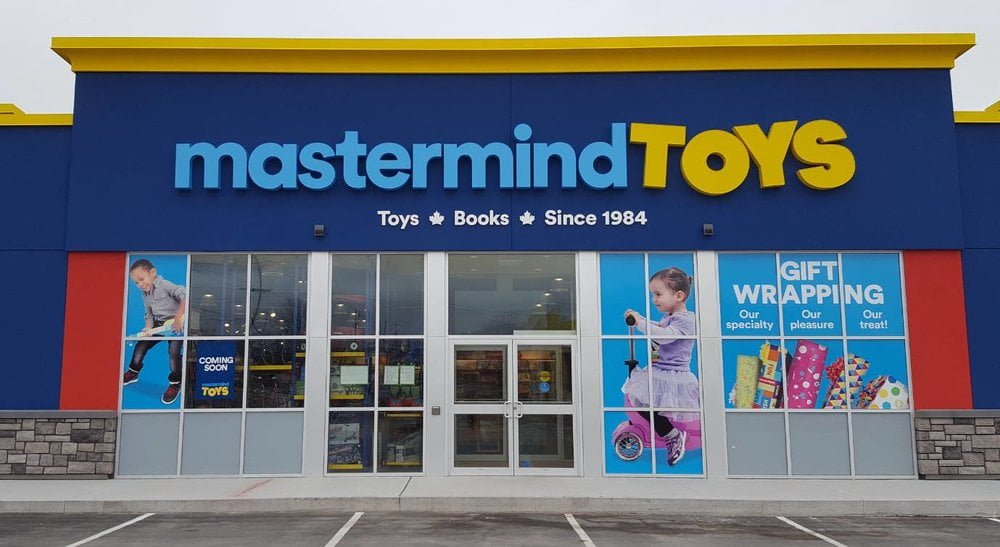
While another large toy retailer is teetering on a precipice of uncertainty, Mastermind Toys is right on track with the company’s 2018 growth plans. Canada’s largest specialty toy and children’s books retailer has announced three more stores will open in quick succession this month. Joining the Mastermind Toys family is the newly opened St. Albert, AB location which will be followed by Saskatoon South, SK and Hamilton, ON, for a total of 63 Canadian locations.
Since 2011, Mastermind Toys has opened 53 new toy stores, expanding from its origins in the Greater Toronto Area. By the end of 2018, the Canadian-owned and operated company expects to have over 70 stores across eight provinces with 1,300 employees, adding over 45,000-square-feet to its retail footprint.
In 2018, Mastermind Toys will invest in consumer-focused digital initiatives, including plans to introduce a new Click and Collect program which gives shoppers the option to reserve online and pick up their order in-store. The company will also launch an innovative and socially conscious loyalty program that will reward and inspire its customers.
More details will be announced later this year.
Cadillac Fairview Blooms Canada-wide with Annual Flower Market
Image: CF Flower Markets
Now that Spring is here, what better way to celebrate than with large floral displays and the occasional 8-foot tall bunny topiaries (perfect for social media enthusiasts, featuring Pantone’s colour of the year – ultra violet).
The CF Flower Markets began popping up in Cadillac Fairview shopping centres nationwide on March 17th. These immersive and stunning pop-ups are inspired by the open-air markets commonly found in Europe. Each CF Flower Market welcomes a range of local, independent businesses who do not have storefronts within CF properties — including beauty brand Flawless by Friday, profiled in Retail Insider last week. Guests will be able to shop everything from flowers to fashion, accessories, seasonal fare, and more.
While CF Shops at Don Mills will begin hosting from April 29 to May 13, the markets on the west coast at CF Pacific Centre and CF Richmond Centre are already hosting their markets offering a selection of fresh blooms alongside curated fashion-and-lifestyle items until April 1st.
A full list of retailers and hours is available at www.cfshops.com. Video below.
Avenue Road Readies for Traffic in YVR’s Gastown
Image: Avenue Road
At the end of January, Retail-Insider reported on Avenue Road, the upscale Toronto-based furniture store, was preparing for launch in Vancouver’s historic Gastown. Avenue Road is in great company with new neighbour Fendi Casa Bentley Home across West Pender and Versace Home a few blocks north on West Cordova, the west end of Gastown is now a burgeoning luxury furniture and homewares shopping destination.
With savvy Vancouver designers and homeowners always on the search for new shapes and sophisticated pieces, the market is ready for leading design brands that Avenue Road carries. The curated collections include Bruno Moinard, Kvadrat/Raf Simons, and Christophe Delcourt, as well as Canadian designers like Yabu Pushelberg and Moss & Lam. British brand The Rug Company is situated over most of the lower floor with the north corner decorated bright white with fragmented tile-flooring and windows creating an area with a separate Hamilton Street entrance. The pop-up nook is currently occupied by Hanna by Celsia Floral.
Retail Insider’s Helen Siwak did a walk-through and shared the advance images above.
Salami Company urbanibrands Rolls-Out Vegan NOBLE Jerky®
Image: NOBLE Jerky®
With over 50 years and 3 generations of family in the salami business, it would seem the future in the meat business for the Urbani family was clearly laid out. Instead, the Port Moody based business forecast a grim outlook on the sustainability of animal-based agriculture and the meat industry.
Utilizing years of meat drying technical knowledge, along with some new developments in plant proteins, Urbani Foods developed NOBLE jerky® in four flavours: BBQ, chipotle, teriyaki, and original pepper. A plant protein-based jerky that has the taste, and characteristic tear and bite of slowly marinated and dried beef jerky. The products’ base is tempeh and plant protein, is all natural, and non-GMO.
NOBLE jerky® is the newest addition to the company’s vegan food line. Also available is a line of flavoured Kale & Quinoa Bites (Mediterranean, Bombay Coconut Curry, Teriyaki, and Rosemary & Lemon), Super Grain Panko, and a family pleaser FiercePop in sriracha, chipotle, and teriyaki.
ME to WE India Tea Focusing on Clean Water for India
Image: ME to WE and DAVIDsTea
Youth charity WE has announced a new partnership with DAVIDs TEA on a new initiative that will see them extending their unique brand into India with a new product – ME to WE India tea.
Since launching in 2016, the partnership gave 1 year of clean drinking water to over 47,000 Kenyans, and now ME to WE is focusing on India, the second most populated country in the world. DAVIDs TEA and ME to WE are widening the global commitments and recently held a special preview of the ME to WE India tea on the morning of March 19th at the WE Global Learning Centre.
Representatives (ME to WE’s co-founder Craig Kielburger and DAVIDsTEA’s Head of Marketing Catherine Laporte) were available for interviews and discussion explored the inner workings of this partnership, and the success that it brought to both companies, and why DAVIDsTEA was the retailer of choice for this.
Green explained that in order to do womenswear, the company would “have to do it right” and one of the complexities is that in womenswear, there are dozens of silhouettes. Prior to any women’s expansions, Indochino is looking to expand into casual pants and ‘untuckit’ shirts, with a goal to have more than 100 showrooms in North America. Green explained the brilliance and cost effectiveness of not having to carry inventory in its stores, a differentiating point from most off-the-rack retailers.
Indochino launched and established itself online before opening its first bricks and mortar location in Vancouver’s Gastown in 2014 and is continuing to make strides with its immersive and engaging showrooms and its three-week delivery promise on all orders. The company continues to rapidly open showrooms with plans for 18 more in 2018.
Tesla Partners with Cadillac Fairview on Expansion
Image: TESLA AT CF SHERWAY GARDENS
California-based electric car company Tesla will open its fourth Canadian shopping centre location this summer at Toronto’s CF Sherway Gardens. Tesla continues to see strong sales in Canada and has partnered with Cadillac Fairview for an expansion with more expected to follow.
Tesla currently operates Canadian stores in Vancouver, Toronto, Oakville ON, Calgary, Montreal and Quebec City. The Montreal store/sales centre is the largest in North America, spanning an impressive 45,000 square feet. The company’s other three mall-based stores are at Toronto’s Yorkdale Shopping Centre (Tesla’s first store in Canada), at Calgary’s CF Chinook Centre, and at Park Royal in West Vancouver.












![Browns Shoes Announces 3 Store Summer Expansion [With Renderings]](https://images.squarespace-cdn.com/content/v1/529fc0c0e4b088b079c3fb6d/1466545504784-W0WWWM1ILO8WFPWM46E1/ke17ZwdGBToddI8pDm48kL1kb38zcKY7DBgiovmzfrtZw-zPPgdn4jUwVcJE1ZvWCor8ysR1XYs4pBKQcuVX1HVwxMIOEK7mu3DMnwqv-Nsp2ryTI0HqTOaaUohrI8PIFnu7M49DlXhzGHe7XaN6SWh0IfjFk_5uG5iBBXaGXo4/Browns+Galeries+Capitale.png)