By Colin Hefferon
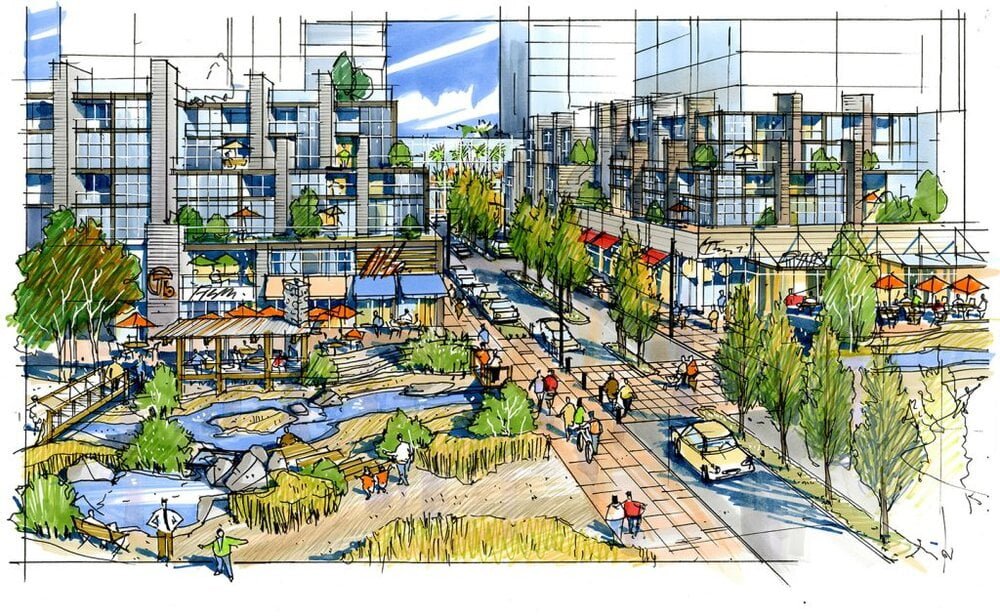
In an earlier article that appeared in Retail Insider I proposed that owners of neighbourhood shopping malls should consider adding multi storey rental residential to their mix of tenants.
I suggested that they could use a conventional commercial lease structure but substitute a qualified rental residential operator for the qualified commercial or retail tenant.
I further indicated that this would have a number of positive business advantages with few if any of the negatives that residential condo development can entail.
Using this model to develop rental residential, the mall owner would not have to sell or subdivide any of its land; nor would it have to take on partners. Both of which can be anathema to a mall owner.
The owner would gain a secure long term, rent-paying anchor tenant and both the mall owner and the retail tenants would profit from the increased foot traffic.
Financing the new development would be relatively straightforward since institutional lenders are familiar with the shopping centre leasing model.
But while financing using this model would be simpler, it would not, in this COVID-19 era, be a slam-dunk. After watching prize clients lose 30% or more of their value virtually overnight as a result of the global lockdown, lenders are understandably skittish these days.
To get a favourable response from a lender, the lease will have to be structured in a way that provides a bulletproof covenant, or at least one that is much stronger than before.
When major retailers are demanding rent abatement and even rent forgiveness and long established public corporations are looking for government loans and guarantees and household retail names are seeking protection in bankruptcy laws, much more than a slickly-packaged business plan will be required before a conventional lender will advance money even for a development as revenue-certain as rental residential in a major urban centre.
What a prudent lender will require is evidence that a collaborative business relationship between the mall owner and the municipality exists. This collaboration could take several different forms. Here are two:
Option One would involve the City’s giving its public blessing to the project by, for example, forgiving payment of the development charges (for more than the current five years for affordable rental projects) and fast tracking the development application in return for a number of the new rental residential suites being suitably-sized for families with children and a portion of the units being made available to qualified renters as “affordable” (which in the Greater Toronto Area usually means 80% of local market rent).
Option Two would be a true partnership. As a condition of development approval, the municipality would receive an equity position in the new rental residential project. This position could be structured so as to limit the municipality’s liability while still lending its credibility to the project. In most cases this, along with a qualified head lessee for the new rental residential portion, could be sufficient for the required covenant.
Worldwide, the equity partnership strategy has been gaining traction in the past few years.

It has been successfully adopted by a number of African countries in dealing with Canadian mining companies, and by some Asian (and European) countries in dealing with major foreign investment of any kind. Within Canada itself, First Nations currently demand an equity position in dealing with the oil and gas industry.
Going forward in the COVID era, it is highly likely the equity partnership model will become even more widely (and creatively) used.
A headline in the May 21, 2020 edition of the Financial Post (“Feds to seek equity or cash from firms applying for bridge loans”) suggests that the federal government is aware that institutional lenders will now want to see tangible evidence of on-going public sector involvement in major projects before they will commit money to them.
While the financing requirements for major projects have already tightened, the growing demand for reasonably priced, conveniently located, rental residential housing in urban areas is not likely to wane anytime soon.
The fiscal emergency now facing cities across Canada means that the widely trumpeted plans to make selected city-owned lands available for a few hundred of the tens of thousands of sorely needed new rental residential suites have been shelved, likely for the foreseeable future.
This has created a singular opportunity for savvy owners of neighbourhood shopping malls to add revenue-producing anchor tenants while satisfying an urgent human need.

Colin Hefferon is a planning and development consultant. A former Ontario Municipal Board (now LPAT) Member, Colin can be reached at chefferon88@gmail.com