Home Blog Page 11

TJX Says Winners, Marshalls and HomeSense Are Gaining Major Market Share in Canada

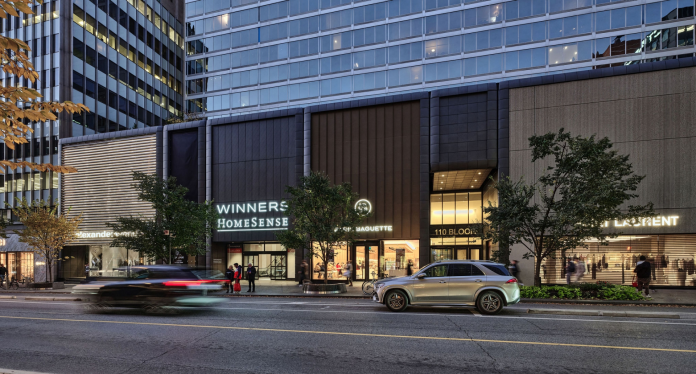
Winners at 110 Bloor St. W. in Toronto. Photo: Salthill Capital

TJX Companies says its Winners, Marshalls and HomeSense businesses are continuing to gain major market share in Canada, with customer transactions rising as the off-price retailer expands into prominent shopping centres and urban locations across the country.

TJX Canada comparable sales increased 6% in the second quarter of fiscal 2027, primarily driven by an increase in customer transactions. Adjusted segment profit margin on a constant-currency basis reached 16.3%, up 30 basis points from a year earlier.

“We are the leading off-price retailer in Canada and are very pleased with our strong brand awareness and loyal shopper base,” said John Klinger, Senior Executive Vice President and Chief Financial Officer of TJX Companies during this week’s earnings call. “We continue to see an opportunity to further grow across Canada with our three retail banners.”

The Canadian performance was among the strongest across TJX during the quarter. Company-wide comparable sales increased 4%, while the Marmaxx division, which includes TJ Maxx and Marshalls in the U.S., posted comparable sales growth of 1%. HomeGoods was up 7%, while TJX International increased 7%.

TJX President and CEO Ernie Herrman discussed Canada several times during the earnings call, describing it as one of the company’s strongest markets for share and pointing to further gains being made by Winners, Marshalls and HomeSense.

“In Canada, we over-index. That’s one of our largest market share geographies in the corporation,” Herrman said during the analyst discussion. “Now that you’ve had closures with The Bay, et cetera, the Canadian merchants are doing an amazing job in HomeSense and in Winners and in Marshalls in Canada.”

Herrman added that Canada does not always receive significant attention during TJX’s earnings discussions, but said the Canadian business continues to gain “major market share.” He compared the momentum in Canada with the strong performance of HomeGoods in the U.S., telling analysts, “Similar to what HomeGoods is doing here, Canada’s doing there.”

More Customers Shopping TJX Stores in Canada

The composition of TJX Canada’s 6% comparable sales increase is notable. Management said the gain was primarily driven by customer transactions, showing that increased purchasing activity at existing stores is contributing to the company’s growth.

TJX continues to position value at the centre of its strategy. Herrman said the company expects consumers to continue looking for value and believes its assortment of brands and fashions appeals to shoppers across a wide range of ages and incomes. TJX’s off-price buying model is supported by approximately 21,000 vendors globally, and management said merchandise availability remains exceptionally strong, with more product available in the marketplace than the company could purchase.

The strength in Canada follows continued expansion by Winners, Marshalls and HomeSense, including several prominent locations in major shopping centres and downtown retail districts.
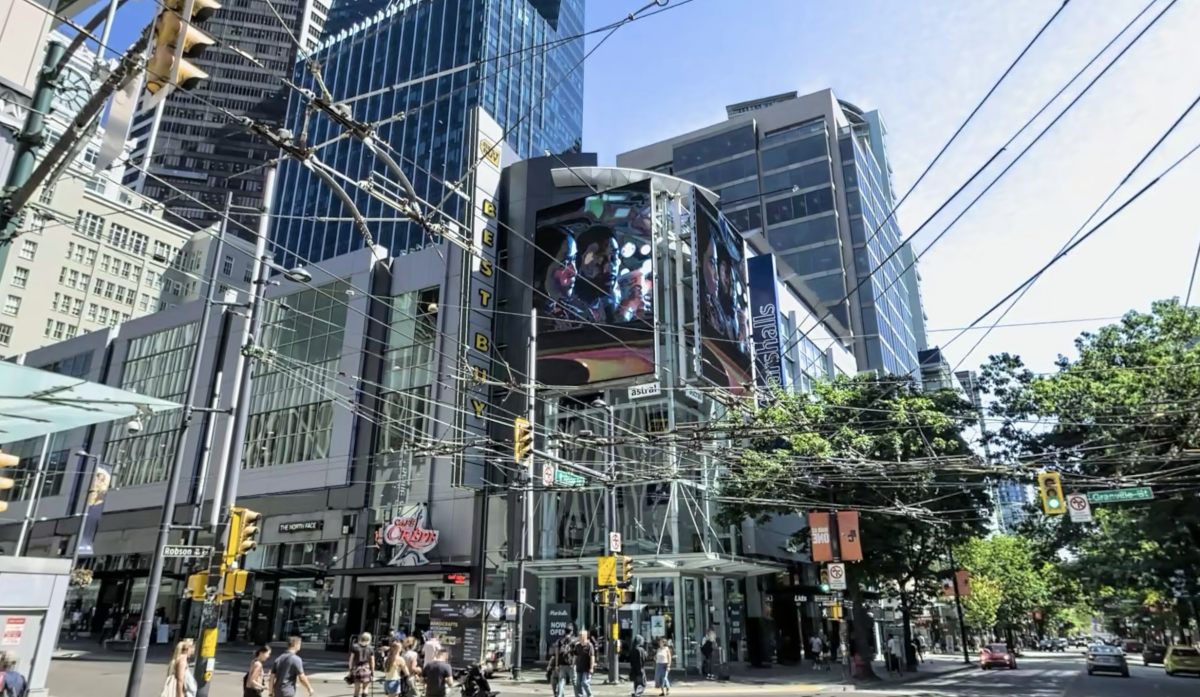
Marshalls recently opened its first downtown Vancouver store at the northeast corner of Robson and Granville streets — in a retail space formerly occupied by Winners, which relocated a couple of blocks north. Photo, Apple Maps.

Winners Moves Into Major Canadian Shopping Centres

In the Greater Toronto Area, Winners has recently established locations in several of the region’s most important shopping centres. The retailer opened at CF Toronto Eaton Centre in downtown Toronto in August 2024, giving the banner a prominent presence in Canada’s busiest shopping destination. Winners opened another large store at Scarborough Town Centre in August 2025, followed by a new location at Square One Shopping Centre in Mississauga in April 2026.

The Square One opening is particularly notable given the scale and regional importance of the shopping centre. Square One spans more than 2.2 million square feet and ranks among Canada’s most productive shopping centres, with sales of approximately $1,396 per square foot according to 2025 International Council of Shopping Centers data. The Square One Winners store spans about 35,000 square feet over two levels.

Winners and Marshalls have operated in enclosed Canadian shopping centres for years, but several recent openings have placed the banners in particularly prominent regional and downtown properties. TJX has also been building its presence in major urban shopping districts, including Vancouver and Montreal.

In Vancouver, Winners relocated in October 2024 from its longtime location at Robson and Granville streets to a larger space farther north on Granville Street. Marshalls subsequently opened in the former Winners space in March 2025, allowing TJX to operate both banners along the downtown retail corridor.

In Montreal, Marshalls is expected to open at Montreal Eaton Centre in September 2026, occupying approximately 32,500 square feet on the Metro level. Winners already operates across the street at Place Montréal Trust, as well as at Complexe Desjardins elsewhere in the downtown core.

The expansion comes as TJX says it is becoming more flexible with its real estate. Management told analysts that smaller store formats are creating opportunities in densely populated urban markets, while its planning, allocation and real estate teams have become more flexible in determining where stores can operate.

New Winners store at Galeries de la Capitale in Quebec City. Image supplied

Hudson’s Bay Closures Change the Competitive Landscape

Herrman’s reference to Hudson’s Bay comes amid a significant reshaping of Canada’s department store sector. Hudson’s Bay closed its remaining stores in June 2025, removing a national retailer that had occupied large spaces in many of the country’s leading shopping centres and competed across apparel, accessories, beauty and home merchandise.

Winners, Marshalls and HomeSense compete in several of the categories historically sold by Hudson’s Bay, while TJX has continued adding stores in major Canadian shopping markets. The company’s ability to operate multiple banners in different store sizes also gives it a range of options as landlords lease and reconfigure retail space.

TJX’s Canadian results show the company gaining share as that competitive landscape changes. Herrman’s comments on the call provided a rare direct acknowledgement from the company of Hudson’s Bay’s departure while discussing TJX Canada’s performance.

TJX Sees More Room to Grow in Canada

TJX operates close to 600 stores in Canada across Winners, Marshalls and HomeSense, making the country one of the company’s largest markets outside the United States. Winners remains the largest of the three Canadian banners, while HomeSense and Marshalls have continued to expand their footprints.

Management did not provide a new Canadian store target during the earnings call, but was explicit that it sees further growth potential for all three banners.

That growth comes as TJX accelerates its store strategy globally. The company increased its long-term store potential by 500 locations to approximately 7,500 stores across its existing banners and countries, representing more than 2,200 additional stores compared with its current footprint. TJX also plans to increase its annual store growth rate from approximately 3% to 4% beginning next year.

The additional 500 stores in the revised long-term target relate specifically to greater potential for TJ Maxx and Marshalls within the Marmaxx division and for the HomeGoods division, and were not attributed specifically to Canada. Management did, however, indicate that opportunities for faster store growth exist across the business.

“When we look at where we see the opportunities, we see it across every single brand that we have,” Klinger said.

Herrman added that the additional percentage point of annual store growth is expected “across the board,” rather than being driven by only one or two divisions.

Home Categories Remain Strong

Home merchandise is also performing well across TJX. The company said its home categories outperformed apparel during the second quarter, while HomeGoods comparable sales in the U.S. increased 7%, driven primarily by a higher average basket, with customer transactions also increasing.

Herrman said strength is extending across consumable products, decorative merchandise and higher-ticket categories such as lighting and wall décor. He also pointed to collaboration among TJX’s home merchants across its international operations, again highlighting Canada and comparing the market-share gains being achieved by Winners, Marshalls and HomeSense with the momentum at HomeGoods in the U.S.

TJX’s latest results add to the evidence of a strong Canadian business at a time of considerable change in the country’s retail landscape. Customer transactions are increasing, the company is securing prominent locations, and management continues to see room to grow all three of its Canadian banners.


More from Retail Insider:

Home Depot Canada Sales Accelerate Despite Challenging Housing Market

Photo: The Home Depot

Home Depot’s Canadian business gained momentum in the second quarter, with the home improvement retailer reporting positive comparable sales in Canada and saying the market outperformed the company overall.

The improvement comes as Canada’s housing market remains subdued and affordability pressures continue to weigh on larger renovation projects. Home Depot management said the Canadian business accelerated during the quarter, with positive comparable transactions and unit growth through the first half of the year.

Ann-Marie Campbell

The performance marks an improvement from earlier in the year, when Home Depot reported negative comparable sales in Canada during the first quarter. By Q2, Canada had moved back into positive territory and was among the stronger-performing parts of the company’s international business.

“Both Canada and Mexico out-comped the company,” Ann-Marie Campbell, Senior Executive Vice President at Home Depot, said during the company’s second-quarter earnings call. She added that it was “great to see the acceleration in Canada,” highlighting positive comparable transactions and units during the first half.

The transaction performance is notable because Home Depot’s company-wide growth was partly driven by customers spending more per purchase. Across the company, comparable average ticket increased 2.8% during the quarter while comparable transactions declined 1%. Transactions valued at more than US$1,000 increased 2.4%.

Home Depot did not disclose a specific comparable-sales figure for Canada. Company-wide comparable sales increased 1.7% during the quarter, compared with 1.3% growth in the U.S. Foreign exchange provided approximately 25 basis points of benefit to the difference between the two figures, while management also pointed to strong performance in Canada, Mexico and its SRS distribution business.

Smaller Home Improvement Projects Remain Active

Home Depot said customers continued to spend on home improvement during the quarter, although larger discretionary projects remain under pressure.

Customers were particularly active in smaller repair and maintenance projects, while 13 of the company’s 16 merchandising departments recorded positive comparable sales. Those included electrical, hardware, plumbing, power, storage, kitchen, paint, building materials, flooring and millwork.

Billy Bastek, Executive Vice President of Merchandising at Home Depot, said the strength extended well beyond seasonal merchandise. Only three of the company’s 20 strongest-performing businesses during the quarter were seasonal, with strong results coming from core areas such as electrical, plumbing, hardware and tools.

Professional customers also outperformed do-it-yourself shoppers. Home Depot reported strength among Pro customers in portable power tools, decking, dimensional lumber, pipe and fittings, fasteners, hand tools and concrete, while DIY customers performed well across a number of spring-related categories, including live goods, mulch, soil, patio and grills.

The spending pattern points to continued demand for maintenance, necessary home projects and professional work even as consumers remain cautious about larger discretionary renovations.

Canadian Housing Market Remains Restrained

The improvement at Home Depot Canada is occurring against a housing market that has recently shown some sequential improvement but remains subdued compared with a year ago.

Canadian home sales increased 0.5% between June and July, according to the Canadian Real Estate Association, marking a fourth consecutive monthly increase. Actual sales activity in July, however, remained 5.3% below July 2025, while the national MLS Home Price Index was down 3.3% year-over-year.

CREA currently forecasts approximately 463,336 residential properties will change hands through Canadian MLS systems in 2026, representing a 1.4% decline from 2025.

Housing turnover is closely watched by the home improvement industry because purchases and moves can generate spending on renovations, repairs, appliances, flooring, paint and other home-related categories. Home Depot CFO Richard McPhail said housing turnover has remained at historically low levels for several years.

“We have seen housing turnover at these low levels for four years now,” McPhail said. “There is just no sign of an inflection point at this moment.”

Home Depot believes its broader business is gaining market share despite that environment. McPhail said significant pressure remains across the home improvement sector and businesses connected with housing, while investments in stores, product availability, digital capabilities and customer service are helping the retailer compete for available demand.

The company did not make a Canada-specific market-share claim, but the acceleration of its Canadian operations stands out against the subdued housing backdrop. Positive Canadian transactions and units also indicate that the improvement extends beyond higher average prices or larger baskets.

Pro Customers Remain a Growth Priority

Professional customers remain central to Home Depot’s strategy as the retailer builds its business with contractors, builders and other trades.

Home Depot has invested in product assortments, job-lot quantities, specialized sales teams, technology and delivery capabilities intended to support larger and more complex professional purchases. Pro customers posted positive comparable sales during the second quarter and outperformed DIY customers.

Campbell said the majority of Home Depot’s Pro sales continue to originate with customers using its stores, keeping the physical retail network at the centre of the strategy. The company has added technology and capabilities at its Pro desks as it works to capture a greater share of customers’ project spending.

Digital sales are growing alongside the store business. Comparable sales generated through Home Depot’s digital platforms increased 11% year-over-year during the second quarter, marking the fifth consecutive quarter of double-digit online growth.

The strategy increasingly connects Home Depot’s stores and digital operations, with the physical network supporting product availability, customer service and fulfillment while online tools help customers plan projects and make purchases.

Home Depot’s Canadian Footprint

Home Depot Canada currently lists 182 stores across all 10 provinces, supported by more than 35,000 associates and a national supply chain and distribution network.

The retailer announced plans in 2025 for an approximately 80,000-square-foot store in Fort McMurray, Alberta, which was intended to become its 183rd Canadian location and 28th store in the province.

Home Depot Maintains 2026 Outlook

Across the company, Home Depot generated second-quarter sales of US$47.9 billion, an increase of 5.7% from a year earlier. Adjusted diluted earnings per share increased 5.1% to US$4.92, while the retailer ended the quarter with 2,364 stores across its operations.

Home Depot maintained its fiscal 2026 outlook following the stronger-than-expected quarter. The company continues to expect comparable sales ranging from flat to 2% growth and total sales growth of approximately 2.5% to 4.5%. Diluted and adjusted diluted earnings per share are expected to range from approximately flat to 4% growth compared with fiscal 2025.

Management said demand at the beginning of the third quarter has remained consistent with what Home Depot experienced in Q2, although the company continues to exercise caution amid cost pressures and what McPhail described as “frozen housing conditions.”

Home Depot Canada enters the second half with considerably stronger momentum than it showed earlier in the year. The business moved from negative comparable sales in Q1 to outperforming the broader company in Q2, while positive transactions and unit growth indicate that Canadian customers remain engaged in home improvement despite a housing market that has yet to return to stronger levels.

More from Retail Insider:

AutoCanada Sees Canadian Auto Market Remaining Challenging

AutoCanada photo
Car Display. Image: AutoCanada

Canada’s automotive retail market remains challenging as affordability pressures, financing costs and broader economic uncertainty continue to weigh on consumers, according to AutoCanada Inc., one of the country’s largest dealership groups.

AutoCanada CEO Samuel Cochrane said the Canadian auto market remained soft during the second quarter and that the company expects difficult conditions through the balance of 2026. His outlook comes even as national vehicle sales have shown tentative signs of stabilization following a weak first half of the year.

“The Canadian auto market remained soft in Q2,” Cochrane told analysts during AutoCanada’s second-quarter earnings call. “Consumers are still dealing with affordability pressure, higher financing costs and broader economic challenges facing Canada.”

Canadian new light-vehicle sales declined approximately 2.6% during the first half of 2026 compared with a year earlier. The market improved more recently, with year-over-year gains in June and July after a prolonged stretch of monthly declines, pointing to stabilization rather than a broad recovery.

Against that backdrop, AutoCanada is working to improve the performance of its dealership network while acknowledging that some of its recent challenges have been company-specific rather than entirely the result of weaker consumer demand. Revenue from continuing operations increased 6% year over year to $1.4 billion in the second quarter, while same-store revenue rose 5.5%.

Profitability moved in the opposite direction, with gross profit falling 8.1% to $207 million and adjusted EBITDA declining to $52 million from $64 million a year earlier. Net income from continuing operations was $12.1 million, compared with $18.9 million in the prior-year quarter, underscoring the company’s challenge of translating higher sales into stronger margins and earnings.

AutoCanada Works to Rebuild New-Vehicle Performance

Cochrane said new-vehicle sales and gross profit per unit remain affected by both the softer Canadian market and internal work underway to improve sales productivity across AutoCanada’s dealerships. The company is rolling out a new in-house sales training program and has been rebuilding its operating team, with management expecting those initiatives to have a more meaningful impact on new-vehicle sales and profitability heading into 2027.

There are early signs of improvement. Cochrane said AutoCanada began gaining new-vehicle market share again in June and that the trend continued into July. “The first step was winning volume back,” he said. “That’s happened.”

The next challenge is restoring margins. Cochrane said AutoCanada no longer views operating expenses as its primary problem and instead needs to generate more profitable growth through stronger vehicle volumes and improved gross profit per unit. The company still sees opportunities to reduce costs through automation, technology and better processes, but management estimates those savings at roughly $4 million to $5 million rather than a major additional restructuring opportunity.

Regional Differences Across Canada

AutoCanada is also seeing meaningful regional differences within the Canadian market. Cochrane described Alberta as particularly strong and pointed to optimism surrounding investment in the province. Saskatchewan and Manitoba are also performing comparatively well, while British Columbia and Ontario have been more difficult markets.

The comments reflect an uneven national environment. Ontario was the only province to record a year-over-year decline in new light-vehicle sales in June, even as overall Canadian sales returned to modest growth.

AutoCanada’s results do not perfectly mirror the national market because its dealership portfolio does not include every major automotive brand. Cochrane noted that AutoCanada does not represent Toyota or Tesla, two brands that have been performing strongly. Toyota Canada, for example, reported record first-half sales in 2026, with approximately 129,700 vehicles sold, up 4.4% from a year earlier. The distinction helps explain how national sales can improve while some of AutoCanada’s dealerships continue to face a more difficult environment.

Used Vehicles Gain Momentum

Used vehicles were among the stronger areas of AutoCanada’s business during the quarter. Used-vehicle revenue increased 13.3%, supported by a 10% increase in retail units and a 2.9% increase in average selling price. Management also said the company is generating more sales while carrying less used inventory, reflecting improvements in how quickly vehicles are moving through its dealerships.

Cochrane said AutoCanada can now carry approximately 6,000 to 7,000 used vehicles while turning roughly half of that inventory during a month, a level of velocity the company has not consistently achieved for several years. Margins have not yet fully recovered, however, as AutoCanada continues to work through older vehicles that have been sitting in inventory for longer periods.

Management does not expect a dramatic improvement in used-vehicle gross profit per unit during the third quarter. Cochrane said front-end vehicle margins should begin looking more normalized during the fourth quarter and into 2027 as older inventory is cleared and tighter purchasing and inventory controls take effect.

The improvement in AutoCanada’s used business comes as affordability remains a major consideration for Canadian vehicle buyers. Used-vehicle prices have generally eased from previous highs, while industry data have shown comparatively strong turnover among more economical and value-oriented models. The trends do not necessarily indicate a broad shift away from new vehicles, but they reinforce the importance of price and monthly-payment considerations in the current market.

Finance, Service and Customer Retention

Finance and insurance remained one of AutoCanada’s stronger profit categories during the quarter. F&I gross profit increased 4% year over year, while average gross profit per retail unit rose to $3,410 from $3,337. AutoCanada attributed the improvement to stronger dealership execution and increased penetration of finance and insurance products.

Management is placing a similar emphasis on parts and service, where it believes there is substantial room to improve customer retention and profitability. Cochrane said AutoCanada wants to become more proactive about communicating with customers after a vehicle purchase and following subsequent service visits.

The company has added staff specifically focused on that effort while also working to recruit more technicians and increase service-bay utilization. While Canada’s vehicle fleet remains relatively old, Cochrane said AutoCanada is not seeing a dramatic new consumer shift toward keeping vehicles longer and views the larger opportunity as retaining more customers already moving through its dealerships and service departments.

Collision Repair Becomes a Larger Growth Platform

That customer-retention strategy increasingly extends into collision repair. AutoCanada has been expanding its collision business through ACX, which now includes 37 corporate-owned collision centres across Canada. The company views collision repair as an important growth platform that can benefit from insurer relationships, manufacturer certifications and referrals from its dealership network.

During the second quarter, AutoCanada added Contemporary Coachworks North and South in Calgary and Mascarin Collision Centre in Thunder Bay. It subsequently expanded further in Ontario through the acquisition of a collision centre in Stratford.

The Contemporary Coachworks acquisition added approximately 30,000 square feet of repair capacity in Calgary and expanded AutoCanada’s presence in higher-end vehicle repair, including certifications for brands such as BMW, Mercedes-Benz, Lexus, Volvo and Tesla. Mascarin brought the company into the Thunder Bay market with an established collision business, while the Stratford acquisition supports AutoCanada’s regional hub-and-spoke strategy.

AutoCanada is looking to increase throughput across the platform, add manufacturer certifications and insurer relationships, strengthen technician development and expand higher-value services including vehicle diagnostics and calibration. Collision revenue declined year over year during the quarter, although management said the comparison was affected by unusually high hail-related repair activity in the prior year and by newer locations that have not yet reached full capacity. Cochrane said recent hail activity in the Prairies should support stronger collision performance during the third and fourth quarters.

Strategically, the collision expansion allows AutoCanada to capture a larger share of the customer relationship throughout the life of a vehicle. A customer can purchase and finance a vehicle through the dealership, return for maintenance and repair, use an affiliated collision centre following an accident and potentially remain within the AutoCanada network when it is time to replace the vehicle.

AutoCanada Sells Three B.C. Dealerships

At the same time that AutoCanada is investing in collision repair and working to improve its dealerships, the company is becoming more selective about which retail locations it is prepared to retain. After the second quarter, AutoCanada completed the sale of three British Columbia dealerships: Island Chevrolet Buick GMC in Duncan, Abbotsford Volkswagen and Chilliwack Volkswagen.

The dealerships were sold for approximately $32.2 million in gross proceeds. They had generated roughly $111 million in revenue during the trailing 12 months ended in the first quarter of 2026 and recorded a net loss of approximately $1 million. AutoCanada said the locations were outside its core regional dealership clusters, limiting opportunities to generate greater operating scale and efficiency.

Cochrane emphasized that the sales do not represent a retreat from Canada. AutoCanada remains committed to eventually growing its dealership platform across the country, but management is prepared to sell locations where it does not see a compelling path to adequate returns.

“There probably are one or two that are on the fence and other unlocks that could be there, but nothing imminent at this time,” Cochrane said when asked whether additional Canadian dealership sales could follow. AutoCanada currently operates 61 franchised dealerships in Canada representing 23 automotive brands across eight provinces, along with three independent used-vehicle dealerships.

U.S. Exit Advances Canadian Refocus

The company is simultaneously nearing completion of its exit from U.S. dealership operations. AutoCanada has received approximately $106 million from completed U.S. divestitures and has agreements in place for the remaining dealerships. Management now expects total proceeds of at least $130 million, subject to closing conditions and manufacturer approvals, with the proceeds expected to help reduce debt.

Together, the U.S. exit and selective Canadian dealership sales are sharpening AutoCanada’s focus on improving returns from its core Canadian network while directing capital toward areas where management sees stronger growth opportunities, including collision repair.

For the remainder of 2026, AutoCanada plans to continue rebuilding sales productivity, improving vehicle margins, increasing service and parts performance, integrating its collision acquisitions and strengthening its balance sheet. Management continues to describe 2026 as a transition year for the dealership business, with more significant improvements expected as inventory normalizes and operational changes take hold heading into 2027.

AutoCanada has begun restoring vehicle volumes and dealership market share, according to management. The next test will be whether those gains translate into stronger margins and more consistent profitability as Canadian consumers continue to navigate a difficult vehicle affordability environment.

More from Retail Insider:

Canadian sponsorship spending reaches $4.7B as industry study marks 20 years

SportChek photo
SportChek photo

Sponsorship spending in Canada has reached $4.7 billion, with brands planning to increase their investment further next year, according to the latest Canadian Sponsorship Landscape Study.

The 2026 edition of the annual study marks the 20th anniversary of the national sponsorship industry benchmark. It found that brands are committing more money to rights fees across categories, while also putting greater emphasis on evaluating whether sponsorship investments are delivering results.

“Twenty years ago, there was no Canadian-specific data for this industry to plan against. Today, the CSLS provides the numbers that brands, properties and agencies use to benchmark their decisions,” said Dr. Norm O’Reilly, partner at T1 and lead author of the CSLS, and professor and director of The Sponsorship Lab at the University of Florida. “This year’s findings show an industry that keeps maturing, from record investment in evaluation to how quickly brands moved on FIFA 2026.”

Professional sport continues to account for the largest and most significant sponsorships, but the study found that brands are spreading spending across a broader range of categories.

Cause sponsorship has become the second-largest category by share of budgets and the third-largest in total sponsor spending, representing a major shift over the past decade, the study said.

The 2026 FIFA World Cup was also a factor for Canadian brands, with numerous activations planned around the tournament, according to the study.

At the same time, the research identified several challenges for the sector. Sponsorship’s share of Canadian brands’ marketing communications budgets has declined to 21 per cent from 25 per cent over the past five years, even as overall sponsorship spending has increased.

Brands also reported that property servicing of sponsorship partners fell short of expectations this year. Return on investment remains the top issue for brands, properties and agencies, with the focus increasingly on maximizing the value of sponsorships and demonstrating their effectiveness.

Sponsors and properties are forecasting a 12 per cent increase in spending next year, while agencies are taking a more cautious view of future billings.

Evaluation has also become a greater spending priority. The study found that brands are spending more on evaluation and pre-sponsorship evaluation than at any point in the CSLS’s 20 years of tracking, indicating greater pressure on sponsorship investments to demonstrate their effectiveness.

“Twenty years of data confirms what we see every day: sponsorship succeeds when it earns a real place in people’s lives, not just visibility on a logo board,” said Lindsay O’Brien, vice-president, partnerships, T1 and co-author of the CSLS. “This year’s findings on evaluation and servicing tell us brands and properties are being held to that higher bar, and the ones investing in real relationships with their communities, not just rights fees, are the ones getting rewarded.”

The 20th annual study is based on responses from 188 Canadian brands, properties and agencies, including 114 brands, 50 properties and 24 agencies.

The research tracks the size and scope of the Canadian sponsorship market, spending by sector, activation trends, evaluation practices and the industry’s future direction.

The study is produced by O’Reilly, with co-authors O’Brien and Mike Alcorn, alongside the Sponsorship Marketing Council Canada, IMI International, SponsorshipX and the Association of Canadian Advertisers.

The Canadian Sponsorship Landscape Study was launched after delegates at the inaugural Canadian Sponsorship Forum in Vancouver identified a lack of Canadian-specific sponsorship data. It has since tracked the market annually, including spending by sector, activation trends, evaluation practices and strategic priorities.

More from Retail Insider:

Daily Synopsis: August 20, 2026

Welcome to the Daily Synopsis by Retail Insider. We hope you find the 9 articles we published informative as they cover significant developments across Canadian retail sectors.

Roots will go private under Joe Mimran’s leadership, marking a strategic shift in its retail operations. Meanwhile, Boston Pizza plans over 40 renovations and new locations amid positive sales trends. HelloFresh is also expanding Factor nationally with a new centre in Calgary to support ready-to-eat offerings throughout Canada.

Empire Company Ltd. will acquire nine Morelli’s pharmacies in Ontario and integrate them into its Sobeys pharmacy network. Retail Insider also published coverage of Edmonton’s downtown business struggles from public safety and construction leading to closures. Optional coverage includes Cargojet’s growth in e-commerce logistics in smaller markets and Canadian Tire integrating AI to evolve its retail strategy.

🗞️ The Day’s Retail Insider Article List

🌐 Canadian Retail News From Around the Web

Roots to Go Private as Joe Mimran Takes Key Operating Role

Roots flagship store on Robson St. in downtown Vancouver. Photo: Brandon Artis

Roots has agreed to be taken private in a transaction that will bring Canadian retail entrepreneur Joe Mimran and business partner Frank Rocchetti into a central operating role at one of the country’s best-known retail brands.

Shareholders will receive $4.10 per common share in cash under the proposed transaction. Marquee Brands is partnering with Toronto-based JM&A Design and Development Inc., led by Mimran and Rocchetti, with Roots continuing to be headquartered and operated in Canada. The deal is expected to close in the fourth quarter of 2026, subject to shareholder, regulatory and court approvals.

JM&A will become the core operating partner for Roots, overseeing the design, development, manufacturing and distribution of men’s and women’s lifestyle apparel. It will also take responsibility for retail and e-commerce operations across Canada and the United States.

Marquee Brands will focus on global brand stewardship, international expansion and new-category development. The structure puts Roots’ North American retail business in the hands of a Canadian operating group, with Marquee bringing its international brand-management and licensing platform.

“Few brands are as deeply connected to Canada’s identity as Roots,” said Mimran, President and Creative Director of JM&A. He said the focus will include product, merchandising and the customer experience, with the business continuing to be led from Canada.

Joe Mimran

Joe Mimran Takes on a Major Canadian Retail Brand

Mimran’s involvement gives the transaction added significance for Canada’s retail industry. He founded Club Monaco and later created Joe Fresh for Loblaw Companies, and in recent years has been involved in several Canadian consumer brands with Rocchetti and other partners.

In 2023, Mimran, Rocchetti and David Lui acquired Vancouver-founded apparel retailer Kit and Ace through Unity Brands. Product design and development subsequently moved to Mimran’s Toronto design operation as work began on renewed growth for the brand.

Unity later acquired Vancouver-based Casca Footwear. Mimran told Retail Insider at the time that the group saw opportunities to bring Canadian brands together and pursue growth through e-commerce, wholesale and international distribution.

Mimran and Rocchetti were also part of the group that acquired Mastermind Toys following the retailer’s creditor-protection proceedings. Toy industry entrepreneur Stéphane Tétrault joined them as an equity partner in Mastermind in 2025.

JM&A’s current interests also include Tilley Endurables, where Mimran serves as chairman, along with Kit and Ace, Mastermind Toys and Coco Village. Roots describes JM&A as a Toronto-based brand development, design and operating company focused on Canadian consumer businesses.

Roots gives Mimran and Rocchetti a much larger retail platform. The company has more than 100 locations in Canada and two stores in the United States, along with its e-commerce business. Roots also has more than 100 partner-operated stores in Asia and a dedicated storefront on Alibaba’s Tmall platform in China.

Roots Enters Deal Following Improved Performance

The acquisition comes after a period of stronger sales and profitability at Roots. For fiscal 2025, ended January 31, 2026, sales increased 5.6 per cent to $277.7 million from $262.9 million a year earlier. Direct-to-consumer sales rose 7.3 per cent to $239.5 million, while comparable direct-to-consumer sales increased 9.5 per cent. Gross margin reached 61.3 per cent and adjusted EBITDA was $23.3 million.

Roots reported net income of $4.7 million for the year, compared with a $33.4-million loss in fiscal 2024, when results included a substantial non-cash impairment charge. The company ended fiscal 2025 with net debt of $4.3 million, down 42.2 per cent from a year earlier.

Sales continued to grow in the first quarter of fiscal 2026. Revenue increased 6.5 per cent to $42.6 million and comparable sales were up 3.2 per cent. It marked the company’s seventh consecutive quarter of comparable sales growth, with the two-year stacked increase reaching 16.6 per cent.

Partners and Other revenue, which includes wholesale, licensing and custom products, increased 26.6 per cent during the quarter to $6.8 million. Growth came from domestic wholesale, custom products and licensing, businesses that could take on greater importance as Marquee looks at opportunities beyond Roots’ core retail operation.

Roots reported a seasonally expected net loss of $10.1 million for the quarter, which included costs associated with the strategic review and the transition of distribution operations to Metro Supply Chain. Net debt stood at $23.4 million at quarter-end, down 20.7 per cent from a year earlier.

Roots Tremblant store. Photo: Roots

Strategic Review Leads to Sale

Roots launched a formal strategic review on March 3, 2026, with its board considering alternatives that included a potential sale. J.P. Morgan Securities Canada was appointed financial adviser and Torys LLP was retained as legal counsel.

Roots said the process involved outreach to a broad group of potential buyers and resulted in multiple proposals. The board has unanimously recommended the Marquee and JM&A transaction to shareholders.

The $4.10-per-share offer represents a 36 per cent premium to Roots’ closing share price on March 2, the last trading day before the strategic review was announced. Searchlight Capital Partners, Kernwood Limited, Roots directors and senior officers representing approximately 69 per cent of the company’s voting interests have agreed to support the transaction.

The deal would end Roots’ run as a publicly traded company. Searchlight Capital Partners became a majority investor in Roots in 2015, and the retailer completed its initial public offering two years later at $12 per share.

Roots said private ownership will provide a structure suited to longer-term investment decisions. Its headquarters will remain in Toronto following completion of the transaction.

Marquee Brands Brings Global Expansion Platform

Marquee Brands adds an international brand-management platform to the partnership. The New York-based company has a portfolio spanning fashion, lifestyle, active, luxury and home brands, including Roberto Cavalli, BCBGMAXAZRIA, Ben Sherman, Laura Ashley, Martha Stewart, Sur La Table, Dakine, Body Glove and Stance. With Roots included, Marquee says its portfolio will consist of 24 brands representing more than US$5 billion in global retail-equivalent sales, supported by partners in more than 100 countries.

Marquee works with manufacturers, operators, retailers and distributors to develop its brands across markets and channels. For Roots, its responsibilities will include global brand stewardship, international expansion and new-category development. JM&A will run the core North American retail and product business.

Roots already has a sizable international partner network, particularly in Asia, with more than 100 partner-operated stores and its Tmall presence in China.

Future growth could come through licensing, wholesale and operating partnerships as well as retail expansion. The companies have not identified specific new countries or product categories.

Heath Golden, CEO of Marquee Brands, said the partnership with JM&A is intended to keep Roots anchored in Canadian culture while expanding its international reach.

“With that foundation in place, we see significant global opportunity to extend Roots into new categories, markets and consumer segments,” Golden said.

Roots store at Vaughan Mills. Photo: Roots

Canadian Stores and Product Come Under JM&A

JM&A’s responsibility for Roots stores and e-commerce will put Mimran and Rocchetti directly into the Canadian retail operation. The group will also oversee product design and development, manufacturing and distribution, giving it responsibility for much of the business from product creation through to the store and online customer.

No store-closing program or major change to the Canadian footprint has been announced. Store locations, formats, merchandising and customer experience will now sit within the operations overseen by JM&A, making the physical network an area to watch after the transaction closes.

Roots has also been changing its distribution infrastructure. Earlier this year, the company began transitioning its distribution-centre operations to Metro Supply Chain, with the move expected to be completed during the second quarter of fiscal 2026.

That work was already underway before the acquisition agreement and comes ahead of JM&A assuming responsibility for manufacturing and distribution.

New Categories Could Expand Roots’ Reach

Roots currently sells apparel, leather goods, footwear and accessories and generates additional revenue through wholesale and licensing relationships.

Marquee has identified new-category development as part of its mandate, potentially widening the commercial reach of the Roots name through additional products and partners. No new categories have been announced.

Mimran’s comments point to an immediate focus on the existing business.

“The opportunity is to build from that strength with renewed focus on product, merchandising and the customer experience, while remaining true to the character that has made Roots so distinctive,” he said.

Meghan Roach
Meghan Roach

Existing Management After Closing

The announcement did not address the composition of Roots’ senior management team following closing. President and CEO Meghan Roach remains in her role and endorsed the transaction. The companies did not specify what position Roach or other members of the existing executive team will hold once the acquisition is completed.

“This transaction brings together Marquee Brands’ global brand-building platform and JM&A’s operational leadership to position Roots for its next chapter of growth,” Roach said.

Roots will remain headquartered in Toronto, with JM&A providing Canadian operating leadership. Marquee will oversee the broader brand platform, international expansion and new-category development.

Deal Expected to Close in Fourth Quarter

Roots expects to hold a special meeting of shareholders in October 2026. The transaction requires approval from at least two-thirds of votes cast, along with the required minority shareholder approval, Competition Act clearance and court approval.

Closing is targeted for the fourth quarter. Roots shares would then be delisted from the Toronto Stock Exchange and the company would cease to be a reporting issuer in Canada.

If completed, the deal will end nearly nine years for Roots on the public markets and more than a decade with Searchlight Capital as its dominant financial backer. Mimran and Rocchetti’s group will take responsibility for the company’s Canadian retail operations, e-commerce and core apparel business, while Marquee pursues additional opportunities for the Roots brand internationally.

More from Retail Insider:

Preparing Retail for the Age of Autonomous Commerce: Why Trust and Fraud Prevention Matter

Photo: IStock/licensed

Retail fraud has become a major challenge for modern commerce. As ecommerce has expanded, fraudsters have become increasingly sophisticated, employing everything from automated bots and account takeovers to phishing campaigns and synthetic identities. The costs extend far beyond the value of a fraudulent transaction itself, encompassing chargebacks, operational expenses, customer service costs and reputational damage.

The issue is particularly relevant for Canadian retailers. Canadians reported more than $704 million in fraud losses in 2025, according to the Canadian Anti-Fraud Centre, marking the highest annual total on record. Authorities estimate that only five to 10 per cent of fraud incidents are reported, meaning the true financial impact is likely far greater. Meanwhile, ecommerce continues to grow, digital payments are becoming increasingly commonplace, and retailers are investing heavily in automation and artificial intelligence throughout their businesses.

For merchants, the challenge is balancing strong security with a smooth customer experience.

Worldpay, a global payments technology company, believes the industry is approaching another major turning point the industry is approaching another major turning point. Drawing on its experience helping merchants process digital payments around the world, the company expects AI-powered shopping agents to play a growing role in how consumers discover products and complete purchases. That evolution creates new opportunities for retailers while introducing new questions about trust, authentication and fraud prevention.

Artificial intelligence is changing not only how fraud is committed, but also how consumers shop.

The Rise of Agentic Commerce

Worldpay refers to this emerging shift as agentic commerce — a model in which AI-powered assistants can research products, compare prices and, with a consumer’s permission, complete purchases on their behalf. While the concept is still in its early stages, major payments companies and technology providers have already begun building the infrastructure to support it.

Early forms of AI-assisted shopping are already influencing consumer behaviour. Research from Adobe found that traffic to retail websites originating from generative AI tools surged dramatically over the past year, underscoring how quickly consumers are becoming comfortable with AI-assisted experiences.

Over time, autonomous agents may handle more routine purchasing decisions, helping consumers discover products, compare offers and complete transactions with minimal effort.

For retailers, the opportunities are significant. AI agents could simplify purchasing decisions, improve convenience and create more personalized shopping experiences.

The technology also raises new questions. How does a merchant know whether an AI agent is acting on behalf of a legitimate customer? How should an autonomous purchase be authenticated? Who is responsible if an AI agent makes an unauthorized purchase?

The future of agentic commerce will depend heavily on trust.

Fraud Is Becoming More Sophisticated

Retailers do not have the luxury of waiting to address these questions.

Bad actors are increasingly using advanced technologies of their own. Artificial intelligence is making it easier for criminals to launch attacks at scale, create convincing impersonations and identify weaknesses in digital commerce environments.

The threat landscape is becoming increasingly sophisticated and continues to evolve rapidly.

Traditional, rules-based approaches to fraud prevention can struggle to keep pace with these emerging threats. Criminals constantly adapt their tactics, forcing merchants to respond just as quickly.

Fraud prevention increasingly depends on systems that can continuously learn, adapt and identify new patterns of risk.

Why Machine Learning Matters

Many retailers are turning to machine learning to help identify suspicious activity and protect legitimate transactions. Companies such as Worldpay are investing heavily in machine learning and advanced fraud prevention technologies that can help merchants better distinguish between genuine customers and potentially fraudulent activity.

Machine learning models can analyse vast amounts of data in real time, identifying patterns and signals that would be impossible for human teams to process manually. These systems continuously evolve as fraud tactics change.

Machine learning can also help merchants avoid unnecessary friction.

One of the biggest challenges in digital commerce is distinguishing between a genuine customer and a fraudulent actor without creating barriers that discourage legitimate purchases. Excessive security measures can lead to checkout abandonment, frustrated customers and lost sales.

Advanced machine learning technologies seek to strike the right balance by helping merchants identify risky behaviour while prioritizing genuine transactions and preserving a smooth customer experience. As the payments landscape evolves, machine learning is becoming a foundational technology for fraud prevention. Worldpay’s fraud prevention capabilities are designed to analyse broad and complex data across the customer journey, helping merchants make more informed decisions in real time while adapting to increasingly sophisticated threats.

Preparing for an Autonomous Future

The emergence of AI-powered shopping agents does not mean retailers need to start from scratch.

Many of the signals that help determine whether a transaction is legitimate today will remain relevant in the future. Transaction behaviour, device information, account history and purchasing patterns will continue to play an important role in fraud prevention.

According to Worldpay’s research into agentic commerce, approximately 80 per cent of today’s fraud signals are expected to remain relevant even as autonomous transactions become more commonplace. Worldpay believes the challenge for merchants will be understanding the new signals that emerge as AI agents increasingly participate in commerce.

Preparing for this transition is not simply about adopting new technology. It also means working with payments and fraud prevention partners that continue to invest in machine learning, behavioural analytics and emerging authentication methods to help merchants stay ahead of evolving threats.

Machine learning that can process broad and complex data across multiple touchpoints in the customer journey are likely to play a critical role in helping merchants determine whether a transaction should be trusted, regardless of whether the purchaser is a person or an AI agent acting on their behalf.

Trust Will Determine Adoption

Consumer interest in AI-assisted shopping is growing, but so are concerns surrounding identity theft, unauthorized purchases, fraud and loss of financial control.

Worldpay’s research found that while many consumers are open to allowing AI agents to shop on their behalf, fraud protection remains one of the most important factors influencing trust in these experiences.

For agentic commerce to achieve widespread adoption, retailers and payment providers will need to demonstrate that these new experiences are secure, transparent and easy to control.

Fraud prevention is no longer simply about stopping bad actors.

It is also about building confidence in new forms of commerce.

Retailers that embrace innovation while maintaining trust in every transaction will be well positioned for the next phase of digital commerce.

Looking Ahead

Artificial intelligence is reshaping retail rapidly. The same technologies creating new opportunities for consumers and merchants are also creating new challenges for fraud prevention.

As autonomous shopping experiences begin to emerge, the ability to distinguish legitimate activity from malicious behaviour will become increasingly important.

Commerce is becoming more intelligent and more automated.

Retailers that begin preparing today will be better positioned to navigate both the opportunities and the risks that lie ahead.

For retailers, preparing for this transition is not simply about adopting new technology. It also means having payment and fraud prevention systems that can adapt as the way consumers shop changes.

Worldpay offers a range of fraud prevention and payment technologies designed to support that transition, including credential management and advanced fraud detection capabilities. These tools can help retailers protect legitimate transactions today while preparing for a future in which AI agents play a greater role in the shopping and payment process.

Retailers looking to strengthen their fraud prevention strategies or prepare for agentic commerce can learn more about Worldpay’s fraud prevention solutions and its work around the future of AI-powered payments.

Smart Home Appliance Trends in Canada: How Innovation in Floor Care Is Reshaping Modern Households

Canada’s home appliance market is entering an unprecedented phase of premiumization. Despite broader economic caution, Canadian consumers are actively reallocating discretionary budgets toward smart home appliances that deliver tangible time savings, simplify household routines, and fit seamlessly into connected lifestyles.

Across major national retailers such as Best Buy Canada, Canadian Tire, Costco, and Amazon.ca, the rise of all-in-one floor cleaning devices has emerged as one of the fastest-growing segments in consumer goods. Gone are the days of the traditional, laborious multi-step routine of sweeping, dragging out a heavy upright vacuum, and manually wringing a wet mop. Today, the modern wet and dry vacuum cleaner mop has established itself as an essential household centerpiece.

For Canadian families navigating long winter months—where tracked-in slush, abrasive road salt, mud, and shedding pet hair constantly challenge delicate floors—the demand for the best wet dry vacuum has transitioned from a niche luxury to a daily necessity. Leading this retail wave is Tineco, whose 2026 portfolio exemplifies the ongoing transformation of modern household cleaning.

(Image Placeholder 1: A bright, modern Canadian open-concept living room with wide-plank hardwood floors. A sleek cordless wet-dry vacuum mop rests elegantly on its automated charging dock, showcasing seamless smart home integration.)

Caption: As Canadian households embrace smart home trends, all-in-one wet-dry floor washers are driving major foot traffic and retail growth across the country.

Retail trends in premium cleaning appliances show that Canadian shoppers look beyond raw suction numbers; they prioritize fluid dynamics, automated maintenance, and structural agility. Tineco’s current ecosystem offers targeted solutions across distinct consumer profiles:

1. The Automated Flagship: Tineco FLOOR ONE STATION S9 Scientist Pro

For large homes where manual maintenance is a daily headache, the Tineco FLOOR ONE STATION S9 Scientist Pro wet dry vacuum cleaner is the definitive hands-off hub. Its heavy-duty station automatically evacuates wastewater, flushes the internal system, and initiates a FlashDry 85°C thermal air-drying cycle. Powered by iLoop™ dirt sensors, it ensures multi-pet households can go days without touching dirty water tanks.

2. High-Heat Thermal Sanitation: Tineco FLOOR ONE S9 Artist Steam & S9 Artist Pro

Winter salt residue and sticky kitchen grease require thermal breakdown. The Tineco FLOOR ONE S9 Artist Steam wet andy dry vacuum cleaner injects continuous high-temperature steam directly at the floor contact point, dissolving dried grime and sanitizing surfaces without harsh chemicals. Alongside it, the Tineco FLOOR ONE S9 Artist Pro delivers flagship intelligent suction, precision water metering, and edge-to-edge cleaning for premium hard floor preservation.

3. Lay-Flat Agility: Tineco FLOOR ONE S7 Stretch Steam & S7 Stretch Ultra

Traditional floor washers struggle under low furniture because internal corrugated hoses kink and trap dirty water. The Tineco FLOOR ONE S7 Stretch Steam and Tineco FLOOR ONE S7 Stretch Ultra feature an innovative lightweight design and a direct-folding, hose-free mechanism. This allows the chassis to lay completely flat at 180 degrees (down to a 13 cm profile), gliding under platform beds and designer sofas with unrestricted suction and zero water leakage. The S7 Stretch Steam adds localized steam sanitization, while the S7 Stretch Ultra excels in rapid 5-minute FlashDry roller maintenance.

4. Dedicated Dry Vacuuming: Tineco Pure ONE Station 5 & PURE ONE S70

For homes with deep-pile carpets, area rugs, and stairs, a dedicated dry cordless vacuum remains crucial. The Tineco Pure ONE Station 5 automates debris disposal with an enclosed, self-emptying HEPA docking station that captures 99.97% of allergens. For versatile whole-home reach, the Tineco PURE ONE S70 features smart dust-sensing suction, bright LED headlights, and a folding wand to easily access low-clearance areas.

Market Benchmark: 2026 Floor Care Competitors

ModelPrimary Tech / HeatingRecline & ChassisPet Hair TechnologySelf-Cleaning & Maintenance
Tineco Station S9 Scientist ProiLoop™ Dynamic SensorStandard ReclineDualBlock Pressure ScraperFull 5L Auto-Empty Station + 85°C FlashDry
Tineco S9 Artist Steam160°C Direct SteamDirect-Fold ReclineDualBlock Pressure ScraperAuto-Wash + 85°C FlashDry
Tineco S9 Artist ProiLoop™ Dynamic SensorDirect-Fold ReclineDualBlock Pressure ScraperAuto-Wash + Heated Drying
Tineco S7 Stretch SteamActive Steam + Lay-Flat180° Lay-Flat (13 cm)DualBlock ScraperAuto-Wash + Heated Drying
Tineco S7 Stretch UltraiLoop™ Smart Water180° Lay-Flat (13 cm)DualBlock Scraper5-Minute FlashDry Base
Tineco Pure ONE Station 5Dry Suction + Smart SensorFlexible StickZeroTangle RollerAuto-Emptying HEPA Dust Station
Tineco PURE ONE S70Dry Suction + Foldable WandMulti-Angle WandAnti-Tangle BrushManual One-Touch Emptying
Roborock F25 Ultra86°C Water / Steam Base180° Lay-FlatInternal Blade CutterHot Water Wash + Air Dry
Dreame H15 Pro HeatHeated Water Base180° Lay-FlatStatic Comb ScraperHeated Base Drying
Dyson V15 Detect (Dry Only)Fluffy Optic Laser (Dry)Standard StickMotorbar Anti-TangleManual Bin Emptying
Bissell CrossWave HydroSteamHydroSteam TechnologyPartial ReclineStandard Brush RollSelf-Clean Storage Tray

Authentic Canadian Consumer Reviews

“Living in Edmonton, road salt and slush ruined my entryway floors every winter. The Tineco vacuum washes away dried white salt stains and vacuums the wet slush in a single pass. It is unquestionably the best vacuum for hardwood floors I’ve used.”

David M., Verified Buyer (Edmonton, AB)

“We have a Bernese Mountain Dog shedding constantly in our Vancouver condo. The hose-free design on the S7 Stretch Ultra ensures wet clumps of fur go straight into the dirty tank without choking the motor. It is the best vacuum for pet hair on tiles and hardwoods.”

Claire T., Verified Buyer (Vancouver, BC)

(Image Placeholder 2: A lifestyle shot showing a direct-folding, hose-free smart floor washer laying completely flat at 180 degrees, smoothly gliding underneath a modern low sofa to remove pet hair and dust.)

Caption: Innovative lay-flat engineering enables modern floor washers to sanitize hard-to-reach spaces beneath low-clearance Canadian furniture.

Complete Canadian Buyer’s Guide & FAQ

1. Is Tineco good for hardwood floors?

Yes. Thanks to the iLoop™ sensor, it meters water delivery precisely, leaving a micro-thin layer that evaporates in seconds without warping sealed hardwoods.

2. Which Tineco floor washer is best for pet hair?

The S7 Stretch Ultra, S9 Artist Steam, and Station S9 Scientist Pro are the best vacuum for pet hair on hard floors due to their DualBlock scrapers that actively squeegee wet fur without tangling.

3. Do I need to vacuum before using a Tineco floor washer?

No. An all-in-one wet dry vacuum mop collects solid debris (crumbs, dirt, pet hair) while simultaneously washing the floor with clean water.

4. Is a Tineco wet dry vacuum worth it?

Yes. It cuts cleaning time by more than half by consolidating vacuuming, mopping, and drying into a single 15-minute pass.

5. Which Tineco floor washer should I buy?

Choose the Station S9 Scientist Pro for maximum automation, the S9 Artist Steam for stubborn grease and winter salt, or the S7 Stretch Ultra for agility under low furniture.

6. Can Tineco vacuum and mop at the same time?

Yes. The machine continuously injects fresh water onto the roller while strong suction vacuums dirty liquid and dry debris simultaneously.

7. Tineco vs Bissell: which wet dry vacuum is better?

Bissell offers simple mechanical functionality, but Tineco leads in smart dirt sensing, hose-free lay-flat agility, edge-to-edge cleaning, and automated 85°C drying.

8. Can Tineco be used on engineered hardwood or laminate floors?

Yes, provided the flooring is properly sealed. Controlled water dispensing prevents moisture from seeping into planks.

9. Does Tineco really clean pet hair without tangling?

Yes. DualBlock pressure scrapers continuously comb the roller, directing wet hair directly into the dirty water chamber without wrapping the brush.

10. How good is Tineco’s self-cleaning system?

Exceptional. Docking the unit activates automatic roller flushing and high-speed heated air drying (FlashDry) in 5 minutes, preventing mildew odors.

11. Can I use another cleaning solution in my Tineco?

No. Always use official Tineco low-foaming solutions to protect internal sensors and prevent motor damage.

12. Does Tineco leave floors wet or streaky?

No. High-speed suction instantly re-collects dirty water, leaving floors streak-free and dry within under 30 seconds.

13. How long does a Tineco battery last?

Depending on the model and mode, runtimes range from 35 minutes up to 75+ minutes in standard auto mode—ample for large Canadian homes.

14. Tineco vs Shark HydroVac: which is better?

Shark is an entry-level option, but Tineco provides superior suction, active steam capabilities, lay-flat designs, and self-drying docks.

15. Tineco vs Dreame wet dry vacuum: which is better?

Dreame focuses on base-station water heating and raw motor power. Tineco excels in balanced fluid management, lighter hand weight, and direct on-floor steam sanitization.

16. Is Tineco good for homes with dogs and cats?

Yes. It effortlessly manages muddy paw prints, spilled kibble, and shedding fur in a single hygienic step.

17. How easy is a Tineco to clean after use?

Extremely simple. Place it on the dock, press the self-clean button, and empty the separated dirty water tank into the drain.

18. What is the Tineco warranty in Canada?

Units purchased through authorized Canadian retailers carry a standard 2-year limited warranty backed by local customer support.

19. Can I buy Tineco replacement rollers, filters and cleaning solution in Canada?

Yes. Replacement consumables are widely available on Amazon.ca, Best Buy Canada, Canadian Tire, and Tineco’s official Canadian storefront.

20. What is the best Tineco floor washer for the money in Canada?

The FLOOR ONE S7 Stretch Ultra offers exceptional value, delivering 180-degree lay-flat flexibility, FlashDry maintenance, and smart dirt detection at a competitive mid-tier price point.

Final Verdict

As Canadian smart home adoption accelerates, multifunctional appliances that eliminate manual effort represent the future of residential care. By combining intelligent sensing, high-heat steam, and hose-free agility, Tineco’s 2026 range provides Canadian homeowners and retailers with the gold standard in modern floor maintenance.

References

[1] Canadian Consumer Electronics & Appliance Retail Report. (2025/2026). Smart Home Adoption and Floor Care Trends in Canada.

[2] International Home Appliance Testing Institute. (2025/2026). Comparative Performance Analysis of Wet-Dry Floor Washers and Thermal Sanitization.

[3] Tineco Engineering. (2026). Technical Specifications: HyperSteam Architecture, Direct-Fold Mechanics, and FlashDry 85°C Systems.

Cargojet Sees E-Commerce Growth as Retail Shifts in Smaller Canadian Markets

Cargojet - Careers. Image: Cargojet.com

Cargojet Inc. is seeing stronger e-commerce activity across its Canadian network, particularly in secondary markets where changing store footprints and inventory strategies are altering how merchandise reaches consumers.

Pauline Dhillon

The Mississauga-based air cargo carrier says domestic demand remained strong into July, with Chief Executive Officer Pauline Dhillon pointing to e-commerce as a key driver.

During Cargojet’s second-quarter earnings call, Dhillon linked changing shipping patterns in secondary markets to the closure of Hudson’s Bay stores. She also pointed to retailers holding more inventory in warehouses rather than at individual stores.

Cargojet expects its domestic business to remain strong through the third and fourth quarters. The company’s observations provide a view into how changes in Canada’s physical retail landscape are flowing through to the logistics networks connecting centralized inventories with consumers.

E-Commerce Demand Growing in Secondary Markets

Cargojet’s domestic overnight network forms the foundation of its business, moving time-sensitive shipments across Canada for major logistics companies, retailers and e-commerce customers.

Asked about domestic trends and expectations for the remainder of 2026, Dhillon said July had been strong and that the company continued to see growth.

“It’s probably driven by e-commerce,” she said, before pointing to a change Cargojet has observed in secondary markets following the closure of Hudson’s Bay stores.

Dhillon said the company has seen more B2C activity in those markets, while retailers are carrying less inventory locally and moving more merchandise through warehousing. Cargojet is consequently seeing an increase in e-commerce shipments into secondary markets.

The comments do not establish that spending previously captured by Hudson’s Bay has shifted directly online. Former Bay customers have numerous physical and digital alternatives, while many former department-store spaces are being repositioned for new retailers.

Instead, Cargojet’s network is showing increased reliance on direct fulfilment in markets where the physical retail landscape has changed. The growth also extends beyond Cargojet’s largest customers, with Dhillon saying increasing e-commerce activity is coming from the company’s mid-market customers.

Hudson’s Bay Closures Changed Canada’s Retail Map

Hudson’s Bay entered 2025 with roughly 80 department stores across Canada before financial difficulties led to creditor protection proceedings and the liquidation of its remaining locations. By June 2025, its department-store network had disappeared.

The closures removed a major source of fashion, beauty, home and general merchandise from communities across Canada. They also left large vacancies at dozens of shopping centres.

Landlords have since been working to subdivide, redevelop and re-lease the former stores, often bringing multiple tenants into spaces previously occupied by a single department store.

Cargojet’s comments offer another perspective on that transition. Consumer demand for merchandise previously available through Hudson’s Bay did not disappear with the stores.

Centralized inventory and direct fulfilment allow other retailers to reach those consumers without maintaining the same breadth of merchandise locally. That may be particularly relevant in secondary markets, where fewer physical alternatives can increase the importance of distribution networks connecting consumers with inventory held elsewhere.

Retail Inventory Shifts Toward Centralized Distribution

The shift described by Cargojet reflects the growing role of centralized inventory in retail distribution. Retailers can hold merchandise in distribution and fulfilment facilities until an order is placed rather than moving the same breadth of inventory into individual stores in advance.

Large retailers increasingly combine physical stores, distribution centres and dedicated fulfilment facilities within broader omnichannel networks. Stores can themselves serve as fulfilment points, making physical and digital retail parts of the same inventory system.

Cargojet’s observations are notable because of where it is seeing additional activity. Secondary markets generally have fewer stores and smaller pools of locally available inventory than Canada’s largest metropolitan areas.

Parcel and freight networks can therefore play a particularly important role in getting merchandise to consumers when products are not stocked nearby.

The broader Canadian parcel market is also preparing for continued e-commerce growth. Canada Post says the Canadian e-commerce market is projected to double over the next decade, making parcel delivery its key growth opportunity.

The Crown corporation has nevertheless lost considerable parcel market share amid increased competition from global carriers and lower-cost delivery companies offering faster and more flexible service.

Cargojet Plane. Image: Cargojet.com

Cargojet’s Domestic Business Continues to Grow

Cargojet’s domestic overnight network generated $104.9 million in second-quarter revenue after excluding the year-over-year impact of fuel-price pass-throughs. That represented an increase of 3% from the same period in 2025.

Management described the domestic overnight business as the foundation of Cargojet and an essential part of Canada’s supply chain.

Overall revenue reached $275.8 million during the quarter, while adjusted EBITDA increased to $87.3 million from $80.2 million a year earlier. Excluding the impact of higher fuel prices, Cargojet generated $250.1 million in revenue, up 5% year-over-year.

The company also generated $56.2 million in free cash flow during the quarter, compared with a $72.5 million cash outflow a year earlier.

Cargojet operates across domestic overnight delivery, charter operations, hybrid ACMI services, interline freight and international operations. Its domestic network connects major Canadian markets, while relationships with international carriers and logistics companies bring additional shipments into the system.

Cargojet Becomes More Selective on Pricing

E-commerce growth is occurring as Cargojet becomes more selective about the freight it accepts and the prices it charges.

Executive Chairman Ajay Virmani said the company has been focusing on the “quality of revenue,” including yield management. That includes moving away from freight that does not require Cargojet’s time-sensitive service or generate sufficient returns.

Dhillon offered a more colourful description of the strategy.

“We recognize that we’re the best steakhouse in the city, we’re not going to charge keg pricing anymore,” she said.

Cargojet is reassessing pricing across routes, lanes and customer groups while examining dimensional factors and aircraft utilization. Dhillon described e-commerce as “certainly surging” and identified mid-market customers as an area of increasing activity.

The strategy means stronger demand for fast fulfilment does not necessarily translate into lower logistics costs. Cargojet is seeking greater returns from its premium overnight capacity while improving utilization of aircraft already in its fleet.

Higher Labour Costs Could Flow Through to Customers

Cargojet is also facing higher costs under a new five-year collective agreement with its pilots. Effective July 1, pilots received a 26% wage increase, followed by annual increases of 5% over each of the subsequent four years through June 2031.

The agreement includes productivity changes, including moving the baseline from 15 to 16 working days per month. Cargojet estimates the changes will provide approximately 6,000 additional crew days annually, helping offset part of the wage increase and reducing overtime requirements.

Management said it intends to pass additional costs through to customers where possible. Charter, ACMI and certain mid-market pricing can be adjusted more quickly, while increases tied to longer-term customer contracts will take more time.

Canadian Retail Distribution Continues to Shift

Cargojet expects its domestic business to remain strong through the second half of 2026, supported in part by continued e-commerce growth.

Its experience provides another view into the changes occurring behind Canada’s retail landscape. Hudson’s Bay’s departure removed stores that had supplied merchandise to consumers across the country, while retailers more broadly continue to adjust where inventory is held and how orders are fulfilled.

Cargojet says those changes are particularly visible in secondary markets, where it is seeing increased B2C activity and e-commerce shipments. The trend adds another dimension to the transformation already taking place inside former department-store properties as Canada’s physical retail and distribution networks continue to evolve.

More from Retail Insider:

Boston Pizza Accelerates Canadian Restaurant Renovations, Adds New Locations

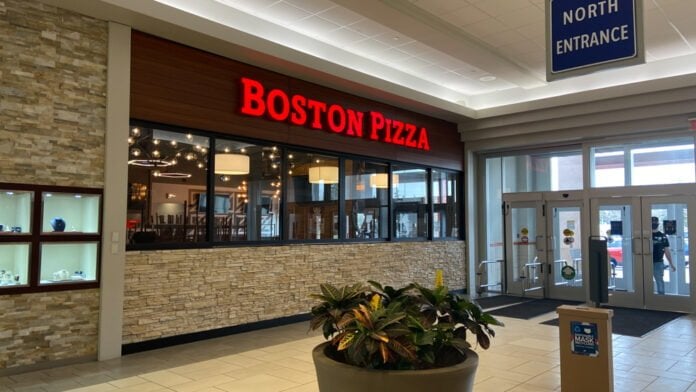
Boston Pizza Restaurant at CF Market Mall
Boston Pizza Restaurant at CF Market Mall. Photo: Jessica Finch

Boston Pizza is accelerating investment across its Canadian restaurant network, with more than 40 locations potentially undergoing renovations this year and three new restaurants under construction in British Columbia, Ontario and Manitoba.

The activity coincides with record second-quarter franchise sales from restaurants in the Boston Pizza Royalties Income Fund’s Royalty Pool. Sales reached $256.5 million for the quarter ended June 30, up 1.9 per cent from a year earlier, while same-restaurant sales increased 2.3 per cent. It marked the seventh consecutive quarter of positive same-restaurant sales for Boston Pizza.

The development activity is significant for one of Canada’s largest and longest-established casual dining chains, with Boston Pizza investing heavily in existing restaurants while selectively adding locations in markets where it sees opportunities.

More Than 40 Renovations Possible in 2026

Boston Pizza completed 21 restaurant renovations during the first half of 2026, including 10 during the second quarter. By the company’s August earnings call, Boston Pizza International President Jordan Holm said the number was approaching 30 and could finish the year above the company’s target of approximately 40.

That follows 40 restaurant renovations completed in 2025 and 28 in 2024. If Boston Pizza reaches its target this year, at least 80 restaurants will have been renovated over 2025 and 2026 combined.

Holm has described the projects as significant investments in restaurant interiors and exteriors, including new fabrics and finishes and upgrades to televisions and sound systems. Full renovations can require restaurants to close for approximately seven to 10 days while work is completed.

Renovations are also a recurring requirement within the Boston Pizza system. Holm said earlier this year that franchise agreements require restaurants to renovate every seven years, while noting that franchisees have been actively pursuing upgrades and discussing the results of completed projects with other operators.

The audiovisual investments are particularly relevant for a chain that continues to position its restaurants as destinations for major sporting events. During the second quarter, management said hockey and basketball playoffs and the FIFA World Cup contributed to restaurant activity.

Three Restaurants Under Construction

Boston Pizza did not open any new restaurants during the first half of 2026, but three are now under construction in Revelstoke, B.C.; Dryden, Ont.; and The Pas, Man.

Holm said the projects are approaching their opening dates. Boston Pizza is also working on other potential restaurants, although permitting, construction trades and supply-chain timing could determine whether those locations advance during the current construction season or move into early 2027.

Revelstoke represents a smaller British Columbia market with a significant tourism economy. Holm has described it as a growing four-season recreational community, pointing to skiing, golf, mountain biking, tourism and an expanding local population as factors supporting the market.

The Dryden restaurant is part of a broader development on Government Street, which carries the Trans-Canada Highway through the northwestern Ontario community. The project is being developed by Wabigoon Lake Ojibway Nation Real Properties, which is also developing a nearby 70-suite Studio 6 extended-stay hotel.

The third confirmed restaurant is under construction in The Pas, Manitoba. The three projects are part of a wider development pipeline, with Holm saying Boston Pizza has identified additional markets across Canada that it considers underserved by full-service restaurants.

Guest Traffic Remains Positive

Royalty Pool restaurants generated $494.9 million in franchise sales during the first six months of 2026, an increase of 2.5 per cent from $483 million during the comparable period last year. Year-to-date same-restaurant sales increased 2.7 per cent.

Holm said guest visitation has been an important contributor during Boston Pizza’s seven consecutive quarters of positive same-restaurant sales. During the second quarter, menu pricing made a somewhat larger contribution to growth, although both traffic and pricing remained positive year over year.

Boston Pizza generally makes its main menu price adjustments in June and November, according to Holm, making the timing of the June increase a factor in the latest quarter.

The company has also been using promotions and major events to drive visits. It began the second quarter with campaigns around the hockey and basketball playoffs before introducing promotions tied to the FIFA World Cup and Team Canada in June. Management specifically cited increased restaurant traffic associated with the World Cup as one of the contributors to second-quarter same-restaurant sales.

Takeout and delivery also continued to support sales. During the summer, Boston Pizza introduced its Live & Local program, featuring live music at restaurants across the country, while another promotion is planned around the beginning of football season.

Canadian Restaurants Continue to Face Cost Pressures

Boston Pizza’s positive traffic comes as restaurant operators across Canada continue to contend with higher costs and pressure on profitability.

Restaurants Canada said in July that inflation-adjusted commercial foodservice sales are forecast to increase 1.5 per cent in 2026. Its latest quarterly report found that 64 per cent of restaurant operators had lower profitability than a year earlier, while 41 per cent said they were operating at a loss or breaking even.

The organization has warned that persistent cost pressures are limiting investment across the industry, with some operators delaying equipment purchases, renovations and expansion. Boston Pizza’s continued spending on renovations and new development therefore comes during a period when many operators have less capacity to invest.

Boston Pizza is monitoring those pressures as well. Holm said the company is watching the trade environment and geopolitical developments for potential effects on restaurant input costs and consumer discretionary spending.

Four Restaurants Closed in First Half

Boston Pizza permanently closed four restaurants during the first half of 2026, including two during the second quarter. That compares with no permanent closures during all of 2025.

Holm said management does not view the closures as evidence of broader weakness in the brand. Individual circumstances have included lease expirations, redevelopment or expropriation and decisions about the long-term viability of older locations.

Earlier this year, Boston Pizza provided additional detail on two closures in Western Canada. An Edmonton-area restaurant was affected by plans to redevelop its site, while a restaurant in British Columbia’s Lower Mainland closed because of a combination of location-specific factors.

Real estate can play a significant role in those decisions. Boston Pizza franchisees often lease their sites or buildings, meaning a property owner’s redevelopment plans can result in a closure even where the broader market remains attractive. Management has said reopening elsewhere may be considered in those circumstances.

Holm also pointed to the age and size of the Boston Pizza system. With the brand operating for more than 60 years and close to 370 restaurants in Canada, some locations have been operating from the same sites for extended periods, eventually requiring decisions about their long-term viability.

The closures are occurring alongside a much larger program of investment in the existing network. Boston Pizza completed 40 renovations without opening or permanently closing a restaurant in 2025; this year, more than 40 renovations are possible while three new restaurants move toward opening.

Additional projects could follow. Boston Pizza says some may advance before the end of 2026, while others could move into early 2027 depending on permitting and construction timelines, adding to the restaurant investment already underway in Revelstoke, Dryden and The Pas.

More from Retail Insider: