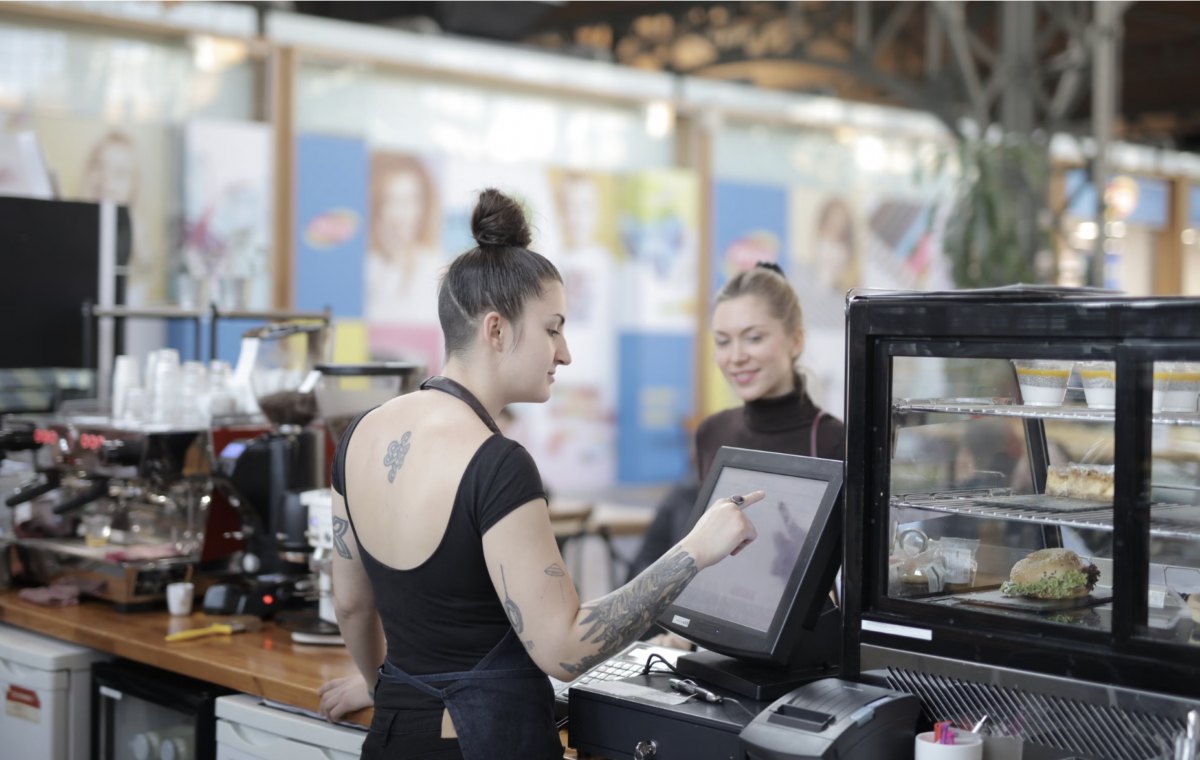
Freshii in Sherbrooke, Quebec. Photo: Freshii/Google Maps
Freshii has added a new lineup of salads to its Canadian menu as the quick-service restaurant chain looks to offer more substantial lunch and dinner options.
The Heartii Salads lineup, available at participating Freshii locations across Canada, includes the Habibii Salad, BBQ Chicken Salad and a redeveloped Kale Caesar.
The menu expansion combines vegetables and protein in three different salad offerings, including a plant-based option and a higher-protein version, according to the company.
“Today’s guests want meals that are nutritious, satisfying and unique,” said Chef Jason Baker, director of culinary at Freshii. “These new Heartii Salads deliver bold flavours, wholesome ingredients and hearty portions that make them a satisfying option for lunch or dinner.”
Chef Jason BakerFreshii photo
The Habibii Salad is a plant-based offering featuring falafel, spicy roasted broccoli, crispy chickpeas, cherry tomatoes, beets, cucumber, roasted sweet potato, red cabbage, pickled red onion, romaine and kale. It is served with a pesto vinaigrette.
The BBQ Chicken Salad includes blackened chicken, romaine, kale, bacon, pickled red onion, avocado, aged cheddar and red cabbage, along with Fiery BBQ Sauce and Green Goddess Ranch.
The redeveloped Kale Caesar features roasted chicken, kale and romaine, Parmesan crisps, a jammy egg, shaved Parmesan, roasted bacon, grape tomatoes, hemp seeds and Mediterranean crunch. It is served with a creamy Greek yogurt Caesar dressing and contains 45 grams of protein.
Freshii said the new salads are intended to provide customers with additional choices for meals that can fit into busy lifestyles while retaining fresh ingredients and flavour.
Freshii photoFreshii photo
“Today’s guests want meals that are nutritious, satisfying and unique,” said Baker. “These new Heartii Salads deliver bold flavours, wholesome ingredients and hearty portions that make them a satisfying option for lunch or dinner.”
Freshii is wholly owned and operated by Foodtastic, which says it has a portfolio of 30 restaurant brands and more than 1,200 establishments across Canada.
Canada’s largest franchise association has signed a trilateral agreement with its U.S. and Mexican counterparts aimed at increasing co-operation, information sharing and support for businesses operating across North America.
The agreement is intended to help franchise businesses better understand and enter each other’s markets, including through greater information sharing on regulations, intellectual property, costs, supply chains, consumers and market-entry strategies.
“While each of our markets has its own unique characteristics, we share many of the same opportunities and challenges. By working together, we can exchange knowledge, share best practices, and create stronger connections that will benefit franchise businesses, franchisees, and the broader franchise community across all three countries.”
Betsy Eslava AltamiranoAlan CatlettSherry McNeil
The three countries collectively account for more than one million franchised establishments, more than 6,600 franchise concepts and more than nine million people employed by franchising, according to the associations.
In Canada, the sector includes more than 1,100 franchise brands and employs about two million people. The industry is projected to be worth nearly $150 billion by 2027, according to the association.
The agreement also calls for joint internationalization projects, which the organizations say will give franchise companies opportunities to learn more about conditions in the other two markets and identify potential growth opportunities.
“By joining forces to share best practices and accelerate brand expansion across borders, we are opening powerful new opportunities for the more than 6,000 brands across North America. This collaboration empowers business leaders with better insights and creates meaningful pathways to ownership and upward mobility for the next generation of entrepreneurs.”
Andrea Piacquadio photo
The organizations will also exchange information intended to help companies anticipate and respond to changing market conditions. The agreement identifies potential advantages of the franchise model, including consolidated purchasing, volume negotiations and opportunities to develop supplier networks.
“Canadian franchising has a strong history of innovation, professionalization, and expansion, and we are pleased to bring that experience to this trilateral partnership,” said McNeil. “At the same time, there is tremendous value in learning from the scale and experience of our U.S. colleagues and from the creativity, adaptability, and growing strength of the Mexican franchise sector. Together, we can help create a more connected and informed North American franchise ecosystem.”
“This agreement began with a very simple question: Why not work together? Today, that conversation becomes a historic milestone. Mexico, the United States, and Canada have different markets, but we have so much to learn from one another. We want this alliance to open doors and make it easier for our companies to learn about, understand, and enter each other’s markets,” she said.
The agreement is between the three business associations and does not constitute an international treaty. It does not create legal obligations for governments or change existing legislation.
A permanent work agenda will now begin following the signing. The associations said the collaboration is expected to support continued development of the franchise sector in the three countries, including entrepreneurship, investment, employment and economic opportunity.
“The signing of this agreement is just the beginning,” added McNeil. “The real measure of its success will be the opportunities we create for our members and the broader franchise community. Whether that means helping a Canadian brand better understand opportunities in Mexico, connecting an international brand with the Canadian market, or sharing knowledge that strengthens franchising across North America, there is tremendous potential in working together.”
The Canadian Franchise Association represents approximately 650 members and more than 40,000 franchisees from Canadian and international franchise brands.
The multi-year agreement follows the first year of the collaboration in 2025 and will include national storytelling, digital and social content, contests, product discovery opportunities and select in-stadium activations during the baseball season.
Garnier said the expanded partnership is intended to provide additional opportunities for the brand to engage with Blue Jays fans through content and in-person experiences.
“This partnership reflects what Garnier Fructis stands for: high-performance hair care that’s accessible to everyone, paired with a team that brings Canadians together coast to coast.” said Carole Maury, General Manager, Garnier Canada. “The Blue Jays’ fanbase reflects the diversity of Canada, and that inclusivity strongly aligns with how we think about beauty and self-care today. We’re excited to build on this partnership in the seasons ahead with meaningful moments for fans.”
The partnership began in August 2025, when Garnier introduced a series of activities at Rogers Centre, including an influencer event, consumer sampling and in-game experiences.
Carole MauryAnastasiya Lobanovskaya photo
The company said the collaboration coincided with the Blue Jays’ 2025 postseason run, which ended with the club’s first World Series appearance since 1993. Garnier said the team reached 24.5 million Canadians during the postseason.
The partnership is continuing as the Blue Jays are in their 50th season, with Garnier positioning the relationship as a way to connect with consumers through the team’s national fan base.
“We are pleased to extend our partnership with Garnier through 2028. Their commitment to innovation and community aligns strongly with our organizational values, and we look forward to continued collaboration.” said Mark Ditmars, Vice President, Partnerships, Toronto Blue Jays.
For the 2026 season and beyond, the companies said fans will see additional activity across digital and social channels as well as in the stadium. Further details are expected to be announced during the baseball season.
Garnier is a brand of L’Oréal Canada, which is a wholly owned subsidiary of L’Oréal Groupe. L’Oréal Canada was established in 1958 and employs more than 1,800 people. Its portfolio includes 36 brands.
Garnier Fructis is one of Garnier’s hair-care brands, offering products for a range of hair-care needs and routines.
It was another busy week for Canadian retail, with expansion, investment and changing consumer behaviour showing up across several of the stories we covered.
Retailers continue to open stores and invest in their physical networks, even as consumers remain cautious about spending. Technology is becoming a bigger part of the conversation as well, including the growing use of AI, while partnerships and new business models are creating opportunities for established brands and newer players.
We are also heading into an important stretch of the retail calendar. Back-to-school shopping is underway, bringing price and value into sharper focus, and the fall season is approaching quickly. At the same time, retail real estate continues to shift as landlords reposition properties and retailers reconsider where and how they want to operate.
What stands out is that the industry isn’t standing still. Companies are making decisions now about stores, technology, partnerships and growth that could shape their businesses well beyond this fall. Some longstanding Canadian brands are entering particularly interesting new chapters, while others are finding opportunities to expand in a market that remains challenging.
Here are some of the stories and developments that caught our attention this week.
Retailer News
The retail environment in Canada is witnessing both reinvention and expansion. TJX’s strong performance in Canada, where Winners, Marshalls, and HomeSense are gaining major market share, illustrates how off-price retailers continue to capitalize on the void left by Hudson’s Bay closures, expanding aggressively into malls and urban centres. Similarly, Canadian Tire is driving growth through its Destination Sport store format, repurposing large-format retail spaces and tapping into the sporting goods market’s momentum.
In parallel, Shopify’s extension of cross-border ecommerce tools for Canadian merchants signals recognition of growing international sales complexities, especially with evolving U.S. import regulations. This infrastructure upgrade will be critical for Canadian retailers striving to broaden their global footprint amid an increasingly competitive landscape.
The departure of Roots from public markets, entering a privatised phase under Joe Mimran’s guidance as outlined in Roots to Go Private as Joe Mimran Takes Key Operating Role, highlights a strategic pivot toward long-term product innovation and international growth outside quarterly earnings pressures. This move is emblematic of legacy brands seeking greater operational agility and renewed brand vitality.
Physical retail expansion continues with DAVIDsTEA advancing its store openings, exemplified by the new flagship at Square One, which supports e-commerce growth in surrounding markets as presented in DAVIDsTEA Opens Square One Flagship. Meanwhile, Shake Shack’s strategic openings, including its first Ontario drive-thru locations, demonstrate adaptive multi-format growth targeting suburban consumers, signaling broadening retail footprints beyond urban cores.
Complementing these retail developments is Primaris REIT’s $19 million investment to transform the former Hudson’s Bay space at Galeries de la Capitale into a multi-tenant complex with new retail and dining anchors, reflecting a trend toward repurposing ageing department store real estate into diversified experiential destinations, detailed in Primaris Invests $19M to Transform Former Hudson’s Bay.
Retailer Financials / Trends / Reports
Recent data confirm Canadian retail’s cautious but steady positive momentum despite inflationary pressures. Statistics Canada reports that retail sales surpassed $74 billion in June, buoyed by strength in general merchandise and clothing, while e-commerce sales increased nearly 10%, indicating digital channels remain a key growth lever.
Home improvement retailer Home Depot Canada continues to outperform with accelerated sales growth, as noted in Home Depot Canada Sales Accelerate, driven by robust demand for smaller projects and professional customers. The company’s strong Q2 fiscal results, posting $47.9 billion in sales, reinforce the sector’s resilience amid a challenging housing market.
On the inflation front, Statistics Canada’s report of a 3.0% year-over-year Consumer Price Index increase, led by gasoline and travel costs, continues to shape retailer pricing strategies. Food price inflation remains sticky, further adding pressure on grocery and restaurant sectors to balance margins and customer affordability. These macroeconomic factors frame the backdrop for constrained consumer purchasing power heading into fall.
Retailer People News
The industry further signals its digital evolution with Groupe Dynamite appointing Henry Spear as Chief Customer Officer to spearhead personalised and seamless omni-channel customer experiences across its brands, GARAGE and DYNAMITE, reflecting heightened focus on integrating e-commerce and physical retail, as detailed in Groupe Dynamite appoints new digital leader.
Retailer Op-Eds
Insightful perspectives from the sector highlight the delicate balance retailers must maintain. Sylvain Charlebois’ article on Canada’s supply management system underscores the urgency for reform to enhance competitiveness and innovation, a necessary evolution that impacts supply chains and pricing structures crucial to retail and grocery operations.
Another op-ed draws attention to the structural challenges within the Canadian restaurant industry, with forecasts suggesting the potential loss of thousands of eateries in 2026, predominantly independent full-service operators, as discussed in Canada Could Lose 2,500 Restaurants. This trend echoes broader concerns over sector viability, impacting retail landlords with significant exposure to foodservice spaces.
A recent strategic overview of the retail landscape stresses the importance of cautious expansions and resilient mixed-use developments blending residential, wellness, and experiential retail offerings. This approach responds well to consumer segmentation and cost management imperatives, reinforcing fundamentals for sustainable growth in a transforming retail market, as detailed in From The Desk: Strategic Expansions and Resilience.
Editor’s Take
There is an interesting contradiction emerging in Canadian retail. Consumers remain cautious and value matters enormously, yet some of the country’s largest retailers are continuing to invest in stores, technology and expansion.
TJX is a good example. The company continues to grow Winners, Marshalls and HomeSense in Canada, including in prominent shopping centres where space has become available following the departure or downsizing of other retailers. Canadian Tire is also finding new uses for major retail spaces. These moves suggest that good real estate still has considerable value, particularly for retailers with the scale and economics to take advantage of opportunities as they emerge.
The consumer side of the equation is harder. Back-to-school spending is putting price sensitivity back into focus, resale continues to gain attention, and restaurants remain under considerable pressure. Retail sales may be growing in parts of the market, but that does not mean every category or operator is benefiting equally.
Roots adds another dimension. Its move into private ownership, with Joe Mimran returning to play a significant operating role, could give the company greater freedom to invest in product, stores and international growth over a longer time horizon. It will be worth watching what happens when an established Canadian brand with considerable recognition is given a new ownership structure and a renewed growth mandate.
Technology is running through many of these stories as well. Shopify, Groupe Dynamite and other Canadian companies are investing in AI and digital capabilities, but the important question will be what those investments actually accomplish. The retailers that use technology to improve merchandising, inventory, customer experience and profitability will have an advantage over those adopting it because it has become the latest corporate priority.
Heading into fall, Canadian retail looks increasingly divided. Strong operators with capital, desirable formats and room to invest are finding opportunities, including some created by the retreat of other retailers. Businesses facing weaker economics and a price-conscious consumer have considerably less room for error. That divide may become one of the most important retail stories to watch over the coming months.
Shoppa.ca launched an online marketplace exclusively featuring Canadian-owned businesses to simplify consumer access to domestic brands. Home Depot Canada accelerated sales growth in Q2 despite housing market challenges by focusing on professional customers and digital investments. AutoCanada acknowledged ongoing challenges in the auto market with strategies to improve productivity and selectively divest. Retail Insider also published data on Canadian retail sales surpassing $74 billion in June driven by general merchandise and e-commerce growth.
The assumption usually goes that big retail chains will get to new technology first. Bigger budgets, an IT department, long contracts with enterprise software providers, all the things a single-site shop won’t have. Customer relationship management has played out differently, though, because it’s the independents who are moving quicker.
They’re picking up CRM tools, getting them configured inside a week, and using what comes out of the other end. Very little of that comes down to money. Most of it comes down to how these businesses are built, and the difference is wider than people expect.
Fewer Layers, Faster Decisions
In a chain, new software will need sign-off from regional managers, head office, IT security and occasionally a board. Six months can disappear before a single employee logs in. An independent owner who spots a tool that will help them track repeat customers or run email campaigns can sign up on Tuesday afternoon and start using it on Wednesday morning.
That speed matters more than it gets credit for. CRM only pays off when it’s adopted quickly and used consistently. A half-configured system left alone for three months will deliver nothing. Independents clear that hurdle because the person choosing the tool is usually the person typing into it.
Customer Relationships That Already Exist
Most independent retailers already know their regulars by name. They’ll remember what someone bought last time, roughly when they tend to come in, and whether they’ll ask about the same thing again. A CRM formalises all of that and makes it usable at scale, but the habit was there long before the software arrived.
Chains have the harder job. Staff behaviour has to be built from nothing. Employees need training on why interactions get logged, how preferences are tagged, and what anyone’s supposed to do with the reports afterwards. In a small shop the owner already thinks that way, so the CRM gives them somewhere better to keep it and a way to act on it, whether that’s a targeted promotion to customers who haven’t been in for 30 days or a reminder to reorder what a regular always buys.
Budget-Friendly Tools Have Caught Up
Five years ago, most CRM platforms were priced for mid-size and enterprise buyers. Monthly fees ran into the hundreds, and a consultant would usually be needed to set the thing up properly. That era is over. Plenty of affordable CRM options are now built specifically for smaller teams, and comparison sites like CRMs Reviewed make it easier to weigh up features without booking a dozen sales demos.
Pricing was the biggest barrier for independents, and it’s largely gone now. Free tiers exist. So do plans under £20 a month that cover contact management, email automation and basic reporting. A shop turning over a few thousand a week can carry that cost without thinking twice.
They Can Test and Adjust Without Committee Approval
Experimenting is where independents pull ahead. A feature that isn’t earning its place will get switched off the same week, or swapped for a different workflow entirely. Chains tend to lock into annual contracts and fixed processes, which makes changing direction slow and expensive.
The results show it. A small clothing boutique can run a loyalty programme through their CRM for a month, watch repeat visits climb, and push harder on it before the month’s even out. A chain attempting the same thing will pilot it across selected stores, gather data for a quarter, then present findings to senior leadership before anybody changes anything.
Data That Actually Gets Used
Collection was never the weak point. Chains gather enormous amounts of data, far more than any independent will manage. Everything after collection is where it comes apart. Large retailers struggle to turn CRM data into action because the people with dashboard access aren’t the ones on the shop floor talking to customers.
In an independent shop, whoever reads the CRM report is often the same person changing the window display and deciding what to reorder on Friday. That short line between insight and action is very hard to build into a bigger organisation, and it explains most of why CRM pays back faster for smaller businesses.
Where It Goes From Here
Nobody running a small shop is buying CRM software to look modern. They’re buying it because the tools have become accessible, the setup takes an afternoon, and the payoff arrives almost straight away. An owner who can see which products bring people back, which customers are quietly drifting off, and which promotions convert will make better calls than someone working from instinct alone.
What independents have going for them is speed, proximity to their customers, and a willingness to act on a piece of data the day it appears. Chains will get there eventually. They’ll just need a few more meetings to do it.
The collapse of Canada/U.S. trade talk will have immediate and significant impact of small businesses in Canada, says the Canadian Federation of Independent Business, which is Canada’s largest association of small and medium-sized businesses with 103,000 members across every industry and region.
In a statement released on Saturday, Dan Kelly, President of the CFIB, said: “The new list of new Canadian exports subject to a 50% tariff includes 18 pages of products that are right at the centre of what small businesses sell. A full 40% of small Canadian exporters will be directly hit by these tariffs and nearly one-third expect their revenues will drop by 50% or more as a result.
“This round of tariffs is far more impactful on a far larger swath of small firms than the earlier ones. Small firms most affected by the tariffs include those selling machinery and equipment, wood and building products, plastic and packaging, food and beverages and arts, jewellery and creative products.
“And while retaliatory tariffs are an understandable response from our government, the impact of this move also hits small firms hard. While 20% of small firms export, over 50% import from the US. The burden of retaliatory tariffs ultimately affects consumers, but first to be hit are the small firms that import. Earlier rounds of Canadian retaliatory tariffs had a major negative impact on many small businesses.”
Dan KellyKATRIN BOLOVTSOVA photo
Kelly said the Prime Minister has rightly noted his concern for small businesses and has pledged measures to support Canadian workers and businesses in the coming days.
“CFIB notes that the $25 billion of earlier supports failed to deliver any meaningful relief to Canadian SMEs. Most of the loan programs delivered by Regional Development Agencies specifically excluded small firms from even applying. These programs were shockingly unfair and ineffective,” said Kelly.
“As we did during the pandemic, CFIB stands ready to work with government on ways to offer relief that delivers, including important tax relief for small firms.
“CFIB does not second guess the decision of government to end this round of discussions in pursuit of a lasting deal that removes the threat of the new tariffs and reduces the earlier sectoral tariffs.
“More than anything, small firms are counting on government to resume negotiations as early as possible and ensure the impact on Canadian entrepreneurs is minimized in the interim.”
Prime Minister Mark Carney
In a statement, Canadian Prime Minster Mark Carney said trade talk progress has not been enough to meet the government’s objectives for Canadians. As a result, he said he decided to suspend trade negotiations with the U.S. and he directed Canada’s negotiators to return to Ottawa. Carney noted that the U.S. intends to impose a 50% tariff on roughly $28 billion of Canadian goods and “Canada will match those tariffs dollar for dollar to protect our workers and businesses.”
“In the coming days, the government will introduce additional measures to support Canadian workers and businesses, building on the nearly $25 billion in support provided over the past 18 months,” he said.
Roots store at Toronto's Yorkdale Shopping Centre. Image: Roots
Joe Mimran expects product to be one of his first areas of focus at Roots as he prepares to take on a key operating role at the Canadian retailer. International expansion, store merchandising and a more deliberate expression of the brand’s Canadian identity are also emerging as priorities.
Mimran, President and Creative Director of Toronto-based JM&A Design and Development Inc., will oversee much of the Roots operating business alongside business partner Frank Rocchetti following completion of the proposed take-private transaction announced this week. JM&A will be responsible for product design and development, manufacturing and distribution, along with Roots retail and e-commerce operations in Canada and the United States.
In an interview with Retail Insider following the announcement, Mimran said his attention will initially turn to the product itself.
“I’m a product person first, so that will be my first focus,” he said.
Consumers should not expect an immediate overhaul. Mimran said Roots is already working roughly nine months ahead on its merchandise, meaning it could take about a year before the influence of the new operating group becomes clearly visible in stores. He is also interested in looking at how assortments vary across the network, including greater differentiation between what he described as A, B and C stores, with larger or higher-volume locations potentially carrying broader assortments.
The transaction is not expected to close until the fourth quarter, and Mimran has yet to work through the Roots organization in detail. His early comments point to product and merchandising as the first areas he wants to examine while building on work already underway at the company.
Joe Mimran
Mimran Looks to Further Develop Roots’ Canadian Identity
One of the questions Mimran is considering is how Roots can make more of an identity built over more than five decades. Founded in Toronto in 1973 by Michael Budman and Don Green, Roots has become closely associated with Canadian casual apparel, leather goods and an outdoor lifestyle.
Mimran believes that heritage can have a stronger presence across merchandise, marketing, visual presentation and stores.
“How do we take that and glamorize it to the point that it really does distill the Canadian identity?” he said.
For Mimran, that extends from the product itself to messaging, imagery and how Roots presents itself in stores. He spoke positively about the existing retail experience and sees room to develop what is already there, including the way merchandise is presented and how different locations are assorted.
Canada itself also factors into his thinking about the brand’s potential outside its home market. Mimran said the country is well regarded internationally and believes Roots can carry a distinctly Canadian lifestyle proposition into additional markets.
“Canada is held in very high esteem,” he said, pointing to the opportunity to take the spirit associated with the country and Roots to consumers elsewhere.
That view is shared by Marquee Brands, which is partnering with JM&A in the Roots transaction.
Marquee Sought a Canadian Partner for Roots
Natasha Fishman, Chief Marketing Officer at Marquee Brands, told Retail Insider that maintaining Roots’ Canadian foundation was important as Marquee pursued the company.
Natasha Fishman
Marquee approached Mimran and JM&A about becoming its operating partner, with discussions beginning around May, according to Mimran. Fishman said Marquee specifically wanted a Canadian-based operator and viewed keeping Roots anchored in Canada as critical to its plans for the brand.
JM&A will operate the core North American business while Marquee concentrates on global brand stewardship, international expansion and opportunities in additional categories and markets.
Fishman said Marquee sees considerable potential in taking the Canadian qualities associated with Roots to consumers internationally. Its strategy will be to expand the reach of the brand while maintaining the characteristics that have made it recognizable.
“We’re incredibly bullish on the Canadian spirit and the Canadian sensibility,” Fishman said, adding that Marquee sees demand for the outdoor lifestyle and cultural associations connected with Roots.
International Expansion a Major Opportunity
Mimran was unequivocal when asked whether international expansion will be part of the plan for Roots.
“Hundred percent. Hundred percent,” he said.
Roots already has a sizeable international business, including more than 100 partner-operated stores in Asia. Taiwan has been a longstanding market for the company, while Roots also operates a storefront on Alibaba’s Tmall platform in China.
Mimran sees considerable room to expand that presence and specifically mentioned Korea, China and Indonesia as markets with potential. He also has experience taking a Canadian retail concept into Asia. Club Monaco, which Mimran founded in Toronto in 1985, expanded into markets including Korea and Japan before the business was acquired by Ralph Lauren in 1999.
Marquee gives Roots access to a much larger network of international relationships. Mimran said the company works with more than 300 partners worldwide, opening potential routes into markets where Roots does not currently have a substantial presence. Marquee also maintains operations in markets including Shanghai and Seoul.
Roots will have several ways to enter or build its presence in those markets. The company already sells internationally through e-commerce, while Marquee works through licensing, wholesale, distribution and local operating partnerships in addition to retail.
Roots has also been developing products and marketing for specific international audiences. Earlier this year, it collaborated with Korean character ZANMANG LOOPY on a collection combining Roots’ Canadian imagery with the popular character. The merchandise was offered in Canada as well as through Roots Taiwan and Tmall in China.
Meghan Roach
Roach Expects ‘A Lot More Global Expansion’
Roots President and CEO Meghan Roach said international demand for the brand became particularly apparent during the strategic review that ultimately led to the Marquee and JM&A transaction.
Roach told Retail Insider that Roots spoke with numerous potential counterparties during the process and attracted significant interest from outside Canada. Some were recognizable names, she said, although confidentiality agreements prevent the company from identifying the other parties involved.
For Roach, that interest provided another indication of how widely Roots is recognized outside Canada. She pointed to the company’s history with the Olympic movement, its outdoor positioning and the broader appeal of Canadian culture as factors that have helped establish the brand internationally. She said some of Marquee’s existing partners have already expressed interest in Roots.
“I definitely think you’re going see a lot more global expansion for this brand,” Roach said.
Roach sees Marquee’s international network as one of the major advantages of the transaction. The company already has relationships with operators around the world that could provide Roots with access to markets where building those connections independently would take considerably longer.
U.S. Business Offers Room for Growth
The United States is another market Mimran intends to examine. Roots currently operates two corporate stores in the country, in Birmingham, Michigan, and Park City, Utah, alongside its U.S. e-commerce business.
Mimran described the existing operation as “a good base from which to work” and said the U.S. business is something the group will be working on. He did not outline a store-opening target or identify additional U.S. markets under consideration.
The physical footprint remains small compared with Roots’ Canadian network and its partner-operated presence in Asia. Further decisions around the U.S. business will come as JM&A gets deeper into the operation following completion of the transaction.
Roots store at Vancouver International Airport. Image: Roots
Travel Retail Emerging as Another Opportunity
Roots has also been testing additional ways to reach consumers through its physical network. Roach said the company’s recent expansion into travel retail has been performing well and sees further opportunities on the real estate side.
Roots opened a store at Vancouver International Airport in July in partnership with Hudson, part of global travel retailer Avolta. Located after security in the airport’s U.S. Departures area, the store carries an assortment developed for travellers, including Canadian-made merchandise, destination graphics and accessories. Roots also has travel-retail exposure at Taiwan Taoyuan International Airport, extending the concept into one of the brand’s longest-established international markets.
The airport strategy puts the Canadian identity that Mimran and Marquee want to develop further in front of travellers from outside the country. Roots said when the Vancouver location opened that it was exploring additional travel-retail opportunities across Canada.
For the Canadian store network more broadly, major changes are unlikely before the transaction closes. Roach said the next 60 to 90 days will largely remain business as usual. Roots will continue to look at its real estate and store network, with Mimran and Rocchetti bringing additional retail experience once JM&A assumes its operating role.
Roots Joins a Growing Group of Canadian Brands
Roots will become part of a broader group of Canadian consumer businesses associated with Mimran and Rocchetti. Asked whether Roots could share expertise or infrastructure with brands including Tilley Endurables and Kit and Ace, Mimran said that is part of the strategy.
“Absolutely. I mean, that’s the whole idea,” he said.
Mimran and Rocchetti have spent the past several years investing in and developing Canadian consumer brands, with interests including Tilley Endurables, Kit and Ace and Mastermind Toys. Mimran said Kit and Ace has reached 18 locations and remains on a growth track, while Tilley has expanded beyond its historical association with hats into a broader apparel business.
Mimran sees opportunities to use expertise and capabilities across the group while maintaining distinct identities for the individual brands. He described part of JM&A’s broader objective as continuing to “remaster Canadian heritage brands.”
Roots is the largest retail platform to enter that group, bringing an established national store network, a substantial e-commerce business and an existing international presence. Its scale also gives JM&A another platform for product development, sourcing and retail expertise that could have applications elsewhere in the portfolio.
Roots Outpost at 1096 Yonge Street in Toronto. Photo: Craig Patterson
Existing Roots Team Remains Important
Mimran said he has not yet had an opportunity to sit down extensively with the Roots management team, with attention so far centred on completing the transaction. He expects those conversations to take place over the coming months and credited the existing leadership and employees for their stewardship of the brand.
“I think they’ve done a great job,” he said. “They’ve really stewarded the brand very well.”
Roach also emphasized the work done by the Roots team leading into the transaction. The company has returned to profitability and has recorded a sustained period of comparable-sales growth while investing in stores, digital operations and distribution infrastructure.
“We have a very healthy business,” Roach told Retail Insider. “It’s profitable. We have a brand that consumers love.”
She said the team has worked hard to put Roots in its current position and believes the combination of JM&A’s operating expertise and Marquee’s international network can build on that foundation.
The companies have not disclosed what role Roach or individual members of the existing senior leadership team will hold following completion of the transaction.
A Note From Roots Co-Founder Don Green
Mimran also heard from one of the people responsible for creating Roots following announcement of the transaction. Co-founder Don Green sent him what Mimran described as a heartfelt note, an exchange he characterized as “founder to founder.”
“I just assured him that it was going to be in good hands,” Mimran said.
For Mimran, the work ahead begins with product and how Roots expresses its Canadian identity. Those decisions will take time to move through the product-development cycle and into stores. Internationally, JM&A and Marquee will have Roots’ existing business to work from, along with Marquee’s network of partners in markets around the world.
The first visible changes may still be about a year away, but the priorities are beginning to take shape: product and merchandising at home, further work on the small U.S. business, and a larger international push for one of Canada’s best-known retail brands.
A new online marketplace aimed at helping Canadians find and shop from Canadian-owned businesses launched Thursday, bringing hundreds of businesses and tens of thousands of products together on one platform.
Buy Canadian Group Inc. says its Shoppa.ca marketplace is designed to address the difficulty consumers face in finding Canadian businesses whose products are often sold through thousands of individual websites.
The marketplace includes businesses from across the country and products in categories including beauty and skincare, apparel, home and living, pets, kids and baby, food and wellness.
“Most of us want to buy Canadian, the hard part is finding the businesses,” said Lee Smith, Chief Canadian Officer of Buy Canadian Group Inc. “Amazing homegrown brands are out there doing incredible work, but they’re spread across the country and across thousands of separate sites. We built Shoppa.ca so Canadians can discover them all in one place, check out in one cart, and shop with confidence, knowing exactly who they’re supporting.”
Buy Canadian Group said the marketplace is intended to give smaller and independent businesses another way to reach consumers who are actively looking to buy Canadian products.
Lee SmithNataliya Vaitkevich photo
The company said every business on the platform is Canadian-owned, while products are labelled according to their Canadian attributes, including “Canadian-Owned Business” and “Made in Canada.”
Shoppa.ca is available across Canada and allows shoppers to browse products from multiple businesses through a single marketplace rather than visiting individual websites.
The company cited figures showing 53 per cent of Canadians say they will go out of their way to buy Canadian, while 57 per cent say they will spend more to support a homegrown business or purchase Canadian-made products.
Buy Canadian Group said Canadian businesses interested in joining the marketplace can apply through Shoppa.ca.
The company operates Shoppa.ca and says its focus is on bringing Canadian-owned businesses and their products together in a single online marketplace.
Retail sales increased 0.6% to $74.3 billion in June. Sales were up in seven of nine subsectors, led by increases at general merchandise retailers. Core retail sales, which exclude gasoline stations and fuel vendors and motor vehicle and parts dealers, were up 1.2% in June, according to a report released Friday by Statistics Canada.
In volume terms, retail sales increased 1.5% in June. Retail sales were up 2.2% in the second quarter. In volume terms, quarterly sales increased 0.4%, added the federal agency.
Core retail sales rose 1.2% in June, posting their second consecutive monthly gain. The increase was led by higher sales at general merchandise retailers (+2.7%), up for a second consecutive month. In June, higher sales were also recorded at clothing, clothing accessories, shoes, jewelry, luggage and leather goods retailers (+3.1%), it said.
The sole decrease in core retail sales in June came from food and beverage retailers (-0.4%). The decrease in this subsector was led by sales at supermarkets and other grocery retailers (except convenience retailers), which were down 0.6% in June after increasing 0.8% in May, added Statistics Canada.
Andrea Piacquadio photo
“Sales at motor vehicle and parts dealers were up 1.0% in June, rising for a third consecutive month. Higher sales at new car dealers (+1.5%) led the increase in this subsector. The largest decrease in the motor vehicle and parts dealers subsector came from used car dealers (-2.4%),” it said.
“The largest decrease in retail sales in June was observed at gasoline stations and fuel vendors (-4.1%), posting their first decline in four months. In volume terms, sales at gasoline stations and fuel vendors rose 4.2% in June.”
On a seasonally adjusted basis, retail e-commerce sales increased 9.9% to $5.7 billion in June, accounting for 7.7% of total retail trade, compared with 7.1% in May, said StatsCan.
“Statistics Canada is providing an advance estimate of retail sales, which suggests that sales decreased 0.8% in July. Owing to its early nature, this figure will be revised. This unofficial estimate was calculated based on responses received from 56.5% of companies surveyed. The average final response rate for the survey over the previous 12 months was 87.3%.”
“Through the monthly volatility we still see a gradual improvement in consumer spending which should continue into next year, supported by expanded household benefits and an improving labour market, as well as hopefully in 2027 by an easing in inflationary pressures linked to gasoline prices,” he said.
Maria Solovieva, Economist, TD Economics, said: “Another solid month for retail sales, with both core spending and real activity rising for a second consecutive month. Taken together, the data point to ongoing real personal consumption growth in Q2 despite rising prices. Second-quarter GDP and consumption data are released next Friday, so we won’t have to wait long for the details on how consumers responded to the rise in inflation.
“Statistics Canada’s advance estimate points to a sizable decline in July, suggesting activity cooled heading into the third quarter as energy prices rose again. Our internal TD Spend data, which excludes some large categories like vehicle purchases, shows goods spending was flat in July.”